Mini-Reviews: Hitchhiker’s, Rake, Emma

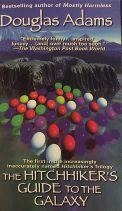
Douglas Adams, The Hitchhiker’s Guide to the Galaxy

It’s an ordinary Thursday, and British everyman Arthur Dent is lying in front of a bulldozer, trying to stop his house from being demolished. Little does he know that the entire planet is about to be demolished to make way for an interstellar bypass. Fortunately, his alien friend, Ford Prefect, saves him from vaporization by hitching a ride on a spaceship. From there, Arthur and Ford brave many dangers, including Vogon poetry, infinite improbability, automated attacks from dead planets, and the evil machinations of white mice. I remember reading this book (and the sequels) in my tween or teen years, and at the time I thought it was hilarious. This time around, I could still appreciate some of the humor, but I had less patience for it. The book isn’t attempting to be anything more than a rapid-fire series of jokes, and after a while I found it a bit tedious. So even though there’s no real resolution at the end of this novel, I’m not tempted to continue with the series.

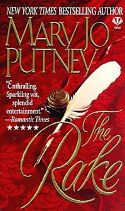
Mary Jo Putney, The Rake

Notorious rake Reggie Davenport is growing tired of his aimless life; so when his cousin, the Earl of Wargrave, unexpectedly gives him an estate, he views it as a fresh start. Upon arriving at the estate, Reggie is shocked to discover that his very capable steward is a woman, Alys Weston. Alys fled her aristocratic family at a young age and has fought hard to make her own way in the world, so at first she fears and resents Reggie’s presence. Eventually they discover each other’s good qualities, but Reggie’s drinking problem threatens their relationship. I was pleasantly surprised by this book! I loved its refusal to romanticize rakishness: Reggie’s drinking and womanizing have serious consequences, particularly his struggle with what we now call alcoholism. His feelings for Alys are one motivating factor in his desire to change, but not the only one, and her love doesn’t magically solve his problems. I liked Alys too and related to her insecurities, but this is really Reggie’s book. I would highly recommend it to historical romance fans, and I’m interested in trying more by Putney—anyone have any recommendations?

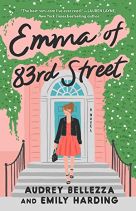
Audrey Bellezza and Emily Harding, Emma of 83rd Street

In this contemporary retelling of Jane Austen’s Emma, Emma Woodhouse is a privileged 23-year-old living on the Upper East Side and getting a master’s in art history. Socially, she’s at a loose end now that her beloved older sister has married and moved out. So when she meets country-mouse classmate Nadine, Emma decides to give her a makeover—as well as some dubious romantic advice. Emma’s friend Knightley doesn’t hesitate to point out the flaws in her approach, but lately their good-natured sparring seems to be taking a romantic turn. I adore Austen but tend to steer clear of retellings; I broke my rule for this one, and sadly I don’t think it was worth it. The novel has its good points—it successfully translates the original book’s major plot points, and it gives us some peeks at Knightley’s point of view—but to me it felt like a standard contemporary romance with nothing particularly interesting or compelling about it. Unless you’re a diehard Austen fanfic lover, I’d skip this one.

Mini-Reviews: Enemy, Rushworth, Spirit

Brigitte Knightley, The Irresistible Urge to Fall for Your Enemy

Osric Mordaunt is an assassin with a terminal illness. Aurienne Fairhrim, the best healer around, is the only person who might possibly be able to save his life. Too bad they hate each other, both personally and as a matter of principle. But Aurienne’s hospital desperately needs money to deal with a viral outbreak that’s targeting children, so Osric bribes her to help him. As they reluctantly work together to pursue a cure for his illness, they slowly grow closer. I’m a big fan of the enemies-to-lovers trope, and this book certainly deploys it well, with lots of charged banter and a slow burn that really ramps up the tension. But overall, the novel didn’t quite work for me; some of the banter felt forced, the occasional bawdiness was jarring, and I just wasn’t terribly invested in the romance. Also, the book is the first of a planned duology, and nothing is resolved at the end of this one! I didn’t realize I’d have to read a second book to get the whole story, and I’m honestly not sure if I care enough.

Claudia Gray, The Rushworth Family Plot

This fourth book in the Mr. Darcy and Miss Tilney mystery series is set in London, where both Jonathan and Juliet have been encouraged by their parents to look for other potential matches. But the two young people have eyes only for each other—that is, until another murder among their acquaintance captures their attention. The victim is Mr. Rushworth, Maria’s spurned husband from Mansfield Park, and it soon becomes evident that tensions are high within the Bertram household. There’s no shortage of suspects, especially when Henry and Mary Crawford also arrive in town. I’m continuing to enjoy this series, which takes Austen’s well-known characters in believable new directions, and I thought the treatment of the Mansfield Park set was particularly entertaining. I also enjoyed the overall plot, which results in a scandal that may divide Jonathan and Juliet forever. I’ll certainly keep reading the series—I want to know which Austen characters we’ll meet next!

Kristen Britain, Spirit of the Wood

This novella in the Green Rider universe is a prequel to the main series, focusing on supporting character Laren Mapstone. But the story is actually told from the point of view of Tavin, a new Green Rider who’s accompanying Laren on his first mission. When she’s gravely wounded, he must figure out how to help her; but Laren is carrying a lot of grief and trauma from the recent wars with the Darrow Raiders, and Tavin’s magical gift of empathy means he must experience it all along with her. This was a decent little adventure, and I liked Tavin and wanted good things for him. His journey of self-discovery was satisfying if a little slow at times. I don’t think the book adds much to readers’ understanding of Laren, though it does reveal how she got her scar. Overall, a fine but not particularly memorable installment of the Green Rider series…though I might be a little too critical, since I find I’m just not very interested in the series anymore.

Mini-Reviews: Muse, Accomplished, Burning

Mimi Matthews, The Muse of Maiden Lane

This final book in the Belles of London series features Stella Hobhouse, who’s bold by nature but has been stifled by her strict brother and by self-consciousness about her unusual silver hair. Meanwhile, Teddy Hayes is a passionate artist who struggles to be independent despite having to use a wheelchair for mobility. When the two meet by chance in an art gallery, Teddy is struck by Stella’s unique beauty and wants to paint her. She resists at first, but as the two grow closer, they both find the courage to take a chance on art and love. I’ve been waiting for Teddy’s book since he appeared as a supporting character in A Convenient Fiction, and overall I was not disappointed. I liked that the book doesn’t shy away from either his flaws or his vulnerability, and Stella is a great match for him, as she understands and shares his struggle for freedom. The novel is a little too overpopulated with characters from previous books, but otherwise I really enjoyed this one. The first book in a new series by Matthews is slated to come out in 2025, and I will definitely be checking it out!

Amanda Quain, Accomplished

Georgie Darcy has been in a dark place ever since her boyfriend, Wickham Foster, betrayed her and almost got her expelled. Her classmates at Pemberley High all hate her, and her overprotective older brother, Fitz, seems to view her as nothing but a problem for him to solve. Georgie is determined to fix everything, but all her plans go spectacularly awry. I’m of two minds about this YA take on Pride and Prejudice from Georgiana’s POV. It’s a clever idea, and I actually really liked the book’s portrayal of Fitz Darcy (and Charlie Bingley, who is an utter delight). The novel also highlights just how horrible Wickham was to Georgiana in P&P; here, he’s clearly emotionally abusive and has left Georgie with some serious trauma. I honestly just wanted all the Darcys to go to therapy! I also found Georgie pretty frustrating, as she consistently makes the worst possible decisions. Overall, I think the pros of the book outweigh the cons, but I haven’t decided whether I want to keep it or not.

Genevieve Cogman, The Burning Page

After the events of The Masked City, Irene is on probation with the Library and is being sent on a lot of low-interest but high-danger jobs. But she’s back in action when her old enemy, Alberich, threatens both her specifically and the Library in general. Meanwhile, someone else also seems to be trying to kill her – could it be her Fae nemesis, Lady Guantes? As Irene pursues her dual goals of serving the Library and staying alive, she also gets some insight into Library politics and learns a bit more about whom she can really trust. I’m continuing to enjoy this series, and I was happy to see Irene, Kai, and Vale all working together in this installment. Irene’s growth is compelling: She’s always been emotionally detached and totally committed to the Library, but now she’s forging close relationships that may be changing her priorities. I’m interested to see how things develop, so I’ll most likely continue with the series into next year.

Mini-Reviews: Rules, Witch, Bride

Sinéad Murphy, The Jane Austen Rules: A Classic Guide to Modern Love

This short book positions itself as a dating guide based on the timeless wisdom of Jane Austen. As a diehard Austen fan, I loved the premise, but I have mixed feelings on the execution. I do think the advice, both about dating and how to be a woman in the modern world, is largely good. The Austen analysis is also interesting; it’s not super deep literary criticism, but some of Murphy’s interpretations are ideas I hadn’t considered before. However, I wasn’t a fan of the writing style, which is trying—and mostly failing—to imitate Austen. Plus, Murphy misquotes the first sentence of Pride and Prejudice, which is frankly inexcusable! So, while I didn’t hate the book, I wouldn’t recommend it either, even for Austen fanatics.

Elizabeth George Speare, The Witch of Blackbird Pond

In 1687, orphan Kit Tyler experiences severe culture shock when she leaves her life of luxury on a Barbados plantation and moves in with her aunt’s family in Connecticut Colony. At first Kit hates her new life: Her uncle is strict, she’s forced to help with the unending household chores, and the broader Puritan community is suspicious and unwelcoming. Gradually she comes to appreciate her new situation, particularly after she befriends an old woman widely reputed to be a witch. But when the town’s hostility toward the “witch” turns ugly, Kit’s own safety is threatened. This was my favorite book for a while growing up, and upon rereading, I was surprised by just how many scenes I remembered. I found it a very enjoyable read that paints a vivid picture of colonial New England, both good and bad. I also loved Kit’s character development, as well as the multiple satisfying love stories. I’m glad I decided to revisit this one!

Cornell Woolrich, The Bride Wore Black

This thriller features a mysterious woman who is systematically murdering men throughout New York City. Her motive is unclear, as she doesn’t seem to know any of the men personally. Beautiful and clever, she’s easily able to gain access to her victims, and she always vanishes directly after the murder without a trace. Eventually, a policeman notices a pattern among the killings and makes it his mission to bring this femme fatale to justice. This is a fascinating, suspenseful novel with a clever structure, following the woman and each of her male victims in turn. As a result, I felt some measure of empathy for every character and was eager to discover the woman’s motive. The ending is both satisfying and heartbreaking—everything is resolved, but none of the characters get what they want. I’d definitely recommend this one to fans of suspense and noir, and I’m interested in reading more by Woolrich.

Mini-Reviews: Frederica, Crusade, Perils

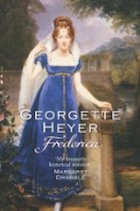
Georgette Heyer, Frederica

The Marquis of Alverstoke is rich, influential, and sought-after in London society, but he’s also jaded and quickly grows bored with most people. That changes, however, when he meets the Merrivilles, distant family connections who have just moved to London. Frederica, the eldest, wants her beautiful younger sister to have a Season so that she can make an advantageous marriage, and she asks Alverstoke for help. Somewhat to his own surprise, he agrees – and soon finds himself invested in the welfare of all the Merrivilles, but perhaps Frederica most of all. This is such an enjoyable Heyer novel, with schoolboys Jessamy and (especially) Felix Merriville stealing every scene they’re in! I also love how the romance between Frederica and Alverstoke develops; they become good friends first, and they often find common ground as the only two rational adults in the room. I’m glad I revisited this one – it’s always a treat to immerse myself in Heyer’s Regency world!

Poul Anderson, The High Crusade

This is a “first contact” story with an unexpected twist: The aliens come to Earth, expecting to conquer it with minimal trouble, as they’ve done with many other planets. But it’s the Year of Our Lord 1345, and when the spaceship opens, it’s immediately stormed and overrun by Sir Roger de Tourneville and his band of merry Englishmen. They plan to use the ship to invade France, and then perhaps take it on crusade to the Holy Land. But a treacherous alien survivor takes them into outer space instead, where they encounter strange planets, hostile aliens, and baffling new technologies. I really enjoyed this book, which is written in the style of a medieval chronicle. The narrator, Brother Parvus, is earnest, religious, and sincere in his belief that despite the aliens’ superior knowledge and technology, they’re no match for true God-fearing Englishmen. The book is full of adventure and humor, with creative battle sequences and even a love story. I’d definitely recommend this one if the premise appeals to you!

Claudia Gray, The Perils of Lady Catherine de Bourgh

Jonathan Darcy and Juliet Tilney—now known in their social circles as talented amateur investigators—receive a summons to Rosings, where Lady Catherine de Bourgh has recently endured several attempts on her life. She orders them to find the person responsible, but the only possible suspects seem to be family and close friends—Lady Catherine’s daughter, Anne; her son-in-law, Colonel Fitzwilliam; her neighbors, the Collinses; or the servants, who have been with the family for many years. Meanwhile, Jonathan and Juliet have developed strong feelings for one another, but each is convinced the other doesn’t reciprocate. I’m continuing to enjoy this series, which does a good job of imagining the continuing lives of Austen’s characters. I liked the decision to pair Anne with Colonel Fitzwilliam and was interested in their relationship. I also really enjoyed the side plot of the antagonism between Fitzwilliam Darcy and Henry Tilney—both great guys, but I can see how they’d rub each other the wrong way at first! Recommended for fans of Austen-inspired mysteries, but start with book 1, The Murder of Mr. Wickham.

Mini-Reviews: Sonya, Benedettos, Magic

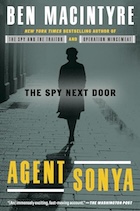
Ben Macintyre, Agent Sonya: The Spy Next Door

Born to German Jewish parents in Berlin in 1906, Ursula Kuczynski grew up sympathetic to left-wing politics and joined the German Communist Party in her teens. After her marriage, she and her husband moved to Shanghai, where she was approached by a Soviet intelligence officer and recruited as a spy. She accepted the work eagerly, her ardent communist beliefs intensifying as the Nazis rose to power in Germany. Using the code name Sonya, Ursula engaged in espionage for the USSR for decades, her missions taking her all over the world and eventually leading her to the UK. I don’t generally gravitate toward nonfiction, but Ursula’s life is so fascinating that this biography reads like a novel. Macintyre weaves in plenty of history to give context to Ursula’s actions and also paints a vivid picture of her personal life, using her own writings and those of her family, friends, and associates as sources. This is definitely another winner from Macintyre!

Katie Cotugno, Meet the Benedettos

A few years ago, the five Benedetto sisters were living the high life in LA as stars of a successful reality TV show. Now, their fame and status are fading, and they’re even in danger of losing their house. Lilly, the sisters’ de facto leader, is determined to hold her family together but doesn’t quite know how. And things get even more complicated when movie star Charlie Bingley and his friend Will Darcy move into their neighborhood – especially when Charlie seems interested in Lilly’s sister June, and Lilly herself is simultaneously attracted to and repulsed by the snobbish Will. I couldn’t resist this Pride and Prejudice retelling and devoured it in a day. I like how this novel centers the relationships among all five Benedetto sisters; they’re very different people, but it’s obvious how much they love each other. I also loved the chemistry between Lilly and Will and especially loved getting inside Will’s head. Some things didn’t quite work for me – the ending was a bit anticlimactic – but overall I enjoyed this one, and it’s reminded me that I really want to read P&P again soon!

V.E. Schwab, A Darker Shade of Magic

This novel is set in a universe in which there are four different Londons: Grey London, in the ordinary world; Red London, in a prosperous world with abundant magic; White London, where magic is scarce and used as a weapon; and Black London, which devoured itself long ago. Kell lives in Red London but has a unique ability to travel between the worlds. Lila, a Grey Londoner, is a thief with ambitions to become a pirate. They meet when Lila picks Kell’s pocket, but the item she steals turns out to be an extremely powerful and dangerous artifact from Black London. Together, they must return it to its proper world before it falls into the wrong hands. I really love the creative world-building of this novel, and Kell and Lila are both compelling characters. Once they meet up, the book becomes a page-turner after a somewhat slow start. I first read this novel eight years ago and wondered whether it would hold up, but I still enjoyed it this time around and am excited to continue with the trilogy.

Mini-Reviews: Screenplay, Montesoro, Listening

Emma Thompson, The Sense and Sensibility Screenplay and Diaries: Bringing Jane Austen’s Novel to Film

I recently rewatched Emma Thompson’s adaptation of Sense and Sensibility and loved it—I hadn’t seen it in a while and had almost forgotten how great it is! I enjoyed it so much that I watched it again with the DVD commentary featuring Thompson and producer Lindsay Doran. And then I remembered that I own this book, which (as the title suggests) includes the shooting script of the film and Thompson’s diary entries that covered the filming process. There’s also an introduction by Doran explaining how she got the idea for the movie and how Thompson was chosen to be the screenwriter. If you’re the kind of person who enjoys a peek behind the scenes of your favorite movies, this book is for you. The script is maybe the least interesting part, since most of it does appear in the final film, but it’s fun to see the stage directions and think about how the actors interpreted the printed words. Thompson’s diary entries are hilarious—I laughed out loud several times—but she’s very kind and respectful about everyone she worked with. Overall, I’d definitely recommend this book for fans of the movie!

Stella Riley, The Montesoro Legacy

This final book in the Brandon Brothers trilogy focuses on the youngest brother, Leo, one of London’s most fashionable painters. When he is invited to a house party to paint a young debutante, he meets Mariella Talbot, who is trying to escape from her cruel, inheritance-stealing stepbrother. A society scandal forces Leo and Mariella into a fake engagement, so they team up to thwart the wicked stepbrother and secure Mariella’s rightful legacy. Stella Riley’s historical romances are always a treat, and this one is no exception. But I do wish the book had focused more on the central couple; instead, much of the plot deals with catching and punishing the villain. Further, Adam and Camilla, the couple from the previous book, play a big role in this story, and much as I like them, I felt they already had their book and I didn’t need to see quite so much of them here. Leo and Mariella feel underdeveloped by comparison, and their love story is basically resolved about halfway through the novel. Overall, it’s still an enjoyable read, but it’s not as romance-centric as I’d expected.

D.E. Stevenson, Listening Valley

I was in need of a cozy, quiet read, so naturally I turned to D.E. Stevenson. This particular novel follows Tonia, a quiet, dreamy girl who’s always been somewhat overshadowed by her bright, vivacious sister, Lou. But when Lou marries and moves away, Tonia comes into her own a bit, and she slowly begins to learn what she truly wants out of life. I really enjoyed this book, which is a quiet slice-of-life story with a bit of romance that also contains some heartbreaking elements. It was published in 1944, so World War II is a presence throughout the story, and there’s one very memorable scene where Tonia experiences an air raid in London. I feel the novel is a quintessential example of Britain’s “keep calm and carry on” mentality, and it’s fascinating to read books that were actually written during this period, when the outcome of the war was still uncertain. Definitely recommended if you like this kind of thing!

Mini-Reviews: Con, Tangle, Austen

Devon Daniels, The Rom Con

Cassidy, a reporter for the feminist website Siren, has just ended yet another disappointing relationship. Her grandmother suggests she try a different approach to dating, based on a 1950s list of rules for catching a husband. Cassidy is horrified, but when she meets Jack Bradford — co-founder of Siren’s rival website, Brawler, which Cassidy views as a bastion of toxic masculinity — she decides to use the antiquated rules on him. Once Jack falls for the Stepford Wives version of her, she’ll write an article exposing him as a sexist jerk. But as she begins dating him, she learns he might not be such a jerk after all. I’m of two minds about this book. On the plus side, it’s a fun, quick read with enjoyable banter between the two leads. But Jack is simultaneously too perfect and problematic — it’s never clear why, if he’s such a good guy, he’d continue to be involved with Brawler. There are also a few too many Big Misunderstandings near the end that seem to exist only to drag out the happy ending. Overall, I did enjoy the book while I was reading it, but looking back, I don’t think it totally works.

Theresa Romain, It Takes Two to Tangle

Soldier Henry Middlebrook has just returned to England after Napoleon’s defeat, wounded and unable to move his right arm. Frustrated by his perceived “uselessness” and the pity of his relatives, he decides to court Lady Caroline Stratton, a popular society beauty who he thinks will help reintegrate him into his old life. He enlists the help of Caroline’s companion, Frances Whittier, but complications ensue when he and Frances grow closer. I was intrigued by the setup of this book — Henry’s disability plus a Cyrano-esque plot point in which Frances writes him letters that he assumes are from Caroline. But unfortunately, I wasn’t as enamored of the book itself. Henry is far too slow to see what’s right under his nose, and the obstacles keeping him and Frances apart aren’t important enough to justify the length of the novel. There’s also more steam than I’d prefer, so overall, this just wasn’t the book for me. I was also underwhelmed by Romain’s Season for Temptation, so I think she’s not the author for me either.

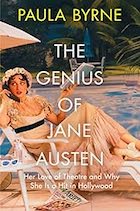
Paula Byrne, The Genius of Jane Austen: Her Love of Theatre and Why She Works in Hollywood

In Mansfield Park, Fanny Price disapproves of the amateur theatricals staged by her cousins and their friends. Some critics have inferred from this that Jane Austen herself disapproved of theater, but Byrne argues pretty convincingly that the opposite is true. Austen acted in private theatricals with her family and friends, she frequently attended plays while living in Bath and London, and her letters reveal that she was familiar with the famous actors and theater gossip of her day. The book explains how Austen’s life interacted with the theater; how she used theatrical plots, character types, and conventions in her novels; and why her books adapt so well to the screen. Byrne is obviously an Austen fan, and a very knowledgable one. The book is briskly written and appears well researched. I liked it a lot and would certainly recommend it to Austen lovers!

Mini-Reviews: Archangel, Shy, Ladies

Sharon Shinn, Archangel

Gabriel, an angel who intercedes with the god Jovah on behalf of the people of Samaria, needs a wife to sing the annual Gloria required by the god. But when he asks an oracle for the name and location of his fated bride, he is dismayed to learn that Jovah has chosen Rachel, a slave and the daughter of peasants. Rachel is equally angry at the news, thinking she will be going from one type of slavery to another. As Gabriel and Rachel unwillingly comply with the god’s will, they slowly inch closer together, but a power grab from an ambitious rival angel may tear them apart — and cause the destruction of the whole land of Samaria. I found the world of this novel jarring at first, as it borrows names and concepts from the Hebrew Bible but uses them in a very different context. But ultimately I did enjoy the story and the romance between Gabriel and Rachel (although her continued defiance gets a bit frustrating at times). Recommended if you like the author or you’re interested in the premise, but I don’t plan to continue with the series.

Sarah Hogle, Twice Shy

Maybell is down on her luck, stuck in an unfulfilling job and recently catfished by someone she thought was a friend. Things seem to improve when she inherits a huge old house and hundreds of acres of land from her great-aunt — until she discovers that Wesley, the taciturn groundskeeper, is an equal inheritor with his own plans for the property. As they work together to fix up the house and grounds, Maybell and Wesley grow closer, but their emotional baggage may keep them apart. I enjoyed this book overall, but I have some quibbles. The novel mentions serious issues like child neglect and severe anxiety/panic attacks, yet it never takes the time to really engage with them. Instead, the focus is on lighthearted renovation projects, treasure hunts, and romance — which I like in theory, but in this case they’re tonally jarring. Also, Maybell’s personality and narrative style are impossibly twee, which bothered me at times even though I have an above-average twee tolerance. All that said, though, I did like the book and would consider reading more by the author.

Lauren Edmondson, Ladies of the House

This modern retelling of Sense and Sensibility shifts the story to the DC political world. When Senator Gregory Richardson dies of a heart attack — in bed with his 20-something mistress — his wife Cricket and daughters Daisy and Wallis are left to deal with the scandal and the ensuing loss of their credibility and social standing. When more details of her father’s shady past come to light, Daisy must decide whether to speak up or keep silent. I’m of two minds about this book. It’s a successful retelling in that it realistically transposes most of the events of the original book to a modern setting; but at the same time, I think it totally misses the spirit of the original! Daisy is no Elinor Dashwood; instead of being the steadfast, unselfish character who keeps her family afloat, she spends most of the book wallowing and makes some shockingly unethical decisions. I also wasn’t a fan of the author’s dismissive attitude toward people who don’t agree with her politically. To be fair, I was never reluctant to pick up the book, and I found it a quick read, but overall I was disappointed with this one.

Mini-Reviews: Wickham, Memory, Business

Claudia Gray, The Murder of Mr. Wickham

This is a hard book to describe without spoiling all of Jane Austen’s novels, but I will do my best! It’s 1820, and most of Austen’s main characters are gathered together at a house party. When George Wickham shows up uninvited, it becomes clear that many of the characters have reasons (both financial and personal) to dislike him. So when Wickham is bludgeoned to death with a blunt instrument, nearly everyone is a suspect, and two of the young guests (children of Austen’s characters) team up to solve the mystery. As an Austen superfan, I greatly enjoyed this! I think the author did a good job of portraying Austen’s characters and the problems they might face after years of marriage. I also loved the two young sleuths, especially the appealingly direct (and presumably neurodivergent) Jonathan. I was fine with the solution to the mystery, though it’s only revealed because the guilty party confesses. My only other complaint is that the romantic subplot isn’t resolved, and it makes me wonder whether there will be a sequel. If so, I’ll certainly check it out!

Lois McMaster Bujold, Memory

As is the case with many books in the series, Miles kicks off this one by doing something stupid — something that endangers both himself and all the Dendarii under his command. He then lies to Illyan about it, which gets him kicked out of the Barrayaran military. Now that Miles has torpedoed his career before turning 30, what will he do next? It sounds like I’m judging Miles harshly, but actually I relate to him in this book. He’s reached that point of adulthood where he’s realizing his life hasn’t turned out the way he thought it would, and he has to figure out how to move forward. There’s also some plot stuff (Miles investigates a possible attack on ImpSec), but the focus is really on developing Miles’s character and setting up a new direction for the series. I’m excited to see where things go next!

Jane Oliver and Ann Stafford, Business as Usual

Twenty-something Hilary Fane is determined not to be idle while waiting to marry her doctor fiancé, so she decides to move to London for a year and get a job. She lands at Everyman’s Department Store, where she is bad at writing labels but surprisingly good at improving the store’s library system. She also gains a new empathy for working-class people as she experiences their hardships firsthand — and realizes that her fiancé may not be the best match for her. This is a pleasant slice-of-life epistolary novel set in the 1930s, and I enjoyed my glimpse into this particular world. Hilary is an engaging and humorous character, though not always aware of her privilege in being able to choose to work or not. But I mostly liked her, and I also liked both the setting and the romantic elements. Recommended if you enjoy this type of thing!