Mini-Reviews: Dance, Babel, Thief

Lois McMaster Bujold, Mira’s Last Dance

Penric’s rescue mission continues in this novella, as he flees to safety with political target General Arisaydia and his widowed sister Nikys. They need to leave the country without being discovered, which means they must travel in disguise. When their journey leads them to shelter in a brothel, Penric poses as a female courtesan, drawing on the experience of Mira, one of Desdemona’s previous riders. But this masquerade is dangerous in more ways than one, as it complicates the mutual attraction between Penric and Nikys. This series continues to be enjoyable, though this installment is very short on plot. Penric’s gender-bending disguise is the main event, and it causes Nikys to reflect more deeply on the relationship between Penric and Desdemona, and what that might mean for a possible romance. The novella ends on an ambiguous note, so I’m interested to see what happens next!

R.F. Kuang, Babel

Robin Swift is a half-Chinese boy plucked from the slums of Canton and raised to study at Oxford’s prestigious Babel Institute of Translation. Babel scholars are trained to work silver magic via their powers of translation—and this magic in turn powers the might of the British Empire. When Robin first comes to Oxford, he falls in love with the university and the people in his cohort, who are all outsiders like him because of race, gender, or both. But the more he learns about silver magic and its ties to imperialism, the more conflicted he becomes. This is a novel I really wanted to like, and I did enjoy parts of it, like the Oxford setting and all the information about linguistics. But this is a novel with a clear message (imperialism is bad and must be resisted with violence), and I felt like I was reading a polemic rather than a story. The characters we’re supposed to like are not very likable or nuanced, and the villains are absolutely pure evil. So overall, I found this book disappointing, though I think I’m in the minority with that opinion.

Ellis Peters, The Holy Thief

In the penultimate book of the Cadfael series, the civil war between King Stephen and Empress Maud has led to the destruction of a Benedictine abbey in Ramsey. Some of its brothers come to Brother Cadfael’s abbey in Shrewsbury to request their aid. Meanwhile, a troubadour from the South of France and his entourage, which includes a beautiful young woman, are also staying at the abbey. When a saint’s relics are stolen and a witness to the theft is murdered, Cadfael must once again investigate these mysteries and determine how justice can best be served. It’s always a pleasure to escape into the world of these novels, and I liked that after taking a backseat in The Summer of the Danes, Cadfael is back at the center of the action, finding clues, interviewing suspects, and talking things over with Hugh. I also liked the callbacks to A Morbid Taste for Bones, although if you don’t remember certain events from that book, you may have a little trouble following this one. But if you love the Cadfael series, this novel won’t disappoint.

Mini-Reviews: Love, Byzantium, Ensemble

Lindsey Kelk, Love Me Do

UK native Phoebe Chapman is excited to spend a couple weeks visiting her sister in Los Angeles. Sure, her sister has to leave pretty much immediately for an emergency work trip, but Phoebe is happy enough to stay at her luxurious house and explore the city, with the help of handsome neighbor Ren and bubbly personal trainer Bel. Phoebe soon learns that Bel has a crush on Ren but is painfully awkward around him, so she decides to help the couple get together. But a little well-meaning advice soon spirals out of control, with Phoebe writing love letters to Ren on Bel’s behalf – while falling for Ren herself. I’m a sucker for a Cyrano de Bergerac storyline, and I enjoyed this book even though Phoebe’s plan was obviously doomed from the start. Yes, Ren is a little too good to be true, and the conflicts are all resolved pretty quickly. But I liked Phoebe’s humorous voice and her enthusiastic descriptions of LA from an outside perspective. Overall, it’s a fun read if the premise interests you.

John Julius Norwich, A Short History of Byzantium

In the late ’80s and early ’90s, English popular historian John Julius Norwich wrote a three-volume history of the Byzantine Empire. This book condenses that longer work into a single tome of 500-ish pages, giving a broad-strokes overview of the history of Byzantium from the reign of Constantine the Great in the fourth century to the Ottoman conquest of Constantinople in 1453. It’s a lot of ground to cover, so Norwich mostly sticks to the emperors and other powerful figures (popes, patriarchs, rival monarchs, etc.) who show up in the historical record. As someone who’s only mildly interested in the Byzantine Empire, I don’t think I’m the target audience for this book, which would probably be more enjoyable to someone with more background knowledge. But Norwich is an entertaining writer, and I think I will retain at least some of what I read, so I’d recommend it to people who are enthusiastic about the period.

Aja Gabel, The Ensemble

This novel closely follows four characters, members of a professional string quartet whose careers and lives are intertwined in various complicated ways. There’s first violinist Jana, the ambitious and emotionally ruthless leader of the group; Brit, the calm and kind second violinist; Henry, the viola prodigy to whom everything seems to come easily; and Daniel, the cellist with a monumental chip on his shoulder. As time passes, each character comes to terms with what he or she really wants from the quartet and from life in general. Literary fiction doesn’t always appeal to me; I find “literary” is often synonymous with “depressing.” But in this case, I found enough to like about these (sometimes quite unlikable) characters, and enough outcomes to root for, that I liked the book more than I expected to. I also thought the descriptions of music and life as a musician rang true. Overall, I think I’d like to read this book again someday, so I’m keeping it on my shelves for now.

Mini-Reviews: Frederica, Crusade, Perils

Georgette Heyer, Frederica

The Marquis of Alverstoke is rich, influential, and sought-after in London society, but he’s also jaded and quickly grows bored with most people. That changes, however, when he meets the Merrivilles, distant family connections who have just moved to London. Frederica, the eldest, wants her beautiful younger sister to have a Season so that she can make an advantageous marriage, and she asks Alverstoke for help. Somewhat to his own surprise, he agrees – and soon finds himself invested in the welfare of all the Merrivilles, but perhaps Frederica most of all. This is such an enjoyable Heyer novel, with schoolboys Jessamy and (especially) Felix Merriville stealing every scene they’re in! I also love how the romance between Frederica and Alverstoke develops; they become good friends first, and they often find common ground as the only two rational adults in the room. I’m glad I revisited this one – it’s always a treat to immerse myself in Heyer’s Regency world!

Poul Anderson, The High Crusade

This is a “first contact” story with an unexpected twist: The aliens come to Earth, expecting to conquer it with minimal trouble, as they’ve done with many other planets. But it’s the Year of Our Lord 1345, and when the spaceship opens, it’s immediately stormed and overrun by Sir Roger de Tourneville and his band of merry Englishmen. They plan to use the ship to invade France, and then perhaps take it on crusade to the Holy Land. But a treacherous alien survivor takes them into outer space instead, where they encounter strange planets, hostile aliens, and baffling new technologies. I really enjoyed this book, which is written in the style of a medieval chronicle. The narrator, Brother Parvus, is earnest, religious, and sincere in his belief that despite the aliens’ superior knowledge and technology, they’re no match for true God-fearing Englishmen. The book is full of adventure and humor, with creative battle sequences and even a love story. I’d definitely recommend this one if the premise appeals to you!

Claudia Gray, The Perils of Lady Catherine de Bourgh

Jonathan Darcy and Juliet Tilney—now known in their social circles as talented amateur investigators—receive a summons to Rosings, where Lady Catherine de Bourgh has recently endured several attempts on her life. She orders them to find the person responsible, but the only possible suspects seem to be family and close friends—Lady Catherine’s daughter, Anne; her son-in-law, Colonel Fitzwilliam; her neighbors, the Collinses; or the servants, who have been with the family for many years. Meanwhile, Jonathan and Juliet have developed strong feelings for one another, but each is convinced the other doesn’t reciprocate. I’m continuing to enjoy this series, which does a good job of imagining the continuing lives of Austen’s characters. I liked the decision to pair Anne with Colonel Fitzwilliam and was interested in their relationship. I also really enjoyed the side plot of the antagonism between Fitzwilliam Darcy and Henry Tilney—both great guys, but I can see how they’d rub each other the wrong way at first! Recommended for fans of Austen-inspired mysteries, but start with book 1, The Murder of Mr. Wickham.

Mini-Reviews: Corpse, Brass, Grumpy

Ellis Peters, One Corpse Too Many

This second installment of the Cadfael series is based on a real event: King Stephen’s siege of Shrewsbury Castle in A.D. 1138 and his subsequent killing of all the castle’s defenders. In the novel, 94 men are supposed to be hanged, but Brother Cadfael finds a 95th body. The extra man wasn’t hanged but strangled, and Cadfael is determined to see his murderer brought to justice. As Cadfael investigates, he navigates treacherous politics, discovers a hidden treasure, and helps two pairs of young lovers. I love the Cadfael series, and this book in particular has always been a favorite. It’s a wonderful slice of medieval life that feels cozy despite the murder plot and wartime setting. I love the mixture of political intrigue, mystery, and romance, and the book introduces one of my favorite characters in the entire series (and one of my first fictional crushes, honestly!). I thoroughly enjoyed this reread and would highly recommend both the book and the series.

Nancy Campbell Allen, Brass Carriages and Glass Hearts

Emmeline O’Shea is an outspoken activist for shapeshifters’ rights, and she’s been asked to give the closing speech at an international summit that could produce a decisive victory in the struggle. But when Emme receives a nasty death threat, she’s forced to accept the protection of Detective-Inspector Oliver Reed of Scotland Yard. Emme and Oliver have clashed frequently in the past, but now that they’re spending more time together, their hostility is turning into something else. I love a good antagonists-to-lovers romance, and Emme and Oliver are both appealing characters (and yes, I especially loved buttoned-up, rule-abiding Oliver). That said, I think the first half of the book is more interesting than the second. They’re obviously in love with each other by that point, and the rest is just the plot playing itself out rather abruptly; I wanted more resolution with some of the secondary characters. Overall, this series is not a keeper for me, but I did enjoy the books and would recommend them if you like the idea of steamless historical romance with paranormal/steampunk elements.

Charlotte Stein, When Grumpy Met Sunshine

Retired footballer Alfie Harding needs a ghostwriter for his new memoir, but he’s notoriously gruff, taciturn, and hard to work with. Said ghostwriter, Mabel Willicker, is the opposite, cheerful and chatty to a fault. Their first few meetings are disastrous—pepper spray is involved—but as they work together, Mabel learns there’s much more to Alfie than meets the eye. When a paparazzi photo forces them into a fake-dating scenario, Mabel realizes she’s developed genuine feelings for Alfie, but she’s convinced he could never be interested in a plus-sized non-celebrity like her. I was a little worried this book was going to be cringey Roy Kent fanfic, but Alfie is very much his own person, and he’s an utter delight! He’s so weird and kind and awkward and vulnerable, and it’s obvious that he and Mabel are perfectly matched. I also loved Mabel and related to her insecurities as a plus-sized woman, but Alfie is definitely the star of the book. My one quibble, apart from the off-putting title, is the author’s irritating overuse of one-sentence paragraphs, which I found distracting. But I was frankly charmed by this book and would highly recommend it to contemporary romance fans!

Mini-Reviews: Summer, Ruined, Celia’s

Ellis Peters, The Summer of the Danes

In the summer of A.D. 1144, Brother Cadfael and his former assistant, Mark, travel to Wales on a diplomatic mission. But they’re soon caught up in larger events including a Welsh civil war, a murdered envoy, a runaway girl, and a possible Danish invasion. This book is a bit different from the rest of the Cadfael series in that Cadfael is actually a pretty minor character; he observes the action but doesn’t really participate. There is a murder, but Cadfael doesn’t solve it — in fact, it happens near the beginning of the book but then is largely forgotten till the end, when the guilty party confesses. Most of the story involves the warring Welsh princes, real historical figures Owain Gwynedd and his rebellious brother Cadwaladr. While I did enjoy the book, it’s definitely more historical fiction than mystery, and I wanted more Cadfael!

Alyssa Everett, Ruined by Rumor

Roxana Langley has been engaged to a dashing soldier for five years. Even though he’s spent most of that time away fighting in the Napoleonic wars, Roxana remains devoted to him and excited for their wedding. So when he suddenly breaks off the engagement, she’s devastated and turns to her neighbor Alex, the Earl of Ayersley, for comfort. Alex has been hopelessly in love with Roxana for years, so when she rushes into his arms he can’t help but kiss her — and when he learns they were observed, he immediately offers marriage. But both he and Roxana have trouble discerning each other’s feelings and communicating their own. I bought this e-book on impulse and am so glad I did, because I really enjoyed it! Alex and Roxana are both kind, well-meaning people who want to make the best of their marriage of convenience, and their obstacles make sense given their characters. I’d highly recommend this book to fans of historical romance and will definitely be seeking out more books by Alyssa Everett!

D.E. Stevenson, Celia’s House

This gentle family saga follows the Dunne family of Dunnian in Scotland. Contrary to all expectations, Celia Dunne decides to leave the Dunnian estate to her great-nephew Humphrey, his wife Alice, and their three small children. The only condition is that, upon Humphrey’s death, the house will go not to his son, Mark, but to a future daughter named Celia. Despite this odd request, Humphrey accepts the inheritance and lives there happily with his family. As the years pass and the children grow, many changes come to Dunnian, including war, friendship, heartbreak, and romance. I very much enjoyed this quiet novel; it’s practically a retelling of Mansfield Park, but with the sharper edges softened (no Mrs. Norris character, and the Dunne parents aren’t silly or negligent). Nothing much happens in terms of plot, but it’s very pleasant to sink into the soothing, slow-paced world of the novel. Recommended if you like this type of thing; it’s one of the better Stevenson novels I’ve read.

Mini-Reviews: Jenny, Alliance, Birdy

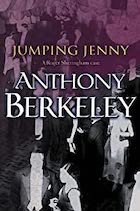
Anthony Berkeley, Jumping Jenny

A disagreeable woman dies at a house party, apparently by suicide, but amateur detective Roger Sheringham discovers proof that she was murdered. Yet Roger — along with all the other party guests — believes that she deserved to be murdered, so while his curiosity prompts him to search for the truth, he also works to shield the killer from the police. This novel has an interesting structure, in that you think you know what’s going on by the end of chapter 4, but there are several more twists and turns to the plot. Berkeley is a good writer but cruel to his characters, and I didn’t find a single one of them likable. I thought everyone’s attitude toward the dead woman was pretty horrifying. Yes, she was obnoxious, but everyone hated her so much that I found myself pitying her! All in all, this novel was very clever but a little too mean-spirited for me.

Lois McMaster Bujold, Captain Vorpatril’s Alliance

Ivan Vorpatril likes to keep his head down and stay as far away from politics as he can. But he gets dragged into a sticky situation when an ImpSec operative asks him to protect a mysterious woman, Tej, and her blue-skinned companion from unknown enemies. Ivan is willing to help, but complications ensue when an emergency forces him to offer Tej the protection of marriage. Ivan is one of my favorite characters in this series, so I was excited to read his book, and fortunately it delivered everything I wanted! More than once I found myself chuckling and affectionately murmuring “Oh, Ivan” (not an exaggeration, I literally did this!). A large chunk of the book is a cozy reunion with beloved series characters; Byerly Vorrutyer makes a welcome return; there’s a lovely exploration of Simon Illyan’s relationship with Ivan; plus a treasure hunt, multiple romances, and a few thrilling heroics. In short, I adored this book, and it’s definitely my favorite of the Vorkosigan saga!

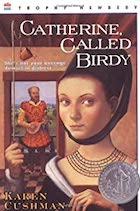
Karen Cushman, Catherine, Called Birdy

Catherine is a 13-year-old girl growing up in the Middle Ages, but she’s not particularly interested in becoming the lady of the manor. She loathes spinning and embroidery, her best friend is Perkin the goat boy, and she’d rather join a circus or go on crusade than get married. But when her father finds her an old, ugly, rude — but rich — suitor, Catherine doesn’t know how to escape her fate. This was one of my favorite books as a child, and I decided to reread it because there’s a new Amazon Prime adaptation coming out today. I was delighted to find that the book really holds up! Catherine’s voice is a joy as she describes her unique thoughts and the various scrapes she gets into. The depiction of life in the Middle Ages is also vivid and compelling. I’m glad I read this book again and discovered that it really is as good as I remembered!

Mini-Reviews: Cherwell, Vanity, Field

Mavis Doriel Hay, Death on the Cherwell

Four students at Oxford’s (fictional) all-female Persephone College meet to discuss the formation of a club in opposition to the college’s unpopular bursar. During their meeting, they spot a canoe floating down the Cherwell river — with the bursar’s drowned corpse inside. The girls are questioned by the police and, realizing they and their fellow students might be suspects, decide to launch their own investigation. I enjoyed this Golden Age mystery, although I wanted more undergraduate hijinks; most of the book has a light, humorous tone, but the final few chapters are quite somber. It’s interesting that this book was published in the same year as Gaudy Night, another mystery novel set at an Oxford women’s college. Gaudy Night is clearly the superior novel, but Death on the Cherwell works well as a less weighty counterpoint.

Kevin Kwan, Sex and Vanity

Lucie Tang Churchill has never felt accepted by her family; as someone with half Chinese and half European ancestry, she doesn’t quite fit in with either side. As a result, she’s always striven for perfection in every aspect of her life. But when she meets the quiet, handsome, unsuitable George Zao at her cousin’s wedding, Lucie is attracted to him and soon feels her perfect life spinning out of control. This novel is a breezy update of E.M. Forster’s A Room with a View, and while I love the original, I wasn’t quite as impressed by the retelling. It’s a fun read — I especially enjoyed the author’s snarky footnotes — but I couldn’t relate to the characters’ ultra-wealthy, jet-setting lifestyle. The book is filled with name-dropping of people, places, and luxury brands I’ve never heard of. I found Lucie shallow and didn’t understand what George saw in her. Overall, I think this book would make a fun beach read, especially for people who enjoy reading about yachts and couture clothing and hip restaurants. I see the appeal of it, but I definitely prefer Forster’s original novel!

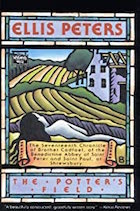
Ellis Peters, The Potter’s Field

In this installment of the Brother Cadfael series, the abbey is given a tract of land known as the Potter’s Field. As the brothers begin to plow the field, they unearth the skeletal remains of an unknown woman. She is most likely the wife of one of the brothers, who deserted her to pursue his religious vocation. Could Brother Ruald be responsible for her death? Brother Cadfael and Hugh Beringar investigate to discover the woman’s identity and find out what happened to her. I love this series because, even though there’s always at least one mysterious death, the overall tone is very gentle and peaceful. Justice always prevails, and usually Cadfael helps a pair of young lovers get together, as he does in this book. It’s the perfect antidote to the anxieties of modern life, and I’d definitely recommend the whole series.

Mini-Reviews: Midwife’s, Check, Talking

Midwife's ApprenticeCheck Me OutTalking as Fast as I Can

Karen Cushman, The Midwife’s Apprentice

Catherine, Called Birdy was one of my favorite books as a child, but I don’t think I’d ever read The Midwife’s Apprentice by the same author. It’s about a young girl in medieval England who is completely alone; she begins the novel by sleeping in a dung heap to keep warm. But the village midwife eventually takes her in as a servant/apprentice, and the girl’s life improves somewhat. Eventually she learns enough about midwifery to make herself useful, makes a friend, and even gets a name of her own: Alyce. But when Alyce makes a mistake in her work, she runs away, certain that everyone will hate her. Will she ever find a place she truly belongs? I was charmed by this book and wish I had read it as a child; while it’s not a keeper for me now, I would definitely recommend it to elementary schoolers!

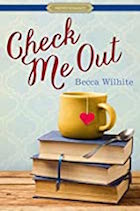
Becca Wilhite, Check Me Out

I really liked the premise of this book, with its librarian heroine and Cyrano vibes, but the execution was disappointing. Twenty-four-year-old Greta loves her job and her BFF Will, but she hasn’t managed to find romance yet. That is, until she meets dreamy Mac in the poetry section, and he sweeps her off her feet with his good looks and romantic texts. The trouble is, in person he’s not as sweet or witty as he is in print. Meanwhile, the library is in danger of shutting down, so Greta embarks on a series of fundraising schemes to save it. I thought the library-related stuff was interesting, and the book did a good job of covering the complexities of the situation (community benefits vs. budget, historical value of the library vs. need for a modern, accessible space). But the romance was frustrating for me; I felt Greta was clueless and shallow, and her descriptions of Will (who is overweight) were downright cruel at times. Overall, I was disappointed in this book and wouldn’t recommend it.

Lauren Graham, Talking as Fast as I Can: From “Gilmore Girls” to “Gilmore Girls” and Everything in Between

A fun celebrity memoir by Lauren Graham, best known for her roles as Lorelai Gilmore on Gilmore Girls and Sarah Braverman on Parenthood. As a huge Gilmore fan and someone who has always admired Lauren Graham, I was definitely the target audience for this book, and I enjoyed it overall. It doesn’t delve very deeply into Gilmore Girls, which I was a little disappointed by, but upon reflection it makes sense: Gilmore was legendary for its long hours and demanding showrunner who expected every line to be word-perfect, so it makes sense that Graham would be reticent about the probable difficulties of working on the show. She obviously feels much more warmly about Parenthood, a show I stopped watching after season 1. Still a worthwhile read for fans of either show, and Graham has a funny, likable voice. But Tina Fey’s Bossypants and Mindy Kaling’s two memoirs are still my favorites in this genre.

Review: The Heretic’s Apprentice

Heretic's ApprenticeEllis Peters, The Heretic’s Apprentice

In the summer of 1143, the Benedictine abbey of Saints Peter and Paul in Shrewsbury is preparing for its annual festival in honor of St. Winifred. But the celebrations are somewhat dampened when a young man called Elave arrives with the body of his master, Sir William Lythwood, who died returning from a seven-year pilgrimage to the Holy Land. Elave requests that Sir William be buried at the abbey, but questions from a visiting cleric reveal that the dead man had discussed and possibly even espoused heretical views. Elave hotly defends his master and is accused of being a heretic himself. When his accuser is later found stabbed to death, Elave falls under suspicion for murder as well. Luckily, Brother Cadfael is once again on the case, both to solve the mystery and to help clear Elave’s name of the heresy charge.

It’s always a pleasure to spend some time with Brother Cadfael, and this installment of the series is no different. All the quintessential elements of the formula are there: Cadfael gets involved through his knowledge of herbs and healing, he solves the mystery with the help of Hugh Beringar, and he helps two young lovers get together. I particularly enjoyed the heresy plot of this book; not only was it interesting (at least for me) to think about the theological topics at issue, but I liked the fact that no one was a complete villain. The book clearly intends us to side with Elave, and the cleric who interrogates him is portrayed as being too rigid, yet we later catch a glimpse of his humanity as well. The mystery is well plotted, although I was able to guess the culprit in advance. Overall, this is a series I continue to love, and I’m sorry I only have four books left!

Review: The Girl in the Tower

Girl in the TowerKatherine Arden, The Girl in the Tower

In this sequel to The Bear and the Nightingale, Vasya can no longer remain in her childhood home; not only is she now an orphan, but her neighbors fear and distrust her, believing she is a witch. Her only socially acceptable options are to marry or join a convent, but she cannot stomach either fate. Instead, dressed as a boy, she decides to seek adventure in distant lands, with the help of a certain frost demon. Meanwhile, Vasya’s brother Sasha is a monk living in Moscow, where he is a trusted advisor at his cousin Dmitrii’s court. But Dmitrii’s power is far from secure: a group of bandits is ravaging the Russian countryside, and Russia’s Turkish overlords are demanding an exorbitantly high tribute payment. When Vasya and Sasha’s storylines converge, Vasya must help to defeat another magical foe, while navigating a path between society’s expectations and her own desires.

I was a huge fan of The Bear and the Nightingale when I read it last year, and I said at the time that I was eager to read more by Katherine Arden. However, when I realized that this book was a sequel, I wasn’t terribly enthusiastic — I had thought the first book would be a standalone. But fortunately, I ended up loving The Girl in the Tower just as much as the first book! I adore the setting and the writing style, and the plot of this novel had me glued to the pages. I love a good political intrigue, and I enjoyed seeing medieval Moscow through Vasya’s eyes. I do find Vasya slightly annoying sometimes — she’s one of those characters who seems to be amazing at everything — but I love how her choices always have consequences, both for herself and for the people she loves. Overall, I loved this a lot and can’t wait for book 3 to be published this summer!