Mini-Reviews: Messenger, Crazy, Gothic

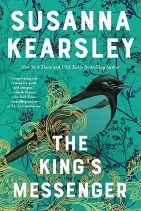
Susanna Kearsley, The King’s Messenger

It’s 1613, and King James I sits on the throne of England. His son, Prince Henry, has recently died, and rumors suggest that he was poisoned. To investigate (or possibly to set up a scapegoat), the king sends one of his messengers, Andrew Logan, to arrest the prince’s mentor and close companion, Sir David Moray. Traveling with Andrew are a scrivener and his daughter, Phoebe Westaway, who will record any statements made by Sir David. Andrew and Phoebe have a contentious history, but their proximity on this journey leads to very different feelings. Meanwhile, their perspective on Sir David also begins to change. Susanna Kearsley is a top-notch writer of historical fiction, and while I don’t know much about this time period, her depiction feels believable and authentic. I found the present-day adventure and romance more interesting than Sir David’s history with the prince, which is interspersed in the narrative via flashbacks. But overall, I really liked this one, though A Desperate Fortune remains my favorite Kearsley novel.

Annie Darling, Crazy in Love at the Lonely Hearts Bookshop

Nina, who works with her two BFFs at a bookstore specializing in romantic fiction, prides herself on being unconventional, from her vintage-pinup-girl style to her sleeves of tattoos. Her romantic ideal is Heathcliff from Wuthering Heights. Noah, a consultant who’s evaluating the bookstore’s finances, couldn’t be farther from Nina’s usual type—yet she feels a surprising attraction to him. But as they get to know each other, they discover an unpleasant shared history that may drive them apart. I remember enjoying the previous book in this series, True Love at the Lonely Hearts Bookshop, but this one didn’t do much for me. I think it’s because I can’t really relate to Nina at all (again, her romantic ideal is Heathcliff). The book also feels pretty dated in its approach to friendships and relationships, despite being published in 2018—it seems a bit like a Bridget Jones’s Diary copycat. Overall, not a horrible book, but not one I’d recommend either.

Silvia Moreno-Garcia, Mexican Gothic

It’s 1950, and Noemí Taboada is a glamorous socialite in Mexico City. But when she receives a disturbing letter from her cousin Catalina, who has recently married and moved to her husband’s remote mountaintop estate, she decides to visit and find out what’s going on. Noemí is repulsed by the decaying estate and its hostile inhabitants. She’s also alarmed by Catalina’s seeming insanity, and becomes even more so when she too starts having strange dreams. She eventually uncovers a complex and horrific history that’s holding her cousin captive—and is now attempting to ensnare her as well. I’ve enjoyed every Moreno-Garcia book I’ve read so far, and this is no exception, though it’s way closer to horror than I normally go! It’s definitely not for the faint of heart—there’s violence (including sexual violence), body horror, and all manner of creepy goings-on. But I really liked this take on the gothic genre and how it explores power dynamics, particularly conquerors vs. conquered and men vs. women. I also loved Noemí as a heroine; she’s got quite a bit more intelligence and spunk than some of her predecessors in this genre. It’s not quite my kind of book, but if this premise interests you, I’d highly recommend it!

Mini-Reviews: Neighbors, Cluny, Velvet

Stephanie Burgis, Good Neighbors

Ever since Mia and her father were run out of town by an angry mob wielding torches and pitchforks, she’s tried to appear normal and respectable, hiding her true identity as a metal mage. Too bad her new home is right next door to a necromancer’s castle. Leander has no interest in hiding his own unnatural gifts, and he soon seeks Mia out to form a defensive alliance against the hostile townsfolk. But as Mia and Leander grow closer, the town’s increasing anger toward those with magical powers forces them to take a stand. This is an enjoyable but insubstantial wisp of a book with a heavy-handed message about how society treats those who are perceived as different. The story is a bit sketchy and underdeveloped, and several loose threads are left dangling. I like the author but wouldn’t recommend this particular work — try Masks and Shadows or Congress of Secrets instead.

Margery Sharp, Cluny Brown

Cluny Brown is a young woman who, according to her plumber uncle, doesn’t know her place, so he decides to find one for her as a parlormaid in an English country house. Cluny isn’t a great success as a parlormaid, but she does make several new friends, both upstairs and down. Eventually she decides where (and with whom) she’ll make her true place in the world. This is a quiet slice-of-life novel set just before the outbreak of World War II. It satirizes the English class system but does so in a gentle and affectionate, not mocking, way. The plot centers around romantic complications that all come right in the end, although I did feel sorry for Cluny’s rejected suitor! I also watched the movie starring Charles Boyer and Jennifer Jones, which I didn’t like quite as much as the book (it changed too many things, and I think Boyer was miscast). But I would recommend the book if you like this type of novel!

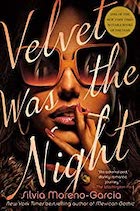
Silvia Moreno-Garcia, Velvet Was the Night

This novel, billed as “neo noir,” is set in 1971 against the backdrop of the Mexican Dirty War. Elvis belongs to a gang with shadowy ties to the repressive government; he’s tasked with brutalizing student activists and other left-wing demonstrators. Meanwhile, Maite is dissatisfied with her life and escapes through the pages of romantic magazines. When Maite’s neighbor Leonora, a young woman with possible communist ties, disappears, Elvis and Maite cross paths as they both try to track her down. I’m not a big noir reader, as I generally prefer optimism in my fiction, but I found this novel fascinating. I know shamefully little about Mexican history, so I was happy to learn more about an unfamiliar place and time. I also really enjoyed the story and was able to guess some of the twists and turns. The ending isn’t exactly happy (this is noir, after all!), but it is satisfying and arguably hopeful. Overall, this book impressed me, and I’m eager to try more of Moreno-Garcia’s work.

Mini-Reviews #2: May books

Still behind on reviews, so here’s a batch of minis for the books I read in May!

Spy Among Friends, AOne Perfect Day

Ben Macintyre, A Spy Among Friends: Kim Philby and the Great Betrayal — Guys, if you’re at all interested in espionage in the 20th century, you need to read Ben Macintyre! This is a fascinating stranger-than-fiction account of Kim Philby, an old-school English gentleman who rose to an extremely high position in the Secret Service while actually being a spy for the USSR.

Rebecca Mead, One Perfect Day: The Selling of the American Wedding — Mead, a British journalist, examines the contemporary American wedding from a sociological and monetary perspective. If you enjoy weddings but suspect they’ve gone off the rails in recent years decades–particularly in the ever-inflating costs for both the couple getting married and their guests–you’ll find a lot of interesting material here.

Vinegar GirlRaven King, TheLike Water for Chocolate

Anne Tyler, Vinegar Girl — First there was The Austen Project, for which six famous contemporary authors tried their hand at updating the novels of Jane Austen. Now Hogarth Shakespeare is doing a similar project with the Bard’s plays, with Vinegar Girl being a retelling of The Taming of the Shrew. Judging it as a novel, I found it a very pleasant read, albeit not particularly original or memorable. But I didn’t think it was a particularly good retelling of The Taming of the Shrew! So whether you enjoy the book will probably depend on what you’re looking for.

Maggie Stiefvater, The Raven King — If you love the series, you’ll love the ending! I thought certain plot elements were resolved a bit too abruptly, but the heart of the book–the relationships between Blue, Gansey, Ronan, Adam, and Noah–remains true. I was also torn on the addition of Henry Cheng as a character. First of all, I should say that I LOVED Henry Cheng! (Maybe he could have his own book? More Henry Cheng, please!) But part of me felt like the book was already crowded enough between the five main players and all the people at Fox Way. Be that as it may, I found this book to be a deeply satisfying ending to a wonderful series. If you love fantasy, you definitely need to read it!

Laura Esquivel, Like Water for Chocolate (trans. Carol Christensen and Thomas Christensen) — I’d heard a lot of good things about this book; people are always mentioning magical realism and comparing it to Sarah Addison Allen’s books (which I love). But ultimately, it didn’t do much for me. I felt sorry for Tita, doomed to take care of her bullying mother and remain unmarried while the love of her life marries her sister. But I also found the entire situation entirely too melodramatic, and the supernatural elements didn’t charm me. Overall, a disappointing read.

Review: The Neruda Case

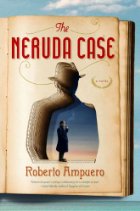
Neruda Case, TheRoberto Ampuero, The Neruda Case (trans. Carolina De Robertis)

Cayetano Brulé, one of the most respected private investigators in Valparaíso, is on his way to meet a prospective client when he stops at a restaurant for lunch. When he opens the menu, he sees a photograph of Pablo Neruda and immediately recalls his first case as a detective, in which his client was the Nobel laureate himself. Suddenly it’s 1973, and Cayetano (a Cuban by birth) is somewhat adrift in his adopted homeland of Chile. At a political party with his wife, Cayetano meets Neruda for the first time, and they soon strike up a conversation. Later, Neruda invites Cayetano to his home and makes a surprising request: he wants Cayetano to find a missing person, a doctor whom Neruda knew many years ago. Cayetano’s search takes him to Mexico City, Havana, and even East Berlin, and he eventually learns that Neruda’s desire to find the doctor is not as straightforward as it seems. Meanwhile, Chile is also experiencing a period of upheaval, as Salvador Allende’s Marxist government is succeeded by the dictatorship of Pinochet.

This novel attempts to do many different things, with mixed results. As a mystery, I think it falls flat; there is no real urgency to Cayetano’s search, and the results of his investigation ultimately don’t matter very much to the story. The book is more successful at painting a portrait of Pablo Neruda at the end of his life. I feel like I got a sense of his personality and his importance to Chile as a political figure. Best of all, this book does a wonderful job of depicting the political situation in Chile at the time and relating it to the wider issue of global politics. It’s no coincidence that Cayetano mostly visits Communist countries, in an era dominated by the Cold War and the ideological conflicts between socialism and capitalism. The novel is definitely not neutral on this subject; both Cayetano and Neruda favor Allende’s government, while Cayetano condemns his wife’s more radical Communism. Overall, I was fascinated by the setting much more than I was by the story. So I’m glad I read this book, but I won’t be seeking out any more installments of the series.