Mini-Reviews: Isabella, Taken, Scandal

IsabellaNot to Be TakenFirst Comes Scandal

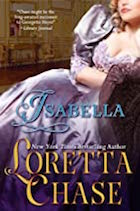
Loretta Chase, Isabella

I’ve liked all of Loretta Chase’s traditional Regencies, and this is no exception. Isabella Latham considers herself an old maid at 26, but she arrives in London for the Season with her two young cousins and is surprised when she acquires multiple suitors. The most notable are Edward Trevelyan, the earl of Hartleigh, and his charming cousin Basil. Isabella is attracted to both men, but they both seem to have ulterior motives: Edward needs a wife to help raise his ward, the young daughter of his deceased best friend, and Basil has his eye on Isabella’s fortune. Naturally Isabella ends up with the right man, and naturally the spurned suitor gets his own book, The English Witch, which I’m looking forward to reading sometime soon! I’ll be interested to see how Chase redeems his character, because he certainly did some morally dubious things in this book.

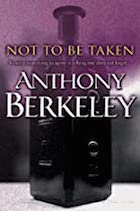
Anthony Berkeley, Not to Be Taken

I adore Berkeley’s The Poisoned Chocolates Case, so I was excited to try another one of his mysteries. But overall, I was a bit disappointed. While this book is well written, the style is entertaining, and the mystery plot hangs together well, there’s nothing particularly special or surprising about it. It’s a classic murder in a small English village, and only one of the victim’s closest friends could have done it. I did find the story entertaining while reading it, especially near the end, when the narrator gives three or four false solutions before revealing the true one. But unlike The Poisoned Chocolates Case, this one is not a keeper. I’ll happily read more by Berkeley in the future, though!

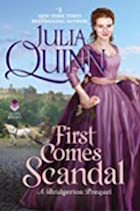
Julia Quinn, First Comes Scandal

I think of Julia Quinn as the perfect choice for historical romance with some sweet, silly fun and minimal angst. But the last few books of hers that I’ve read have been a bit “meh,” including this one. The heroine is Georgiana Bridgerton, who is forcibly abducted by one of her suitors and therefore “ruined,” even though nothing actually happened. The hero, Henry Rokesby, is a medical student who’s not particularly interested in marriage. But the Rokesbys and Bridgertons have been neighbors and close friends for many years, so Henry’s father convinces him to propose to Georgiana and salvage her reputation. I liked the premise and the fact that the book is very light on conflict, but the style got on my nerves. I felt like Quinn was trying too hard to be clever, and I also found a lot of the dialogue distractingly anachronistic. So I wouldn’t recommend this one unless you’re a Quinn completist.
Mini-Reviews: Mask, Winter, Unlimited

Grey MaskWinter of the WitchDetection Unlimited

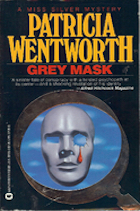
Patricia Wentworth, Grey Mask

Charles Moray has just returned to England after four years abroad. When he reaches his home, he is surprised to find that it is unlocked and that a secret meeting is taking place inside. He learns that the intruders are members of a criminal organization led by an unknown man in a grey mask. He also sees Margaret Langton — the woman he once loved, who broke off their engagement right before the wedding with no explanation — enter the house and speak with Grey Mask. Charles decides not to go to the police but to investigate the matter himself. He and Margaret eventually team up to save a beautiful young heiress who is in danger from the gang and to discover the identity of Grey Mask. I thought this book would be somewhat cheesy and campy, but in fact I really enjoyed it! I will definitely read more by Patricia Wentworth; this is technically the first book in the Miss Silver series, but Miss Silver is a pretty marginal character in this installment.

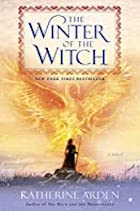
Katherine Arden, The Winter of the Witch

I loved the first two books in this trilogy, The Bear and the Nightingale and The Girl in the Tower, and this book was a fitting conclusion to the series. I love the setting, which is essentially a magical version of medieval Russia that contains various elements of Russian folklore. I also really like that the series doesn’t shy away from consequences: although Vasilisa is a sympathetic heroine, sometimes her choices have unexpected or unintended effects on those close to her. It’s a morally complex universe where no one is completely good or evil, and I liked that the book has some sympathy for even the most destructive characters. My only complaint is that the novel is a bit slow-moving, but if you liked earlier books in the series, you should definitely read this last installment!

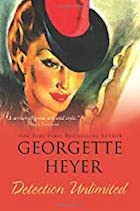
Georgette Heyer, Detection Unlimited

I love Georgette Heyer, but this isn’t one of my favorite of her mysteries. I’m a little surprised that I feel this way, though, because the mystery plot itself is one of her strongest. It’s a simple setup: a universally disliked man is shot in his garden, and everyone seems to have an alibi for the time of death. I thought the solution was clever and hung together well, although I was a bit disappointed in the choice of murderer because I liked that character! But the reason I didn’t totally love this book is that there’s a lot of padding surrounding the mystery plot; most of the book is just descriptions of the various characters and how they interact with one another. And while Heyer is great at characterization, I just wanted the story to go somewhere!

Mini-Reviews: Witch, Scarlet, Homicide

Water Witch*Study in Scarlet WomenHome Sweet Homicide

Cynthia Felice and Connie Willis, Water Witch

I’m a huge Connie Willis fan, so I had high hopes for this book, especially because it also contains some of my favorite elements: con artists, a missing princess, and a sci-fi/romance combo. But overall I found it pretty underwhelming. I really liked the kernel of the story, but I wanted it to be fleshed out a lot more, especially the characterization. The romance essentially comes out of nowhere, and I never really felt like I got to know the hero at all. That said, I really liked a twist involving one of the secondary characters, who came to be a lot more important than I initially expected. Overall, I didn’t like this as much as Willis’s solo work, but I already own two more Willis/Felice collaborations, so I’ll definitely read them at some point.

Sherry Thomas, A Study in Scarlet Women

I’d heard great things about the Lady Sherlock series but was hesitant to dive in, fearing that the books wouldn’t live up to the hype. But I was pleasantly surprised — I really enjoyed this book, which recasts literature’s most famous detective as Charlotte Holmes, a Victorian woman whose brilliant mind is constrained by the social rules of her time. So she decides to leave home and forge her own path. Meanwhile, of course, she solves several murders by realizing that they are all connected. I loved this take on a Holmesian character; Charlotte has a brilliant deductive mind but also really enjoys fashion, and her style is surprisingly ornate and gaudy. I also loved that the book, while sympathetic to Charlotte, also shows her flaws and the negative consequences of some of her decisions. I will definitely continue with the series sooner rather than later!

Craig Rice, Home Sweet Homicide

I found this mystery novel delightful. It’s about three children (ages 8 to 14, I believe) whose mother is a popular mystery novelist. When their neighbor is murdered in real life, the kids are ecstatic — now Mother might get some new material for her books, and the publicity is bound to be good for business. Plus, the handsome detective working the case looks like excellent stepfather material, though Mother doesn’t seem to agree. The children team up to solve the mystery with the help of their friends and neighbors; the result is a farcical romp that I thoroughly enjoyed.

Review: A Question of Proof

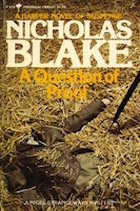
Question of ProofNicholas Blake, A Question of Proof

This first book in the Nigel Strangeways mystery series is set at an English boys’ prep school called Sudeley Hall. One of the schoolmasters, Michael Evans, is in love with Hero, the headmaster’s wife. They’ve been having a passionate affair for two months, but so far they’ve successfully managed to keep it a secret. One afternoon they meet for a rendezvous in a haystack on school property. Unfortunately for them, several hours later the corpse of one of the schoolboys is found in that same haystack. The boy, who was unpopular with both the students and teachers, has clearly been murdered, and it seems as though an outsider couldn’t have done it. Michael’s secret makes him the most likely suspect, a fact which isn’t lost on the local policeman in charge of the case. Luckily, one of Michael’s good friends is amateur detective Nigel Strangeways, who agrees to investigate the murder on the school’s behalf. Nigel is convinced of Michael’s innocence and soon sets his sights on another suspect. But since there’s very little physical evidence in the case, the murderer might get away scot-free.

I enjoyed this Golden Age mystery novel and think it’s a solid example of the genre with a few unique elements. First of all, Nicholas Blake is the pen name of Cecil Day-Lewis, who was Poet Laureate of the UK from 1968 to 1972, and I think his literary background shows in the writing style. The first chapter of the book reads more like a play, with lots of interior monologuing and narration that sounds like stage directions. It’s a clever device that recurs throughout the book, but it’s perhaps a bit overwrought. On the other hand, Day-Lewis was also a schoolmaster for several years, and it’s clear that his experience in this area also provided fodder for the book. The characterization of the schoolboys rings true and is especially fun to read. As for the mystery itself, I liked how the book deals with one question at a time and solves it before proceeding to the next problem — it makes the whole outline of the plot easier to follow, rather than waiting to dump everything on the reader in the last chapter. The revelation of the killer made sense but relied an awful lot on Strangeways’s amateur psychological profiling. Overall, I liked this book fine and will read the next in the series, Thou Shell of Death, which is already on my shelves!

Review: In Milady’s Chamber

In Milady's ChamberSheri Cobb South, In Milady’s Chamber

When Lord Fieldhurst is found murdered in his richly appointed Mayfair home, suspicion immediately falls on his wife. It’s common knowledge in London society that their marriage has been unhappy and that, because of Lady Fieldhurst’s inability to produce an heir, her husband has pursued sexual satisfaction elsewhere. Furthermore, the man was stabbed in the neck with his wife’s own nail scissors. The evidence seems ironclad; but John Pickett, the Bow Street Runner assigned to the case, is immediately enthralled by Lady Fieldhurst’s beauty and becomes determined to prove her innocence. As he investigates other promising suspects, such as Fieldhurst’s heir and his colleagues at the War Office, he uncovers many secrets but comes no closer to finding the killer — that is, until he and Lady Fieldhurst finally join forces to discover the truth.

I love mysteries and the Regency period, so any book that combines them both is something I’m going to want to read! In this case, the book delivered exactly what I wanted: a light, quick-reading, Heyer-esque period piece with a little mystery and a hint of romance. John Pickett is a somewhat unique protagonist for this type of story: most Regency heroes are self-assured and commanding, but John is young, naive, and idealistic to a fault. Nevertheless, he manages to be good at his job, despite being distracted by the beautiful Lady Fieldhurst. I was a little annoyed that he falls for her so quickly, and apparently on the basis of nothing but her looks, but his awkward pining does make for several humorous moments. Julia, Lady Fieldhurst, is also given some dimension and depth as she helps John with his investigation and contemplates her own future. The mystery is wrapped up a little too abruptly, although I did like the subtle hints to one part of the solution that are seeded throughout the book. But overall, I simply enjoyed spending time in this world with these characters, and I definitely plan on continuing with the series!

Review: Murder Most Malicious

Murder Most MaliciousAlyssa Maxwell, Murder Most Malicious

It’s Christmas 1918, and England is ready for a little peace on earth after the end of the Great War. But the house party at Foxwood Hall is anything but peaceful: on Christmas night, Lady Phoebe Renshaw hears her older sister Julia arguing with her would-be fiancé, Lord Allerton. The argument ends with Julia breaking off their relationship — and the next day, Lord Allerton is nowhere to be found. Then some of the Foxwood servants receive a gruesome surprise in their Boxing Day gifts, indicating that Allerton is dead. The police believe one of the footmen is responsible, but Lady Phoebe and her maid, Eva Huntford, are convinced of his innocence. In an effort to prove it, Phoebe and Eva do some investigating of their own, and they soon discover that many of Foxwood’s current inhabitants — both above and below stairs — had a reason to want Allerton dead. And if they don’t stop sleuthing, they may be the next to die.

This book has strong Downton Abbey vibes, and I think anyone who enjoyed that show will like this book too. It gives that same upstairs-downstairs picture of English country house life at a time when social mores were beginning to shift dramatically. Phoebe and Eva are both likable protagonists, and despite their class differences, it’s obvious that they truly care for one another. At times they feel a little too much like stock characters, though . . . like every other heroine in historical fiction, they’re intelligent women who seek to transcend their social roles, but they don’t have many other personality traits. The same is true for most of the other characters: there’s the eccentric older relative, the faithful butler, the autocratic matriarch, the handsome lord who’s more than he seems, and so on. Nevertheless, it’s an enjoyable formula, so I didn’t mind too much. The mystery plot was interesting, and while I did guess the culprit, it was fun to follow along. Overall, I’m definitely interested in continuing with the series, and I hope that Phoebe and Eva’s characters will be more fleshed out in subsequent books.

Review: Mystery in White

Mystery in WhiteJ. Jefferson Farjeon, Mystery in White

Six passengers in a third-class train compartment become entangled in a sinister mystery when the train is trapped in a snowdrift on Christmas Eve. The group includes a lively young brother and sister, a chorus girl, an elderly bore, a shy clerk, and a professor with an interest in the supernatural. They all decide to leave the train and seek shelter at a nearby station, but they become lost in the snow and end up at an isolated country house. Desperate for shelter, they enter the house, but no one seems to be home. Yet the teakettle is on, and the table is set for a meal. As the characters try to make sense of these events, one of them reveals that a man was murdered in the train — and when the group is later joined by another “lost” individual, they suspect that he may be the murderer. This chain of events later converges with another mystery concerning the house itself and a murder that happened 20 years ago.

I enjoy Farjeon’s light and humorous writing style, and his characters are well rounded and sympathetic. But plot-wise, I was quite disappointed in this novel. The six characters introduced in the opening chapters of the book are the ones we follow for about two-thirds of the novel, so naturally I assumed that they would be the most important people in the story. But in fact, aside from the professor, who acts as the detective and orchestrates the denouement, none of these six people have any relevance to either of the mysteries in the novel! They provide some humor and some human interest, but they have no actual function in the plot. Instead, two new characters come in late in the game, and they turn out to be central to the story. I can’t understand why Farjeon would structure his story in such a way that it’s totally disconnected from the characters we’ve been following all along. I also felt sorry for several of the characters, who deserved a happier ending than what they got. All in all, this might be entertaining for people who enjoy a witty period piece, but I definitely wouldn’t recommend it for people who want a good mystery!

Review: The Moving Toyshop

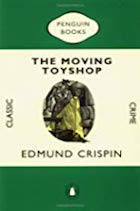
Moving ToyshopEdmund Crispin, The Moving Toyshop

On holiday in Oxford, poet Richard Cadogan stumbles upon a perplexing mystery. Arriving in town late at night, he blunders into a toyshop (the front door being mysteriously unlocked) and discovers a corpse in the flat upstairs. Before he can do much more than ascertain that the old woman is really dead, someone hits him from behind and knocks him out. When he comes to, Cadogan escapes and rushes to tell the police about the murder. But when he leads the policemen back to the scene of the crime, the toyshop is gone. In its place is a grocer that has obviously been there for years. Of course, the police think that Cadogan is crazy, and they won’t investigate a murder without a body. Luckily, Cadogan is acquainted with Gervase Fen, an Oxford don who moonlights as an amateur detective. Together, Fen and Cadogan investigate the mystery and uncover a murderous conspiracy, as well as discovering what happened to the moving toyshop.

This is a fun romp of an English Golden Age mystery, with just enough Oxford detail to please fans of academic mysteries. But despite the fact that it’s probably Crispin’s most famous novel, several aspects of it didn’t work for me. First, I can’t figure out Gervase Fen as a character: he’s supposed to be about 40 and lean, but his dialogue (especially the constant exclamations of “Oh, my dear paws!” and “Oh, my fur and whiskers!”) makes me picture a much older and larger man. Also, he’s rude about Jane Austen, which is an automatic strike against him in my book! Then there’s the issue of pacing. The story starts off strong, but it seems like most of the mystery is solved with about one-third of the book still to go. Finally, it seemed like the novel was setting up a romance for Cadogan, but nothing ever came of it, which I found confusing and disappointing. Still, I did enjoy the novel’s light tone overall, as well as the Oxford setting. I’d consider reading more by Crispin, but I think I’ll have to go in with moderate expectations.

Review: The Cut Direct

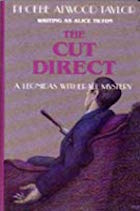
Cut Direct.jpgAlice Tilton, The Cut Direct

Leonidas Witherall, a retired professor at a boys’ school, can’t imagine why anyone would want to murder him; but within the first few chapters of this book, he is twice run over by a car. The perpetrator looks like one of Witherall’s former pupils, an unpleasant young man named Bennington Brett. But when Witherall regains consciousness after the second vehicular assault, he wakes up in a chair across from Brett’s corpse. Concerned that he’ll be the number-one suspect if he calls the police, Witherall decides that the only available course of action is to solve the murder himself. Along the way, he accumulates a motley crew of assistants, including a drinking pal of Bennington’s, the Brett household’s beautiful secretary, a mobster and his girlfriend, and the kindly widow next door — whose brother just happens to be the local chief of police. Of course, Witherall’s attempts to investigate are hampered by the fact that his description is all over the police reports and the newspapers. As his efforts to evade capture become ever more farcical, he slowly begins to piece the mystery together.

This second book in the Witherall series is just as much madcap fun as the first book, Beginning with a Bash. The book is light, breezy, and full of delicious banter; it reminds me of the great screwball comedies of the 1930s, and I really wish someone would adapt the series for television. The opening chapters of the book are a little bewildering because Witherall himself doesn’t know what has happened to him, but it’s actually pretty easy to follow all the strands of the somewhat convoluted plot. As a mystery, I’m not sure it’s entirely successful; some aspects of the solution aren’t fair play, although I think astute readers will spot the culprit fairly quickly. But the characters, the dialogue, and the humor more than make up for any plot deficiencies. I especially loved Mrs. Price, the thoroughly respectable widow who wholeheartedly embraces Witherall’s schemes, even going so far as to use police resources to help him out of various difficulties. In short, this book (and, so far, the series) is a delight, especially for fans of movies like His Girl Friday and Bringing Up Baby.

Review: The Spider’s Touch

Spider's TouchPatricia Wynn, The Spider’s Touch

***Warning: SPOILERS for The Birth of Blue Satan.***

This second book in the Blue Satan and Mrs. Kean series picks up shortly after the first one left off. Gideon, Viscount St. Mars, is accused of his father’s murder and, though innocent, has fled to France. There he is approached by supporters of James Stuart and asked to aid the Jacobite cause by returning to England and assessing whether the people would rise up to overthrow George I and restore the Stuart dynasty to the English throne. Gideon is reluctant to embrace the Jacobite cause wholeheartedly, but he agrees to the mission. Meanwhile, Hester Kean is living with her cousin Isabella and the rest of her family, who are trying to ingratiate themselves at George I’s court. However, the family unwittingly becomes close with a number of Jacobite spies and sympathizers. When Gideon returns to England and sees Hester’s plight, he is determined to protect her. And when one of Hester’s Jacobite acquaintances is murdered during an opera performance, she and Gideon team up to solve the mystery.

I don’t know why more novels aren’t set during the early 18th century, when the conflict between Hanover supporters and Jacobites provides such a compelling conflict and backdrop for dramatic action! So I’m very glad that this series exists, and I enjoyed this second installment very much. It had been a few years since I’d read the first book, but Wynn does a good job of catching up readers and reminding them of the most important plot points. I also appreciated the historical note at the very beginning of the book, which provides some much-needed context for the events of the novel. As for the book itself, I really like both Gideon and Hester as characters, and I especially like how Hester’s role (though necessarily a bit more passive, because she’s both a woman and a dependent) is just as vital as Gideon’s. The book starts out slowly because it follows each of them in turn, but it picks up once they start sharing scenes together. I’m definitely here for the inevitable romance! The mystery plot is probably the weakest element, as the culprit is fairly obvious, and I felt it was an uncreative way to resolve that character’s arc. Still, I really liked this book and will definitely continue with the series!