Mini-Reviews #4: June Books, Part 2

More mini-reviews! Just when I think I’m getting to the end of my backlog, I go and read more books. Will I never learn?

Only Thing Worse Than Me Is You, TheSchool for Unusual Girls, A

Lily Anderson, The Only Thing Worse Than Me Is You — Oof. I really wanted to like this one — it’s a modern retelling of Much Ado About Nothing! But I was very underwhelmed, and the main reason is that I couldn’t stand the protagonist, Trixie. She’s incredibly self-absorbed and utterly convinced of her own righteousness at all times, which makes her downright mean to the people around her. She’s also a proud geek girl, obsessed with comic books and “Doctor Who.” Don’t get me wrong — I have nothing against these things! But Trixie’s constant references to geek culture didn’t feel real to me. Instead, I felt like the book was trying to pander to a specific audience and going way over the top. In short, I just wasn’t a fan.

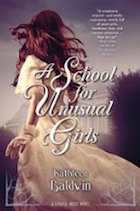
Kathleen Baldwin,  A School for Unusual Girls — This one’s about — you guessed it — a school for unusual girls. Sixteen-year-old Georgiana Fitzpatrick doesn’t behave as a proper young lady should; and when one of her scientific experiments nearly burns down the stables, her parents pack her off to a school whose reputation for strictness is legendary. Of course, Georgie soon realizes that the school is not what it seems and that her fellow students all have unique, mysterious abilities. There’s also romance, kidnapping, and a touch of espionage. All in all, a fun read, although not particularly groundbreaking in the genre. I’d like to read the sequel at some point.
Tell Me Three ThingsStrong PoisonDecent Proposal, The

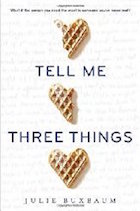
Julie Buxbaum, Tell Me Three Things — I enjoyed this novel despite its ridiculous premise: Jessie Holmes moves across the country when her dad remarries, and she is forced to attend a pretentious private school where she doesn’t know anyone — that is, until the mysterious Somebody/Nobody emails her, offering friendship and guidance in navigating the social scene at her new school. Though Jessie is skeptical at first, she soon opens up to Somebody/Nobody and speculates on who it might be. To the reader, the answer is astoundingly obvious, but it’s still fun to watch Jessie get there. A nice YA romance if you’re into that kind of thing.

Dorothy L. Sayers, Strong Poison — I read this installment of the Lord Peter Wimsey series years ago but didn’t remember much about it, except that Lord Peter finally meets his match in Harriet Vane, a young woman who’s on trial for murdering her ex-lover. For me, this was the best novel in the series so far. The mystery is well plotted (although, as with other books in the series, the suspect list is so small that the true mystery is howdunit, not whodunit), and the romance is nicely underplayed. I’m definitely loving this series more and more as I continue to read, and I’m looking forward to the next book!

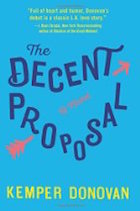
Kemper Donovan, The Decent Proposal — I was drawn to this book because of the title, and I knew very little about it going in. The premise is that a mysterious benefactor has promised two L.A. residents, happy-go-lucky Richard and highly regimented Elizabeth, that they will each receive half a million dollars if they agree to meet each other once a week for a year and talk — just talk. Of course they accede to the proposal, and of course they start out as very different people but eventually find some common ground. I liked the development of the relationship between Richard and Elizabeth, especially since I honestly didn’t know whether it was going to end in friendship or romance. I could have done without most of the other characters, actually; they seemed like they should get their own novels rather than being relegated to secondary characters in this one. I also think people who have lived in L.A. would get more out of the book, since it’s definitely written in that specific setting. Overall, I did like the book, but I’m glad I got it from the library instead of buying.

Mini-Reviews #3: June Books, Part 1

Still making my way through my review backlog, so here are some more short ones:

Lilac GirlsUnexpected Everything, The

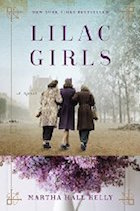
Martha Hall Kelly, Lilac Girls — For the past few years, I’ve really gravitated toward books set during World War II, especially those dealing with the “home front” experience rather than the actual fighting. So I think I wanted to like this book more than I did. I found the story of Kasia, a Polish girl imprisoned in Ravensbrück, to be the most compelling. I especially liked how the book follows her (and the other characters) long after the war is over and shows the psychological scars that still remain. But I didn’t like Caroline’s story at all; I found her the least interesting character, and the romance between her and Paul didn’t do anything for me. The book is worth reading if you like the time period, but I’d recommend Elizabeth Wein’s Rose Under Fire for a better book on Ravensbrück.

Morgan Matson, The Unexpected Everything — I’ve said it before, but it’s true: Morgan Matson writes the perfect summer reads! I really enjoyed this one, which centers around politician’s daughter Andie and a summer that doesn’t go quite according to plan. One of my favorite aspects of the book is that Andie has a really close group of girlfriends, and those relationships are just as important as her newfound romance. I’d definitely recommend this book as an adorable summer read, especially for those who enjoy YA.

Summer Before the War, TheDarker Shade of Magic, ACocaine Blues

Helen Simonson, The Summer Before the War — I really enjoyed this quiet, character-driven novel, although I wouldn’t recommend it to those who love lots of action and unpredictable twists. The plot (such as it is) centers around a young woman who moves to a rural English village to become the new Latin teacher. As one might expect, she meets with some resistance from the locals because of her youth and gender, but she also wins over some key players, including the unconventional Agatha Kent and her two nephews. Most of the book involves the resulting social politics, although the titular war (World War I) does intrude near the end.

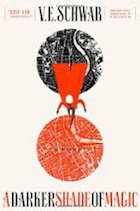
V.E. Schwab, A Darker Shade of Magic — This book hooked me from the first line: “Kell wore a very peculiar coat. It had neither one side, which would be conventional, nor two, which would be unexpected, but several, which was, of course, impossible.” The novel is an exciting blend of fantasy and sci fi, combining magical artifacts with parallel universes. The hero is a conflicted, magic-wielding prince, and the heroine is a scrappy thief and would-be pirate. In short, I loved it and have already purchased book 2, A Gathering of Shadows!

Kerry Greenwood, Cocaine Blues — After watching and LOVING “Miss Fisher’s Murder Mysteries,” I decided to pick up the first book in the series. Phryne is a wonderfully entertaining character: intelligent, rich, attractive, and determined to get the most out of life. I also really enjoyed the setting of 1920s Melbourne, where Phryne rubs elbows with all sorts of people, from wealthy blue bloods to socialist cab drivers to feisty maidservants. I did miss Inspector Jack Robinson, who apparently has a much smaller role in the books than he does in the TV series. I also didn’t care too much about the mystery, but I still liked the book for its setting and protagonist.

Mini-Reviews #1: Readathon leftovers

It’s pretty obvious that I haven’t spent much time on this blog lately. *blush* What can I say — life has been busy for the past couple of months, and when I’ve had free time, I’ve preferred to spend it doing other things (like reading!). As a result, I have a pretty huge backlog of books that I haven’t written about yet, and the thought of sitting down to compose a full review for each one is incredibly daunting. So, rather than continuing to avoid the task, I’ve decided to do three batches of mini-reviews — just titles and authors of the books I’ve been reading, along with a couple of sentences expressing my opinions. Once I catch up, I plan to go back to my regular style of reviewing. But for now, here are mini-reviews for the books I read during April’s 24-hour readathon:

Love, Lies and SpiesAs If!

Cindy Anstey, Love, Lies and Spies — A fun, lighthearted bit of Regency fluff for those who enjoy YA historical romance. I found the spy storyline weak, and the romance wasn’t quite compelling for me — Georgette Heyer, this is not! But it’s a pleasant enough read for fans of the genre.

Jen Chaney, As If! The Oral History of Clueless as Told by Amy Heckerling, the Cast, and the Crew — This book will only appeal to people who really love the movie “Clueless” and who are fascinated by behind-the-scenes movie knowledge. Fortunately, I fall within this demographic, so I really enjoyed the book!

Hermit of Eyton Forest, TheAlways the BridesmaidWhy Not Me?

Ellis Peters, The Hermit of Eyton Forest — Full disclosure: this installment of the Brother Cadfael series features a male character called Hyacinth. But I still love this series about a 12th-century Benedictine monk who solves crimes! (Who wouldn’t?)

Lindsey Kelk, Always the Bridesmaid — Entertaining British chick lit about a young woman named Maddie whose two best friends are at opposite ends of the romantic spectrum: one just got engaged, while the other is getting divorced. My friend pointed out that Maddie is a huge pushover, which she (my friend) found irritating. While I think that’s a fair criticism, I ultimately enjoyed the book for  its humor and romance, so I’d definitely read more by this author.

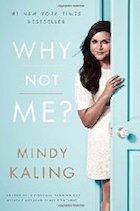
Mindy Kaling, Why Not Me? — I think Mindy Kaling is very talented and hilarious, and this book had me giggling pretty much nonstop. I like that she isn’t preachy, she’s very self-aware, and she doesn’t apologize for her confidence (some might say arrogance). As she says in the book, there’s nothing wrong with being confident — as long as you’ve put in the hard work to back it up. Bottom line: if you like Mindy Kaling, you’ll like this book.

Review: Quick Curtain

Quick CurtainAlan Melville, Quick Curtain

Crowds flock to the London premiere of Douglas B. Douglas’ sensational new musical comedy, hoping to catch a glimpse of stage idols Brandon Baker and Gwen Astle. But they get even more sensation than they bargained for when leading man Baker is shot dead in the middle of Act 2. Fortunately, Inspector Wilson of Scotland Yard is in the audience, along with his son Derek, an enterprising young journalist. When another cast member is found hanged in his dressing room, the obvious conclusion is that he murdered Baker, then committed suicide. But Inspector Wilson isn’t convinced, especially when he finds a bullet hole in a place that would be impossible under that theory of the crime. He and Derek jointly investigate the mystery, which leads them to a remote village, several salacious secrets, and an altogether unexpected solution to the mystery.

I absolutely love Golden Age mysteries, and this one was a very enjoyable read, unique in its lighthearted tone and somewhat breezy attitude to police procedure. (For instance, does Inspector Wilson even have jurisdiction over the case? In this book, it doesn’t matter: he’s first on the scene, so he simply commandeers the investigation.) I loved the humorous running commentary on show business of the era; apparently the author himself had a long career in the industry. And I laughed out loud at various silly jokes, particularly an exchange where the play’s director is impatiently waiting for the doctor to examine the corpse. Finally fed up, the director asks, “Well?” “Not at all; in fact, he’s dead,” the doctor replies. The mystery plot isn’t particularly original, and a twist in the last chapter may irritate readers who want their mystery authors to play fair. But I really enjoyed the book’s tongue-in-cheek style and would definitely recommend it to fans of the genre!

Review: No Wind of Blame

No Wind of BlameGeorgette Heyer, No Wind of Blame

Plenty of people wanted to murder the shiftless, good-for-nothing Wally Carter. His rich wife, Ermyntrude, was tired of giving him money that he only drank or gambled away. Ermyntrude’s daughter, Vicky, thought her mother would be happier with another man. The slick “Prince” Alexis Varasashvili, had his eye on Ermyntrude’s fortune. And several other characters had equally strong movies for wanting Wally out of the way. But when he actually is shot, it seems that no one could possibly have fired the gun without being immediately discovered. As suspicion rests on each of the characters in turn, it’s up to Scotland Yard’s Inspector Hemingway to discover the truth. Along the way, a sordid scandal comes to light, a crooked business deal is unearthed, and romances end and begin.

I’m glad I chose this book to kick off my 2016 reading, since it contains both an ingenious mystery plot and a wonderful assortment of classic Heyer characters. I loved the histrionic Ermyntrude, who is certainly vulgar but also extremely kind-hearted. And Vicky, who delights in playing a variety of different roles (such as Sports Girl and Dutiful Daughter), annoyed me at first, but eventually I began to enjoy her antics in spite of myself. The main characters are so well-drawn that the mystery is a bit sidelined, but I do think the solution is very clever. I guessed the murderer but not the “how” or the “why,” although Heyer plants a few clues throughout the novel. The romances are a bit undercooked, especially the one involving Wally’s ward, Mary Cliffe. I don’t know whether I’d consider it one of my favorite Heyer mysteries, but it was still a fun read and a great start to the year!

Review: An English Murder

English Murder, AnCyril Hare, An English Murder

The setting of An English Murder seems, at first, to be a very conventional one. A group of family and friends come together for Christmas at a country house, Warbeck Hall. The house is owned by Lord Warbeck, a dying and impoverished peer who wants to be among loved ones for what he thinks will be his last Christmas. The holiday decorations are up and snow is falling fast outside. The guests range from the Lord’s difficult son to a visiting Czech historian. There is, of course, a faithful butler and his ambitious daughter. But when the murders begin, there is nothing at all conventional about them – or the manner of their detection. This ingenious detective story gleefully plays with all of our expectations about what an ‘English murder’ might be and offers enough twists and turns to keep us reading into the night. (Summary from Amazon.com.)

This was my first Cyril Hare mystery, but hopefully it won’t be my last! This is a quintessential English country house mystery, and I really enjoyed it. Most of the characters aren’t particularly likable, but the amateur sleuth, Dr. Wenceslaus Bottwink, makes up for all the others. Not only does he have a great name, but his somewhat detached “observer” status allows him to see the situation clearly and even find some humor in the various nasty interactions among other characters. The book is also interesting as a historical artifact: it was published just after World War II (1951, I believe) and contains characters whose views span the whole political spectrum, from socialism to fascism. The solution to the mystery, which also explains the book’s title, is one of the most delightful resolutions to a murder mystery that I’ve read in a while. Definitely recommended for vintage mystery lovers!

Review: The Unpleasantness at the Bellona Club

Unpleasantness at the Bellona Club, TheDorothy L. Sayers, The Unpleasantness at the Bellona Club

On November 11, ninety-year-old General Fentiman is found dead in an armchair at the Bellona Club. No one knows exactly when his death occurred—information essential in determining the recipient of a substantial inheritance. But that is only one of the mysteries vexing Lord Peter Wimsey. The aristocratic sleuth needs every bit of his amazing skills to discover why the proud officer’s lapel was missing the requisite red poppy on Armistice Day, how the Bellona Club’s telephone was fixed without a repairman, and, most puzzling of all, why the great man’s knee swung freely when the rest of him was stiff with rigor mortis. (Summary from Amazon.com.)

I think this is my favorite Lord Peter Wimsey book so far. The mystery plot is ingenious and provides an intellectually satisfying solution. I also appreciate how character-driven Sayers’ mysteries are in comparison to, say, Agatha Christie’s. (Not to bash Dame Agatha, but I think her books are far more plot-driven, with the characters rarely being very three-dimensional.) I was especially fascinated by Ann Dorland, one of the potential heirs to the general’s fortune. Her behavior is suspicious throughout the novel, but is she guilty? And if not, why does she act the way she does? The one jarring note to this mystery is the ending, where Lord Peter unmasks the killer and essentially suggests that, instead of going through the humiliation of an arrest and trial, the person should just commit suicide. I guess this attitude makes sense for the time, when people set more store by their honor than they do today…and of course, a convicted murderer would face the death penalty anyway…but I was still taken aback by Lord Peter’s suggestion! Still, I enjoyed the book and look forward to continuing with the series.

Review: First Impressions

First ImpressionsCharlie Lovett, First Impressions

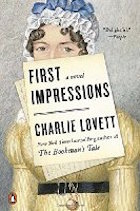
Book lover and Austen enthusiast Sophie Collingwood has recently taken a job at an antiquarian bookshop in London when two different customers request a copy of the same obscure book: the second edition of A Little Book of Allegories by Richard Mansfield. Their queries draw Sophie into a mystery that will cast doubt on the true authorship of Pride and Prejudice—and ultimately threaten Sophie’s life.

In a dual narrative that alternates between Sophie’s quest to uncover the truth—while choosing between two suitors—and a young Jane Austen’s touching friendship with the aging cleric Richard Mansfield, Lovett weaves a romantic, suspenseful, and utterly compelling novel about love in all its forms and the joys of a life lived in books. (Summary from Amazon.com.)

I should have known better than to pick this one up. My love of Jane Austen means that I’ve read a lot of the retellings, re-imaginings, and spinoffs of her novels, and most of them have ranged from “meh” to truly awful. So I should have known that I’d dislike this book, and indeed, the writing style had turned me off by the end of the first chapter. The author unwisely makes Jane Austen a character and tries to imitate her voice, with disastrous results.

Further, the entire “past” storyline had essentially no stakes, being nothing more than an account of the friendship between Austen and an elderly clergyman. In the “present” storyline, book lover Sophie Collingwood comes across said clergyman’s name in connection with Austen and investigates a possible plagiarism scandal. Because of course Austen lovers want to read books suggesting that she didn’t actually create her own work!

Anyway, Sophie is an utter ninny caught between a Darcy and a Wickham, although they’re pretty equally insufferable! The Wickham (whose name I can’t actually remember) is supposed to be skeevy, of course, but the Darcy also exhibits some major stalker vibes. Therefore, I didn’t buy the love triangle or enjoy the romance. So for me, the book failed on basically every front. Maybe I’m being too harsh; I’d read some positive reviews of the novel, and possibly my expectations were too high. But unfortunately, this book is in my “bottom 10” for the year.

Review: A Curious Beginning

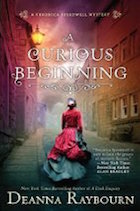
Curious Beginning, ADeanna Raybourn, A Curious Beginning

London, 1887. As the city prepares to celebrate Queen Victoria’s golden jubilee, Veronica Speedwell is marking a milestone of her own. After burying her spinster aunt, the orphaned Veronica is free to resume her world travels in pursuit of scientific inquiry—and the occasional romantic dalliance. As familiar with hunting butterflies as she is fending off admirers, Veronica wields her butterfly net and a sharpened hatpin with equal aplomb, and with her last connection to England now gone, she intends to embark upon the journey of a lifetime.

But fate has other plans, as Veronica discovers when she thwarts her own abduction with the help of an enigmatic German baron with ties to her mysterious past. Promising to reveal in time what he knows of the plot against her, the baron offers her temporary sanctuary in the care of his friend Stoker—a reclusive natural historian as intriguing as he is bad-tempered. But before the baron can deliver on his tantalizing vow to reveal the secrets he has concealed for decades, he is found murdered. Suddenly Veronica and Stoker are forced to go on the run from an elusive assailant, wary partners in search of the villainous truth. (Summary from Amazon.com.)

I’ve read and enjoyed the first few Lady Julia Grey books, so I was excited to learn that Raybourn has begun a new mystery series featuring intrepid lepidopterist Veronica Speedwell. Unfortunately, this book really didn’t work for me. It’s a good read in the sense that it’s well written and moves quickly, but I couldn’t get over my dislike of both Veronica and her partner/love interest, Stoker. Historical fiction can be difficult because the protagonists should be realistic for their time period but also sympathetic to modern readers. Veronica errs on the side of being far too modern for her era. She pursues a scientific career by traveling all over the world without a chaperone, and she engages in a variety of sexual affairs, apparently without any consequences to her reputation as a gentlewoman. I simply didn’t find her believable. As for Stoker, he’s a generic brooding alpha male type, and that’s basically all you need to know. It’s not a bad book, by any means, but it didn’t deliver what I look for in historical fiction.

Review: Unnatural Death

Unnatural DeathDorothy L. Sayers, Unnatural Death

While dining out one day, Lord Peter Wimsey and his friend Inspector Parker are discussing so-called accidental deaths that might actually be murders. A young doctor overhears them and joins their conversation. He shares the story of a former patient, an elderly woman with cancer who died rather suddenly. She was terminally ill, and no signs of foul play were found on the body, so everyone believed her death was natural; but the doctor was nevertheless suspicious because she had seemed to be improving lately. The woman’s great-niece and presumed heiress was living with her at the time, so she had opportunity, but her motive was questionable because the old lady would die soon enough from natural causes. Lord Peter is intrigued by the case and decides to investigate. He employs Miss Climpson, a chatty but intelligent spinster, to temporarily relocate to the dead woman’s village and do some discreet investigating. Meanwhile, he and Parker search for other suspects, motives, and possible methods of the murder.

After rediscovering Dorothy Sayers earlier this year, I’ve embarked on a project to read all her Lord Peter Wimsey books in publication order. This is book #3 in the series, but if I recall correctly, it can be read as a standalone. I enjoyed this book a lot, but I feel like it’s a very unusual detective story. Despite a high body count, it doesn’t feel very action-packed or plot-driven. The main mystery is not whodunnit, but why and how. One of the biggest clues to the motive is a tiny change in an obscure property statute. Nevertheless, I found the mystery compelling and was eager to solve the complete puzzle of how and why the murder took place. Also, Miss Climpson is delightful; this is her first appearance in the series, but I believe she’ll be a recurring character in future books. She reminds me somewhat of a Jane Austen character — one of the good-hearted chatterboxes, like a more intelligent Miss Bates. I wasn’t completely on board with the characterization of the villain, whose psychology didn’t ring true for me. I doubt this will be my favorite Sayers mystery, but I did enjoy it and look forward to reading the rest of the series.