Mini-Reviews: Christmas, Paupers, Garden

Rupert Latimer, Murder after Christmas

A Christmas house party turns deadly when the guest of honor, Sir Willoughby Keene-Cotton, is found dead on Boxing Day. Uncle Willie was very rich, so plenty of people had a motive to kill him—except that, based on the specific legal circumstances surrounding his demise, it was unclear who would inherit his fortune. Similarly, he died by poisoning—but apparently nothing he ate in the hours before his death could have contained the poison. The increasingly bewildered police must sift through piles of red herrings before they can even verify that a murder has been committed, let alone by whom. This breezy vintage mystery multiplies motives and clues so that it’s nearly impossible to separate the important information from the surrounding camouflage. And that’s what makes it such a fun read—that, and the whimsical characters who needlessly obstruct the investigation. I really enjoyed this one and would recommend it as a good vintage holiday read.

Sheri Cobb South, Of Paupers and Peers

James Weatherly, a poor village curate, is shocked when a London solicitor informs him that he’s the new Duke of Montford. He travels to Montford immediately to claim his title, only to be attacked by thieves and lose his memory in the process. Miss Margaret Darrington finds him at the side of the road and assumes he’s Mr. Fanshawe, the tutor she hired for her teenage brother. James has no reason to doubt her identification and takes up his new tutorial position. But complications ensue when James seems smitten by Margaret’s beautiful sister, Amanda, who must marry a wealthy man — and when Margaret begins to fall for James herself. This is a sweet and steamless Regency romance that I very much enjoyed, despite the fact that it’s not particularly original. I liked that, while there are various moments of mistaken identity, they’re not drawn out too long and are solved promptly with intelligent communication. I’d definitely recommend this to fans of traditional Regencies, and I’ll seek out more by Sheri Cobb South.

Sarah Addison Allen, Garden Spells

In the small town of Bascom, North Carolina, magic is an understood and largely unspoken fact of life. Everyone knows, for instance, that the Waverley family’s garden produces plants that can influence your mood, and that if you eat the apples from their tree, you’ll have a vision of the biggest event in your life. Claire Waverley has embraced her family’s legacy and uses the magic plants in her catering business, while her estranged sister, Sydney, never liked being a Waverley and couldn’t wait to leave town. But when Sydney unexpectedly returns with a five-year-old daughter in tow, Claire’s carefully cultivated life begins to change. I really enjoy Allen’s books, which are tales of family, romance, and female friendship overlaid with a patina of magic. Claire and Sydney’s relationship is the heart of this novel, and I loved how they slowly grew closer despite years of misunderstandings. Recommended if you like books about small towns and the bonds between women.

Mini-Reviews: Ghosts, Secret, Masked

Katherine Arden, The Warm Hands of Ghosts

The Great War has left Laura Iven an orphan. Her parents were recently killed in the Halifax Explosion of 1917, and now she’s received word that her only sibling, Freddie, is missing presumed dead after the Battle of Passchendaele. But if he’s missing, how could she have received his uniform and identification tags? Something doesn’t add up, so Laura goes to Europe looking for answers. This novel alternates between Laura’s story and Freddie’s, which takes place a few months earlier and reveals how he escaped the war’s horrors only to fall prey to something even worse. This book is beautifully written and emotionally harrowing; Arden’s depiction of the war and its all-consuming effects is relentlessly grim and graphically vivid. I found it a very hard read at times, but I’m glad I persevered and came to a whisper of hope in the end. I also loved how the story engages with literature and legends about the devil, who is very much present in the book. Highly recommended if you’re in the mood for something dark!

Benjamin Stevenson, Everyone This Christmas Has a Secret

Ernie Cunningham gets involved in a “holiday special” murder when his ex-wife, Erin, calls on him for help: Her current boyfriend, Lyle, was killed in their home, and she’s been arrested for the murder. Ernie’s investigation centers around Lyle’s philanthropic work at a theater in the Blue Mountains, which is currently staging a famous magic act. This means Ernie is surrounded by people familiar with stage magic and skilled in the art of misdirection—in other words, the perfect set of suspects. Can he clear Erin’s name and find the real murderer in time for Christmas? This novella is a fun installment of the series that makes good use of the time-honored detective novel trappings of theater, magic, and of course Christmas. I was able to guess the murderer but didn’t unravel the whole plan, and I enjoyed Ernie’s conviction that there are rules for holiday specials as well as for mysteries. Recommended if you’ve enjoyed previous books in the series.

Genevieve Cogman, The Masked City

Irene is happy with her new job as the Librarian-in-Residence in a steampunk version of Victorian London. But when her apprentice, Kai—the youngest son of a noble dragon family—is kidnapped, she must leave her (relatively) comfortable new position to rescue him and prevent an all-out war between dragons and Fae. To do so, she travels to an unfamiliar, extremely chaotic world that’s dominated by the Fae: a fairytale version of Venice where it’s always Carnival. This book is a pretty good follow-up to The Invisible Library, with exciting action scenes and some fun snark about the Fae’s addiction to storytelling tropes. I enjoyed Irene’s cleverness and practicality, though I missed Kai and Vale, who didn’t get a lot of page time in this installment. But overall, it’s a fun read, and I’m looking forward to book #3 next month.

Mini-Reviews: Rules, Witch, Bride

Sinéad Murphy, The Jane Austen Rules: A Classic Guide to Modern Love

This short book positions itself as a dating guide based on the timeless wisdom of Jane Austen. As a diehard Austen fan, I loved the premise, but I have mixed feelings on the execution. I do think the advice, both about dating and how to be a woman in the modern world, is largely good. The Austen analysis is also interesting; it’s not super deep literary criticism, but some of Murphy’s interpretations are ideas I hadn’t considered before. However, I wasn’t a fan of the writing style, which is trying—and mostly failing—to imitate Austen. Plus, Murphy misquotes the first sentence of Pride and Prejudice, which is frankly inexcusable! So, while I didn’t hate the book, I wouldn’t recommend it either, even for Austen fanatics.

Elizabeth George Speare, The Witch of Blackbird Pond

In 1687, orphan Kit Tyler experiences severe culture shock when she leaves her life of luxury on a Barbados plantation and moves in with her aunt’s family in Connecticut Colony. At first Kit hates her new life: Her uncle is strict, she’s forced to help with the unending household chores, and the broader Puritan community is suspicious and unwelcoming. Gradually she comes to appreciate her new situation, particularly after she befriends an old woman widely reputed to be a witch. But when the town’s hostility toward the “witch” turns ugly, Kit’s own safety is threatened. This was my favorite book for a while growing up, and upon rereading, I was surprised by just how many scenes I remembered. I found it a very enjoyable read that paints a vivid picture of colonial New England, both good and bad. I also loved Kit’s character development, as well as the multiple satisfying love stories. I’m glad I decided to revisit this one!

Cornell Woolrich, The Bride Wore Black

This thriller features a mysterious woman who is systematically murdering men throughout New York City. Her motive is unclear, as she doesn’t seem to know any of the men personally. Beautiful and clever, she’s easily able to gain access to her victims, and she always vanishes directly after the murder without a trace. Eventually, a policeman notices a pattern among the killings and makes it his mission to bring this femme fatale to justice. This is a fascinating, suspenseful novel with a clever structure, following the woman and each of her male victims in turn. As a result, I felt some measure of empathy for every character and was eager to discover the woman’s motive. The ending is both satisfying and heartbreaking—everything is resolved, but none of the characters get what they want. I’d definitely recommend this one to fans of suspense and noir, and I’m interested in reading more by Woolrich.

Mini-Reviews: Librarian, Lady, Call

C.J. Archer, The Librarian of Crooked Lane

In a fantasy version of post-World War I England, Sylvia Ashe supports herself by working as a librarian. Her path crosses with that of Gabriel Glass, a nobleman and the son of a famous magician, as he investigates the theft of a possibly magical painting. When he inadvertently gets Sylvia fired, he finds her a new job at a library specializing in magical tomes. He also draws her into both his investigation and his circle of friends. As Sylvia gets closer to Gabe, she also resaerches whether her family might possess silver magic, as her brother (who died in the war) believed. In terms of genre, this book is right up my alley—it’s essentially a historical mystery, with a few magical trappings and a hint of romance. The trouble is that I’ve read a lot of books in this genre, and after a while they all tend to feel pretty similar, unless there’s something truly remarkable about them. This book isn’t remarkable, but it’s a perfectly decent read. I certainly wouldn’t mind continuing with the series, but it’s not a high priority for me.

Mimi Matthews, A Lady of Conscience

This fifth (and final?) book in the Somerset series features the oldest Beresford brother, James, who is the heir to an earldom and is determined to rehabilitate the family name by making an advantageous marriage. His plans don’t include falling in love with Hannah Heywood, the shy daughter of an untitled naval officer, yet he finds himself struggling with unexpected feelings. Meanwhile, Hannah is attracted to James but doesn’t think they will be compatible in the long term. Can James convince her to give him a chance? I really enjoyed this book, which is somewhat in the Pride and Prejudice vein – James is a Darcy-esque, starchy, uptight hero who is slowly transformed by love. I liked Hannah too; she’s shy and quiet but still has a spine. Some aspects of the plot felt a bit rushed, but otherwise this is a strong installment of an entertaining series. Recommended if you enjoy steamless historical romance!

Kristen Britain, First Rider’s Call

Karigan G’ladheon tried to fight her destiny as a Green Rider and return to her former life as a rich merchant’s daughter. But she ultimately couldn’t resist the Riders’ call, though she’s now experiencing odd glitches in her magic and seeing visions of the long-dead First Rider, who seems to be desperately trying to tell her something. Meanwhile, an ancient evil is stirring in Blackveil Forest, and Karigan must dig deep into her country’s history to figure out how to stop it. This second book in the Green Rider series is a worthy sequel: It’s a solid fantasy novel with interesting world-building and a likable (if perhaps a little too special) heroine. The setting in particular is thoughtfully done; though the menace of Blackveil drives the main plot, the characters also have to deal with the problems of their everyday lives, such as court politics and romantic turmoil. I’m fairly invested in this series now and am looking forward to reading book #3 next month.

Mini-Reviews: Love, None, Hedges

Sheila Simonson, Love and Folly

Twins Jean and Maggie Conway are about to start their first London Season, but the death of King George III and the subsequent political unrest delay their come-out. However, the girls don’t need a Season to find romance: Jean is smitten with Owen Davies, a radical poet, while Maggie falls for Johnny Dyott, her cousin’s private secretary. But when Owen’s poetry runs afoul of the sedition laws, the whole Conway family must band together to protect both him and themselves. This book is a sequel to Lady Elizabeth’s Comet, which I loved, but it also features characters from The Bar Sinister, which I haven’t read. And while Simonson gives enough background that readers won’t be totally confused, I don’t think they will care much about these characters unless they’ve read the previous two books. Also, if you’re expecting a romance, you’ll be disappointed; the love story between Maggie and Johnny is brief and barely developed. This novel is well written and well researched, but for me it was disappointing, especially compared with Lady Elizabeth’s Comet.

Agatha Christie, And Then There Were None

Ten people of different ages, genders, and walks of life are summoned to an island off the coast of Devon. They’ve been invited under various pretexts, but the real reason becomes clear after dinner on their first night, when a recorded voice accuses them all of murder. Then the guests start dying one by one, in ways that echo a sinister nursery rhyme displayed in each of their bedrooms. Who is behind these deaths, and will anyone make it off the island alive? This is one of Christie’s most famous mysteries, and also in my opinion one of her creepiest! The setup—a mysterious murderer on the rampage in an isolated location—is straight out of a horror novel, and the tension builds wonderfully as the guests each face their inevitable fate. To be honest, it’s so dark that it isn’t one of my favorites by Christie, but it’s masterfully done and I admire the way she pulled it off!

Side note: Newer versions of this book have understandably used this title rather than the far more problematic Ten Little Indians (and, before that, Ten Little N—–s). I don’t fault the publisher for that, but I do wish this edition had acknowledged that changes were made, not only to the title but to the rhyme itself and several lines of dialogue. If I’m reading something different from the originally published version, I want to know about it!

Lish McBride, Rough around the Hedges

Will and Vanessa have been best friends for years, and he’s been in love with her the entire time. Van has only ever seen him as a friend—until their mutual friend group unintentionally spills the beans. Now she’s seeing him in a whole new light, but because of her cold, manipulative father and horrible upbringing, she’s scared to take a chance on love. Meanwhile, Van wants to enroll in courses to become a hedge witch, but her father, an esteemed professor, may throw a wrench in her plans. This book is a sequel to A Little Too Familiar, which I remember liking, but this one didn’t work as well for me. The world is so black and white—the good characters are all perfectly understanding and emotionally fluent, while the bad characters are irredeemably awful. Will in particular is flawless (unless you count the fact that he’s been lying to his supposed best friend for their entire relationship) and just doesn’t feel believable as a person to me. Overall, a very “meh” read.

Mini-Reviews: Afterlife, Thirteen, Crime

Kirsty Greenwood, The Love of My Afterlife

When twentysomething Delphie chokes on a microwavable hamburger and dies, she finds herself in a strange version of the afterlife. She’s greeted by Merritt, a quirky and enthusiastic “afterlife coach,” and also meets a handsome man named Jonah who isn’t dead, just unconscious during a dental surgery. Merritt, a lover of romance novels, decides to give Delphie a second chance: She claims that Delphie and Jonah are soulmates, and if she can find him on Earth and get him to kiss her within 10 days, she’ll get her life back. Finding Jonah is more difficult than Delphie expected, but as she looks for him, she also starts to see her life and the people around her in a new light. I stayed up way too late to read this book in a single sitting, and I’d definitely recommend it to romantic comedy fans! But it’s a surprisingly emotional book, too; Delphie’s initial loneliness is heart-wrenching, and it’s satisfying to see her slowly open up to the people in her life. Overall, I liked this one a lot and will look out for more by Greenwood.

J. Jefferson Farjeon, Thirteen Guests

Lord Aveling has invited 12 guests to his country house for a hunting party. They’re a strange assortment that includes a politician, an actress, a painter, a journalist, and a rich tradesman’s family. A last-minute 13th guest observes various tensions among the group—tensions that come to a head with vandalism, a dead dog, and finally murder. I liked a lot of things about this book: The plot is twisty without being overly complicated, and several of the characters are three-dimensional and interesting. However, it’s hard to know whom to care about or root for because there’s no clear protagonist. At first it seems like the 13th guest, John Foss, and his love interest are the main characters, but they’re largely abandoned in the middle for the police inspector and a few sleuths among the guests. I found the shifts in focus distracting and frustrating, and I also didn’t love the ultimate solution of the mystery. Overall, a decent read, but I’m not eager to read more by Farjeon.

Ally Carter, The Most Wonderful Crime of the Year

Maggie Chase is a successful writer of cozy mysteries. Ethan Wyatt writes blockbuster thrillers for the same publisher. She’s hated him for years, viewing him as a golden boy who’s able to coast through life, while he continually calls her Marcie. But the two find themselves unlikely allies when they’re both invited to the estate of Eleanor Ashley, the world’s greatest living mystery writer, for Christmas. When Eleanor disappears from a locked room—and many of her guests have a motive for wanting her gone—Maggie and Ethan team up to solve the mystery, and perhaps to find love in the process. I enjoyed this book, but it didn’t give me the same sense of pure, unadulterated glee as The Blonde Identity. There was just a little too much going on between Eleanor’s disappearance, Maggie’s and Ethan’s individual pasts, and their budding romance. It’s definitely heavier than the fun Christmas caper I was expecting. I did like the book overall, but sadly not quite as much as I was hoping to.

Mini-Reviews: Bookshop, Notebooks, Vampire

Madeline Martin, The Last Bookshop in London

Grace and her best friend Viv are excited to move to London from the countryside, both of them dreaming of working in a fashionable clothing shop. But the only job Grace can get is as an assistant at the disorganized and overcrowded Primrose Hill Books. At first she just wants to work there long enough to get a good reference, but gradually she comes to find fulfillment in her job, as well as a new love of literature. However, her joy in her work is tempered by the onset of World War II, in which she experiences the horrors of the Blitz firsthand. I have to say, much as I enjoy a book set during the Blitz, this one did nothing for me. The writing style felt awkward and unpolished, and while the author obviously did some research, it intruded on the narrative rather than being subtly incorporated. I wasn’t impressed with this one and won’t seek out more by this author.

John Curran, Agatha Christie’s Secret Notebooks: Fifty Years of Mysteries in the Making

This book is based on a collection of Agatha Christie’s notebooks, in which she jotted down the ideas and worked out the plots that would eventually become her published novels, stories, and plays. Curran, obviously a huge fan, compares Christie’s notes with her finished works and thereby paints a picture of her creative process. I think Christie aficionados would enjoy this book, but it’s definitely not for the casual fan as it assumes in-depth knowledge of her work (though Curran does provide spoiler warnings). Many of the notes aren’t particularly detailed or interesting, though they do shed a fun light on Christie’s somewhat haphazard process. The book also feels disorganized, with photos of the notebooks and little informational boxes interrupting the main narrative, sometimes for several pages. Basically, I’d only recommend this one to the true die-hard fans, but it did make me want to go back and reread some of my favorite Christie novels!

Jenna Levine, My Roommate Is a Vampire

Struggling artist Cassie is about to be evicted, so when she sees a “roommate wanted” ad on Craigslist for a great apartment with a suspiciously low rent, she’s desperate enough to check it out. Her would-be roommate, Frederick J. Fitzwilliam, seems strange and old-fashioned but harmless – that is, until she discovers the bags of human blood in the refrigerator. Yes, Frederick is a vampire, and he needs Cassie’s help to navigate the modern world. A romance soon develops between them, but people from Frederick’s past seek to keep them apart. I liked the premise of this book and found it a fun read, but I was unable to suspend my disbelief about Frederick’s situation. There are too many inconsistencies in what he knows about the modern world vs. what he doesn’t, and very little time is spent on what vampire life is like, whether Cassie will be “turned” and what that will mean for her, etc. Those hoping for a modern vampire story that makes sense will be disappointed, but if you’re just looking for a cute contemporary romance with paranormal trappings, you might like this one.

Mini-Reviews: Spade, Satterthwaite, Conjuring

Alan Bradley, What Time the Sexton’s Spade Doth Rust

Passionate chemist and adolescent sleuth Flavia de Luce is back on the case when Buckshaw’s cook, Mrs. Mullet, is accused of killing a Bishop’s Lacey resident with poisoned mushrooms. Flavia knows Mrs. Mullet is innocent and decides to clear her name. The dead man, Major Greyleigh, seemed reasonably well liked, so who had a motive to kill him? As Flavia digs deeper, she uncovers a shocking secret that will upend her whole life. I’ve read every book in this series, which I enjoy for Flavia’s breezy, often hilarious narration (though I’m not convinced she’s a realistic or even a coherent character). But the mysteries tend to be weak, and that’s certainly the case here. I also don’t love the direction in which this book seems to be taking the series; it doubles down on some of my least favorite plot elements from previous books. Overall, it’s mid, as the kids say. But if another Flavia book comes out, I’ll most likely read it!

Mimi Matthews, Return to Satterthwaite Court

This Victorian romance centers around Lieutenant Charles Heywood, son of the couple from The Work of Art, and Lady Katherine Beresford, daughter of the couple from Gentleman Jim. They meet in passing and are instantly smitten, and their relationship develops as they investigate an anonymous letter that hints at a past wrongdoing involving Charles’s mother. Much as I love Mimi Matthews, this is not one of my favorites by her. The central romance just seemed a bit bland to me; Charles and Kate didn’t feel like fully fleshed out characters, though I did like that Kate knows what she wants and isn’t afraid to go after it. Still, I found myself much more interested in the hints of romance among the secondary characters—two of Kate’s brothers are the heroes of the next two books in the series. It’s a perfectly good (and steamless!) historical romance, and I did enjoy reading it, but it didn’t blow me away.

V.E. Schwab, A Conjuring of Light

Immediately after the events of A Gathering of Shadows, Kell finds himself in White London being confronted by Osaron, a god (or demon) whose magic threatens to ruin everything in its path. Kell defies Osaron, but the latter still manages to get to Red London, where he promptly enslaves or murders most of its residents. It’s up to Kell, Lila, Rhy, Alucard et al. to stop Osaron before he destroys their entire world—and perhaps the neighboring worlds as well. This conclusion to the Shades of Magic trilogy is huge—my hardcover is more than 600 pages long, and the margins are small—but it’s also a page-turner. That said, I would have preferred a shorter book; we didn’t really need all the flashbacks, nor the chapters from non-protagonist POVs. I did enjoy the story and think this book gives a satisfying ending to the series (though I believe the author has since written more books in this world). Overall, I’m glad I finally read this whole trilogy, but it’s not a keeper for me.

Mini-Reviews: Like, Gentleman, Aristocrat

Hannah Orenstein, Love at First Like

Jewelry store owner Eliza is dismayed when she sees on social media that her ex-boyfriend has just gotten engaged. To console herself, she tries on the store’s most extravagant ring and takes a photo – then accidentally posts it to Instagram. When she wakes up the next morning, she discovers thousands of new social media followers, as well as several big online orders from the store. Since her fake engagement is good for business, she decides to keep up the charade. But as her little white lie spirals out of control, she risks losing both her business and a chance at love. I thought this book sounded cute, but Eliza’s behavior made me so mad! Basically, she starts dating a guy in the hope that he’ll actually become her fiancé (and thus make the lie true)…but she 100% leads him on and manipulates him into falling in love with her, not telling him the truth until after he proposes. I thought it was irredeemably awful of her, and her subsequent happy ending felt undeserved. Not recommended.

Mimi Matthews, Gentleman Jim

Ten years ago, stableboy Nicholas Seaton and young lady Margaret Honeywell fell in love, but the cruel interference of a rival suitor forced Nicholas to run away, and Maggie hasn’t heard from him since. Now, visiting a friend in London, she encounters Lord St. Clare, an enigmatic viscount who has recently come to England after years spent abroad. Maggie is convinced that St. Clare is Nicholas, but he staunchly denies it, while at the same time determinedly pursuing a relationship with her. Who is St. Clare, and what’s his purpose in coming to London? I haven’t hit a bad Matthews book yet, and this one is just as well written and entertaining as her others. It’s explicitly inspired by The Count of Monte Cristo, so if you know that story, the plot is pretty predictable. I also found the central romance a bit farfetched, given that Maggie and Nicholas were so young when they initially fell in love. But then, second-chance romance really just isn’t my trope. I did like the book and plan to continue with the series, though this installment can 100% stand alone.

Mignon G. Eberhart, Murder by an Aristocrat

Nurse Sarah Keate is called to the home of the wealthy and prominent Thatcher family when one of its members, Bayard, is shot in the arm. The family claims the shot was an accident that occurred while Bayard was cleaning his gun, but Bayard tells Nurse Keate that someone in the household tried to kill him. His claim seems to be proved true when he’s later found dead in the library. The family then coerces Nurse Keate into staying at the house, where more sinister things occur, including another death. This was my first book by Mignon G. Eberhart, and I quite liked it! The sensible Nurse Keate is a great narrator, and I appreciated the way the mystery unfolded; new evidence came to light at a good pace and so forth. The suspense aspects of the plot (lots of “had I but known” moments) aren’t really my thing, but they’re not too intrusive here. I’ll certainly read more by Eberhart, especially if I can get my hands on some other Nurse Keate books.

Mini-Reviews: Frederica, Crusade, Perils

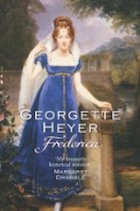
Georgette Heyer, Frederica

The Marquis of Alverstoke is rich, influential, and sought-after in London society, but he’s also jaded and quickly grows bored with most people. That changes, however, when he meets the Merrivilles, distant family connections who have just moved to London. Frederica, the eldest, wants her beautiful younger sister to have a Season so that she can make an advantageous marriage, and she asks Alverstoke for help. Somewhat to his own surprise, he agrees – and soon finds himself invested in the welfare of all the Merrivilles, but perhaps Frederica most of all. This is such an enjoyable Heyer novel, with schoolboys Jessamy and (especially) Felix Merriville stealing every scene they’re in! I also love how the romance between Frederica and Alverstoke develops; they become good friends first, and they often find common ground as the only two rational adults in the room. I’m glad I revisited this one – it’s always a treat to immerse myself in Heyer’s Regency world!

Poul Anderson, The High Crusade

This is a “first contact” story with an unexpected twist: The aliens come to Earth, expecting to conquer it with minimal trouble, as they’ve done with many other planets. But it’s the Year of Our Lord 1345, and when the spaceship opens, it’s immediately stormed and overrun by Sir Roger de Tourneville and his band of merry Englishmen. They plan to use the ship to invade France, and then perhaps take it on crusade to the Holy Land. But a treacherous alien survivor takes them into outer space instead, where they encounter strange planets, hostile aliens, and baffling new technologies. I really enjoyed this book, which is written in the style of a medieval chronicle. The narrator, Brother Parvus, is earnest, religious, and sincere in his belief that despite the aliens’ superior knowledge and technology, they’re no match for true God-fearing Englishmen. The book is full of adventure and humor, with creative battle sequences and even a love story. I’d definitely recommend this one if the premise appeals to you!

Claudia Gray, The Perils of Lady Catherine de Bourgh

Jonathan Darcy and Juliet Tilney—now known in their social circles as talented amateur investigators—receive a summons to Rosings, where Lady Catherine de Bourgh has recently endured several attempts on her life. She orders them to find the person responsible, but the only possible suspects seem to be family and close friends—Lady Catherine’s daughter, Anne; her son-in-law, Colonel Fitzwilliam; her neighbors, the Collinses; or the servants, who have been with the family for many years. Meanwhile, Jonathan and Juliet have developed strong feelings for one another, but each is convinced the other doesn’t reciprocate. I’m continuing to enjoy this series, which does a good job of imagining the continuing lives of Austen’s characters. I liked the decision to pair Anne with Colonel Fitzwilliam and was interested in their relationship. I also really enjoyed the side plot of the antagonism between Fitzwilliam Darcy and Henry Tilney—both great guys, but I can see how they’d rub each other the wrong way at first! Recommended for fans of Austen-inspired mysteries, but start with book 1, The Murder of Mr. Wickham.