Mini-Reviews: Masque, Library, Heartbeat

Stella Riley, Masque of Deceptions

Daniel, Viscount Reculver, has recently inherited his father’s title, along with a mountain of debt he didn’t know about. To make ends meet, he’s begun selling some of his family’s valuables. When Anna Hawthorne of Hawthorne’s porcelain manufactory hears this news, she’s determined to buy back the set of scent bottles that the late viscount had purchased from Hawthorne’s over the years. But when she meets the handsome and charming Daniel, she’s tempted to make a different offer entirely. As Daniel contemplates her surprising proposal, he begins to see Anna in a new light. This is the second book in Stella Riley’s new series, after The Shadow Earl, and I liked it more than its predecessor. Both Anna and Daniel are very sympathetic characters, and their slow journey from awkwardness to love is delightful. Of course Daniel’s close friends, at least two of whom are sequel bait, make a few appearances, but the focus is largely on the central romance. There are not one but two villains, which gets a bit tiresome, but luckily they don’t overwhelm the story. I’m hoping the next book in this series comes out soon, as I’m definitely excited to read it!

Sulari Gentill, The Woman in the Library

Four strangers are sitting at the same table in the reading room of the Boston Public Library, when they hear a woman scream. At the time nobody knows what’s happened, but news reports later reveal that the woman was murdered. The four strangers, who began talking to each other after hearing the scream, quickly become friends and speculate on who could have killed the woman—but things get complicated when it comes out that one of them has a violent past. I was intrigued by the premise of this book and imagined it would be a variation of the locked-room whodunnit, perhaps with a side of “unbreakable” alibi. Instead, very little time is actually spent on the woman in the library, as the book becomes more of a thriller, with plenty of “shocking” but repetitive revelations and a couple more violent deaths. As a thriller, it was…fine. The unmasking of the murderer fell flat, and then everything ended very abruptly. Overall, I just found it a bit lackluster, and I wouldn’t particularly recommend it.

Cara Bastone, Just a Heartbeat Away

Sebastian Dorner, grieving the sudden death of his wife, is shocked and ashamed when his son Matty’s preschool teacher, Via DeRosa, gently tells him that Matty shows signs of neglect. Seb vows to do better, and two years later, he and Matty are in much better shape. Seb is volunteering at Matty’s new school, where Via just happens to be the new guidance counselor. A mutual attraction builds between them, but Seb is 42 while Via is 27 and has a boyfriend. Will these obstacles prevent their romance? Ultimately, of course, the answer is no, but getting there is a delicious, achingly slow burn. I loved this book’s nuanced portrayal of grief and strong characterization, even of the minor players. Much as I adored Seb and Via together, some of my favorite scenes in the book were between Seb and his mother-in-law, who have a complicated relationship. Overall, I really enjoyed this novel and am eager to continue with the series. Highly recommended if you don’t mind some heavier elements in your romance.

Mini-Reviews: Murder, Ruin, Story

Anthony Wynne, Murder of a Lady

This mystery, set in the Scottish Highlands, opens with the murder of Mary Gregor, the elderly sister of the local laird. Her corpse is found in a locked room, and the police are stymied as to how the murderer got in or out. The discovery of a fish scale on the body leads the locals to believe that supernatural merman-like creatures are responsible. Luckily, amateur detective Dr. Eustace Hailey is visiting the area, and he eventually discovers a more logical explanation—but not before a troubled marriage nearly falls apart, and several more deaths occur. I quite liked this Golden Age mystery; I didn’t guess the culprit, and the locked-room puzzle was ingenious. I also found the psychological discussion interesting, although it occasionally seemed questionable and dated. But Hailey’s analysis of the dead woman’s character is both fascinating and integral to the solution of the case. It’s a bit melodramatic, and the book ends very abruptly; but overall, I liked this one and would recommend it to vintage mystery fans.

Mimi Matthews, Rules for Ruin

Euphemia “Effie” Flite was plucked from the streets as a child and placed in the Crinoline Academy, a school dedicated to educating strong and independent young women. Effie graduated years ago, but now the headmistress is calling in a favor: Effie must use her training to ruin the reputation of Lord Compton, a member of Parliament who’s opposing a bill that would allow married women to own property. In so doing, Effie butts heads with Gabriel Royce, a self-made man from the London slums who needs Compton’s influence to pursue his plans for social reform. I think Mimi Matthews is one of the best historical romance authors writing today, but I was worried that this new series would be too anachronistic and unsubtle (the back cover says something about “disrupting the patriarchy”). Happily, my fears were unjustified; Effie and Gabriel are both progressive thinkers for their time, but their beliefs are grounded in their cultural context and make sense for their characters. I also loved the romance, which is steamless but leaves no doubt that Effie and Gabriel are wildly attracted to each other. I’m excited to continue with the series—book 2 comes out in November!

Genevieve Cogman, The Untold Story

***Warning: SPOILERS for previous books in the series!***

In the last (at least for now) installment of the Invisible Library series, Irene finally comes to a reckoning with Alberich, who is a murderer, a traitor to the Library—and Irene’s biological father. But at their climactic meeting, Alberich reveals information that has Irene questioning her most deeply held beliefs and loyalties. How was the Library founded, who really controls it, and for what purpose? Irene must find these answers without getting herself or her loved ones killed in the process. When I first read The Invisible Library, I remember being disappointed that Alberich was a villain with no nuance and that Irene never questioned the benevolence of the Library. Thankfully, those complaints are no longer valid! This book finally digs into the Library’s true nature and sheds some light on a few things from previous books that seemed strange or incongruous. I think it’s a satisfying ending to the series, though I can imagine Irene & co. having further adventures if the author ever wants to return to this world.

Mini-Reviews: Ticket, Fatally, Inconvenient

Freya Sampson, The Lost Ticket

In 1962, twentysomething Frank met a girl on a London bus, and that single encounter changed his life. Unfortunately, he lost the phone number she gave him, and he never saw her again. Sixty years later, Libby has just arrived in London after simultaneously losing her job and her boyfriend. When she meets Frank (on the bus, of course), she’s fascinated by his story and decides to help him find the girl from the bus—posting flyers, placing newspaper ads, inventing a Twitter hashtag, etc. In the course of the search, Libby grows in unexpected ways as she discovers a new purpose and perhaps a new romance. This is a gentle, bittersweet novel about community and the positive ways people can influence each other. There are a lot of tender, effective moments, and Libby is a realistically complex character. Some aspects of the plot, like the romance and Libby’s conflict with her family, get short shrift. But overall, this is a pleasant, escapist, not too saccharine read.

Ande Pliego, You Are Fatally Invited

Six mystery authors are invited to a writers’ retreat at the home of reclusive best-selling author J.R. Alastor. Alastor is a pen name, and no one knows the author’s true identity, but the guests are all eager to meet their host. They don’t know that Mila, the event coordinator acting as Alastor’s proxy, has a grudge against one of them and is planning murder as her revenge. But when someone turns up dead—and it’s not the murder Mila had planned—she and the guests must team up to find the killer(s?) in their midst. This novel is heavily influenced by Agatha Christie’s And Then There Were None, with a dash of the Clue board game thrown in. As such, I was sold on the premise, and ultimately I enjoyed the book. It’s a little gory, and some of the logistical plot elements didn’t quite make sense (but maybe that’s my fault, as I was racing to the end and might have missed some details). But I liked the ending, and I’m pleased with myself for figuring out Alastor’s identity. Recommended if the premise appeals to you.

Loretta Chase, My Inconvenient Duke

Lady Alice Ancaster has decided it’s time to marry. Her brother constantly engages in reckless behavior that could get him killed, and his heir is a terrible cousin who would make Alice’s life miserable. Unfortunately, she’s already in love with the wrong man: Giles, duke of Blackwood, one of her brother’s best friends and partners in crime. Giles has loved Alice for years but knows she’s far too good for him, and he’d rather sow wild oats with his friends than settle down to marriage and respectability. When circumstances push them together, however, their attraction threatens to overcome their better judgment. Much as I love Loretta Chase, I found this book a little disappointing. It’s the third in a series, and the first two books hinted at problems in Alice and Giles’s marriage, which I assumed this book would explore. Instead, this is more of a prequel, starting well before their marriage and the events of books 1 and 2. The story is entertaining and well told, but it’s not the story I was hoping for. It’s still a Chase novel, which means there’s still a lot to enjoy (I do love me some pining, and there’s plenty of it here!), but this one won’t be a keeper for me.

Mini-Reviews: Hunting, Zero, Secret

Anna Gavalda, Hunting and Gathering

This novel, set in the late ’90s/early aughts, follows four characters struggling to survive in Paris. There’s Camille, literally a starving artist, who’s eking out a living as a cleaning lady; Philibert, a sheltered aristocrat with OCD and no idea how to live in the 21st century; Franck, a talented chef who does nothing but work; and Paulette, Franck’s grandmother, who’s getting too old to live in her house but doesn’t want to move to a nursing home. All four are lonely and at the end of their resources, but as their lives intersect, they find connection and hope. I’ve read this book before and enjoy it every time. I laugh and cry and fall in love with the characters, and there’s an achingly lovely slow-burn romance as well. It’s not all sunshine and rainbows—Paulette’s story is particularly heartbreaking—but overall it’s a warm and uplifting book.

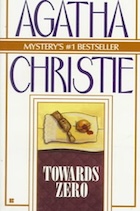
Agatha Christie, Towards Zero

The setup of this Christie novel is an ill-assorted house party in a small coastal town. Nevile Strange and his new wife, Kay, are visiting his former guardian, the rich invalid Lady Tressilian. Awkwardly, Nevile’s first wife, Audrey, happens to be visiting at the same time. The three members of the love triangle all claim to be perfectly fine with this arrangement, but tensions are high. When Lady Tressilian is murdered and it’s clearly an inside job, Superintendent Battle takes a hand in the investigation. This is one of Christie’s more farfetched tales, but it’s still a compelling read! I remembered the murderer’s identity and was entertained by the book’s clever misdirection involving certain clues and alibis. The characterization is on the weaker side—for example, there’s a romance shoehorned in at the end that doesn’t really work—but I still enjoyed rereading this one.

Genevieve Cogman, The Secret Chapter

In this sixth installment of the Invisible Library series, Irene is tasked with acquiring a book from Mr. Nemo, a mysterious Fae collector with a Bond-villain-esque island lair. In exchange, Mr. Nemo wants her to participate in a heist: She’ll work with a crew of dragons (including Kai) and Fae to steal a famous painting from an alt-21st-century Vienna. But tensions are high among the crew, the nascent dragon-Fae-Library treaty notwithstanding, and everyone has a hidden agenda. I love a good heist caper, so I found this book a lot of fun; it doesn’t do anything groundbreaking with the genre, but it both embraces and mocks the various tropes. I’m not sure the book does much to move the series forward, and with just two books remaining, I’m curious about the endgame. Guess I’ll just have to keep reading to find out!

Mini-Reviews: Dials, Misdirected, Mirror

Agatha Christie, The Seven Dials Mystery

At a lively country house party, the young guests mock their friend Gerry Wade for always sleeping late. They decide to play a prank on him, setting up eight alarm clocks in his room to go off early in the morning—but the joke falls flat when Gerry is found dead the next day, ironically from an overdose of sleeping medication. The death is ruled an accident, but when another of the houseguests is killed shortly thereafter, Gerry’s friends begin to suspect murder. The resulting story is a mashup of thriller and farce that includes sensitive political documents, hijinks at a second house party, and the mysterious Seven Dials society. This novel is a fun romp, with a light tone despite the murders, and Christie puts her own unique spin on the “secret society” trope. I enjoyed rereading the book and seeing just how she pulls off the unexpected conclusion. Not a top-tier Christie, but a good read nonetheless!

Lucy Parker, Misdirected

Hattie Murton is an actress with a major role on the popular (and steamy) historical soap “Leicester Square.” Now she has a problem: Her character is about to embark on a passionate romance with the show’s villain, played by the coldly arrogant Anthony Rafe. She’s not eager to simulate love for the man who treats her and everyone else with cynical disdain, so she’s shocked to feel a genuine spark of attraction during their scripted love scenes—and even more shocked to discover that Anthony might feel the same way. Lucy Parker is an autobuy author for me, so I was hoping to love this book, and I did. Hattie is a sweetheart without being insufferably saccharine, and Anthony is a swoonworthy hero who nevertheless retains his hard edges. His indignation at his growing feelings for Hattie is a delight! Definitely recommended for romance fans if you like the premise.

This book is only available on Audible right now, and it’s narrated by Nicola Coughlan (of “Derry Girls” and “Bridgerton” fame) and Gwilym Lee. I never listen to audiobooks, so I don’t have any basis for comparison, but I think both narrators did a good job, especially Lee. It was hard for me to get into the story at first, and occasionally I got confused about who was speaking, but ultimately the format didn’t prevent me from enjoying the book. Though if it’s ever published in paperback, I will definitely pick up a copy!

Kristen Britain, Mirror Sight

This installment of the Green Rider series is somewhat unusual. At the end of the last book, Karigan was spirited away somewhere; in this book, we learn that she’s traveled 168 years into the future. The Sacoridia she knows has vanished, and the land is now ruled by a tyrannical emperor. Technology has advanced, but magic is virtually unknown and the Green Riders are no more. Karigan is determined to get back to her own time and somehow prevent this future from occurring—but what if she can’t find a way home? I was initially biased against this book, fearing it would be a tedious side adventure with no lasting consequences for the series. But I actually found the book a refreshing change of pace, with an interesting steampunk setting and some new characters for Karigan to interact with. That said, it’s still far too long, and it doesn’t affect the series arc in any real way. My enthusiasm for this series is waning, honestly, but I’m still invested enough that I plan to continue for now.

Mini-Reviews: Lake, Simple, Beg

John Bude, The Lake District Murder

At an isolated garage in the Lake District, a man is found dead inside a car, with an apparatus indicating that he deliberately killed himself by asphyxiation. But Inspector Meredith notices a few things that aren’t consistent with suicide and soon comes to believe the man was murdered. As Meredith investigates, he also uncovers shady business dealings at the garage and searches for the connection between them and the murder. I love a good Golden Age mystery, but this one was often frustrating for me. The plot doesn’t really present a puzzle for readers to solve; rather, the story plods along with what feels like a minute-by-minute account of Meredith’s investigation. I think Bude was trying to make the point that detective work is often dull routine, not dramatic and glamorous—but that doesn’t make it fun to read about the dull routine! Overall, fans of police procedurals might enjoy this one more than I did, but I found it a slog.

Pamela Morsi, Simple Jess

Althea Winsloe is a young widow with a three-year-old son and a good farm property. Her small, tight-knit community is pressuring her to marry again, but she has no desire to give up her freedom or her farm. Still, she needs a man to help her work the land, so she hires Jesse Best, known to everyone as “Simple Jess” because he has an intellectual disability. As Althea gets to know Jesse, she realizes that despite his limitations, he’s very knowledgeable about farming and hunting – as well as being kind, loyal, and handsome. I think this is a book that might be polarizing; Morsi boldly chooses to tell some of the story from Jesse’s POV, and while I think she portrays him with sensitivity and kindness, it’s certainly a fine line to walk. I was rooting for him from the start, and I also liked the various secondary characters who populate Althea and Jesse’s community. Overall, I really liked this one and appreciated the unique premise, but I don’t think it’s a book for everyone.

Sarah Adams, Beg, Borrow, or Steal

This is Adams’s third book set in Rome, Kentucky, and the heroine is the oldest Walker sister, Emily. She’s the one who (seemingly) has it all together, who helps her family with terrifying competence and no hesitation. But lately she’s been feeling lonely and dissatisfied—that is, until her longtime nemesis, Jack Bennett, moves back to town. Emily and Jack have always argued, but now their fights are feeling more flirty than genuinely aggressive. They’ll have to overcome some baggage, however, before they can move past their bickering and truly trust each other. I enjoy the enemies-to-lovers trope and think this book does it well. I’m also a fan of prickly heroines who are outwardly competent but inwardly struggling, so Emily particularly appealed to me. Toward the end, I think things got a bit too syrupy-sweet (all the men in this series are annoyingly perfect), but I enjoyed the book and will definitely read the next one when it comes out!

Mini-Reviews: Christmas, Paupers, Garden

Rupert Latimer, Murder after Christmas

A Christmas house party turns deadly when the guest of honor, Sir Willoughby Keene-Cotton, is found dead on Boxing Day. Uncle Willie was very rich, so plenty of people had a motive to kill him—except that, based on the specific legal circumstances surrounding his demise, it was unclear who would inherit his fortune. Similarly, he died by poisoning—but apparently nothing he ate in the hours before his death could have contained the poison. The increasingly bewildered police must sift through piles of red herrings before they can even verify that a murder has been committed, let alone by whom. This breezy vintage mystery multiplies motives and clues so that it’s nearly impossible to separate the important information from the surrounding camouflage. And that’s what makes it such a fun read—that, and the whimsical characters who needlessly obstruct the investigation. I really enjoyed this one and would recommend it as a good vintage holiday read.

Sheri Cobb South, Of Paupers and Peers

James Weatherly, a poor village curate, is shocked when a London solicitor informs him that he’s the new Duke of Montford. He travels to Montford immediately to claim his title, only to be attacked by thieves and lose his memory in the process. Miss Margaret Darrington finds him at the side of the road and assumes he’s Mr. Fanshawe, the tutor she hired for her teenage brother. James has no reason to doubt her identification and takes up his new tutorial position. But complications ensue when James seems smitten by Margaret’s beautiful sister, Amanda, who must marry a wealthy man — and when Margaret begins to fall for James herself. This is a sweet and steamless Regency romance that I very much enjoyed, despite the fact that it’s not particularly original. I liked that, while there are various moments of mistaken identity, they’re not drawn out too long and are solved promptly with intelligent communication. I’d definitely recommend this to fans of traditional Regencies, and I’ll seek out more by Sheri Cobb South.

Sarah Addison Allen, Garden Spells

In the small town of Bascom, North Carolina, magic is an understood and largely unspoken fact of life. Everyone knows, for instance, that the Waverley family’s garden produces plants that can influence your mood, and that if you eat the apples from their tree, you’ll have a vision of the biggest event in your life. Claire Waverley has embraced her family’s legacy and uses the magic plants in her catering business, while her estranged sister, Sydney, never liked being a Waverley and couldn’t wait to leave town. But when Sydney unexpectedly returns with a five-year-old daughter in tow, Claire’s carefully cultivated life begins to change. I really enjoy Allen’s books, which are tales of family, romance, and female friendship overlaid with a patina of magic. Claire and Sydney’s relationship is the heart of this novel, and I loved how they slowly grew closer despite years of misunderstandings. Recommended if you like books about small towns and the bonds between women.

Mini-Reviews: Ghosts, Secret, Masked

Katherine Arden, The Warm Hands of Ghosts

The Great War has left Laura Iven an orphan. Her parents were recently killed in the Halifax Explosion of 1917, and now she’s received word that her only sibling, Freddie, is missing presumed dead after the Battle of Passchendaele. But if he’s missing, how could she have received his uniform and identification tags? Something doesn’t add up, so Laura goes to Europe looking for answers. This novel alternates between Laura’s story and Freddie’s, which takes place a few months earlier and reveals how he escaped the war’s horrors only to fall prey to something even worse. This book is beautifully written and emotionally harrowing; Arden’s depiction of the war and its all-consuming effects is relentlessly grim and graphically vivid. I found it a very hard read at times, but I’m glad I persevered and came to a whisper of hope in the end. I also loved how the story engages with literature and legends about the devil, who is very much present in the book. Highly recommended if you’re in the mood for something dark!

Benjamin Stevenson, Everyone This Christmas Has a Secret

Ernie Cunningham gets involved in a “holiday special” murder when his ex-wife, Erin, calls on him for help: Her current boyfriend, Lyle, was killed in their home, and she’s been arrested for the murder. Ernie’s investigation centers around Lyle’s philanthropic work at a theater in the Blue Mountains, which is currently staging a famous magic act. This means Ernie is surrounded by people familiar with stage magic and skilled in the art of misdirection—in other words, the perfect set of suspects. Can he clear Erin’s name and find the real murderer in time for Christmas? This novella is a fun installment of the series that makes good use of the time-honored detective novel trappings of theater, magic, and of course Christmas. I was able to guess the murderer but didn’t unravel the whole plan, and I enjoyed Ernie’s conviction that there are rules for holiday specials as well as for mysteries. Recommended if you’ve enjoyed previous books in the series.

Genevieve Cogman, The Masked City

Irene is happy with her new job as the Librarian-in-Residence in a steampunk version of Victorian London. But when her apprentice, Kai—the youngest son of a noble dragon family—is kidnapped, she must leave her (relatively) comfortable new position to rescue him and prevent an all-out war between dragons and Fae. To do so, she travels to an unfamiliar, extremely chaotic world that’s dominated by the Fae: a fairytale version of Venice where it’s always Carnival. This book is a pretty good follow-up to The Invisible Library, with exciting action scenes and some fun snark about the Fae’s addiction to storytelling tropes. I enjoyed Irene’s cleverness and practicality, though I missed Kai and Vale, who didn’t get a lot of page time in this installment. But overall, it’s a fun read, and I’m looking forward to book #3 next month.

Mini-Reviews: Rules, Witch, Bride

Sinéad Murphy, The Jane Austen Rules: A Classic Guide to Modern Love

This short book positions itself as a dating guide based on the timeless wisdom of Jane Austen. As a diehard Austen fan, I loved the premise, but I have mixed feelings on the execution. I do think the advice, both about dating and how to be a woman in the modern world, is largely good. The Austen analysis is also interesting; it’s not super deep literary criticism, but some of Murphy’s interpretations are ideas I hadn’t considered before. However, I wasn’t a fan of the writing style, which is trying—and mostly failing—to imitate Austen. Plus, Murphy misquotes the first sentence of Pride and Prejudice, which is frankly inexcusable! So, while I didn’t hate the book, I wouldn’t recommend it either, even for Austen fanatics.

Elizabeth George Speare, The Witch of Blackbird Pond

In 1687, orphan Kit Tyler experiences severe culture shock when she leaves her life of luxury on a Barbados plantation and moves in with her aunt’s family in Connecticut Colony. At first Kit hates her new life: Her uncle is strict, she’s forced to help with the unending household chores, and the broader Puritan community is suspicious and unwelcoming. Gradually she comes to appreciate her new situation, particularly after she befriends an old woman widely reputed to be a witch. But when the town’s hostility toward the “witch” turns ugly, Kit’s own safety is threatened. This was my favorite book for a while growing up, and upon rereading, I was surprised by just how many scenes I remembered. I found it a very enjoyable read that paints a vivid picture of colonial New England, both good and bad. I also loved Kit’s character development, as well as the multiple satisfying love stories. I’m glad I decided to revisit this one!

Cornell Woolrich, The Bride Wore Black

This thriller features a mysterious woman who is systematically murdering men throughout New York City. Her motive is unclear, as she doesn’t seem to know any of the men personally. Beautiful and clever, she’s easily able to gain access to her victims, and she always vanishes directly after the murder without a trace. Eventually, a policeman notices a pattern among the killings and makes it his mission to bring this femme fatale to justice. This is a fascinating, suspenseful novel with a clever structure, following the woman and each of her male victims in turn. As a result, I felt some measure of empathy for every character and was eager to discover the woman’s motive. The ending is both satisfying and heartbreaking—everything is resolved, but none of the characters get what they want. I’d definitely recommend this one to fans of suspense and noir, and I’m interested in reading more by Woolrich.

Mini-Reviews: Librarian, Lady, Call

C.J. Archer, The Librarian of Crooked Lane

In a fantasy version of post-World War I England, Sylvia Ashe supports herself by working as a librarian. Her path crosses with that of Gabriel Glass, a nobleman and the son of a famous magician, as he investigates the theft of a possibly magical painting. When he inadvertently gets Sylvia fired, he finds her a new job at a library specializing in magical tomes. He also draws her into both his investigation and his circle of friends. As Sylvia gets closer to Gabe, she also resaerches whether her family might possess silver magic, as her brother (who died in the war) believed. In terms of genre, this book is right up my alley—it’s essentially a historical mystery, with a few magical trappings and a hint of romance. The trouble is that I’ve read a lot of books in this genre, and after a while they all tend to feel pretty similar, unless there’s something truly remarkable about them. This book isn’t remarkable, but it’s a perfectly decent read. I certainly wouldn’t mind continuing with the series, but it’s not a high priority for me.

Mimi Matthews, A Lady of Conscience

This fifth (and final?) book in the Somerset series features the oldest Beresford brother, James, who is the heir to an earldom and is determined to rehabilitate the family name by making an advantageous marriage. His plans don’t include falling in love with Hannah Heywood, the shy daughter of an untitled naval officer, yet he finds himself struggling with unexpected feelings. Meanwhile, Hannah is attracted to James but doesn’t think they will be compatible in the long term. Can James convince her to give him a chance? I really enjoyed this book, which is somewhat in the Pride and Prejudice vein – James is a Darcy-esque, starchy, uptight hero who is slowly transformed by love. I liked Hannah too; she’s shy and quiet but still has a spine. Some aspects of the plot felt a bit rushed, but otherwise this is a strong installment of an entertaining series. Recommended if you enjoy steamless historical romance!

Kristen Britain, First Rider’s Call

Karigan G’ladheon tried to fight her destiny as a Green Rider and return to her former life as a rich merchant’s daughter. But she ultimately couldn’t resist the Riders’ call, though she’s now experiencing odd glitches in her magic and seeing visions of the long-dead First Rider, who seems to be desperately trying to tell her something. Meanwhile, an ancient evil is stirring in Blackveil Forest, and Karigan must dig deep into her country’s history to figure out how to stop it. This second book in the Green Rider series is a worthy sequel: It’s a solid fantasy novel with interesting world-building and a likable (if perhaps a little too special) heroine. The setting in particular is thoughtfully done; though the menace of Blackveil drives the main plot, the characters also have to deal with the problems of their everyday lives, such as court politics and romantic turmoil. I’m fairly invested in this series now and am looking forward to reading book #3 next month.