Mini-Reviews: Heartless, Blunt, Mere

Mary Balogh, Heartless

For the past decade, Lucas Kendrick has lived in Paris, cultivating a reputation as a man without a heart. Ever since he was betrayed by and banished from his family 10 years ago, he’s resisted any hint of love or vulnerability. Now Luke has inherited a dukedom and must return to England to fulfill his duties. He also needs to marry and decides upon the beautiful, vivacious Anna Marlowe, though he has no intention of actually falling in love with his wife. Their relationship slowly deepens but is tested when Anna’s traumatic past catches up with her. I liked this book fine, but it would have been even better without the suspense subplot. I think romances are most interesting when the obstacles are internal to the people involved — character flaws they need to overcome, fears they need to face, etc. Luke and Anna have plenty of those obstacles, so the external conflict with the villain from Anna’s past felt like overkill. So while this is an enjoyable read, I don’t feel a need to keep it on my shelves.

Georgette Heyer, A Blunt Instrument

When Ernest Fletcher is found dead in his study with his head bashed in, everyone is shocked — he was well-liked and seemingly had no enemies. But as the police begin their investigation, they soon unearth plenty of possible motives and suspects. There’s the dead man’s nephew, Neville Fletcher, who stands to inherit a fortune. There’s neighbor Helen North, whose gambling debts Ernest was using to blackmail her — and her husband, John, who may have been jealous of Ernest. But before the police can arrest anyone, they need to solve two problems: given the evidence at hand, how could anyone have had time to commit the murder? And what did the killer do with the weapon? This is one of Heyer’s best mysteries, in my opinion, with a clever solution and an entertaining cast of characters. My one quibble is that I wanted even more of Neville & co.; frankly, I felt the relationships among the suspects were more interesting than the mystery!

C.S. Lewis, Mere Christianity

A small group of people at my church decided to form a book club during Lent and chose this book. I’d read it before, years ago, but I’m really glad I decided to reread it now. Lewis is deservedly famous for his writings on Christianity; he has a gift for explaining complex ideas in a straightforward, accessible way. In this book, he suggests some arguments supporting belief in Christianity, states the religion’s core beliefs (shared by all denominations), discusses various aspects of Christian morality, and delves a bit into theological concepts such as the Trinity. Throughout the book, he emphasizes practical concepts such as what people must do in order to truly follow Jesus, and why it matters. I feel like most people interested in the topic have already read this book, but if it’s been a while since you’ve read it, I’d definitely encourage you to revisit it!

Mini-Reviews: Con, Tangle, Austen

Devon Daniels, The Rom Con

Cassidy, a reporter for the feminist website Siren, has just ended yet another disappointing relationship. Her grandmother suggests she try a different approach to dating, based on a 1950s list of rules for catching a husband. Cassidy is horrified, but when she meets Jack Bradford — co-founder of Siren’s rival website, Brawler, which Cassidy views as a bastion of toxic masculinity — she decides to use the antiquated rules on him. Once Jack falls for the Stepford Wives version of her, she’ll write an article exposing him as a sexist jerk. But as she begins dating him, she learns he might not be such a jerk after all. I’m of two minds about this book. On the plus side, it’s a fun, quick read with enjoyable banter between the two leads. But Jack is simultaneously too perfect and problematic — it’s never clear why, if he’s such a good guy, he’d continue to be involved with Brawler. There are also a few too many Big Misunderstandings near the end that seem to exist only to drag out the happy ending. Overall, I did enjoy the book while I was reading it, but looking back, I don’t think it totally works.

Theresa Romain, It Takes Two to Tangle

Soldier Henry Middlebrook has just returned to England after Napoleon’s defeat, wounded and unable to move his right arm. Frustrated by his perceived “uselessness” and the pity of his relatives, he decides to court Lady Caroline Stratton, a popular society beauty who he thinks will help reintegrate him into his old life. He enlists the help of Caroline’s companion, Frances Whittier, but complications ensue when he and Frances grow closer. I was intrigued by the setup of this book — Henry’s disability plus a Cyrano-esque plot point in which Frances writes him letters that he assumes are from Caroline. But unfortunately, I wasn’t as enamored of the book itself. Henry is far too slow to see what’s right under his nose, and the obstacles keeping him and Frances apart aren’t important enough to justify the length of the novel. There’s also more steam than I’d prefer, so overall, this just wasn’t the book for me. I was also underwhelmed by Romain’s Season for Temptation, so I think she’s not the author for me either.

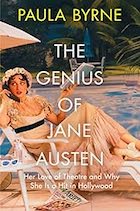
Paula Byrne, The Genius of Jane Austen: Her Love of Theatre and Why She Works in Hollywood

In Mansfield Park, Fanny Price disapproves of the amateur theatricals staged by her cousins and their friends. Some critics have inferred from this that Jane Austen herself disapproved of theater, but Byrne argues pretty convincingly that the opposite is true. Austen acted in private theatricals with her family and friends, she frequently attended plays while living in Bath and London, and her letters reveal that she was familiar with the famous actors and theater gossip of her day. The book explains how Austen’s life interacted with the theater; how she used theatrical plots, character types, and conventions in her novels; and why her books adapt so well to the screen. Byrne is obviously an Austen fan, and a very knowledgable one. The book is briskly written and appears well researched. I liked it a lot and would certainly recommend it to Austen lovers!

Mini-Review: Murder, Pairing, Spindle

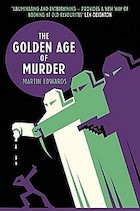
Martin Edwards, The Golden Age of Murder

This book is a sprawling account of the lives of the authors of detective fiction in the 1920s and ’30s, particularly the earliest members of the Detection Club. Martin Edwards is the current Detection Club president, and his enthusiasm for his predecessors — and for Golden Age mysteries in general — is both obvious and contagious. He gives biographical information about authors such as Agatha Christie, Dorothy L. Sayers, and Anthony Berkeley. He also speculates a fair bit about their personal lives and sexual proclivities, with varying amounts of supporting evidence. He discusses several Golden Age novels, though never in very much depth, and is pretty good about avoiding spoilers. I found the book a bit scattered and hard to follow at times; the content doesn’t necessarily correspond to the various chapter headings, and Edwards often bounces among several ideas in the course of a single paragraph. The book also has invisible endnotes, which I found a bit irritating, though that’s just a personal preference. Overall, though, I think this is a good read for fans of Golden Age detective fiction, and it’s certainly put several new-to-me novels and authors on my radar!

Elizabeth Harmon, Pairing Off

American pairs figure skater Carrie Parker is facing career death after her partner gets caught in a cheating scandal. So when a Russian coach invites her to Moscow for a tryout, Carrie seizes the opportunity — but is appalled to discover that her new partner is Anton Belikov, a top Russian skater with whom Carrie had a one-night stand seven years ago. Anton doesn’t seem to remember her, and his gruff demeanor intimidates her. But as they train for the upcoming competition season, they grow closer, until secrets from Carrie’s past threaten their budding relationship. This book appealed to the same part of my brain that enjoys sports movies (even though I don’t follow any sports). I got the impression that Harmon actually has some figure skating knowledge; her descriptions of the routines and workouts feel like more than window dressing. I liked the Moscow setting as well. The romance between Carrie and Anton is fine, though a bit angsty/“it’s destiny!” for my taste. Overall, a decent read that I’d recommend if you like figure skating and/or the ’90s movie The Cutting Edge.

Nancy Campbell Allen, Kiss of the Spindle

Isla Cooper is cursed: Every night, she falls into a deathlike sleep from which she can’t be awakened. To find the witch who cursed her and obtain the cure, she blackmails her way onto Daniel Pickett’s airship, which is headed for the city where the witch is rumored to be. Meanwhile, Daniel is illegally transporting shapeshifters out of England, where they’re facing political persecution. He doesn’t have time to help Isla, especially when another last-minute passenger who wants to exterminate all shapeshifters forces his way on board. Eventually, though, Daniel and Isla decide to work together — and fall in love in the process. This is a fun steampunk romance with nods to Sleeping Beauty, and though there’s nothing extraordinary about it, I really enjoyed it! I liked Daniel and Isla’s progression from grudging toleration to mutual attraction, and I also found more than one secondary character intriguing…I kind of hope they get their own books at some point! In the meantime, I’m happy to be reading this series and looking forward to the next installment!

Mini-Reviews: Serfdom, Benevolent, Wicked

F.A. Hayek, The Road to Serfdom

F.A. Hayek was an Austrian economist who moved to England in the 1930s and subsequently taught in both the UK and US. He won the Nobel prize in economics in 1974. In this essay, written during World War II and first published in 1944, he argues that Nazi fascism was not a reaction against socialism but rather a natural progression of socialist ideas. In Hayek’s view, socialism (by which he seems to mean a centrally planned economy) is bad economics because competition, not central planning, is what allows new ideas and wealth-creating innovations to flourish. But it’s also bad politics because under a socialist system, individual freedom will disappear; all power will reside in the hands of the central planners/the state. I broadly agree with Hayek’s ideas here, so my opinion is biased. But I think this essay is worth reading for anyone who is interested in a “liberal” (as opposed to socialist) view of economics or in the history of socialist thought. Hayek doesn’t straw-man his opponents, and his arguments are thoughtful and measured. Maybe I’ll tackle one of his full-length books at some point!

Alison Goodman, The Benevolent Society of Ill-Mannered Ladies

Lady Augusta “Gus” Colbrook and her sister, Lady Julia, are unmarried women in their 40s and thus are basically invisible in society. Instead of dwindling into spinsterish obscurity, they decide to help vulnerable women who are being abused by the men in their lives. Aiding them in their quest is the handsome Lord Evan Belford, whose checkered past doesn’t deter Gus from a more-than-friendly interest. This novel is hard to categorize; it’s not exactly a romance or a mystery, though it has elements of both. But the book mainly depicts the negative aspects of Regency society, particularly the limits placed on women, and offers a sort of revenge fantasy in which the women take charge and triumph over all wrongdoers. For some readers, this will be exactly their cup of tea, but for me, it was too anachronistic and felt a bit preachy. I didn’t dislike the book, though! Goodman is a good writer, the plot adventures are fun, and Gus is (usually) a sympathetic character. I believe a sequel is planned, and I’ll likely read it when it comes out.

Stella Riley, The Wicked Cousin

After a too-strict upbringing, Sebastian Audley has spent the past several years behaving as outrageously as possible, first in England and then abroad. Now his scandalous ways are beginning to pall, and he hopes to return to England and lead a quieter life, but his reputation makes that difficult. Meanwhile, Cassandra Delahaye is determined not to be impressed by the rakish Sebastian, but she soon finds herself attracted to his good looks and roguish sense of humor. I’m officially a huge fan of this series and enjoyed this installment as well, but it felt a little too long. The main obstacle to the romance is Sebastian’s obsessed ex-lover, which means there’s a lot of plot to slog through even after Sebastian and Cassie fall in love. (I find that Stella Riley uses the “evil ex” trope pretty often, which I’m not fond of.) I still liked the book a lot, though, and it was nice to catch up with the various recurring characters. Looking forward to the next one!

Mini-Reviews: Guide, Wicked, Kit

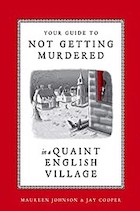
Maureen Johnson and Jay Cooper, Your Guide to Not Getting Murdered in a Quaint English Village

This charming, humorous little book presents itself as a guidebook for travelers in the English countryside who may unexpectedly find themselves in an English Murder Village. As everyone knows, such villages are fraught with peril, from the sinister antique shop to the overly violent cricket match to the local inn full of mysterious strangers. The book enumerates various people and places to avoid, both in the village itself and at the neighboring manor, such as the pond (“full of the skeletons of Victorian children and, if you are unwise, you”) and the kitchen (“no”). I got a few giggles out of this book, and the Gorey-esque illustrations really enhance the material. It does go on a bit too long for what is essentially a single joke, but I think fans of Agatha Christie novels and British mystery series like Midsomer Murders will enjoy it.

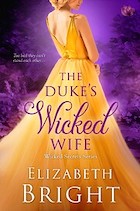
Elizabeth Bright, The Duke’s Wicked Wife

After years of rakish living, Sebastian Sinclair, the duke of Wessex, decides it’s time to marry and produce an heir. He plans to invite some marriagable ladies to a house party, and he asks his longtime friend, Eliza Benton, for help with the guest list. However, as the party commences, it’s Eliza herself whom Sebastian can’t stop thinking about. I’ve mentioned before that I enjoy romance heroes whose conflict is basically, “I’m having a feeling and I don’t like it!” I also like characters whose frivolous facades conceal hidden depths. That’s definitely Sebastian here, and he is by far the best part of the book, though Eliza is also a strong heroine and a great match for him. The book is billed as a stand-alone, but I’m not sure it totally works…characters from previous books in the series have prominent roles, and without having read their books, it was hard for me to keep everyone straight. I did enjoy the central romance here, but I don’t find myself particularly tempted to try more by the author.

Amy Barry, Kit McBride Gets a Wife

Junebug McBride is tired of doing all the chores for her four older brothers in the tiny town of Buck’s Creek, Montana, so she decides to advertise for a wife for her brother Kit. The woman must “expect neither doting nor compliments” and must be an excellent cook. A widow from St. Louis answers the ad, dragging along her disillusioned Irish servant, Maddy. Complications ensue when Kit has a meet-cute with Maddy and mistakenly thinks she’s his prospective bride. I’m not terribly interested in Westerns or cowboy romances, but I found this book unexpectedly charming! Some of the chapters are from Junebug’s point of view, and I really enjoyed her hilarious perspective on events. The romance between Kit and Maddy is sweet, though not terribly unique, and there aren’t many scenes with just the two of them. So if you like your romance to focus heavily on the central couple, this book might not be for you; but if you like a large cast of quirky characters and a unique setting, I’d recommend this one! I will definitely be continuing with the series.

Mini-Reviews: Thief, Mischief, Normal

Emily Gee, Thief with No Shadow

I recently reread Gee’s The Laurentine Spy and quite enjoyed it, so I decided to dust off this book too. The plot is tricky to summarize, but it involves sinister magical creatures, a stolen necklace, and a curse. Melke and Bastian hate each other at first; he needs the necklace to break the curse, but she stole it to save her brother’s life. When they’re forced to spend time together as her brother heals, they begin to understand one another better. I found this book very compelling and stayed up too late last night to finish it. But at the same time, I’m not sure I actually liked it that much. I love an enemies-to-lovers romance, but Bastian is so furious and straight-up mean for most of the novel that it’s hard to accept him as a hero. There’s also some weird sex stuff in the book; not all of it is consensual, and some of it involves nonhuman magical creatures. Granted, the book knows this is icky, not sexy, but it’s still unpleasant to read about! So, while I’d consider reading more by this author, I don’t think this particular book is for me.

Manda Collins, A Lady’s Guide to Mischief and Mayhem

Lady Katherine Bascomb owns and writes for a London newspaper. Her latest article criticizes Scotland Yard for negligence in investigating a series of shocking murders, and the article causes lead investigator Andrew Eversham to be taken off the case. But when Kate later stumbles on another dead body, and the methods are similar to those of the previous murders, Eversham is assigned to the new case. He and Kate work together to discover the killer and navigate a growing attraction to each other. I really liked the premise of this book, with its blend of historical romance and mystery, but for me the execution fell flat. Kate and Andrew are 21st-century characters in period dress, and I just didn’t find them believable. The mystery plot is also disappointing; the villain’s motive is ridiculously farfetched. I don’t plan to continue this series, but considering how many others I’m trying to catch up with, that’s not necessarily a bad thing!

Rachel Bloom, I Want to Be Where the Normal People Are

I’m a huge fan of the TV show Crazy Ex-Girlfriend, which is an insightful, at times painful exploration of mental illness wrapped in a musical comedy. So I was excited to read Rachel Bloom’s memoir — she co-created and starred in the show and was also one of the writers and composers. But to my disappointment, the book doesn’t focus much on the show; instead, it delves deep into Rachel’s awkward childhood, her experiences with bullying, her love of musical theater, and her struggles with depression and anxiety. Still, there were things I enjoyed about this book — the chapter that’s presented as a musical (which you can hear Rachel perform on her website!) is a particular delight. But I also thought some of the humor was a bit labored, and overall I just didn’t like the book as much as I was hoping to.

Mini-Reviews: Golden, Holidays, Undertaking

Francis Spufford, Golden Hill

It’s November 1746, and Richard Smith has just arrived in the small town of New York. He visits a countinghouse and produces a note for 1,000 pounds — a huge sum. The denizens of New York don’t know what to make of him: Is he simply a rich man planning to explore the pleasures of a new place? Or is he some kind of fraud, spy, or scoundrel? As Smith explores the city, he gets into various kinds of financial, political, and romantic trouble, but it’s not till the end of the novel that his true purpose is revealed. I really enjoyed this book, which apes the picaresque adventures and digressive style of 18th-century novels. It does a good job of pointing out the social ills of the period (such a slavery) without being anachronistic or preachy. It’s also just plain fun to follow the possibly roguish Smith around and try to figure out what he’s up to, though the ending is a bit of a heartbreaker. But I’d still heartily recommend this book to historical fiction fans!

David Sedaris, Holidays on Ice

This book is a collection of holiday-themed stories and essays, some of them autobiographical and most previously published elsewhere. “SantaLand Diaries” chronicles the time Sedaris worked as a Macy’s elf, “Christmas Means Giving” follows two families as they compete to see who can best demonstrate the true meaning of the season, and “Jesus Shaves” sheds some light on different cultures’ Easter traditions. These short works contain some hilarious moments, but frankly, a lot of them are dark and depressing. One story ends with the murder of a baby, while in another, parents sell their children to a pedophile. So if you’re looking for light, fun stories to get you in the holiday spirit, I’d recommend skipping this one! But if you’re of a more cynical disposition during this time of year, then it could be just the thing for you. For me, it was a mixed bag and probably not a keeper.

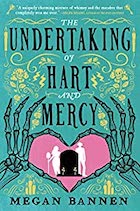
Megan Bannen, The Undertaking of Hart and Mercy

This book is a weird but winning genre mashup of romance, fantasy, and Western. Hart Ralston is a marshal in a fantasy world similar to our own, but with zombielike creatures called drudges; his job is to kill them and take their bodies to the nearby undertakers. One such undertaker is Mercy Birdsall, who loves her job but is desperately trying to keep the family business afloat, despite a sick father and uninterested brother. Hart and Mercy fight constantly, but their mutual antagonism is concealing very different feelings, which emerge when they become anonymous penpals. So basically, the book is The Shop around the Corner/You’ve Got Mail with a bit of zombie action and a Western flavor…which sounds like it shouldn’t work, but it totally does! I didn’t need quite as much world-building and would have preferred more of a buildup to the romance, but overall I loved this one and would recommend it if the premise sounds appealing.

Mini-Reviews: Dragon, Austen, Venom

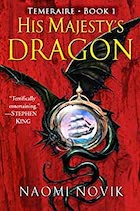
Naomi Novik, His Majesty’s Dragon

When naval captain Will Laurence captures a French ship with a coveted dragon egg aboard, his life is turned upside-down. He bonds with the baby dragon, Temeraire, which means he must give up his naval career to become an aviator — a way of life completely different from what Laurence is used to. But his newfound friendship with Temeraire carries him through, and the two of them will have an important role to play in England’s ongoing war with France. I’ve read several books in this series, but I’d forgotten how much I enjoyed them! The concept (Napoleonic Wars plus dragons) is right up my alley, and I adore both Laurence and Temeraire as characters. I can’t wait to read about their further adventures in subsequent books! 

Lucy Worsley, Jane Austen at Home

This biography is a breezy and entertaining look at Jane Austen’s life through the lens of the homes she lived in. It also explores how the concepts of home and domesticity informed her work. As an enthusiastic Janeite, I enjoyed this book, although if you’ve read other Austen biographies you don’t particularly need to read this one. It appears reasonably well cited; there are numbered endnotes, and Worsley quotes many primary sources. She speculates quite a bit about motives and emotions (as she herself admits in the introduction), and I occasionally found her interpretations farfetched. Overall, though, a good read, especially for those who haven’t read other books on Austen’s life and work.

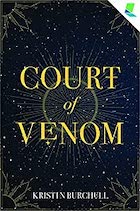
Kristin Burchell, Court of Venom

Badriya never wanted to become the queen’s poisoner, but she has no choice. The malicious Queen Solena will kill her if she refuses, and the city is surrounded by a wasteland full of witches and demons, making it impossible for her to run away. But when a neighboring prince arrives as a potential suitor for the queen, Badriya may finally get the chance to pursue a different life. This novel reads like a standard YA fantasy (though it’s marketed as adult); the heroine is an outsider with special powers who eventually has to fight for justice. It’s entertaining enough, but not particularly unique. I didn’t like how the book kept jumping between past and present; I think it was supposed to generate suspense, but instead it just made the world-building confusing and hard to follow. Overall, while I certainly didn’t hate this book, I wouldn’t particularly recommend it either.

Mini-Reviews: Women, Coconut, Belle

Madeleine St. John, The Women in Black

This novel follows the lives of four women who all work at Goode’s department store in 1950s Sydney, Australia. Patty, in her mid-30s, is married but unhappily childless, and her husband Frank is oblivious to her emotional turmoil. Fay is around 30 and has been going out with men for years, but somehow none of them seem to want to marry her. Lisa, a temporary hire for the Christmas season, dreams of going to university and becoming a poet, but her strict father won’t hear of it. And Magda, a glamorous Slovenian immigrant, is adjusting to a culture very different from her own. I loved this book and devoured it in a single sitting. It’s light and charming and slyly funny, and I became invested in the stories of all four women. I especially loved Magda, who enjoys the finer things in life and is generous in sharing them. There’s a bit of romance, but the main focus is on women’s experiences and relationships. The book reminds me a bit of Miss Pettigrew Lives for a Day, but with a slightly more satirical edge. I expect to revisit it often and would recommend it as a great comfort read!

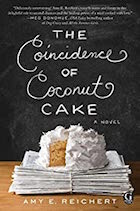
Amy E. Reichert, The Coincidence of Coconut Cake

Milwaukee restaurateur Lou Johnson is having a run of terrible luck. First her fiancé cheats on her; then, that very night, food critic Al Waters samples her cooking — which is subpar because of her distress over the breakup — and writes a scathing review. The day the review comes out, Lou goes to a bar to drown her sorrows and meets Al. They’re attracted to each other and soon strike up a romance. The only problem is, he doesn’t realize she owns the restaurant he panned, and she doesn’t know he’s the hostile reviewer because he writes under a pen name. I’m a sucker for a You’ve Got Mail story, and this is a fun one that made me want to visit Milwaukee and eat some fried cheese curds immediately. I never quite believed in Lou and Al as characters; they seemed like stock types rather than real people to me. But I liked the setting and the overall cheerful, Hallmark-esque vibe of this novel, so I’d consider trying more by this author.

Paula Byrne, Belle: The Slave Daughter and the Lord Chief Justice

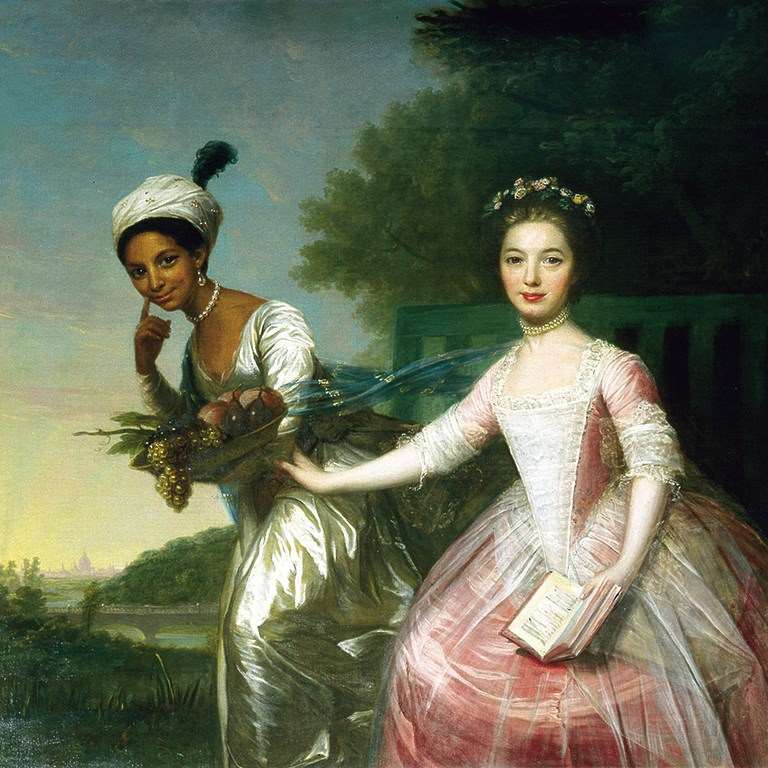
The idea for this book came from an 18th-century English portrait of two young women — one white, one black — who are portrayed as equals, almost as sisters. The black woman was Dido Elizabeth Belle, the illegitimate daughter of an English naval captain and an African slave. She grew up in the house of her great-uncle, the Earl of Mansfield, who happened to be the Lord Chief Justice and who decided several cases that would be crucial to the antislavery movement in Britain. It’s a fascinating story, but unfortunately, there’s very little about Dido in the historical record, and consequently very little in the book! Instead, Byrne focuses on the English slave trade, the status of black individuals in London, the Earl of Mansfield’s legal career, etc. It’s all interesting, but I was hoping for more biography, less history. The book does have numbered endnotes, many of which cite primary sources, yet Byrne also editorializes a fair amount. I’d say it’s more of a popular history than a scholarly one. Overall, I’d recommend it for people who are interested in the period. Apparently there’s also a movie about Dido, called Belle, which I’m interested in watching now.

Here is the portrait of Dido and her cousin, Elizabeth Murray:

Mini-Reviews: Reading, Jeeves, Enchantment

Alan Jacobs, The Pleasures of Reading in an Age of Distraction

In this short volume, literature professor Jacobs speaks to people who would like to be readers but feel too busy or intimidated to try, and to people who once were readers but aren’t any longer. He champions the idea that reading can and should be a pleasure, not an obligation. His slogan is “Read at whim” — that is, what you actually enjoy, not what you or others think you ought to read. He discusses the perils of the reading list, the specific joys of rereading, and the notion that different kinds of texts can be read with different types of attention. I think this book is probably preaching to the choir for most of us, but I still found it very interesting, and I liked Jacobs’s friendly and humorous tone. Recommended for current and aspiring readers!

P.G. Wodehouse, How Right You Are, Jeeves

Affable, dimwitted Bertie Wooster gets into scrape after scrape while visiting his Aunt Dahlia in the country. Fellow guests include Roberta “Bobbie” Wickham, a beautiful redhead who is pretending to be Bertie’s fiancée while actually being engaged to his friend Kipper; famous mystery novelist Adela Cream and her playboy son Willie; Aubrey Upjohn, the menacing former headmaster of Bertie’s preparatory school; and Sir Roderick Glossop, a celebrated brain scientist currently posing as Aunt Dahlia’s butler. Naturally, complications ensue, and Bertie must call Jeeves back from his annual vacation to sort out the mess. Wodehouse is always good for the soul, and I found myself chuckling my way through this novel. A fun and breezy lark to kick off the year with!

Margaret Rogerson, An Enchantment of Ravens

Isobel is an extremely gifted painter, which means her work is in high demand among the fair ones. But when Rook, the autumn prince himself, requests her to paint his portrait, she makes a fatal mistake: she paints human sorrow in his eyes, which is both alien and scandalous to the fair ones. To clear his reputation and defend his throne, Rook whisks Isobel away to fairyland, where they encounter many perils and slowly come to a deeper understanding of each other. Yes, this book is YA, and it’s a bit dramatic and angsty at times, but I still really enjoyed it! I loved the magical portrayal of the fairy world, and I wish there were a series of books set in the various fairy courts. Isobel is a strong and practical heroine, and I couldn’t help but enjoy the sulky, emotionally oblivious Rook as well. I also loved Rogerson’s Sorcery of Thorns, and I really hope she comes out with another book soon!