Mini-Reviews: Call, Muslin, Desperate

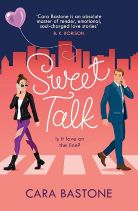
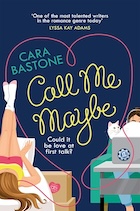
Cara Bastone, Call Me Maybe

Vera has just started her own business and is about to attend a local expo that will hopefully bring her a lot of new clients. But her website is crashing, and she desperately needs it to be functional by the expo. After waiting on hold for hours, she finally speaks to customer service rep Cal, who is surprisingly friendly and helpful. Their conversation soon moves beyond Vera’s website problems, and they find themselves sharing jokes and even personal details about their lives. In short, they’re flirting pretty hard, but each is unsure about how the other feels. Can one chance phone call lead to romance? I was utterly charmed by this short romance novel (my e-book edition is under 200 pages), which focuses almost entirely on conversations between Vera and Cal before they meet face to face. Both of them are realistic, likable characters, and they have great chemistry. Sure, the misunderstandings keeping them apart are a bit silly, and the stakes feel very low. But in a story of this length, I think that’s fine! My streak of loving every book I’ve read by Cara Bastone continues, and I’m excited to read the other two books in this series.

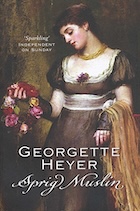
Georgette Heyer, Sprig Muslin

Sir Gareth Ludlow is an extremely eligible bachelor, but he’s shown no interest in marriage since his beautiful fiancée died seven years ago. Now he thinks it’s time to marry, however, so he decides to propose to his longtime friend Lady Hester Theale, a “spinster” in her late 20s. But en route to Hester’s home, he stumbles across a beautiful young woman in need of his help. Amanda has run away from home, and Gareth feels honor-bound to protect her and keep her out of trouble. Unfortunately, given Amanda’s fertile imagination and instinct for drama, that’s easier said than done! A Heyer reread is always a treat, and I like this book in particular because the plot contains a few surprises, including (arguably) Gareth’s eventual choice of bride. There’s a lot of humor in the book, mostly from the stories Amanda tells and her impetuous decision-making. I actually would have liked a bit less of that and a bit more of Gareth and his heroine together, but aside from that, I enjoyed revisiting this book.

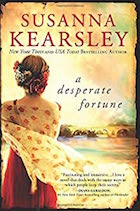
Susanna Kearsley, A Desperate Fortune

In the present, autistic computer programmer Sara is hired to decode an 18th-century diary. She travels from London to the outskirts of Paris, where she stays with the diary’s owner and falls for a handsome Frenchman. Meanwhile, the diary’s writer, Mary Dundas, is the daughter and sister of Jacobites who have followed the exiled King James VIII into France. When her brother asks her to help protect a fugitive Jacobite Englishman, she doesn’t realize that she’ll be plunged into adventure, danger, and romance. I loved this novel the first time I read it, and this reread was extremely enjoyable as well. I prefer the historical story to the contemporary one, but both deal with unconventional women trying to find their place in the world. The author’s note reveals that a lot of care was taken with the historical research, and it definitely shows, but not in an obnoxious info-dump-y way. Highly recommended for lovers of historical fiction!

Mini-Reviews: Bride, Mink, Undercutting

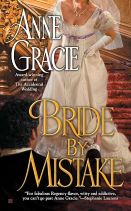
Anne Gracie, Bride by Mistake

Eight years ago, young soldier Luke Ripton was fighting Napoleon’s forces in Spain when he stumbled across a girl, Bella, being attacked by bandits. He rescued her and learned that she was running away from her vicious cousin, who planned to marry her and steal her fortune. Luke’s only course of action was to marry Bella himself, bring her to a convent for safekeeping, and have the marriage annulled later. In the present, Luke learns the annulment didn’t go through, so he has no choice but to retrieve his Spanish wife. But Bella is far from the demure, obedient bride he expected. Despite the implausibility of the plot, which veers into soap opera territory near the end, I had a lot of fun with this book! Bella is a strong heroine who’s determined to do the right thing, and Luke is unwillingly charmed by her. I also liked the book’s unique setting, focusing on Spain during and after the Napoleonic Wars. Overall, though it’s probably not a keeper for me, I found this an enjoyable historical romance.

James Anderson, The Affair of the Mutilated Mink

Another house party goes wrong at the English stately home of Alderley. This time the earl, who has recently become a film enthusiast, invites an American movie producer who’s thinking of using Alderley as the setting for his new project. The writer and leading man also attend, as well as an Italian actress who may become the leading lady. Then the earl’s wife invites her cousin and cousin’s husband, while the earl’s daughter, Gerry, asks two of her boyfriends so she can make up her mind between them. The stage is set for another murder, and while all the evidence initially points to one of Gerry’s suitors, the case soon becomes more complicated. This Golden Age pastiche is just as enjoyable as The Affair of the Bloodstained Egg Cosy and has a lot of fun with the genre’s tropes, including a Great Detective who comes in to “assist” the local police with the investigation. I especially enjoyed the references to fictional detectives such as Peter Wimsey and Roderick Alleyn, who are real people in this universe. Looking forward to reading the third and final book next month!

Megan Bannen, The Undercutting of Rosie and Adam

Tanrian marshal Rosie Fox doesn’t mind taking on the most difficult and dangerous jobs. As an immortal demigod, she can’t die, so her motto is “Act first, think never.” But she may be in over her head when the portals between Tanria and Bushong start malfunctioning, threatening the lives of everyone inside Tanria. Her boss calls in Adam Lee, the inventor of the portals, to see if he can repair them; instead, he and Rosie end up stuck in Tanria. As they search for a way out, they also grow closer, but Adam is keeping some pretty big secrets about his past. I love the creative fantasy world of this series, with its complex theology and quasi-Western vibes. But this book, I think, relies a little too much on the world-building and not enough on characterization or plot. Not a lot happens in the book till the last hundred pages or so, and the romance between Rosie and Adam also feels a bit forced. There’s a mismatch between the darker subject matter (the weight of immortality, the meaning of death, complicated family dynamics) and the light, breezy tone. I did still enjoy the book, and it certainly gives some good closure to the series, but I don’t ever need to read it again.

Mini-Reviews: Bloodstained, Famous, Bellwether

James Anderson, The Affair of the Bloodstained Egg Cosy

This historical mystery novel has all the trappings of a Golden Age detective story: a country house party, hidden identities, political machinations, a secret passage, a famous jewel thief, a staged car accident, and multiple suspicious deaths. Based on the title, I was expecting the book to be humorous, but it isn’t particularly, though occasionally a character will toss off a witty line. Overall I think this is a great read for Golden Age mystery lovers. All the tropes are present in abundance (sometimes superabundance), yet the book still manages to subvert reader expectations in interesting ways. I don’t want to say too much more about the plot because it’s more fun to experience it as it unfolds. Suffice it to say that I liked this one quite a bit and am looking forward to the other two books in the Inspector Wilkins series (I have an omnibus edition that contains all three). Apparently they’re all set at the same country house, so I’m interested to see which characters will recur!

Mary Balogh, The Famous Heroine

The daughter of a wealthy merchant, Cora Downes would normally have no reason to mingle with London society’s upper crust. But when she (sort of) rescues from drowning a relative of the Duchess of Bridgwater, the duchess is so grateful that she decides to sponsor Cora for a Season and help her find a husband. The unconventional Cora is nervous and awkward in this new environment, so Lord Francis Kneller (a friend of the Bridgwater family) takes her under his wing. They soon become friends, but when Francis inadvertently “compromises” her, neither one expects the ensuing marriage to bring true love. This book was a reread for me, and I enjoyed revisiting these characters. Cora is a lovable klutz, and Francis is a kind hero with a sense of humor. Some aspects of the plot don’t quite work; for example, Cora’s mistaken assumption that Francis is gay, based on his colorful attire, persists for far too long. There are also plentiful references to the previous books in the series, Dark Angel and Lord Carew’s Bride, which I found slightly tiresome. But overall, I enjoyed my reread—Mary Balogh is reliably entertaining!

Connie Willis, Bellwether

Dr. Sandra Foster, a researcher at HiTek Corp., is studying the origin of fads, and it’s not going well. As she sorts through articles on hair bobbing and crossword puzzles and the Hula Hoop, she’s forced to deal with out-of-touch management, “sensitivity exercises,” and the world’s least competent assistant. As her world grows increasingly more illogical and frustrating, Sandra meets Dr. Bennett O’Reilly, a fellow HiTek scientist who seems strangely resistant to fads, if his terrible clothes are any indication. Could he somehow be the key to her research? I adore Connie Willis, especially her lighter and more comedic novels, of which this is one. It’s actually a bit stressful to read at times, because Sandra’s work frustrations are entirely too realistic! The satire of life in a corporate environment is spot-on, though, and I really liked the progression of the story and the romance. The book came out in 1996, so some aspects of it are dated now (no one researches anything on the computer), but overall I think it holds up quite well. Highly recommended if the premise interests you!

Mini-Reviews: Something, Captivity, Reluctant

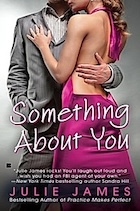
Julie James, Something About You

Assistant US attorney Cameron Lynde just wants a peaceful night in a posh hotel while her floors are being refinished. Instead, she’s kept awake by a late-night sex marathon in the room next door—followed by a murder. And unfortunately, because the case has federal implications, the person in charge of the investigation is FBI agent Jack Pallas, with whom Cameron has a contentious professional past. Since Cameron is a key witness with a high-profile job, she’s put in protective custody, which forces her and Jack into much closer proximity than they’d prefer—that is, until their mutual attraction complicates things even further. Julie James was one of the first romance novelists I ever read, and her books were a great gateway into the genre for me. This one is a fun read with likable leads; both Cameron and Jack are smart and good at their jobs, and they have great chemistry. The book isn’t destined to be a new favorite, but it was definitely an enjoyable way to spend an evening.

Michael Gilbert, Death in Captivity

This mystery has the unique setting of an Italian prisoner-of-war camp. An unpopular prisoner is found dead in a tunnel that some of the POWs had been digging to escape. But was his death an accident or murder? And how did he get into the tunnel, whose entrance is disguised by a heavy slab that takes four men to lift? One of the British prisoners, Henry “Cuckoo” Goyles, is tasked with solving the case, but his investigation is complicated by a potential informer within the camp, as well as by the eventual necessity for a prison break. This is a fascinating variation on the “impossible crime” mystery, where the circle of suspects is limited to camp guards and prisoners. Gilbert himself was a POW who escaped from an Italian camp during World War II, and his experience undoubtedly informed many details of the novel. The murder mystery is interesting—and several aspects of the solution surprised me—but it’s secondary to the vivid, personal depiction of this specific time and place. Recommended, but more for those interested in WWII history than for mystery lovers.

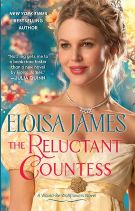
Eloisa James, The Reluctant Countess

Giles Renwick, the earl of Lilford, always does the proper thing. He needs an appropriate countess to uphold his social position, so it’s too bad that he’s continually lusting after Lady Yasmin Régnier, whose gowns and reputation are equally scandalous. Yasmin is attracted to Giles also, though she’s reluctant to admit it, as they seem to argue every time they’re together. Eventually they surrender to their mutual passion, but when Giles wants to marry Yasmin, she hesitates, unsure that they are truly well matched. I have really liked some works by Eloisa James, but this book was not one of them. I didn’t really believe in either of these characters or in the conflicts that kept them apart. Giles’s younger sister, who throws some obstacles in their way, also doesn’t seem to have a very clear or consistent motivation for her actions. I’ll try a few more of James’s books in hopes of finding one I really like, but this one was not it.

Mini-Reviews: Trellised, Morning, Silent

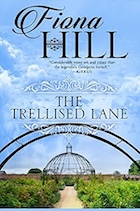
Fiona Hill, The Trellised Lane

Julia has been the lady of the house since her mother’s death, but now that her father has remarried, she no longer has that freedom and authority. Despite liking her new stepmother, Julia wants to regain her lost responsibilities and urges her brother, Fitz, to accompany her to London so that she can marry and leave home. She soon catches the eye of a French nobleman with a dubious past, but is herself attracted to a friend of her stepmother’s. Meanwhile, Fitz’s innocence is challenged by the new friends he meets in London. Last year I really enjoyed Fiona Hill’s The Country Gentleman and consequently bought an e-book collection of her novels. Unfortunately, this one didn’t really work for me; it just felt very unoriginal and paint-by-numbers. The stakes couldn’t be lower, and none of the characters are particularly well developed. Not a terrible book, just bland as an unsalted cracker.

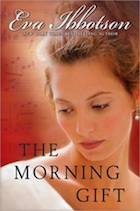
Eva Ibbotson, The Morning Gift

Ruth Berger was born and raised in Vienna as the privileged daughter of a well-off professor. But in 1938, because of her Jewish heritage, Vienna is no longer safe. Her family emigrates to England, but due to a paperwork mix-up, she is left behind. Enter Quinton Somerville, a British professor who once studied with Ruth’s father and decides to help her get out of Austria. Unfortunately, the only way to do it is by marrying her. Quin and Ruth agree they’ll annul the marriage once they reach England, but of course fate has other ideas. Eva Ibbotson’s books are the ultimate comfort reads for me. They’re full of warmth and community, with luxurious descriptions of scenery and music and food. But they’re saved from being too sickly sweet by some moments of genuine gravity and heartbreak, such as the story of the Ziller quartet in this book. Work is stressful at the moment, so I needed a familiar comfort read, and this novel was the perfect choice!

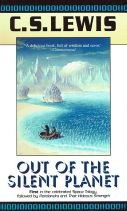
C.S. Lewis, Out of the Silent Planet

Philologist Elwin Ransom is on a walking tour of England when he encounters an old schoolfellow, Devine, and a brilliant physicist, Dr. Weston. They’re working on a mysterious object that turns out to be a spaceship—and the hapless Ransom is taken on board by force. He learns that Devine and Weston are taking him to another planet, Malacandra, which is inhabited by sapient beings who requested Ransom for some ominous purpose. But when the three men land on Malacandra, Ransom soon learns that the planet and its inhabitants are nothing like he expected. This book was written in the ’30s, and it cleverly interrogates the tropes of science fiction that were popular at the time (what aliens would be like, what would be the experience of space travel). The plot is a bit slow-moving, with lots of descriptive language about the terrain and the various species Ransom meets. There are also some thinly veiled religious ideas, which is to be expected with Lewis. Overall, this is a pretty good space-travel tale, but it’s definitely more on the philosophical than the adventurous side.

Mini-Reviews: Educating, Joyful, Lucky

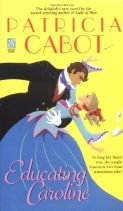
Patricia Cabot, Educating Caroline

Lady Caroline Linford is shocked and dismayed to discover her fiancé in the arms of another woman. Feeling unable to break off the engagement, she decides she needs some lessons in seduction so that she can keep her betrothed from straying. And who better to teach her than the “Lothario of London,” Braden Granville? Braden is surprised by Caroline’s proposal, since she’s such an innocent and proper young lady, while he’s a self-made man from the slums of London. But he’s also intrigued—and finds himself giving her a much more hands-on tutorial than either of them expected. This is one of the first historical romance novels I ever read, and I was curious to see if it would hold up to my fond, nostalgic memories. By and large, I still found it an enjoyable read! It’s almost a parody of the genre, which made me willing to overlook the book’s sillier elements, and there’s a decent suspense plot alongside the main romance. It’s not great literature by any means, but if you’re in the mood for a light and fluffy historical romance, this one is a fun time.

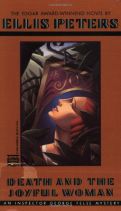
Ellis Peters, Death and the Joyful Woman

Sixteen-year-old Dominic Felse meets the beautiful 22-year-old Kitty Norris and falls immediately, painfully in love with her. So when she is arrested for the murder of Alfred Armiger, an enormously wealthy but not very popular local entrepreneur, Dominic knows she must be innocent and attempts to find the real killer. Is it Armiger’s estranged son and his wife, who lost out on the dead man’s fortune? Or could the murder have something to do with a tavern sign of dubious artistic merit? I’m really enjoying these Felse novels, not just for the vintage-mystery charm but for the lovely characterizations, especially of George and Dominic. Their relationship is loving but complicated now that Dominic is on the verge of adulthood. The solution to the mystery is almost irrelevant to the central conflicts of the novel, but that’s a minor quibble when the book is this enjoyable. I’ll definitely be continuing with this series at some point!

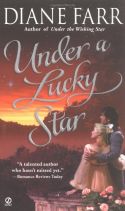
Diane Farr, Under a Lucky Star

When Derek Whittaker rescues Lady Cynthia Fitzwilliam from the unwelcome attentions of another man, it’s love at first sight for them both. Derek immediately plans to court Cynthia, but at their next meeting she rebuffs him. Hurt and angry, Derek tries to forget about her; but when they meet again three years later at a house party, he’s annoyed to find that he is still drawn to her. Meanwhile, Cynthia struggles with her attraction to Derek, since she feels duty-bound to marry a very rich man to support her family. Diane Farr is a good writer, and I’ve enjoyed some of her books, but this one frustrated me. I’m not a fan of insta-love generally, and in this case it felt like Derek and Cynthia kept having the same argument over and over again. But I did like that Cynthia’s scheming mother gets her comeuppance in the end! Overall, this book is a quick and pleasant read, but it just wasn’t the right story for me.

Mini-Reviews: Regency, Eyes, Spellman

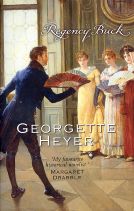
Georgette Heyer, Regency Buck

Judith Taverner and her brother Peregrine travel to London to meet their guardian, Lord Worth, who they assume is a curmudgeonly old man. In fact, Worth is relatively young, a leader of fashionable society, and friends with Beau Brummell. His autocratic manner immediately offends strong-willed Judith, and their frequent arguments comprise the most dramatic parts of the book. Meanwhile, someone is trying to kill Peregrine, but is the villain Worth or someone else? I love Heyer, but this is not one of my favorites by her, and now I remember why. It’s one of her earliest Regency romances, and it seems like she dumped all her research here. We get so much detail about Beau Brummell, the Royal Pavilion at Brighton, prizefighting, and so on that there’s no space for the romance. The hero treats Judith badly, and we don’t get enough insight into his feelings or motives. If you want a detailed window into the Regency era, this novel is great, but it’s not very satisfying as a romance.

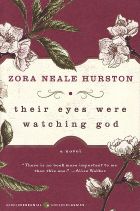
Zora Neale Hurston, Their Eyes Were Watching God

Janie Crawford is a young black woman living in Florida in the early 20th century. Her grandmother, who was born in slavery, has a specific vision for Janie’s life: She should marry a well-to-do man and let him take care of her, so that she never has to work or struggle. But Janie has an adventurous spirit and wants to see more of the world. Some of her choices don’t work out—she meets men who want to stifle and control her, and she endures poverty and great suffering. But she also finds true love and spiritual freedom despite her circumstances. This is a beautifully written novel with a compelling protagonist; Janie felt like a real person to me, and in the end I was convinced that she’d be okay no matter what happened next. I also liked the portrayal of Janie’s community, which felt vivid and true to life. The characters all use a specific dialect, which means you have to pay close attention while reading, but I think that’s a feature rather than a bug. Overall, I can see why this book is regarded as a classic and would definitely recommend it.

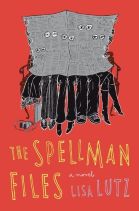
Lisa Lutz, The Spellman Files

The Spellmans are a loving but dysfunctional family of private investigators. They tail each other around town, record each other’s private conversations, and break into each other’s locked rooms. Twenty-eight-year-old Izzy, who narrates this novel, is the screwup of the Spellman children and wants to leave the family business. But her parents make her take on one last case before they’ll allow her to quit, and Izzy’s questionable investigative tactics cause even more family drama. This is a really clever book with a fun premise—I enjoyed Izzy’s deadpan narrative voice and the various hijinks she and her family get into. At the same time, it all requires a huge suspension of disbelief, and you can’t think too hard about the reality of this family or you’ll realize how truly tragic and dysfunctional it is. This is the first book in a series, but I’m not sure I’ll be continuing…I did enjoy it, but I don’t think I need more.

Mini-Reviews: Hitchhiker’s, Rake, Emma

Douglas Adams, The Hitchhiker’s Guide to the Galaxy

It’s an ordinary Thursday, and British everyman Arthur Dent is lying in front of a bulldozer, trying to stop his house from being demolished. Little does he know that the entire planet is about to be demolished to make way for an interstellar bypass. Fortunately, his alien friend, Ford Prefect, saves him from vaporization by hitching a ride on a spaceship. From there, Arthur and Ford brave many dangers, including Vogon poetry, infinite improbability, automated attacks from dead planets, and the evil machinations of white mice. I remember reading this book (and the sequels) in my tween or teen years, and at the time I thought it was hilarious. This time around, I could still appreciate some of the humor, but I had less patience for it. The book isn’t attempting to be anything more than a rapid-fire series of jokes, and after a while I found it a bit tedious. So even though there’s no real resolution at the end of this novel, I’m not tempted to continue with the series.

Mary Jo Putney, The Rake

Notorious rake Reggie Davenport is growing tired of his aimless life; so when his cousin, the Earl of Wargrave, unexpectedly gives him an estate, he views it as a fresh start. Upon arriving at the estate, Reggie is shocked to discover that his very capable steward is a woman, Alys Weston. Alys fled her aristocratic family at a young age and has fought hard to make her own way in the world, so at first she fears and resents Reggie’s presence. Eventually they discover each other’s good qualities, but Reggie’s drinking problem threatens their relationship. I was pleasantly surprised by this book! I loved its refusal to romanticize rakishness: Reggie’s drinking and womanizing have serious consequences, particularly his struggle with what we now call alcoholism. His feelings for Alys are one motivating factor in his desire to change, but not the only one, and her love doesn’t magically solve his problems. I liked Alys too and related to her insecurities, but this is really Reggie’s book. I would highly recommend it to historical romance fans, and I’m interested in trying more by Putney—anyone have any recommendations?

Audrey Bellezza and Emily Harding, Emma of 83rd Street

In this contemporary retelling of Jane Austen’s Emma, Emma Woodhouse is a privileged 23-year-old living on the Upper East Side and getting a master’s in art history. Socially, she’s at a loose end now that her beloved older sister has married and moved out. So when she meets country-mouse classmate Nadine, Emma decides to give her a makeover—as well as some dubious romantic advice. Emma’s friend Knightley doesn’t hesitate to point out the flaws in her approach, but lately their good-natured sparring seems to be taking a romantic turn. I adore Austen but tend to steer clear of retellings; I broke my rule for this one, and sadly I don’t think it was worth it. The novel has its good points—it successfully translates the original book’s major plot points, and it gives us some peeks at Knightley’s point of view—but to me it felt like a standard contemporary romance with nothing particularly interesting or compelling about it. Unless you’re a diehard Austen fanfic lover, I’d skip this one.

Mini-Reviews: Ring, Moon, Earl

Lois McMaster Bujold, The Spirit Ring

In a magical version of Renaissance Italy, Fiametta is the privileged daughter of a goldsmith and master mage. Her biggest problem is an unrequited crush on one of the duke’s soldiers—that is, until the duke is assassinated by a rival who seems to command dark magic. When this man’s soldiers kill Fiametta’s father and seize his corpse for use in an evil ritual, she teams up with the local abbot, who also has some knowledge of magic, and with Thur, a would-be metalworker who was supposed to be her father’s new apprentice. This stand-alone fantasy novel is one of Bujold’s earlier works, but it has a lot of her characteristic elements: strong world-building, an intelligent heroine with agency, and ordinary people doing heroic things because there’s no one else around to do them. The book has a YA feel to it, possibly because Fiametta and Thur are both teenagers, and their romance is a bit underdeveloped. Overall, though, I really enjoyed this one and would recommend it to fantasy fans!

Robert A. Heinlein, The Moon Is a Harsh Mistress

It’s 2075, and the Federated Nations of Earth have established a thriving colony on the moon. But times are tough on Luna, whose resources are being unfairly exploited by the Terran government. A small group of Lunar citizens decides to start a revolution, including narrator Manny, an engineer who has befriended self-aware supercomputer “Mike.” Along with a crafty professor, a beautiful revolutionary, and a Terran self-proclaimed soldier of fortune, Manny and Mike engineer a rebellion—but at what cost? This novel combines clever world-building with speculative science and libertarian political philosophy. There are some interesting ideas in it, and I liked Manny’s narrative voice once I got used to the Lunar dialect, but I also found it a slog; it really drags after the initial setup. It was fascinating that some aspects of the plot were very dated while others still felt timely. Overall, this was a mixed bag for me, and I’ll probably wait a while before trying anything else by Heinlein.

Kate Pembrooke, Not the Kind of Earl You Marry

William Atherton, the earl of Norwood, is a man of unassailable respectability and political aspirations. So when a newspaper announces his engagement to Charlotte Hurst, a social nobody whom he’s never even met before, he’s furious. But when it becomes obvious that Charlotte knows nothing about the announcement either, William proposes that they pretend it’s true: A temporary engagement will prevent any scandal and give him the chance to figure out who’s really behind the announcement. But as William and Charlotte spend more time together, their fake betrothal starts to feel all too real. I enjoy the fake relationship trope, and this is an inoffensive example of it, but honestly the book fell a bit flat for me. Contrary to the title, William is exactly the kind of earl anyone would marry—handsome, rich, intelligent, kind, and essentially flawless. Lovely in real life but dull in fiction, and Charlotte is no better. Overall, the book just feels like the blandest possible version of this story, and I’m not particularly tempted to pick up the sequel.

Mini-Reviews: Dreams, Daring, Undone

Sarah Adams, In Your Dreams

Madison Walker has always seen herself as the “failure” among her successful siblings. She’s just graduated from culinary school in New York, but she’s no longer sure cooking brings her joy, and she doesn’t love the big city like she thought she would. Still, when family friend James Huxley offers her the executive chef position at his new restaurant, she jumps at the chance to move home to Rome, Kentucky, and prove that she can succeed at something. Little does she know that James has been secretly in love with her for years, and he may finally be ready to do something about it. I enjoyed this light, charming romance and felt Madison’s insecurities and issues with her (loving but imperfect) family were relatable. James is of course a bit too perfect as a romantic hero, though I liked that he had a conflict with his brother, Tommy, that was partly (or even mostly) his fault. It looks like this is the last book in the Rome series, but is it weird that I kind of want Tommy’s story now?

Joanna Shupe, A Daring Arrangement

Lady Nora Parker is a spirited young Englishwoman who’s fallen in love with an unsuitable artist. Her father has sent her away to New York to find a better match, but Nora just wants to return to England. She decides to find an outrageously unsuitable American man to pose as her fiancé, so her father will object to the match and summon her home. Wall Street tycoon Julius Hatcher seems like the perfect candidate; his lavish parties and scandalous paramours are the topic of every gossip column. But as Nora and Julius spend more time together, an inconvenient attraction sparks. I love the fake relationship trope and was excited about the Gilded Age setting of this romance, but ultimately the plot just doesn’t work. Nora wants Julius to help her create a scandal, while he is trying to use her to get into high society, so their desires are opposed from the start—why does either of them think this arrangement is a good idea? That said, I do think they have good chemistry, so I enjoyed the romance aspect. Overall, the book is fine but didn’t knock my socks off.

Cecilia Grant, A Gentleman Undone

Will Blackshear is a soldier who has returned from the Napoleonic Wars with visible and invisible wounds. He needs money to support the widow of one of his men, and he hopes to win it at the gambling tables. There he meets Lydia Slaughter, a prostitute who once worked in a brothel and is now a gentleman’s mistress. She also happens to be a genius at cards and agrees to help Will cheat in exchange for a share of the take. They are drawn to each other almost immediately, but they know that acting on their attraction would be a huge mistake: Will can’t afford to keep a mistress, and Lydia’s entire livelihood depends on her current protector. I finished this book thinking, “Now this is how you write historical romance!” Will and Lydia are both such complex characters, broken in many ways, convinced they’re unable to love and unworthy of being loved. Every interaction between them is fraught with tension, and while I don’t usually like books with a lot of steam, the sex scenes here are crucial to the development of character and relationship. If you want superior-quality historical romance, I can’t recommend Cecilia Grant highly enough!