Mini-Reviews: Sacred, Nursing, Swan

Sacred Wood and Major Early EssaysNursing Home MurderMurder on Black Swan Lane

T.S. Eliot, The Sacred Wood and Major Early Essays

Despite its shortness, this book was a real challenge for me. It’s a collection of essays by T.S. Eliot about literary criticism, mostly focusing on specific critics and their (rare) success and (common) failures. Since I hadn’t heard of, much less read, the vast majority of these critics, I found most of Eliot’s arguments extremely hard to follow. On the other hand, I do think reading this book was good for me — the mental equivalent of strenuous exercise. But this is probably the type of book best read in a college course, with a professor and other students on hand to help make sense of it.

Ngaio Marsh, The Nursing Home Murder

When the Home Secretary contracts acute appendicitis and dies on the operating table, his wife insists that he has been murdered. After all, there’s no shortage of suspects: the man had many political enemies, including one of the nurses who assisted with his operation. Another of the nurses was his mistress, who was devastated when he broke off their relationship. Even the operating surgeon is a suspect, since he’s in love with the mistress himself. Then there are the dead man’s wife and sister, who each inherit a substantial sum under his will. Fortunately, Inspector Alleyn and Sergeant Fox are on the case. I found this a thoroughly enjoyable Golden Age mystery, despite some pejorative discussion of mental illness (referring to it as a “taint” in someone’s heredity, for example). I’m slowly working my way through this series and am glad Ngaio Marsh was so prolific!

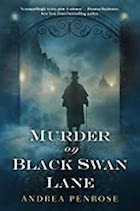
Andrea Penrose, Murder on Black Swan Lane

All London society knows about the animosity between the scientifically minded Lord Wrexham and the Reverend Josiah Holworthy. Cartoonist A.J. Quill has even been selling pointed satirical sketches about their feud. So when Holworthy is murdered, Wrexham is the number-one suspect. To clear his name, he hunts down A.J. Quill and discovers that “he” is actually Charlotte Sloane, a poor widow using her artistic talents to earn a meager living. They team up to solve the murder and are soon plunged into a sinister plot involving alchemy. I love a good Regency mystery, so I had high hopes for this book, but I ended up being a little disappointed. It’s not bad, per se, but nothing about it stood out to me, and I doubt I’ll continue with the series.
Mini-Reviews: Ruby, Angel, Bride

Ruby in the SmokeDark Angel : Lord Carew's Bride

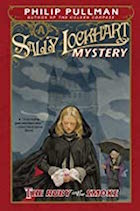
Philip Pullman, The Ruby in the Smoke

I greatly enjoyed this historical adventure set in Victorian England. When 16-year-old Sally Lockhart’s father dies under mysterious circumstances, she visits his business partner looking for answers — and stumbles into a sinister plot involving opium and murder. It’s just a really fun, pulpy novel for the MG/YA demographic, and I definitely plan to read the rest of the series!

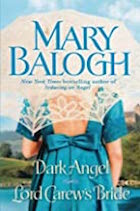
Mary Balogh, Dark Angel / Lord Carew’s Bride

It’s a testament to how much I enjoy Balogh’s writing that I thoroughly enjoyed Dark Angel, even though it contains some of my least favorite romance tropes: reformed rake and revenge-seduction of the heroine. But the book doesn’t minimize the hero’s (initially) awful behavior or its painful consequences. The heroine doesn’t forgive him too easily, and he fully acknowledges how terrible his actions were. So I was ultimately able to root for the couple and believe in their happy ending.

I also liked Lord Carew’s Bride, though it wasn’t quite as emotionally resonant for me. Samantha has had a terrible experience with love, so she’s determined to keep her many suitors at arms’ length. Then she meets the incognito Lord Carew, who she mistakes for a common landscape gardener. He falls for her immediately, and she accepts his marriage proposal because she feels safe with him — and because the man she once loved is trying to weasel his way back into her life. I liked the hero more than the heroine in this one, but I do think they’re well matched. And I enjoyed seeing the villain get his comeuppance!

Mini-Reviews: Isabella, Taken, Scandal

IsabellaNot to Be TakenFirst Comes Scandal

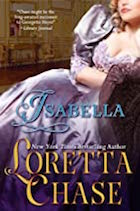
Loretta Chase, Isabella

I’ve liked all of Loretta Chase’s traditional Regencies, and this is no exception. Isabella Latham considers herself an old maid at 26, but she arrives in London for the Season with her two young cousins and is surprised when she acquires multiple suitors. The most notable are Edward Trevelyan, the earl of Hartleigh, and his charming cousin Basil. Isabella is attracted to both men, but they both seem to have ulterior motives: Edward needs a wife to help raise his ward, the young daughter of his deceased best friend, and Basil has his eye on Isabella’s fortune. Naturally Isabella ends up with the right man, and naturally the spurned suitor gets his own book, The English Witch, which I’m looking forward to reading sometime soon! I’ll be interested to see how Chase redeems his character, because he certainly did some morally dubious things in this book.

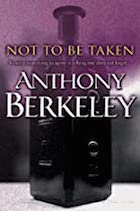
Anthony Berkeley, Not to Be Taken

I adore Berkeley’s The Poisoned Chocolates Case, so I was excited to try another one of his mysteries. But overall, I was a bit disappointed. While this book is well written, the style is entertaining, and the mystery plot hangs together well, there’s nothing particularly special or surprising about it. It’s a classic murder in a small English village, and only one of the victim’s closest friends could have done it. I did find the story entertaining while reading it, especially near the end, when the narrator gives three or four false solutions before revealing the true one. But unlike The Poisoned Chocolates Case, this one is not a keeper. I’ll happily read more by Berkeley in the future, though!

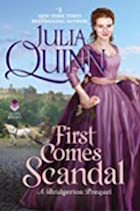
Julia Quinn, First Comes Scandal

I think of Julia Quinn as the perfect choice for historical romance with some sweet, silly fun and minimal angst. But the last few books of hers that I’ve read have been a bit “meh,” including this one. The heroine is Georgiana Bridgerton, who is forcibly abducted by one of her suitors and therefore “ruined,” even though nothing actually happened. The hero, Henry Rokesby, is a medical student who’s not particularly interested in marriage. But the Rokesbys and Bridgertons have been neighbors and close friends for many years, so Henry’s father convinces him to propose to Georgiana and salvage her reputation. I liked the premise and the fact that the book is very light on conflict, but the style got on my nerves. I felt like Quinn was trying too hard to be clever, and I also found a lot of the dialogue distractingly anachronistic. So I wouldn’t recommend this one unless you’re a Quinn completist.

Mini-Reviews: Scandal, Death, Enchanting

Do You Want to Start a ScandalDeath on a Friday AfternoonOnly Enchanting

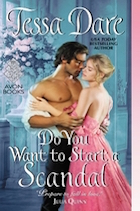
Tessa Dare, Do You Want to Start a Scandal

This Regency romance is the story of Charlotte Highwood, who has been nicknamed “the Desperate Debutante” because of her mother’s aggressive matchmaking efforts. Her mother’s latest target is Piers Brandon, Lord Granville; so Charlotte seeks him out at a house party to reassure him that she doesn’t wish to marry him. This strategy backfires immediately when the two are found in a compromising position — they accidentally interrupt a lovers’ tryst, but everyone else believes they are the lovers. Charlotte decides to clear her good name by unmasking the real lovers. But of course, the more time she and Piers spend together, the more they fall in love. This book was fine, although I found the comic style a little forced and overwrought. Not bad, but not particularly recommended.

Richard John Neuhaus, Death on a Friday Afternoon: Meditations on the Last Words of Jesus from the Cross

I chose this book at the beginning of Lent as an appropriate spiritual read. As the subtitle suggests, each chapter is inspired by one of the seven last words of Jesus from the cross. Each “word” provides a jumping-off point for the author, a Catholic priest, to discuss various aspects of his faith. Sadly, since I read this a while ago, I don’t remember a lot of the details! But I do remember the chapter on “I thirst” being particularly interesting because it discussed the question of universal salvation (is it possible that everyone will be saved?). I’d say the book is geared more toward intellectual than devotional purposes. Overall, the book gave me a lot of food for thought, and I definitely plan to reread it in the future.

Mary Balogh, Only Enchanting

I’ve yet to be disappointed by a Balogh book, and this Regency romance is no exception. It’s part of the Survivors’ Club series, about a group of people who have been deeply wounded (physically, emotionally, or both) in the Napoleonic Wars, but it can be read as a stand-alone novel. The hero, Flavian, has returned from the war with a head injury that left gaps in his memory. When he is thrown together with Agnes, a widow living a quiet rural life, he impulsively proposes to her, and together they are able to fill in some of the blanks in Flavian’s memory — and fall in love in the process. That makes it sound like love magically cures Flavian’s mental injuries, which isn’t the case…I feel like I’m not describing the plot terribly well! But I really liked the book and will continue reading more in this series.

Review: In Milady’s Chamber

In Milady's ChamberSheri Cobb South, In Milady’s Chamber

When Lord Fieldhurst is found murdered in his richly appointed Mayfair home, suspicion immediately falls on his wife. It’s common knowledge in London society that their marriage has been unhappy and that, because of Lady Fieldhurst’s inability to produce an heir, her husband has pursued sexual satisfaction elsewhere. Furthermore, the man was stabbed in the neck with his wife’s own nail scissors. The evidence seems ironclad; but John Pickett, the Bow Street Runner assigned to the case, is immediately enthralled by Lady Fieldhurst’s beauty and becomes determined to prove her innocence. As he investigates other promising suspects, such as Fieldhurst’s heir and his colleagues at the War Office, he uncovers many secrets but comes no closer to finding the killer — that is, until he and Lady Fieldhurst finally join forces to discover the truth.

I love mysteries and the Regency period, so any book that combines them both is something I’m going to want to read! In this case, the book delivered exactly what I wanted: a light, quick-reading, Heyer-esque period piece with a little mystery and a hint of romance. John Pickett is a somewhat unique protagonist for this type of story: most Regency heroes are self-assured and commanding, but John is young, naive, and idealistic to a fault. Nevertheless, he manages to be good at his job, despite being distracted by the beautiful Lady Fieldhurst. I was a little annoyed that he falls for her so quickly, and apparently on the basis of nothing but her looks, but his awkward pining does make for several humorous moments. Julia, Lady Fieldhurst, is also given some dimension and depth as she helps John with his investigation and contemplates her own future. The mystery is wrapped up a little too abruptly, although I did like the subtle hints to one part of the solution that are seeded throughout the book. But overall, I simply enjoyed spending time in this world with these characters, and I definitely plan on continuing with the series!

Review: Miss Grimsley’s Oxford Career

Mrs. Drew Plays Her Hand:Miss Grimsley's Oxford CareerCarla Kelly, Miss Grimsley’s Oxford Career

Miss Ellen Grimsley is the second daughter of a respectable country gentleman, and her destiny is to marry an equally respectable country gentleman and fulfill her womanly duties as wife and mother. But Ellen would much rather be a scholar and an explorer, traveling the world and making maps of far-off places. When her forward-thinking aunt gets her a place at Miss Dignam’s Select Female Academy, in the very town of Oxford, Ellen is thrilled — but she soon discovers that the classes are only in “feminine” subjects like French and embroidery. So when her brother Gordon, who’s flunking his Shakespeare course at Oxford, asks for her help, Ellen can’t resist writing his papers and even dressing as a man to attend lectures at the university. Obviously she can’t continue this charade for long without being caught; but luckily, the person who catches her is the kind and scholarly Jim Gatewood, who encourages her intellectual curiosity and converses with her as an equal. But when Jim professes his love for her and proposes marriage, Ellen is hesitant to give up her dreams, even for love.

Since this book came in the omnibus with Mrs. Drew Plays Her Hand, which I liked, I decided to give this one a try too. Unfortunately, I didn’t enjoy this one quite as much. The plot is rather muddled, and too many of the events strain credibility. For example, how does Ellen manage to fool everyone (or indeed anyone) in her male disguise? The book mentions that Gordon’s tutor is old and practically blind, but were there no other students nearby? Then there’s Ellen’s roommate, Fanny Bland, who is sometimes cruel and sometimes kind, without any real explanation for these fluctuating moods. Finally, the central conflict between Ellen and Jim seems to come down to Ellen’s own obtuseness. Despite her affection for, friendship with, and attraction to Jim, she refuses to see that she’s in love with him and turns down his repeated proposals of marriage. Near the very end of the book, there’s a hint that Ellen turns him down because she fears giving up her dreams of an independent life. That would have been a more interesting conflict to explore, but the book doesn’t dig into it at all, merely giving Ellen an abrupt change of heart just before the novel ends. Overall, a disappointing read — but at least I was able to finish it before the end of the year!

Review: Mrs. Drew Plays Her Hand

Mrs. Drew Plays Her Hand:Miss Grimsley's Oxford CareerCarla Kelly, Mrs. Drew Plays Her Hand

Roxanna Drew is at the end of her rope. After the death of her husband the vicar, she must find a new home for herself and her two young daughters. Her late husband’s brother is willing to provide this home, but only if she agrees to become his mistress. Revolted by the suggestion, Roxanna decides to rent the dower house of a nearby estate instead, but her brother-in-law’s nefarious schemes are far from over. Meanwhile, the estate’s owner, Fletcher Rand, Lord Winn, has problems of his own. He is shunned by most of society because he publicly divorced his wife after discovering her many infidelities. His family urges him to marry again and produce an heir, but Winn is reluctant to trust another woman — that is, until he meets Roxanna while on a tour of his estates. Winn is immediately attracted to her and quickly befriends both herself and her children. But when circumstances force them into a marriage of convenience, they must learn whether they can truly rely on each other.

As I’ve become more familiar with the romance genre, I’ve encountered Carla Kelly’s name multiple times as a respected author of traditional Regencies, and this particular novel is often praised as one of her best. I wasn’t quite as impressed as I wanted to be, but I did enjoy this book very much and have already begun another of Kelly’s novels. Both Roxanna and Winn struck me as mature adults who are doing their best in their respective difficult situations. I especially liked Winn because, while he’s slightly curmudgeonly at first, he’s not brooding or selfish like many other romance heroes. He shows his love for Roxanna by always putting her and her family’s needs before his own, but his sense of humor keeps him from being annoyingly perfect. There’s not much plot beyond the initial setup, and I found the writing style a bit clunky and some of the dialogue anachronistic. I also wasn’t convinced by the evil brother-in-law’s repentance in the end. But overall, I did like this one and will definitely read more by the author.

Review: A Summer to Remember

Summer to RememberMary Balogh, A Summer to Remember

Kit Butler, Viscount Ravensberg, was once a respectable army officer, but now he’s one of London’s most notorious rakes. His father wants him to come home, accept his responsibilities as heir, and marry the woman his family has chosen for him. Kit rebels from this fate and decides to choose his own wife; but she must be so thoroughly respectable that his family couldn’t possibly object to her. Lauren Edgeworth fits the bill nicely: she’s not only beautiful but a perfectly proper lady. She finds Kit’s behavior shocking, yet she’s also intrigued by his mischievous attempts to provoke her. She won’t consent to a real marriage — ever since she was left at the altar a year ago, she’s been determined to remain a spinster — but eventually she agrees to a fake engagement. She’ll accompany Kit to his home and help to heal the estrangement between him and his family. But in return, she wants a summer to remember. Of course, the longer Kit and Lauren spend together, the fonder they grow of each other. But their love may not be enough to overcome past wounds and present insecurities.

Mary Balogh has quickly become one of my go-to historical romance authors, but I must confess that I didn’t love this book quite as much as some of her others. I think it’s largely because I didn’t find Kit remotely charming or fun in the beginning; rather, I thought he was pushing Lauren out of her comfort zone far too aggressively, almost to the point of harassing her. Balogh does course-correct fairly early in the novel, making Kit realize that he’s been treating Lauren as an object rather than as a fellow human being, but I felt that the transition was abrupt and the motivation for the change was unclear. The premise of the book is a bit thin as well — I didn’t understand what Lauren was actually hoping to get out of her summer with Kit, given that she was planning to live in Bath as a spinster afterwards. However, I liked that both characters are dealing with a lot of emotional pain, but they react in completely opposite ways, Lauren by adhering strictly to society’s rules and Kit by breaking them altogether. So I did warm up to both main characters eventually, and I ended up enjoying this opposites-attract romance quite a bit. I’ll definitely continue to read more by Balogh!

Review: The Famous Heroine / The Plumed Bonnet

Famous Heroine:Plumed BonnetMary Balogh, The Famous Heroine / The Plumed Bonnet

This volume collects two of Balogh’s earlier novels, which each focus on couples who marry first and fall in love later. In The Famous Heroine, Cora Downes, the daughter of a rich merchant, is launched into high society in hopes that she’ll find an aristocratic husband. But Cora is clumsy, outspoken, and ignorant of the rules of this new world. Lord Francis Kneller takes her under his wing, and they become good friends — until he inadvertently “compromises” her and feels honor-bound to marry her. In The Plumed Bonnet, Alistair Munro, the duke of Bridgwater, gives a ride to a hitchhiking young woman out of boredom. Because of her gaudy clothes, he assumes she’s a prostitute and listens with amusement to her unlikely story of misfortune. But when he learns that Stephanie Gray’s story is true, he realizes that he’s ruined her reputation and must marry her to make amends.

I’ve been slowly discovering Mary Balogh’s books and haven’t hit a bad one yet! I didn’t find either of the romances entirely compelling — something prevented me from becoming fully emotionally invested — but these two novels are on the short side, so perhaps there was just less space for character development. And there’s still plenty to enjoy with both of these books. I liked Cora’s frank nature and was amused by Francis’s attitude toward her: bewilderment slowly transforming into delight. They’re a more fun, lighthearted couple than Alistair and Stephanie, but I found Stephanie’s conflict (she’s trying so hard to become duchess material that she begins to lose herself) more interesting. I should note that these two books are actually the third and fourth installments of a series that starts with Dark Angel and Lord Carew’s Bride; the heroes and heroines of those books appear in both of these as well. You don’t HAVE to read the first two books to understand what’s going on, but it would give you some extra context. Overall, I liked these books a lot and will continue my wanderings through Balogh’s backlist.

Review: Ten Things I Love about You

Ten Things I Love about YouJulia Quinn, Ten Things I Love about You

Sebastian Grey occupies an unusual social position: he is the heir apparent to his uncle, the Earl of Newbury, but if the earl marries and has a son, Sebastian gets nothing. The earl hates Sebastian and is therefore desperate to marry a young, fertile bride. His eye falls on Annabel Winslow, who is young enough to be his granddaughter, but whose numerous siblings and wide hips seem to guarantee her ability to produce heirs. Though Annabel is repulsed by the earl, she feels obligated to marry him to gain financial security for her impoverished family. But of course, complications ensue when Sebastian and Annabel meet and are immediately attracted to one another — each without knowing the other’s identity. When they discover their situation, Sebastian initially sees an opportunity to thwart his uncle’s plans; but he soon realizes that his feelings for Annabel are all too genuine.

It’s telling that I read this book a week ago and could barely remember the plot; I had to read some Amazon reviews to refresh my memory. It’s not a bad book, and I can’t point to anything specific that annoyed me about it, but it just didn’t leave much of an impression on me. Earlier this year I read and enjoyed the prequel to this book, What Happens in London, and found Sebastian to be a delightfully fun character. The scene in which he performs a dramatic reading from a lurid gothic novel (of which he is secretly the author) was a highlight of that book. So I was excited to read his story, but I found it underwhelming. We don’t really get to know more about Sebastian as a character. We learn that he’s had insomnia ever since returning from the Napoleonic Wars, and we know that he enjoys writing novels, but neither one of these character traits is really explored. And while Annabel seems perfectly nice, it’s never entirely clear why he falls in love with her. Overall, a very “meh” read.