Mini-Reviews: Summer, Tryst, Prince

Lizzy Dent, The Summer Job

Birdy’s best friend, Heather, is a master sommelier who’s accepted a position at a hotel restaurant in Scotland for the summer. But when Heather bails on the job without notifying the hotel, Birdy, who’s between jobs, decides to take her place – despite knowing nothing about wine. Of course, she soon realizes she’s in way over her head, but she becomes genuinely interested in the work – and in the restaurant’s chef, James. But what will happen when the truth comes out? This book, while entertaining on a micro level, actually stressed me out because Birdy made so many terrible, thoughtless decisions! Not only was she horrifically incompetent while (initially) making no effort to improve, but she also lied to her employer and her best friend and didn’t ’fess up even when she realized how badly she could damage said friend’s professional reputation. The book does its best to make Birdy likable despite this awful start, but I never quite came around. The Scottish setting is lovely, and James is a dreamy romantic interest, but honestly, he deserves better!

Alyssa Everett, A Tryst with Trouble

Lord Beningbrough, “Ben” to his friends, prides himself on being emotionally detached and is in no hurry to marry. Strong-minded Lady Barbara Jeffords has a low opinion of men in general and, after their first meeting, of Ben in particular. But they’re forced to work together when Ben’s cousin and Barbara’s sister, who are recently engaged, are both implicated in the murder of a footman. Ben and Barbara know neither of their relatives can be the killer, but as they team up to find the true culprit, their mutual annoyance/attraction evolves into something quite different. I’ve enjoyed a couple of this author’s other Regency romances and am happy to say I liked this one as well! Ben and Barbara are an enjoyable pair, whether they’re trading insults or slowly letting their guard down with one another. And they take turns narrating the book, so it’s fun to get a peek inside their heads and see how they view the same events differently. The mystery itself is slight and utterly predictable; it’s really just a device to get these two crazy kids together. But I’d still recommend this book (and author) to fans of lively, well-written historical romance.

Priscilla Pearce, My Enemy, My Prince

This “romantasy” centers around Ro, a farm girl plucked from obscurity because of her psychic abilities to become the wife of Prince Corrado. Ro and Corrado don’t get along at first, and they’re awkward and shy with one another, but mutual feelings soon develop. Meanwhile, Corrado’s kingdom is under threat by his odious cousin, who will inherit the throne unless he and Ro can produce an heir. And as Ro adjusts to being a princess, she begins to consider how to use her power for good in the world. If you’re expecting a fantasy novel with strong worldbuilding and a well-thought-out magical system, this book is not for you. It’s 100% a romance, and probably the first half of the book is just Ro and Corrado enthusiastically, ahem, “getting to know” one another. There’s not much plot to go along with the sex scenes, and the book’s editing leaves a lot to be desired. I did like the main characters, especially their early awkwardness, and I feel like there’s the kernel of a good book here. But it’s not one that I’d enthusiastically recommend, unfortunately.

Mini-Reviews: Impossible, Tea, Rectory

Connie Willis, Impossible Things

I’m not a huge fan of short stories, but I do love Connie Willis, so I decided to revisit this collection of her early stories and novellas, which were all originally published in the ’80s and early ’90s. I was pleasantly surprised to find that there are really no duds in the collection, though of course some stories resonated with me more than others. I particularly enjoyed “Spice Pogrom,” an homage to the screwball comedy; “Chance,” a heartbreaker about a woman who’s consumed with regret over a bad choice she made years ago; and “Winter’s Tale,” a compelling, contemplative take on a Shakespeare conspiracy theory. The collection contains both tragic and comic stories, but even the tragic ones generally have a hint of hope or humor, and even the comic ones have surprisingly sharp edges. I still prefer Willis’s full-length novels, but if you like the author (or sci-fi stories in general), these stories are well worth reading also.

India Holton, The Secret Service of Tea and Treason

This final book in the Dangerous Damsels trilogy focuses on Alice Dearlove and Daniel Bixby, both of whom appeared in the previous book as a lady’s maid and butler, respectively. In fact, they’re two of the best spies in England’s shadow government, and now they’re tasked with working on a mission together. The Wisteria Society is allegedly plotting to assassinate Queen Victoria using a mysterious new weapon. Alice and Daniel must pose as a married couple, infiltrate the Society, and steal the weapon; naturally, complications ensue when the ruse starts feeling all too real. This book shares with its predecessors a light tone, copious literary references, silly piratical hijinks, and a central romance. But I think this is my favorite of the trilogy because I loved Alice and (especially) Daniel. Both are dealing with childhood trauma and neurodivergent brains that make them feel like outsiders, and it’s lovely to watch them slowly realize that they understand each other. That said, this series is a fun read, but I’m not sure I’ll ever feel the need to reread it.

Catherine Lloyd, Death Comes to the Rectory

Lucy and Robert Kurland are excited for the christening of their baby daughter, Elizabeth. But as they welcome their family and friends for the event, they’re also surprised by some unwanted guests: Harriet and Basil Northam, the daughter and son-in-law of Robert’s Aunt Rose, who recently married Lucy’s father. The obnoxious Northams have long sponged off of Aunt Rose and aren’t pleased that her remarriage may now disinherit them. When Basil Northam is found stabbed to death in the rectory study, Lucy’s father becomes the chief suspect, which causes tension between Robert and Lucy as they investigate the crime. This book is the last of the Kurland St. Mary mysteries, and while it doesn’t really feel like a series finale, it fits right in with the rest of the series: pleasant but bland, and not particularly remarkable as a mystery. I did like the brief observations on inequities in the justice system, but they’re not treated with much depth. Overall, these books are quick, undemanding reads, but I wouldn’t enthusiastically recommend the series. It’s fine, but I feel pretty tepid about it.

Mini-Reviews: Time, Comet, Overture

Kaliane Bradley, The Ministry of Time

In the near future, a secret branch of the UK government called the Ministry of Time has discovered time travel, but they’re still figuring out its rules and limits. As an experiment, they’ve extracted five “expats,” people from earlier periods of history who would have died in their own eras, and brought them into the present. The book’s narrator works for the ministry; her job is to live with one of the expats—Commander Graham Gore, a naval officer lost in an Arctic expedition in the 1840s—and help him acclimate to the 21st century. As the narrator gets closer to Gore and learns more about the ministry’s project, she discovers some sinister secrets and must decide where her loyalties truly lie. I’m still processing this book, to be honest, but I think I might love it. Bradley writes beautifully, and her characters are complex and interesting (especially Gore, whom I adored!). The only thing I didn’t like was the denouement, which felt a bit rushed and obvious. But the novel manages to be thought-provoking about power, narratives, and identity, while still being an excellent story. I’ll definitely be reading this again at some point!

Sheila Simonson, Lady Elizabeth’s Comet

The titular Lady Elizabeth is a would-be astronomer tracking a comet across the night sky. At age 28, she’s also been the de facto head of her family since her father’s death more than a year ago. So when the heir to her father’s earldom, distant cousin Thomas Conway, finally takes possession of the family home, Elizabeth is wary and defensive toward the newcomer. But when she helps nurse him after a battlefield injury catches up with him, she finds her feelings changing. Complicating matters is her quasi-engagement to Tom’s friend Lord Bevis and her need to care for her twin 15-year-old sisters. While I don’t mind the occasional “wallpaper historical,” it is refreshing to read a Regency romance that actually feels authentic to the period! While Elizabeth has a unique-for-her-time interest, she’s not a 21st-century heroine in costume. I also enjoyed her witty first-person narration, which is unusual for this genre. The romance is quite lovely with some funny moments (and steamless, which is a bonus for me). I’d definitely recommend this one to fans of historical romance and will be seeking out more by the author!

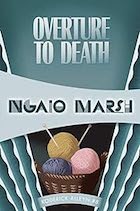
Ngaio Marsh, Overture to Death

This Golden Age mystery, book #8 in the Roderick Alleyn series, has a classic setup: Seven people in a small English village decide to put on a play. One of the actors, a universally disliked spinster, is murdered in a shocking fashion on opening night – shot via a booby trap hidden in a piano. Complicating matters is that Miss Eleanor Prentice, the victim’s equally unpopular friend/rival, may have been the intended target. Suspects include the local squire, a pair of young lovers, the vicar, the village doctor, and a femme fatale. Fortunately, Inspector Alleyn is on hand to uncover adultery, blackmail, and murder. I generally enjoy Marsh’s mysteries, although I think her books get less interesting after the murder occurs. This one is true to form: The setup and character introductions are great, but once Alleyn arrives on the scene, the “plot” is basically just a bunch of suspect interviews. That said, I still enjoyed the book, and I’m pleased that I managed to solve the mystery before the culprit was revealed.

Mini-Reviews: Scarlet, Pointe, Locked

Anne Gracie, Marry in Scarlet

Lady Georgiana “George” Rutherford isn’t a typical society lady: She rides astride, prefers dogs and horses to people, and has no interest in marriage. Hart, the duke of Everingham, doesn’t particularly want a wife either, though he knows he must marry to secure an heir. And after being jilted by Lady Rose Rutherford, he certainly isn’t looking to her family for a bride. But as George and Hart encounter each other at various society events, they’re reluctantly attracted to one another and are forced to wed when they’re caught in a scandalous embrace. I enjoyed this book more than I expected to…while the seemingly cold and closed-off Hart is my kind of hero, I don’t generally enjoy “feisty,” anachronistic heroines like George. But she won me over with her honesty and firm loyalty to her family. I actually wish the book were a bit longer—I felt like the transition from grudging attraction to feelings happened too quickly, and I wanted to really see them falling in love. That said, this is definitely my favorite book in the series, and I may be keeping it on my shelves for a while.

Chloe Angyal, Pointe of Pride

Chaotic, hot-tempered Carly and pedantic, uptight Nick seemingly have nothing in common. But in fact, both are floundering in their careers: Carly is a ballerina who desperately wants to be promoted to soloist, while Nick’s post-dancing photography career hasn’t taken off. Nick agrees to take photos of Carly that will boost her Instagram following, making her a more attractive candidate for promotion, and get his work into the public eye. As they work together, their hostility transforms into attraction. Like its predecessor, Pas de Don’t, this is a well-written contemporary romance with a beautifully depicted Australian setting. There’s not a lot about ballet in it, which I found disappointing, and the reason for the third-act breakup felt a little flimsy to me. But I did like the inclusion of Carly’s medical condition that makes penetrative sex extremely painful; there aren’t many romance novels where the sex is anything less than perfect and magical. Overall, I liked this book fine but am not particularly excited about it.

Ashley Weaver, Locked in Pursuit

In this fourth installment of the Electra McDonnell series, Ellie hasn’t seen her military handler, Major Ramsey, in months. They were both almost killed in their last mission, in which they also shared a passionate kiss that they agreed never to repeat. But when Ellie suspects that a high-profile London robbery might be a cover for espionage activity, she and Ramsey must work together once more. As their investigation leads them to a murdered woman and a valuable map, Ellie also pursues answers about her father, who might have been a spy for the Germans in the last war. I’m still really enjoying this historical mystery series; it’s an entertaining mix of WWII atmosphere, plot, and romance. The series-long stories make some real progress, as Ellie becomes more proactive in investigating her parents and examines her feelings about both Ramsey and longtime friend Felix. If the premise sounds interesting to you, I’d definitely recommend this series, though it’s best to start with book #1, A Peculiar Combination.

Mini-Reviews: Moon, Snowed, Secret

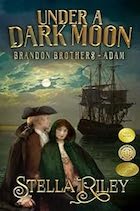
Stella Riley, Under a Dark Moon

Book #2 of the Brandon Brothers trilogy focuses on expert swordsman Adam Brandon, who at the start of the book is recruited to M Section, a shadowy intelligence-esque organization affiliated with the British government. His first mission is to escort the boss’s niece, Camilla Edgerton-Foxe, from London to her home on the Kentish coast—and, while there, investigate a smuggling ring that’s engaging in espionage. Adam’s mission is highly dangerous, but as he and Camilla get to know one another, the greatest peril may be to his own heart. A Stella Riley book is always enjoyable, and I liked the secret agent/smuggling plot, though I felt it dragged on a bit too long. The romance is sweet and satisfying, and I loved that Adam doesn’t “protect” Camilla by excluding her from the investigation; rather, he acknowledges her talents and puts them to good use. Overall, another winner from Riley, though I’m not loving this trilogy quite as much as her Rockliffe series.

Catherine Walsh, Snowed In

Five years ago, Megan was a runaway bride, and because her would-be groom was the town’s golden boy, she hasn’t gone home since—but her mother is pressuring her to come back for Christmas this year. Meanwhile, Christian (who’s from the same small town) is feeling lonely and isn’t looking forward to another holiday as the “black sheep” single son. When he and Megan bump into each other, he proposes a fake-dating scheme: He’ll be able to forestall his family’s pity, and she can use him as a buffer when she encounters her ex. I love a Christmas rom-com and a fake-dating plot, so I was predisposed to like this book, and I did! Megan and Christian are both relatable characters with great banter, and I also liked the nuanced portrayal of their family relationships, which are generally functional and loving but still have areas of conflict. I’d definitely recommend this book and author to fans of contemporary romance.

Anne Gracie, Marry in Secret

Lady Rose Rutherford has always been unconventional and uninterested in being a social success or making an advantageous marriage. She agrees to wed a wealthy duke for purely pragmatic reasons, but on the day of the wedding, a bedraggled man shows up at the church, claiming to be Rose’s husband. Rose is shocked to recognize Thomas Beresford, the man she impetuously (and secretly) married at age 16, who she thought had died in a shipwreck. Now Rose and Thomas must decide whether, after four years apart, they can make their marriage work. I’ve generally enjoyed Anne Gracie’s books, and this one was another solid historical romance, but I must admit it didn’t do anything special for me. After the first few chapters, Rose and Thomas’s relationship is pretty smooth sailing, and the bit of mystery isn’t compelling enough to sustain the rest of the book. However, I am looking forward to the next book in the series, in which Rose’s jilted duke is the hero!

Mini-Reviews: Nursery, Disappearing, Spy

Catherine Lloyd, Death Comes to the Nursery

Robert and Lucy Kurland are finally parents to a two-year-old son, Ned, and they’re thrilled that Lucy is now pregnant with their second child. Lucy decides to hire additional help in the nursery, but the new maid, Polly, soon causes disruption in both the manor and the village. Her beauty attracts many suitors, some of them employed by Robert, and conflict is the inevitable result. When Polly is murdered, Robert and Lucy investigate and make some surprising discoveries about the girl’s past. This book is, like the rest of the series, a pleasant but not groundbreaking historical mystery. I found the mystery component a bit weak; I was able to guess the culprit in advance, so it was frustrating to wait for the characters to catch up – especially when one suspect insists that he knows the truth but won’t tell Robert and Lucy anything! I’ll definitely continue with the next (and so far final) book in the series, but I think I’m running out of steam.

Kate Clayborn, The Other Side of Disappearing

Jess Greene has dedicated her life to protecting her young half-sister, Tegan, after their mother ran off with famous con man Lynton Baltimore. Baltimore was the subject of a popular podcast several years ago, and now the podcast creators want to interview Jess and Tegan to see if they can track him down. Jess hates the idea but reluctantly agrees because Tegan is eager to participate in hopes of seeing her mother again. As they follow Baltimore’s trail across the country, Jess is attracted to the podcast’s producer, Adam Hawkins, but their mutual baggage hinders their romance. Clayborn is one of my favorite contemporary romance authors, and I really enjoyed this book, even though I’m not into podcasts or true crime. There’s not much lightness or humor in the book – the emotions are intense – but I loved both the romance and Jess’s development as a character. I do wish we’d learned more about Baltimore, but he remains an enigma throughout. Overall, though, I’d definitely recommend this book if the premise interests you!

Tatsuya Endo, Spy x Family, vol. 1

Twilight is a master spy, but his latest mission brings unique challenges: He has to infiltrate an elite private school, which means he needs a wife and child. But he gets much more than he bargained for when it turns out that his hastily adopted daughter, Anya, is a telepath and his brand-new wife, Yor, is an assassin. Will they be able to foil a dastardly seditious plot and, more importantly, come together as a family? I’m not much of a manga reader, but this one caught my eye with its spy-thriller-plus-found-family vibes, and I found it a very cute read! There’s a nice mixture of action and comedy with a bit of heart, and I like the art as well. This being volume 1, it only tells the beginning of the story – the installment ends with the entrance interview to the school – so I’ll have to read more if I want to know what happens next! Fortunately, my library seems to have several installments, so I probably will continue with the series at some point.

Mini-Reviews: Rose, Scandal, Lukov

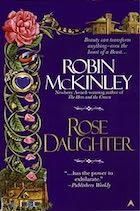
Robin McKinley, Rose Daughter

Robin McKinley’s Beauty is one of my favorite retellings of Beauty and the Beast; when I last read it in 2020, I called it the quintessential retelling, praising its thoughtful heroine and gorgeous prose. Rose Daughter is McKinley’s other Beauty and the Beast retelling, and until now I’d never reread it, thinking that if I wanted a Robin McKinley take on this story, I’d just read Beauty again. Now, while I still prefer Beauty, I think Rose Daughter is enchanting in its own way. In this version, Beauty is an avid gardener and lover of roses. When she comes to the Beast’s palace, she takes on the task of bringing back to life his overgrown and dying rose garden. Like most of McKinley’s books, this one is quite slow, and I wish we got more of a sense of the Beast’s personality. But Beauty and her two sisters are wonderful characters, and I liked the book’s emphasis on their close sibling relationship. If you like fairy tale retellings, I’d definitely recommend both this book and Beauty; I think they each bring something unique and worthwhile to the story.

Anne Gracie, Marry in Scandal

Lady Lily Rutherford longs to marry for love, but she believes that, between her plump figure and her inability to read, she’ll have a hard time finding a husband. Her large fortune, however, makes her a target for unscrupulous men, one of whom abducts her with the intention of forcing her into marriage. Fortunately, she’s rescued by her brother’s friend, Edward Galbraith — but when she and Ned take multiple days to travel back to London, they soon learn they must wed to avoid a scandal. Lily falls for Ned immediately, but he is reluctant to love anyone, even his beguiling wife. This is a pretty standard marriage-of-convenience setup, and Anne Gracie doesn’t really bring anything new to the table in terms of plot or characterization. I did find the main characters, particularly Ned, appealing and could see why they fell for each other. Overall, this is a solid, engaging historical romance, and I certainly plan to continue with the series, but it’s not doing anything particularly special or exciting.

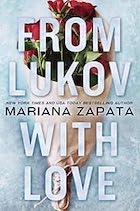
Mariana Zapata, From Lukov with Love

Jasmine Santos is a pairs figure skater with no partner, and at age 26, she’s running out of time to win the gold medal she wants more than anything. A surprising solution presents itself when superstar Ivan Lukov — whom Jasmine has known for years and always hated — suggests partnering up. Jasmine reluctantly agrees, but as she and Ivan train together, her feelings toward him slowly begin to change. Whether you like this book or not will probably depend on how you feel about Jasmine. She’s foulmouthed, angry, impatient, defensive, and not particularly kind — but also hardworking, determined, strong, and loyal. I didn’t always like her, but what sold me on the romance is that Ivan admires her toughness and appreciates her for who she is. It’s the slowest of slow burns, which I liked but other people might not, and I do think the book is bloated and repetitive in spots. But overall, I’m glad I read this one and would recommend it to fans of sports romances and the enemies-to-lovers trope.

Mini-Reviews: Con, Tangle, Austen

Devon Daniels, The Rom Con

Cassidy, a reporter for the feminist website Siren, has just ended yet another disappointing relationship. Her grandmother suggests she try a different approach to dating, based on a 1950s list of rules for catching a husband. Cassidy is horrified, but when she meets Jack Bradford — co-founder of Siren’s rival website, Brawler, which Cassidy views as a bastion of toxic masculinity — she decides to use the antiquated rules on him. Once Jack falls for the Stepford Wives version of her, she’ll write an article exposing him as a sexist jerk. But as she begins dating him, she learns he might not be such a jerk after all. I’m of two minds about this book. On the plus side, it’s a fun, quick read with enjoyable banter between the two leads. But Jack is simultaneously too perfect and problematic — it’s never clear why, if he’s such a good guy, he’d continue to be involved with Brawler. There are also a few too many Big Misunderstandings near the end that seem to exist only to drag out the happy ending. Overall, I did enjoy the book while I was reading it, but looking back, I don’t think it totally works.

Theresa Romain, It Takes Two to Tangle

Soldier Henry Middlebrook has just returned to England after Napoleon’s defeat, wounded and unable to move his right arm. Frustrated by his perceived “uselessness” and the pity of his relatives, he decides to court Lady Caroline Stratton, a popular society beauty who he thinks will help reintegrate him into his old life. He enlists the help of Caroline’s companion, Frances Whittier, but complications ensue when he and Frances grow closer. I was intrigued by the setup of this book — Henry’s disability plus a Cyrano-esque plot point in which Frances writes him letters that he assumes are from Caroline. But unfortunately, I wasn’t as enamored of the book itself. Henry is far too slow to see what’s right under his nose, and the obstacles keeping him and Frances apart aren’t important enough to justify the length of the novel. There’s also more steam than I’d prefer, so overall, this just wasn’t the book for me. I was also underwhelmed by Romain’s Season for Temptation, so I think she’s not the author for me either.

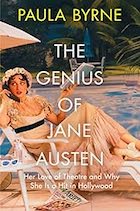
Paula Byrne, The Genius of Jane Austen: Her Love of Theatre and Why She Works in Hollywood

In Mansfield Park, Fanny Price disapproves of the amateur theatricals staged by her cousins and their friends. Some critics have inferred from this that Jane Austen herself disapproved of theater, but Byrne argues pretty convincingly that the opposite is true. Austen acted in private theatricals with her family and friends, she frequently attended plays while living in Bath and London, and her letters reveal that she was familiar with the famous actors and theater gossip of her day. The book explains how Austen’s life interacted with the theater; how she used theatrical plots, character types, and conventions in her novels; and why her books adapt so well to the screen. Byrne is obviously an Austen fan, and a very knowledgable one. The book is briskly written and appears well researched. I liked it a lot and would certainly recommend it to Austen lovers!

Mini-Reviews: Folly, Ships, School

Laura Kinsale, My Sweet Folly

When Folie Hamilton begins corresponding with Robert Cambourne, a relative of her husband’s who is stationed in India, they soon discover they’re kindred spirits. They fall in love through their letters, but their correspondence ends abruptly just after Folie’s husband dies. More than four years later, Robert is back in England and has summoned Folie and her stepdaughter, who is now Robert’s ward, to his remote country estate. But the cold, troubled, possibly insane man Folie meets is nothing like the man she remembers from the letters. I saw an old review online that said Kinsale writes “extreme romance,” and I definitely agree with that assessment — the drama and all the emotions are dialed up to 11. I don’t normally love high-angst romances, but this book really worked for me. The heavy drama is tempered by Folie’s lighthearted pragmatism, and while Robert is truly awful at times, we get enough insight into his state of mind at least to understand his actions. Despite the uneven and slightly bananas plot, I loved the central romance and will definitely be keeping this book on my shelves!

Martha Wells, The Ships of Air

This book picks up shortly after The Wizard Hunters left off: Tremaine has commandeered a large luxury ship, the Queen Ravenna, to transport evacuees out of Ile-Rien and try to reach the Rienish government-in-exile. She also hopes to forge a Rienish-Syprian alliance to unite against the Gardier — but she’s surprised when a political marriage becomes part of the bargain. Meanwhile, she and her allies face not only the Gardier threat but also a menacing presence aboard the ship itself. I’m continuing to enjoy this fantasy saga, though the pacing in this book is uneven; things really pick up about 2/3 of the way through, when a few of the characters get separated from the rest. Main characters Tremaine, Ilias, and Giliead get some good development, though most of the other characters remain pretty flat, and we finally learn a little bit about what makes the Gardier tick. Overall, a solid read, and I’m looking forward to the final book in the trilogy.

Catherine Lloyd, Death Comes to the School

Robert and Lucy Kurland have now been married for three years, but two miscarriages and the ensuing grief have strained their relationship. Lucy tries to distract herself with village activities and soon butts heads with the unpopular new schoolteacher, Miss Broomfield. When Miss Broomfield is subsequently stabbed to death with a hatpin, Lucy and Robert once again investigate. Could her murder be related to a spate of nasty anonymous letters circulating through the village? I’m still enjoying this series and think this book is one of the stronger installments. The conflict between Lucy and Robert feels realistic, and they’re both a bit to blame despite both having good intentions: He’s concerned for her welfare but expresses it in all the wrong ways, while she bottles up her emotions and won’t let him (or anyone else) support her. The mystery is a little lackluster and not really fair play, though I correctly guessed the culprit fairly early on. But the series’ strengths are the central characters and the immersive portrayal of village life. Looking forward to the next one!

Mini-Reviews: Secret, Lily, Always

Sharon Shinn, The Safe-Keeper’s Secret

I actually read this book in 2023 but for some reason didn’t post my review here at the time. Oh well, better late than never!

Damiana is a safe-keeper, which means she’s bound to listen to anyone who wants to confide a secret to her, and she’s not allowed to reveal these secrets to anyone. One night a mysterious stranger arrives at her door with a newborn baby, charging her to keep the infant safe and his parentage a secret. Damiana raises this baby alongside her own child, so Fiona and Reed grow up together as brother and sister. But as they mature into adulthood, they begin to question their identities in various ways. I like Sharon Shinn’s writing style and the gentle fantasy world she’s created in this book, but I was underwhelmed by the actual story. There’s really no plot to speak of until the last couple chapters, when some long-standing secrets are revealed. I was also a bit disturbed by the hint of romance between Fiona and Reed (they’re not related by blood but were raised as siblings). Overall, this isn’t one of Shinn’s stronger works, but I have the sequel on my shelves so will undoubtedly read it at some point.

Mimi Matthews, The Lily of Ludgate Hill

Six and a half years ago, Felix Hartford and Lady Anne Deveril were in love, but they parted after a bitter argument. Hart never stopped loving Anne, though, and now he’s determined to win her back, although he’ll have an uphill battle convincing her to trust him again. Meanwhile, ever since her father’s death, Anne has been consumed with supporting her grieving mother and hasn’t been able to live her own life. Hart attracts her as much as ever, but can she learn to let go of the past? I’m a big fan of Matthews’s intelligent (and steamless!) historical romances, and this book is no exception. I liked both Hart and Anne and bought the connection between them, as well as the obstacles keeping them apart. It’s frustrating that they’ve both martyred themselves to selfish family members and can’t seem to break free, and their hesitation to commit fully to each other goes on too long. Nevertheless, I really liked this one overall and am excited for the next (and final?) installment of the series!

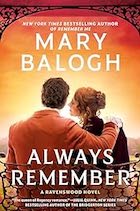
Mary Balogh, Always Remember

Ben Ellis, a widower with a young daughter, wants to remarry. He’s not looking for passionate love, just someone with whom he can be comfortable. He certainly shouldn’t be thinking about Lady Jennifer Arden, who’s extremely wealthy and the sister of a duke, whereas he is illegitimate. Meanwhile, Jennifer is convinced she’s unlovable due to a malformed leg that prevents her from walking. A fixer by nature, Ben helps her find various ways to become more mobile. As they grow closer, however, their families express concern about their different social stations. This third book in the Ravenswood series continues to frustrate me with its inclusion of not only Ben’s and Jennifer’s various relatives, but a bunch of random villagers as well. Most of these characters have no relevance to the plot, so why keep mentioning them? I don’t care! That said, I did like both Ben and Jennifer, who aren’t extraordinarily gorgeous or gifted; they’re just two kind people who genuinely like each other. Their relationship is pretty low-conflict; the dramatic tension comes mostly from the individual problems they’re working through. Overall, I do think this is an improvement over the previous two books in the series, but it’s still not one of Balogh’s stronger offerings.