Mini-Reviews: Children, Christmas, Mistletoe

P.D. James, The Children of Men

This dystopian novel imagines a near-future world in which no human children have been born since 1995. England is ruled by a seemingly benevolent dictator called the Warden, and most people’s material needs are satisfied. But the human race is dying out, and hope is a thing of the past. Theo Faron, a 50-year-old Oxford professor, views the future with detachment and despair. But when a young woman, one of his former students, approaches him with a surprising request, he finds himself unwillingly getting involved with a resistance movement. I’m of two minds about this book. On the plus side, it’s steeped in deep questions about morality and whether good and evil even matter if the world is ending. Certain scenes are quite memorable and chilling, and the dramatic tension builds effectively even when there’s not much going on. On the minus side, the pacing is slow, the world-building doesn’t feel completely thought out, and the ending leaves a lot of unanswered questions. I’m excited to talk about this book with my office reading group, as I’m sure it will generate an interesting discussion. But for me personally, it was an unsettling read.

Martha Waters, Christmas Is All Around

Artist Charlotte has never enjoyed Christmas, and she especially hates holiday rom-coms because when she was nine years old, she had a role in the modern holiday classic Christmas, Truly, which she’d love to forget about. But when she visits her sister in England for the holidays, she finds she can’t escape her past as they tour an estate that was used as a set on the film. There Charlotte meets Graham, the estate’s handsome owner, who hires her for an art project to bring much-needed publicity to the estate. Will grumpy Grinch Charlotte find herself in a holiday rom-com of her own? I enjoyed Martha Waters’s recent historical mystery and wanted to try more of her work, so I was excited for this contemporary romance. Unfortunately, it wasn’t quite as funny as I wanted it to be, and I didn’t really connect with the characters. It’s still a pleasant read – there are some fun one-liners, plentiful Love, Actually references, and cozy Christmas vibes – but this book won’t be a keeper for me.

Chloe Liese, The Mistletoe Motive

Gabriella Di Natale and Jonathan Frost are work nemeses. They’re co-managers of Bailey’s Bookstore and couldn’t be more different: Gabby is a festive ball of sunshine who loves the bookstore’s soul, while Jonathan is cold and grumpy and all about the bottom line. But as Christmas approaches, Gabby starts experiencing a strange attraction to Jonathan—an attraction that just might be reciprocated. I enjoy the enemies-to-lovers trope, so I was hoping to like this holiday novella a lot more than I did. But it suffers from perfect hero syndrome: Jonathan is outrageously handsome, incredibly attuned to Gabby’s every need, and the ideal ally when she discloses her autism. And while I think it’s great to see neurodivergent folks represented in romance, autism (plus loving Christmas) basically felt like Gabby’s entire personality. She’s so mean to Jonathan, yet he’s completely devoted to her. And don’t get me started on the overly Christmassy names—there is literally a character named George Bailey. In short, I found this book frustrating, and I won’t be reading more by Chloe Liese.
Mini-Reviews: Peace, Murder, Dreadful

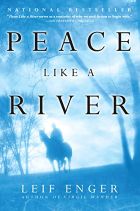
Leif Enger, Peace Like a River

Narrated by 11-year-old Reuben Land, this book tells the story of a tragedy and its aftermath. Reuben’s older brother, Davy, commits an act of violence and subsequently runs away. Reuben, along with his father and his sister, Swede, head west from their home in Minnesota and travel across the Badlands to find him. They encounter many dangers on their journey, from the unforgiving winter weather to the FBI agent who’s on their trail, hoping they’ll lead him to Davy. But they also find friendship and help in unexpected places. I really enjoyed this novel, which is part coming-of-age story, part Western adventure, and part pilgrimage narrative. It’s a book that feels uniquely American; I don’t think it could have been set anywhere else. I loved the humor sprinkled throughout Reuben’s narration and absolutely adored the character of Swede. Recommended if the premise interests you, and I’m now interested in trying more by Enger.

Delano Ames, Murder Begins at Home

English couple Jane and Dagobert Brown are on holiday in the US and find themselves in New Mexico, where Miranda Ross, an old friend of Dagobert’s, now resides. He manages to obtain an invitation to Miranda’s house for the weekend, and he and Jane soon feel that something is off about the seemingly happy, prosperous household. The next day, Miranda is murdered – but who could have wanted to kill a woman who was (apparently) universally beloved? Last year I read and really enjoyed the previous book in this series; this book is a decent follow-up, but it didn’t have quite the same sparkle for me. Jane is the narrator, and her snarky voice is one of the novel’s highlights. Her relationship with Dagobert is often fun, though I occasionally found myself thinking she’s way too good for him! The mystery is fine but didn’t really grab me. I did love that the seemingly ignorant county sheriff is much shrewder than he lets on! Overall, this is a pretty good read, and I do plan to continue with the series.

Caitlin Rozakis, Dreadful

This novel opens with a man who has lost all his memories (and his eyebrows). He appears to be trapped in a dark wizard’s lair, which is worrisome – until he realizes he is the dark wizard, the Dread Lord Gavrax. He’s kidnapped a princess, and he’s in league with three other dark wizards to do some kind of evil ritual. But Gav isn’t sure he actually wants to be evil anymore. Can he hide his memory loss from those around him, thwart the evil ritual, and learn how to be a good person? I really enjoyed this charming comic fantasy, which raises some surprisingly complex moral questions as Gav tries to fight his evil tendencies. He’s a flawed but sympathetic character whom I found extremely relatable, and I just wanted good things for him. His goblin minions are wonderful as well, as is the princess, who’s more than she appears to be. Definitely recommended for those who like a spin on the usual fantasy tropes.

Mini-Reviews: Fangirl, Messy, Circling

Rainbow Rowell, Fangirl

When Cather and her twin sister, Wren, head off for college, Cath is overwhelmed by all the changes in her life. Her roommate, Reagan, is curt and intimidating; she doesn’t know where the dining hall is and she’s afraid to ask; and worst of all, Wren doesn’t seem to have time for her anymore. At least she has Simon Snow, a Harry Potter-esque series she’s always loved—and the fanfic she’s writing about Simon and his vampire roommate, Baz. But as Cath slowly acclimates to college life, she discovers that sometimes real life is better than fanfiction. Rowell is a wonderful writer, and in this book I think she does a great job of capturing the anxieties of entering college and the changes people experience during that formative time. I also think there’s way too much Simon Snow (both “canon” and fanfic)—Rowell was clearly working out the beginnings of the Simon Snow series she would later write, but it detracts from Cath’s own narrative. Still, I’m glad I revisited this one.

Matthew Kelly, Life Is Messy

I’m familiar with Matthew Kelly as the founder of the Dynamic Catholic Institute, which puts out educational videos and other materials for Catholics to grow in their faith. This book is sort of a memoir, based on his journals from a particularly tough time in his life—he doesn’t give specifics of the problems he was dealing with, but it’s clear he was extremely depressed and questioning a lot of things in his life. In the book, he ruminates on how he got through his hard time and shares his thoughts on how to move forward despite the problems and obstacles we encounter in life. Honestly, most of the book felt a bit trite to me, but he does pose a few insightful questions that will likely stay with me (“Do you like the person you’re becoming?”). Not sure I would recommend this one widely, but if the title or premise speaks to you, it might be worth picking up.

Julie Tieu, Circling Back to You

Cadence and Matt work at the same real estate firm, she as an analyst and he as a broker. They’ve always been friendly—and several coworkers have speculated on whether there’s a romantic element to their relationship—but they both insist they’re just friends, while secretly harboring a desire for more. When a work-related trip sends them both from their San Francisco office to L.A. (and in the same hotel suite, no less), the boundaries of their relationship get blurry; but conflicting career opportunities might end their romance before it ever gets started. I liked the premise of this workplace romance, but the execution felt meh. I never fully understood the work stuff (to be fair, maybe I just tuned it out because it was boring), and I didn’t feel much chemistry between Matt and Cadence. Overall, an okay read, but not one I’d recommend.

Mini-Reviews: Dance, Star, Strange

Rainbow Rowell, Slow Dance

In high school, Shiloh and Cary were inseparable—best friends who knew they were destined to be in each other’s lives forever. But 14 years later, they’ve completely lost touch. Shiloh has been married and divorced, and now she and her two young children live in her childhood home with her mother. Meanwhile, Cary joined the Navy and hardly ever comes home. But when they both attend their good friend Mikey’s wedding, they get a chance to figure out what went wrong between them and possibly build a future together. I’ve long been a Rainbow Rowell fan and was delighted to discover she’d come out with another adult romance, so I snapped up the hardcover immediately. Overall I liked it a lot; she’s such a good writer, and she does a great job of depicting complex emotions in a relatable, realistic way. There’s not much of a plot, nor is there as much humor and joy as in my favorite of her books (Attachments), but I’d still highly recommend this one to fans of contemporary romance.

Elizabeth C. Bunce, StarCrossed

Digger is a street thief in a country that’s being unjustly oppressed by both the king and his fanatical Inquisition/secret police. She has no interest in politics – she’s just trying to stay alive and not get caught – but after a job gone wrong, she falls in with a group of young nobles and becomes a lady-in-waiting to one of them. At her employer’s mountain castle, Digger is blackmailed into spying on the castle’s owners and their guests, who are concealing many secrets that could have ramifications throughout the kingdom. I enjoyed this YA fantasy novel, which combines a streetwise, fish-out-of-water heroine with some solid political intrigue. It’s well written, with several twists and turns of the plot to keep things interesting. While the book has a reasonably solid ending, there’s plenty of room for a sequel, which I’m excited to read next month!

Tara Isabella Burton, Strange Rites: New Religions for a Godless World

The decline in traditional religiosity in America over the past several decades is well known, but along with this decline has come a surge in Americans who describe themselves as “spiritual but not religious” or as religiously unaffiliated. Burton’s thesis is that many contemporary Americans do still acknowledge a spiritual component to their lives; they just look for it in places other than traditional religious institutions. She discusses several ways in which contemporary Americans pursue spiritual fulfillment, including fandom, wellness culture, witchcraft, and political activism. I find Burton’s central thesis compelling and her examples incredibly entertaining – once you start to look for the oddly spiritual language in modern marketing, you can’t unsee it! The book does feel a bit dated now; it was published in 2020, and much of the data is from the mid-2010s. Still, I’d recommend the book to those interested in the subject, and I plan to read Burton’s next book, Self Made, at some point.

Mini-Reviews: Heartless, Blunt, Mere

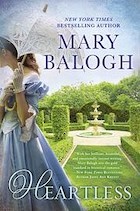
Mary Balogh, Heartless

For the past decade, Lucas Kendrick has lived in Paris, cultivating a reputation as a man without a heart. Ever since he was betrayed by and banished from his family 10 years ago, he’s resisted any hint of love or vulnerability. Now Luke has inherited a dukedom and must return to England to fulfill his duties. He also needs to marry and decides upon the beautiful, vivacious Anna Marlowe, though he has no intention of actually falling in love with his wife. Their relationship slowly deepens but is tested when Anna’s traumatic past catches up with her. I liked this book fine, but it would have been even better without the suspense subplot. I think romances are most interesting when the obstacles are internal to the people involved — character flaws they need to overcome, fears they need to face, etc. Luke and Anna have plenty of those obstacles, so the external conflict with the villain from Anna’s past felt like overkill. So while this is an enjoyable read, I don’t feel a need to keep it on my shelves.

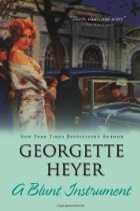
Georgette Heyer, A Blunt Instrument

When Ernest Fletcher is found dead in his study with his head bashed in, everyone is shocked — he was well-liked and seemingly had no enemies. But as the police begin their investigation, they soon unearth plenty of possible motives and suspects. There’s the dead man’s nephew, Neville Fletcher, who stands to inherit a fortune. There’s neighbor Helen North, whose gambling debts Ernest was using to blackmail her — and her husband, John, who may have been jealous of Ernest. But before the police can arrest anyone, they need to solve two problems: given the evidence at hand, how could anyone have had time to commit the murder? And what did the killer do with the weapon? This is one of Heyer’s best mysteries, in my opinion, with a clever solution and an entertaining cast of characters. My one quibble is that I wanted even more of Neville & co.; frankly, I felt the relationships among the suspects were more interesting than the mystery!

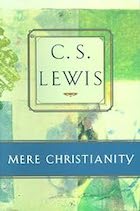
C.S. Lewis, Mere Christianity

A small group of people at my church decided to form a book club during Lent and chose this book. I’d read it before, years ago, but I’m really glad I decided to reread it now. Lewis is deservedly famous for his writings on Christianity; he has a gift for explaining complex ideas in a straightforward, accessible way. In this book, he suggests some arguments supporting belief in Christianity, states the religion’s core beliefs (shared by all denominations), discusses various aspects of Christian morality, and delves a bit into theological concepts such as the Trinity. Throughout the book, he emphasizes practical concepts such as what people must do in order to truly follow Jesus, and why it matters. I feel like most people interested in the topic have already read this book, but if it’s been a while since you’ve read it, I’d definitely encourage you to revisit it!

Mini-Reviews: Puzzle, Viscount, Sparrow

Patrick Quentin, A Puzzle for Fools

Broadway producer Peter Duluth has been drinking his life away ever since the tragic death of his wife two years ago. Now he’s hit rock bottom and checked himself into a sanatorium to dry out. When he hears a creepy voice talking about murder late one night, he initially thinks he’s imagined it — until a couple of the other patients mention a similar experience. Then a member of the staff is murdered, and while the police are officially investigating, Peter decides to do a little sleuthing of his own. This is my first book by Patrick Quentin, and I’d definitely consider reading more. It’s a solid Golden Age mystery with a perfect sinister setting. The only thing I didn’t particularly like was the romance, which was quite superficial. Still, I’ll keep my eye out for more Peter Duluth mysteries.

Mimi Matthews, The Viscount and the Vicar’s Daughter

Like A Rogue of One’s Own, this novella is a Victorian romance featuring the “reformed rake” trope, and the rake is even named Tristan! This book’s Tristan shows up at an annual country house party that is known for being exceptionally racy, where he unexpectedly befriends Valentine March, a vicar’s daughter who is attending the house party as a lady’s companion. When Tristan and Valentine are caught in a passionate embrace in the conservatory, Tristan does the honorable thing and offers marriage. But Valentine, despite her attraction to Tristan, isn’t sure she wants to marry a man with his unsavory reputation. I liked this novella more than A Rogue of One’s Own, but the many similarities made me feel like I was reading the same book again! I did enjoy this one more, but it’s definitely not my favorite by Mimi Matthews. Still, I look forward to trying some more of her full-length novels.

Mary Doria Russell, The Sparrow

The premise of this novel caught my fancy immediately: humans have discovered intelligent life on another planet, and the Jesuits (an order of Catholic priests) are spearheading the mission to make contact with these life forms and learn about their culture. The novel starts in 2060, and Fr. Emilio Sandoz is the sole survivor of that mission; he has returned to Earth badly damaged, both physically and spiritually. The book then jumps back and forth in time, giving the backstory on Emilio and his companions and describing what happened on the alien planet and its aftermath. The novel is epic in scope, and I’m frankly still digesting it. Overall, I think it’s wonderfully done, although it takes a while to get going — we don’t actually meet the aliens until about 2/3 of the way through the book. So it’s not quite an action-packed sci fi story; but as an examination of faith, of human goodness and human frailty, and of the complexity of relationships, this novel has a lot to say and gave me a lot to think about.

Mini-Reviews: Switch, Liturgy, Book

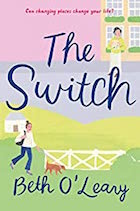
Beth O’Leary, The Switch

Leena Cotton has always been driven, but since her sister Carla died more than a year ago, she’s completely thrown herself into her work. But when an anxiety attack causes her to ruin an important meeting, her boss insists on her taking two months of paid leave. Meanwhile, Leena’s grandmother, Eileen, has lived most of her life in a tiny Yorkshire village. Her husband has recently left her, and now Eileen yearns to have the adventures she missed out on as a young woman. So Leena and Eileen decide to switch places: Leena will use her sabbatical to rest in the country, while Eileen will go to London and explore the world of online dating for senior citizens. The premise of this novel might be a little farfetched, but who cares when it yields such delightful results? I really enjoyed both women’s stories, but Eileen totally steals the show: she knows what she wants and isn’t afraid to go after it! I loved her benevolent meddling and the fact that, as a 79-year-old woman, she’s allowed to find love and have adventures. Definitely recommended if you’re looking for something fun and pleasant in your life right now!

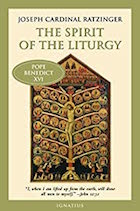
Joseph Cardinal Ratzinger, The Spirit of the Liturgy

Anyone who’s ever been to a Catholic mass will know that it follows a very specific, structured order called the liturgy. This book explains the “why” behind various liturgical practices and also talks about the philosophy of liturgy itself. I found it very interesting, though heavy going at times, and I definitely received some new insights on why certain liturgical rules exist — for example, that churches should be oriented to the east — and why they are important. I would definitely recommend this book for people who are interested in the subject and who already have some knowledge of Catholic liturgical practices. It wouldn’t be a good introductory work, however!

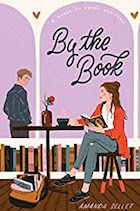
Amanda Sellet, By the Book

In this cute YA romance, Mary Porter-Malcom is a socially awkward teenager who’s accumulated most of her knowledge of the world from classic literature. As you might suspect, she’s not terribly popular; but when she overhears a group of girls discussing a notorious “cad” at their high school, Mary can’t help but share her opinion and cite the novels that support her theory. In gratitude, the girls accept Mary into their friend group. But as they apply Mary’s literary wisdom to their other relationships and potential romances — and as Mary starts to fall for the cad herself — she risks losing both her friends and her crush. I liked the premise of this novel and thought it was executed fairly well, but it panders a little too much to its target audience of bookish teen girls. The romance is predictable but fine, and I liked that Mary’s friendships are at least as important to her as her love life. A fun book, but not a keeper for me.

Mini-Reviews: Scandal, Death, Enchanting

Do You Want to Start a ScandalDeath on a Friday AfternoonOnly Enchanting

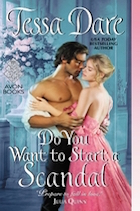
Tessa Dare, Do You Want to Start a Scandal

This Regency romance is the story of Charlotte Highwood, who has been nicknamed “the Desperate Debutante” because of her mother’s aggressive matchmaking efforts. Her mother’s latest target is Piers Brandon, Lord Granville; so Charlotte seeks him out at a house party to reassure him that she doesn’t wish to marry him. This strategy backfires immediately when the two are found in a compromising position — they accidentally interrupt a lovers’ tryst, but everyone else believes they are the lovers. Charlotte decides to clear her good name by unmasking the real lovers. But of course, the more time she and Piers spend together, the more they fall in love. This book was fine, although I found the comic style a little forced and overwrought. Not bad, but not particularly recommended.

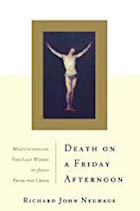
Richard John Neuhaus, Death on a Friday Afternoon: Meditations on the Last Words of Jesus from the Cross

I chose this book at the beginning of Lent as an appropriate spiritual read. As the subtitle suggests, each chapter is inspired by one of the seven last words of Jesus from the cross. Each “word” provides a jumping-off point for the author, a Catholic priest, to discuss various aspects of his faith. Sadly, since I read this a while ago, I don’t remember a lot of the details! But I do remember the chapter on “I thirst” being particularly interesting because it discussed the question of universal salvation (is it possible that everyone will be saved?). I’d say the book is geared more toward intellectual than devotional purposes. Overall, the book gave me a lot of food for thought, and I definitely plan to reread it in the future.

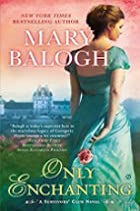
Mary Balogh, Only Enchanting

I’ve yet to be disappointed by a Balogh book, and this Regency romance is no exception. It’s part of the Survivors’ Club series, about a group of people who have been deeply wounded (physically, emotionally, or both) in the Napoleonic Wars, but it can be read as a stand-alone novel. The hero, Flavian, has returned from the war with a head injury that left gaps in his memory. When he is thrown together with Agnes, a widow living a quiet rural life, he impulsively proposes to her, and together they are able to fill in some of the blanks in Flavian’s memory — and fall in love in the process. That makes it sound like love magically cures Flavian’s mental injuries, which isn’t the case…I feel like I’m not describing the plot terribly well! But I really liked the book and will continue reading more in this series.

Mini-Reviews: Prim, Reading, Headliners

Awakening of Miss PrimI'd Rather Be ReadingHeadliners

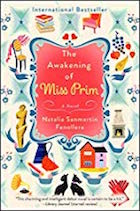
Natalia Sanmartin Fenollera, The Awakening of Miss Prim (trans. Sonia Soto)

This is a strange little novel about a young woman, Prudencia Prim, who applies for a position as a private librarian in a remote French village. A modern woman herself, she is initially shocked by the villagers’ old-fashioned beliefs and behavior. But she soon observes the happiness and prosperity of those around her, and with the help of her enigmatic employer, she comes to see the merits of their way of life. I think this book is aimed at a very particular audience, namely a certain subdivision of Catholics who are huge fans of G.K. Chesterton. If you don’t know what I’m talking about, I’d say this book is probably not for you! Even as part of the target audience, I still found it a little much.

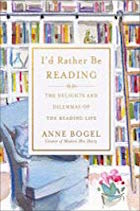
Anne Bogel, I’d Rather Be Reading: The Delights and Dilemmas of the Reading Life

I’m a big fan of Anne Bogel’s podcast, What Should I Read Next? So when I found her book at a library sale, I snatched it up! The essays are fun — nothing particularly new or memorable, but bibliophiles and fans of the author should enjoy them. A fun read, but not a keeper for me.

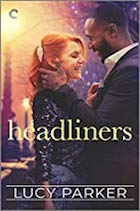
Lucy Parker, Headliners

Lucy Parker is an auto-buy author for me; I really love her contemporary romances set in the London entertainment world. In this one, protagonists Sabrina and Nick are rival TV presenters who are forced to work together to revive their network’s struggling morning show. If you enjoy enemies to lovers, this book is a great example! I especially liked how Sabrina and Nick resolve their conflicts like adults; there are no stupid misunderstandings or secrets kept for no reason. I note that, while this book can technically stand alone, it does refer back frequently to the events of the previous book, The Austen Playbook. Definitely recommended for romance fans, although my favorite Parker books remain her first two, Act Like It and Pretty Face.

Review: Discerning Religious Life

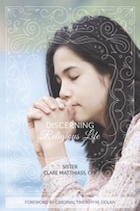
Discerning Religious LifeSr. Clare Matthiass, CFR, Discerning Religious Life

This short book, written by a religious sister, is a guide for Catholic women that describes the process of discerning a religious vocation (that is, a call to become a religious sister or nun). It describes various “steps” of this process in detail, from a woman’s first inkling that she might be called to religious life, to the attitudes and habits she should possess before beginning to discern seriously, to what will happen when she starts researching specific convents and communities. The book is peppered with anecdotes from the author and many other religious sisters who share their experiences of being called and of living out their vocations. The book doesn’t spend a lot of time digging into the theological and historical background of religious life, assuming that the reader will already be familiar with the basics. But it does provide very practical advice and reassurance to women who are questioning whether the religious life might be for them.

Obviously this book is going to be useful only for a very small audience: unmarried Catholic women who are still trying to discover God’s plan for their lives. I fall into this category, and while I’ve never particularly felt called to religious life, I found a lot to think about in this book. My favorite aspect of the book is that it spends a lot of time discussing the sacrifices of religious life — particularly the vows of poverty, chastity, and obedience — and the various obstacles and doubts that many women confront as they consider this vocation. It frankly acknowledges that the religious life is difficult and that the sacrifices it requires are significant. At the same time, the personal stories from the author and the other religious sisters clearly demonstrate the joy they find in their calling. I also really appreciated the book’s discussion of prayer and will definitely be applying some of those lessons to my own prayer life. Overall, I got a lot out of this book and would definitely recommend it to any woman in a similar stage of life.