Mini-Reviews: Heiress, Sailor, Uprooted

Eva Ibbotson, The Reluctant Heiress

Guy Farne is a foundling who has overcome his lowly origins and is now a multimillionaire. He’s just purchased Pfaffenstein, Austria’s most famous castle, and is determined to present it to his beloved, Nerine, as a wedding gift. But complications ensue when Guy meets Tessa, a lowly assistant at an opera company who turns out also to be the princess of Pfaffenstein. They are drawn to each other right away, but Guy’s engagement and Tessa’s quasi-betrothal to a German prince hinder their romance. I adore Eva Ibbotson’s books, which are the literary equivalent of a hug. This one has gorgeous descriptions of the Austrian countryside, vivid secondary characters with endearing quirks, loving depictions of the pleasures of music, and a heartwarming romance at its center. It’s very sweet and sentimental, perhaps too much so for some readers, but for me Ibbotson’s novels are the ultimate comfort reads.

Lillian Marek, Home Is the Sailor

Captain Will Dormer’s naval career came to an abrupt end when he lost a leg and an eye in battle. Fortunately, he’s just inherited an estate and a title – but he has no idea what he’s supposed to do in this new role. What he needs is a wife, someone practical to help him manage his household and smooth his way socially. So when he encounters Maria Garland, the daughter of his former captain who has fallen on hard times, he proposes a marriage of convenience. As Will and Maria slowly grow accustomed to their new lives and fall in love, they are also threatened by someone who apparently wants them dead. I liked this closed-door historical romance, although it’s not particularly focused on Will and Maria’s relationship. Rather, most of the plot involves them learning what it takes to run a large estate (interesting), as well as pursuing justice against the villains (a bit boring, as the villains’ identities and motives are never in doubt). Overall, an enjoyable read, and I wouldn’t mind reading more by this author.

Naomi Novik, Uprooted

Agnieszka lives in a poor village that’s overshadowed by the Wood, which is full of evil, dangerous magic. The villagers therefore rely on a mysterious wizard called the Dragon for protection, though they pay a terrible price for it: Every ten years, the Dragon takes a village girl and keeps her in his tower as a servant. Now it’s time for the next girl to be chosen, and everyone expects it to be Agnieszka’s beautiful and accomplished best friend, Kasia. But shockingly, the Dragon chooses Agnieszka instead. As she adapts to her new life in the Dragon’s tower, she slowly discovers her own magical gifts and realizes she can help defeat the Wood. I fell in love with this book the first time I read it and loved it again this time around! It’s an immersive fantasy with superb world-building and a wonderful heroine, reminiscent of Robin McKinley at her best. Honestly, I can’t be objective about this book; it feels like it was written especially for me. Highly recommended for lovers of fantasy and fairy tales!
Mini-Reviews: Tower, Flatshare, Aunt

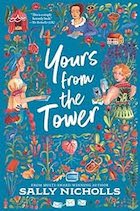
Sally Nicholls, Yours from the Tower

This epistolary novel centers around the correspondence between three school friends who are taking their first steps into adulthood. Tirzah is stuck being her strict grandmother’s companion in a remote Scottish village, but she longs for excitement and adventure. Sophia is in London for the Season and hopes to gain financial security through marriage, but she’s soon attracted to a penniless charmer. And Polly loves her job as a teacher in an orphanage, but complications ensue when she tries to find the father of one of her students. This book is wholesome and charming and delightful, and I really enjoyed it! Each girl is vividly drawn, with her own distinctive voice, and I found all three equally compelling. The letters are chatty and wide-ranging, covering everything from the minutiae of daily life to the girls’ deeper hopes and dreams. There are some some dark moments in the book involving alcoholism and depression, but the overall tone is light and hopeful. This is a YA novel, but I’d recommend it to adult fans of light historical fiction as well. I definitely want to read more by Sally Nicholls!

Beth O’Leary, The Flatshare

After moving out of her ex-boyfriend’s London flat, Tiffy desperately needs a new place to live. She sees an ad for a flatshare: The current tenant, Leon, works nights and will only be in the flat from 9 a.m. to 6 p.m., while Tiffy’s at work. The rent is cheap, so Tiffy jumps at the chance, even though she isn’t able to meet Leon in person before moving in. At first, they both find it odd to share their living space with a stranger, but as they start leaving notes for each other around the flat, they slowly become friends. When they finally do meet in person, they’re surprised by their mutual attraction, but difficulties arise when Tiffy’s ex reappears in her life. I feel like my summary of the book doesn’t do it justice at all. Both Tiffy and Leon are such endearing characters! Their notes to each other are adorable, and I like that they have jobs and friends and relatives and lives that don’t revolve solely around each other. Tiffy’s experiences with her ex are hard to read — the book does a great job of slowly revealing just how horrible he is — but the central romance is lovely. I’m glad I reread this one and would definitely recommend it to fans of contemporary romance!

Richard Hull, The Murder of My Aunt

Edward Powell lives in a small Welsh village with his Aunt Mildred. He hates Wales, the countryside, and everyone around him, especially his aunt. He only stays because she controls his finances; without the allowance he gets from her, he’d have nothing. As Edward broods over his distasteful circumstances, he realizes that his life would be much better if Aunt Mildred were to die. Soon he starts plotting possible murder scenarios, but his plans don’t work out the way he expects. This is both a funny and a grim book: Edward is a magnificently unreliable narrator whose misreading of conversations and events is often amusing, but he’s so snobbish and hateful that it’s tough to spend time in his head. I must admit, though, I didn’t find Aunt Mildred entirely sympathetic either! The ending is a surprise, but a well-plotted and foreshadowed one. Overall, this book isn’t strictly speaking a mystery—and certainly not a detective novel—but it’s worth reading for the narrative style and dramatic irony.

Mini-Reviews: Sugar, Widow, Scorpio

Sarah Addison Allen, The Sugar Queen

Twenty-seven-year-old Josey Cirrini is expected to live at home, take care of her aging mother, and always behave with perfect propriety. While she outwardly conforms to those expectations, she secretly rebels by stashing sweets, junk food, and romance novels in her bedroom closet. Then one day, a local woman named Della Lee Baker moves into her closet and refuses to come out until Josey starts making changes in her life. With Della Lee’s encouragement, Josey finds friendship and even love, but her newfound community is threatened by a sinister stranger. I always like Sarah Addison Allen’s books, which are set in Southern small towns with a hint of magic. This one is probably my favorite because I find Josey very relatable (though thankfully I have a much better mother than she does!). It’s got multiple romances, cozy fall/winter vibes, and a strong emphasis on relationships between women. Recommended, especially for this time of year.

Diana Biller, The Widow of Rose House

Alva Webster has recently returned to America after several years abroad. She’s bought an old house and plans to publish a book about the process of renovating and decorating it. But the house is allegedly haunted, and she can’t convince anyone to come work on it until she does something about the ghost. Enter Professor Samuel Moore, a brilliant scientist with an interest in the supernatural. As he and Alva investigate the possible ghost, they also fall in love, but Alva’s traumatic past may derail their romance. I’d heard good things about this book, and I’m happy to say it lived up to the hype! I enjoyed the relatively uncommon setting of 1870s New York, and I loved the banter between Sam and Alva. Sam is a bit too good to be true — he always reacts perfectly to Alva’s emotional turmoil — but he’s very charming and likable nonetheless. Recommended for fans of historical romance, and I’ll definitely be seeking out more by Biller!

Maggie Stiefvater, The Scorpio Races

Life on the remote island of Thisby revolves around the Scorpio Races, an annual event in which men (it’s always men) ride the dangerous, man-eating water horses native to the seas surrounding the island. Sean Kendrick has won the races several times, and he hopes this time he’ll win enough to finally be able to buy his beloved mount. Meanwhile, Puck Connolly is racing for the very first time, in hopes of somehow convincing her older brother, Gabe, not to move to the mainland. As Sean and Puck train together, they grow closer, but to get what they want — including each other — they’ll have to survive the races first. This is a book of my heart, and it was sheer joy to immerse myself in its world once again. I’m not usually a person who reads for setting, but Thisby is magical and feels as though it must be real. The book is slow and subtle and, while it contains a love story, it doesn’t feel romance-y at all, if that makes sense. For my money, this is Stiefvater’s best book, and I highly recommend it if the premise interests you.

Mini-Reviews: Rogue, Widening, Carnation

Virginia Heath, Never Rescue a Rogue

Giles Sinclair and Diana Merriwell have delighted in vexing each other ever since his best friend married her sister. Everyone thinks their teasing banter is masking a mutual attraction, but they both vehemently deny it. Yet when Giles finds himself in trouble, it’s Diana he turns to for help, and eventually they’ll have to admit to themselves — and each other — that their friends were right all along. There’s a lot in this book that requires suspension of disbelief (Giles might be illegitimate but no one knows! Diana is secretly a hard-hitting investigative journalist!). But if you can roll with the implausibilities of the plot, as well as the characters’ modern attitudes and language, this is a fun book. I liked it more than the first in the series, and I’ll definitely seek out book #3 when it comes out.

W. Bolingbroke Johnson, The Widening Stain

This vintage mystery novel, originally published in 1942, is set in a fictional university library. A French professor is found dead in the stacks, apparently having fallen off a high ladder. But Gilda Gorham, the library’s head cataloger, suspects foul play — especially when another member of the faculty is later strangled and a priceless manuscript goes missing. I liked this book well enough; the writing style is brisk and humorous, gently satirizing the world of academia and providing several limericks (of varying quality) as a bonus. The mystery itself isn’t terribly satisfying, as the motive hinges on some dubious psychology. But still, I found it an enjoyable read and a pretty good start to 2023.

Lauren Willig, The Secret History of the Pink Carnation

It’s 1803, and the Scarlet Pimpernel (who’s a real person in this universe) has inspired several other heroes with flowery names to spy against Napoleon. Lord Richard Selwick, a.k.a. the Purple Gentian, is on a mission to thwart Bonaparte’s invasion of England when he meets Amy Balcourt, an impetuous young lady who wants to join the Gentian’s league. As Amy and the Gentian fall in love, Richard struggles with when and how to reveal his true identity. I’m really glad I decided to revisit this series, because this book is a delightful romp of a historical romance that doesn’t take itself too seriously. If you’re looking for historical accuracy and period-appropriate dialogue and manners, this is not the book for you. But if you’re in the mood for some light-hearted, swashbuckling fun, I would definitely recommend it! Now I’m really looking forward to book #2, as I remember it being one of my favorites in the series.

Mini-Reviews: Stocks, Glass, Mayhem

Georgette Heyer, Death in the Stocks

The rich but disagreeable Arnold Vereker is stabbed to death, and his body is found in the stocks on the village green. Suspicion centers around the dead man’s half-siblings, Kenneth and Antonia, as well as their shady love interests. Scotland Yard is assisted by Giles Carrington, the Vereker family’s attorney, though he has a personal interest in the case as well. I adore Heyer’s romances but have been less impressed with her mysteries overall. This is one of the few I kept after my initial read, but upon rereading I thought it was just okay. The Verekers are supposed to be likable and entertaining, but they annoyed me this time around, and the romance was barely sketched in. It’s a decent read if you like Golden Age mysteries, but it’s no longer a keeper for me.

Caroline Stevermer, The Glass Magician

Thalia Cutler is a stage magician on the vaudeville circuit, but when a dangerous trick goes wrong, she discovers that she also has real magical powers. But until she learns to control them, she’s in grave danger and must take shelter with a friendly family that has similar powers. Meanwhile, one of Thalia’s onstage competitors is murdered, and her mentor is arrested for the crime, so she must discover the real killer. I wanted to love this book, but it didn’t have the same spark that A College of Magics and A Scholar of Magics did for me. It felt very much like book 1 of a series, with incomplete world-building and storylines that aren’t resolved. I don’t know if a sequel is planned, but I’m not especially interested in it, unfortunately.

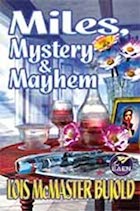
Lois McMaster Bujold, Miles, Mystery, and Mayhem

In Cetaganda, Miles and his cousin Ivan travel to Cetaganda to attend a state funeral, only to become entangled in political intrigue and murder. In Ethan of Athos, Ethan leaves his all-male planet and is forced to team up with that most mysterious and dangerous of creatures, a woman (and hey, it’s Elli Quinn from The Warrior’s Apprentice!). And in the novella Labyrinth, the Dendarii Mercenaries’ simple mission to pick up a scientist from Jackson’s Whole goes awry. I’m still really enjoying this series, although the characters trump the plots, for me. I adore Miles and have a huge soft spot for Ivan as well! Also, I find it interesting how much of this series (at least so far) is about gender, sexual politics, and reproduction. Looking forward to seeing what happens next!

Mini-Reviews: Throne, Beloved, Marion

Naomi Novik, Throne of Jade

Former naval captain Will Laurence and dragon Temeraire are now fast friends and inseparable companions. But because Temeraire is an extremely rare and valuable Chinese dragon, China is demanding him back. So Laurence and Temeraire are forced to travel to the imperial court to placate the emperor and prevent the Chinese from allying with France. This book is a worthy continuation of His Majesty’s Dragon, fleshing out the global political situation and contrasting English and Chinese treatment of dragons. I enjoyed watching Temeraire mature a bit and start to question the English way of doing things. Looking forward to book 3!

Mary Balogh, Only Beloved

George, the Duke of Stanbrook, has helped the other six Survivors to heal from their war wounds and find true love. But he has never truly coped with his own pain and loss: his son died in the Napoleonic Wars, and his wife took her own life soon afterward. Now George is lonely and decides to remarry, but his chosen wife is determined to help him finally confront and heal from his tragic past. This isn’t one of my favorite installments of the Survivors’ Club series, but I still enjoyed it. I like Balogh’s style, and it’s refreshing to see historical romance protagonists in their 30s and 40s. The book takes an oddly melodramatic turn toward the end, and the last few chapters are a bit cloying, with all the blissfully married Survivors and their babies. But it’s still worth a read, especially if you’ve enjoyed the rest of the series.

T.A. Willberg, Marion Lane and the Midnight Murder

Marion Lane is an apprentice at a mysterious private detective agency that operates beneath the streets of London. When one of her colleagues is murdered and her mentor is accused of the crime, Marion decides to investigate. But she uncovers some troubling secrets about the agency’s history and isn’t sure whom she can trust. I really liked the world of this novel (shadowy secret society + crime fighting + cool steampunk gadgets!), but I wish it had been more developed. The novel is almost entirely focused on plot, to the detriment of character development and world building. I also found myself oddly sympathetic to the villain! I’m interested enough to read book 2 in the series, but I hope the setting and characters will be more fleshed out.

Mini-Reviews: Dragon, Austen, Venom

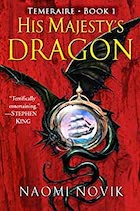
Naomi Novik, His Majesty’s Dragon

When naval captain Will Laurence captures a French ship with a coveted dragon egg aboard, his life is turned upside-down. He bonds with the baby dragon, Temeraire, which means he must give up his naval career to become an aviator — a way of life completely different from what Laurence is used to. But his newfound friendship with Temeraire carries him through, and the two of them will have an important role to play in England’s ongoing war with France. I’ve read several books in this series, but I’d forgotten how much I enjoyed them! The concept (Napoleonic Wars plus dragons) is right up my alley, and I adore both Laurence and Temeraire as characters. I can’t wait to read about their further adventures in subsequent books! 

Lucy Worsley, Jane Austen at Home

This biography is a breezy and entertaining look at Jane Austen’s life through the lens of the homes she lived in. It also explores how the concepts of home and domesticity informed her work. As an enthusiastic Janeite, I enjoyed this book, although if you’ve read other Austen biographies you don’t particularly need to read this one. It appears reasonably well cited; there are numbered endnotes, and Worsley quotes many primary sources. She speculates quite a bit about motives and emotions (as she herself admits in the introduction), and I occasionally found her interpretations farfetched. Overall, though, a good read, especially for those who haven’t read other books on Austen’s life and work.

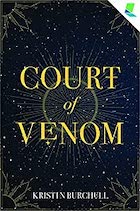
Kristin Burchell, Court of Venom

Badriya never wanted to become the queen’s poisoner, but she has no choice. The malicious Queen Solena will kill her if she refuses, and the city is surrounded by a wasteland full of witches and demons, making it impossible for her to run away. But when a neighboring prince arrives as a potential suitor for the queen, Badriya may finally get the chance to pursue a different life. This novel reads like a standard YA fantasy (though it’s marketed as adult); the heroine is an outsider with special powers who eventually has to fight for justice. It’s entertaining enough, but not particularly unique. I didn’t like how the book kept jumping between past and present; I think it was supposed to generate suspense, but instead it just made the world-building confusing and hard to follow. Overall, while I certainly didn’t hate this book, I wouldn’t particularly recommend it either.

Mini-Reviews: Sapphire, Scandalous, Red, Silver

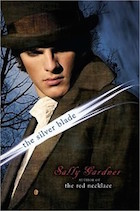
Singapore SapphireSlightly ScandalousRed NecklaceSilver Blade

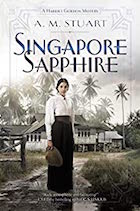
A.M. Stuart, Singapore Sapphire

I love a historical mystery, and this book’s uncommon setting of 1910 Singapore intrigued me, so I decided to give it a try. Overall, I liked but didn’t love it. Protagonist Harriet Gordon is a widow living with her brother and eking out a meager living as a typist. She’s been hired to type Sir Oswald Newbold’s memoirs, but after only a day of work, the man’s throat is cut. Inspector Robert Curran is on the case, and while he and Harriet get off to a bad start, they soon become friendly as they work together to solve the mystery. I think the mystery itself hangs together well, but it definitely takes a backseat to the setting and characters. It was interesting to get a glimpse of Singapore at this point in time, which was home to so many different cultures, both Asian and European. But if you’re looking for a novel with diverse characters, this isn’t it — there are a few Asian secondary characters, but they’re quite two-dimensional and have no impact on the story. Overall, I’m curious enough to give the next book a try, but this one fell a bit flat for me.

Mary Balogh, Slightly Scandalous

This third book in the Bedwyn saga focuses on Lady Freyja Bedwyn, who is much bolder and more direct than the typical Regency lady. Having grown up with four brothers, she can shoot and ride and box with the best of them. She’s also in no hurry to marry; most of the fashionable society men bore her, and she’s still not over a former flame who recently married someone else (as told in A Summer to Remember, though you don’t need to read that book to understand this one). But when Joshua Moore, marquess of Hallmere, proposes a fake betrothal, Freyja agrees to the scheme, not realizing that there is more to Josh than meets the eye. I continue to enjoy the Bedwyn books, and this might be my favorite so far! Freyja hasn’t been particularly likable in the previous books, but this novel gave her much more dimension. And the roguish Joshua, whose carefree manner and bad reputation hide his true goodness, is a hero after my own heart. The book does have some moments of cheesiness, but overall I liked it a lot and look forward to more of the Bedwyns. I find myself more and more excited for Wulfric’s book!

Sally Gardner, The Red Necklace and The Silver Blade

This YA fantasy duology set during the French Revolution focuses on Yann, a Gypsy boy with unusual gifts, and Sido, an aristocratic girl with a neglectful father. They meet in The Red Necklace when Yann’s theater troupe performs at Sido’s father’s house, and they are immediately drawn to one another. But when the troupe falls afoul of the powerful and evil Count Kalliovski, Yann must flee the country. Later, when Kalliovski sets his sights on Sido as a bride, Yann returns to rescue her. In The Silver Blade, Yann continues to rescue aristocrats from the guillotine, while Sido waits in England. But his plans are once again thwarted by Kalliovski, who wants Yann’s magic for himself. I found these books enjoyable enough — loved the French Revolution setting and the Pimpernel-esque elements — but didn’t like that they spend just as much time (if not more) on the villain as on the heroes. As a result, Yann and Sido don’t have much dimension; I wanted more time with them and less time describing just how evil Kalliovski is. I’m glad I read these books, but now they can leave my shelves to make room for something new!

Review: The Element of Fire

Element of FireMartha Wells, The Element of Fire

In a quasi-Renaissance fantasy world, the kingdom of Ile-Rien is in a precarious position. King Roland is young and weak, completely under the thumb of his conniving cousin, who has his own plans for the throne. Roland’s mother Ravenna still wields much of the throne’s power, but her health is deteriorating, and many of those at court (including the evil cousin) are now her enemies. In addition to these domestic intrigues, Ile-Rien is now under threat from a foreign sorcerer, Urbain Grandier, who is rumored to be a powerful and dangerous dark magician. Thomas Boniface, captain of the Queen’s Guard and Ravenna’s former lover, is charged with finding Grandier and thwarting whatever plans he may have against Ile-Rien. Thomas also finds himself dealing with Roland’s half-fay half-sister Kade, who returns to court after a years-long absence with unknown motives. Amid the complex allegiances of the court — in which it soon becomes apparent that at least one traitor is at work — whom, if anyone, can Thomas trust? And when Grandier finally makes his move, will Thomas be able to stop him before it’s too late?

I first read this book in (I think) 2009, and I enjoyed it so much that I bought four other books set in the world of Ile-Rien. But for some reason, I never read any of those sequels, and since it’s been more than a decade, I wanted to refresh my memory of the first book. I’m happy to say that I still really enjoyed it! It strikes me as a quintessential classic fantasy novel, with tons of political intrigue, sorcery, and fay magic thrown in for good measure. I really like that, instead of the quasi-medieval setting of most fantasy novels, this book evokes more of a Renaissance feel, with pistols and gunpowder beginning to supplement (though not yet replace) swords as the dominant weapons. I also liked the main characters a lot, particularly Thomas and Kade. They share a cynical, bantering sense of humor that makes their interactions particularly enjoyable; but when the chips are down, they also share a deep courage and sense of loyalty. The plot is action-packed and exciting, and the world-building is vivid. In short, I’m really glad I reread this one, and I look forward to reading a few more of the Ile-Rien books this year!

Mini-Reviews: The 13 Clocks; Chalice

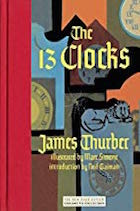
13 ClocksJames Thurber, The 13 Clocks (illustrated by Marc Simont)

This odd little book is like nothing I’ve ever read. A sort of fable or fairytale for adults, it’s the story of a wicked duke who is keeping captive the beautiful Princess Saralinda, and of the noble prince who must complete an impossible task in order to rescue her. Good ultimately triumphs over evil, yet the overall mood is creepy and melancholy. Neil Gaiman was the perfect choice to write the short introduction, because his writing gives me a similar (though even darker) vibe. I would definitely recommend this to anyone, and I think it will be even more interesting on a reread.

***

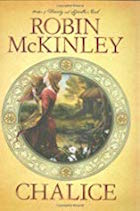
ChaliceRobin McKinley, Chalice

Robin McKinley is an author onto whom I imprinted sometime in my late elementary or middle school years. Novels such as The Blue Sword, Beauty, and The Outlaws of Sherwood were my introduction to the fantasy genre, and they remain some of my all-time favorite books. Chalice was written several years later, and while I still bought and read it immediately, I remember not loving it as much as McKinley’s other books. Because of my memory of that disappointment, I’d never reread it until now, but I appreciated it more this time around. I loved the protagonist, Mirasol, and her stubborn attempts to do her duty in an unusual situation. It was a pleasure to sink into the lush descriptions and slow unfolding of the story. It is a very slow-moving book, which might put off some people; but if you like McKinley’s style of writing, you’ll like this one.