More mini-reviews! Just when I think I’m getting to the end of my backlog, I go and read more books. Will I never learn?

Lily Anderson, The Only Thing Worse Than Me Is You — Oof. I really wanted to like this one — it’s a modern retelling of Much Ado About Nothing! But I was very underwhelmed, and the main reason is that I couldn’t stand the protagonist, Trixie. She’s incredibly self-absorbed and utterly convinced of her own righteousness at all times, which makes her downright mean to the people around her. She’s also a proud geek girl, obsessed with comic books and “Doctor Who.” Don’t get me wrong — I have nothing against these things! But Trixie’s constant references to geek culture didn’t feel real to me. Instead, I felt like the book was trying to pander to a specific audience and going way over the top. In short, I just wasn’t a fan.
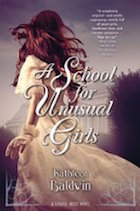
Kathleen Baldwin, A School for Unusual Girls — This one’s about — you guessed it — a school for unusual girls. Sixteen-year-old Georgiana Fitzpatrick doesn’t behave as a proper young lady should; and when one of her scientific experiments nearly burns down the stables, her parents pack her off to a school whose reputation for strictness is legendary. Of course, Georgie soon realizes that the school is not what it seems and that her fellow students all have unique, mysterious abilities. There’s also romance, kidnapping, and a touch of espionage. All in all, a fun read, although not particularly groundbreaking in the genre. I’d like to read the sequel at some point.
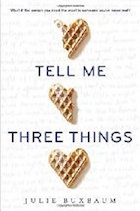

Julie Buxbaum, Tell Me Three Things — I enjoyed this novel despite its ridiculous premise: Jessie Holmes moves across the country when her dad remarries, and she is forced to attend a pretentious private school where she doesn’t know anyone — that is, until the mysterious Somebody/Nobody emails her, offering friendship and guidance in navigating the social scene at her new school. Though Jessie is skeptical at first, she soon opens up to Somebody/Nobody and speculates on who it might be. To the reader, the answer is astoundingly obvious, but it’s still fun to watch Jessie get there. A nice YA romance if you’re into that kind of thing.
Dorothy L. Sayers, Strong Poison — I read this installment of the Lord Peter Wimsey series years ago but didn’t remember much about it, except that Lord Peter finally meets his match in Harriet Vane, a young woman who’s on trial for murdering her ex-lover. For me, this was the best novel in the series so far. The mystery is well plotted (although, as with other books in the series, the suspect list is so small that the true mystery is howdunit, not whodunit), and the romance is nicely underplayed. I’m definitely loving this series more and more as I continue to read, and I’m looking forward to the next book!
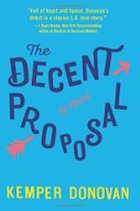
Kemper Donovan, The Decent Proposal — I was drawn to this book because of the title, and I knew very little about it going in. The premise is that a mysterious benefactor has promised two L.A. residents, happy-go-lucky Richard and highly regimented Elizabeth, that they will each receive half a million dollars if they agree to meet each other once a week for a year and talk — just talk. Of course they accede to the proposal, and of course they start out as very different people but eventually find some common ground. I liked the development of the relationship between Richard and Elizabeth, especially since I honestly didn’t know whether it was going to end in friendship or romance. I could have done without most of the other characters, actually; they seemed like they should get their own novels rather than being relegated to secondary characters in this one. I also think people who have lived in L.A. would get more out of the book, since it’s definitely written in that specific setting. Overall, I did like the book, but I’m glad I got it from the library instead of buying.


