Mini-Reviews: Hitchhiker’s, Rake, Emma

Douglas Adams, The Hitchhiker’s Guide to the Galaxy

It’s an ordinary Thursday, and British everyman Arthur Dent is lying in front of a bulldozer, trying to stop his house from being demolished. Little does he know that the entire planet is about to be demolished to make way for an interstellar bypass. Fortunately, his alien friend, Ford Prefect, saves him from vaporization by hitching a ride on a spaceship. From there, Arthur and Ford brave many dangers, including Vogon poetry, infinite improbability, automated attacks from dead planets, and the evil machinations of white mice. I remember reading this book (and the sequels) in my tween or teen years, and at the time I thought it was hilarious. This time around, I could still appreciate some of the humor, but I had less patience for it. The book isn’t attempting to be anything more than a rapid-fire series of jokes, and after a while I found it a bit tedious. So even though there’s no real resolution at the end of this novel, I’m not tempted to continue with the series.

Mary Jo Putney, The Rake

Notorious rake Reggie Davenport is growing tired of his aimless life; so when his cousin, the Earl of Wargrave, unexpectedly gives him an estate, he views it as a fresh start. Upon arriving at the estate, Reggie is shocked to discover that his very capable steward is a woman, Alys Weston. Alys fled her aristocratic family at a young age and has fought hard to make her own way in the world, so at first she fears and resents Reggie’s presence. Eventually they discover each other’s good qualities, but Reggie’s drinking problem threatens their relationship. I was pleasantly surprised by this book! I loved its refusal to romanticize rakishness: Reggie’s drinking and womanizing have serious consequences, particularly his struggle with what we now call alcoholism. His feelings for Alys are one motivating factor in his desire to change, but not the only one, and her love doesn’t magically solve his problems. I liked Alys too and related to her insecurities, but this is really Reggie’s book. I would highly recommend it to historical romance fans, and I’m interested in trying more by Putney—anyone have any recommendations?

Audrey Bellezza and Emily Harding, Emma of 83rd Street

In this contemporary retelling of Jane Austen’s Emma, Emma Woodhouse is a privileged 23-year-old living on the Upper East Side and getting a master’s in art history. Socially, she’s at a loose end now that her beloved older sister has married and moved out. So when she meets country-mouse classmate Nadine, Emma decides to give her a makeover—as well as some dubious romantic advice. Emma’s friend Knightley doesn’t hesitate to point out the flaws in her approach, but lately their good-natured sparring seems to be taking a romantic turn. I adore Austen but tend to steer clear of retellings; I broke my rule for this one, and sadly I don’t think it was worth it. The novel has its good points—it successfully translates the original book’s major plot points, and it gives us some peeks at Knightley’s point of view—but to me it felt like a standard contemporary romance with nothing particularly interesting or compelling about it. Unless you’re a diehard Austen fanfic lover, I’d skip this one.
Mini-Reviews: Gilded, Enchanting, Scoop

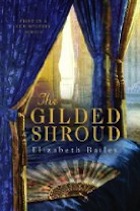
Elizabeth Bailey, The Gilded Shroud

In this Georgian-era historical mystery, Emily Fanshawe, the marchioness of Polbrook, is strangled in her bedchamber, and the most likely suspect is her husband. Their marriage has always been contentious, they argued the night before the murder, and now Lord Polbrook is nowhere to be found. His family is horrified yet determined to prove him innocent—a task that falls on his younger brother, Lord Francis Fanshawe, and on his mother’s new companion, Ottilia Draycott, whose clever mind soon uncovers some pertinent secrets. I read this book a long time ago and remember liking it, so I’m pleased to say I really enjoyed it this time as well! The historical setting feels grounded, and both Francis and Ottilia are interesting, sympathetic characters. The mystery is well plotted but a bit slow, and I found it less compelling than the romantic subplot. But I’m excited to read the next book, which I also own, and it looks like Bailey has also written some romances that I’d like to check out!

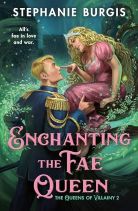
Stephanie Burgis, Enchanting the Fae Queen

Imperial general Gerard Moireul is a brilliant military strategist with an unassailable reputation for honor and integrity. Queen Lorelei of Balravia is notorious for her flighty, scandalous behavior. They’ve been nemeses for years, both politically and personally. But when a magical bargain forces them to compete in a fae tournament, they must work together, and slowly they come to realize they’re much more alike than they thought. I’m generally a Burgis fan, and I enjoy the enemies-to-lovers trope, so overall I found this quite fun. Both Gerard and Lorelei are likable characters underneath their exaggerated public personas, and I’m especially fond of an uptight, duty-bound hero. I do think the broader political situation in this fantasy world is boring and basic; the book is more enjoyable when it focuses on the romance. Overall, it’s a fun read, and you don’t necessarily have to read the previous book, Wooing the Witch Queen, to follow this one.

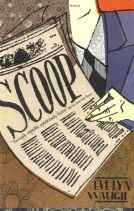
Evelyn Waugh, Scoop

British novelist John Courteney Boot has gotten himself entangled with the wrong woman and needs to skip town. He asks a friend to get him a job as a foreign correspondent covering the imminent war in the East African republic of Ishmaelia. But through a series of misunderstandings, the newspaper sends the wrong man, William Boot, who writes a nature column and has absolutely no desire to travel beyond his country village. As William embarks on his bewildering adventure, he learns more than he bargained for about journalism and international relations. This novel is both a biting satire on journalism and an extremely well-plotted farce. I loved how William’s oblivious blundering essentially caused the revolution (and counterrevolution) in Ishmaelia. On the minus side, there aren’t really any characters to root for, and the worldview expressed by the novel is cynical and bleak. Overall, I enjoyed the book’s humor but don’t think I’d ever want to reread it.

Mini-Reviews: Unlikely, Penance, Outcrossing

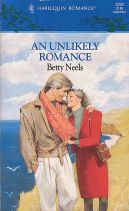
Betty Neels, An Unlikely Romance

Orphan Trixie Doveton doesn’t expect too much from life; she’s content with her work as a nurse-in-training and doesn’t believe she’ll ever marry. So she’s shocked when Professor Krijn van der Brink-Schaaksma, a renowned endocrinologist and very eligible bachelor, proposes a marriage of convenience. He needs someone to manage his social life and keep his acquaintances at bay so he can concentrate on the book he’s writing. Trixie, having fallen in love with him almost immediately, accepts—but can she be happy when the man she desperately loves hardly seems to notice her? I enjoyed this a bit more than my previous Neels title, No Need to Say Goodbye. I liked that Trixie wasn’t a complete doormat; though she outwardly conforms to all Krijn’s expectations, she isn’t happy about it and occasionally lets her anger show. I also liked getting a few glimpses into Krijn’s head as his feelings for his wife begin to change. It’s not a deep or significant book, but not bad for a quick, nostalgic read.

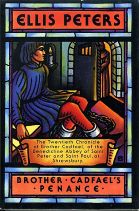
Ellis Peters, Brother Cadfael’s Penance

***Warning: SPOILERS for previous books in the series!***

In the late fall of A.D. 1145, the civil war between King Stephen and Empress Maud rages on, but most people just want the fighting to be over, regardless of the victor. To that end, one of the empress’s major supporters changes sides and surrenders a key castle to Stephen. When some of the castle’s knights refuse to betray the empress, they are taken prisoner. Among them is Olivier de Bretagne, Brother Cadfael’s son from his crusading days. Cadfael sets out for Coventry, where a peace conference is being held, to see if he can locate and ransom Olivier. But doing so will risk his place among his Benedictine brethren—and possibly even his life. I adore this series and am sad to have finished it, but I think this is an extremely fitting conclusion. Cadfael faces his biggest challenge yet, as he’s torn between love of his vocation and love of his son. The book also explores the complexities of friendship, loyalty, and father-son relationships, all while painting a vivid picture of medieval life. I can’t recommend this series highly enough, although I definitely think this book should be read last.

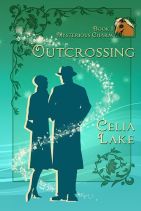
Celia Lake, Outcrossing

In this fantastical version of 1920s England, Rufus Pride is magically gifted but untrained, since the man who was supposed to teach him died in the Great War. Now Rufus is struggling to make ends meet with no steady trade, magical or otherwise. Meanwhile, Ferry Wright is from an aristocratic family, but she’s become a governess rather than marry the much older man her parents have chosen for her. When Rufus and Ferry meet, they’re immediately drawn to each other but don’t see a way to be together. Then Rufus falls in with a gang of smugglers who put both his and Ferry’s lives in danger. This book is marketed as a “cozy historical fantasy romance,” which is a fair description and right up my alley. I found it slight but charming, although the dialogue was occasionally a bit stilted to my ear. I also could have done without the two or three steamy scenes. But overall, I enjoyed this one and would consider reading more by the author – she seems to be quite prolific!

Mini-Reviews: Ring, Moon, Earl

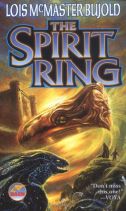
Lois McMaster Bujold, The Spirit Ring

In a magical version of Renaissance Italy, Fiametta is the privileged daughter of a goldsmith and master mage. Her biggest problem is an unrequited crush on one of the duke’s soldiers—that is, until the duke is assassinated by a rival who seems to command dark magic. When this man’s soldiers kill Fiametta’s father and seize his corpse for use in an evil ritual, she teams up with the local abbot, who also has some knowledge of magic, and with Thur, a would-be metalworker who was supposed to be her father’s new apprentice. This stand-alone fantasy novel is one of Bujold’s earlier works, but it has a lot of her characteristic elements: strong world-building, an intelligent heroine with agency, and ordinary people doing heroic things because there’s no one else around to do them. The book has a YA feel to it, possibly because Fiametta and Thur are both teenagers, and their romance is a bit underdeveloped. Overall, though, I really enjoyed this one and would recommend it to fantasy fans!

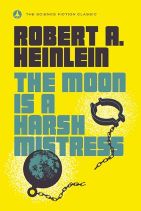
Robert A. Heinlein, The Moon Is a Harsh Mistress

It’s 2075, and the Federated Nations of Earth have established a thriving colony on the moon. But times are tough on Luna, whose resources are being unfairly exploited by the Terran government. A small group of Lunar citizens decides to start a revolution, including narrator Manny, an engineer who has befriended self-aware supercomputer “Mike.” Along with a crafty professor, a beautiful revolutionary, and a Terran self-proclaimed soldier of fortune, Manny and Mike engineer a rebellion—but at what cost? This novel combines clever world-building with speculative science and libertarian political philosophy. There are some interesting ideas in it, and I liked Manny’s narrative voice once I got used to the Lunar dialect, but I also found it a slog; it really drags after the initial setup. It was fascinating that some aspects of the plot were very dated while others still felt timely. Overall, this was a mixed bag for me, and I’ll probably wait a while before trying anything else by Heinlein.

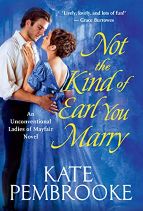
Kate Pembrooke, Not the Kind of Earl You Marry

William Atherton, the earl of Norwood, is a man of unassailable respectability and political aspirations. So when a newspaper announces his engagement to Charlotte Hurst, a social nobody whom he’s never even met before, he’s furious. But when it becomes obvious that Charlotte knows nothing about the announcement either, William proposes that they pretend it’s true: A temporary engagement will prevent any scandal and give him the chance to figure out who’s really behind the announcement. But as William and Charlotte spend more time together, their fake betrothal starts to feel all too real. I enjoy the fake relationship trope, and this is an inoffensive example of it, but honestly the book fell a bit flat for me. Contrary to the title, William is exactly the kind of earl anyone would marry—handsome, rich, intelligent, kind, and essentially flawless. Lovely in real life but dull in fiction, and Charlotte is no better. Overall, the book just feels like the blandest possible version of this story, and I’m not particularly tempted to pick up the sequel.

Mini-Reviews: Dreams, Daring, Undone

Sarah Adams, In Your Dreams

Madison Walker has always seen herself as the “failure” among her successful siblings. She’s just graduated from culinary school in New York, but she’s no longer sure cooking brings her joy, and she doesn’t love the big city like she thought she would. Still, when family friend James Huxley offers her the executive chef position at his new restaurant, she jumps at the chance to move home to Rome, Kentucky, and prove that she can succeed at something. Little does she know that James has been secretly in love with her for years, and he may finally be ready to do something about it. I enjoyed this light, charming romance and felt Madison’s insecurities and issues with her (loving but imperfect) family were relatable. James is of course a bit too perfect as a romantic hero, though I liked that he had a conflict with his brother, Tommy, that was partly (or even mostly) his fault. It looks like this is the last book in the Rome series, but is it weird that I kind of want Tommy’s story now?

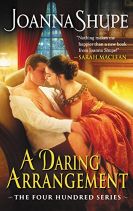
Joanna Shupe, A Daring Arrangement

Lady Nora Parker is a spirited young Englishwoman who’s fallen in love with an unsuitable artist. Her father has sent her away to New York to find a better match, but Nora just wants to return to England. She decides to find an outrageously unsuitable American man to pose as her fiancé, so her father will object to the match and summon her home. Wall Street tycoon Julius Hatcher seems like the perfect candidate; his lavish parties and scandalous paramours are the topic of every gossip column. But as Nora and Julius spend more time together, an inconvenient attraction sparks. I love the fake relationship trope and was excited about the Gilded Age setting of this romance, but ultimately the plot just doesn’t work. Nora wants Julius to help her create a scandal, while he is trying to use her to get into high society, so their desires are opposed from the start—why does either of them think this arrangement is a good idea? That said, I do think they have good chemistry, so I enjoyed the romance aspect. Overall, the book is fine but didn’t knock my socks off.

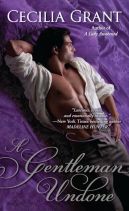
Cecilia Grant, A Gentleman Undone

Will Blackshear is a soldier who has returned from the Napoleonic Wars with visible and invisible wounds. He needs money to support the widow of one of his men, and he hopes to win it at the gambling tables. There he meets Lydia Slaughter, a prostitute who once worked in a brothel and is now a gentleman’s mistress. She also happens to be a genius at cards and agrees to help Will cheat in exchange for a share of the take. They are drawn to each other almost immediately, but they know that acting on their attraction would be a huge mistake: Will can’t afford to keep a mistress, and Lydia’s entire livelihood depends on her current protector. I finished this book thinking, “Now this is how you write historical romance!” Will and Lydia are both such complex characters, broken in many ways, convinced they’re unable to love and unworthy of being loved. Every interaction between them is fraught with tension, and while I don’t usually like books with a lot of steam, the sex scenes here are crucial to the development of character and relationship. If you want superior-quality historical romance, I can’t recommend Cecilia Grant highly enough!

Mini-Reviews: School, Remember, Secret

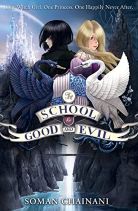
Soman Chainani, The School for Good and Evil

Every year, two children are kidnapped from the village of Gavaldon. One, beautiful and kind-hearted, is sent to the School for Good, and the other, ugly and malicious, goes to the School for Evil. This year, Sophie is determined to be the one selected for the School for Good, where she’ll become the heroine of her very own fairy tale, complete with Prince Charming. But when she and her friend, the plain and all-black-wearing Agatha, are chosen, she’s shocked to end up in Evil, while Agatha is sent to Good. Can the two girls figure out how to fix this mistake – and what happens if they want to go home? I loved the first sentence of this book (“Sophie had waited all her life to be kidnapped”), but unfortunately it was mostly downhill from there. The plot lurches along unsteadily and is surprisingly hard to follow, and I found Sophie so awful that I wondered why Agatha (or anyone) would want to be friends with her! There are some interesting ideas in the book, but they never quite gel into anything substantial. Not recommended, and I won’t be continuing with the series.

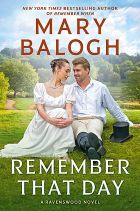
Mary Balogh, Remember That Day

Winifred Cunningham is close friends with Owen Ware and has been invited, with her family, to his family’s estate of Ravenswood for a few weeks. Winifred wonders whether Owen will propose to her; they share a passion for helping others and might do a lot of good together. But she’s not in love with him, and as the visit proceeds, she finds herself unexpectedly attracted to his brother, Colonel Nicholas Ware. Meanwhile, Nicholas is about to make a pragmatic proposal to his commanding officer’s daughter, but meeting Winifred throws a wrench in his plans. This is another mildly pleasant installment of the Ravenswood series. I liked the central love story but felt it lacked depth; too much time was spent on the myriad supporting characters in both Nicholas’s and Winifred’s families, and I just don’t find them interesting! I really hope the next book is Stephanie’s story, which still intrigues me, but after that I’ll probably stick with Balogh’s earlier titles.

Tana French, The Secret Place

This fifth book in the Dublin Murder Squad series is set at St. Kilda’s, a posh girls’ boarding school where a student from the neighboring boys’ school was found dead a year ago. The case was never solved, but now Detective Stephen Moran has received an anonymous note saying, “I know who killed him.” Hoping for a permanent spot on the Murder Squad, Moran teams up with Antoinette Conway, the abrasive detective who worked the case the first time around. As they delve deeper into St. Kilda’s mysteries, they’re shocked to discover just how much these teenage girls are hiding. I liked this book a lot more than Broken Harbor, though a few things still bugged me: The narrative switches between the present-day investigation and the months leading up to the boy’s murder, and I found the present-day story much more interesting. The teen speak felt inauthentic, and I didn’t like the supernatural element. But I did really love the insights into teen friendship and psychology, as well as the development of Moran and Conway’s partnership. I’m interested to see how that dynamic continues and changes in the next (and final) book.

Mini-Reviews: Spouse, Duke, Fallen

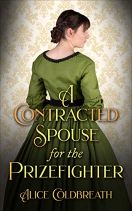
Alice Coldbreath, A Contracted Spouse for the Prizefighter

Former prizefighter Clem Dabney has embarked upon a new career and established a popular music hall in London; now he seeks to expand into a real theater. The Parthenon, owned by Theodora Fields and her two siblings, is his target, but he’s surprised when she approaches him with a proposition: She’ll marry him and thus give him an ownership stake in the theater, if he agrees to put her male impersonation act onstage. Clem agrees and soon finds himself oddly drawn to his eccentric wife, but his secrets may threaten their happiness. I’ve enjoyed this whole series, and this book caps things off nicely. I liked Clem’s bewildered affection for Dora (as he calls her), and I enjoyed the music hall setting. I do think the book is oddly paced, and the conflict between them isn’t terribly substantial, but I still really enjoyed the central romance. I’m looking forward to my next read by this author!

Anna Harrington, If the Duke Demands

Miranda Hodgkins has been in love with her neighbor, Robert Carlisle, for years, but the attraction has always been one-sided. Determined finally to get his attention, Miranda sneaks into his bedroom and attempts to seduce him—only to encounter his older brother, Sebastian, instead. Sebastian offers to help her with Robert if she’ll help him find a suitable wife; as the Duke of Trent, he needs a woman with the right family and social connections. But as Miranda and Sebastian’s agreement brings them closer together, an inconvenient mutual attraction sparks. This Regency romance was a perfectly fine read, but it didn’t knock my socks off. I generally enjoy the “wrong brother” trope, but here it’s a relatively small part of the plot. Miranda also gives off strong “not like other girls” vibes. I did like that she’s honest with Sebastian about her feelings and desires, but I felt he was caddish and irresponsible for pursuing her without feeling able to marry her. Overall, I didn’t dislike this one but wouldn’t particularly recommend it either.

Ellis Peters, Fallen into the Pit

It’s been five years since World War II ended, but in the English town of Comerford, on the Welsh border, trouble persists. Helmut Schauffler, a former POW and proud Nazi, is deliberately antagonizing everyone, picking fights and tormenting a local Jewish woman. No one is sorry when his dead body turns up, but Sergeant George Felse knows it’s his duty to find the killer—especially when his teenage son, Dominic, gets involved in the investigation and ends up in danger. I adore the Brother Cadfael novels and was excited to finally try Peters’s other mystery series, which she set in her own era. Overall I really enjoyed this book, despite its being a bit too long; it manages to be a convincing depiction of a changing postwar England, a compelling mystery, and a surprisingly tender portrayal of George and Dominic’s relationship. The Cadfael series has my heart, but I think if you enjoy that series and like Golden Age-style mysteries, you’ll enjoy this one too. I’m excited to continue with the next book!

Mini-Reviews: Ready, Ruined, Christmas

Cara Bastone, Ready or Not

When Eve unexpectedly gets pregnant after a one-night stand, her stable and predictable life suddenly gets a lot more complicated. She doesn’t have parents to lean on, and her best friend, Willa, is struggling with infertility and finding it hard to be supportive. Fortunately, Willa’s brother Shep, whom Eve has known since childhood, is showing up in a big way—and suddenly Eve is seeing him in a whole new light. But are her feelings real, or is this just a hormone-induced infatuation? I continue to be a fan of Cara Bastone’s contemporary romances, which tend to star real people dealing with real problems, and this one is no exception. Eve’s narrative voice is fun and down-to-earth, and I bought her as a character, as well as her friendship with Willa and her developing feelings for Shep. Shep himself is wonderful, perhaps a little too perfect (the pining!), but a great example of the golden retriever hero. Definitely recommended if you like this premise, and I look forward to my next Bastone book!

Alyssa Everett, Ruined by Rumor

Roxana has been engaged to the dashing Major Wyatt for five years, waiting patiently while he served in the Napoleonic Wars. Now that he’s back, she’s ecstatic finally to set the wedding date—but Wyatt suddenly breaks things off, and a devastated Roxana turns to her neighbor, Alex Ayersley, for comfort. Little does she know that the proper, stuffy Alex has been in love with her for years; when he attempts to give her a consoling hug, they end up kissing passionately. When he learns that their kiss was observed, and Roxana is the target of vicious gossip, he proposes marriage to save her reputation. But will she be able to return Alex’s love, especially when Wyatt comes back into the picture? This is a reread for me, and I enjoyed it just as much as I did the first time. Alex and Roxana are both terrible communicators, but their reasons for not being direct made sense to me. And the denouement, while a bit implausible, is extremely satisfying!

Alexandra Benedict, The Christmas Murder Game

Lily Armitage is summoned to Endgame House to participate in the family’s traditional Christmas Game. She hasn’t attended in years, ever since her mother’s suicide on the grounds of the estate. But this year, her aunt begged her to come, hinting that her mother was actually murdered. Moreover, the winner of this year’s game will inherit Endgame House. But tensions are high within the Armitage family, and as they start to play the game, it’s evident that everyone is hiding something. And then the players begin to die. This book had all the elements that should have appealed to me—a country house murder mystery set at Christmas, complete with anagrams and puzzle clues—but it never really clicked. The characters felt flat and predictable, and honestly the villain’s identity was pretty obvious. In theory, I liked the author’s inclusion of a scavenger hunt for readers (finding anagrams of the Twelve Days of Christmas within the book), but in practice it just distracted me from the story. A cool premise, but unfortunately the execution didn’t live up to it.

Mini-Reviews: Blue, Nothing, Wish

Lia Louis, Dear Emmie Blue

Emmie has been best friends with Lucas since high school, and lately she’s been hoping they can become more than friends. So when Lucas plans a nice dinner at their favorite restaurant with a big question to ask her, she’s ecstatic—until he asks her to be “best woman” at his upcoming wedding. Emmie is devastated, but ultimately she agrees and tries to suppress her feelings. Meanwhile, she finds herself unexpectedly growing closer to Lucas’s brother, Eliot, who helps her with some difficult family issues of her own. Has she been in love with the wrong brother all along? This was a reread for me, and I still enjoyed it this time around. There’s nothing groundbreaking about the plot, but I like that Emmie has important relationships and problems that don’t involve her love life at all. And without spoiling the romance, I’ll just say I enjoy a man who pines!

Jodi Taylor, The Nothing Girl

Growing up in the shadow of a strict aunt and malicious cousins, Jenny Dove has always faded into the background. Now she’s dissatisfied with her small life—always at home, never allowed to pursue an education or career—but doesn’t know how to change it. Enter Russell Checkland, a chaotic artist who’s just been rejected by the love of his life. He shocks Jenny by proposing a marriage of convenience: Her money (inherited from her parents) will help restore his dilapidated estate, and in return he’ll help her to try new things. But Jenny’s growing confidence and delight in her new life are threatened when it seems that someone is trying to kill her. There is so much plot in this book, and I didn’t even get to the magical talking horse! But this is a delightful little fairy tale, somewhat in the vein of The Blue Castle but with a modern setting and a bit more spice. I loved it, and it will definitely be in my top 10 books of the year!

Louise Allen, His Housekeeper’s Christmas Wish

Alex Tempest runs (literally) into Tess Ellery on the streets of Ghent and causes her to miss her boat back to England. He therefore offers to escort her to London, where she hopes to find employment as a governess or companion. Unfortunately, a society matron spots them together on the boat and assumes Tess is Alex’s mistress, ruining her chances of a respectable job. With no other options, Alex hires Tess as his housekeeper, but their mutual attraction makes everything more complicated, especially when Alex is forced to visit his estranged family at Christmas. Louise Allen’s historical romances have been hit or miss for me, and unfortunately this was one of the misses. I found the plot contrived and unrealistic, and I never really bought Alex and Tess’s romance. I also don’t love stories where family dysfunction is magically healed just because it’s Christmas. Not a terrible book, but definitely not a keeper for me.

Mini-Reviews: Physicians, Trickerie, Promise

Lois McMaster Bujold, The Physicians of Vilnoc

Penric is summoned from his cozy home in Vilnoc with wife Nikys, baby daughter Florina, and mother-in-law Idrene to deal with a mysterious disease that’s broken out in the local army camp. It’s nothing the army healer or Penric has seen before, and they can’t figure out how (if at all) the illness is passed from person to person. As the cases and fatalities multiply, Pen begins to despair—but timely assistance from his god brings new insight and helps turn the tide of the disease. This novella came out in 2020, and while Bujold’s “outroduction” says she started writing it before Covid was on her horizon, it’s certainly an impactful coincidence of timing! I think she does a great job of illustrating a healthcare worker’s experience of a pandemic, though obviously it’s not fun to read about. A well-written but somber installment of the Penric and Desdemona series; I’m hoping the next one will have a little more lightness and humor!

Rosanna Pike, A Little Trickerie

In the year 1500, Tibb Ingleby and her Ma are vagabonds in search of a permanent home. When Ma’s plans to get them a roof go awry, Tibb is left on her own and must navigate her way through a challenging and hostile world. Her adventures include living off the land with a troubled friend, performing with a group of traveling players, being kidnapped by a dangerous man, and faking a miracle (the “trickerie” of the title). I have mixed feelings about this book. I really liked Tibb’s irrepressible and unique voice—the author was definitely going for A Style, and I think it mostly worked. But I wasn’t a fan of the chapters told from another character’s POV; they took me out of the story, and I always found myself wanting to get back to Tibb. Also, the Catholic Church (and religion in general) doesn’t come off well in this book, which rubs up against my biases as a Catholic myself. Still, lovers of historical fiction will likely find a lot to enjoy here, and I’m glad I ventured a little bit outside my comfort zone for this one.

Mary Balogh, A Christmas Promise

Randolph Pierce, the new Earl of Falloden, is struggling to pay his predecessor’s considerable debts. A rich merchant has purchased all those debts and says he’ll write them off if Randolph marries his daughter, Eleanor. Randolph reluctantly agrees, not knowing that Eleanor isn’t happy with the match either—she’s only consenting because it’s her father’s dying wish. Initially, both Randolph and Eleanor are cold and distant, but as Christmas approaches and Eleanor’s boisterous, loving family comes to visit, they begin to see each other in a new light. I like Mary Balogh’s marriage-of-convenience romances, and this one is well done. The holiday setting is fun and not too cloying, and I enjoyed the slight secondary romance as well. Not my favorite Balogh, but probably my favorite (so far) of her Christmas romances.