Mini-Reviews: Proposal, Peculiar, Royal

Mary Balogh, The Proposal

This is the first book in the Survivors’ Club series, which centers around seven individuals who have endured wounds (both physical and mental) in the Napoleonic Wars. Hugo Emes, the son of a merchant, is lauded as a war hero, but he feels guilty for leading his men into a deadly battle which few survived. He is looking for a practical, capable wife of his own class; too bad he’s instead drawn to the beautiful, aristocratic, and (he thinks) flighty and arrogant Gwendoline, Lady Muir. Gwen is similarly attracted, despite finding Hugo coarse and uncompromising. Together they must decide whether and how to make a relationship work. I always enjoy Balogh’s romances; she writes about people who have been through some hard life experiences and who find peace and healing as well as love. I found Hugo’s bluntness and social awkwardness endearing, and I liked Gwen as well (although I felt she was less interesting than Hugo). Overall, this novel didn’t blow me away, but I enjoyed it quite a bit and will certainly continue with the series.

Ashley Weaver, A Peculiar Combination

In this World War II mystery, safecracker Ellie McDonnell is caught stealing jewelry; but instead of arresting her, her captor, Major Ramsey, offers her a deal. Ramsey is with British intelligence, and he needs Ellie’s expertise to break into the safe of a suspected German spy. But when Ellie and Ramsey discover the suspect dead and the contents of the safe missing, they must team up to find what was stolen and uncover the murderer. This is a fun book that combines mystery, period detail, and a hint of romance. It’s not life-changing, but I found it a solid, enjoyable read. The main mystery is solved, but since this is a series opener, there are a lot of loose ends, including a love triangle and a mystery involving Ellie’s dead mother. I’m definitely intrigued enough to read the next book when it comes out!

Sharon Shinn, Royal Airs

Rafe Adova lives in the slums of Chialto, the capital city of Welce, where he makes a precarious living by playing cards. A chance encounter with Princess Josetta, however, changes his destiny. As Rafe and Josetta get to know each other better, they fall in love; but the intrigues of Chialto’s court and the mystery of Rafe’s identity may keep them apart. I found this sequel to Troubled Waters somewhat disappointing, mostly because the main characters are so dull. Rafe is a charming card sharp for approximately one chapter, and then he becomes a boring nonentity. Josetta’s main traits are disliking court life and being a saintly do-gooder (she runs a homeless shelter in the slums). However, the book picks up with some exciting plot toward the end, and there are many interesting secondary characters (as well as the welcome return of the main players from the first book). So I’ll continue with the series even though this book fell a bit flat.
Mini-Reviews: Troubled, Corpse, Billionaires

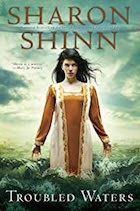
Sharon Shinn, Troubled Waters

In this traditional fantasy novel, protagonist Zoe Ardelay is plucked from obscurity to become the king’s fifth wife, but she escapes that fate, only to discover unsuspected magical powers that grant her a place at court in her own right. She navigates palace intrigues, contemplates her future role in the court, and tries hard not to fall in love with royal advisor Darien Serlast. This book is not particularly groundbreaking, but I really enjoyed it! The magical system, based on keeping the balance between five elements, is creative and informs the world of the novel in interesting ways. Zoe is likable, though sometimes a bit too impulsive, and Darien is a hero after my own heart. Overall, I liked this one a lot and have already checked out the next book in the series, Royal Airs, from my library!

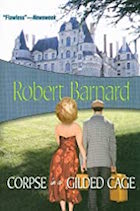
Robert Barnard, Corpse in a Gilded Cage

In this 1980s take on the English country house mystery, working-class Percy Spender has unexpectedly inherited an earldom and a grand estate. He and his wife just want to sell the place and go back to their regular lives, but their children — not to mention the family lawyer — have other ideas. Then Percy is murdered, and with multiple wills cropping up, it seems the investigation will hinge on who actually inherits the fortune. I wasn’t in the mood for this book when I picked it up, but I thought it would at least be a quick read that I could get off my TBR shelves. However, it actually won me over with its humor and satire of the British class system, not to mention this delightful allusion: “Dixie’s voice warbled from bass to soprano, replete with all the outraged disbelief of Lady Bracknell at her most handbageous.” So I think I need to keep the book now! I’d definitely recommend it to fans of this type of mystery.

Annika Martin, Just Not That into Billionaires

Nine years ago, outgoing ballet dancer Francine had a crush on her co-worker, socially awkward but technologically brilliant Benny. She thought he didn’t feel the same way, but after one drunken night, they got married in Vegas. Feeling ashamed the morning after (she’d tried to sleep with him and he’d refused), Francine left town, and she hasn’t talked to Benny since. Now she needs a divorce, but Benny unexpectedly refuses; instead, he insists that she pose as his loving wife, since he’s now a wildly successful billionaire whose personal life is being scrutinized by the press. Despite this ridiculous plot, this book completely sucked me in. Something about the chemistry between Francine and Benny, and their complementary weirdness, and Benny’s endearing awkwardness, really worked for me! However, I also think some people will find Benny an irredeemable jerk, which I completely understand! So this book won’t be for everyone, but I liked it and may try more by this author.

Review: Battle Royal

Lucy Parker, Battle Royal

Talented pastry chefs Sylvie Fairchild and Dominic De Vere have been professional rivals ever since their stint on Operation Cake four years ago. Sylvie was a contestant, Dominic was a judge, and her robotic unicorn cake creation may have gone rogue and hit him in the face. Now they’re competing for the most important job of their careers — a cake for an upcoming royal wedding. Their baking styles (and personalities) couldn’t be more different: Sylvie is all about whimsy and creativity, while Dominic sticks to classic perfection. But as they spend more time together, they discover a surprising mutual attraction and must figure out how to reconcile their romance with their career ambitions.

Lucy Parker is an auto-buy author for me, and I always worry that her latest book won’t live up to my sky-high expectations. Fortunately, in this case the worry was unfounded because I loved this book! While I don’t particularly care about baking shows or British royals, I do adore a grumpy/sunshine pairing, and the relationship between Sylvie and Dominic is every bit as swoony and satisfying as I’d hoped. The first few chapters are a little confusing — lots of characters and backstory to establish — and there’s perhaps a bit too much going on throughout the book. But that’s a tiny quibble that in no way diminishes my overall love for this novel. I already can’t wait for the next one!

Mini-Reviews: Graces, Proposal, News

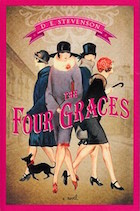
D.E. Stevenson, The Four Graces

The titular four graces are the four daughters of Mr. Grace, the vicar of the village of Chevis Green. They’re all pretty and intelligent, though Liz is the most outgoing, Sal is the most bookish, and Tilly is the shyest. (Addie, the youngest, is barely on page.) The girls are quite happy until the arrival of Aunt Rona, who’s snobbish and oblivious and determined to “manage” them all. As they wonder how to deal with her, they also take part in village life and consider their futures, especially after the arrival of two potential suitors. I always enjoy D.E. Stevenson’s books, and this one was a pleasant, low-stakes read, despite being set during World War II. I didn’t engage with it quite as much as I did with [Miss Buncle’s Book], although that could be partly because I have a cold at the moment. But I did enjoy the book and will likely revisit it at some point.

Melanie Dickerson, A Viscount’s Proposal

This Regency romance centers around Leorah, a spirited young lady who defies convention, and Edward, an uptight politician who hopes to become prime minister one day. Naturally, they dislike each other immensely, but their feelings change as they get to know one another better. Meanwhile, someone is trying to kill Edward, but no one knows who or why. This was my first book by this author, and I was underwhelmed. The setting doesn’t really ring true (I suspect a lot of historical details are wrong), and the writing style is awkward and inauthentic. The “mystery” plot is paper-thin, and I was expecting more because this book is part of the Regency Spies of London series. There is literally no spying at all! This is a quick read but a bland one, and I won’t be seeking out more books by Dickerson.

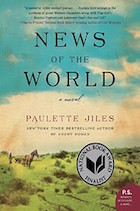
Paulette Jiles, News of the World

Captain Jefferson Kyle Kidd has lived through three wars and raised two daughters, but now he may face his toughest challenge yet. Johanna Leonberger is a 10-year-old white girl who was captured by Kiowa warriors four years ago and has been living among their people ever since. She’s just been “rescued,” and Captain Kidd is tasked with taking her to her relatives near San Antonio. But Johanna views the Kiowa as her people and doesn’t want to leave. Moreover, there are many dangers along the way, including Kiowa and Comanche raiders, the US Army, hostile townspeople, and opportunists exploiting the lawless American West of the 1870s. I loved this book! The writing style is sparse yet evocative, and the slow evolution of the captain’s relationship with Johanna is touching in its restraint. The book manages to include a lot of interesting history without being too expository or preachy. I would strongly recommend this to lovers of historical fiction, and I know I’ll be seeking out more of Jiles’s books!

Mini-Reviews: Acting, Trip, Wisteria

Adele Buck, Acting Up

Cath and Paul have been best friends since college, and they also work together: Paul is a regional theater director, and Cath is a stage manager. Cath has been in love with Paul for years, but she’s never made a move for fear of ruining their friendship and professional relationship. Now they’re putting on a new play, and Cath’s nemesis Susan has been cast as the lead actress. Susan’s spiteful behavior irritates everyone but also forces some long-buried feelings into the open. I really wanted to love this book — I do community theater myself, so I was hoping for a lot of behind-the-scenes drama and hijinks. But the book focuses much more on Cath’s and Paul’s inner turmoil, and I found their conflict frustrating. One honest conversation could have solved everything! And I couldn’t figure out why Cath was so reluctant to share her feelings…it seemed like she should have had some traumatic backstory to explain the extent of her fear, but she didn’t (at least not on page). Overall, this book was OK but not what I wanted it to be.

Beth O’Leary, The Road Trip

Addie and Dylan used to be in love, but they broke up two years ago and haven’t spoken since. Now they’re both going to a mutual friend’s wedding, and when Dylan wrecks the car he’s driving, he and his best friend Marcus hitch a ride with Addie, her sister Deb, and another random wedding guest who needed a ride. The book jumps between the present-day road trip and the story of Addie and Dylan’s relationship in the past. I couldn’t put this book down, and I was surprised by how much it affected me emotionally. At the same time, though, I wasn’t necessarily rooting for Dylan and Addie to work things out! Their relationship seems based primarily (solely?) on physical attraction, and they don’t function particularly well as a couple. I also couldn’t relate to Dylan and Marcus, who are basically “poor little rich boys” distracting themselves from real life with sex, drugs, and their parents’ money. The book attempts to make them sympathetic by giving them some shallow backstory and (in Dylan’s case) a cartoonishly villainous father, but it doesn’t quite work. I did like the book overall, but I’m still deciding whether it’s a keeper for me. Oh, and notwithstanding the cover, it’s definitely more of a drama than a comedy.

India Holton, The Wisteria Society of Lady Scoundrels

Miss Cecilia Bassingthwaite is a proper young Victorian lady, and also a pirate. In fact, she’s a junior member of the Wisteria Society, England’s most prestigious and fearsome league of piratical ladies. When another Society member hires an assassin to kill her, Cecilia thinks she’s finally made it: now the Society will have to take her seriously and promote her to senior membership. But things start to go wrong when the assassin, Ned Lightbourne, turns out to be dangerously attractive and charming. Then the villainous Captain Morvath, an evil pirate and even worse poet, kidnaps the rest of the Society, leaving only Cecilia to save the day. Hijinks ensue, complete with flying houses, literary allusions, ghosts, thievery, and a touch of romance. This book won’t be for everyone; it’s a ridiculous romp in which the rules don’t make sense, there’s very little character development, and the tone is gleefully ahistorical. To enjoy it, you have to let the silliness wash over you — and be someone who appreciates Brontë references and dick jokes in equal measure. Honestly, I loved it! Can’t wait for the sequel next year!

Mini-Reviews: Inheritance, There, Naturalist

Charles Finch, The Inheritance

Victorian gentleman-sleuth Charles Lenox is once again on the case when he receives a troubling letter from an old school friend, Gerald Leigh. Leigh’s life is in danger, but he’s not sure why; it could be for the £25,000 he’s inherited from a mysterious benefactor, or it could be connected to his scientific discoveries, which are important enough that the Royal Society of London has taken notice. As Lenox tries to discover who’s after Leigh and why, he also deals with tension both at his detective agency and in his marriage. It had been a while since I’d checked in with this series, and it was nice to catch up with Lenox and his friends again. The mystery itself was fine, but at this point I’m far more invested in the characters. The next book in the series is technically a prequel, following Lenox’s very first case. I’m not sure if I care about the prequels…I might skip them and pick back up again with the current timeline. For anyone who’s kept up with this series, will I be missing anything if I take that approach?

Pat Murphy, There and Back Again

Do you love The Hobbit but wish it had more spaceships? Then this is the book for you! As the title indicates, this book is a retelling of The Hobbit set in a futuristic, space-faring society. Bailey Beldon is perfectly content with his quiet life in the asteroid belt. He has no desire for adventure, but when he discovers an undelivered message pod from the powerful Farr clone family, adventure finds him nonetheless. I thought this was a well done and creative retelling; it follows all the major story beats of The Hobbit quite closely, but with a sci-fi spin. Bailey’s encounter with the Gollum equivalent is particularly good (not coincidentally, one of the best chapters in the original book too). A fun read for Tolkien fans, though a bit unnecessary — why not just reread the original?

Christina Dudley, The Naturalist

Joseph Tierney is a naturalist studying English flora and fauna at the behest of the Royal Society. He’s staying with a country family to work on his research, and he’s found an excellent assistant in a local boy, Arthur Baddely, who is just as interested in the natural world as Joseph himself. But “Arthur” is actually Alice Hapgood, a daughter of the local squire, who leaps at the opportunity to do some real scientific work — and to spend more time with the attractive Joseph. I’d rate this Regency romance OK to fine. I don’t enjoy plots that hinge upon a Big Secret that the reader already knows and has to wait for the characters to catch up to. I also thought the characters weren’t fleshed out beyond stock types, and the writing is clunky in places. The central romance is rather endearing, though, and I did find it a quick read that held my attention. Still, this one isn’t a keeper, and I doubt I’ll seek out more by this author.

Mini-Reviews: Fiction, Companion

Mimi Matthews, A Convenient Fiction

This third book in the Parish Orphans of Devon series focuses on Alex Archer, the orphan who ran away in boyhood and hasn’t been heard from since. He’s been living abroad and has made a small fortune through gambling. Now he’s determined to marry a rich English heiress; but instead of his intended target, he finds himself more drawn to her friend, Laura Hayes. Laura lives with her invalid brother and elderly aunt, and she’s barely holding things together. The last thing she needs is to fall for the attractive Alex, especially since she knows he’s a fortune hunter. But as Laura’s and Alex’s feelings grow, they must each contemplate a different future from the one they envisioned. This might be my favorite book in the series, and I think it comes down to the characters. I loved Laura right away; she’s strong and independent without being implausibly anachronistic, and she tries so hard to do right by her family. Alex is harder to like at first, since both his past actions and his plan to marry an heiress aren’t exactly sympathetic. But he’s so starved for love that I couldn’t help but warm up to him! So I’d definitely recommend this book to fans of the genre, especially if you like brooding heroes and the marriage-of-convenience trope.

Mimi Matthews, The Winter Companion

Again, I enjoyed A Convenient Fiction so much that I had to move on immediately to the fourth and final book in the series! The hero is Neville Cross, who sustained a head injury as a child that has left him with a speech impediment. Though he can think and write fluently, he has trouble with talking, and therefore he is more comfortable with animals than with people. He works in his friend Justin’s stables and has more or less made peace with his isolated, predictable life. That is, until he meets lady’s companion Clara Hartwright at Justin’s Christmas house party. Clara is beautiful and kind, and she bonds with Neville over her ancient pug dog. But she has dreams beyond being a lady’s companion, and they will eventually take her out of Neville’s life — unless he can find the courage and strength to go after what he really wants. This is the last book in the Parish Orphans of Devon series, and it’s a very satisfying finale. The Christmas party setting allows all four orphans and their love interests to reunite, and some of the memorable side characters from previous books also reappear. (I really need a novella telling Teddy Hayes’s story!) Neville’s speech impediment is handled sensitively, and thankfully he is not magically cured by love. So all in all, I really liked both this book and the whole series, and I look forward to reading more by Matthews!

Mini-Reviews: Night, Imaginary, Dress

Mhairi McFarlane, Just Last Night

Don’t let the bright colors and cartoonish art fool you: this is primarily a book about grief. Thirty-something Eve and her three best friends have been inseparable since college; they know, love, and understand each other in a way that no one else can. At the beginning of the novel, one of them dies, and Eve spends most of the book trying to cope with her grief and process the aftermath. She also uncovers a devastating secret that profoundly affects her life, as well as the dynamic of the friend group. There is, in fact, a love story that I quite enjoyed, but it doesn’t really get going until the last third of the book or so, and it seems a bit incongruous with what came before. Nevertheless, I devoured the book in one sitting and stayed up far too late to finish it! So I did like the book overall, although I think I still prefer If I Never Met You.

Robin McKinley, ed., Imaginary Lands

I picked up this short story collection based solely on Robin McKinley’s name, but unfortunately, as with most short story collections, I found it a mixed bag. Below are my thoughts on the individual stories, but my overall opinion is that even if you’re a fantasy lover, you can skip this one.

James P. Blaylock, “Paper Dragons” – This story won the 1986 World Fantasy Award for short fiction, and I have no idea why. Nothing happens! And we’re introduced to a lot of characters and bits of history and mythology that are never fully explained or given context. A frustrating read, for me.

Patricia A. McKillip, “The Old Woman and the Storm” – This one is set at the dawn of time, and it has a very elevated, myth-like style that got on my nerves. I did like the resolution to the story, but overall it just wasn’t my jam.

Robert Westall, “The Big Rock Candy Mountain” – In the early 20th century, a family of American tourists is forced to stay overnight in an English salt-mining town that is slowly sinking into the earth. Probably my favorite story in the bunch, perhaps because of its lively, comedic tone.

Peter Dickinson, “Flight” – A “history” of a fictional empire that repeatedly tries and fails to conquer a stubborn territory whose residents use hang glider-esque devices to fly. The narrative device was my favorite part of this one; it allowed for some fun satire about real-life history and government policy.

Jane Yolen, “Evian Steel” – Sort of a prequel to Arthurian legends. Well-written, but I think I’d have gotten more out of it if I knew more about Arthuriana.

P.C. Hodgell, “Stranger Blood” – Probably the most traditional “high fantasy” story in the collection, set on the borderland of a Great Evil that is going to kill everyone unless our heroes can stop it. I liked this story, but it felt unfinished; if it were expanded into a novel, I’d be curious to read it.

Michael de Larrabeiti, “The Curse of Igamor” – A short fable-like tale with a killer horse and rich bad guys who get their comeuppance. I liked this one.

Joan D. Vinge, “Tam Lin” – A Tam Lin retelling, as the title indicates, and one with a somewhat unsettling ending. I prefer The Perilous Gard by Elizabeth Marie Pope or Fire and Hemlock by Diana Wynne Jones.

Robin McKinley, “The Stone Fey” – This story has a lot of the things I love about McKinley’s writing — a sympathetic heroine, lovable secondary characters, great animals — but I wanted to know a lot more about the titular stone fey. He’s a catalyst for the story’s action rather than a character in his own right, and I wanted to know what his deal was. I feel like this story is only for McKinley completists like me…and even then, maybe not.

Kate Noble, The Dress of the Season

Harris Dane, Viscount Osterley, is known to Society as “Austere Osterley” for his serious, some might say rigid, demeanor. But that doesn’t stop him from pursuing a lovely widow as his mistress. He purchases a scandalous gown for her, and at the same shop he also buys a pair of gloves for his ward, Felicity Grove. When the packages are sent to the wrong women and Felicity mistakenly receives the dress, scandal erupts, leading to a chain of events neither Harris nor Felicity could have anticipated. I read this cute Regency romance novella in an afternoon. It’s not particularly authentic in terms of writing style, and the short length prevented me from getting very emotionally invested in the characters. But I found it a fun read and would definitely try more by this author.

Mini-Reviews: Gentleman, Goodbye, First

Amor Towles, A Gentleman in Moscow

In 1922, Count Alexander Ilyich Rostov is arrested and tried for the crime of being an aristocrat. But because he once wrote a poem with a revolutionary message, he isn’t immediately killed; instead, he is sentenced to house arrest for life in Moscow’s Metropol Hotel. As Alexander lives out his days in the Metropol, he befriends a variety of people, including hotel employees, Party officials, a beautiful actress, and (most significantly) a solemn young girl named Nina. Despite the turbulent political situation in the country as a whole, this novel focuses on one man’s life as he adapts to extraordinary circumstances. Like everyone else, I loved this book! The pace is slow, and there aren’t many dramatic events, but it felt like real life to me. There are some delicious satirical jabs at the broader political situation in Russia/the USSR, but the novel focuses primarily on Alexander’s own experiences. I would definitely recommend this to anyone who enjoys historical fiction!

Beatriz Williams, Lauren Willig, and Karen White, All the Ways We Said Goodbye

This is one of those historical novels with multiple storylines set in three different time periods. In 1914, Aurélie de Courcelles abandons her luxurious life with her mother at the Paris Ritz and runs to her father’s ancestral home, which is later invaded by German soldiers. In 1942, Daisy Villon is primarily concerned with keeping herself and her children safe in occupied France, but she is eventually drawn into the resistance effort and an illicit love affair. And in 1964, Babs Langford travels from England to Paris in search of information about her deceased husband’s war years. Overall, I liked this book and found it entertaining; there’s a lot of drama and excitement to keep the pages turning, and I do love a good WW2 spy plot. On the other hand, the plot twists and “reveals” are quite predictable. And while I liked all three stories, I think they were a little much for one book; perhaps the authors should have eliminated the 1964 story and focused on the other two in greater depth. As I said, I enjoyed the book overall, but I didn’t like it as much as these authors’ previous book, The Glass Ocean.

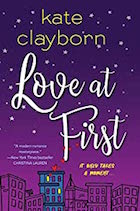
Kate Clayborn, Love at First

Nora Clarke loves her Chicago apartment building; her happiest childhood memories were spent there with her grandmother, and she’s known and loved her neighbors all her life. So when the building’s owner dies and his nephew, Will Sterling, inherits it, Nora is terrified that things will change. In fact, Will has no interest in owning or living in the building, so he decides to rent out his uncle’s unit to short-term tenants. Aghast, Nora is determined to stop him; but the more time she spends trying to persuade Will, the more she is attracted to him. I was a bit nervous about this book since I enjoyed Love Lettering so much, but thankfully I ended up loving this one too! I liked that the characters actually move on from the apartment conflict pretty quickly; they each come to understand the other’s position and are both willing to compromise. The real obstacles to their relationship are their fears and insecurities, which I found very realistic. I was rooting so hard for Will and Nora, and I enjoyed the quirky secondary characters as well (Will’s buttoned-up boss might be my favorite). And as with Love Lettering, I adored Kate Clayborn’s writing style. Fans of contemporary romance with minimal drama, where people actually deal with their problems like adults, should definitely check out this author!

Mini-Reviews: Thorn, Orange, Duke

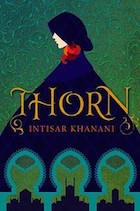
Intisar Khanani, Thorn

Despite being a princess, Alyrra is a nobody. Abused and neglected by her family, she has nothing to look forward to except a politically strategic marriage. But when she is betrothed to the prince of a neighboring kingdom whom she has never met, she suddenly finds herself embroiled in intrigue and magic. A sorceress curses Alyrra to switch bodies with her lady’s maid, so no one recognizes her as the true princess and she must work as a goose girl instead. But Alyrra is content with her new life — until she realizes that she has a duty to ensure the good governance of her new kingdom, not to mention protect the life of the prince. Overall, I really enjoyed this book! Alyrra is a sympathetic heroine, and I enjoyed watching her slowly, painfully grow throughout the story as she realizes that she can’t avoid her real life forever. There are some pacing issues and some awkward character introductions that had me flipping backwards to make sure I hadn’t missed something. I also wanted some of the secondary characters to be more fleshed out, particularly Kestrin. But I liked the book despite these issues and will plan to read more by Khanani.

Note: This book was originally self-published in 2012, but it was subsequently rereleased by a traditional publisher. According to the author, the rerelease has “gone through four rounds of professional edition . . . the middle of the book was replotted, and the story overall has grown by about 20,000 words.” So, since I read the original self-published version (which was gifted to me years ago), my comments may not be particularly applicable to the version that’s widely available now! I’d actually like to read the rereleased version and see if the issues I complained about have been addressed.

Ellery Queen, The Chinese Orange Mystery

When Ellery Queen accompanies his friend Donald Kirk to a dinner party at Kirk’s hotel suite, he is shocked to discover a murdered man in the waiting room of Kirk’s office. The crime is bizarre for a number of reasons: not only does no one recognize the corpse, but there is absolutely no identifying information to be found anywhere on or around the dead man. Moreover, everything in the room has been turned backwards or upside-down — furniture, art, even the victim’s clothes. As Ellery’s policeman father investigates the case officially, Ellery also does some sleuthing among Kirk’s friends and family, and he eventually discovers the identity of both the victim and the murderer. I enjoyed this mystery and found the solution very clever; I never would have guessed it, but it does make sense and is fairly clued (although the killer’s motive is a little weak). Even the list of dramatis personae drops a few hints! Recommended for fans of Golden Age mysteries — and even though it’s part of a series, it can definitely be read out of order.

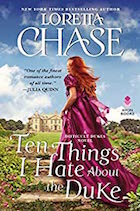
Loretta Chase, Ten Things I Hate about the Duke

This second novel in the Difficult Dukes series focuses on Lucius, Duke of Ashmont, whose wild and rakish behavior is a well-known society scandal. He has no interest in reforming his wicked ways, however, until he crosses paths with strong-minded bluestocking Cassandra Pomfret. I’m not a big fan of the “reformed rake” trope, but I liked that Lucius spends most of the book acknowledging his faults and genuinely making an effort to improve himself. He admires Cassandra’s strength and intelligence, and he supports her without trying to take charge or get in her way. I should say that, while this book can technically stand alone, it does refer back to events in A Duke in Shining Armor. I’m looking forward to the third book now, which looks like it will have a marriage-in-trouble plot…unfortunately, it’s not out yet!