Mini-Reviews: Forgotten, Kiss, Single

Forgotten GardenIt's in His KissLast Single Girl

Kate Morton, The Forgotten Garden

It took me a while to get through this book, and I think I’m still digesting it somewhat. It tells the stories of four different women. First, Nell is found on a dock in Brisbane, Australia, in 1913. She is raised by a loving family, but when her father finally tells her that she was adopted, she feels compelled to research the mystery of her past. In 2005, Nell passes away, and her granddaughter Cassandra inherits the mystery, as well as a decaying cottage on the coast of Cornwall. She eventually travels to England to see the cottage and piece together what really happened to Nell. Finally, the book jumps to 1900 and details the lives of Eliza Makepeace, a poor orphan with a gift for storytelling, and Rose Mountratchet, a privileged and beloved young woman who befriends Eliza. As the book shifts back and forth between all these different perspectives, the true story of Nell’s origins finally emerges. I thought the mystery was interesting, I liked the writing style, and the main characters were sympathetic; but for me, the pacing was just too slow. I genuinely do think it’s a good book, but I’m not sure I will pick up anything else by Kate Morton.

Bria Quinlan, It’s in His Kiss and The Last Single Girl

Last year I read Worth the Fall, book 2 in Bria Quinlan’s Brew Ha Ha series, and was unexpectedly charmed by it. So I picked up these two e-books when they were on a free deal; It’s in His Kiss is a prequel novella, and The Last Single Girl is book 1. The novella is about Jenna, a YA writer who needs her character to have a first kiss, but it’s been a long time since Jenna experienced one herself. She meets handsome, arrogant Ben while doing “research,” but her beautiful frenemy seems to be competing with her for his attention. Book 1 has all new characters: Sarah, a girl who needs a New Year’s Eve date and meets a bunch of online suitors in a coffee shop, ends up hitting it off with John, the shop’s owner, instead. These were decent quick reads, but I didn’t find the same spark that I did with Worth the Fall. On the upside, I managed to read them both in a single night!

Mini-Reviews: Midwife’s, Check, Talking

Midwife's ApprenticeCheck Me OutTalking as Fast as I Can

Karen Cushman, The Midwife’s Apprentice

Catherine, Called Birdy was one of my favorite books as a child, but I don’t think I’d ever read The Midwife’s Apprentice by the same author. It’s about a young girl in medieval England who is completely alone; she begins the novel by sleeping in a dung heap to keep warm. But the village midwife eventually takes her in as a servant/apprentice, and the girl’s life improves somewhat. Eventually she learns enough about midwifery to make herself useful, makes a friend, and even gets a name of her own: Alyce. But when Alyce makes a mistake in her work, she runs away, certain that everyone will hate her. Will she ever find a place she truly belongs? I was charmed by this book and wish I had read it as a child; while it’s not a keeper for me now, I would definitely recommend it to elementary schoolers!

Becca Wilhite, Check Me Out

I really liked the premise of this book, with its librarian heroine and Cyrano vibes, but the execution was disappointing. Twenty-four-year-old Greta loves her job and her BFF Will, but she hasn’t managed to find romance yet. That is, until she meets dreamy Mac in the poetry section, and he sweeps her off her feet with his good looks and romantic texts. The trouble is, in person he’s not as sweet or witty as he is in print. Meanwhile, the library is in danger of shutting down, so Greta embarks on a series of fundraising schemes to save it. I thought the library-related stuff was interesting, and the book did a good job of covering the complexities of the situation (community benefits vs. budget, historical value of the library vs. need for a modern, accessible space). But the romance was frustrating for me; I felt Greta was clueless and shallow, and her descriptions of Will (who is overweight) were downright cruel at times. Overall, I was disappointed in this book and wouldn’t recommend it.

Lauren Graham, Talking as Fast as I Can: From “Gilmore Girls” to “Gilmore Girls” and Everything in Between

A fun celebrity memoir by Lauren Graham, best known for her roles as Lorelai Gilmore on Gilmore Girls and Sarah Braverman on Parenthood. As a huge Gilmore fan and someone who has always admired Lauren Graham, I was definitely the target audience for this book, and I enjoyed it overall. It doesn’t delve very deeply into Gilmore Girls, which I was a little disappointed by, but upon reflection it makes sense: Gilmore was legendary for its long hours and demanding showrunner who expected every line to be word-perfect, so it makes sense that Graham would be reticent about the probable difficulties of working on the show. She obviously feels much more warmly about Parenthood, a show I stopped watching after season 1. Still a worthwhile read for fans of either show, and Graham has a funny, likable voice. But Tina Fey’s Bossypants and Mindy Kaling’s two memoirs are still my favorites in this genre.

Mini-Reviews: Scandal, Death, Enchanting

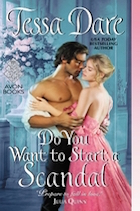
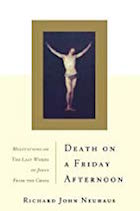
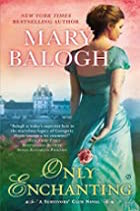
Do You Want to Start a ScandalDeath on a Friday AfternoonOnly Enchanting

Tessa Dare, Do You Want to Start a Scandal

This Regency romance is the story of Charlotte Highwood, who has been nicknamed “the Desperate Debutante” because of her mother’s aggressive matchmaking efforts. Her mother’s latest target is Piers Brandon, Lord Granville; so Charlotte seeks him out at a house party to reassure him that she doesn’t wish to marry him. This strategy backfires immediately when the two are found in a compromising position — they accidentally interrupt a lovers’ tryst, but everyone else believes they are the lovers. Charlotte decides to clear her good name by unmasking the real lovers. But of course, the more time she and Piers spend together, the more they fall in love. This book was fine, although I found the comic style a little forced and overwrought. Not bad, but not particularly recommended.

Richard John Neuhaus, Death on a Friday Afternoon: Meditations on the Last Words of Jesus from the Cross

I chose this book at the beginning of Lent as an appropriate spiritual read. As the subtitle suggests, each chapter is inspired by one of the seven last words of Jesus from the cross. Each “word” provides a jumping-off point for the author, a Catholic priest, to discuss various aspects of his faith. Sadly, since I read this a while ago, I don’t remember a lot of the details! But I do remember the chapter on “I thirst” being particularly interesting because it discussed the question of universal salvation (is it possible that everyone will be saved?). I’d say the book is geared more toward intellectual than devotional purposes. Overall, the book gave me a lot of food for thought, and I definitely plan to reread it in the future.

Mary Balogh, Only Enchanting

I’ve yet to be disappointed by a Balogh book, and this Regency romance is no exception. It’s part of the Survivors’ Club series, about a group of people who have been deeply wounded (physically, emotionally, or both) in the Napoleonic Wars, but it can be read as a stand-alone novel. The hero, Flavian, has returned from the war with a head injury that left gaps in his memory. When he is thrown together with Agnes, a widow living a quiet rural life, he impulsively proposes to her, and together they are able to fill in some of the blanks in Flavian’s memory — and fall in love in the process. That makes it sound like love magically cures Flavian’s mental injuries, which isn’t the case…I feel like I’m not describing the plot terribly well! But I really liked the book and will continue reading more in this series.

Mini-Reviews: Prim, Reading, Headliners

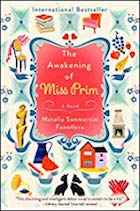
Awakening of Miss PrimI'd Rather Be ReadingHeadliners

Natalia Sanmartin Fenollera, The Awakening of Miss Prim (trans. Sonia Soto)

This is a strange little novel about a young woman, Prudencia Prim, who applies for a position as a private librarian in a remote French village. A modern woman herself, she is initially shocked by the villagers’ old-fashioned beliefs and behavior. But she soon observes the happiness and prosperity of those around her, and with the help of her enigmatic employer, she comes to see the merits of their way of life. I think this book is aimed at a very particular audience, namely a certain subdivision of Catholics who are huge fans of G.K. Chesterton. If you don’t know what I’m talking about, I’d say this book is probably not for you! Even as part of the target audience, I still found it a little much.

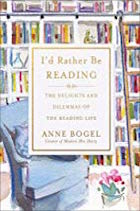
Anne Bogel, I’d Rather Be Reading: The Delights and Dilemmas of the Reading Life

I’m a big fan of Anne Bogel’s podcast, What Should I Read Next? So when I found her book at a library sale, I snatched it up! The essays are fun — nothing particularly new or memorable, but bibliophiles and fans of the author should enjoy them. A fun read, but not a keeper for me.

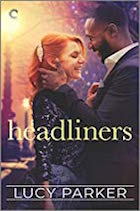
Lucy Parker, Headliners

Lucy Parker is an auto-buy author for me; I really love her contemporary romances set in the London entertainment world. In this one, protagonists Sabrina and Nick are rival TV presenters who are forced to work together to revive their network’s struggling morning show. If you enjoy enemies to lovers, this book is a great example! I especially liked how Sabrina and Nick resolve their conflicts like adults; there are no stupid misunderstandings or secrets kept for no reason. I note that, while this book can technically stand alone, it does refer back frequently to the events of the previous book, The Austen Playbook. Definitely recommended for romance fans, although my favorite Parker books remain her first two, Act Like It and Pretty Face.

Mini-reviews: Henrietta’s, Matrimonial, Austen

Henrietta's WarMatrimonial AdvertisementAusten Escape

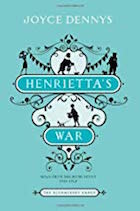
Joyce Dennys, Henrietta’s War: News from the Home Front 1939-1942

I greatly enjoyed this charming epistolary novel, which is both written and set during World War II. The titular Henrietta writes to her childhood friend Robert, who is off fighting somewhere in France, and describes daily life in her rural English village. Despite the constant presence of the war in the background, Henrietta mostly focuses on the mundane, humorous aspects of life. A pleasant and uplifting book.

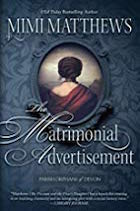
Mimi Matthews, The Matrimonial Advertisement

Last year I read Matthews’s novella, A Holiday by Gaslight, and enjoyed it so much that I wanted to seek out some of her full-length novels. This one, the first in her Parish Orphans of Devon series, is a “proper” Victorian romance (i.e., no explicit content) that centers around a marriage of convenience. Justin needs a wife to manage his remote, secluded estate, and Helena needs a safe place to hide from her past. The book definitely justified my high expectations, and I can’t wait to continue with the series!

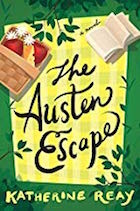
Katherine Reay, The Austen Escape

I’ve read one other book by Reay, Dear Mr. Knightley, and I wasn’t a huge fan. But when I got this novel as a gift, I decided to give the author another chance. Unfortunately, I didn’t like this book either — something about the writing style just grates on my nerves. I also found the heroine obnoxious and unsympathetic, and I have no idea what her love interest saw in her. I was frankly appalled by one major plot point: the heroine’s best friend, who has a history of mental health issues, starts to believe she’s living in Jane Austen’s time…and nobody seems to think this is something that needs immediate medical attention! So all in all, I wasn’t a fan, and I’m pretty sure I’m done with this author.

Review: Love Lettering

Love LetteringKate Clayborn, Love Lettering

Meg Mackworth, the “Planner of Park Slope,” has a thriving business in which she creates unique, hand-lettered planners, journals, and calendars for her clients. She’s reasonably successful and Instagram-famous, and now a major stationery brand is interested in hiring her, which would be a big step forward in her career — if only she weren’t completely creatively blocked. To make matters worse, Meg is unexpectedly confronted by a professional faux pas she made about a year ago, when she hid the word “mistake” in a wedding program she designed. The would-be groom, Reid Sutherland, noticed the pattern and has sought out Meg looking for answers. An unlikely friendship grows between them as Reid accompanies Meg on various walks around New York City, searching for inspiration in the city’s wealth of hand-lettered signs. But their relationship can only be temporary, since Reid hates the city and plans to move soon. Can Meg convince him to fall in love with New York — and with her — before it’s too late?

I feel I’ve done a horribly inadequate job of describing this book, which is so much more compelling than I’ve made it sound! Most of what I mentioned above is the setup; the meat of the book is the slow development of Meg and Reid’s relationship. It’s a joy to see them fall in love in such a simple, quiet way, without a lot of unnecessary drama or conflict. The book is told exclusively from Meg’s point of view, so the reader gets to know Reid the same way she does, relying on every little comment, look, or gesture to figure out what he’s thinking. Some readers might be annoyed by this, but I actually really liked it! Reid is definitely my type of hero — a bit Darcy-esque in his directness and occasional awkwardness. I will say, I didn’t love the last section of the book, in which a big external conflict suddenly arises to threaten Meg and Reid’s relationship. I couldn’t figure out what purpose it served, other than to provide the obligatory “It almost didn’t work out!” story beat before the ultimate resolution. But overall, I loved this book and resented every time I had to put it down! Definitely recommended for fans of contemporary romance.

Review: Miss Grimsley’s Oxford Career

Mrs. Drew Plays Her Hand:Miss Grimsley's Oxford CareerCarla Kelly, Miss Grimsley’s Oxford Career

Miss Ellen Grimsley is the second daughter of a respectable country gentleman, and her destiny is to marry an equally respectable country gentleman and fulfill her womanly duties as wife and mother. But Ellen would much rather be a scholar and an explorer, traveling the world and making maps of far-off places. When her forward-thinking aunt gets her a place at Miss Dignam’s Select Female Academy, in the very town of Oxford, Ellen is thrilled — but she soon discovers that the classes are only in “feminine” subjects like French and embroidery. So when her brother Gordon, who’s flunking his Shakespeare course at Oxford, asks for her help, Ellen can’t resist writing his papers and even dressing as a man to attend lectures at the university. Obviously she can’t continue this charade for long without being caught; but luckily, the person who catches her is the kind and scholarly Jim Gatewood, who encourages her intellectual curiosity and converses with her as an equal. But when Jim professes his love for her and proposes marriage, Ellen is hesitant to give up her dreams, even for love.

Since this book came in the omnibus with Mrs. Drew Plays Her Hand, which I liked, I decided to give this one a try too. Unfortunately, I didn’t enjoy this one quite as much. The plot is rather muddled, and too many of the events strain credibility. For example, how does Ellen manage to fool everyone (or indeed anyone) in her male disguise? The book mentions that Gordon’s tutor is old and practically blind, but were there no other students nearby? Then there’s Ellen’s roommate, Fanny Bland, who is sometimes cruel and sometimes kind, without any real explanation for these fluctuating moods. Finally, the central conflict between Ellen and Jim seems to come down to Ellen’s own obtuseness. Despite her affection for, friendship with, and attraction to Jim, she refuses to see that she’s in love with him and turns down his repeated proposals of marriage. Near the very end of the book, there’s a hint that Ellen turns him down because she fears giving up her dreams of an independent life. That would have been a more interesting conflict to explore, but the book doesn’t dig into it at all, merely giving Ellen an abrupt change of heart just before the novel ends. Overall, a disappointing read — but at least I was able to finish it before the end of the year!

Review: Mrs. Drew Plays Her Hand

Mrs. Drew Plays Her Hand:Miss Grimsley's Oxford CareerCarla Kelly, Mrs. Drew Plays Her Hand

Roxanna Drew is at the end of her rope. After the death of her husband the vicar, she must find a new home for herself and her two young daughters. Her late husband’s brother is willing to provide this home, but only if she agrees to become his mistress. Revolted by the suggestion, Roxanna decides to rent the dower house of a nearby estate instead, but her brother-in-law’s nefarious schemes are far from over. Meanwhile, the estate’s owner, Fletcher Rand, Lord Winn, has problems of his own. He is shunned by most of society because he publicly divorced his wife after discovering her many infidelities. His family urges him to marry again and produce an heir, but Winn is reluctant to trust another woman — that is, until he meets Roxanna while on a tour of his estates. Winn is immediately attracted to her and quickly befriends both herself and her children. But when circumstances force them into a marriage of convenience, they must learn whether they can truly rely on each other.

As I’ve become more familiar with the romance genre, I’ve encountered Carla Kelly’s name multiple times as a respected author of traditional Regencies, and this particular novel is often praised as one of her best. I wasn’t quite as impressed as I wanted to be, but I did enjoy this book very much and have already begun another of Kelly’s novels. Both Roxanna and Winn struck me as mature adults who are doing their best in their respective difficult situations. I especially liked Winn because, while he’s slightly curmudgeonly at first, he’s not brooding or selfish like many other romance heroes. He shows his love for Roxanna by always putting her and her family’s needs before his own, but his sense of humor keeps him from being annoyingly perfect. There’s not much plot beyond the initial setup, and I found the writing style a bit clunky and some of the dialogue anachronistic. I also wasn’t convinced by the evil brother-in-law’s repentance in the end. But overall, I did like this one and will definitely read more by the author.

Review: A Summer to Remember

Summer to RememberMary Balogh, A Summer to Remember

Kit Butler, Viscount Ravensberg, was once a respectable army officer, but now he’s one of London’s most notorious rakes. His father wants him to come home, accept his responsibilities as heir, and marry the woman his family has chosen for him. Kit rebels from this fate and decides to choose his own wife; but she must be so thoroughly respectable that his family couldn’t possibly object to her. Lauren Edgeworth fits the bill nicely: she’s not only beautiful but a perfectly proper lady. She finds Kit’s behavior shocking, yet she’s also intrigued by his mischievous attempts to provoke her. She won’t consent to a real marriage — ever since she was left at the altar a year ago, she’s been determined to remain a spinster — but eventually she agrees to a fake engagement. She’ll accompany Kit to his home and help to heal the estrangement between him and his family. But in return, she wants a summer to remember. Of course, the longer Kit and Lauren spend together, the fonder they grow of each other. But their love may not be enough to overcome past wounds and present insecurities.

Mary Balogh has quickly become one of my go-to historical romance authors, but I must confess that I didn’t love this book quite as much as some of her others. I think it’s largely because I didn’t find Kit remotely charming or fun in the beginning; rather, I thought he was pushing Lauren out of her comfort zone far too aggressively, almost to the point of harassing her. Balogh does course-correct fairly early in the novel, making Kit realize that he’s been treating Lauren as an object rather than as a fellow human being, but I felt that the transition was abrupt and the motivation for the change was unclear. The premise of the book is a bit thin as well — I didn’t understand what Lauren was actually hoping to get out of her summer with Kit, given that she was planning to live in Bath as a spinster afterwards. However, I liked that both characters are dealing with a lot of emotional pain, but they react in completely opposite ways, Lauren by adhering strictly to society’s rules and Kit by breaking them altogether. So I did warm up to both main characters eventually, and I ended up enjoying this opposites-attract romance quite a bit. I’ll definitely continue to read more by Balogh!

Review: A Holiday by Gaslight

Holiday by GaslightMimi Matthews, A Holiday by Gaslight

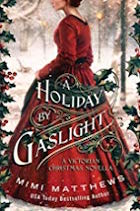
Sophie Appersett is the elder daughter of an impoverished noble family. Her father has squandered the family fortune, including Sophie’s dowry, on modernizations to the estate, such as the implementation of gaslight. As a result, Sophie knows it’s her duty to marry money, even if means looking outside her own class for a husband. Edward Sharpe is a prosperous tradesman whose fortune is large enough to overcome his lack of gentility. But although he’s asked Sophie’s father for permission to court her, he shows no sign of being in love with her. In fact, Ned is interested in Sophie, but he doesn’t want to commit any breaches of etiquette in his courtship, so he takes refuge in silence. Frustrated, Sophie decides to break things off — but a further conversation with Ned convinces her to try once more. He’ll attend her family’s extravagant Christmas party, and they will both make an effort to know one another better. But will their fledgling relationship survive the obstacles presented by their respective families?

Christmas is my favorite holiday, and I’m already starting to get into the spirit of things, although I’m desperately trying to wait until after Thanksgiving to break out my Christmas music! So this holiday-set romance novella was bound to catch my eye, and I thoroughly enjoyed it. I loved the premise, which has a sort of marriage-of-convenience flavor (one of my favorite tropes!) but even better because the hero and heroine are actually honest with each other, almost from the very beginning! They communicate well, and almost all the conflict is driven by Sophie’s truly appalling father and his determination to bleed Ned dry in order to improve Appersett House. I like that the book engages with the technological and scientific innovations of the Victorian period; in addition to gaslight, indoor plumbing and the theories of Charles Darwin are also mentioned. My one complaint is that the characterization is a little flat, especially for the secondary characters, but that’s understandable given the length of the story (only about 160 pages in the print version). Overall, I really liked this one and will definitely seek out the author’s full-length novels!