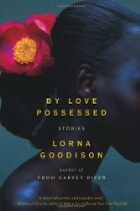
Review: By Love Possessed

By Love PossessedLorna Goodison, By Love Possessed: Stories

As the title suggests, this collection of short stories is loosely focused on the theme of love, but not just romantic love: there are stories of friendships, parent-child relationships, and love requited and unrequited (mostly the latter). The stories are also pictures of life in Jamaica, chronicling the country’s postcolonial poverty, class warfare, desperation, and ambition. But while the setting is clearly and specifically delineated, the stories in this book also explore universal themes. In “The Helpweight,”a successful woman meets her ex-husband again after he has been in England for many years, but she is shocked when he asks for a favor. In “Shilling,” a teenage girl daydreams about her crush, but when he finally notices her, the reality is far different from her fantasies. And in “The Big Shot,” a man who has worked all his life to escape the grinding poverty of his childhood is suddenly confronted with his past.

I think this is the first book I have ever read by a Caribbean author, so it was an entirely new experience for me. I loved the fact that these stories paint such a vivid picture of life in Jamaica, from the weather to the food to the patterns of speech. Several of the stories are written in dialect, and the characters’ speech patterns vary depending on their level of education. While some of the phrases and spellings were unfamiliar to me, I really felt immersed in the world of these stories. Goodison is also a beautiful writer; she has a talent for conveying a lot of information without ever explicitly saying it. I found the endings of the stories especially impressive because they provide just enough closure without tying everything up too neatly. As with most short story collections, some were better than others, but I can’t think of any that I really disliked. (My favorites are the ones I mentioned in the first paragraph.) I would definitely recommend this book to anyone interested in Jamaican or Caribbean literature!
Review: With a Little Luck

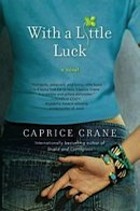
With a Little LuckCaprice Crane, With a Little Luck

Classic rock DJ Beryl “Berry” Lambert claims she doesn’t believe in luck; but thanks to her gambling-addict father, she has a superstition for almost every occasion. She wears a horseshoe necklace at all times, is appalled when someone opens an umbrella indoors, and believes bad luck comes in threes. So when perpetually single Berry goes on two promising first dates that both end in disaster, she’s convinced that her next boyfriend will be equally unlucky. But then she meets Ryan Riley, a successful “relationship expert” who works at her radio station, and their on-air squabbling soon takes a flirtatious turn. Ryan seems like the perfect guy — witty, handsome, and tolerant of Berry’s superstitious quirks — but she is convinced that he’ll eventually reveal himself as bad-luck boyfriend number three. Is Berry doomed to be perpetually unlucky in love, or will she meet her match at last?

Ever since I read and really liked Crane’s first novel, Stupid and Contagious, I’ve been hoping to enjoy her subsequent books just as much, but I’ve always been disappointed. Sadly, With a Little Luck is no exception; it’s a decently-written chick lit novel, but that’s about all I can say for it. Maybe part of the problem was that I couldn’t relate to Berry at all. Her belief in random superstitions is just so extreme, and while it’s understandable that she would have baggage given her past, she seems determined to sabotage every good thing in her life. I also didn’t particularly warm to Ryan, who is a fairly two-dimensional character throughout the book. I couldn’t figure out what makes him tick or why he’s interested in Berry at all. Even as a person who loves fluffy romance, I still have to believe that the hero and heroine would fall for each other, and that just wasn’t the case here. If you’re a chick lit fan, you could do worse, but you could also do a lot better.

Review: The Spanish Bride

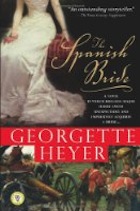
Spanish Bride, TheGeorgette Heyer, The Spanish Bride

Brigade-Major Harry Smith is a Rifleman in Wellington’s army, fighting Napoleon’s forces in Spain and Portugal. He participates in the Siege of Badajos, a long and drawn-out battle that results in plunder, rape, and violence when the allied British and Portuguese soldiers finally conquer the town. As Harry tries to maintain order and discipline, he is approached by two Spanish women who are seeking protection from the carnage within the city. As soon as he lays eyes on the younger of the women, Juana, he falls instantly in love with her, and she with him. Against the advice of Harry’s comrades, they marry immediately, and Juana accompanies her husband throughout the rest of the Peninsular campaign. As she “follows the drum” and experiences life as a soldier, she demonstrates the courage and fiery temperament that make her a perfect match for Harry. Together, the Smiths witness history as they eventually see Napoleon’s final defeat at Waterloo.

I am a huge fan of Georgette Heyer’s Regency romances, but I found that I had to approach this book with entirely different expectations. Although the novel features two young, passionate lovers, it is much more about military history than it is about romance. Harry and Juana Smith were actual historical figures, and Heyer got most of her information from Harry’s journals, as well as from other comtemporary accounts including Wellington’s own dispatches. As a result, there is a lot of great historical detail in the book, but not a lot of plot or character development. While Harry and Juana are very vivid characters, their journey is not the focus of the book. I think the trick to enjoying The Spanish Bride is viewing it as a work of military history with a few romantic touches. If you approach it that way, you’ll find it very readable and entertaining. But if you go into it expecting a tale of romance and suspense with the Napoleonic Wars as a backdrop, you’ll find it extremely dull! So overall, I’d recommend this book if you’re interested in the time period, but you have to adjust your expectations.

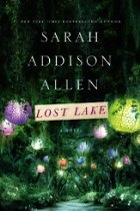
Review: Lost Lake

Lost LakeSarah Addison Allen, Lost Lake

The tiny vacation resort of Lost Lake in Suley, Georgia, means different things to different people. For Eby Pim, it’s a tangible reminder of her happy life with her now-deceased husband, George; but it’s also an increasingly burdensome property to maintain, and Eby has decided to sell it. For Eby’s longtime friend and constant companion, Lisette, Lost Lake is a refuge, and she vows she’ll never leave. And for Kate Pheris, widowed one year ago and just now waking up from her grief, Lost Lake is a memory of the best summer she ever had. When Kate impulsively decides to revisit Lost Lake with her daughter, Devin, she is immediately drawn to Eby and the other colorful inhabitants of the surrounding town. Kate and Devin’s arrival also catalyzes several important changes in Suley, including the resolution of a long-buried tragedy and the banishing of an old ghost. Eventually Kate is able to help Eby create a new future — and maybe even find one for herself.

As a longtime fan of Sarah Addison Allen, I couldn’t resist buying her newest book immediately (in hardcover, no less!) and devouring it as soon as possible. Fortunately, this book contains all of SAA’s trademark elements: a community of strong women with interconnected lives, decades-old secrets that are gradually revealed, understated romance, and a hint of magic. I especially loved the flashbacks to Eby’s life with George in Europe; they were so romantic and lavishly described that they made me want to hop on the next plane to Paris! I wasn’t terribly fond of the storyline with the alligator…I don’t want to spoil the book, so I’ll just say that the magical element was a bit too prominent for me. Overall, this is not my favorite SAA novel (that would be The Sugar Queen), but it is a lovely, relaxing read that I would definitely recommend to fans of this genre.

Love poetry

Happy Valentine’s Day! Here are a couple of poems to get you in the romantic spirit:

* * *

“since feeling is first”
e.e. cummings

since feeling is first
who pays any attention
to the syntax of things
will never wholly kiss you;
wholly to be a fool
while Spring is in the world

my blood approves,
and kisses are a better fate
than wisdom
lady i swear by all flowers. Don’t cry
–the best gesture of my brain is less than
your eyelids’ flutter which says

we are for each other: then
laugh, leaning back in my arms
for life’s not a paragraph

And death i think is no parenthesis

* * *

“The Life That I Have”
Leo Marks

The life that I have
Is all that I have
And the life that I have
Is yours.

The love that I have
Of the life that I have
Is yours and yours and yours.

A sleep I shall have
A rest I shall have
Yet death will be but a pause.

For the peace of my years
In the long green grass
Will be yours and yours and yours.

* * *

What are your favorite love poems?

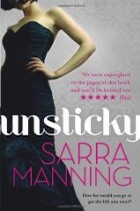
Review: Unsticky

UnstickySarra Manning, Unsticky

Grace Reeves has always known that she wanted to work in fashion, but her big dreams have been replaced by bitter reality. At 23 years old, all she has to show for herself is an unfinished degree, a terrible job that barely pays enough to live on, an abusive boss, and a mountain of credit card debt. In short, Grace is stuck and can’t seem to find a way to change things. But that all changes when a wealthy older man named Vaughn presents her with a shocking offer: He wants her to become his mistress. He will give her a monthly sum and an additional clothing allowance; in return, she must be at his beck and call, accompanying him to various social events and making herself available…in every way. At first Grace is shocked and repulsed, but eventually she rationalizes that she can’t turn down so much money, especially when she already finds Vaughn attractive. But as they embark on their “arrangement,” Grace and Vaughn both find themselves changing in ways they never thought possible.

I finished this book several days ago, but I still find myself processing it, which is not something that usually happens to me with chick lit! At first glance, this is a Cinderella story, but it’s a very dark, complex take on that idea. I’m still not sure how I feel about Grace and Vaughn’s relationship. It can certainly be seen as unhealthy or even abusive: Vaughn is very controlling, and while he is never physically violent with Grace, he tends to treat her as an object he’s bought and paid for. On the other hand, as we learn later in the novel, Vaughn does have reasons for being the way he is. Both he and Grace are very flawed characters who have extremely low self-worth. I admire what Manning did here, which was take two damaged, unlovable people and show them learning to love each other. This is definitely not a feel-good romance, but it feels more realistic than many books in the genre. It’s also a very addictive read! So I’d definitely recommend it as a thought-provoking look at love and romance, but be aware that many aspects of this novel are uncomfortable, to say the least.

Review: The Shadowy Horses

The Shadowy HorsesSusanna Kearsley, The Shadowy Horses

Verity Grey is a young archaeologist who has recently quit her job at the British Museum and is looking for freelance work. Her former colleague (and ex-boyfriend) Adrian tells her about a potential job in the coastal town of Eyemouth, Scotland, but he is vague about the details. Nevertheless, Verity is intrigued enough to travel to Eyemouth for an interview. There she learns that the head of the expedition, wealthy archaeologist Peter Quinnell, is hoping to find traces of the Ninth Roman Legion, which appeared in Britain in the second century A.D. and then vanished from history. Verity is excited to be part of such a potentially major find — until she learns that Quinnell has no tangible evidence that the Ninth ever passed through Eyemouth. Rather, he is basing his expedition on the word of an eight-year-old boy who is said to have the second sight. Verity is extremely skeptical at first; but the longer she spends in Eyemouth, the more she becomes convinced that something supernatural is at work.

I was surprised to discover that, unlike many of Susanna Kearsley’s other novels, this book is not a work of historical fiction; all the action takes place in the present day. Aside from that, however, The Shadowy Horses definitely has a similar feel to Kearsley’s other books. There is a young, intellectual heroine who is fascinated by history; a story in the present that closely parallels a story in the past; various supernatural elements (in this case, a ghost!); and a romance. These are all things that generally appeal to me in books, but once again, I found myself unable to get emotionally involved with this novel. There is just something about Kearsley’s writing that keeps me at a distance; though her books (including this one) are very readable, I’m never on the edge of my seat, dying to know what will happen next. A lack of dramatic tension, perhaps? Anyway, I did enjoy this book — the bits about archaeology were especially fascinating, though probably a bit outdated now — but it wasn’t anything more than a pleasant read for me.

Review: The Two Mrs. Abbotts

Two Mrs. Abbotts, TheD.E. Stevenson, The Two Mrs. Abbotts

Warning: SPOILERS for Miss Buncle’s Book and Miss Buncle Married.

This third book in the “Miss Buncle” series jumps forward in time to explore life in an English village during World War II. Barbara Abbott, née Buncle, now lives in Wandlebury with her husband and two adorable children. The war apparently has little effect on her life, except that there is less food available at the market. But Barbara’s niece by marriage, Jerry Abbott, is dealing with the fact that her husband Sam is fighting somewhere in Africa; in the meantime, she has opened her home to soldiers and evacuees. But despite the privations and worries of wartime, there are still plenty of opportunities for gossip and romance! Sullen Lancreste Marvell has fallen in love with an unsuitable woman; famous authoress Janetta Walters is coming to Wandlebury to speak at the village bazaar; and Jerry’s brother Archie finally seems to be ready for marriage. Finding herself in the midst of these entanglements, will Barbara be able to engineer a happy ending?

I’m so happy that Sourcebooks is re-releasing D.E. Stevenson’s books! I really loved the first two “Miss Buncle” books, and this one is also quite fun and charming, though it definitely suffers by comparison. The problem with this book is that it lacks cohesion; there are several little plots going on, but they are largely independent of one another. Some plots also seem to peter out with no resolution; for example, in the beginning of the book, an old friend of Barbara’s comes to visit, and it seems as though she is going to be a big part of the story, but then she vanishes about halfway through the book. Ultimately the biggest story is about Archie’s courtship, which is quite sweet, but it’s not really developed in much depth. I did like reading a World War II novel that isn’t really about the war, but nevertheless the war affects many aspects of the characters’ lives. The happy, wholesome picture of village life in this book was most likely vanishing at the time Stevenson wrote the novel. Overall, I’d recommend this book to people who liked the other “Miss Buncle” books and are looking for a nice comfort read.

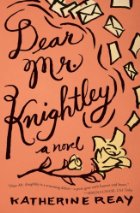
Review: Dear Mr. Knightley

Dear Mr. KnightleyKatherine Reay, Dear Mr. Knightley

Samantha Moore has been in and out of foster homes her whole life. Now, at age 23, she’s living at a group home called Grace House, but she’ll soon have to leave unless she can find a way to go back to school. One day she gets a surprising offer: if she can get into the Medill School of Journalism at Northwestern University, an anonymous donor will pay her tuition and living expenses. The only condition is that she must write regular letters detailing her educational progress to the donor under the name Mr. Knightley. Samantha is reluctant at first, particularly because she feels much more connected to fiction than journalism. Indeed, her closest friends growing up were the classic novels that kept her company through dark times, and she frequently hides in the world of books when real life is confusing or difficult. Still, Sam agrees to the deal, and through her letters to “Mr. Knightley,” she is finally able to face her past — and her future.

Despite what the title might suggest, this book is not a Jane Austen spinoff; rather, it’s a contemporary reimagining of Jean Webster’s novel Daddy-Long-Legs. My overall opinion is that the original is far better, but I can’t get into more depth without SPOILERS for both books, so skip the rest of this review if you don’t want to know how they end! … OK, so if you’re still with me, what happens is that Samantha eventually falls in love with “Mr. Knightley,” who turns out to be the handsome mystery novelist who’s been keeping Sam company throughout the book. He knows everything about Samantha, whose letters to him have been more like a diary, yet he doesn’t confess his true identity until the very end of the book. There’s this huge power imbalance between him and Sam, and the book never really addresses it, and I just couldn’t buy it as a romantic or satisfying ending at all. For some reason I didn’t mind it as much in the original – maybe because of the time period in which it was written? So I had a huge issue with the core of the story, and I also didn’t like the author’s writing style. It’s a very readable book, and if you like Daddy-Long-Legs you may enjoy this one too, but I was disappointed.

Review: Just Like Heaven

Just Like HeavenJulia Quinn, Just Like Heaven

Lady Honoria Smythe-Smith is desperate to be married. Though she is part of a large, affectionate family, things have been very quiet in her parents’ house ever since her brother Daniel fled England after seriously wounding a man in a duel. Honoria longs to start her own family and once again feel surrounded by love; and as an added bonus, once she is married, she’ll no longer have to perform at the Smythe-Smiths’ infamous musicales. Meanwhile, Marcus Holroyd, the Earl of Chatteris, is Daniel’s best friend and has always felt more at home with the Smythe-Smiths than with his own distant family. Marcus and Honoria have always been friendly, but when a sprained ankle and a dangerous illness throw them together, they both begin to suspect that their relationship is deepening into something more.

I basically picked up this book for two reasons: 1) It shares a title with a really great Cure song, and 2) I’m a sucker for ridiculous British surnames. Fortunately, I ended up enjoying it quite a bit! Marcus is a delightful hero; he comes across as proud and brooding, but only because he feels shy and socially awkward (shades of Mr. Darcy!). And Honoria is a sweet girl with just enough humor to keep her from being insipid. Somewhat unusually for a Regency romance, most of this book doesn’t take place during the London Season; rather, Honoria spends a good portion of it nursing Marcus back to health from a life-threatening fever. Some might find the sickroom scenes tedious, but to me they underscored why Marcus and Honoria make such a great pair. All in all, I’d definitely recommend this light, quick read to fans of Regency romances, and I’ll probably pick up something else by Julia Quinn in the future.