Mini-Reviews: Orphans, Systems, Bookshop

Lois McMaster Bujold, The Orphans of Raspay

Penric is sailing home from what should have been a routine journey, but naturally his ship is captured by pirates, and things only get worse from there. Among his fellow captives are two young orphan girls who will almost certainly be sold into slavery, so Pen takes responsibility for them as he engineers a prison break. But between pirates, corrupt merchants, and a local distrust of sorcerers, it’s all Pen and Des can do to keep themselves and their charges alive. This is another enjoyable installment in the Penric and Desdemona saga, heavy on adventure and light on character development. I wonder if we’ll see the two orphans, Lencia and Seuka, in subsequent books. Otherwise, I don’t have much to say about this one – it’s entertaining but doesn’t really feel like a crucial (or even particularly necessary) installment of the series.

Martha Wells, All Systems Red

This novella is narrated by a SecUnit, a robotic “construct” made of both organic and inorganic materials, whose job is basically to provide security for whoever hires it. It’s currently accompanying a crew on a mission of planetary exploration, but all it really wants to do is watch soap operas on its entertainment feed. The longer the self-designated Murderbot spends with this particular crew of humans, however, the more it begins to care about them. And when it senses something off about the mission, it must figure out whether and how to help the humans. The Murderbot series has gotten a lot of hype, and I can definitely see why; the concept is fascinating, particularly now that AI is so prominent in our society, and Murderbot is a snarky yet sympathetic character. I’m just not sure if it’s my thing, you know? I did enjoy the story, but I haven’t decided whether I care enough to continue with the series—with apologies to all the Murderbot lovers out there!

Jenny Colgan, The Christmas Bookshop

Carmen has just been laid off and is struggling to find work in her dying Scottish town. She ends up moving to Edinburgh to stay with her sister, Sofia, who seems to have the perfect life — which Carmen both mocks and envies. Sofia gets Carmen a job with Mr. McCredie, who owns an unprofitable bookstore and expects Carmen to turn things around somehow. At first, Carmen hates everything about her new situation, but she eventually finds things to love about her job, the city, and even her sister. This book is like a warm hug; it’s cozy and Christmassy and makes me want to visit Edinburgh in December, despite what sounds like horrific weather. I loved Carmen and Sofia’s relationship, which felt very realistic and nuanced, and there’s a sweet romance as well, though it doesn’t get much page time. I would definitely recommend this as a great read to get into the holiday spirit!
Mini-Reviews: Murder, Ruin, Story

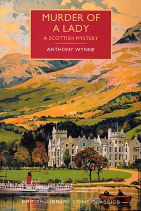
Anthony Wynne, Murder of a Lady

This mystery, set in the Scottish Highlands, opens with the murder of Mary Gregor, the elderly sister of the local laird. Her corpse is found in a locked room, and the police are stymied as to how the murderer got in or out. The discovery of a fish scale on the body leads the locals to believe that supernatural merman-like creatures are responsible. Luckily, amateur detective Dr. Eustace Hailey is visiting the area, and he eventually discovers a more logical explanation—but not before a troubled marriage nearly falls apart, and several more deaths occur. I quite liked this Golden Age mystery; I didn’t guess the culprit, and the locked-room puzzle was ingenious. I also found the psychological discussion interesting, although it occasionally seemed questionable and dated. But Hailey’s analysis of the dead woman’s character is both fascinating and integral to the solution of the case. It’s a bit melodramatic, and the book ends very abruptly; but overall, I liked this one and would recommend it to vintage mystery fans.

Mimi Matthews, Rules for Ruin

Euphemia “Effie” Flite was plucked from the streets as a child and placed in the Crinoline Academy, a school dedicated to educating strong and independent young women. Effie graduated years ago, but now the headmistress is calling in a favor: Effie must use her training to ruin the reputation of Lord Compton, a member of Parliament who’s opposing a bill that would allow married women to own property. In so doing, Effie butts heads with Gabriel Royce, a self-made man from the London slums who needs Compton’s influence to pursue his plans for social reform. I think Mimi Matthews is one of the best historical romance authors writing today, but I was worried that this new series would be too anachronistic and unsubtle (the back cover says something about “disrupting the patriarchy”). Happily, my fears were unjustified; Effie and Gabriel are both progressive thinkers for their time, but their beliefs are grounded in their cultural context and make sense for their characters. I also loved the romance, which is steamless but leaves no doubt that Effie and Gabriel are wildly attracted to each other. I’m excited to continue with the series—book 2 comes out in November!

Genevieve Cogman, The Untold Story

***Warning: SPOILERS for previous books in the series!***

In the last (at least for now) installment of the Invisible Library series, Irene finally comes to a reckoning with Alberich, who is a murderer, a traitor to the Library—and Irene’s biological father. But at their climactic meeting, Alberich reveals information that has Irene questioning her most deeply held beliefs and loyalties. How was the Library founded, who really controls it, and for what purpose? Irene must find these answers without getting herself or her loved ones killed in the process. When I first read The Invisible Library, I remember being disappointed that Alberich was a villain with no nuance and that Irene never questioned the benevolence of the Library. Thankfully, those complaints are no longer valid! This book finally digs into the Library’s true nature and sheds some light on a few things from previous books that seemed strange or incongruous. I think it’s a satisfying ending to the series, though I can imagine Irene & co. having further adventures if the author ever wants to return to this world.

Mini-Reviews: Messenger, Crazy, Gothic

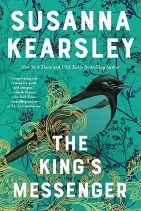
Susanna Kearsley, The King’s Messenger

It’s 1613, and King James I sits on the throne of England. His son, Prince Henry, has recently died, and rumors suggest that he was poisoned. To investigate (or possibly to set up a scapegoat), the king sends one of his messengers, Andrew Logan, to arrest the prince’s mentor and close companion, Sir David Moray. Traveling with Andrew are a scrivener and his daughter, Phoebe Westaway, who will record any statements made by Sir David. Andrew and Phoebe have a contentious history, but their proximity on this journey leads to very different feelings. Meanwhile, their perspective on Sir David also begins to change. Susanna Kearsley is a top-notch writer of historical fiction, and while I don’t know much about this time period, her depiction feels believable and authentic. I found the present-day adventure and romance more interesting than Sir David’s history with the prince, which is interspersed in the narrative via flashbacks. But overall, I really liked this one, though A Desperate Fortune remains my favorite Kearsley novel.

Annie Darling, Crazy in Love at the Lonely Hearts Bookshop

Nina, who works with her two BFFs at a bookstore specializing in romantic fiction, prides herself on being unconventional, from her vintage-pinup-girl style to her sleeves of tattoos. Her romantic ideal is Heathcliff from Wuthering Heights. Noah, a consultant who’s evaluating the bookstore’s finances, couldn’t be farther from Nina’s usual type—yet she feels a surprising attraction to him. But as they get to know each other, they discover an unpleasant shared history that may drive them apart. I remember enjoying the previous book in this series, True Love at the Lonely Hearts Bookshop, but this one didn’t do much for me. I think it’s because I can’t really relate to Nina at all (again, her romantic ideal is Heathcliff). The book also feels pretty dated in its approach to friendships and relationships, despite being published in 2018—it seems a bit like a Bridget Jones’s Diary copycat. Overall, not a horrible book, but not one I’d recommend either.

Silvia Moreno-Garcia, Mexican Gothic

It’s 1950, and Noemí Taboada is a glamorous socialite in Mexico City. But when she receives a disturbing letter from her cousin Catalina, who has recently married and moved to her husband’s remote mountaintop estate, she decides to visit and find out what’s going on. Noemí is repulsed by the decaying estate and its hostile inhabitants. She’s also alarmed by Catalina’s seeming insanity, and becomes even more so when she too starts having strange dreams. She eventually uncovers a complex and horrific history that’s holding her cousin captive—and is now attempting to ensnare her as well. I’ve enjoyed every Moreno-Garcia book I’ve read so far, and this is no exception, though it’s way closer to horror than I normally go! It’s definitely not for the faint of heart—there’s violence (including sexual violence), body horror, and all manner of creepy goings-on. But I really liked this take on the gothic genre and how it explores power dynamics, particularly conquerors vs. conquered and men vs. women. I also loved Noemí as a heroine; she’s got quite a bit more intelligence and spunk than some of her predecessors in this genre. It’s not quite my kind of book, but if this premise interests you, I’d highly recommend it!

Mini-Reviews: Miles, Plot, Country

Jenny Colgan, 500 Miles from You

Lissa and Cormac are both home care nurses, she in London and he in the tiny town of Kirrinfief, Scotland. When Lissa is traumatized by an on-the-job tragedy, her boss forces her into a swap: She’ll go to Kirrinfief for three months, where she’ll theoretically have enough peace and quiet to begin healing, and Cormac will take her place in London. At first, both Lissa and Cormac have trouble adjusting to their new surroundings, but gradually they grow and change in unexpected ways. I’ve read a few books by Colgan and found them sweet, uplifting comfort reads. This book definitely has more darkness in it: Lissa’s trauma is described in detail, and many of the patients she and Cormac treat suffer horribly. But the novel retains a gentle feel and warm sense of community, especially in Kirrinfief. Scottish life is a bit too idealized, and the novel seemed to end rather abruptly, but I did enjoy it overall and will continue to read more by Colgan.

Genevieve Cogman, The Lost Plot

In this fourth installment of the Invisible Library series, Irene and Kai are unwillingly roped into political intrigue among the dragons, which puts the Library’s careful neutrality between dragons and Fae in jeopardy. To protect the Library, Irene and Kai travel to an alternate version of Prohibition-era New York City, where they have to evade mobsters and police as well as dragons. This fourth installment of the Invisible Library series is a fun read, consistent with previous books in the series. I enjoyed the new setting with its gangsters and speakeasies, and Irene continues to subtly grow and change as she realizes the Library isn’t always her highest priority. I missed Vale in this book, but it looks like he’ll be more prominent in book 5, which I plan to read next month.

Fiona Hill, The Country Gentleman

Anne Guilfoyle is celebrated as one of the cleverest ladies in London, and she relishes her position and status. But when her fortune is lost due to a bad investment, she’s forced to move to a country manor she’s inherited from a distant relative—and by the terms of the will, she must reside there for 10 months every year. Anne resents the change in her circumstances and views her country neighbors—especially the owner of the closest estate, Henry Highet—as ignorant bumpkins. But as she acclimates to her new life, she grows to appreciate country living, and Highet, more. I’m always on the hunt for well-written, steamless historical romances, and this one definitely fits the bill! Anne is somewhat hard to like at first, as she’s very condescending, but she grows sufficiently throughout the book. I also really liked Anne’s companion and the secondary love story featuring her. Overall, this was a very pleasant surprise, and I’m eager to try more by Fiona Hill.

Mini-Reviews: Summer, Tryst, Prince

Lizzy Dent, The Summer Job

Birdy’s best friend, Heather, is a master sommelier who’s accepted a position at a hotel restaurant in Scotland for the summer. But when Heather bails on the job without notifying the hotel, Birdy, who’s between jobs, decides to take her place – despite knowing nothing about wine. Of course, she soon realizes she’s in way over her head, but she becomes genuinely interested in the work – and in the restaurant’s chef, James. But what will happen when the truth comes out? This book, while entertaining on a micro level, actually stressed me out because Birdy made so many terrible, thoughtless decisions! Not only was she horrifically incompetent while (initially) making no effort to improve, but she also lied to her employer and her best friend and didn’t ’fess up even when she realized how badly she could damage said friend’s professional reputation. The book does its best to make Birdy likable despite this awful start, but I never quite came around. The Scottish setting is lovely, and James is a dreamy romantic interest, but honestly, he deserves better!

Alyssa Everett, A Tryst with Trouble

Lord Beningbrough, “Ben” to his friends, prides himself on being emotionally detached and is in no hurry to marry. Strong-minded Lady Barbara Jeffords has a low opinion of men in general and, after their first meeting, of Ben in particular. But they’re forced to work together when Ben’s cousin and Barbara’s sister, who are recently engaged, are both implicated in the murder of a footman. Ben and Barbara know neither of their relatives can be the killer, but as they team up to find the true culprit, their mutual annoyance/attraction evolves into something quite different. I’ve enjoyed a couple of this author’s other Regency romances and am happy to say I liked this one as well! Ben and Barbara are an enjoyable pair, whether they’re trading insults or slowly letting their guard down with one another. And they take turns narrating the book, so it’s fun to get a peek inside their heads and see how they view the same events differently. The mystery itself is slight and utterly predictable; it’s really just a device to get these two crazy kids together. But I’d still recommend this book (and author) to fans of lively, well-written historical romance.

Priscilla Pearce, My Enemy, My Prince

This “romantasy” centers around Ro, a farm girl plucked from obscurity because of her psychic abilities to become the wife of Prince Corrado. Ro and Corrado don’t get along at first, and they’re awkward and shy with one another, but mutual feelings soon develop. Meanwhile, Corrado’s kingdom is under threat by his odious cousin, who will inherit the throne unless he and Ro can produce an heir. And as Ro adjusts to being a princess, she begins to consider how to use her power for good in the world. If you’re expecting a fantasy novel with strong worldbuilding and a well-thought-out magical system, this book is not for you. It’s 100% a romance, and probably the first half of the book is just Ro and Corrado enthusiastically, ahem, “getting to know” one another. There’s not much plot to go along with the sex scenes, and the book’s editing leaves a lot to be desired. I did like the main characters, especially their early awkwardness, and I feel like there’s the kernel of a good book here. But it’s not one that I’d enthusiastically recommend, unfortunately.

Mini-Reviews: Screenplay, Montesoro, Listening

Emma Thompson, The Sense and Sensibility Screenplay and Diaries: Bringing Jane Austen’s Novel to Film

I recently rewatched Emma Thompson’s adaptation of Sense and Sensibility and loved it—I hadn’t seen it in a while and had almost forgotten how great it is! I enjoyed it so much that I watched it again with the DVD commentary featuring Thompson and producer Lindsay Doran. And then I remembered that I own this book, which (as the title suggests) includes the shooting script of the film and Thompson’s diary entries that covered the filming process. There’s also an introduction by Doran explaining how she got the idea for the movie and how Thompson was chosen to be the screenwriter. If you’re the kind of person who enjoys a peek behind the scenes of your favorite movies, this book is for you. The script is maybe the least interesting part, since most of it does appear in the final film, but it’s fun to see the stage directions and think about how the actors interpreted the printed words. Thompson’s diary entries are hilarious—I laughed out loud several times—but she’s very kind and respectful about everyone she worked with. Overall, I’d definitely recommend this book for fans of the movie!

Stella Riley, The Montesoro Legacy

This final book in the Brandon Brothers trilogy focuses on the youngest brother, Leo, one of London’s most fashionable painters. When he is invited to a house party to paint a young debutante, he meets Mariella Talbot, who is trying to escape from her cruel, inheritance-stealing stepbrother. A society scandal forces Leo and Mariella into a fake engagement, so they team up to thwart the wicked stepbrother and secure Mariella’s rightful legacy. Stella Riley’s historical romances are always a treat, and this one is no exception. But I do wish the book had focused more on the central couple; instead, much of the plot deals with catching and punishing the villain. Further, Adam and Camilla, the couple from the previous book, play a big role in this story, and much as I like them, I felt they already had their book and I didn’t need to see quite so much of them here. Leo and Mariella feel underdeveloped by comparison, and their love story is basically resolved about halfway through the novel. Overall, it’s still an enjoyable read, but it’s not as romance-centric as I’d expected.

D.E. Stevenson, Listening Valley

I was in need of a cozy, quiet read, so naturally I turned to D.E. Stevenson. This particular novel follows Tonia, a quiet, dreamy girl who’s always been somewhat overshadowed by her bright, vivacious sister, Lou. But when Lou marries and moves away, Tonia comes into her own a bit, and she slowly begins to learn what she truly wants out of life. I really enjoyed this book, which is a quiet slice-of-life story with a bit of romance that also contains some heartbreaking elements. It was published in 1944, so World War II is a presence throughout the story, and there’s one very memorable scene where Tonia experiences an air raid in London. I feel the novel is a quintessential example of Britain’s “keep calm and carry on” mentality, and it’s fascinating to read books that were actually written during this period, when the outcome of the war was still uncertain. Definitely recommended if you like this kind of thing!

Mini-Reviews: Corpse, Brass, Grumpy

Ellis Peters, One Corpse Too Many

This second installment of the Cadfael series is based on a real event: King Stephen’s siege of Shrewsbury Castle in A.D. 1138 and his subsequent killing of all the castle’s defenders. In the novel, 94 men are supposed to be hanged, but Brother Cadfael finds a 95th body. The extra man wasn’t hanged but strangled, and Cadfael is determined to see his murderer brought to justice. As Cadfael investigates, he navigates treacherous politics, discovers a hidden treasure, and helps two pairs of young lovers. I love the Cadfael series, and this book in particular has always been a favorite. It’s a wonderful slice of medieval life that feels cozy despite the murder plot and wartime setting. I love the mixture of political intrigue, mystery, and romance, and the book introduces one of my favorite characters in the entire series (and one of my first fictional crushes, honestly!). I thoroughly enjoyed this reread and would highly recommend both the book and the series.

Nancy Campbell Allen, Brass Carriages and Glass Hearts

Emmeline O’Shea is an outspoken activist for shapeshifters’ rights, and she’s been asked to give the closing speech at an international summit that could produce a decisive victory in the struggle. But when Emme receives a nasty death threat, she’s forced to accept the protection of Detective-Inspector Oliver Reed of Scotland Yard. Emme and Oliver have clashed frequently in the past, but now that they’re spending more time together, their hostility is turning into something else. I love a good antagonists-to-lovers romance, and Emme and Oliver are both appealing characters (and yes, I especially loved buttoned-up, rule-abiding Oliver). That said, I think the first half of the book is more interesting than the second. They’re obviously in love with each other by that point, and the rest is just the plot playing itself out rather abruptly; I wanted more resolution with some of the secondary characters. Overall, this series is not a keeper for me, but I did enjoy the books and would recommend them if you like the idea of steamless historical romance with paranormal/steampunk elements.

Charlotte Stein, When Grumpy Met Sunshine

Retired footballer Alfie Harding needs a ghostwriter for his new memoir, but he’s notoriously gruff, taciturn, and hard to work with. Said ghostwriter, Mabel Willicker, is the opposite, cheerful and chatty to a fault. Their first few meetings are disastrous—pepper spray is involved—but as they work together, Mabel learns there’s much more to Alfie than meets the eye. When a paparazzi photo forces them into a fake-dating scenario, Mabel realizes she’s developed genuine feelings for Alfie, but she’s convinced he could never be interested in a plus-sized non-celebrity like her. I was a little worried this book was going to be cringey Roy Kent fanfic, but Alfie is very much his own person, and he’s an utter delight! He’s so weird and kind and awkward and vulnerable, and it’s obvious that he and Mabel are perfectly matched. I also loved Mabel and related to her insecurities as a plus-sized woman, but Alfie is definitely the star of the book. My one quibble, apart from the off-putting title, is the author’s irritating overuse of one-sentence paragraphs, which I found distracting. But I was frankly charmed by this book and would highly recommend it to contemporary romance fans!

Mini-Reviews: Fate, Bigger, Don’t

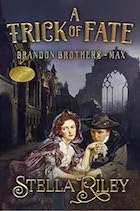
Stella Riley, A Trick of Fate

Max Brandon has a problem: Someone has been purchasing expensive goods and running up bills in his name, which he’s now being asked to pay. This minor nuisance becomes a major problem when the thief’s actions harm Frances Pendleton, Max’s first love. Now Max and Frances must team up to find the thief, and their quest leads them on a wild-goose chase throughout England and Scotland. After loving Stella Riley’s Rockliffe series, I had to continue with the spinoff Brandon Brothers trilogy (Max is Arabella’s brother from Cadenza). I don’t think you have to read any of the Rockliffe books to follow this one, but the two series are definitely set in the same universe. The love story in this book is a bit lightweight; while the obstacles originally dividing Max and Frances made sense, there was no reason for them not to be together in the present. But I love Riley’s writing and enjoyed the book anyway — especially since it also provides a peek at Elizabeth and Sherbourne, a couple from Cadenza whose story I’d wanted more of. I’d definitely recommend this book and author to historical romance fans and am eager to continue with the series.

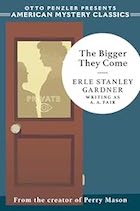
Erle Stanley Gardner, The Bigger They Come

Most people know Erle Stanley Gardner as the author of the Perry Mason books, but he also wrote another series, featuring private detectives Bertha Cool and Donald Lam, under the pseudonym A.A. Fair. Narrated by Lam, this first book in the series describes how he got the job with Bertha Cool’s detective agency. It also details Lam’s first assignment: He’s tasked with serving divorce papers to an unfaithful husband, but no one seems to know where the man is. As Lam searches, he uncovers various secrets and even a murder — and demonstrates how, using a legal loophole, a person can commit murder and get away with it. This book is an enjoyable noir novel with plenty of fights, femmes fatales, and damsels in distress. The mystery itself isn’t terribly innovative, but Lam’s humorous narration keeps things light, and the book moves at a quick pace. I didn’t love the constant negative commentary on people’s sizes — part of the book’s “humor” comes from the fact that Bertha is a large woman, while Lam is a shrimpy guy — but I suppose that’s of its time. Overall, I liked the book and am interested in trying more by Gardner at some point.

Chloe Angyal, Pas de Don’t

Heather Hays’s dance career is finally taking off when she learns that her fiancé, a world-famous dancer in the same NYC ballet company, has been cheating on her. Desperate to get as far away as possible, she accepts a guest position with the Australian National Ballet. There she meets Marcus Campbell, a dancer recovering from an injury and grieving the recent death of his father. The two are immediately attracted to one another, but the ballet company has a firm no-dating policy. Will Heather and Marcus risk their jobs to follow their hearts? I have absolutely zero dance ability, but I’ve always enjoyed movies and TV shows about dancing, so the premise of this book intrigued me. I might have liked all the ballet background more than the actual romance, which is fine but a bit pedestrian. I did like the third-act conflict between Heather and Marcus, which felt realistic given the setup, and I enjoyed the resolution as well. A sequel is coming out in May, featuring Heather’s best friend, and I plan to get it from my library when it’s available.

Mini-Reviews: Tower, Flatshare, Aunt

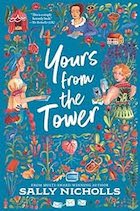
Sally Nicholls, Yours from the Tower

This epistolary novel centers around the correspondence between three school friends who are taking their first steps into adulthood. Tirzah is stuck being her strict grandmother’s companion in a remote Scottish village, but she longs for excitement and adventure. Sophia is in London for the Season and hopes to gain financial security through marriage, but she’s soon attracted to a penniless charmer. And Polly loves her job as a teacher in an orphanage, but complications ensue when she tries to find the father of one of her students. This book is wholesome and charming and delightful, and I really enjoyed it! Each girl is vividly drawn, with her own distinctive voice, and I found all three equally compelling. The letters are chatty and wide-ranging, covering everything from the minutiae of daily life to the girls’ deeper hopes and dreams. There are some some dark moments in the book involving alcoholism and depression, but the overall tone is light and hopeful. This is a YA novel, but I’d recommend it to adult fans of light historical fiction as well. I definitely want to read more by Sally Nicholls!

Beth O’Leary, The Flatshare

After moving out of her ex-boyfriend’s London flat, Tiffy desperately needs a new place to live. She sees an ad for a flatshare: The current tenant, Leon, works nights and will only be in the flat from 9 a.m. to 6 p.m., while Tiffy’s at work. The rent is cheap, so Tiffy jumps at the chance, even though she isn’t able to meet Leon in person before moving in. At first, they both find it odd to share their living space with a stranger, but as they start leaving notes for each other around the flat, they slowly become friends. When they finally do meet in person, they’re surprised by their mutual attraction, but difficulties arise when Tiffy’s ex reappears in her life. I feel like my summary of the book doesn’t do it justice at all. Both Tiffy and Leon are such endearing characters! Their notes to each other are adorable, and I like that they have jobs and friends and relatives and lives that don’t revolve solely around each other. Tiffy’s experiences with her ex are hard to read — the book does a great job of slowly revealing just how horrible he is — but the central romance is lovely. I’m glad I reread this one and would definitely recommend it to fans of contemporary romance!

Richard Hull, The Murder of My Aunt

Edward Powell lives in a small Welsh village with his Aunt Mildred. He hates Wales, the countryside, and everyone around him, especially his aunt. He only stays because she controls his finances; without the allowance he gets from her, he’d have nothing. As Edward broods over his distasteful circumstances, he realizes that his life would be much better if Aunt Mildred were to die. Soon he starts plotting possible murder scenarios, but his plans don’t work out the way he expects. This is both a funny and a grim book: Edward is a magnificently unreliable narrator whose misreading of conversations and events is often amusing, but he’s so snobbish and hateful that it’s tough to spend time in his head. I must admit, though, I didn’t find Aunt Mildred entirely sympathetic either! The ending is a surprise, but a well-plotted and foreshadowed one. Overall, this book isn’t strictly speaking a mystery—and certainly not a detective novel—but it’s worth reading for the narrative style and dramatic irony.

Mini-Reviews: Closed, Countess, Wager

Patricia Wentworth, The Case Is Closed

One year ago, Geoffrey Grey was convicted of murdering his uncle and is now in prison. His wife and her cousin Hilary believe he’s innocent, but the evidence against him is overwhelming — that is, until Hilary has a chance meeting with Mrs. Mercer, one of the prosecution’s star witnesses. Mrs. Mercer seems deeply troubled and hints at secrets she could reveal if she weren’t deathly afraid of her husband. Hilary decides to investigate with the help of her beau, Henry, but her sleuthing soon puts her in danger. I really enjoyed this book! The mystery is satisfying, albeit not particularly complex, and I also adored the romance between Hilary and Henry. They’ve quarreled at the beginning of the book, but they obviously still love each other, and it’s a treat to peek inside their heads as they attempt to get back together. If you like your vintage mysteries on the lighter side, with a generous helping of romance, you’ll enjoy this one!

Eva Ibbotson, A Countess below Stairs

Newly arrived in England after fleeing the Russian Revolution, Countess Anna Grazinsky has no choice but to work as a housemaid at the grand estate of Mersham. Despite her noble upbringing, she’s willing to work hard and soon endears herself to the other servants and the entire household. She also catches the eye of Rupert, Mersham’s owner, but he is already engaged to the beautiful but coldhearted Muriel. This book is one of my favorite comfort reads, and I adored it just as much this fifth or sixth time through. The central romance is sweet and passionate, and there’s a wealth of sympathetic, lovable secondary characters as well. The good characters are a bit too perfect and the bad ones totally irredeemable, but I love the book so much that I can easily overlook its flaws.

Lynn Painter, The Love Wager

After a drunken one-night stand, Hallie Piper is determined to make better romantic choices, so she joins a dating app in hopes of meeting “the one.” On the app, she spots her one-night stand, Jack Marshall, and decides to send him a joking message. He responds, and they soon strike up a fun conversation, which turns into a real-life friendship. They make a bet about which of them will find love first — but the more time they spend together, the more they begin to wonder if they’re each other’s perfect match. I enjoyed this fun and funny romantic comedy. Hallie and Jack both felt like real people, and their playful banter had me rooting for them from the beginning. I did find the central conflict a bit frustrating, since it all came down to poor communication, and the ending felt a bit drawn out. But I still liked the book overall and would definitely recommend Lynn Painter to fans of contemporary romance.