Mini-Reviews: Necromancer, Dimple, Scrapbook

Death of the NecromancerWhen Dimple Met RishiScrapbook of Frankie Pratt

Martha Wells, The Death of the Necromancer

This gaslamp fantasy follows Nicholas Valliarde, otherwise known as Donatien, the leader of a notorious criminal enterprise in the city of Vienne. He has one goal: to ruin the life of the Count of Montesq, who had Nicholas’s foster-father executed on a false charge of necromancy. In the middle of a heist that would further this goal, however, Nicholas runs into an unexpectedly life-threatening situation and soon learns that a real necromancer may be at work in the city. I really enjoyed this novel, especially the setting, which is like a fantastical version of 18th-century France. There’s also a really great friendship that arises between Nicholas and the police inspector who’s been tracking his criminal alter-ego. I will definitely continue with the Ile-Rien series, although this one stands alone quite well.

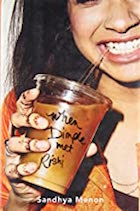
Sandhya Menon, When Dimple Met Rishi

Dimple and Rishi are Indian American teens who have never met, but their parents are friends and have tentatively arranged a marriage between them. Rishi knows about the arrangement and is happy about it; he loves his family and his culture, and he trusts his parents to choose an appropriate wife for him. Dimple, on the other hand, is more interested in computer coding than marriage, and she’s desperate to attend a prestigious summer program — one that Rishi happens to be attending also. When they meet, Dimple is enraged to discover the marriage arrangement. But the more she gets to know Rishi, the more she ends up liking him. This is a cute YA rom-com with insight into a culture I know little about. I recommend it if the premise intrigues you!

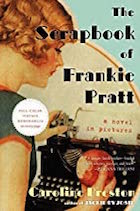
Caroline Preston, The Scrapbook of Frankie Pratt

This “novel in pictures” tells the story of Frances “Frankie” Pratt, an ambitious American girl who leaves her hometown to attend college, then travel to New York and Paris in hopes of becoming a writer. The book purports to be Frankie’s scrapbook of these eventful years of her life, with just a few sentences of narration on each page. The photos are of authentic 1920s artifacts — advertisements, ticket stubs, postcards, and the like — and I was very impressed by the author’s dedication to finding these artifacts and creating a story around them. That said, the scrapbook conceit is the cleverest part of the book; the plot and characters are all fairly two-dimensional. Still, this is a fun, quick read that would appeal to people who enjoy scrapbooking or are fascinated by the 1920s.
Review: A Modest Independence

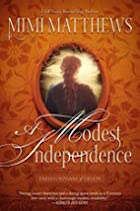
Modest IndependenceMimi Matthews, A Modest Independence

This second installment of the Parish Orphans of Devon series follows Thomas Finchley and Jenny Holloway, both of whom first appeared in The Matrimonial Advertisement. Tom is a London solicitor, and his job is his life; it was his ticket out of the orphanage and his escape from a life of poverty. His clients must always come first, even before his own needs and wants. Meanwhile, Jenny has just received a small fortune that enables her to quit her job as a ladies’ companion. She yearns to see the world and is eager to set sail for India, where she hopes to find news of an old flame who reportedly died in an uprising. Tom and Jenny are powerfully attracted to each other, but they want such different things that a romance seems out of the question. But when Tom spontaneously accompanies Jenny on her trip to India, their feelings for each other grow and intensify. Will they be able to find a way to be together despite pursuing their very different dreams?

I really enjoyed The Matrimonial Advertisement and was excited to continue with the series, but this book suffered a bit by comparison. First of all, I don’t think it stands alone very well; Tom and Jenny’s story definitely began in the first novel, and that context is important as their relationship grows in this book. Secondly, Tom’s actions occasionally rubbed me the wrong way. For example, he decides to escort Jenny to India and hires Indian servants for her without her knowledge or consent. His motives are good — he knows her journey will be more difficult and dangerous if she travels alone — but I didn’t like that he makes these decisions without consulting Jenny first. Finally, the conflict is very repetitive and became frustrating for me. Nearly all the conversations between Tom and Jenny deal with the same problem: she doesn’t want to be tied down by marriage, while he isn’t cut out for a life of adventure. And after all the hand-wringing, the solution seems almost too easy. But while I was disappointed in this book, it wasn’t a bad read by any means, and I definitely plan to continue with the series!

Review: Charmed Life and The Lives of Christopher Chant

Chronicles of Chrestomanci vol 1Diana Wynne Jones, Charmed Life and The Lives of Christopher Chant

In Charmed Life, Cat Chant is alone in the world except for his sister Gwendolen: their parents died in a steamboat accident when they were very young, and they have no family except each other. Gwendolen is a gifted witch, and her talents soon outstrip the capabilities of the local magic teacher. So when Cat and Gwendolen are invited to live with the Chrestomanci, the most powerful enchanter in the world and governor of all magic, Gwendolen is ecstatic — until it becomes clear that Chrestomanci won’t teach her any magic. As Gwendolen plots her revenge, Cat gradually realizes that he may have unsuspected talents of his own. The Lives of Christopher Chant takes place 25 years earlier and gives the backstory of how the Chrestomanci came to be. Christopher is able to travel between worlds while he’s dreaming. When other magicians discover this talent and seek to use it for their own ends, Christopher is caught in a battle between good and evil — but which side is he really on?

I dimly recall reading Charmed Life as a child, but I’d forgotten almost all the details. It was a pleasure to revisit the book, which perfectly depicts Cat’s alienation and confusion as he is thrust into a new environment. And I adored Christopher in both books — he’s such a fun enigma as the Chrestomanci, but his origin story makes him an even more interesting and fleshed-out character. In both cases, I felt that the books ended just as they were getting interesting: Cat learns something important about himself, but we don’t get to see what he does with that knowledge. Similarly, Christopher survives his first test as Chrestomanci, but I wanted to see more of his story as he grows into his power. There are a few more books set in this world, so perhaps they’ll fill in some of the blanks, but I was a bit frustrated that these books both ended where they did! Still, I enjoyed both of these books a lot and will continue with the Chronicles of Chrestomanci.

Mini-Reviews: Brittany, Thing, Diamonds

Assignment in BrittanyJust One Damned Thing after AnotherDiamonds Are a Girl's Best Friend

Helen MacInnes, Assignment in Brittany

Martin Hearne, a British intelligence agent, has just been given a new assignment. He happens to bear an uncanny resemblance to Bertrand Corlay, a Frenchman recuperating in an English hospital after the evacuation of Dunkirk. His job will be to impersonate Corlay and go “home” to the village of Saint-Déodat in Brittany, where he will research the movements of the occupying German troops. Of course, complications ensue as Hearne meets Corlay’s family, shelters an American journalist, and has several unpleasant run-ins with the Nazis. His situation becomes even more precarious when he realizes that the real Corlay hasn’t been entirely truthful with him. I really enjoyed this suspenseful and entertaining book. It’s all the more remarkable because the novel was published in 1942, when the outcome of the war was far from certain. Definitely recommended for fans of spy and/or World War II novels.

Jodi Taylor, Just One Damned Thing after Another

When Madeleine “Max” Maxwell is recruited to join the St. Mary’s Institute of Historical Research, she gets a lot more than she bargained for: the historians of St. Mary’s “investigate major historical events in contemporary time” — in other words, time travel! Max embraces the concept wholeheartedly and soon proves herself adept at her new job. But when a trip to the late Cretaceous goes horribly wrong, Max learns that another group of time travelers is wreaking havoc with history, and the St. Mary’s gang will have to stop them in order to protect both the past and the future. This book is a fun romp, although Max is one of those heroines who’s annoyingly good at everything. I found the present timeline hard to follow; the book starts with Max arriving at St. Mary’s, but it seems like several months (or years?) pass without really being acknowledged. There’s also a graphic sex scene that I could have done without. Despite these quibbles, though, I did enjoy the book and will most likely continue with the series.

Jenny Colgan, Diamonds Are a Girl’s Best Friend

This chick lit novel is about Sophie Chesterton, a shallow socialite whose life is upended when her father dies, and the terms of his will state that she must earn her own living for six months before receiving her inheritance. Sophie moves into a dirty flat in South London with four guys, attempts to pursue her interest in photography, and falls for not one but two of her roommates. Normally I really enjoy Jenny Colgan’s novels, but this one was disappointing. Sophie does grow throughout the book, but she’s so awful in the beginning that it’s hard to completely buy her redemption. I also didn’t find the romance angle satisfying; the outcome seemed to come out of the blue, so that I had no chance to become invested. I still recommend Colgan’s books in general, but this one just wasn’t for me.

Mini-Reviews: Forgotten, Kiss, Single

Forgotten GardenIt's in His KissLast Single Girl

Kate Morton, The Forgotten Garden

It took me a while to get through this book, and I think I’m still digesting it somewhat. It tells the stories of four different women. First, Nell is found on a dock in Brisbane, Australia, in 1913. She is raised by a loving family, but when her father finally tells her that she was adopted, she feels compelled to research the mystery of her past. In 2005, Nell passes away, and her granddaughter Cassandra inherits the mystery, as well as a decaying cottage on the coast of Cornwall. She eventually travels to England to see the cottage and piece together what really happened to Nell. Finally, the book jumps to 1900 and details the lives of Eliza Makepeace, a poor orphan with a gift for storytelling, and Rose Mountratchet, a privileged and beloved young woman who befriends Eliza. As the book shifts back and forth between all these different perspectives, the true story of Nell’s origins finally emerges. I thought the mystery was interesting, I liked the writing style, and the main characters were sympathetic; but for me, the pacing was just too slow. I genuinely do think it’s a good book, but I’m not sure I will pick up anything else by Kate Morton.

Bria Quinlan, It’s in His Kiss and The Last Single Girl

Last year I read Worth the Fall, book 2 in Bria Quinlan’s Brew Ha Ha series, and was unexpectedly charmed by it. So I picked up these two e-books when they were on a free deal; It’s in His Kiss is a prequel novella, and The Last Single Girl is book 1. The novella is about Jenna, a YA writer who needs her character to have a first kiss, but it’s been a long time since Jenna experienced one herself. She meets handsome, arrogant Ben while doing “research,” but her beautiful frenemy seems to be competing with her for his attention. Book 1 has all new characters: Sarah, a girl who needs a New Year’s Eve date and meets a bunch of online suitors in a coffee shop, ends up hitting it off with John, the shop’s owner, instead. These were decent quick reads, but I didn’t find the same spark that I did with Worth the Fall. On the upside, I managed to read them both in a single night!

Mini-Reviews: Mask, Winter, Unlimited

Grey MaskWinter of the WitchDetection Unlimited

Patricia Wentworth, Grey Mask

Charles Moray has just returned to England after four years abroad. When he reaches his home, he is surprised to find that it is unlocked and that a secret meeting is taking place inside. He learns that the intruders are members of a criminal organization led by an unknown man in a grey mask. He also sees Margaret Langton — the woman he once loved, who broke off their engagement right before the wedding with no explanation — enter the house and speak with Grey Mask. Charles decides not to go to the police but to investigate the matter himself. He and Margaret eventually team up to save a beautiful young heiress who is in danger from the gang and to discover the identity of Grey Mask. I thought this book would be somewhat cheesy and campy, but in fact I really enjoyed it! I will definitely read more by Patricia Wentworth; this is technically the first book in the Miss Silver series, but Miss Silver is a pretty marginal character in this installment.

Katherine Arden, The Winter of the Witch

I loved the first two books in this trilogy, The Bear and the Nightingale and The Girl in the Tower, and this book was a fitting conclusion to the series. I love the setting, which is essentially a magical version of medieval Russia that contains various elements of Russian folklore. I also really like that the series doesn’t shy away from consequences: although Vasilisa is a sympathetic heroine, sometimes her choices have unexpected or unintended effects on those close to her. It’s a morally complex universe where no one is completely good or evil, and I liked that the book has some sympathy for even the most destructive characters. My only complaint is that the novel is a bit slow-moving, but if you liked earlier books in the series, you should definitely read this last installment!

Georgette Heyer, Detection Unlimited

I love Georgette Heyer, but this isn’t one of my favorite of her mysteries. I’m a little surprised that I feel this way, though, because the mystery plot itself is one of her strongest. It’s a simple setup: a universally disliked man is shot in his garden, and everyone seems to have an alibi for the time of death. I thought the solution was clever and hung together well, although I was a bit disappointed in the choice of murderer because I liked that character! But the reason I didn’t totally love this book is that there’s a lot of padding surrounding the mystery plot; most of the book is just descriptions of the various characters and how they interact with one another. And while Heyer is great at characterization, I just wanted the story to go somewhere!

Mini-Reviews: Scandal, Death, Enchanting

Do You Want to Start a ScandalDeath on a Friday AfternoonOnly Enchanting

Tessa Dare, Do You Want to Start a Scandal

This Regency romance is the story of Charlotte Highwood, who has been nicknamed “the Desperate Debutante” because of her mother’s aggressive matchmaking efforts. Her mother’s latest target is Piers Brandon, Lord Granville; so Charlotte seeks him out at a house party to reassure him that she doesn’t wish to marry him. This strategy backfires immediately when the two are found in a compromising position — they accidentally interrupt a lovers’ tryst, but everyone else believes they are the lovers. Charlotte decides to clear her good name by unmasking the real lovers. But of course, the more time she and Piers spend together, the more they fall in love. This book was fine, although I found the comic style a little forced and overwrought. Not bad, but not particularly recommended.

Richard John Neuhaus, Death on a Friday Afternoon: Meditations on the Last Words of Jesus from the Cross

I chose this book at the beginning of Lent as an appropriate spiritual read. As the subtitle suggests, each chapter is inspired by one of the seven last words of Jesus from the cross. Each “word” provides a jumping-off point for the author, a Catholic priest, to discuss various aspects of his faith. Sadly, since I read this a while ago, I don’t remember a lot of the details! But I do remember the chapter on “I thirst” being particularly interesting because it discussed the question of universal salvation (is it possible that everyone will be saved?). I’d say the book is geared more toward intellectual than devotional purposes. Overall, the book gave me a lot of food for thought, and I definitely plan to reread it in the future.

Mary Balogh, Only Enchanting

I’ve yet to be disappointed by a Balogh book, and this Regency romance is no exception. It’s part of the Survivors’ Club series, about a group of people who have been deeply wounded (physically, emotionally, or both) in the Napoleonic Wars, but it can be read as a stand-alone novel. The hero, Flavian, has returned from the war with a head injury that left gaps in his memory. When he is thrown together with Agnes, a widow living a quiet rural life, he impulsively proposes to her, and together they are able to fill in some of the blanks in Flavian’s memory — and fall in love in the process. That makes it sound like love magically cures Flavian’s mental injuries, which isn’t the case…I feel like I’m not describing the plot terribly well! But I really liked the book and will continue reading more in this series.

Mini-Reviews: Witch, Scarlet, Homicide

Water Witch*Study in Scarlet WomenHome Sweet Homicide

Cynthia Felice and Connie Willis, Water Witch

I’m a huge Connie Willis fan, so I had high hopes for this book, especially because it also contains some of my favorite elements: con artists, a missing princess, and a sci-fi/romance combo. But overall I found it pretty underwhelming. I really liked the kernel of the story, but I wanted it to be fleshed out a lot more, especially the characterization. The romance essentially comes out of nowhere, and I never really felt like I got to know the hero at all. That said, I really liked a twist involving one of the secondary characters, who came to be a lot more important than I initially expected. Overall, I didn’t like this as much as Willis’s solo work, but I already own two more Willis/Felice collaborations, so I’ll definitely read them at some point.

Sherry Thomas, A Study in Scarlet Women

I’d heard great things about the Lady Sherlock series but was hesitant to dive in, fearing that the books wouldn’t live up to the hype. But I was pleasantly surprised — I really enjoyed this book, which recasts literature’s most famous detective as Charlotte Holmes, a Victorian woman whose brilliant mind is constrained by the social rules of her time. So she decides to leave home and forge her own path. Meanwhile, of course, she solves several murders by realizing that they are all connected. I loved this take on a Holmesian character; Charlotte has a brilliant deductive mind but also really enjoys fashion, and her style is surprisingly ornate and gaudy. I also loved that the book, while sympathetic to Charlotte, also shows her flaws and the negative consequences of some of her decisions. I will definitely continue with the series sooner rather than later!

Craig Rice, Home Sweet Homicide

I found this mystery novel delightful. It’s about three children (ages 8 to 14, I believe) whose mother is a popular mystery novelist. When their neighbor is murdered in real life, the kids are ecstatic — now Mother might get some new material for her books, and the publicity is bound to be good for business. Plus, the handsome detective working the case looks like excellent stepfather material, though Mother doesn’t seem to agree. The children team up to solve the mystery with the help of their friends and neighbors; the result is a farcical romp that I thoroughly enjoyed.

Mini-Reviews: Prim, Reading, Headliners

Awakening of Miss PrimI'd Rather Be ReadingHeadliners

Natalia Sanmartin Fenollera, The Awakening of Miss Prim (trans. Sonia Soto)

This is a strange little novel about a young woman, Prudencia Prim, who applies for a position as a private librarian in a remote French village. A modern woman herself, she is initially shocked by the villagers’ old-fashioned beliefs and behavior. But she soon observes the happiness and prosperity of those around her, and with the help of her enigmatic employer, she comes to see the merits of their way of life. I think this book is aimed at a very particular audience, namely a certain subdivision of Catholics who are huge fans of G.K. Chesterton. If you don’t know what I’m talking about, I’d say this book is probably not for you! Even as part of the target audience, I still found it a little much.

Anne Bogel, I’d Rather Be Reading: The Delights and Dilemmas of the Reading Life

I’m a big fan of Anne Bogel’s podcast, What Should I Read Next? So when I found her book at a library sale, I snatched it up! The essays are fun — nothing particularly new or memorable, but bibliophiles and fans of the author should enjoy them. A fun read, but not a keeper for me.

Lucy Parker, Headliners

Lucy Parker is an auto-buy author for me; I really love her contemporary romances set in the London entertainment world. In this one, protagonists Sabrina and Nick are rival TV presenters who are forced to work together to revive their network’s struggling morning show. If you enjoy enemies to lovers, this book is a great example! I especially liked how Sabrina and Nick resolve their conflicts like adults; there are no stupid misunderstandings or secrets kept for no reason. I note that, while this book can technically stand alone, it does refer back frequently to the events of the previous book, The Austen Playbook. Definitely recommended for romance fans, although my favorite Parker books remain her first two, Act Like It and Pretty Face.

Mini-reviews: Henrietta’s, Matrimonial, Austen

Henrietta's WarMatrimonial AdvertisementAusten Escape

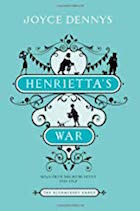
Joyce Dennys, Henrietta’s War: News from the Home Front 1939-1942

I greatly enjoyed this charming epistolary novel, which is both written and set during World War II. The titular Henrietta writes to her childhood friend Robert, who is off fighting somewhere in France, and describes daily life in her rural English village. Despite the constant presence of the war in the background, Henrietta mostly focuses on the mundane, humorous aspects of life. A pleasant and uplifting book.

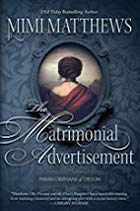
Mimi Matthews, The Matrimonial Advertisement

Last year I read Matthews’s novella, A Holiday by Gaslight, and enjoyed it so much that I wanted to seek out some of her full-length novels. This one, the first in her Parish Orphans of Devon series, is a “proper” Victorian romance (i.e., no explicit content) that centers around a marriage of convenience. Justin needs a wife to manage his remote, secluded estate, and Helena needs a safe place to hide from her past. The book definitely justified my high expectations, and I can’t wait to continue with the series!

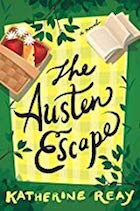
Katherine Reay, The Austen Escape

I’ve read one other book by Reay, Dear Mr. Knightley, and I wasn’t a huge fan. But when I got this novel as a gift, I decided to give the author another chance. Unfortunately, I didn’t like this book either — something about the writing style just grates on my nerves. I also found the heroine obnoxious and unsympathetic, and I have no idea what her love interest saw in her. I was frankly appalled by one major plot point: the heroine’s best friend, who has a history of mental health issues, starts to believe she’s living in Jane Austen’s time…and nobody seems to think this is something that needs immediate medical attention! So all in all, I wasn’t a fan, and I’m pretty sure I’m done with this author.