Review: One More Thing

One More Thing-Stories and Other StoriesB.J. Novak, One More Thing: Stories and Other Stories

In this collection of (very) short stories, B.J. Novak — formerly a writer, producer, and actor on the US version of “The Office” — uses his comedic imagination to ask a variety of hypothetical questions. What if the hare who lost the fabled race to the tortoise became obsessed with thoughts of a rematch? What if the handsome man you met in a bar turned out to be a brutally violent African warlord? What if you could literally hold a mirror up to Earth? And what if Chris Hansen, of “To Catch a Predator” fame, were forced to go to a Justin Bieber concert at the insistence of his tween daughter? Novak answers these questions and many more in his debut collection of funny, dark, ridiculous, and often poignant stories.

The first thing to say about these stories is that most of them are very short, some no more than a page or two. So most of the stories don’t have time to delve deeply into plot or character; rather, they focus sharply on a single joke or idea (see, for example, “The Comedy Central Roast of Nelson Mandela” or “The Market Was Down”). In that sense, it’s easy to see the influence of Novak’s TV background. However, even if you aren’t a fan of “The Office” or its style of comedy, you should still find plenty to enjoy in this book! I was very impressed by how smart Novak obviously is; clever wordplay and literary allusions abound. Several of the stories are laugh-out-loud funny, but the comedy is often followed by a swift stab to the gut. One story in particular, “The Ghost of Mark Twain,” gave me chills. Overall, I wasn’t sure what to expect when I picked up this book, but I was very pleasantly surprised!

I was fortunate to be able to attend a book signing with Novak at which he read a few of the stories out loud. Having heard the stories in his own voice, I would strongly recommend the audiobook to those of you who enjoy that format. Apparently Novak reads many of the stories himself, although there are some “special guest appearances” by other actors such as Mindy Kaling and Lena Dunham.
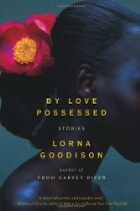
Review: By Love Possessed

By Love PossessedLorna Goodison, By Love Possessed: Stories

As the title suggests, this collection of short stories is loosely focused on the theme of love, but not just romantic love: there are stories of friendships, parent-child relationships, and love requited and unrequited (mostly the latter). The stories are also pictures of life in Jamaica, chronicling the country’s postcolonial poverty, class warfare, desperation, and ambition. But while the setting is clearly and specifically delineated, the stories in this book also explore universal themes. In “The Helpweight,”a successful woman meets her ex-husband again after he has been in England for many years, but she is shocked when he asks for a favor. In “Shilling,” a teenage girl daydreams about her crush, but when he finally notices her, the reality is far different from her fantasies. And in “The Big Shot,” a man who has worked all his life to escape the grinding poverty of his childhood is suddenly confronted with his past.

I think this is the first book I have ever read by a Caribbean author, so it was an entirely new experience for me. I loved the fact that these stories paint such a vivid picture of life in Jamaica, from the weather to the food to the patterns of speech. Several of the stories are written in dialect, and the characters’ speech patterns vary depending on their level of education. While some of the phrases and spellings were unfamiliar to me, I really felt immersed in the world of these stories. Goodison is also a beautiful writer; she has a talent for conveying a lot of information without ever explicitly saying it. I found the endings of the stories especially impressive because they provide just enough closure without tying everything up too neatly. As with most short story collections, some were better than others, but I can’t think of any that I really disliked. (My favorites are the ones I mentioned in the first paragraph.) I would definitely recommend this book to anyone interested in Jamaican or Caribbean literature!

Review: The World of Jeeves

World of Jeeves, TheP.G. Wodehouse, The World of Jeeves

This book is an omnibus of short stories describing the adventures of Bertie Wooster, an amiable but dim aristocrat in early 20th-century England, and Jeeves, the consummate gentleman’s gentleman. Bertie is a friendly soul who just wants to be left alone to enjoy himself. Unfortunately, he has plenty of friends and relatives who are continually making demands on him, both financially and emotionally. His terrifying Aunt Agatha holds him in contempt, yet she is constantly trying to “improve” him and set him up with equally terrifying young females. His friend Bingo Little is always falling desperately in love with some girl or other, and for some reason he always approaches Bertie for help. Though Bertie is not overburdened with brains, he has a generous heart and usually wants to help. Good thing he has Jeeves, whose gravity and intelligence always manage to get Bertie and his friends out of whatever scrapes they’re in.

What can I say about Jeeves and Wooster that the entire world hasn’t said already? Wodehouse has a very specific style and brand of humor, and literally nobody does it better than he does. Bertie’s narrative voice is an utter joy to read, showcasing his own lack of intelligence but also satirizing the pretentious language of some popular fiction at the time. Strangely enough, his friends and family all think of him as the village idiot, but he’s probably smarter than most of his friends — definitely wiser than poor Bingo, for example! And the interplay between Bertie and Jeeves is wonderful; Jeeves always appears completely respectful and subservient, yet he dominates Bertie mercilessly (for his own good, of course!). I definitely recommend the story “Bertie Changes His Mind,” which is narrated by Jeeves and demonstrates how skillfully he is able to manipulate his employer. My one caveat is that you should pace yourself while reading this book, because the stories are all very similar and could become tedious after a while. But I loved it and would recommend it to anyone who enjoys British humor and wants a good belly laugh!

Review: Suddenly, a Knock on the Door

Suddenly, a Knock on the DoorEtgar Keret, Suddenly, a Knock on the Door (trans. Miriam Shlesinger, Sondra Silverston, and Nathan Englander)

This collection of short stories is a strange mixture of realism and fantasy, comedy and tragedy. Keret is an Israeli author, and several of his stories reflect the current struggles of that country; one of them begins with a conversation in a restaurant and ends with a suicide bombing. But there is no grand political pronouncement in these stories, and ultimately they’re not about politics. Rather, they depict universal human experiences like sex, friendship, death, love, loneliness, chance, and fate. My favorite story in the collection (“What, of This Goldfish, Would You Wish?”) starts with politics but ends somewhere else entirely, as a documentarian interviews both Jewish and Arab residents of Israel and meets a man with a magic goldfish. Most of these stories are dark, and many are surreal, but all of them offer a fascinating perspective on the human condition.

I don’t often read short stories, and I’d certainly never read anything by Keret before, so I was pleasantly surprised by how much I liked this collection. Keret’s style is very understated and direct, which works well in his fantastical stories especially; it’s as though he’s telling a joke with a completely deadpan expression. I also think the stories as a whole are very well-crafted, with endings that are resonant and satisfying but don’t necessarily tie everything up too neatly. I definitely teared up on more than one occasion! As usual, a few of the stories didn’t quite work for me — the titular story in particular was a bit too clever for its own good — but overall I was very impressed with this collection and plan to read more by Etgar Keret.

Review: The Wedding of Zein and Other Sudanese Stories

The Wedding of ZeinTayeb Salih, The Wedding of Zein and Other Sudanese Stories (trans. Denys Johnson-Davies)

This very short book contains two short stories, “The Doum Tree of Wad Hamid” and “A Handful of Dates,” as well as the novella “The Wedding of Zein.” All three works portray everyday life in a Sudanese village, but from varying perspectives. “The Doum Tree…” is about a sacred tree that is threatened when outsiders want to cut it down to make room for a new agricultural system. “A Handful of Dates” portrays a young boy’s disillusionment as he realizes that his grandfather isn’t as heroic as the boy once thought. And in “The Wedding of Zein,” the village laughingstock is about to be married to a beautiful and much-desired woman; the varied reactions of the townspeople to the news reveal subtle tensions within the village.

Before giving my thoughts on this book, I must admit that I know next to nothing about Sudan. I wasn’t even aware that its population spoke Arabic until I saw “translated from the Arabic” somewhere on my copy of the book! So I was very interested in reading these stories and broadening my horizons a little bit. Interestingly, my first impression after reading this book was that it could have been set in any number of places: the  country’s major conflicts of the last several years, including the secession of South Sudan, are not mentioned at all. Yet I did get a sense of the country’s Islamic culture and traditions, as well as its incorporation of progressive ideas in the realms of medicine and education. I found my glimpse into this foreign (to me) culture extremely fascinating. But I really liked the book’s focus on universal themes like love, family relationships, and the intricacies of village life. All in all, I found this book very easy to read and would definitely consider reading more by Tayeb Salih.

Review: The Ladies of Grace Adieu

Susanna Clarke, The Ladies of Grace Adieu and Other Stories

When I read Jonathan Strange and Mr. Norrell last year, it pretty much knocked my socks off, so I was excited to find  Clarke’s collection of short stories (all of which were, I think, previously published elsewhere).  Here are my thoughts on the individual stories:

“The Ladies of Grace Adieu” — Jonathan Strange visits his brother-in-law in Gloucestershire and is surprised to discover three young ladies with magical talents; however, they don’t always use these talents for benevolent purposes. A suitably creepy and atmospheric story, but I didn’t quite follow the plot.

“On Lickerish Hill” — In the 15th or 16th century, a young peasant girl marries the local squire and is forced to spin a large quantity of wool in an impossibly short period of time. My least favorite story in the bunch; the period language got on my nerves, and in general the story didn’t feel like it had very much substance to it.

“Mrs. Mabb” — In Regency England, a girl’s lover jilts her for the mysterious Mrs. Mabb, and the girl decides to fight back. I liked this story, especially the descriptions of the girl’s experiences in fairyland, which are darker and more painful than the word “fairyland” suggests.

“The Duke of Wellington Misplaces His Horse” — The title of this one is pretty self-explanatory. 🙂 This is one of the shortest, most amusing stories in the bunch, and the setting (the village of Wall) is borrowed from Neil Gaiman’s Stardust. Definitely one of my favorites in the bunch.

“Mr. Simonelli or The Fairy Widower” — Simonelli keeps a journal about his new job as the vicar of a country village and his encounters with a fairy lord who is looking for a new human bride. I liked this story because it was longer and more fleshed out than most of the others; it also conveys a subtly disturbing atmosphere.

“Tom Brightwind or How the Fairy Bridge Was Built at Thoresby” — A Jew and a fairy visit the decaying town of Thoresby and make a plan to help its inhabitants. I wasn’t terribly interested in this story as such, but it does shed some light on Clarke’s fairies and their family relationships.

“Antickes and Frets” — Mary, Queen of Scots, plots to destroy Elizabeth by using magic. I enjoyed the incorporation of actual historical figures into this story.

“John Uskglass and the Cumbrian Charcoal Burner” — John Uskglass, the Raven King, inadvertently injures a lowly charcoal burner, who turns to various Christian saints for retribution. This was my favorite story in the bunch; the saints were hilarious, and I just really liked the whole idea of this story.

Sorry that took so long! I never know how to review short story collections. Should I talk about each story individually or just give my impressions on the collection as a whole? As you can see, I’ve chosen the former approach because I think it’s more helpful to people who are deciding whether the collection is worth their time or not. Anyway, I wouldn’t recommend this book to someone who hasn’t read Jonathan Strange, but for those who have read it, these stories shed an interesting light on Clarke’s world and her vision of the realm of fairy.