Mini-Reviews: Chocolate, Red, Mistress

Charlotte Armstrong, The Chocolate Cobweb

When Amanda Garth, an aspiring artist, learns that she was almost switched at birth with a painter’s son, she impulsively seeks out her “almost” family and befriends them. But when she’s invited to stay at their home, she soon discovers a sinister plot that threatens the life of one of its members. Amanda warns the intended victim, but he doesn’t believe her, so she devises an outrageous — and dangerous — plan to trap the evildoer in the act. I was surprised that the evildoer’s identity and basic plan are revealed quite early in the novel, but the book still manages to be suspenseful and exciting as Amanda and the villain play their cat-and-mouse game. The climactic scene, in which Amanda sets her plan in motion, is particularly thrilling. This the second book I’ve read by Charlotte Armstrong, the first being The Unsuspected, and so far she’s two for two! I’m definitely interested in reading more of her work.

Antoine Laurain, The Red Notebook (trans. Emily Boyce and Jane Aitken)

This short novel, set in contemporary Paris, begins when bookstore owner Laurent Letellier finds a woman’s handbag. It’s obviously been stolen — the wallet, ID, and phone are gone — so Laurent goes through the rest of the bag’s contents, hoping he’ll be able to discover the identity of its owner. Among the items is a red notebook filled with the owner’s thoughts, lists, dreams, and so on; as Laurent reads these miscellaneous entries, he becomes more and more fascinated by the woman who wrote them. But will he ever find her, and what will happen when he does? This is a charming book full of literary allusions, Parisian atmosphere, and understated romance. The fact that the main characters are in their 40s lends a nostalgic air to the story; even though the setting is modern-day, it feels timeless and a bit idealized. I enjoyed it and will likely read more by this author.

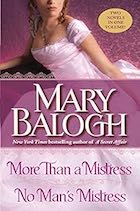
Mary Balogh, More Than a Mistress / No Man’s Mistress

In More Than a Mistress, Jocelyn Dudley, the duke of Tresham, is injured in a duel and hires the sharp-tongued Jane Ingleby as his nurse. Their constant bickering masks a mutual attraction, and when Tresham no longer needs a nurse, he offers Jane employment as his mistress. In No Man’s Mistress, Tresham’s brother, Ferdinand, wins a country estate in a card game. When he goes to inspect his new property, he’s shocked to find Viola Thornhill already living there; moreover, she claims the house is hers and refuses to move out. In both books, the women are hiding their true identities, and when the secrets come out, they unleash a lot of angst and conflict. I didn’t love either of these novels, mostly because I felt they went on too long after the secrets were revealed. I also found all four protagonists frustrating at times, as none of them were good at communicating their true feelings and opinions. My favorite character in both books was Tresham and Ferdinand’s sister, who fortunately has her own book! But these two novels are not among Balogh’s stronger offerings.
Mini-Reviews: Wicked, Left-Handed, Madam

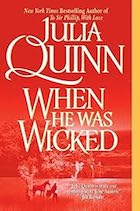
Julia Quinn, When He Was Wicked

Michael Stirling is known throughout society as “the Merry Rake,” but despite his myriad sexual conquests, he’s been in love with Francesca Bridgerton since the moment he saw her. Unfortunately, she was betrothed to his cousin John at the time and is now John’s wife. When John dies unexpectedly, Michael can no longer hide his true feelings, but can he pursue a relationship with Francesca without dishonoring his cousin’s memory? I wanted to like this book more than I did. I enjoy a hero who pines for the heroine, but in this case I didn’t understand why Michael was so obsessed with Francesca. He’s already in love with her when the story begins, so we don’t see what makes her so special to him. Further, he “courts” her exclusively by seducing her, so their romantic relationship is based entirely on sex, which I didn’t find particularly appealing. I’ve really liked some books in the Bridgerton series, but this one just wasn’t for me.

Garth Nix, The Left-Handed Booksellers of London

Eighteen-year-old Susan Arkshaw has come to London to find the father she’s never met. She tracks down Frank Thringley, an old friend of her mother’s, to see if he knows anything about her father — but she arrives just in time to see him crumble into dust at the prick of a hatpin. The hatpin’s wielder is Merlin, who describes himself as a “left-handed bookseller” and tells Susan she is in grave danger. He explains that the Old World of myths, legends, and ancient powers is real, and it’s starting to intrude dangerously into the ordinary world — unless Susan and the booksellers can stop it. This is a really creative YA adventure novel that seems intended to introduce readers to (or reinforce their love of) British fantasy fiction and mythology. I really liked all the literary allusions and the occasional humorous banter, but the book is a bit too episodic and plot-driven for me — too many action sequences, not enough character development. Overall, I liked but didn’t love it, and I probably won’t read the sequel.

Mary Stewart, Madam, Will You Talk?

Charity Selborne is a young Englishwoman on holiday in the South of France. At her hotel in Avignon, she befriends a 13-year-old boy named David and gradually realizes that something is very wrong in his life. She then learns that David’s father, an accused murderer, is at large and has followed David to France. Charity’s decision to help David plunges her into days of suspense and fear, during which she encounters a mystery with its roots in World War II and finds love in an unexpected place. I really enjoy Mary Stewart’s novels of romantic suspense, though they all follow the same basic pattern: beautiful girl in exotic location finds danger and romance. But this is one of her strongest books, in my opinion — the plot is nice and twisty, and there’s a very memorable car chase. Recommended if you like this type of book!

Review: My Sister, the Serial Killer

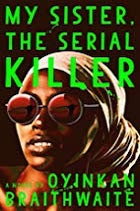
My Sister, the Serial KillerOyinkan Braithwaite, My Sister, the Serial Killer

Have you heard this one before? Two girls walk into a room. The room is in a flat. The flat is on the third floor. In the room is the dead body of an adult male. How do they get the body to the ground floor without being seen?” This quote from early in the novel basically sums up its premise: Korede’s little sister, Ayoola, has been killing her boyfriends, and Korede protects her by scrubbing the crime scenes and disposing of the evidence. Ayoola claims she’s justified in her killings — that the men attacked her, and she was just defending herself. But Korede is beginning to have doubts; and when Ayoola starts flirting with the object of Korede’s desire, Korede must decide whether to reveal Ayoola’s secrets or remain loyal to her sister at all costs.

This book certainly has an eye-catching title and hook, but it’s not really a serial killer book at all. We get very little insight into Ayoola’s motives or feelings about what is happening. Rather, this is a book about sisters, and it’s a fascinating study of Korede’s complex relationship with Ayoola. I completely understood Korede’s feelings: her frustration at not understanding her sister; her jealousy that Ayoola is beautiful and desired by men, even the man Korede herself loves; her protectiveness and loyalty despite the monstrosity of Ayoola’s actions. I also enjoyed the writing style; Korede’s deadpan narration gives a lightness to the grim subject matter. I don’t think plot is this novel’s strong point. Despite the high body count, nothing really happens. But overall, this was a fun and thought-provoking read for me, and I would definitely try another book by this author.

Mini-reviews: Poison, Best, Z, Crooked

Poison Dark and Drowning, ABest Man, The

Jessica Cluess, A Poison Dark and Drowning — ***Warning: slight spoilers for A Shadow Bright and Burning.***

Henrietta Howel is now a full-fledged sorcerer defending England against the Ancients, horrible monsters from another world. When she and her fellow sorcerers discover the existence of special weapons that might help defeat the Ancients, they immediately begin the search. But along the way, Henrietta learns some disturbing truths about the Ancients, her friends, and her own past. I have to say, I enjoyed the first book very much, but now I’m really nervous about where the series is going! Certain character developments were unwelcome, to say the least. But then again, the second installment of a trilogy often ends dark — think The Empire Strikes Back — and everything still turns out fine. I’m curious to see what will happen in the third (and presumably final) book now!

Grace Livingston Hill, The Best Man — An old-fashioned novel of romantic suspense featuring secret agent Cyril Gordon, who infiltrates a criminal gang and steals a secret message that has grave implications for national security. To evade the criminals’ pursuit, he runs into a church where a wedding is about to take place. The guests mistake him (he thinks) for the best man, so he stands in front of the altar…only to realize at the end of the ceremony that he is actually the groom! Now Cyril must not only deliver the message to the US government, but he must also deal with the stranger who is now his wife. Overall, this book was a fine read, but it is quite dated, and there’s really nothing remarkable about it other than the extremely farfetched premise.

Z Murders, TheAll the Crooked Saints

J. Jefferson Farjeon, The Z Murders — Everyman Richard Temperley takes an overnight train into London and must share a compartment with a surly elderly man. He goes from the train station to a hotel, where he sees his traveling companion sitting in an armchair in one of the public rooms — only to discover that the man has been murdered. Richard is, of course, a prime suspect, as is the woman seen leaving the hotel shortly before the victim was found dead. Of course, Richard falls in love with the woman and decides to clear her name (and his own) by finding the real murderer. The idea that the police would allow Richard such free rein to investigate is absurd, and the revelation of the true murderer is nothing short of bonkerballs insane, but I honestly enjoyed this book a lot! I’ll definitely seek out more by this Golden Age author.

Maggie Stiefvater, All the Crooked Saints — The tiny town of Bicho Raro, hidden away in the Colorado desert, is a place people visit for only one reason: to find a miracle. Daniel Soria is the current Saint of Bicho Raro, the one responsible for performing miracles; but the results are almost never what the seekers of such miracles expect. His cousin Beatriz could have been the Saint, but she prefers to focus on tangible, scientific pursuits. And the third Soria cousin, Joaquin, operates a pirate radio station under the name Diablo Diablo, hoping someday to become a famous DJ. All three cousins are changed irrevocably when two new visitors arrive in Bicho Raro, and these changes will alter the status quo for the Soria family forever. Much as I love Maggie Stiefvater, this novel didn’t quite click for me. The first half especially is very slow going, as Stiefvater sets up the world and explains the status quo; the second half is paced better, and I found myself getting more invested in the book. But I think the world-building gets too much emphasis, at the expense of character and plot. Then again, I’m not a huge fan of magical realism in general, so maybe this just wasn’t the right book for me.


Mini-Reviews: Aunt, Farleigh, Likeness, Poldark

As you can tell, I’m not super motivated to blog at the moment, and I’m contemplating some possible changes to my process. Going forward, I’d like to absolve myself from trying to review every book I read, and maybe just focus on the best or most interesting books of each month. I’d also like to vary my content a little bit more, maybe by doing more discussion posts and memes à la Top Ten Tuesday. So I’m ruminating on that…but in the meantime, here are some more mini-reviews!

Death of My AuntIn Farleigh Field

C.H.B. Kitchin, Death of My Aunt — I love a good Golden Age mystery, but this one isn’t one of my favorites. I don’t remember it being particularly bad, but nothing stands out as particularly memorable either. It’s your standard “unpleasant family matriarch dies, the younger husband is the main suspect, but did he really do it?” plot. I did like the fact that the younger husband wasn’t an obvious slimeball, as they generally tend to be in these types of stories. But in the end, I think only diehard Golden Age fans will enjoy this one.

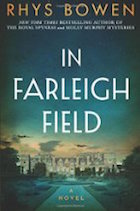
Rhys Bowen, In Farleigh Field — This book has a lot of my favorite things: historical fiction, World War II, spies, and a friends-to-lovers subplot. But while it was an enjoyable read, I didn’t fall in love with it. I think I wanted more from the espionage story, and the characters all seemed a little flat to me. Also, while the book can definitely be read as a standalone, I got the impression that it was setting up a sequel, and I’m not sure I care enough to continue with a (hypothetical) series.

Likeness, TheJeremy Poldark

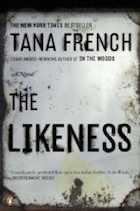
Tana French, The Likeness — The modern crime thriller isn’t my preferred genre, but I made an exception for French’s In the Woods and completely devoured it. This is the second book in the Dublin Murder Squad series, and it focuses on Cassie, Ryan’s partner from the first book. The premise is somewhat outlandish, as Cassie must go undercover to investigate the murder of a young woman who looks just like her. But despite that, I found myself completely compelled by Cassie’s journey as she integrates herself into the dead woman’s life. I definitely plan to continue with this series — I’ve already bought book three!

Winston Graham, Jeremy Poldark — ***Warning: Spoilers for previous books in the Poldark series.***

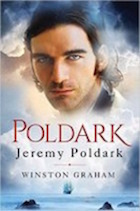
Book three in the Poldark saga really amps up the drama, as it begins with Ross on trial for his life because of his role in the shipwreck and ensuing events at the end of Demelza. Of course, Ross is hellbent on making things as difficult as possible for himself, and George Warleggan is working behind the scenes to get Ross convicted. This is the book that really sold me on the series, although newcomers should start at the beginning with Ross Poldark.

Mini-Reviews #11: December, part 1

I can’t believe it’s already New Year’s Eve…time to finish up those 2016 (mini) reviews before 2017 arrives!

skink-no-surrendersomebody-to-love

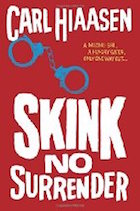
Carl Hiaasen, Skink: No Surrender — Teenager Richard teams up with the idiosyncratic Skink (former governor, current homeless eco-warrior) to find Richard’s missing cousin Malley. There’s no particular mystery about what happened to her, but the fun is in the journey, as rule-follower Richard finds his worldview enlarged by Skink’s more reckless lifestyle. Overall, while this isn’t really my kind of book, I did enjoy it and may read more by the author. I believe Skink is a recurring character in Hiaasen’s novels, and I’d like to know more of his backstory.

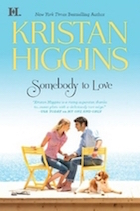
Kristan Higgins, Somebody to Love — Another light, charming contemporary romance from Kristan Higgins. Although most of her books are not serialized, this one borrows the location (and a few characters) from Catch of the Day, and it also features the couple from The Next Best Thing. Having read those two books, I enjoyed seeing how the various fictional worlds overlapped. That said, I don’t think you’d miss anything important if you haven’t read the other two books. I always enjoy Higgins’ books, but this one isn’t destined to be one of my favorites.

old-dogsenvious-casca

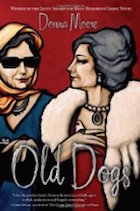
Donna Moore, Old Dogs — If you enjoy heist movies, you should definitely check out this book, which involves two priceless historical artifacts: solid gold dog statues. Main characters Letty and Dora are aging ex-hookers who hope to enjoy a lavish retirement by stealing the dogs from a museum exhibit. The trouble is, they’re not the only ones after the dogs…. While I didn’t find this one laugh-out-loud funny, it does include plenty of entertaining mishaps, mistaken identities, and mad schemes of vengeance. Definitely worth reading if the word “caper” appeals to you!

Georgette Heyer, Envious Casca — So far, I’ve found Heyer’s mysteries to be a bit hit-or-miss, but I think this is her best one yet! It’s an English country house murder set at Christmas. Of course, there’s a big family party, and of course, everyone has a reason to wish the estate’s owner dead. The novel is very well plotted, and the solution to the mystery is (in my opinion) utterly convincing. Even if you’ve tried another Heyer mystery and didn’t particularly like it, I’d urge you to give this one a try!

Review: The Gabriel Hounds

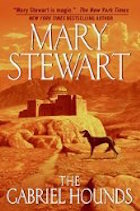
Gabriel Hounds, TheMary Stewart, The Gabriel Hounds

It’s all a grand adventure when Christy Mansel unexpectedly runs into her cousin Charles in Damascus. And being young, rich, impetuous, and used to doing whatever they please, they decide to barge in uninvited on their eccentric Great-Aunt Harriet—despite a long-standing family rule strictly forbidding unannounced visits. A strange new world awaits Charles and Christy beyond the gates of Dar Ibrahim—”Lady Harriet’s” ancient, crumbling palace in High Lebanon—where a physician is always in residence and a handful of Arab servants attends to the odd old woman’s every need.

But there is a very good—very sinister—reason why guests are not welcome at Dar Ibrahim. And the young cousins are about to discover that, as difficult as it is to break into the dark, imposing edifice, it may prove even harder still to escape… (Summary from Amazon.com.)

I always enjoy Mary Stewart’s novels of romantic suspense, and The Gabriel Hounds is no exception. I liked Christy’s lively and slightly self-absorbed nature; she seemed real and relatable, if not always admirable. But the Amazon summary makes her sound a lot more irritating and privileged than she is! And the novel is great at creating a subtly sinister atmosphere once Christy enters Dar Ibrahim. The place seems to be nothing more than an old, run-down estate, and its inhabitants all treat Christy kindly, at least at first. Yet the book manages to convey an escalating sense of menace until Christy, with Charles’ help, must flee for her life. The novel’s central mystery, which involves drug trafficking, is both amusingly dated and surprisingly relevant today. I enjoyed the romance and the exotic setting as well, both hallmarks of Mary Stewart’s writing style. This book doesn’t rank among my favorites by Stewart, but it’s still a very solid read if you like the author or old-fashioned novels of romantic suspense.

Review: The Thirty-Nine Steps

39 Steps, TheJohn Buchan, The Thirty-Nine Steps

Richard Hannay is fed up. He has just returned to London after several years in South Africa, where he’s led an adventurous life and made a modest fortune. His current life of leisure in England seems incredibly dull by comparison — that is, until his neighbor knocks on his door one day with an amazing story about international conspiracies, assassination plots, and his own very important mission. Hannay isn’t sure what to make of the story at first but agrees to keep his neighbor’s secret. When the man is murdered shortly thereafter, Hannay concludes that his farfetched story must actually be true, and he decides to take over the dead man’s mission to deliver some secret documents to a highly important member of the British government. He immediately finds himself on the run, as the people who murdered his neighbor are now on his trail. Hannay encounters a variety of people on his journey, both friend and foe, and he relies on his instincts to tell him whom he can trust with his story. In some cases these instincts are right, while in others, they are very, very wrong. But somehow, he always manages to stay one step ahead of his pursuers as he searches for the mysterious location with the 39 steps, where the evildoers can all be captured in one fell swoop.

This is one of those books that’s fun to read as a historical artifact, but I feel like it would never be published today. Spy thrillers are so popular in book, TV, and movie formats that audiences have become very sophisticated. The plot of this book may have been cutting-edge when it was published in 1915, but for a modern reader, it’s pretty predictable and really strains credulity at times. Hannay’s actual mission isn’t important; the dramatic tension in the book comes from the fact that he’s being followed, as well as the fact that some pursuers are actually lying in wait for him. There is one pretty suspenseful scene near the end where Hannay is in a room with the suspected evildoers, and he’s suddenly struck with self-doubt: are these people actually the bad guys, or has he been imagining the whole thing? But I did mentally roll my eyes at Hannay several times, as he basically blurts out the entire story to everyone he meets without once stopping to wonder, “Should I actually trust this person?” Still, despite its flaws, I did find the book entertaining and would consider reading more of Hannay’s adventures. I also need to check out the Hitchcock movie now!

Review: Darkness at Pemberley

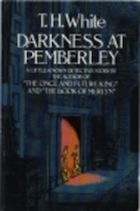
Darkness at PemberleyT.H. White, Darkness at Pemberley

This mystery novel begins at Cambridge, where a history don and an undergraduate are nearly simultaneously found shot in their rooms. The local police are called, and Inspector Buller is assigned to investigate. At first it appears that the don murdered the student and then killed himself, but Buller notices a few oddities in the don’s rooms that contradict this murder-suicide theory. He subsequently uncovers a drug scandal in the college and eventually discovers the real murderer’s identity. Unfortunately, the murderer has a cast-iron alibi, so Buller is forced to let the man go free. Buller then goes to visit his friend Charles Darcy at Pemberley and tells him about the murders. Charles, enraged by this injustice, goes to Cambridge to threaten the murderer. When Buller discovers this, he is terrified, knowing that the murderer will now come after Charles in retaliation. Almost immediately, strange things begin to happen at Pemberley, and Buller is convinced that the murderer is hiding somewhere in the house or grounds. Can he catch the murderer before his friend becomes the next victim?

Obviously, I was drawn to this book because of the title; any Austen fan will immediately recognize Pemberley as the name of Mr. Darcy’s grand estate in Pride and Prejudice. Sadly, from my point of view, there’s very little connection to Austen’s novel in this book, except that the current inhabitants of the house are still called Darcy. But this is still a very interesting and suspenseful book, despite the fact that it’s a bit schizophrenic. The first part of the book seems like a traditional locked-room mystery, and the solution is both complicated and ingenious. But as I mentioned, the murderer’s identity is discovered fairly early in the book. The novel then shifts to more of a suspense/thriller, as the inhabitants of Pemberley wait for the murderer to make his move so that they can catch him. The novel genuinely creeped me out in places; the idea of being trapped in a maze of a house, with someone pursuing you whom you can’t see, is absolutely claustrophobic and terrifying to me! So if you enjoy that kind of thing, I definitely recommend this book!

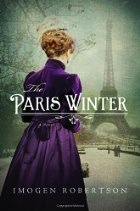
Review: The Paris Winter

Paris Winter, TheImogen Robertson, The Paris Winter

In November 1909, young Englishwoman Maud Heighton is in Paris pursuing her dream of becoming a painter. She studies at Lafond’s Academie, one of the few respectable art studios that is open to women. However, despite having some talent as an artist, Maud is living in extreme poverty and will soon have to choose between starving or returning to her family in England, which would be an admission of failure. Fortunately, Maud befriends Tatiana Koltsova, a fellow student at the Academie who is friendly, charming, and rich. Tanya takes Maud under her wing and eventually helps her to get a job as an English tutor for the Morel family. Both Sylvie Morel and her older brother Christian seem eager for Maud to accept their job offer, which includes room and board. But while Maud accepts the job gratefully, she can’t help feeling that it’s a little too good to be true. And the more she learns about the Morels, the more sinister they appear, until eventually she must seek out Tanya’s help to extricate herself from an unbearable situation.

I love historical fiction and was intrigued by the premise of this book, but I ended up with mixed feelings about it. First, I did love the setting, especially because it depicts a less glamorous version of Paris than many other books and movies do. Although Maud comes from the English gentry, she is forced to live a much more bohemian life in Paris, befriending people from each extreme of the class spectrum. And because she is not rich, she doesn’t have much opportunity to participate in the exciting, glamorous activities one usually associates with Paris during the Belle Époque. However, I wasn’t particularly invested in Maud as a character or in the plot involving her relationship with the Morels. It moved very slowly and eventually became a psychological thriller, which isn’t quite what I expected when I picked up the book. I thought both Tanya and Yvette, the artists’ model at the Academie, were more interesting characters, and I wish the book had focused more on their stories. That said, I did like the book’s denouement, which takes place during the great Paris flood of 1910. I would recommend this book to fans of historical fiction, but it’s not my favorite offering in the genre.