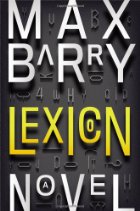
 Max Barry, Lexicon
Emily Ruff is a teenager living on the streets of San Francisco, subsisting on the change she earns by fleecing people at cards. So when she is approached by a mysterious organization that wants to send her to a special boarding school, all expenses paid, she jumps at the chance without asking too many questions. When Emily arrives at the school, she learns that its purpose is to train poets, an elite group of individuals who can use words to “persuade” people to do anything. Emily learns that people can be divided into segments based on their personality type, and each segment responds to a unique set of words. The poets want Emily because they have ascertained that she is more than usually persuasive. Meanwhile, Wil Parte is on the run, accompanied by a renegade poet called Eliot — but he doesn’t know who he’s running from or why they’re looking for him. Both Emily and Wil must eventually face violence and impossible choices as the connection between their stories becomes evident.
I picked up this book because I loved the premise, which is essentially that words have power (something book lovers already know!). Max Barry has imagined a world in which the masses can be controlled by an elite few with words alone — a world that is frighteningly close to our own. For me, the book’s biggest strength is how plausible it is; with our private lives increasingly made public through the Internet, it’s very easy to imagine governments and other powerful groups using that private information for their own ends. The book also reads extremely quickly and is chock-full of action. However, the book was a little too graphic for me, in terms of both sex and violence. And more importantly, I feel like Barry missed a great opportunity to explore some interesting philosophical questions in the novel. Clearly the poets are to some extent sinister, and the villain of the book is quite obviously the villain; but even the so-called heroes do a lot of morally questionable things, and their behavior is never really called to account. The book has a happy(ish) ending, and I just don’t think it’s justified. Still, this is a fun read if you’re interested in the premise, but I’d recommend getting it from the library rather than buying.

 You Book Me All Night Long