Mini-Reviews: Time, Comet, Overture

Kaliane Bradley, The Ministry of Time

In the near future, a secret branch of the UK government called the Ministry of Time has discovered time travel, but they’re still figuring out its rules and limits. As an experiment, they’ve extracted five “expats,” people from earlier periods of history who would have died in their own eras, and brought them into the present. The book’s narrator works for the ministry; her job is to live with one of the expats—Commander Graham Gore, a naval officer lost in an Arctic expedition in the 1840s—and help him acclimate to the 21st century. As the narrator gets closer to Gore and learns more about the ministry’s project, she discovers some sinister secrets and must decide where her loyalties truly lie. I’m still processing this book, to be honest, but I think I might love it. Bradley writes beautifully, and her characters are complex and interesting (especially Gore, whom I adored!). The only thing I didn’t like was the denouement, which felt a bit rushed and obvious. But the novel manages to be thought-provoking about power, narratives, and identity, while still being an excellent story. I’ll definitely be reading this again at some point!

Sheila Simonson, Lady Elizabeth’s Comet

The titular Lady Elizabeth is a would-be astronomer tracking a comet across the night sky. At age 28, she’s also been the de facto head of her family since her father’s death more than a year ago. So when the heir to her father’s earldom, distant cousin Thomas Conway, finally takes possession of the family home, Elizabeth is wary and defensive toward the newcomer. But when she helps nurse him after a battlefield injury catches up with him, she finds her feelings changing. Complicating matters is her quasi-engagement to Tom’s friend Lord Bevis and her need to care for her twin 15-year-old sisters. While I don’t mind the occasional “wallpaper historical,” it is refreshing to read a Regency romance that actually feels authentic to the period! While Elizabeth has a unique-for-her-time interest, she’s not a 21st-century heroine in costume. I also enjoyed her witty first-person narration, which is unusual for this genre. The romance is quite lovely with some funny moments (and steamless, which is a bonus for me). I’d definitely recommend this one to fans of historical romance and will be seeking out more by the author!

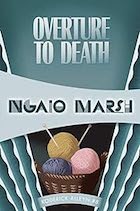
Ngaio Marsh, Overture to Death

This Golden Age mystery, book #8 in the Roderick Alleyn series, has a classic setup: Seven people in a small English village decide to put on a play. One of the actors, a universally disliked spinster, is murdered in a shocking fashion on opening night – shot via a booby trap hidden in a piano. Complicating matters is that Miss Eleanor Prentice, the victim’s equally unpopular friend/rival, may have been the intended target. Suspects include the local squire, a pair of young lovers, the vicar, the village doctor, and a femme fatale. Fortunately, Inspector Alleyn is on hand to uncover adultery, blackmail, and murder. I generally enjoy Marsh’s mysteries, although I think her books get less interesting after the murder occurs. This one is true to form: The setup and character introductions are great, but once Alleyn arrives on the scene, the “plot” is basically just a bunch of suspect interviews. That said, I still enjoyed the book, and I’m pleased that I managed to solve the mystery before the culprit was revealed.

Mini-Reviews: Tiger, London, Coffee

Philip Pullman, The Tiger in the Well

Two years after the events of The Shadow in the North, Sally Lockhart is doing well; her business is thriving, and she’s built a happy life with her daughter, Harriet, and their household. So she’s shocked when she receives divorce papers from Arthur Parrish — a man she’s never met — and he demands custody of “his” daughter. As Sally tries to fight back, she is overwhelmed by the evidence against her, including a forged marriage certificate. Her troubles turn out to have roots in the distant past, and they’re also connected to a larger plot against the Jews in London. Like the other books in this series, this one is a page-turner, but I found Sally’s plight almost too stressful to read about! The depictions of the seamier side of London life are vivid and fascinating. I missed some of my old favorite characters, particularly Jim Taylor, but I liked the new cast as well. That said, I don’t think this series will be a keeper for me, but I’m certainly looking forward to reading the final book next month!

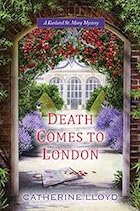
Catherine Lloyd, Death Comes to London

This second book in the Kurland St. Mary series finds Lucy Harrington traveling to London with her sister for the Season in hopes of finding a potential husband. Meanwhile, Major Robert Kurland is also in London at the Prince Regent’s command; he’s to be made a baronet for his heroism at Waterloo. There he reconnects with an old army acquaintance, Lieutenant Broughton. When Broughton’s grandmother suddenly dies in the middle of a ball at Almack’s, both Lucy and Robert suspect foul play, so they once again team up to solve the mystery. Like the first book, this is a pleasant historical mystery with likable main characters and a world I enjoy spending time in. The mystery itself is a bit thin — I guessed the culprit fairly early — but it’s well presented and the solution makes sense. As a romance reader, I also enjoyed the development of Lucy and Robert’s relationship and am eager to see what happens next! I’ll definitely be seeking out book #3 soon.

Toshikazu Kawaguchi, Before the Coffee Gets Cold (trans. Geoffrey Trousselot)

Somewhere in Tokyo there is an old basement cafe with an unusual quality: If you sit in a particular seat, you’re able to travel back in time. But nothing you do in the past can change the present, and you must return before your cup of coffee gets cold. Because of these rules, the cafe isn’t overrun with would-be time travelers, but occasionally someone arrives who wants to sit in that seat. And despite not being able to change the present, those who visit the past usually come back with a new perspective and a lighter heart. This is a quiet, contemplative read that’s short on plot but full of relatable, poignant moments that emphasize our common humanity. Some of the time travelers’ stories are heartbreaking, but the book is ultimately hopeful. It’s not my usual type of read, but I’m definitely glad I tried it!

Mini-Reviews: Wrong, Hardcastle, Season

Lynn Painter, Mr. Wrong Number

Olivia Marshall is perpetually unlucky, and when her latest mishap results in her apartment burning down, she’s forced to move in with her brother Jack and his best friend, Colin. Liv and Colin have never gotten along, but now that they’re living together, they start to see each other in a new light. Meanwhile, a text to Liv from an unknown number sparks an anonymous flirtation, but what will happen when she learns Mr. Wrong Number’s true identity? I enjoyed this cute rom-com, mostly for Liv’s funny and self-deprecating voice. The romance moves from enemies to sex to feelings a bit too rapidly, and I also wanted more exploration of Liv’s conflict with her family (they perceive and treat her as an immature screwup). That said, I enjoy Painter’s writing style and look forward to reading the sequel, which will feature Jack as the hero.

Stuart Turton, The 7 1/2 Deaths of Evelyn Hardcastle

This genre-bender begins on the grounds of Blackheath, an English country estate, where the narrator wakes up in a forest with no idea how he got there and no memory of his own identity. The next day, he wakes up in a different body altogether, and eventually he pieces together the truth: He’s supposed to solve the murder of Evelyn Hardcastle, and he’ll keep reliving the same day (in a different host each time) until he can identify the murderer. Along the way, he discovers both allies and enemies and eventually learns the true nature of Blackheath. This is a clever take on the classic country house mystery, with a plot that becomes ever more intricate as the narrator’s choices in later days affect what happened on earlier days. The murder plot hangs together, but the resolution to the bigger question of what’s happening at Blackheath and why is not completely satisfying. Also, the book is long, and while seeing events from multiple perspectives is interesting, it does bloat the narrative. Overall, I’m glad I read this one, and I think it’s a well-done experiment, but it didn’t totally work for me.

Jane Dunn, The Marriage Season

Sisters Sybella and Lucie are headed to London for the Season so that Lucie can potentially make a match. Sybella, a widow with a young son, has no intention of remarrying; she’s too busy managing her country estate and keeping her son out of trouble. But of course, both women meet several potential suitors and must discern who’s a hero, who’s a rake, and who’s just a friend. I bought this e-book when it was on sale, partly because of the appealing cover and partly because I’d heard it was a well-written steamless romance. Steamless, yes; well-written, sadly no. I found the style clunky and unrealistic for the time period (Sybella at one point has an “existential crisis”), and the romances were unconvincing. My search for non-steamy historical romances continues, but unfortunately this one was a dud.

Mini-Reviews: Bodyguard, Dog, Fortune-Hunting

Katherine Center, The Bodyguard

Hannah is an “executive protection agent,” a.k.a. a bodyguard, whose job is her whole life. But her latest assignment is less than ideal: the client is Jack Stapleton, a famous (and incredibly handsome) actor who has been receiving threats from a stalker. He doesn’t want to worry his sick mother by telling her he’s in danger, so he asks Hannah to pose as his girlfriend. Inevitably, their fake relationship starts feeling a bit too real for Hannah. I have really loved some of Katherine Center’s books, but this one fell flat for me. I never quite bought Hannah as a character, and I didn’t believe she was as good at her job as she claimed to be. The obstacles to the romance also seemed a bit contrived. It’s not a bad read by any means — I tore through virtually the whole thing in a day — but it’s not a keeper for me.

Connie Willis, To Say Nothing of the Dog

It’s 2057, and time travel is possible, but there are two laws that govern it: you can’t change the course of history (no killing Hitler), and you can’t bring anything back with you (such as ancient treasures or priceless works of art). That is, until historian Verity Brown returns from a trip to the Victorian era with a cat. No one knows how this could have happened, and everyone is terrified that Verity might have destroyed the space-time continuum. The only hope is to send fellow historian Ned Henry back in time to replace the cat before anyone notices it’s missing. But of course, complications immediately ensue. This is one of my all-time favorite books: it has everything from time travel and chaos theory to romance and Agatha Christie references, not to mention historical trips to the Victorian era and World War II. I can understand why the book may not be for everyone — there’s a lot of miscommunication, which can be stressful, and perhaps a bit too much going on. But I love it too much to be rational about its flaws, and I always want everyone to read it!

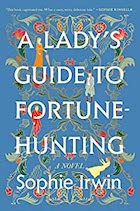
Sophie Irwin, A Lady’s Guide to Fortune-Hunting

Kitty Talbot desperately needs to marry a rich man. She and her four younger sisters live in a crumbling country cottage, from which they will soon be evicted unless Kitty can come up with the money to pay the mortgage. She convinces a friend of her deceased mother’s to launch her in London society, and she soon zeros in on a target: the young, wealthy, and smitten Archibald de Lacy. Archie’s older brother, Lord Radcliffe, sees through Kitty’s scheme and is determined to prevent the match. Yet the more their opposing goals throw them together, the more they actually enjoy each other’s company. The plot of this Regency romance is nothing new, but I found it great fun! Kitty’s single-minded determination (combined with the subtlety of a sledgehammer) makes her a unique heroine, and I loved the development of her relationship with Radcliffe. I’d definitely recommend this book to historical romance fans, and I’ll be interested to read more by the author.

Mini-Reviews: Return, Museum, Time

Megan Whalen Turner, Return of the Thief

***Warning: SPOILERS for previous books in the series!***

This last installment of the Queen’s Thief series finds the kingdoms of Attolia, Eddis, and Sounis banding together to defend themselves against the inevitable Mede invasion. The events are chronicled by Pheris Erondites, grandson of the traitorous baron whose machinations in Attolian politics are far from over. Pheris is physically disabled and mute, but he is also clever and observant. When he becomes one of Eugenides’s attendants, he gets a front-row seat to the action and even finds that he has a role to play. I don’t have much to say about this book, except that it’s a fitting end to a fantastic series. If you’ve loved the previous books, you won’t be disappointed! I did wish Costis and Kamet had a little bit more to do in this installment, since they were the focus of the last one; but that’s a very small complaint about an otherwise wonderful book. This series will definitely live on my keeper shelf to be revisited many times in the future!

John Rowland, Murder in the Museum

Mild-mannered Henry Fairhurst is working in the British Museum Reading Room when he notices that one of his neighbors has fallen asleep. His heavy snoring is attracting attention, so Henry attempts to wake him up — only to discover that the man has stopped breathing and died. When Inspector Shelley of Scotland Yard discovers that the man was poisoned, Henry becomes an important witness and uses his enthusiasm for detection to help Inspector Shelley solve the case. Along the way, they encounter a blackmail scheme, a pair of young lovers, a kidnapping, and more suspicious deaths. I liked the writing style of this book (straightforward and occasionally humorous) and found it a quick and easy read, but I wasn’t terribly excited about the mystery. I’m not sure it’s “fair play,” and the solution didn’t quite satisfy me. I did like that there was one seemingly significant event that turned out to be a coincidence; that doesn’t often happen in detective novels, but it’s very true to life! Overall, this particular book isn’t a keeper for me, but I’d definitely read more by this author.

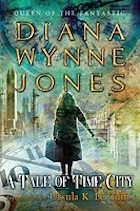
Diana Wynne Jones, A Tale of Time City

It’s the beginning of World War II, and Vivian Smith is being evacuated from London to the English countryside to escape the Blitz. Her cousin is supposed to meet her at the train station, but instead she is kidnapped by two boys, Jonathan and Sam. They take her to Time City, a place outside history whose residents are tasked with observing history and making sure it doesn’t go off the rails. But something is going wrong, and Jonathan and Sam are convinced that Vivian can somehow put it right — except they’ve kidnapped the wrong Vivian Smith! Diana Wynne Jones can do no wrong, and I enjoyed this time travel adventure, although I found the plot hard to follow at first. Fortunately, everything came together in the end, and I very much enjoyed Vivian’s narrative voice. Recommended for fans of the author.

Mini-Reviews: Garden, Murder, Love

Susanna Kearsley, The Rose Garden

Grieving the untimely death of her sister, Eva Ward decides to scatter her sister’s ashes at Trelowarth House in Cornwall, where they’d spent many happy summers as children. When she gets there, Eva is pleased to reconnect with the Trelowarth family and help them maintain the estate by setting up some new tourist attractions. But she also has some strange experiences and eventually discovers that she’s been going back in time, seeing Trelowarth as it was in the early 1700s. She also meets the house’s former inhabitants, one of whom, Daniel, soon captures her heart. But Daniel’s world is dangerous, especially because of his illicit smuggling career and his Jacobite sympathies. Eventually Eva must decide where she truly belongs. I enjoyed this novel but didn’t love it as much as I loved A Desperate Fortune. I wasn’t particularly interested in the time-travel element or the contemporary storyline; I would have preferred a straightforward historical novel. Maybe that’s why it took me several days to finish the book, even though I liked the overall story, characters, and writing style. It was just missing that spark for me.

Richard Osman, The Thursday Murder Club

The Thursday Murder Club is a group of four residents of a senior living facility, who meet once a week to discuss — and hopefully solve — various cold cases. So when a present-day murder lands on their doorstep (literally; the victim is the boorish owner of the senior living facility), they’re eager to get involved. But as the bodies continue to pile up, the investigation becomes more dangerous, and one of the club members might even be the next victim. I really enjoyed this mystery novel; it’s clever and funny, and I liked all the main characters, pensioners and police alike. I do feel like the plot falls apart a little bit toward the end. But ultimately, it was just a pleasure to read, and isn’t that all you can really ask of a book? There’s at least one sequel planned (coming out this fall in the US), and it’s definitely on my TBR list.

Marisa de los Santos, Love Walked In

Cornelia Brown is a 30-something barista in a Philadelphia café, trying to figure out what to do with her life. Then one day, a Cary Grant look-alike walks into the café and changes everything. Meanwhile, an 11-year-old girl named Clare is having problems at home: her father is absent, and her mother is behaving strangely. As her mother’s condition worsens, Clare becomes increasingly terrified that something awful will happen and she’ll be separated from her mom. When Cornelia’s and Clare’s paths converge, they transform each other in surprising ways. I loved this book and stayed up way too late to finish it! But despite the romantic title and chick-lit-esque marketing, it’s a tough read at times. Clare’s situation with her mother is heartbreaking and difficult, so if you’re not up for reading about mental illness and child neglect/abandonment, maybe skip this one. But the book is certainly hopeful and uplifting overall, and there is even a romance, though it’s not my favorite part of the story. I’m eager to read more by this author!

Mini-Reviews: Brittany, Thing, Diamonds

Assignment in BrittanyJust One Damned Thing after AnotherDiamonds Are a Girl's Best Friend

Helen MacInnes, Assignment in Brittany

Martin Hearne, a British intelligence agent, has just been given a new assignment. He happens to bear an uncanny resemblance to Bertrand Corlay, a Frenchman recuperating in an English hospital after the evacuation of Dunkirk. His job will be to impersonate Corlay and go “home” to the village of Saint-Déodat in Brittany, where he will research the movements of the occupying German troops. Of course, complications ensue as Hearne meets Corlay’s family, shelters an American journalist, and has several unpleasant run-ins with the Nazis. His situation becomes even more precarious when he realizes that the real Corlay hasn’t been entirely truthful with him. I really enjoyed this suspenseful and entertaining book. It’s all the more remarkable because the novel was published in 1942, when the outcome of the war was far from certain. Definitely recommended for fans of spy and/or World War II novels.

Jodi Taylor, Just One Damned Thing after Another

When Madeleine “Max” Maxwell is recruited to join the St. Mary’s Institute of Historical Research, she gets a lot more than she bargained for: the historians of St. Mary’s “investigate major historical events in contemporary time” — in other words, time travel! Max embraces the concept wholeheartedly and soon proves herself adept at her new job. But when a trip to the late Cretaceous goes horribly wrong, Max learns that another group of time travelers is wreaking havoc with history, and the St. Mary’s gang will have to stop them in order to protect both the past and the future. This book is a fun romp, although Max is one of those heroines who’s annoyingly good at everything. I found the present timeline hard to follow; the book starts with Max arriving at St. Mary’s, but it seems like several months (or years?) pass without really being acknowledged. There’s also a graphic sex scene that I could have done without. Despite these quibbles, though, I did enjoy the book and will most likely continue with the series.

Jenny Colgan, Diamonds Are a Girl’s Best Friend

This chick lit novel is about Sophie Chesterton, a shallow socialite whose life is upended when her father dies, and the terms of his will state that she must earn her own living for six months before receiving her inheritance. Sophie moves into a dirty flat in South London with four guys, attempts to pursue her interest in photography, and falls for not one but two of her roommates. Normally I really enjoy Jenny Colgan’s novels, but this one was disappointing. Sophie does grow throughout the book, but she’s so awful in the beginning that it’s hard to completely buy her redemption. I also didn’t find the romance angle satisfying; the outcome seemed to come out of the blue, so that I had no chance to become invested. I still recommend Colgan’s books in general, but this one just wasn’t for me.

Review: The Woman Who Died a Lot

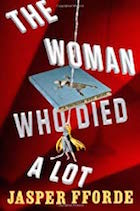
Woman Who Died a LotJasper Fforde, The Woman Who Died a Lot

This seventh book in the Thursday Next series continues the madcap adventures of Thursday Next, her family, and the alternate-reality Swindon that is obsessed with all things literary. Thursday is now middle-aged and struggling with the fact that she’s not as physically resilient as she used to be. She hopes to become the head of a newly reinstated SpecOps 27 (the division of the government dealing with literary crimes), but instead, she’s offered the job of Chief Librarian of Swindon All-You-Can-Eat-at-Fatso’s Drink Not Included Library, a plum assignment that gives her absolute power within the library’s domain. But there’s still plenty of trouble to go around. Her son Friday’s career at the ChronoGuard is halted when time travel is ruled impossible, and he’s now coming to terms with a very different destiny. Meanwhile, the Global Standard Deity is preparing to smite Swindon within a week, unless Thursday’s genius daughter Tuesday can find a way to stop it. Not to mention, the sinister Goliath Corp is up to its usual skulduggery, and more than one person seems to want Thursday dead.

I’m a longtime Fforde ffan, but I haven’t been as impressed by his last few books. Maybe the novelty of his humor has worn off for me, but I was only intermittently amused by this installment. There are still a lot of fun jokes and gags and wordplay, but the whole seems like less than the sum of its parts. The Thursday vs. Goliath stuff was fine, but it felt like a retread of previous books with nothing particularly new to add. The Chronoguard stuff was more interesting — I especially enjoyed the idea that time travel works (or used to work) because someone would invent the technology in the future, and therefore it could be used in the present. I wanted a little more about Thursday’s Librarian gig, but her library-related adventures are fairly peripheral to the main plot. In fact, I’m realizing that there aren’t a lot of literature-related hijinks in this novel. Unlike the first few books, which were constantly jumping into and out of specific literary worlds, this one doesn’t contain many literary allusions at all. Maybe that’s why earlier books in the series worked for me better than the last few. Regardless, I’m glad to be caught up with the Thursday Next series, but I’m also glad that it’s now (as far as I can tell) complete.

Review: The Jane Austen Project

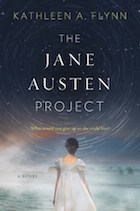
Jane Austen ProjectKathleen A. Flynn, The Jane Austen Project

Rachel Katzman and Liam Finucane live in a near-future world where time travel is well established as a scientific research tool. Their first mission is to travel to 1815, where they will retrieve Jane Austen’s personal letters (many of which were destroyed after her death) and her manuscript of “The Watsons,” which, according to a recent discovery, she actually did complete. To achieve this goal, Rachel and Liam will pose as members of the gentry and try to become part of the Austens’ social circle. But the more they get to know Jane and her family, the more Rachel and Liam begin to have scruples about their actions. Additionally, they start to worry about the possibility of changing history and the even scarier possibility that they may not be able to leave 1815. And of course, the deepening of their relationship to each other may have far-reaching consequences in both 1815 and their own time.

I enjoyed this book overall, but I definitely think some parts were more successful than others. The premise is certainly an interesting one if you love Jane Austen, and overall I think the portrayal of Jane and her family was very well done. The book evokes the 1815 setting very well; it feels like the reader is also a time traveler, being immersed into this bygone era for the first time. I was particularly tickled by one scene where Jane catches Rachel looking through her private papers and accuses her of being a French spy! That said, the novel gives short shrift to the time travel element; it doesn’t explain how it works or what the “rules” are, and the future consequences of Rachel and Liam’s actions in 1815 are wrapped up very quickly. Finally, I wasn’t particularly invested in the romance. While Rachel and Liam are both pleasant enough, I never really got a sense of what made them tick. Ultimately, I did like the book, but I don’t think it’s one I’ll ever need to reread.

Review: The River of No Return

River of No Return, TheBee Ridgway, The River of No Return

Nicholas Falcott, Marquess of Blackdown, is about to die on the battlefield at Salamanca. But instead of being trampled by a French cavalry horse, he suddenly disappears in a blaze of light and reappears in the 21st century. There, Nicholas finds himself under the protection of the Guild, a secret society of individuals with the ability to jump forward in time. The Guild provides Nick with a new identity, plenty of money, and enough information about the modern world for him to survive in the present. Nick believes it’s impossible to go back to his original time — until one day, out of the blue, the Guild leaders order him to do just that. They tell him about a rival group of time travelers whose attempts to change history will result in widespread disaster, unless Nick can go back to 1815 and stop them. But when he jumps back to his own time, he learns that the Guild is keeping secrets from him. He also reconnects with Julia Percy, his beautiful young neighbor who is somehow connected to this feud between time travelers.

This is a book I should have loved: it’s got Regency England, romance, intrigue, and time travel! But sadly, the novel’s underwhelming execution didn’t live up to its great premise. One of the biggest problems for me was the pacing. It took forever to set up the world and introduce Nick and Julia as characters. Once Nick jumps back to 1815 (about 1/4 of the way into the book), things pick up a little, but the pacing still drags. Nothing really important occurs until the last 50 pages or so, when the characters suddenly learn a whole lot of new information at breakneck speed. My other big problem with this novel is that NOTHING IS RESOLVED IN THE END. Nick eventually learns more about the future catastrophe that the time travelers are trying to prevent, but he doesn’t actually do anything about it. So basically, this book is one long setup for a payoff that isn’t going to happen until the sequel — and I don’t think it’s actually been published yet, so it could be a long wait! I’ll admit that I am a bit curious to know how things turn out, but it may not be worth the aggravation this book caused me.