Mini-Reviews: Spade, Satterthwaite, Conjuring

Alan Bradley, What Time the Sexton’s Spade Doth Rust

Passionate chemist and adolescent sleuth Flavia de Luce is back on the case when Buckshaw’s cook, Mrs. Mullet, is accused of killing a Bishop’s Lacey resident with poisoned mushrooms. Flavia knows Mrs. Mullet is innocent and decides to clear her name. The dead man, Major Greyleigh, seemed reasonably well liked, so who had a motive to kill him? As Flavia digs deeper, she uncovers a shocking secret that will upend her whole life. I’ve read every book in this series, which I enjoy for Flavia’s breezy, often hilarious narration (though I’m not convinced she’s a realistic or even a coherent character). But the mysteries tend to be weak, and that’s certainly the case here. I also don’t love the direction in which this book seems to be taking the series; it doubles down on some of my least favorite plot elements from previous books. Overall, it’s mid, as the kids say. But if another Flavia book comes out, I’ll most likely read it!

Mimi Matthews, Return to Satterthwaite Court

This Victorian romance centers around Lieutenant Charles Heywood, son of the couple from The Work of Art, and Lady Katherine Beresford, daughter of the couple from Gentleman Jim. They meet in passing and are instantly smitten, and their relationship develops as they investigate an anonymous letter that hints at a past wrongdoing involving Charles’s mother. Much as I love Mimi Matthews, this is not one of my favorites by her. The central romance just seemed a bit bland to me; Charles and Kate didn’t feel like fully fleshed out characters, though I did like that Kate knows what she wants and isn’t afraid to go after it. Still, I found myself much more interested in the hints of romance among the secondary characters—two of Kate’s brothers are the heroes of the next two books in the series. It’s a perfectly good (and steamless!) historical romance, and I did enjoy reading it, but it didn’t blow me away.

V.E. Schwab, A Conjuring of Light

Immediately after the events of A Gathering of Shadows, Kell finds himself in White London being confronted by Osaron, a god (or demon) whose magic threatens to ruin everything in its path. Kell defies Osaron, but the latter still manages to get to Red London, where he promptly enslaves or murders most of its residents. It’s up to Kell, Lila, Rhy, Alucard et al. to stop Osaron before he destroys their entire world—and perhaps the neighboring worlds as well. This conclusion to the Shades of Magic trilogy is huge—my hardcover is more than 600 pages long, and the margins are small—but it’s also a page-turner. That said, I would have preferred a shorter book; we didn’t really need all the flashbacks, nor the chapters from non-protagonist POVs. I did enjoy the story and think this book gives a satisfying ending to the series (though I believe the author has since written more books in this world). Overall, I’m glad I finally read this whole trilogy, but it’s not a keeper for me.

Mini-Reviews: Impossible, Tea, Rectory

Connie Willis, Impossible Things

I’m not a huge fan of short stories, but I do love Connie Willis, so I decided to revisit this collection of her early stories and novellas, which were all originally published in the ’80s and early ’90s. I was pleasantly surprised to find that there are really no duds in the collection, though of course some stories resonated with me more than others. I particularly enjoyed “Spice Pogrom,” an homage to the screwball comedy; “Chance,” a heartbreaker about a woman who’s consumed with regret over a bad choice she made years ago; and “Winter’s Tale,” a compelling, contemplative take on a Shakespeare conspiracy theory. The collection contains both tragic and comic stories, but even the tragic ones generally have a hint of hope or humor, and even the comic ones have surprisingly sharp edges. I still prefer Willis’s full-length novels, but if you like the author (or sci-fi stories in general), these stories are well worth reading also.

India Holton, The Secret Service of Tea and Treason

This final book in the Dangerous Damsels trilogy focuses on Alice Dearlove and Daniel Bixby, both of whom appeared in the previous book as a lady’s maid and butler, respectively. In fact, they’re two of the best spies in England’s shadow government, and now they’re tasked with working on a mission together. The Wisteria Society is allegedly plotting to assassinate Queen Victoria using a mysterious new weapon. Alice and Daniel must pose as a married couple, infiltrate the Society, and steal the weapon; naturally, complications ensue when the ruse starts feeling all too real. This book shares with its predecessors a light tone, copious literary references, silly piratical hijinks, and a central romance. But I think this is my favorite of the trilogy because I loved Alice and (especially) Daniel. Both are dealing with childhood trauma and neurodivergent brains that make them feel like outsiders, and it’s lovely to watch them slowly realize that they understand each other. That said, this series is a fun read, but I’m not sure I’ll ever feel the need to reread it.

Catherine Lloyd, Death Comes to the Rectory

Lucy and Robert Kurland are excited for the christening of their baby daughter, Elizabeth. But as they welcome their family and friends for the event, they’re also surprised by some unwanted guests: Harriet and Basil Northam, the daughter and son-in-law of Robert’s Aunt Rose, who recently married Lucy’s father. The obnoxious Northams have long sponged off of Aunt Rose and aren’t pleased that her remarriage may now disinherit them. When Basil Northam is found stabbed to death in the rectory study, Lucy’s father becomes the chief suspect, which causes tension between Robert and Lucy as they investigate the crime. This book is the last of the Kurland St. Mary mysteries, and while it doesn’t really feel like a series finale, it fits right in with the rest of the series: pleasant but bland, and not particularly remarkable as a mystery. I did like the brief observations on inequities in the justice system, but they’re not treated with much depth. Overall, these books are quick, undemanding reads, but I wouldn’t enthusiastically recommend the series. It’s fine, but I feel pretty tepid about it.

Mini-Reviews: Funny, Spirit, Witches

Emily Henry, Funny Story

Daphne moves to the small lakeside town of Waning Bay, Michigan, to be with her fiancé, Peter. So when Peter dumps her for his longtime best friend, Petra, Daphne feels rootless and doesn’t know what to do. In the meantime, she’s living in the spare room of Miles, Petra’s ex, and plotting her escape from Waning Bay. Daphne and Miles have nothing in common—aside from being treated badly by their exes—but as they spend more time together, they forge a surprising connection. I’m a fan of Emily Henry’s writing and enjoyed this book, though Miles wasn’t particularly appealing to me in the beginning. He’s a chaotic free spirit, while Daphne is more structured and buttoned-up, so they had a fun opposites-attract dynamic. Overall, though, I find myself a bit lukewarm on this one; I did enjoy it, but I’m not particularly enthusiastic about it. Glad I got it from the library instead of purchasing.

Carol Berg, The Spirit Lens

Portier de Savin-Duplais has always longed to become a sorcerer, but despite several years of study at the Collegia Magica, he can’t actually do any magic and is living a vaguely dissatisfied life as the Collegia’s librarian. Opportunity knocks, however, when his distant cousin, the king of Sabria, entrusts him with a special mission. Someone recently tried to assassinate the king using very dark (and very illegal) magic, and Portier—along with foppish courtier Ilario and mysterious mage Dante—must discover who’s responsible before the would-be assassin strikes again. This book is an interesting mixture of fantasy and mystery with a hint of buddy comedy, but I think it focuses a little too much on the mystery; Portier’s investigation moves slowly and feels like a dull police procedural at times. By contrast, the fantasy world gets short shrift (though I enjoyed the quasi-Renaissance vibes), and I found some magical aspects of the plot confusing. I do really like the main characters, though, and will certainly continue with the trilogy since I own the remaining books.

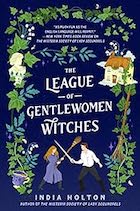
India Holton, The League of Gentlewomen Witches

Charlotte Pettifer is an exceedingly proper young Victorian lady, and also a witch who’s destined to become the head of the Wickan League. So when an amulet belonging to Black Beryl, the league’s founder, is discovered, Charlotte knows she must steal it. Unfortunately, those vulgar pirates of the Wisteria Society are also after the amulet—not to mention the infuriatingly handsome Captain Alex O’Riley. When circumstances throw Charlotte and Alex together in their quest for the amulet, they quickly give in to their mutual attraction; but since pirates and witches are mortal enemies, obviously they can’t fall in love. Like its predecessor, this book is a fun pseudo-historical romp, and the plentiful Austen references are a fun bonus. This installment focuses a lot on the romance, which I’d have been fine with except that it feels very similar to the romance in the first book. Still, if you liked book #1, you’ll like this one too—and the peek at the hero and heroine of book #3 has me intrigued to complete the series!

Mini-Reviews: Tower, Flatshare, Aunt

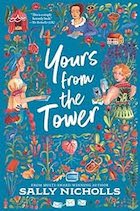
Sally Nicholls, Yours from the Tower

This epistolary novel centers around the correspondence between three school friends who are taking their first steps into adulthood. Tirzah is stuck being her strict grandmother’s companion in a remote Scottish village, but she longs for excitement and adventure. Sophia is in London for the Season and hopes to gain financial security through marriage, but she’s soon attracted to a penniless charmer. And Polly loves her job as a teacher in an orphanage, but complications ensue when she tries to find the father of one of her students. This book is wholesome and charming and delightful, and I really enjoyed it! Each girl is vividly drawn, with her own distinctive voice, and I found all three equally compelling. The letters are chatty and wide-ranging, covering everything from the minutiae of daily life to the girls’ deeper hopes and dreams. There are some some dark moments in the book involving alcoholism and depression, but the overall tone is light and hopeful. This is a YA novel, but I’d recommend it to adult fans of light historical fiction as well. I definitely want to read more by Sally Nicholls!

Beth O’Leary, The Flatshare

After moving out of her ex-boyfriend’s London flat, Tiffy desperately needs a new place to live. She sees an ad for a flatshare: The current tenant, Leon, works nights and will only be in the flat from 9 a.m. to 6 p.m., while Tiffy’s at work. The rent is cheap, so Tiffy jumps at the chance, even though she isn’t able to meet Leon in person before moving in. At first, they both find it odd to share their living space with a stranger, but as they start leaving notes for each other around the flat, they slowly become friends. When they finally do meet in person, they’re surprised by their mutual attraction, but difficulties arise when Tiffy’s ex reappears in her life. I feel like my summary of the book doesn’t do it justice at all. Both Tiffy and Leon are such endearing characters! Their notes to each other are adorable, and I like that they have jobs and friends and relatives and lives that don’t revolve solely around each other. Tiffy’s experiences with her ex are hard to read — the book does a great job of slowly revealing just how horrible he is — but the central romance is lovely. I’m glad I reread this one and would definitely recommend it to fans of contemporary romance!

Richard Hull, The Murder of My Aunt

Edward Powell lives in a small Welsh village with his Aunt Mildred. He hates Wales, the countryside, and everyone around him, especially his aunt. He only stays because she controls his finances; without the allowance he gets from her, he’d have nothing. As Edward broods over his distasteful circumstances, he realizes that his life would be much better if Aunt Mildred were to die. Soon he starts plotting possible murder scenarios, but his plans don’t work out the way he expects. This is both a funny and a grim book: Edward is a magnificently unreliable narrator whose misreading of conversations and events is often amusing, but he’s so snobbish and hateful that it’s tough to spend time in his head. I must admit, though, I didn’t find Aunt Mildred entirely sympathetic either! The ending is a surprise, but a well-plotted and foreshadowed one. Overall, this book isn’t strictly speaking a mystery—and certainly not a detective novel—but it’s worth reading for the narrative style and dramatic irony.

Mini-Review: Murder, Pairing, Spindle

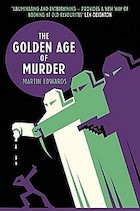
Martin Edwards, The Golden Age of Murder

This book is a sprawling account of the lives of the authors of detective fiction in the 1920s and ’30s, particularly the earliest members of the Detection Club. Martin Edwards is the current Detection Club president, and his enthusiasm for his predecessors — and for Golden Age mysteries in general — is both obvious and contagious. He gives biographical information about authors such as Agatha Christie, Dorothy L. Sayers, and Anthony Berkeley. He also speculates a fair bit about their personal lives and sexual proclivities, with varying amounts of supporting evidence. He discusses several Golden Age novels, though never in very much depth, and is pretty good about avoiding spoilers. I found the book a bit scattered and hard to follow at times; the content doesn’t necessarily correspond to the various chapter headings, and Edwards often bounces among several ideas in the course of a single paragraph. The book also has invisible endnotes, which I found a bit irritating, though that’s just a personal preference. Overall, though, I think this is a good read for fans of Golden Age detective fiction, and it’s certainly put several new-to-me novels and authors on my radar!

Elizabeth Harmon, Pairing Off

American pairs figure skater Carrie Parker is facing career death after her partner gets caught in a cheating scandal. So when a Russian coach invites her to Moscow for a tryout, Carrie seizes the opportunity — but is appalled to discover that her new partner is Anton Belikov, a top Russian skater with whom Carrie had a one-night stand seven years ago. Anton doesn’t seem to remember her, and his gruff demeanor intimidates her. But as they train for the upcoming competition season, they grow closer, until secrets from Carrie’s past threaten their budding relationship. This book appealed to the same part of my brain that enjoys sports movies (even though I don’t follow any sports). I got the impression that Harmon actually has some figure skating knowledge; her descriptions of the routines and workouts feel like more than window dressing. I liked the Moscow setting as well. The romance between Carrie and Anton is fine, though a bit angsty/“it’s destiny!” for my taste. Overall, a decent read that I’d recommend if you like figure skating and/or the ’90s movie The Cutting Edge.

Nancy Campbell Allen, Kiss of the Spindle

Isla Cooper is cursed: Every night, she falls into a deathlike sleep from which she can’t be awakened. To find the witch who cursed her and obtain the cure, she blackmails her way onto Daniel Pickett’s airship, which is headed for the city where the witch is rumored to be. Meanwhile, Daniel is illegally transporting shapeshifters out of England, where they’re facing political persecution. He doesn’t have time to help Isla, especially when another last-minute passenger who wants to exterminate all shapeshifters forces his way on board. Eventually, though, Daniel and Isla decide to work together — and fall in love in the process. This is a fun steampunk romance with nods to Sleeping Beauty, and though there’s nothing extraordinary about it, I really enjoyed it! I liked Daniel and Isla’s progression from grudging toleration to mutual attraction, and I also found more than one secondary character intriguing…I kind of hope they get their own books at some point! In the meantime, I’m happy to be reading this series and looking forward to the next installment!

Mini-Reviews: Secret, Lily, Always

Sharon Shinn, The Safe-Keeper’s Secret

I actually read this book in 2023 but for some reason didn’t post my review here at the time. Oh well, better late than never!

Damiana is a safe-keeper, which means she’s bound to listen to anyone who wants to confide a secret to her, and she’s not allowed to reveal these secrets to anyone. One night a mysterious stranger arrives at her door with a newborn baby, charging her to keep the infant safe and his parentage a secret. Damiana raises this baby alongside her own child, so Fiona and Reed grow up together as brother and sister. But as they mature into adulthood, they begin to question their identities in various ways. I like Sharon Shinn’s writing style and the gentle fantasy world she’s created in this book, but I was underwhelmed by the actual story. There’s really no plot to speak of until the last couple chapters, when some long-standing secrets are revealed. I was also a bit disturbed by the hint of romance between Fiona and Reed (they’re not related by blood but were raised as siblings). Overall, this isn’t one of Shinn’s stronger works, but I have the sequel on my shelves so will undoubtedly read it at some point.

Mimi Matthews, The Lily of Ludgate Hill

Six and a half years ago, Felix Hartford and Lady Anne Deveril were in love, but they parted after a bitter argument. Hart never stopped loving Anne, though, and now he’s determined to win her back, although he’ll have an uphill battle convincing her to trust him again. Meanwhile, ever since her father’s death, Anne has been consumed with supporting her grieving mother and hasn’t been able to live her own life. Hart attracts her as much as ever, but can she learn to let go of the past? I’m a big fan of Matthews’s intelligent (and steamless!) historical romances, and this book is no exception. I liked both Hart and Anne and bought the connection between them, as well as the obstacles keeping them apart. It’s frustrating that they’ve both martyred themselves to selfish family members and can’t seem to break free, and their hesitation to commit fully to each other goes on too long. Nevertheless, I really liked this one overall and am excited for the next (and final?) installment of the series!

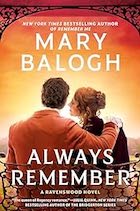
Mary Balogh, Always Remember

Ben Ellis, a widower with a young daughter, wants to remarry. He’s not looking for passionate love, just someone with whom he can be comfortable. He certainly shouldn’t be thinking about Lady Jennifer Arden, who’s extremely wealthy and the sister of a duke, whereas he is illegitimate. Meanwhile, Jennifer is convinced she’s unlovable due to a malformed leg that prevents her from walking. A fixer by nature, Ben helps her find various ways to become more mobile. As they grow closer, however, their families express concern about their different social stations. This third book in the Ravenswood series continues to frustrate me with its inclusion of not only Ben’s and Jennifer’s various relatives, but a bunch of random villagers as well. Most of these characters have no relevance to the plot, so why keep mentioning them? I don’t care! That said, I did like both Ben and Jennifer, who aren’t extraordinarily gorgeous or gifted; they’re just two kind people who genuinely like each other. Their relationship is pretty low-conflict; the dramatic tension comes mostly from the individual problems they’re working through. Overall, I do think this is an improvement over the previous two books in the series, but it’s still not one of Balogh’s stronger offerings.

Mini-Reviews: Bird, Clockwork, Murder

Josie Silver, The Two Lives of Lydia Bird

When Lydia Bird’s fiancé, Freddie, dies in a car accident, she’s absolutely devastated. Even mundane daily tasks like bathing and eating feel unbearably difficult, and sleep is out of the question. But when she takes an experimental sleeping pill her doctor prescribes, she has a vividly lucid dream — or perhaps enters a parallel universe — in which Freddie is still alive. Soon her waking life becomes a chore as she waits desperately for the next time she can sleep and be with Freddie. But as time passes, she must decide where she truly belongs. This was an interesting book to start the new year with, since it’s all about exploring what-if scenarios, remembering the past, and making choices about the future. The novel is very slow-paced, but that makes sense, as more than anything else it’s a story about grief and navigating life after a big loss. There’s a slight element of romance that I didn’t find totally satisfying, but otherwise I liked the book and would recommend it if the premise appeals to you.

Nancy Campbell Allen, Beauty and the Clockwork Beast

In this steampunk twist on the gothic novel, Lucy Pickett travels to Blackwell Manor to care for her beloved cousin, Kate, who is suffering from a mysterious illness after her recent marriage to the earl of Blackwell’s younger brother. At the manor, Lucy experiences many terrors, from ghostly apparitions to the earl himself, whose surly and intimidating demeanor hides dangerous secrets. She and the earl, Miles, eventually team up to discover what’s causing Kate’s illness, who’s behind a spate of vampire attacks in the area, and who murdered Miles’s recently deceased wife and sister. So yes, there’s a lot going on in this book (and I didn’t even mention the werewolf!), but it’s easy enough to follow the narrative. I liked plucky Lucy and brooding Miles, and though the book is steamless, their mutual attraction is clear. I wasn’t as impressed with the book as I remember being when I first read it, but I enjoyed it nonetheless and look forward to continuing with the series.

Delano Ames, She Shall Have Murder

Jane Hamish, a clerk in a London law office, is writing a mystery novel in which her coworkers and legal clients are the main characters. Her boyfriend, Dagobert Brown, instigated the project and insists that Mrs. Robjohn, an elderly client who’s convinced mysterious men are out to get her, should be the murder victim. But when Mrs. Robjohn really does die — apparently due to an accidental gas leak in her home — Dagobert is convinced she was actually murdered and decides to investigate. This is my first encounter with Golden Age mystery writer Delano Ames, but it won’t be my last because I thoroughly enjoyed this book! Jane narrates the story and has a delightfully witty voice, and I’m intrigued by her relationship with Dagobert (this is book #1 in the series, but there’s clearly some interesting backstory that will hopefully be explored in later installments). The mystery itself is fine but not remarkable; the book’s strengths are its characterizations and style. I’ll be looking out for more in this series.

Mini-Reviews: Betting, Gambit, Midwinter

Lynn Painter, Betting on You

Charlie and Bailey first meet on a 10-hour flight, where his careless cynicism clashes with her uptight, rule-following personality. But they really get to know each other three years later, when they end up working at the same amusement park. Charlie is adamant that guys and girls can’t really be friends, but Bailey is determined to prove him wrong. As they grow closer, however, the lines between friendship and romance get confusingly blurry. The book’s cover copy emphasizes fake dating and multiple bets among the main characters, but these are both pretty minor plot points. In reality, the novel is a cute friends-to-lovers YA romance, though it also gets into some heavier issues, as both Bailey and Charlie struggle with being children of divorced parents. I enjoy Lynn Painter’s writing style; she does good banter and makes her characters feel like believable people. I also liked getting some of Charlie’s POV, though Bailey is the primary narrator. The book perhaps owes a little too much to When Harry Met Sally, but I liked it nonetheless and now want to rewatch the movie!

Evie Dunmore, The Gentleman’s Gambit

Between writing a book on female political leaders, managing her absentminded father’s household, and working for the suffragist cause with her three best friends, Catriona MacPherson is burned out. When she meets her father’s handsome new colleague, Elias Khoury, she’s immediately attracted to him but doesn’t think he (or anyone) could be interested in her. Meanwhile, Elias is on a mission to repatriate historical artifacts — legally or otherwise — to his homeland of Mount Lebanon. He doesn’t have time for romance, but Catriona intrigues him. As with the previous books in this series, Evie Dunmore tries to balance a love story with a lot of historical detail, to mixed effect. In this case, information about the women’s suffrage movement and the ethics of removing antiquities from their lands of origin overwhelmed the romance. Also, between Catriona’s negative internal narrative (she seems to struggle with some form of depression) and the Serious Political Stuff, there’s just no joy in this book. Since I want joy in my romance novels, this one didn’t work for me, and I doubt I’ll read any future books from this author.

Stella Riley, Midwinter Magic

This novella caps off the Rockliffe series and gives readers one last look at most of the main series couples. Adrian and Caroline, the earl and countess of Sarre, are hosting a Christmas party at their country estate, but complications ensue when Caroline’s vulgar mother and sisters show up uninvited. Two romances develop, one involving Adrian’s French friend, Bertrand Didier, and there’s even a Christmas miracle. This is undoubtedly the weakest installment of the Rockliffe series — perhaps unsurprisingly, since it’s a novella with few new characters and (mostly) low stakes — but I still enjoyed it overall. I wish Ralph and Elizabeth from Cadenza had made an appearance, as I would have loved to get a peek at their marriage, and part of me wanted to roll my eyes at the aforementioned miracle. But I guess that sort of thing is to be expected in a Christmas story! I definitely would not recommend this novella if you haven’t read and enjoyed the rest of the Rockliffe books, but it’s a sweet holiday treat for fans of the series.

Mini-Reviews: Mistress, Princess, Death

Mary Balogh, The Secret Mistress

Lady Angeline Dudley has no interest in marrying a rake like her brothers; she just wants a steady, responsible man who will nevertheless love her passionately. So when Edward Ailsbury, the earl of Heyward, chivalrously rescues her from the improper attentions of a rake, she falls in love with him at once. Meanwhile, Edward knows he needs to marry, and Angeline is certainly eligible, but her outspoken, slightly wild behavior horrifies him. He’s also drawn to her despite himself, but he has trouble reconciling his feelings with his long-held image of the perfect wife. This is the final book of Balogh’s “Mistress” trilogy and, in my opinion, the most enjoyable. Angeline is a somewhat unconventional heroine in that she’s not particularly deep or intelligent; rather, she’s a flighty chatterbox with terrible fashion sense but a very warm heart. Edward isn’t a typical hero, either — he’s very responsible and practical and not rakish at all. I loved them both and was rooting for them to get together, although the last few chapters got a bit too flowery and sentimental for my taste. Still, overall I quite liked this one, which is a bit lighter than Balogh’s usual fare!

Philip Pullman, The Tin Princess

This final book in the Sally Lockhart series doesn’t actually have much Sally in it. Rather, the plot centers around Adelaide, who vanished at the end of The Ruby in the Smoke but has now resurfaced as the wife of the crown prince of a tiny Central European country. Accompanied by intrepid detective Jim Taylor and German tutor Becky Winter, she must travel to Razkavia and learn how to be a princess. But court intrigues, foreign interference, and assassination plots threaten both their own safety and that of Razkavia as a whole. As with the other books in this series, this is an entertaining adventure novel that’s chock-full of plot. The characterization is a bit less convincing; I didn’t believe Adelaide would become an expert politician so quickly, and the romance between her and Jim is barely sketched in. So while this is a fun series and I’m glad I read it, I won’t be keeping it on my shelves.

Catherine Lloyd, Death Comes to Kurland Hall

Lucy Harrington is back in Kurland St. Mary to help her best friend, Sophia, with Sophia’s upcoming wedding. One of the wedding guests, Mrs. Chingford, is a conniving widow who delights in spreading malicious gossip and antagonizes several of the other guests. On the wedding day, Mrs. Chingford falls down a flight of stairs and dies, and Lucy is convinced it’s no accident. She and Major Robert Kurland must once again work together to discover the killer — and sort out their complicated feelings for each other. This is another enjoyable installment of the Kurland St. Mary series, though it’s not a particularly memorable one in terms of the mystery. But I do like the way the world is being built out and how some of the recurring series characters are being developed. Lucy and Robert’s romance also takes a step forward in this one, though I wish the book had focused on it more…there was so much buildup, but the resolution fell flat. Regardless, though, I’ll certainly continue with the series.

Mini-Reviews: Sugar, Widow, Scorpio

Sarah Addison Allen, The Sugar Queen

Twenty-seven-year-old Josey Cirrini is expected to live at home, take care of her aging mother, and always behave with perfect propriety. While she outwardly conforms to those expectations, she secretly rebels by stashing sweets, junk food, and romance novels in her bedroom closet. Then one day, a local woman named Della Lee Baker moves into her closet and refuses to come out until Josey starts making changes in her life. With Della Lee’s encouragement, Josey finds friendship and even love, but her newfound community is threatened by a sinister stranger. I always like Sarah Addison Allen’s books, which are set in Southern small towns with a hint of magic. This one is probably my favorite because I find Josey very relatable (though thankfully I have a much better mother than she does!). It’s got multiple romances, cozy fall/winter vibes, and a strong emphasis on relationships between women. Recommended, especially for this time of year.

Diana Biller, The Widow of Rose House

Alva Webster has recently returned to America after several years abroad. She’s bought an old house and plans to publish a book about the process of renovating and decorating it. But the house is allegedly haunted, and she can’t convince anyone to come work on it until she does something about the ghost. Enter Professor Samuel Moore, a brilliant scientist with an interest in the supernatural. As he and Alva investigate the possible ghost, they also fall in love, but Alva’s traumatic past may derail their romance. I’d heard good things about this book, and I’m happy to say it lived up to the hype! I enjoyed the relatively uncommon setting of 1870s New York, and I loved the banter between Sam and Alva. Sam is a bit too good to be true — he always reacts perfectly to Alva’s emotional turmoil — but he’s very charming and likable nonetheless. Recommended for fans of historical romance, and I’ll definitely be seeking out more by Biller!

Maggie Stiefvater, The Scorpio Races

Life on the remote island of Thisby revolves around the Scorpio Races, an annual event in which men (it’s always men) ride the dangerous, man-eating water horses native to the seas surrounding the island. Sean Kendrick has won the races several times, and he hopes this time he’ll win enough to finally be able to buy his beloved mount. Meanwhile, Puck Connolly is racing for the very first time, in hopes of somehow convincing her older brother, Gabe, not to move to the mainland. As Sean and Puck train together, they grow closer, but to get what they want — including each other — they’ll have to survive the races first. This is a book of my heart, and it was sheer joy to immerse myself in its world once again. I’m not usually a person who reads for setting, but Thisby is magical and feels as though it must be real. The book is slow and subtle and, while it contains a love story, it doesn’t feel romance-y at all, if that makes sense. For my money, this is Stiefvater’s best book, and I highly recommend it if the premise interests you.