What’s in a Name 6 Challenge Wrap-up

I’ve completed the What’s in a Name 6 Challenge at Beth Fish Reads!

2013 what's in a name 6

The goal was to read 6 books, one in each of the categories below. Here’s what I read:

  1. Up or down (or equivalent): Niccolò RISING by Dorothy Dunnett
  2. Something you’d find in your kitchen: The CRYSTAL Cave by Mary Stewart — I was thinking fancy crystal glassware here
  3. Party or celebration: The WEDDING of Zein by Tayeb Salih
  4. Fire (or equivalent): FIRE and Hemlock by Diana Wynne Jones
  5. Emotion: LONESOME Dove by Larry McMurtry
  6. Lost or found (or equivalent): They FOUND Him Dead by Georgette Heyer

My favorite read for this challenge was probably Fire and Hemlock, although Lonesome Dove and The Wedding of Zein were also very good. On the other hand, I couldn’t stand Niccolò Rising! But I like this challenge because it’s completely based on titles rather than content, which is pretty unique among reading challenges. Hopefully it will continue next year, in which case I’ll most likely sign up!

2013 Vintage Mysteries Challenge Wrap-up

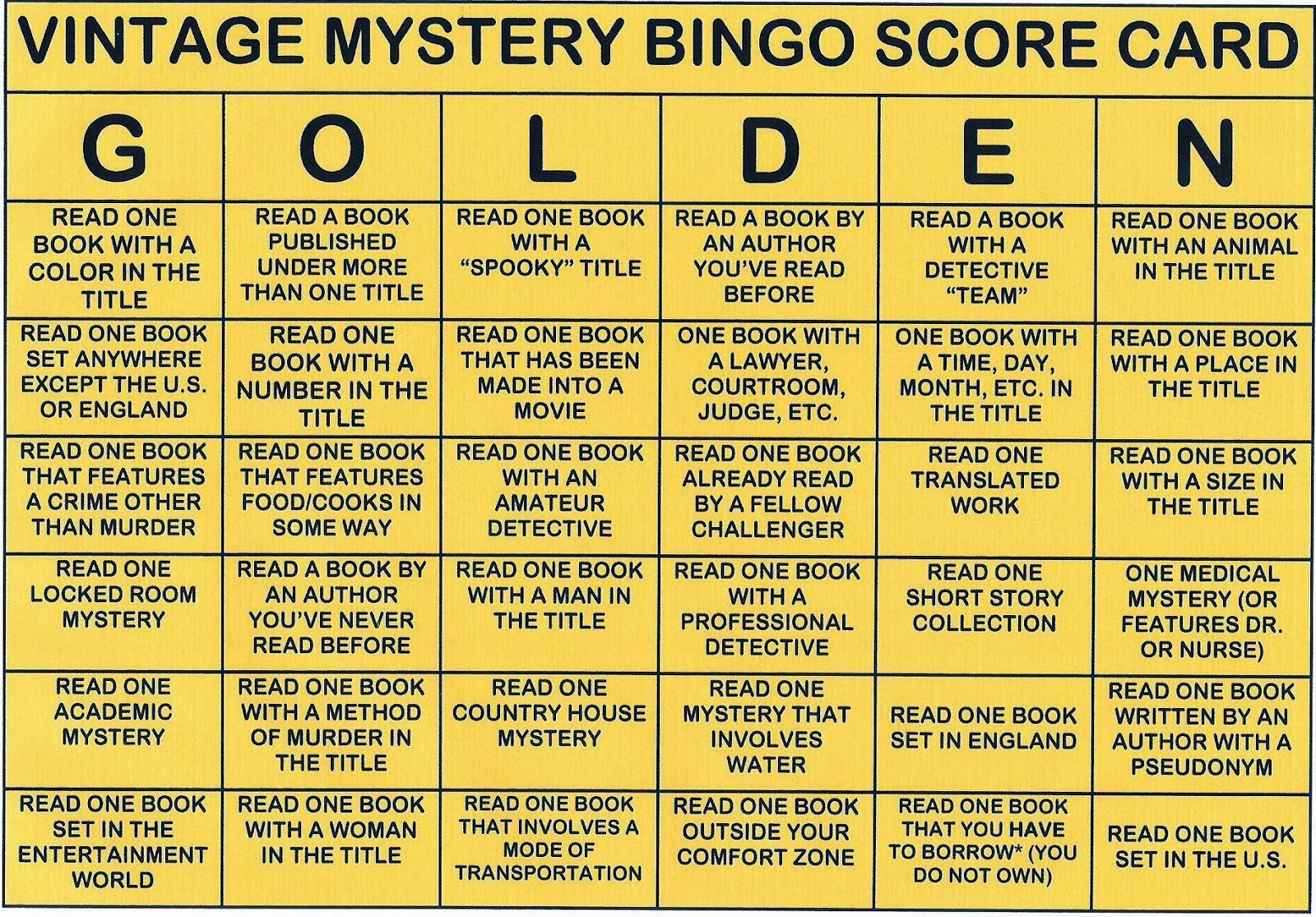
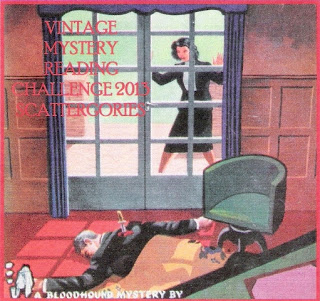
I recently completed the annual Vintage Mystery Reading Challenge at My Reader’s Block! The general goal is to read mysteries published before 1960, and this year’s twist was to fit them within certain pre-arranged categories, à la Scattergories.

2013 vintage mystery scattergories

Here’s what I read, along with a brief explanation of why each book fits within its specified category:

  1. World Traveler: Patricia Moyes, Dead Men Don’t Ski — Set in the Italian Alps.
  2. Repeat Offenders: Georgette Heyer, Death in the Stocks — Because I love me some Heyer!
  3. Murderous Methods: Anthony Berkeley, The Poisoned Chocolates Case — Makes me think twice about eating food I get in the mail…
  4. Staging the Crime: Michael Innes, Hamlet, Revenge! — An amateur performance of Hamlet turns deadly.
  5. Country House Criminals: Georgette Heyer, Behold, Here’s Poison — I love a good English country house murder!
  6. Murder Is Academic: Isaac Asimov, A Whiff of Death — Chemistry professors and their murderous impulses.
  7. Yankee Doodle Dandy: Ellery Queen, The Roman Hat Mystery — New York, New York, it’s a hell of a town.
  8. Malicious Men: Georgette Heyer, They Found Him Dead — Only male victims in this one!

I really enjoyed my reading for this challenge! The Roman Hat Mystery was probably my least favorite read, but I still liked it — and The Poisoned Chocolates Case in particular was absolutely wonderful! Can’t wait to sign up for the 2014 Vintage Mystery Challenge…you’ll probably be seeing that post in the next day or two! 🙂

Review: They Found Him Dead

They Found Him DeadGeorgette Heyer, They Found Him Dead

This book begins, as so many classic British mysteries do, with an ill-fated party at an English country house. Silas Kane is celebrating his 60th birthday, but many of his guests aren’t in a particularly happy mood. His heir, Clement, is desperate to get his hands on a piece of the older man’s fortune — especially because his beautiful but materialistic wife, Rosemary, is threatening to leave him. Meanwhile, Silas’ neighbor and business partner is eager to interest him in an investment opportunity, but so far he has stubbornly refused to consider the deal. So when Silas is discovered dead the day after the party — having apparently fallen over the cliff where he habitually took a walk every evening — there is no shortage of suspects to consider. And when Clement is shot in the study shortly afterwards, it seems clear that a murderer is at work. Once again, Inspector Hannasyde of Scotland Yard must untangle the various motives in play and discover the identity of a ruthless killer.

I’ve been steadily working my way through Heyer’s mysteries, and this book is a typical example. I always enjoy Heyer’s witty dialogue and hints of romance, although in this book the love story is very peripheral to the main plot. The mystery itself is fine, though there’s nothing particularly surprising for those who read a lot of detective novels. As always, the strength of Heyer’s books is her characters, and there several great ones here, from the self-absorbed Rosemary Kane to the exuberant young Timothy Harte, who is overly eager to assist the police in solving the murder. I should note, however, that while Inspector Hannasyde is a recurring character in Heyer’s mysteries, he is definitely not the protagonist; each individual book tends to revolve around the victim and the suspects much more than around the detective. Anyway, I definitely liked this book overall, but there’s nothing that makes it particularly stand out to me.

Review: Doc

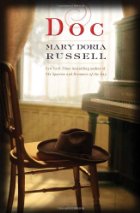
DocMary Doria Russell, Doc

This is a novel about the legendary Doc Holliday, known to history for his involvement in the infamous Gunfight at the O.K. Corral in Tombstone, Arizona. But this book isn’t about that particular historical event; rather, it’s about who Doc Holliday really was, or at least who he might have been. It starts with John Henry Holliday’s childhood in Georgia: how he survived the aftermath of the Civil War and Sherman’s march; how he loved music and the finer things in life; and how he was profoundly affected by his mother’s death. It describes how he became ill with the disease that eventually killed him, and how his health forced him to seek a more arid climate out West. Finally, it depicts his life in Dodge City, Kansas, and the friendships and relationships he formed there, particularly with Kate Harony — an educated, passionate, and temperamental whore — and with a taciturn lawman named Wyatt Earp.

Historical fiction is one of my favorite genres, and this book is a perfect example of why. It brings the Wild West to life in an extremely vivid way, particularly the struggles of a frontier town in an era where the law offered very little protection to its citizens. I was fascinated by the political machinations at work in Dodge, where social issues like prostitution and Prohibition were intimately entangled with the local economy, and where political elections were often decided over a hand of cards. The characters in this book are as well-depicted as the setting: I felt like I truly got to know Doc and Wyatt, what made them tick, and how they managed to rise above their time while also being defined by it. They are both admirable characters, but Russell doesn’t shy away from describing their very real flaws. Overall, this book transported me to another time, and I absolutely loved it. Definitely one of my top reads of the year!

R.I.P. VIII Challenge Wrap-up

I’m a bit late to the game here, but the eighth annual R.eaders I.mbibing P.eril event officially ended on October 31.

RIP VIII

The purpose of this event was to read books that fell within the genres of mystery, suspense, thriller, dark fantasy, gothic, horror, supernatural, or anything else sufficiently dark/spooky/autumnal. I attempted Peril the First, which asked me to read at least 4 books that met the challenge criteria.

RIP VIII peril the first

Fortunately, I managed to do a lot of perilous reading in September and October! Here’s what I read:

  1. Luis Fernando Verissimo, The Club of Angels
  2. Rhys Bowen, Royal Blood
  3. Isaac Asimov, A Whiff of Death
  4. Seanan McGuire, Chimes at Midnight
  5. Amy Patricia Meade, Million Dollar Baby
  6. Maggie Stiefvater, The Dream Thieves
  7. Robin McKinley, Shadows
  8. Ellery Queen, The Roman Hat Mystery
  9. Ray Bradbury, Something Wicked This Way Comes

Links will take you to my reviews. Overall, my favorite books were The Club of AngelsChimes at Midnight, and The Dream Thieves. My least favorite was undoubtedly Something Wicked This Way Comes.

Did you participate in R.I.P. VIII? If so, what did you read? What were your favorite and least favorite books of the challenge? (Also, don’t forget to link to your wrap-up posts here!)

Review: Something Wicked This Way Comes

Something Wicked This Way ComesRay Bradbury, Something Wicked This Way Comes

A week before Halloween, Cooger & Dark’s Pandemonium Shadow Show creeps silently into Green Town, Illinois, in the middle of the night. To most of the town’s inhabitants, the show is a carnival like any other, with its sideshows, rides, and circus freaks. But 13-year-old best friends Jim Nightshade and Will Halloway suspect that something more sinister is at work. The carnival seems to lure unwary visitors into its depths, and those who fall under its spell will never be the same again. It’s up to Jim and Will — and Will’s father, an unassuming librarian who worries about his age and his relationship with his son — to uncover the dark secret at the heart of the circus and to prevent it from ensnaring more victims.

I don’t usually read horror novels, but I was interested in this book because of its classic status (and, frankly, because of its Shakespearean title). Unfortunately, this novel really didn’t work for me, but the problem wasn’t the story at all — it was the writing style. The prose is gratingly faux-poetic, overblown, and melodramatic. Words are often used in unconventional ways (nouns being used as verbs and the like), which can be an effective stylistic choice, but in this case I found it incredibly distracting. I also found the dialogue completely unrealistic and stilted. It’s a shame, because I actually do think the basic story is fascinating and could have been very effective in the right hands. I’m definitely not enthusiastic about trying more Bradbury after this — and I’m wondering how well Fahrenheit 451 would stand up to a re-read!

Review: No Plot? No Problem!

No Plot? No Problem!Chris Baty, No Plot? No Problem!: A Low-Stress, High-Velocity Guide to Writing a Novel in 30 Days

This book, written by the creator of NaNoWriMo, explains the origin of his crazy idea to write a 50,000-word novel in 30 days. Its target audience is those creative, literature-loving types who often say to themselves, “Someday I’d like to write a novel,” but who haven’t actually done anything to make their dream happen. Baty’s central point is that the best way to write a novel is just to sit down and write it — and to give yourself an impossibly short deadline so that you can’t let procrastination or perfectionism get in the way. This book introduces the concept of NaNoWriMo and offers a guided tour of each week, complete with tips from people who have successfully hit the 50,000-word target in the past. It also offers suggestsions for how to keep motivated, what to do when you get stuck, and how to conquer your pesky Inner Editor.

Not sure if I’ve mentioned this yet, but I am participating in NaNoWriMo this month (and am already falling behind in my word count, due to an incredibly busy first weekend!), so I seized the opportunity to read this book before all the madness began. I really enjoyed Baty’s breezy, tongue-in-cheek tone, which underscores the fact that this is a ridiculous undertaking that is highly unlikely to produce quality work. I also found several of his suggestions helpful, particularly the idea of finding time to write every day by making a schedule and eliminating nonproductive activities. I know I can waste several hours a day doing nothing but watching TV or puttering around the apartment…but now I’m going to spend those hours writing intead! I should say, though, that this is not a good resource for learning about the craft of writing. Other than very basic definitions of plot, setting, and characters, this book doesn’t offer advice about style or improving the quality of your writing. I’d recommend it to people who are interested in doing NaNoWriMo, but those who want a more general writing guide should look elsewhere.
Review: The Roman Hat Mystery

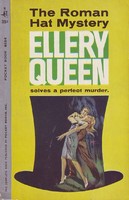
The Roman Hat MysteryEllery Queen, The Roman Hat Mystery

In 1920s New York City, crowds have been thronging to see the latest Broadway hit, a sensationalist gangster play complete with flashing lights and gunfire. But little did the audience members of the Roman theater suspect that a real murder would be committed during the second act! Inspector Richard Queen of the local police is on the scene almost immediately, with his curious son Ellery in tow. In examining the victim’s body, they soon discover an interesting anomaly: despite being dressed in full evening clothes, the dead man wasn’t wearing a top hat. The police scour the Roman theater from top to bottom and search all the audience members as they leave the premises, but the hat is nowhere to be found. While Inspector Queen and his fellow police detectives identify the corpse and discover his involvement in a blackmailing scheme, Ellery applies himself to the mystery of the missing hat — and deduces the identity of the murderer as a result.

I really enjoy classic mysteries from the early 20th century, so I was excited to read this first Ellery Queen novel. Overall, I was very impressed with the mystery plot itself; the solution is tight and hangs together well, although part of the motive is concealed from readers until the very end. (Historical racism is also an aspect of the solution, which can certainly be offputting for contemporary readers.) I also liked the way in which the police were depicted as they investigated the murder: far from being bumbling idiots, they approach their job intelligently and methodically. I was especially tickled by the introduction of the district attorney as a character. Most mystery novels focus solely on catching the killer — never mind if s/he can actually be convicted in a court of law! I wasn’t as impressed with the characterization of the detectives, however. Inspector Queen was more central to this book than Ellery, but he didn’t seem to be consistently depicted, and Ellery was barely fleshed out at all. Presumably, though, more character development occurs in subsequent books, and I’d certainly be willing to read more Ellery Queen novels.