Review: Devil’s Brood

Devil's BroodSharon Kay Penman, Devil’s Brood

Henry II, with the help of his wife, Eleanor of Aquitaine, has created one of the vastest empires known to Europe, and the time has come to parcel it out among his sons. As the oldest, Hal will succeed his father as king of England and will also rule over the French duchies of Normandy and Anjou. Richard, Eleanor’s favorite son, will inherit her lands as Duke of Aquitaine. Geoffrey will become Duke of Brittany through marriage to a prominent heiress. But even though all three boys have grown up, Henry still holds onto the reins of power, convinced that none of them are truly ready to rule in their own right. His sons’ lack of independence soon breeds resentment, and Henry is shocked by its consequence: with the help of their mother, they openly rebel against him. This novel is the story of the conflict between Henry and his sons, between Henry and Eleanor, and between the boys themselves, as their struggle for power leads to almost constant warfare throughout Europe.

I’ve been enjoying Penman’s Plantagenet series, and I think this is my favorite installment so far. It’s hard to believe that the major events in this novel actually happened…there’s just so much drama! I also found the portrayal of Henry and Eleanor’s (adult) sons to be fascinating. Geoffrey was my favorite, which will probably surprise any fans of “The Lion in Winter”; but based on Penman’s depiction, I think he would have made the best king. Sure, he was self-serving and manipulative, but so was everyone else in the book! At least he had a good strategic mind with an ability to make long-term plans, and he managed to win over the Breton nobles so that he could rule Brittany competently. The overarching conflict between Henry and his sons was both sad and frustrating. It seemed to come down to a total lack of communication skills and an inability to see the other side’s point of view. (Hmm, sounds familiar….) I’m glad I finally read this book, and I look forward to reading Lionheart in the future.
Review: The Collaborator of Bethlehem

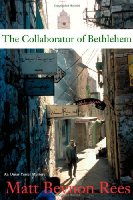
The Collaborator of BethlehemMatt Beynon Rees, The Collaborator of Bethlehem

Omar Yussef, a teacher at the Dehaisha refugee camp in Bethlehem, is a fussy, polite, middle-aged man with a combover. He’s the last person anyone would ever expect to make trouble, especially in the politically charged atmosphere of Bethlehem, where one wrong step (literally or figuratively) could place him and his family in lethal danger. But when a prominent Palestinian freedom fighter (or terrorist, depending on whom you ask) is shot just outside his own home, Omar can’t help getting involved — especially when his friend George Saba, a Christian and therefore a convenient scapegoat, is arrested for the killing. Omar knows that George is innocent and even finds evidence proving that he could not have committed the crime. But Omar’s friend the police chief is unwilling to investigate the matter further, since clearing George’s name would anger the militant Palestinians who champion the dead man as a martyr. So Omar resolves to investigate on his own; but the more he digs into the events surrounding the murder, the more he risks his own life.

I don’t know if I can say I liked this book…it’s very dark and very serious, and “liking” doesn’t seem like an appropriate response to it. But I’m extremely glad I read this novel, because it introduced me to a setting and a conflict that I honestly know very little about. The book does a wonderful job of depicting everyday life in Bethlehem, where the threat of violence is omnipresent and where the voices of extremism are much louder than the voices of moderation and peace. I really appreciated that the book does not paint either Israelis or Palestinians as the “bad guys,” but rather focuses on the struggles of individual people to do the right thing (or not) in a terrible situation. This novel is technically a murder mystery, but I found the detective work to be the least interesting part of the story. The urgency of the plot comes not from the hunt for the killer, but from Omar’s race against time to save his friend George. Overall, I found this book a fascinating read and will probably seek out more mysteries featuring Omar Yussef.

Review: The Passion of the Purple Plumeria

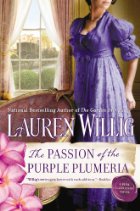
The Passion of the Purple PlumeriaLauren Willig, The Passion of the Purple Plumeria

In the eyes of the world, Miss Gwendolyn Meadows is the fiercely protective chaperone of Miss Jane Wooliston, who is currently one of the belles of Parisian society. But since Jane is also the elite British spy known as the Pink Carnation, Miss Gwen’s duties also include strategy, swordsmanship, and a taste for the dangerous work of espionage. Miss Gwen thrives upon the excitement of her double life, but she is forced to return to England when Jane’s younger sister goes missing from her prestigious boarding school. A second girl has also disappeared: the youngest daughter of Colonel William Reid, an officer of the British East India Company who has recently returned to England to reunite with his daughters. Now Miss Gwen and Colonel Reid must work together to find the missing girls — and fight their increasing attraction to one another, because Miss Gwen is all too aware that her clandestine activities are the probable reason for the girls’ disappearance.

This is the 10th book in Lauren Willig’s Pink Carnation series, and as I expected, it was a fun Regency romp complete with legendary Indian treasure, a meeting of the Hellfire Club, and a sinister French master spy. I like the fact that Willig chose a more mature hero and heroine for this installment of the series; it lent a bit of substance to the story, although the book still retains the series’ trademark light and fluffy tone. Miss Gwen is in her 40s and has long despaired of ever finding romance, so the relationship between her and Colonel Reid is particularly sweet and satisfying. I also liked how Willig is starting to gather the loose threads from some of her earlier books; for example, Colonel Reid is the father of Alex Reid from The Betrayal of the Blood Lily, and some of the events of that novel are relevant to this story. I am really hoping that Jack Reid, the black sheep of the family, is a hero in one of the future Pink Carnation books! All in all, I’m still enjoying this series and will continue to read more by Willig.

Review: A Midsummer Tempest

A Midsummer Tempest

Poul Anderson, A Midsummer Tempest

Set during an alternate version of the English Civil War, this novel follows Prince Rupert of Bohemia, one of King Charles’ most valiant allies. Unfortunately, Charles is losing his war against the Puritans, and after a particularly brutal battle, Rupert is captured by a Puritan nobleman and placed under house arrest. He immediately begins plotting his escape, but fate steps in when he meets his captor’s beautiful niece, Jennifer. The two of them end up fleeing the Puritan’s house together and receiving help from an unlikely source: Oberon and Titania, the king and queen of Faerie. They encourage Rupert to find the lost treasure of Prospero, whose magical artifacts will help the king’s cause; but Rupert must brave many dangers before he can fulfill his quest.

There are so many clever, ingenious concepts at work in this book that it’s almost too hard to list them all. First there is the obvious debt to Shakespeare: in this world, he is not merely a playwright but also the Great Historian, so everything he wrote is factually true. (Bohemia even has a sea coast!) Thus, this book is full of all the wonderful Shakespearean plot devices — faeries, star-crossed lovers, uncouth jesters, shipwrecks, and a very unusual tavern, to name a few. My favorite thing was realizing that several of the characters actually talk in iambic pentameter. Sure, it makes the style a bit choppy and stilted, but the characters talk in iambic pentameter! Add in a discussion of parallel universes, some trains, and angry Puritans getting their comeuppance, and I’m sold! I’d definitely recommend this one if you’re interested in the premise.

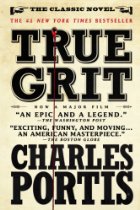
Review: True Grit

True GritCharles Portis, True Grit

In the postwar American West, Mattie Ross is a girl on a mission: her father has been killed by one of his drunken hired hands, and she’s determined to avenge his death. Despite being only 14 years old, Mattie has utter faith in her own ability to achieve her goal. As she arranges her father’s burial rites, she demands to know the name of a U.S. Marshal with “true grit” — someone who will be able to hunt down her father’s killer and exact retribution. Thus Mattie sets out with Rooster Cogburn, who is technically on the side of the law but whose own past is murky at best, and a Texan cowboy named LaBoeuf, who is hunting the same man for a different crime, on a quest for justice and revenge.

Though I don’t normally read Westerns, I’m very impressed with the ones I’ve been reading this year! The best part of this book is Mattie’s voice, which is completely distinctive and very funny, often unintentionally. For example, here’s a tidbit in which Mattie asks the sheriff about the various U.S. Marshals who could help her:

The sheriff thought on it for a minute. He said, “…The meanest one is Rooster Cogburn. He is a pitiless man, double-tough, and fear don’t enter into his thinking. … Now L.T. Quinn, he brings his prisoners in alive. He may let one get by now and then but he believes even the worst of men is entitled to a fair shake.” … I said, “Where can I find this Rooster?”

Another thing I found fascinating about this novel was its exploration of law in the Wild West. Near the beginning of the book, Mattie transcribes the trial of a man whom Rooster Cogburn had caught, complete with lawyers’ arguments and objections. It’s easy to see that, in the world of this novel, the law is largely ineffective and irrelevant to the men whose job is enforcing it. Perhaps that’s why Mattie feels such a strong urge to personally ensure that justice (as she sees it) is done. I’d definitely recommend this book as a quick, adventurous read that raises some thought-provoking questions.

Review: Dirty Little Secret

Dirty Little SecretJennifer Echols, Dirty Little Secret

Bailey Mayfield grew up playing classic country songs with her sister, Julie. They’d always planned to pursue a music career together, with Bailey on her fiddle and Julie playing guitar. But when a big record company signs Julie — and only Julie — Bailey is left out in the cold. She’s not even allowed to play music in public anymore because it might damage Julie’s career. Now Bailey is living in Nashville with her grandfather, and the only place she can play her fiddle is at the local mall, where she accompanies country musician impersonators. Everything changes, however, when Bailey catches the eye of Sam Hardiman, a fellow musician who wants Bailey’s fiddle in his band. He also seems to want Bailey herself, but will his dreams of stardom come between them? And will Bailey be able to follow her own path without ruining her sister’s life?

After being disappointed by Echols’ adult romance, Star Crossed, I’m happy to say that I really loved this book! I’m a sucker for plots that involve music and musicians, so this particular novel was right up my alley. I loved the descriptions of the Nashville music scene, which really made me want to experience it for myself! And of course, Echols does teen drama and swoony romance so well; Sam might be my favorite hero yet! I wasn’t totally crazy about the storytelling structure, though. We meet Bailey significantly after the record company snubbed her in favor of her sister, but we don’t really learn what’s happened to her until much later in the novel, so there are a lot of allusions to Bailey’s past that don’t make sense initially. I understand that writers do this to build suspense, and it can be effective, but here I just found it confusing. Still, that’s my one issue with a book I otherwise loved. YA and/or romance fans should definitely check it out!

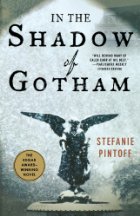
Review: In the Shadow of Gotham

In the Shadow of GothamStefanie Pintoff, In the Shadow of Gotham

After the tragic death of his fiancée, Detective Simon Ziele needs to get out of New York City. He joins the police force of a small town north of the metropolis, hoping that the work will be a respite from the suffering he’s left behind. But when a well-to-do young woman is brutally murdered — in her own house, in broad daylight — Ziele discovers that he can’t fully escape the violence and tragedy of his past. He receives the help of a criminal psychologist at Columbia University who believes that one of his own research subjects may be responsible for crime. Ziele is skeptical about the psychologist’s methods but accepts his help in hunting for the main suspect. But as they search for the man, Ziele is forced to return to New York City and confront some of the memories of his past.

This book had been sitting on my shelf for years, so I’m very glad I finally took the time to read it! I haven’t read many books set in turn-of-the-century America, but it’s certainly a fascinating setting for a murder mystery. This book takes full advantage of the setting, frequently mentioning the Tammany Hall political machine and exploring the gap between rich and poor. The mystery itself was fine but not particularly surprising; I didn’t guess “whodunit,” but I came up with a solution that, frankly, I would have enjoyed more than the actual answer! Nonetheless, I liked Simon Ziele and plan to continue with the series. I would definitely recommend this book to fans of historical mysteries.

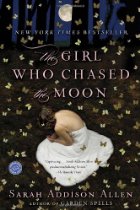
Review: The Girl Who Chased the Moon

The Girl Who Chased the MoonSarah Addison Allen, The Girl Who Chased the Moon

When 17-year-old Emily’s mother dies, leaving her an orphan, Emily moves in with her grandfather in her mother’s hometown of Mullaby, North Carolina. Almost immediately, Emily begins to notice strange things about the town — starting with the fact that her grandfather is literally a giant who stands over 7 feet tall. Then there are the mysterious lights that appear outside her window at night, which nobody seems to want to talk about. But most importantly, Emily soon discovers that the entire town is hiding a secret about her mother, something that has the potential to change Emily’s life forever.

I’m starting to suspect that Sarah Addison Allen is a sorcerer of some kind; her novels all have this luxurious, magical quality that transcends ordinary experience. Or to put it less pretentiously, I love her books, and this one is no exception! I enjoyed the glimpse of life in a small town, with all its idiosyncratic personalities and inexplicable traditions. My favorite character was Julia, Emily’s next-door neighbor and the best baker in town. There’s plenty of romance and mystery in this book, and it’s a perfect read for a lazy summer afternoon. This is not my favorite novel by Sarah Addison Allen — that would be The Sugar Queen — but it was still a lovely experience. Can’t wait for her new book, which is coming out next year!

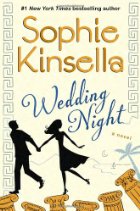
Review: Wedding Night

Wedding NightSophie Kinsella, Wedding Night

Lottie Graveney is certain that her boyfriend Richard is going to propose, so when his “big question” for her turns out to involve frequent flyer miles, she’s absolutely devastated. Still reeling from the subsequent breakup, she gets a call from her ex-boyfriend Ben, with whom she once spent an amazing summer on the Greek island of Ikonos. Ben is still as gorgeous and fun as Lottie remembers, and he even says he wants to get married. So Lottie and Ben decide to have a quickie wedding and fly to Ikonos for a whirlwind honeymoon. But Lottie’s older sister Fliss thinks this is a terrible decision, and the only solution is to follow them to Ikonos and stop them from consummating the marriage. Can Fliss prevent Lottie from making the biggest mistake of her life without losing her own chance at happiness?

I normally enjoy Sophie Kinsella’s light, breezy brand of chick lit, so I was excited to get my hands on a copy of this latest book. It was a fun, fluffy read, but ultimately I didn’t like this one as much as I wanted to. Lottie and Fliss take turns narrating the story, and I think the novel lacks focus as a result. There’s just so much going on, between Lottie’s romantic turmoil and Ben’s questionable motives and Fliss’ difficult divorce and Richard’s change of heart…it was just too many threads to keep track of, especially in such a fast-paced novel. There are ultimately two romantic plotlines, and neither of them is sufficiently developed. Also, I had a lot of trouble with Fliss’ character; while her original intention of protecting her sister is good, she uses a lot of underhanded methods to get her way. Another character does call her out for this behavior, but that didn’t stop me from being frustrated for a big part of the novel. All in all, this is a decent beach read, but I’m glad I didn’t spend any money on it.

Review: Suddenly, a Knock on the Door

Suddenly, a Knock on the DoorEtgar Keret, Suddenly, a Knock on the Door (trans. Miriam Shlesinger, Sondra Silverston, and Nathan Englander)

This collection of short stories is a strange mixture of realism and fantasy, comedy and tragedy. Keret is an Israeli author, and several of his stories reflect the current struggles of that country; one of them begins with a conversation in a restaurant and ends with a suicide bombing. But there is no grand political pronouncement in these stories, and ultimately they’re not about politics. Rather, they depict universal human experiences like sex, friendship, death, love, loneliness, chance, and fate. My favorite story in the collection (“What, of This Goldfish, Would You Wish?”) starts with politics but ends somewhere else entirely, as a documentarian interviews both Jewish and Arab residents of Israel and meets a man with a magic goldfish. Most of these stories are dark, and many are surreal, but all of them offer a fascinating perspective on the human condition.

I don’t often read short stories, and I’d certainly never read anything by Keret before, so I was pleasantly surprised by how much I liked this collection. Keret’s style is very understated and direct, which works well in his fantastical stories especially; it’s as though he’s telling a joke with a completely deadpan expression. I also think the stories as a whole are very well-crafted, with endings that are resonant and satisfying but don’t necessarily tie everything up too neatly. I definitely teared up on more than one occasion! As usual, a few of the stories didn’t quite work for me — the titular story in particular was a bit too clever for its own good — but overall I was very impressed with this collection and plan to read more by Etgar Keret.