Review: The Mark of the Midnight Manzanilla

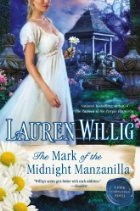
Mark of the Midnight Manzanilla, TheLauren Willig, The Mark of the Midnight Manzanilla

In the autumn of 1806, a popular novel called The Convent of Orsino (written by none other than Miss Gwen!) has sparked a vampire craze in fashionable society. Rumors swirl around one man in particular — Lucien, Duke of Belliston — whose long absence from society is seen as evidence that he is a creature of the night. Practical, outspoken Sally Fitzhugh is determined to prove this rumor false, so she seeks out an acquaintance with the duke. For Lucien, the rumor escalates from inconvenient to dangerous when a young woman is murdered at a society ball, with what appear to be fang marks on her throat. Lucien and Sally quickly realize that someone is framing Lucien for the murder, so together they decide to find the real killer. Is it someone with a personal grudge against Lucien, or could the nefarious French spy known as the Black Tulip be at work again? The more time Lucien and Sally spend together, the more they are drawn to each other; but before they can be together, they must defeat a cunning killer.

This 11th novel in the Pink Carnation series once again combines romance, historical fiction, and a touch of intrigue for a very enjoyable read. I wasn’t totally enthused about the plot of this installment beforehand, since vampires aren’t really my thing, but fortunately they’re not a big part of the story. I also didn’t completely warm up to Lucien or Sally, both of whom seem like types rather than characters…Sally in particular just seems like a younger version of Miss Gwen. But there’s still an awful lot to enjoy in this book! I was pleasantly surprised by the resolution of the mystery, which is quite clever and hangs together well. And as always, I adore the light, tongue-in-cheek tone of the series; it doesn’t take itself too seriously and aims to be entertaining above all else. I should mention that the contemporary story takes some significant steps forward in this installment, with Eloise facing important decisions both personally and professionally. So I’m really looking forward to the next (and last!) Pink Carnation novel, which will finally tell the story of the Carnation herself!

Review: That Summer

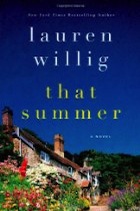
That SummerLauren Willig, That Summer

In 2009, Julia Conley learns that she’s inherited a house in England from a great-aunt she’s never met. She hasn’t even been to England since her mother died when she was little. When Julia reluctantly goes to London to get the house ready to sell, she teams up with her cousin Natalie and an attractive antiques dealer named Nick to sort through her great-aunt’s belongings. Julia is especially intrigued by a stunning painting that she finds in a wardrobe, which looks like it was painted by a member of the Pre-Raphaelite Brotherhood. Her quest to learn more about the painting leads her to the story of Imogen, who lived in the house with her husband Arthur in the 1840s. Imogen thought her marriage would be like a fairy tale, but in reality her husband is selfish and distant. She finally finds the love she’s been longing for when she meets a struggling painter named Gavin Thorne, who has been hired to paint her portrait. But will their romance last, or is it destined to end in tragedy?

I’m a longtime fan of Willig’s Pink Carnation series, so I was excited to read this book, her second stand-alone novel. As an added bonus, I really like Pre-Raphaelite art and was interested to learn a bit more about the movement. But while this was a fairly good read, I didn’t love it quite as much as I was hoping to. Both Julia’s and Imogen’s stories had the potential to be really interesting, but because the book divides its focus between them, neither plot is as rich as it could be. I had a hard time connecting to Imogen’s story in particular; the romance seemed to happen very abruptly. Also, I personally have a very hard time with love stories that expect me to condone adultery, so while I sympathized with Imogen’s plight, I wasn’t exactly rooting for her and Gavin to get together. Finally, I missed the lighthearted tone and occasionally silly humor of the Pink Carnation books. This novel is much more somber, and I didn’t find it as enjoyable. Overall, I’d say the book is worth a read if you’re a Willig completist (like me) or if you are particularly interested in the premise.

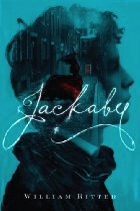
Review: Jackaby

JackabyWilliam Ritter, Jackaby

Abigail Rook has just arrived in the New England town of New Fiddleham with nowhere to go and no way to earn a living. As she sits in a tavern and ponders her next move, she encounters a strange man who turns out to be R.F. Jackaby, a private investigator with an extraordinary gift for detecting paranormal activity. Abigail’s talent for observation lands her a job as Jackaby’s assistant, and she is immediately embroiled in the investigation of a gruesome murder. Jackaby is convinced that the killer is supernatural, but the police scoff at the very idea — except for one young detective named Charlie Cane. With Cane’s help, Jackaby and Abigail pursue the investigation, encountering a banshee, a helpful madwoman, and a possible bridge troll along the way. Meanwhile, Abigail relishes the excitement of her new job, but several people warn her to stay away from Jackaby. She wants to keep her job, but will it cost her her reputation — or even her life?

Despite the fact that this book is classified as YA or even middle-grade, I really enjoyed it! The book is narrated by Abigail, a plucky protagonist who is suddenly thrown into a magical world with nothing but her wits to rely on. I like that she is basically ordinary; though smart and brave, she doesn’t have superpowers, so she is very relatable as she encounters the surprises and challenges of this world. Jackaby is a really fun character as well, with more than a few similiarities to Benedict Cumberbatch’s Sherlock Holmes! I also loved the richly imagined world of this novel, especially the random little gags that didn’t have much to do with the main plot, such as the frog in Jackaby’s office, or what happened to his former assistant. The mystery itself was fairly easy to solve — I figured out whodunnit almost as soon as the guilty character was introduced — but the fun of the book is the characters and setting. I’d definitely recommend this book to fans of historical fantasy, and I’m looking forward to the sequels!

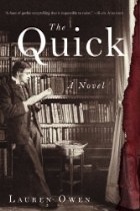
Review: The Quick

Quick, TheLauren Owen, The Quick

This novel, set in late Victorian England, centers around James Norbury and his sister Charlotte. After growing up isolated in a crumbling country estate, James is eager to move to London and try his luck as a poet. He slowly begins to conquer his shyness and mix a little in society, and eventually he even falls in love. But everything changes one fateful night when James is attacked, kidnapped, and initiated into the sinister Aegolius Club. Meanwhile, Charlotte has grown more and more anxious about her brother, who seems to have vanished without a trace. She journeys to London and attemps to discover what has happened to him, but what she finds out is more shocking and horrible than she ever could have imagined. As the Aegolius Club’s secrets are slowly revealed, and its members become more and more dangerous, Charlotte realizes that her only course of action is to destroy the club; but even if such a thing were possible, would she truly be able to rescue James?

I find that I really can’t talk about this book without mentioning one significant spoiler, so please STOP READING NOW if you don’t want to know anything else about the plot of this book! … If you’re still interested, here goes: this book is about vampires. I mention it because there is nothing in the book’s description or on the cover blurb about them, yet they are central to the entire book! Personally, I’m not a big fan of vampire novels and would not have picked up this book if I’d known they would be such a big part of the plot. That said, I actually really liked it a lot; Owen is a wonderful writer, and I found the novel a real page-turner despite the fact that it’s over 500 pages long. In fact, my other complaint is that it could probably have ended a few chapters before it did. I wasn’t a huge fan of the (largely depressing) ending, and I would have liked a little happiness for the main characters in the end, after they’d suffered so much. Still, this is a very accomplished gothic novel, and I’d definitely consider reading more by Lauren Owen.

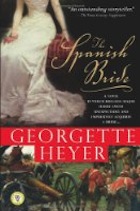
Review: The Spanish Bride

Spanish Bride, TheGeorgette Heyer, The Spanish Bride

Brigade-Major Harry Smith is a Rifleman in Wellington’s army, fighting Napoleon’s forces in Spain and Portugal. He participates in the Siege of Badajos, a long and drawn-out battle that results in plunder, rape, and violence when the allied British and Portuguese soldiers finally conquer the town. As Harry tries to maintain order and discipline, he is approached by two Spanish women who are seeking protection from the carnage within the city. As soon as he lays eyes on the younger of the women, Juana, he falls instantly in love with her, and she with him. Against the advice of Harry’s comrades, they marry immediately, and Juana accompanies her husband throughout the rest of the Peninsular campaign. As she “follows the drum” and experiences life as a soldier, she demonstrates the courage and fiery temperament that make her a perfect match for Harry. Together, the Smiths witness history as they eventually see Napoleon’s final defeat at Waterloo.

I am a huge fan of Georgette Heyer’s Regency romances, but I found that I had to approach this book with entirely different expectations. Although the novel features two young, passionate lovers, it is much more about military history than it is about romance. Harry and Juana Smith were actual historical figures, and Heyer got most of her information from Harry’s journals, as well as from other comtemporary accounts including Wellington’s own dispatches. As a result, there is a lot of great historical detail in the book, but not a lot of plot or character development. While Harry and Juana are very vivid characters, their journey is not the focus of the book. I think the trick to enjoying The Spanish Bride is viewing it as a work of military history with a few romantic touches. If you approach it that way, you’ll find it very readable and entertaining. But if you go into it expecting a tale of romance and suspense with the Napoleonic Wars as a backdrop, you’ll find it extremely dull! So overall, I’d recommend this book if you’re interested in the time period, but you have to adjust your expectations.

Review: Just Like Heaven

Just Like HeavenJulia Quinn, Just Like Heaven

Lady Honoria Smythe-Smith is desperate to be married. Though she is part of a large, affectionate family, things have been very quiet in her parents’ house ever since her brother Daniel fled England after seriously wounding a man in a duel. Honoria longs to start her own family and once again feel surrounded by love; and as an added bonus, once she is married, she’ll no longer have to perform at the Smythe-Smiths’ infamous musicales. Meanwhile, Marcus Holroyd, the Earl of Chatteris, is Daniel’s best friend and has always felt more at home with the Smythe-Smiths than with his own distant family. Marcus and Honoria have always been friendly, but when a sprained ankle and a dangerous illness throw them together, they both begin to suspect that their relationship is deepening into something more.

I basically picked up this book for two reasons: 1) It shares a title with a really great Cure song, and 2) I’m a sucker for ridiculous British surnames. Fortunately, I ended up enjoying it quite a bit! Marcus is a delightful hero; he comes across as proud and brooding, but only because he feels shy and socially awkward (shades of Mr. Darcy!). And Honoria is a sweet girl with just enough humor to keep her from being insipid. Somewhat unusually for a Regency romance, most of this book doesn’t take place during the London Season; rather, Honoria spends a good portion of it nursing Marcus back to health from a life-threatening fever. Some might find the sickroom scenes tedious, but to me they underscored why Marcus and Honoria make such a great pair. All in all, I’d definitely recommend this light, quick read to fans of Regency romances, and I’ll probably pick up something else by Julia Quinn in the future.

Review: Whom the Gods Love

Whom the Gods LoveKate Ross, Whom the Gods Love

Alexander Falkland, one of the darlings of English society, has just been murdered — bashed over the head with a poker in the middle of a party at his own house. The Bow Street Runners are at a loss to discover the killer; after all, who would want to murder a man who was universally liked? When the official investigation goes nowhere, Alexander’s father enlists the help of Regency dandy/sleuth Julian Kestrel. As a man of Alexander’s own social class, Julian has unique access to his friends and associates that the Bow Street Runners could never obtain. Julian agrees to take the case, but he warns Alexander’s father that unpleasant truths might emerge. And indeed, the further Julian digs into Alexander’s life, the more shocking secrets he uncovers, including several motives for murder.

I absolutely loved the first two books in the Julian Kestrel series, and I’m thrilled to be able to say that I loved this one as well! The strength of most mystery series depends on the protagonist, and Julian Kestrel is a wonderful sleuth: intelligent, intuitive, willing to cooperate with the police (a rare trait!), and always impeccably dressed. I also think this book is very well-plotted. Obviously there is more to Alexander Falkland than meets the eye, but the various twists and turns of the plot kept me in suspense until almost the very end of the book. My only problem with the book is that I really liked one particular character who ended up doing a horrible thing in the course of the plot. Because of this, the resolution of the mystery wasn’t completely satisfying for me; but I suppose that’s a testament to the author for making me care so much about that character! In short, I’d definitely recommend this book (and the entire series) to anyone who enjoys mysteries or historical fiction!

Review: An Old Betrayal

An Old BetrayalCharles Finch, An Old Betrayal

***Warning: SPOILERS for previous books in the series!***

Charles Lenox, Victorian gentleman and Member of Parliament, thinks he has left his former life as a detective behind. But when his aristocratic protégé, John Dallington, asks him for help with a prospective client, Charles is eager to lend a hand, leaving his work in the House of Commons behind. Since Dallington is laid up with a bad cold, Charles agrees to meet the prospective client in his place; but before Charles can make contact with the client, a young woman named Grace Ammons, she is scared away by a mysterious man. Eventually Charles learns that Grace has connections to Buckingham Palace, and he suspects a possible plot to steal the priceless items within it. But when the man who frightened Grace Ammons is later found murdered, Charles realizes that the plot against the palace is more shocking and deadly than he ever imagined.

This is the seventh Lenox mystery, and in my opinion, the series is still going strong. One of my biggest complaints about the last couple installments has been the neglect of the secondary characters, but this book gives them a lot more attention. There is a significant subplot involving Charles’ medical friend, Thomas McConnell, and Dallington (my favorite character!) is also prominently featured. I also largely enjoyed how the mystery plot unfolded in this book; unsurprisingly, the murder and the threat to Buckingham Palace turn out to be connected, and there are many clever twists and turns along the way. But I think my favorite aspect of this novel is how it ends: there are a lot of big changes for Lenox and his friends in this book, and in my opinon, they’re changes for the better. I’m really looking forward to seeing where the series goes from here!

Review: Curtsies & Conspiracies

Curtsies and ConspiraciesGail Carriger, Curtsies & Conspiracies

After the events of Etiquette & Espionage, Miss Sophronia Temminick is back at Mademoiselle Geraldine’s finishing school, where young ladies learn to finish…anyone or anything. Sophronia learns that she has received top marks in her espionage classes, which causes resentment among the other students, even her close friends. Meanwhile, she discovers more information about the crystalline valve prototype that caused so much trouble in the previous book. While she tries to learn more about the valve’s purpose, it quickly becomes evident that she’s not the only interested party — and that her best friend Dimity might be in danger because of it. While Sophronia attempts to put her clandestine skills to good use, she must also cope with the arrival of boys from a rival academy — including one who flirts with her most scandalously! Will Sophronia be able to protect her friend and solve the mystery, all while trying to listen to her confused heart?

This second book in Carriger’s Finishing School series is another fun Victorian romp with steampunk trappings. The world of these books is fascinating and very entertaining, with its steam-powered “mechanimals” and rules of supernatural etiquette. This book even furnishes a few specific alternate-universe facts, such as that the telegraph was introduced a few years ago but failed dismally. These tidbits help to anchor the novel’s plot a bit more in reality, which is important because most of it is so entirely silly! If you’re not familiar with Carriger’s schtick, be prepared for a lot of riduculous names and pseudo-British witticisms. I personally enjoy the silliness, but your mileage may vary. I also quite like Sophronia, a delightfully practical, self-assured heroine who doesn’t let little things like rules or restrictions prevent her from satisfying her curiosity. My only complaint is that I’m still very confused about the valve and the various parties involved. No one’s motives are clear yet, which makes it hard to know whether Sophronia is doing a good job or not. But I’m still definitely planning to continue with the series to find out!

Review: Doc

DocMary Doria Russell, Doc

This is a novel about the legendary Doc Holliday, known to history for his involvement in the infamous Gunfight at the O.K. Corral in Tombstone, Arizona. But this book isn’t about that particular historical event; rather, it’s about who Doc Holliday really was, or at least who he might have been. It starts with John Henry Holliday’s childhood in Georgia: how he survived the aftermath of the Civil War and Sherman’s march; how he loved music and the finer things in life; and how he was profoundly affected by his mother’s death. It describes how he became ill with the disease that eventually killed him, and how his health forced him to seek a more arid climate out West. Finally, it depicts his life in Dodge City, Kansas, and the friendships and relationships he formed there, particularly with Kate Harony — an educated, passionate, and temperamental whore — and with a taciturn lawman named Wyatt Earp.

Historical fiction is one of my favorite genres, and this book is a perfect example of why. It brings the Wild West to life in an extremely vivid way, particularly the struggles of a frontier town in an era where the law offered very little protection to its citizens. I was fascinated by the political machinations at work in Dodge, where social issues like prostitution and Prohibition were intimately entangled with the local economy, and where political elections were often decided over a hand of cards. The characters in this book are as well-depicted as the setting: I felt like I truly got to know Doc and Wyatt, what made them tick, and how they managed to rise above their time while also being defined by it. They are both admirable characters, but Russell doesn’t shy away from describing their very real flaws. Overall, this book transported me to another time, and I absolutely loved it. Definitely one of my top reads of the year!