Mini-Reviews #6: Dog days

I can see the light at the end of the tunnel for these mini-reviews! I’ll do this post and one more, and then I should finally be caught up! *sobs with relief*

Murder on the LusitaniaSingle Girl's To-Do List, The

Conrad Allen, Murder on the Lusitania — This is a fairly pedestrian mystery novel set during the Lusitania’s maiden voyage, where ship’s detective George Porter Dillman thinks he’ll have to deal with nothing more exciting than a few thefts. Of course, when an unpopular journalist is murdered on board, Dillman has to investigate–and choose between two women, the beautiful but aloof Genevieve and the happy-go-lucky Ellen. I didn’t particularly like this book, mostly because the characters annoyed me. Dillman is too smug and superior, and Genevieve seems more like a male fantasy than an actual person. The solution to the mystery was fine but seemed to come out of nowhere–or perhaps I just stopped paying attention too soon. Overall, a very “meh” read, and I feel no desire to continue with the series.

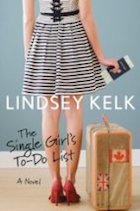
Lindsey Kelk, The Single Girl’s To-Do List — After enjoying Always the Bridesmaid, I had to track down another Lindsey Kelk novel, and this one did not disappoint! Rachel has just been dumped by her long-term boyfriend and has basically forgotten how to be single, so her two best friends create “the single girl’s to-do list” to force her out of her comfort zone. I really liked that Rachel’s friendships were so central in the novel, remaining constant throughout her tumultuous love life. Of course, the ultimate romance comes as no surprise, and I would have liked the hero to be a little more fleshed out. Nonetheless, I liked this book a lot and will continue to read more by Kelk.

CotillionBetween Shades of Gray Blackmoore

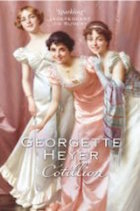
Georgette Heyer, Cotillion — One of my very favorite Heyer novels, mainly thanks to its delightful hero, Freddy! He is a wonderfully unconventional leading man: not particularly handsome, not a ladies’ man, not overly burdened with brains. In fact, he reminds me of a slightly more functional Bertie Wooster. But of course, his “street smarts” and kind heart ultimately win the day!

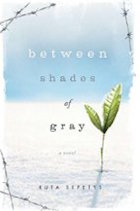
Ruta Sepetys, Between Shades of Gray — This World War II novel centers around an aspect of the war that is sadly often forgotten. The narrator, Lina, is a 15-year-old Lithuanian girl who is abducted one night, along with her mother and brother, by the NKVD. Lina describes the horrible tortures and indignities she and her fellow prisoners suffer, as well as the desperate hope that somehow her father will find her. My favorite thing about this book is that many of the characters are portrayed with some complexity. For example, one of Lina’s fellow prisoners is a cranky old man who constantly complains, yet in the end he manages to do something heroic. Similarly, one of the Soviet guards is deeply conflicted about his cruel actions. But some of the other characters–particularly Lina’s saintly mother–remain annoyingly simplistic. I also wasn’t a fan of the flashbacks to Lina’s carefree earlier life; they were too jarring for me. Still, I liked the book overall, and I think it tells a story that needs to be told.

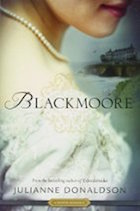
Julianne Donaldson, Blackmoore — Kate Worthington wants nothing more than to escape her horrible family and go to live in India with her aunt. But her mother refuses to let her go, finally delivering an ultimatum: if Kate wants to go to India, she must first receive–and reject–three marriage proposals. Since Kate is not beautiful and flirtatious like her sister, she despairs at first. But when she is invited to the estate of her old friends, Sylvia and Henry Delafield, she reasons that she can at least try. Of course, she doesn’t expect to fall in love along the way. While this book is extremely predictable, I have to say that I enjoyed it anyway! My biggest complaint is that it takes Kate far too long to realize that her ideal mate is right in front of her, head over heels in love. The Big Misunderstanding could easily have been solved with a little rational communication! I should also note that the book is subtitled “A Proper Romance,” which essentially just means it’s rated PG; there’s nothing explicitly religious or preachy about it. All in all, this was a pleasant read that satisfied my craving for a Regency romance.

Mini-Reviews #5: Summer Reading

All right, time to post some mini-reviews of books I read way back in July! Will I ever catch up with all my reviews? Only time will tell, so stay tuned! 🙂

Death of an AirmanSong for Summer, A

Christopher St. John Sprigg, Death of an Airman — In this mystery centered around an English aviation club, one of its best flyers perishes in a tragic plane crash. Most people assume it’s an accident, but the victim was a first-class pilot, and the inquest revealed nothing wrong with the plane. A few of the club members suggest suicide, but a visiting Australian bishop suspects murder. When the police get involved, they realize the victim’s death may be connected to a much larger criminal organization. I liked this mystery well enough, but I think the strength was definitely in the plot rather than in the characters. For example, for the first several chapters, it looks like the Australian bishop is going to be the sleuth, but suddenly everything switches to the police inspector’s point of view. Still, this was a fun variation on the “impossible crime” mystery with a truly ingenious solution.

Eva Ibbotson, A Song for Summer — Ibbotson’s novels are the ultimate comfort reads! I’d never reread this one before, and I think it’s because the plot moves a bit more slowly than in Ibbotson’s other novels, and the atmosphere is bleaker. It’s still a lovely book, but I definitely find myself returning to A Countess Below Stairs and The Morning Gift much more often.

It Happened One WeddingSpear of Summer Grass, ACrown's Game, The

Julie James, It Happened One Wedding — Julie James was my first contemporary romance author, and she pretty much single-handedly convinced me that not all romance novels are poorly written trash. This is another fun, banter-filled romance between hedge fund manager (?) Sidney and FBI agent Vaughn. They initially dislike each other but are forced to play nice when her sister and his brother get engaged. I think we all know where this is going.

Deanna Raybourn, A Spear of Summer Grass — After scandalizing English society with her outrageous behavior, Delilah Drummond is packed off to British East Africa so she won’t further damage her family’s reputation. Although Delilah is the consummate city girl, with her fashionable dresses and daring bob, she soon falls in love with the African landscape. She also encounters various dangers, from marauding lions to outright murder — and possibly finds love as well. I didn’t particularly like this book, and I’m not sure why. I didn’t dislike it either…I just felt indifferent to it. Delilah reminded me a lot of Phryne Fisher, but while I love Phryne, I didn’t have the same enthusiasm for Delilah. Maybe she was too similar (since I encountered Phryne first)? The romance also made me roll my eyes a bit; the hero is very much an alpha-male caveman type, and he just seemed like a stereotype to me. Overall, a “meh” read.

Evelyn Skye, The Crown’s Game — In an alternate Imperial Russia where magic exists but only a few have the power to wield it, Vika knows she is destined to become the Imperial Enchanter and take her place at the emperor’s side. But then she learns that there is another powerful enchanter in Russia — and that she must defeat him in the Crown’s Game, a magical duel in which the winner becomes Imperial Enchanter and the loser is condemned to death. Little does she know that the other enchanter is Nikolai, whose magic (and handsome face) intrigues her. As Vika and Nikolai get to know each other, they realize they don’t want the Crown’s Game to end in death. But will they be able to find a better solution? I have to admit, this book sort of lost me early on, when Vika is described as having wild red hair with a black streak down the middle. I immediately had a knee-jerk Mary Sue reaction, and I never quite warmed to Vika after that. I did end up somewhat liking the book, particularly for the Russian setting and the lovely descriptions of the magic. I also liked the fact that the stakes are real, and not everybody gets a happy ending. I’ll probably look for the sequel when it comes out. Nevertheless, I was definitely underwhelmed by this one, especially given the amount of hype I’d seen about it.

Mini-Reviews #4: June Books, Part 2

More mini-reviews! Just when I think I’m getting to the end of my backlog, I go and read more books. Will I never learn?

Only Thing Worse Than Me Is You, TheSchool for Unusual Girls, A

Lily Anderson, The Only Thing Worse Than Me Is You — Oof. I really wanted to like this one — it’s a modern retelling of Much Ado About Nothing! But I was very underwhelmed, and the main reason is that I couldn’t stand the protagonist, Trixie. She’s incredibly self-absorbed and utterly convinced of her own righteousness at all times, which makes her downright mean to the people around her. She’s also a proud geek girl, obsessed with comic books and “Doctor Who.” Don’t get me wrong — I have nothing against these things! But Trixie’s constant references to geek culture didn’t feel real to me. Instead, I felt like the book was trying to pander to a specific audience and going way over the top. In short, I just wasn’t a fan.

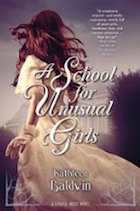
Kathleen Baldwin,  A School for Unusual Girls — This one’s about — you guessed it — a school for unusual girls. Sixteen-year-old Georgiana Fitzpatrick doesn’t behave as a proper young lady should; and when one of her scientific experiments nearly burns down the stables, her parents pack her off to a school whose reputation for strictness is legendary. Of course, Georgie soon realizes that the school is not what it seems and that her fellow students all have unique, mysterious abilities. There’s also romance, kidnapping, and a touch of espionage. All in all, a fun read, although not particularly groundbreaking in the genre. I’d like to read the sequel at some point.

Tell Me Three ThingsStrong PoisonDecent Proposal, The

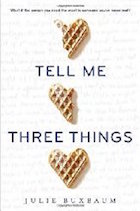
Julie Buxbaum, Tell Me Three Things — I enjoyed this novel despite its ridiculous premise: Jessie Holmes moves across the country when her dad remarries, and she is forced to attend a pretentious private school where she doesn’t know anyone — that is, until the mysterious Somebody/Nobody emails her, offering friendship and guidance in navigating the social scene at her new school. Though Jessie is skeptical at first, she soon opens up to Somebody/Nobody and speculates on who it might be. To the reader, the answer is astoundingly obvious, but it’s still fun to watch Jessie get there. A nice YA romance if you’re into that kind of thing.

Dorothy L. Sayers, Strong Poison — I read this installment of the Lord Peter Wimsey series years ago but didn’t remember much about it, except that Lord Peter finally meets his match in Harriet Vane, a young woman who’s on trial for murdering her ex-lover. For me, this was the best novel in the series so far. The mystery is well plotted (although, as with other books in the series, the suspect list is so small that the true mystery is howdunit, not whodunit), and the romance is nicely underplayed. I’m definitely loving this series more and more as I continue to read, and I’m looking forward to the next book!

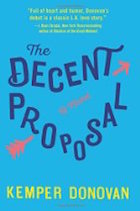
Kemper Donovan, The Decent Proposal — I was drawn to this book because of the title, and I knew very little about it going in. The premise is that a mysterious benefactor has promised two L.A. residents, happy-go-lucky Richard and highly regimented Elizabeth, that they will each receive half a million dollars if they agree to meet each other once a week for a year and talk — just talk. Of course they accede to the proposal, and of course they start out as very different people but eventually find some common ground. I liked the development of the relationship between Richard and Elizabeth, especially since I honestly didn’t know whether it was going to end in friendship or romance. I could have done without most of the other characters, actually; they seemed like they should get their own novels rather than being relegated to secondary characters in this one. I also think people who have lived in L.A. would get more out of the book, since it’s definitely written in that specific setting. Overall, I did like the book, but I’m glad I got it from the library instead of buying.

Mini-Reviews #2: May books

Still behind on reviews, so here’s a batch of minis for the books I read in May!

Spy Among Friends, AOne Perfect Day

Ben Macintyre, A Spy Among Friends: Kim Philby and the Great Betrayal — Guys, if you’re at all interested in espionage in the 20th century, you need to read Ben Macintyre! This is a fascinating stranger-than-fiction account of Kim Philby, an old-school English gentleman who rose to an extremely high position in the Secret Service while actually being a spy for the USSR.

Rebecca Mead, One Perfect Day: The Selling of the American Wedding — Mead, a British journalist, examines the contemporary American wedding from a sociological and monetary perspective. If you enjoy weddings but suspect they’ve gone off the rails in recent years decades–particularly in the ever-inflating costs for both the couple getting married and their guests–you’ll find a lot of interesting material here.

Vinegar GirlRaven King, TheLike Water for Chocolate

Anne Tyler, Vinegar Girl — First there was The Austen Project, for which six famous contemporary authors tried their hand at updating the novels of Jane Austen. Now Hogarth Shakespeare is doing a similar project with the Bard’s plays, with Vinegar Girl being a retelling of The Taming of the Shrew. Judging it as a novel, I found it a very pleasant read, albeit not particularly original or memorable. But I didn’t think it was a particularly good retelling of The Taming of the Shrew! So whether you enjoy the book will probably depend on what you’re looking for.

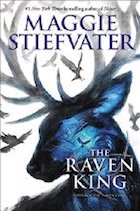
Maggie Stiefvater, The Raven King — If you love the series, you’ll love the ending! I thought certain plot elements were resolved a bit too abruptly, but the heart of the book–the relationships between Blue, Gansey, Ronan, Adam, and Noah–remains true. I was also torn on the addition of Henry Cheng as a character. First of all, I should say that I LOVED Henry Cheng! (Maybe he could have his own book? More Henry Cheng, please!) But part of me felt like the book was already crowded enough between the five main players and all the people at Fox Way. Be that as it may, I found this book to be a deeply satisfying ending to a wonderful series. If you love fantasy, you definitely need to read it!

Laura Esquivel, Like Water for Chocolate (trans. Carol Christensen and Thomas Christensen) — I’d heard a lot of good things about this book; people are always mentioning magical realism and comparing it to Sarah Addison Allen’s books (which I love). But ultimately, it didn’t do much for me. I felt sorry for Tita, doomed to take care of her bullying mother and remain unmarried while the love of her life marries her sister. But I also found the entire situation entirely too melodramatic, and the supernatural elements didn’t charm me. Overall, a disappointing read.

Mini-Reviews #1: Readathon leftovers

It’s pretty obvious that I haven’t spent much time on this blog lately. *blush* What can I say — life has been busy for the past couple of months, and when I’ve had free time, I’ve preferred to spend it doing other things (like reading!). As a result, I have a pretty huge backlog of books that I haven’t written about yet, and the thought of sitting down to compose a full review for each one is incredibly daunting. So, rather than continuing to avoid the task, I’ve decided to do three batches of mini-reviews — just titles and authors of the books I’ve been reading, along with a couple of sentences expressing my opinions. Once I catch up, I plan to go back to my regular style of reviewing. But for now, here are mini-reviews for the books I read during April’s 24-hour readathon:

Love, Lies and SpiesAs If!

Cindy Anstey, Love, Lies and Spies — A fun, lighthearted bit of Regency fluff for those who enjoy YA historical romance. I found the spy storyline weak, and the romance wasn’t quite compelling for me — Georgette Heyer, this is not! But it’s a pleasant enough read for fans of the genre.

Jen Chaney, As If! The Oral History of Clueless as Told by Amy Heckerling, the Cast, and the Crew — This book will only appeal to people who really love the movie “Clueless” and who are fascinated by behind-the-scenes movie knowledge. Fortunately, I fall within this demographic, so I really enjoyed the book!

Hermit of Eyton Forest, TheAlways the BridesmaidWhy Not Me?

Ellis Peters, The Hermit of Eyton Forest — Full disclosure: this installment of the Brother Cadfael series features a male character called Hyacinth. But I still love this series about a 12th-century Benedictine monk who solves crimes! (Who wouldn’t?)

Lindsey Kelk, Always the Bridesmaid — Entertaining British chick lit about a young woman named Maddie whose two best friends are at opposite ends of the romantic spectrum: one just got engaged, while the other is getting divorced. My friend pointed out that Maddie is a huge pushover, which she (my friend) found irritating. While I think that’s a fair criticism, I ultimately enjoyed the book for  its humor and romance, so I’d definitely read more by this author.

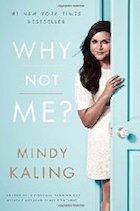
Mindy Kaling, Why Not Me? — I think Mindy Kaling is very talented and hilarious, and this book had me giggling pretty much nonstop. I like that she isn’t preachy, she’s very self-aware, and she doesn’t apologize for her confidence (some might say arrogance). As she says in the book, there’s nothing wrong with being confident — as long as you’ve put in the hard work to back it up. Bottom line: if you like Mindy Kaling, you’ll like this book.

Review: War and Peace

War and PeaceLeo Tolstoy, War and Peace (trans. Anthony Briggs)

“Set against the sweeping panoply of Napoleon’s invasion of Russia, War and Peace — presented here in the first new English translation in forty years — is often considered the greatest novel ever written. At its center are Pierre Bezukhov, searching for meaning in his life; cynical Prince Andrei, ennobled by wartime suffering; and Natasha Rostov, whose impulsiveness threatens to destroy her happiness. As Tolstoy follows the changing fortunes of his characters, he crafts a view of humanity that is both epic and intimate and that continues to define fiction at its most resplendent.” (Summary from Amazon.)

It took me more than three months to read this book, and I’m still not quite sure what to make of it. I feel a bit presumptuous in criticizing such a well-known classic, but certain parts of the novel worked for me much more than others. There’s a lot of social comedy in this book, which I loved! And I find the Napoleonic era fascinating, although I’ve only been exposed to it from a British point of view, so it was interesting to see that conflict from a Russian perspective. However, there are reasons most people never finish this book, and those reasons are: the overly long, mind-numbingly tedious descriptions of battles; philosophical digressions; and tirades about the right and wrong way to study history. I do think this book is worth reading once, but I’m glad I don’t ever have to read it again!

I also want to note that I liked the Briggs translation; it’s not as word-for-word accurate as the Pevear-Volokhonsky translation is rumored to be, but I suspect it’s more readable. Instead of footnoting the long French passages, Briggs just translates them directly into English, although he does note when certain characters are speaking French. I actually preferred this, but some readers may not. Also, the Briggs translation is pretty aggressively British; for example, some of the lower-class soldiers have Cockney accents! Again, I didn’t mind this, but I can see how others might. All in all, I’d recommend this translation for casual readers but maybe not for serious scholars.

Review: The River of No Return

River of No Return, TheBee Ridgway, The River of No Return

Nicholas Falcott, Marquess of Blackdown, is about to die on the battlefield at Salamanca. But instead of being trampled by a French cavalry horse, he suddenly disappears in a blaze of light and reappears in the 21st century. There, Nicholas finds himself under the protection of the Guild, a secret society of individuals with the ability to jump forward in time. The Guild provides Nick with a new identity, plenty of money, and enough information about the modern world for him to survive in the present. Nick believes it’s impossible to go back to his original time — until one day, out of the blue, the Guild leaders order him to do just that. They tell him about a rival group of time travelers whose attempts to change history will result in widespread disaster, unless Nick can go back to 1815 and stop them. But when he jumps back to his own time, he learns that the Guild is keeping secrets from him. He also reconnects with Julia Percy, his beautiful young neighbor who is somehow connected to this feud between time travelers.

This is a book I should have loved: it’s got Regency England, romance, intrigue, and time travel! But sadly, the novel’s underwhelming execution didn’t live up to its great premise. One of the biggest problems for me was the pacing. It took forever to set up the world and introduce Nick and Julia as characters. Once Nick jumps back to 1815 (about 1/4 of the way into the book), things pick up a little, but the pacing still drags. Nothing really important occurs until the last 50 pages or so, when the characters suddenly learn a whole lot of new information at breakneck speed. My other big problem with this novel is that NOTHING IS RESOLVED IN THE END. Nick eventually learns more about the future catastrophe that the time travelers are trying to prevent, but he doesn’t actually do anything about it. So basically, this book is one long setup for a payoff that isn’t going to happen until the sequel — and I don’t think it’s actually been published yet, so it could be a long wait! I’ll admit that I am a bit curious to know how things turn out, but it may not be worth the aggravation this book caused me.

Review: Newt’s Emerald

Newt's EmeraldGarth Nix, Newt’s Emerald

After Lady Truthful’s magical Newington Emerald is stolen from her she devises a simple plan: go to London to recover the missing jewel. She quickly learns, however, that a woman cannot wander the city streets alone without damaging her reputation, and she disguises herself as a mustache-wearing man. During Truthful’s dangerous journey she discovers a crook, an unsuspecting ally, and an evil sorceress—but will she find the Emerald? (Summary from Amazon.com.)

A Regency romance with fantasy elements…of course I was going to like this book! 🙂 It’s actually the first thing I’ve read by Garth Nix, and I believe it’s somewhat atypical for him, but I’m still interested in reading more of his backlist now. I think my favorite thing about this book is the light, bright tone throughout. Even though the novel’s stakes are fairly high — the missing emerald is an ancient and powerful jewel capable of causing significant havoc — the plentiful humor and Regency elements make the book a very light, pleasant read. I also enjoyed Truthful’s adventures as a man, especially because they allowed her and her love interest truly to get to know each other, beyond the superficial interactions between ladies and gentlemen in Regency society. The actual romance wasn’t totally satisfying for me; it starts off with a nice slow build, but the resolution is extremely abrupt and comes very late in the book. But overall, I really enjoyed this novel, and so should any fan of the genre!

Review: Sorcerer to the Crown

Sorcerer to the CrownZen Cho, Sorcerer to the Crown

The Royal Society of Unnatural Philosophers, one of the most respected organizations throughout all of England, has long been tasked with maintaining magic within His Majesty’s lands. But lately, the once proper institute has fallen into disgrace, naming an altogether unsuitable gentleman—a freed slave who doesn’t even have a familiar—as their Sorcerer Royal, and allowing England’s once profuse stores of magic to slowly bleed dry. At least they haven’t stooped so low as to allow women to practice what is obviously a man’s profession…

At his wit’s end, Zacharias Wythe, Sorcerer Royal of the Unnatural Philosophers and eminently proficient magician, ventures to the border of Fairyland to discover why England’s magical stocks are drying up. But when his adventure brings him in contact with a most unusual comrade, a woman with immense power and an unfathomable gift, he sets on a path which will alter the nature of sorcery in all of Britain—and the world at large… (Summary from Amazon.com.)

This book ticks so many of my boxes — Regency England! Magic! Georgette Heyer comparisons! — that I knew it would be right up my alley. And my high expectations were completely justified: this is definitely one of my favorite books of the year! Zacharias is an immediately sympathetic character, his African descent automatically making him an outsider despite his theoretical position of authority. The other protagonist, Prunella, is equally appealing. She is headstrong and warmhearted, while Zacharias can be cold and reserved, so they make an excellent team. My gold standard for historical fantasy novels is Sorcery and Cecelia by Patricia C. Wrede and Caroline Stevermer, and Sorcerer to the Crown is very much in that tradition. I must say that the marketing for this book is terrible; the cover design implies a very different sort of novel, and the quote comparing it to “a cross between Georgette Heyer and Susanna Clarke” is completely inaccurate. It’s much more Heyer than Clarke, so if you’re expecting something similar to Jonathan Strange and Mr. Norrell, you’ll be disappointed. But I loved the book and am thrilled that there will be at least one sequel!

Review: A Proper Companion

Proper Companion, ACandice Hern, A Proper Companion

Robert, Lord Bradleigh, is a rakish earl with a recently arranged betrothal to a lovely young girl he barely knows. Emily Townsend is an impoverished spinster employed as a companion to his grandmother, the formidable dowager countess. Robert agrees to help his grandmother find a husband for the beautiful Emily. But once he comes to know the charms of his grandmother’s companion, he begins to regret his hasty engagement.

This sparkling tale will take you from the Pump Room at Bath to the ballrooms of London as the unexpected and undeniable attraction between Robert and Emily blossoms into something more … something that could put one of them in danger. (Summary from Amazon.com.)

I’m going to be honest: I read this book about two months ago, and I truly don’t remember a thing about the plot. I think maybe Emily had another suitor who turned out to be evil in some way, but I’m not sure. And maybe Robert’s fiancée ended up falling in love with someone else? Like I said, the details have completely gone out of my head. So, obviously, this was not a particularly great read for me…but it wasn’t particularly awful either, or I would have remembered it! From what little I recall, the writing style was fine but not great; but after all, only a few authors can flawlessly imitate that Regency voice. I’m sure I did enjoy the book while I was reading it, because I remember looking up the sequels on Amazon (although I didn’t actually purchase them). I suppose lovers of non-bodice-ripping Regency romances would enjoy this book, but I can’t really recommend something that I can’t remember!