Mini-Reviews: Shippers, Corpse, Brides

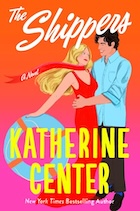
Katherine Center, The Shippers

JoJo Burton’s love life is a train wreck—a fact that becomes abundantly clear when she leaves her rich, “perfect” fiancé at the altar. JoJo thinks her problem may be rooted in unresolved feelings for her childhood crush, Finn Turner. Fortunately, her sister’s about to get married on a cruise ship, and newly divorced Finn is one of the guests. With several days of forced proximity and her sister’s help, JoJo is determined to attract Finn and thus fulfill her romantic destiny. The only problem is JoJo’s best friend, Cooper, who thinks her plan is ridiculous. As her attempts to lure Finn meet with disaster, JoJo eventually begins to question where her romantic destiny truly lies. This is a fun, fast-paced read with some cute banter, but I have to say that the romance drove me crazy! JoJo is implausibly blind to what’s right in front of her, and I don’t buy that Cooper would have kept his feelings a secret for so long. I also found the ending a bit anticlimactic after all the buildup. The book is still a fun, breezy summer read if you like this premise, but for me it’s not one of Center’s best.

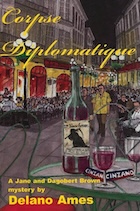
Delano Ames, Corpse Diplomatique

Jane and Dagobert Brown are traveling through France when they encounter a violent death, about which Dagobert immediately suggests Jane write another mystery novel. While staying in Nice, they meet a diplomat from “Santa Rica” who is terrified of being assassinated. His fears seem justified when a bullet whizzes by his head, narrowly missing him but killing Major Hugh Arkwright instead. Who was the true intended victim, and who among the Browns’ new acquaintances at their French hotel is the killer? This series is enjoyable mainly for Jane’s snarky running commentary on the various people and events she’s writing about. The characters are largely well drawn, and I enjoyed the touches of humor, but the mystery itself is a bit lackluster; it kind of plods along without any real forward motion until the very end. Overall I liked this book fine, and I’d read more in the series if I came across them, but I don’t feel compelled to seek them out.

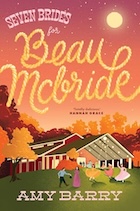
Amy Barry, Seven Brides for Beau McBride

After Junebug McBride found wives for two of her four older brothers, she’s been strictly forbidden from advertising for any more mail-order brides. But the third McBride brother, Beau, thinks Junebug had the right idea and places his own ad for a bride. Naturally, Junebug has to be involved and bets Beau that she can find a better wife than he can. But when she writes to six women instead of one, and they all come out West hoping to marry Beau, she has a problem on her hands. Especially when one of her brides, Ellie Neale, turns out to be best friends with Beau’s own pick, Diana—and Ellie soon falls for Beau herself! I enjoyed this fun Western romance, with its nonsensical yet enjoyable plot and over-the-top characters. Junebug is a lot and would be insufferable in real life, but she’s a lot of fun to read about. I liked that the seven potential brides were all decent and kind women, rather than being catty rivals. Beau and Ellie’s romance was sweet and had some funny moments due to Ellie’s melodramatic nature. I’m looking forward to the next book in the series!
Mini-Reviews: Trellised, Morning, Silent

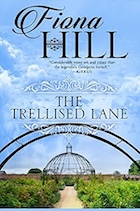
Fiona Hill, The Trellised Lane

Julia has been the lady of the house since her mother’s death, but now that her father has remarried, she no longer has that freedom and authority. Despite liking her new stepmother, Julia wants to regain her lost responsibilities and urges her brother, Fitz, to accompany her to London so that she can marry and leave home. She soon catches the eye of a French nobleman with a dubious past, but is herself attracted to a friend of her stepmother’s. Meanwhile, Fitz’s innocence is challenged by the new friends he meets in London. Last year I really enjoyed Fiona Hill’s The Country Gentleman and consequently bought an e-book collection of her novels. Unfortunately, this one didn’t really work for me; it just felt very unoriginal and paint-by-numbers. The stakes couldn’t be lower, and none of the characters are particularly well developed. Not a terrible book, just bland as an unsalted cracker.

Eva Ibbotson, The Morning Gift

Ruth Berger was born and raised in Vienna as the privileged daughter of a well-off professor. But in 1938, because of her Jewish heritage, Vienna is no longer safe. Her family emigrates to England, but due to a paperwork mix-up, she is left behind. Enter Quinton Somerville, a British professor who once studied with Ruth’s father and decides to help her get out of Austria. Unfortunately, the only way to do it is by marrying her. Quin and Ruth agree they’ll annul the marriage once they reach England, but of course fate has other ideas. Eva Ibbotson’s books are the ultimate comfort reads for me. They’re full of warmth and community, with luxurious descriptions of scenery and music and food. But they’re saved from being too sickly sweet by some moments of genuine gravity and heartbreak, such as the story of the Ziller quartet in this book. Work is stressful at the moment, so I needed a familiar comfort read, and this novel was the perfect choice!

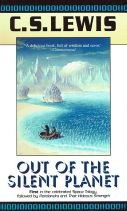
C.S. Lewis, Out of the Silent Planet

Philologist Elwin Ransom is on a walking tour of England when he encounters an old schoolfellow, Devine, and a brilliant physicist, Dr. Weston. They’re working on a mysterious object that turns out to be a spaceship—and the hapless Ransom is taken on board by force. He learns that Devine and Weston are taking him to another planet, Malacandra, which is inhabited by sapient beings who requested Ransom for some ominous purpose. But when the three men land on Malacandra, Ransom soon learns that the planet and its inhabitants are nothing like he expected. This book was written in the ’30s, and it cleverly interrogates the tropes of science fiction that were popular at the time (what aliens would be like, what would be the experience of space travel). The plot is a bit slow-moving, with lots of descriptive language about the terrain and the various species Ransom meets. There are also some thinly veiled religious ideas, which is to be expected with Lewis. Overall, this is a pretty good space-travel tale, but it’s definitely more on the philosophical than the adventurous side.

Mini-Reviews: Educating, Joyful, Lucky

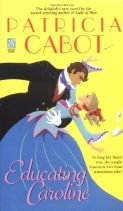
Patricia Cabot, Educating Caroline

Lady Caroline Linford is shocked and dismayed to discover her fiancé in the arms of another woman. Feeling unable to break off the engagement, she decides she needs some lessons in seduction so that she can keep her betrothed from straying. And who better to teach her than the “Lothario of London,” Braden Granville? Braden is surprised by Caroline’s proposal, since she’s such an innocent and proper young lady, while he’s a self-made man from the slums of London. But he’s also intrigued—and finds himself giving her a much more hands-on tutorial than either of them expected. This is one of the first historical romance novels I ever read, and I was curious to see if it would hold up to my fond, nostalgic memories. By and large, I still found it an enjoyable read! It’s almost a parody of the genre, which made me willing to overlook the book’s sillier elements, and there’s a decent suspense plot alongside the main romance. It’s not great literature by any means, but if you’re in the mood for a light and fluffy historical romance, this one is a fun time.

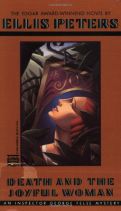
Ellis Peters, Death and the Joyful Woman

Sixteen-year-old Dominic Felse meets the beautiful 22-year-old Kitty Norris and falls immediately, painfully in love with her. So when she is arrested for the murder of Alfred Armiger, an enormously wealthy but not very popular local entrepreneur, Dominic knows she must be innocent and attempts to find the real killer. Is it Armiger’s estranged son and his wife, who lost out on the dead man’s fortune? Or could the murder have something to do with a tavern sign of dubious artistic merit? I’m really enjoying these Felse novels, not just for the vintage-mystery charm but for the lovely characterizations, especially of George and Dominic. Their relationship is loving but complicated now that Dominic is on the verge of adulthood. The solution to the mystery is almost irrelevant to the central conflicts of the novel, but that’s a minor quibble when the book is this enjoyable. I’ll definitely be continuing with this series at some point!

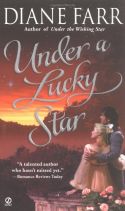
Diane Farr, Under a Lucky Star

When Derek Whittaker rescues Lady Cynthia Fitzwilliam from the unwelcome attentions of another man, it’s love at first sight for them both. Derek immediately plans to court Cynthia, but at their next meeting she rebuffs him. Hurt and angry, Derek tries to forget about her; but when they meet again three years later at a house party, he’s annoyed to find that he is still drawn to her. Meanwhile, Cynthia struggles with her attraction to Derek, since she feels duty-bound to marry a very rich man to support her family. Diane Farr is a good writer, and I’ve enjoyed some of her books, but this one frustrated me. I’m not a fan of insta-love generally, and in this case it felt like Derek and Cynthia kept having the same argument over and over again. But I did like that Cynthia’s scheming mother gets her comeuppance in the end! Overall, this book is a quick and pleasant read, but it just wasn’t the right story for me.

Mini-Reviews: Regency, Eyes, Spellman

Georgette Heyer, Regency Buck

Judith Taverner and her brother Peregrine travel to London to meet their guardian, Lord Worth, who they assume is a curmudgeonly old man. In fact, Worth is relatively young, a leader of fashionable society, and friends with Beau Brummell. His autocratic manner immediately offends strong-willed Judith, and their frequent arguments comprise the most dramatic parts of the book. Meanwhile, someone is trying to kill Peregrine, but is the villain Worth or someone else? I love Heyer, but this is not one of my favorites by her, and now I remember why. It’s one of her earliest Regency romances, and it seems like she dumped all her research here. We get so much detail about Beau Brummell, the Royal Pavilion at Brighton, prizefighting, and so on that there’s no space for the romance. The hero treats Judith badly, and we don’t get enough insight into his feelings or motives. If you want a detailed window into the Regency era, this novel is great, but it’s not very satisfying as a romance.

Zora Neale Hurston, Their Eyes Were Watching God

Janie Crawford is a young black woman living in Florida in the early 20th century. Her grandmother, who was born in slavery, has a specific vision for Janie’s life: She should marry a well-to-do man and let him take care of her, so that she never has to work or struggle. But Janie has an adventurous spirit and wants to see more of the world. Some of her choices don’t work out—she meets men who want to stifle and control her, and she endures poverty and great suffering. But she also finds true love and spiritual freedom despite her circumstances. This is a beautifully written novel with a compelling protagonist; Janie felt like a real person to me, and in the end I was convinced that she’d be okay no matter what happened next. I also liked the portrayal of Janie’s community, which felt vivid and true to life. The characters all use a specific dialect, which means you have to pay close attention while reading, but I think that’s a feature rather than a bug. Overall, I can see why this book is regarded as a classic and would definitely recommend it.

Lisa Lutz, The Spellman Files

The Spellmans are a loving but dysfunctional family of private investigators. They tail each other around town, record each other’s private conversations, and break into each other’s locked rooms. Twenty-eight-year-old Izzy, who narrates this novel, is the screwup of the Spellman children and wants to leave the family business. But her parents make her take on one last case before they’ll allow her to quit, and Izzy’s questionable investigative tactics cause even more family drama. This is a really clever book with a fun premise—I enjoyed Izzy’s deadpan narrative voice and the various hijinks she and her family get into. At the same time, it all requires a huge suspension of disbelief, and you can’t think too hard about the reality of this family or you’ll realize how truly tragic and dysfunctional it is. This is the first book in a series, but I’m not sure I’ll be continuing…I did enjoy it, but I don’t think I need more.

Mini-Reviews: Gilded, Enchanting, Scoop

Elizabeth Bailey, The Gilded Shroud

In this Georgian-era historical mystery, Emily Fanshawe, the marchioness of Polbrook, is strangled in her bedchamber, and the most likely suspect is her husband. Their marriage has always been contentious, they argued the night before the murder, and now Lord Polbrook is nowhere to be found. His family is horrified yet determined to prove him innocent—a task that falls on his younger brother, Lord Francis Fanshawe, and on his mother’s new companion, Ottilia Draycott, whose clever mind soon uncovers some pertinent secrets. I read this book a long time ago and remember liking it, so I’m pleased to say I really enjoyed it this time as well! The historical setting feels grounded, and both Francis and Ottilia are interesting, sympathetic characters. The mystery is well plotted but a bit slow, and I found it less compelling than the romantic subplot. But I’m excited to read the next book, which I also own, and it looks like Bailey has also written some romances that I’d like to check out!

Stephanie Burgis, Enchanting the Fae Queen

Imperial general Gerard Moireul is a brilliant military strategist with an unassailable reputation for honor and integrity. Queen Lorelei of Balravia is notorious for her flighty, scandalous behavior. They’ve been nemeses for years, both politically and personally. But when a magical bargain forces them to compete in a fae tournament, they must work together, and slowly they come to realize they’re much more alike than they thought. I’m generally a Burgis fan, and I enjoy the enemies-to-lovers trope, so overall I found this quite fun. Both Gerard and Lorelei are likable characters underneath their exaggerated public personas, and I’m especially fond of an uptight, duty-bound hero. I do think the broader political situation in this fantasy world is boring and basic; the book is more enjoyable when it focuses on the romance. Overall, it’s a fun read, and you don’t necessarily have to read the previous book, Wooing the Witch Queen, to follow this one.

Evelyn Waugh, Scoop

British novelist John Courteney Boot has gotten himself entangled with the wrong woman and needs to skip town. He asks a friend to get him a job as a foreign correspondent covering the imminent war in the East African republic of Ishmaelia. But through a series of misunderstandings, the newspaper sends the wrong man, William Boot, who writes a nature column and has absolutely no desire to travel beyond his country village. As William embarks on his bewildering adventure, he learns more than he bargained for about journalism and international relations. This novel is both a biting satire on journalism and an extremely well-plotted farce. I loved how William’s oblivious blundering essentially caused the revolution (and counterrevolution) in Ishmaelia. On the minus side, there aren’t really any characters to root for, and the worldview expressed by the novel is cynical and bleak. Overall, I enjoyed the book’s humor but don’t think I’d ever want to reread it.

Mini-Reviews: Unlikely, Penance, Outcrossing

Betty Neels, An Unlikely Romance

Orphan Trixie Doveton doesn’t expect too much from life; she’s content with her work as a nurse-in-training and doesn’t believe she’ll ever marry. So she’s shocked when Professor Krijn van der Brink-Schaaksma, a renowned endocrinologist and very eligible bachelor, proposes a marriage of convenience. He needs someone to manage his social life and keep his acquaintances at bay so he can concentrate on the book he’s writing. Trixie, having fallen in love with him almost immediately, accepts—but can she be happy when the man she desperately loves hardly seems to notice her? I enjoyed this a bit more than my previous Neels title, No Need to Say Goodbye. I liked that Trixie wasn’t a complete doormat; though she outwardly conforms to all Krijn’s expectations, she isn’t happy about it and occasionally lets her anger show. I also liked getting a few glimpses into Krijn’s head as his feelings for his wife begin to change. It’s not a deep or significant book, but not bad for a quick, nostalgic read.

Ellis Peters, Brother Cadfael’s Penance

***Warning: SPOILERS for previous books in the series!***

In the late fall of A.D. 1145, the civil war between King Stephen and Empress Maud rages on, but most people just want the fighting to be over, regardless of the victor. To that end, one of the empress’s major supporters changes sides and surrenders a key castle to Stephen. When some of the castle’s knights refuse to betray the empress, they are taken prisoner. Among them is Olivier de Bretagne, Brother Cadfael’s son from his crusading days. Cadfael sets out for Coventry, where a peace conference is being held, to see if he can locate and ransom Olivier. But doing so will risk his place among his Benedictine brethren—and possibly even his life. I adore this series and am sad to have finished it, but I think this is an extremely fitting conclusion. Cadfael faces his biggest challenge yet, as he’s torn between love of his vocation and love of his son. The book also explores the complexities of friendship, loyalty, and father-son relationships, all while painting a vivid picture of medieval life. I can’t recommend this series highly enough, although I definitely think this book should be read last.

Celia Lake, Outcrossing

In this fantastical version of 1920s England, Rufus Pride is magically gifted but untrained, since the man who was supposed to teach him died in the Great War. Now Rufus is struggling to make ends meet with no steady trade, magical or otherwise. Meanwhile, Ferry Wright is from an aristocratic family, but she’s become a governess rather than marry the much older man her parents have chosen for her. When Rufus and Ferry meet, they’re immediately drawn to each other but don’t see a way to be together. Then Rufus falls in with a gang of smugglers who put both his and Ferry’s lives in danger. This book is marketed as a “cozy historical fantasy romance,” which is a fair description and right up my alley. I found it slight but charming, although the dialogue was occasionally a bit stilted to my ear. I also could have done without the two or three steamy scenes. But overall, I enjoyed this one and would consider reading more by the author – she seems to be quite prolific!

Mini-Reviews: Hugo, Clouds, Slender

Molly Clavering, Dear Hugo

It’s 1951, and 40-year-old Sara Monteith has just moved to the Scottish village of Ravenskirk, the hometown of her fiancé, Ivo, who was killed in World War II. Sara writes to Ivo’s brother, Hugo, about her experiences in the village: taking tea with the local gossips, making friends (and frenemies), gardening, and exploring the beautiful landscape. She also becomes the guardian of her cousin’s child, 13-year-old Atty, and reflects on the highs and lows of parenting a teenage boy. Several romances blossom around her, some of which she helps along, but ultimately Sara’s story is one of contentment in this new season of her life. This is a pleasant, peaceful read with a bit of light humor and some very sweet moments, especially between Sara and Atty. There’s absolutely no plot to speak of, and I was disappointed that Sara didn’t get her own romance, but I liked this one overall and think it will please anyone who enjoys this type of book.

Agatha Christie, Death in the Clouds

In this 1935 mystery, a woman is murdered on an airplane in the middle of a cross-Channel flight—and Hercule Poirot unfortunately sleeps through the whole thing! The victim was killed with a blow-dart coated in an obscure poison, but how could anyone have shot the dart without being observed? Poirot collaborates with the English and French police—as well as some of the passengers on the fatal flight—to learn more about the dead woman and discover who had a motive to kill her. He also finds a vital clue in the passengers’ luggage that reveals how the murder occurred. I enjoy this Christie novel and have read it a few times. I think the solution to the mystery is really clever, especially Poirot’s reconstruction of how the crime must have occurred. There’s a fair bit of humor—I love the detective novelist, Mr. Clancy—and multiple romantic subplots. Recommended if you’re in the mood for a fun Golden Age romp!

Muriel Spark, The Girls of Slender Means

This slender book (see what I did there?) is set in a boardinghouse called the May of Teck Club, inhabited by women eking out a living in postwar London. The girls pursue various jobs and love affairs, sharing jokes and a single glamorous evening gown, until a tragedy radically alters their lives. This is a very odd novel; aside from the aforementioned tragedy at the end, hardly anything actually happens. I’m also not quite sure how the author intends us to feel about some of the characters — she seems to mock them all pretty indiscriminately. That said, the book is absolutely hilarious, and I loved the frequent satire of the publishing industry:

She had put aside Nicholas’s manuscript for the time being, as it was a sticky proposition; she had not yet, in fact, grasped the theme of the book, as was necessary before deciding on a significant passage to cast doubt upon, although she had already thought of the comment she would recommend George to make: “Don’t you think this part is a bit derivative?” Jane had thought of it in a brain-wave.

Overall, highly recommended for the writing style and setting, but not if you need a plot and/or likable characters.

Mini-Reviews: Bend, Redfern, Knew

V.S. Naipaul, A Bend in the River

This novel depicts a pessimistic view of life in postcolonial Africa. It’s narrated by Salim, a young Indian Muslim who decides to move away from his family on the east coast and settle in a small town in the interior of Africa. There he observes the various struggles he and his neighbors face, from the petty corruption of local officials to large-scale political violence. Salim’s aimlessness and confusion mirror the experience of the town, which seems doomed to corruption and decay no matter who is ruling it. This is my first encounter with Naipaul, and while he’s an excellent writer, I didn’t much care for the book. As a novel, I don’t think it works; there’s not much plot, and Salim is an incredibly passive and unsympathetic character. Based on cursory internet research, Naipaul seems to be widely viewed as racist and sexist; the character of Salim certainly is both. But I didn’t read this as a pro-colonialist novel, as some have claimed. The fictional town here seems doomed to corruption and decay no matter who is ruling it. Regardless, this type of book isn’t for me, and I don’t plan to read more by Naipaul.

Tessa Arlen, Poppy Redfern and the Midnight Murders

It’s 1942, and Poppy Redfern is the local air raid warden in her village of Little Buffenden. Excitement has recently come to the village in the form of an American airfield; the Yanks have arrived to help win the war, and at first the locals embrace them with open arms. Some of the village’s young women begin dating the dashing American soldiers; but when two of the women are murdered, suspicion immediately falls on the outsiders. But Poppy, wondering whether someone from the village might be responsible, decides to investigate for herself. I enjoy a good historical mystery, and this one was fine, but nothing particularly stands out about it. Poppy is a fun narrator, but many of the secondary characters are flat and two-dimensional. I also felt there was a lot of info-dumping about life in England during World War II, which will be redundant for most people. Overall, this was an easy, pleasant read, but I’m not desperate to pick up the sequel.

Kristan Higgins, If You Only Knew

This novel follows two sisters as they face new challenges in their lives. Jenny, recently divorced but trapped in an unwanted “friendship” with her ex and his new wife, has moved back to her hometown for a fresh start. There she meets her attractive neighbor, Leo, who flirts with her but is adamant that he doesn’t want a relationship. Meanwhile, Jenny’s sister, Rachel, channels all her energy into being the perfect wife and mother—until she discovers that her husband cheated on her. Will she forgive him or forge a new path for herself? I enjoyed this book quite a bit; both Jenny and Rachel, who take turns narrating, are relatable and sympathetic characters. The serious issues in the book are leavened by humor and by a satisfying romance that develops throughout the novel. I stopped reading Higgins’s books after a while because they got too miserably depressing, but this one is a fun and uplifting read.

Mini-Reviews: Spouse, Duke, Fallen

Alice Coldbreath, A Contracted Spouse for the Prizefighter

Former prizefighter Clem Dabney has embarked upon a new career and established a popular music hall in London; now he seeks to expand into a real theater. The Parthenon, owned by Theodora Fields and her two siblings, is his target, but he’s surprised when she approaches him with a proposition: She’ll marry him and thus give him an ownership stake in the theater, if he agrees to put her male impersonation act onstage. Clem agrees and soon finds himself oddly drawn to his eccentric wife, but his secrets may threaten their happiness. I’ve enjoyed this whole series, and this book caps things off nicely. I liked Clem’s bewildered affection for Dora (as he calls her), and I enjoyed the music hall setting. I do think the book is oddly paced, and the conflict between them isn’t terribly substantial, but I still really enjoyed the central romance. I’m looking forward to my next read by this author!

Anna Harrington, If the Duke Demands

Miranda Hodgkins has been in love with her neighbor, Robert Carlisle, for years, but the attraction has always been one-sided. Determined finally to get his attention, Miranda sneaks into his bedroom and attempts to seduce him—only to encounter his older brother, Sebastian, instead. Sebastian offers to help her with Robert if she’ll help him find a suitable wife; as the Duke of Trent, he needs a woman with the right family and social connections. But as Miranda and Sebastian’s agreement brings them closer together, an inconvenient mutual attraction sparks. This Regency romance was a perfectly fine read, but it didn’t knock my socks off. I generally enjoy the “wrong brother” trope, but here it’s a relatively small part of the plot. Miranda also gives off strong “not like other girls” vibes. I did like that she’s honest with Sebastian about her feelings and desires, but I felt he was caddish and irresponsible for pursuing her without feeling able to marry her. Overall, I didn’t dislike this one but wouldn’t particularly recommend it either.

Ellis Peters, Fallen into the Pit

It’s been five years since World War II ended, but in the English town of Comerford, on the Welsh border, trouble persists. Helmut Schauffler, a former POW and proud Nazi, is deliberately antagonizing everyone, picking fights and tormenting a local Jewish woman. No one is sorry when his dead body turns up, but Sergeant George Felse knows it’s his duty to find the killer—especially when his teenage son, Dominic, gets involved in the investigation and ends up in danger. I adore the Brother Cadfael novels and was excited to finally try Peters’s other mystery series, which she set in her own era. Overall I really enjoyed this book, despite its being a bit too long; it manages to be a convincing depiction of a changing postwar England, a compelling mystery, and a surprisingly tender portrayal of George and Dominic’s relationship. The Cadfael series has my heart, but I think if you enjoy that series and like Golden Age-style mysteries, you’ll enjoy this one too. I’m excited to continue with the next book!

Mini-Reviews: Merry, Wallflower, Best

Charlotte MacLeod, Rest You Merry

This yuletide mystery is set in a college town, where Professor Peter Shandy hates the tacky, over-the-top Christmas light display in which all the residents are bullied into participating. This year Peter retaliates by putting up the most garish decorations possible, then promptly leaving for a Christmas cruise. When he returns to find local busybody Jemima Ames dead in his living room, he wonders whether his prank might have somehow contributed to her death. And when he suspects murder, the college president orders him to investigate before scandal can damage the college’s reputation. I really enjoyed this vintage mystery novel (first published in 1978), which includes all the predictable elements — an intelligent amateur sleuth, multiple suspicious deaths, some seeming impossibilities, a closed circle of suspects, and even a romance — but deploys them well, with plenty of clever wit. This is the first book in the Peter Shandy series, and I’ll happily read more if I can find them at my library.

Eloisa James, How to Be a Wallflower

Cleo Lewis has come to London for the Season, but she’s more interested in running the company her father left her, Lewis Commodes, than in finding a husband. In fact, she’s determined to be a wallflower and orders her wardrobe accordingly. At the dressmaker’s, she runs into Jacob Astor Addison, a rich American who wants to buy the dress shop and transport it to New York. Cleo immediately opposes this scheme, and they become business rivals—which of course leads to bickering, bantering, and falling in love. After enjoying Eloisa James’s story in Ladies in Waiting, I picked up a bunch of her full-length novels as free/cheap e-books, but this one was just okay for me. It’s the very definition of a wallpaper historical; Cleo and Jake would never have been tolerated in high society based on their speech and behavior, and the plot is completely implausible. There’s also not much conflict in the romance; Jake’s feelings and intentions are clear from the start, and Cleo comes around pretty early on. That said, James does have a fun, breezy writing style, and I’m hoping to have more luck with her other novels!

Kate Clayborn, Best of Luck

This final book in the Chance of a Lifetime series focuses on Greer, who’s trying to complete her degree at age 27 but needs a photography class to graduate. She asks her best friend’s brother, Alex, for help while he’s in town, since he’s a well-known photojournalist. But their collaboration is complicated by a mutual attraction that seems pointless in the long term, since Alex travels for his job and hates staying in one place. I really like Kate Clayborn; a lot of contemporary romances these days seem same-y and flat to me, but hers are heartfelt and complex. I loved that both Greer and Alex are dealing with real problems, but their trauma isn’t their only defining characteristic. They’ve both fought hard for what they have, so despite their affection for each other, they’re understandably wary of how a relationship might destabilize their lives. There’s maybe a bit too much angst toward the end of the novel, but overall I really liked this one, and I’d strongly recommend the whole series to those who enjoy contemporary romance!