
Mini-Reviews: Heiress, Excellent, Witch

Sherry Thomas, Ravishing the Heiress

In this Victorian romance, Millie Graves is the daughter of a rich tradesman who has arranged a marriage for her with the destitute Earl Fitzhugh. When Millie meets Fitz, she falls in love with him immediately, but Fitz is much less impressed, since he’s already in love with his childhood sweetheart, Isabelle. When Millie realizes this, she proposes that they wait to consummate their marriage and that once she produces an heir, he and Isabelle can pursue an extramarital relationship. But as the designated time for the consummation draws near, Fitz is surprised to find that the woman he really desires is his wife. I was pretty disappointed in this book, mostly because Fitz is such a jerk for most of it! He spends his entire honeymoon drunk, openly cheats on Millie with random women, and makes absolutely no effort to understand her thoughts or feelings. I couldn’t believe we were supposed to be rooting for this guy, and he doesn’t do nearly enough in the end to make up for his abhorrent behavior. So I definitely would not recommend this one and am hoping that the other Thomas title on my shelves, His at Night, is a lot better!

Richard Hull, Excellent Intentions

This mystery story has a common Golden Age setup: Wealthy and thoroughly unpleasant Henry Cargate is poisoned on a train. It turns out any number of people wished him ill, but only a few had the means and opportunity to obtain the poison and put it in his snuffbox, where he’d be sure to inhale it. The unusual element of the novel is that it starts at the murder trial, where the prosecutor summarizes the case against the accused (whose identity isn’t revealed till very late in the book). The narration jumps back and forth between the trial and the preceding investigation, and readers get inside the heads of the Scotland Yard inspector, prosecuting and defense attorneys, and even the judge. I liked the clever narrative structure and the reminder that catching the murderer isn’t the end of the story. However, the actual mystery isn’t particularly creative or hard to solve; the unique structure is the most interesting part of the book.

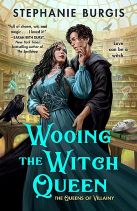
Stephanie Burgis, Wooing the Witch Queen

Queen Saskia is a witch determined to protect her people from the evil empire that’s trying to invade her country. Archduke Felix is the embodiment of that empire and the focus of Saskia’s hatred. But Felix is merely a figurehead imprisoned by his conniving relatives, who are about to escalate from torture to murder. When Felix escapes, he runs straight into Saskia’s kingdom but can’t reveal his true identity, so he applies for a job as her librarian, where romance and cozy villainy ensue. I enjoy Burgis’s writing, but this book fell a little flat for me. I think it’s because there’s no nuance; the good characters are 100% good, the baddies are entirely evil, and the romance lacks any real tension or depth. This book illustrates a trend I’ve noticed in the past few years, where romantic heroes are implausibly perfect and exist solely to provide emotional support to the heroine. Of course, I don’t want horrible, misogynistic “heroes,” but I would like them to feel like actual human beings and not cardboard fantasies. All that said, I may read the next book in the series when it’s published, but I will get it from the library instead of buying.

Mini-Reviews: Nonesuch, Masquerade, Strawberries

Georgette Heyer, The Nonesuch

Sir Waldo Hawkridge—known as the Nonesuch because of his superior looks, wealth, and social status—has just inherited an estate in Yorkshire. When he and his young cousin Julian visit the estate to evaluate its condition, they soon meet the various residents of the neighborhood. Julian is immediately smitten with the beautiful (but headstrong and selfish) Tiffany Wield, while Sir Waldo is intrigued by her companion, Ancilla Trent. Meanwhile, Ancilla is immediately drawn to Sir Waldo but fears he’d never seriously be interested a nobody like her. I adore Georgette Heyer, and normally I reread four or five of her novels every year. But I recently realized that I hadn’t yet read a single Heyer book this year! It’s been a long time since I read this one, and I enjoyed it SO much. The main romance is sweet, and the secondary characters add a lot of humor and charm. It doesn’t quite have the sparkle of my top favorite Heyers, but it’s still a delightful read!

Lois McMaster Bujold, Masquerade in Lodi

This novella in the Penric & Desdemona series comes after Penric’s Fox in terms of internal chronology, but it’s set several years later, and Penric has recently relocated to the island city of Lodi. He is summoned to the local hospital to evaluate a “mad” patient, and he immediately realizes that the young man is possessed by a demon. Unfortunately, the patient escapes, so now Penric must find him somewhere in the city—no easy feat, given that Lodi is full of crowds for a holiday celebration—and team up with the local saint, with unexpected results. This series is such fun, and I really liked that this installment changes things up a little: Penric is in a new place, meeting new people, and looking for a missing person rather than investigating a murder. I’m especially intrigued by the saint, Chio, and hope she’ll return in future novellas. Overall, I’m still really liking this series and eager to continue with the next installment.

Angela Thirkell, Wild Strawberries

This 1930s social comedy centers around the Leslie family and Mary Preston, a niece by marriage who visits them one summer. The matriarch, Lady Emily, is kind but scatterbrained; her daughter Agnes is placid and indolent; her older son John is grieving the death of his wife; and her younger son David is an idle charmer. When Mary arrives at the Leslie estate, she’s immediately attracted to David, but Emily and Agnes want to set her up with John. This little love triangle is the only “plot” to speak of; the novel is very much a slice of life between the two world wars, and depending on one’s perspective, it’s either pleasantly soothing or incredibly dull. I’m in the former camp, and I enjoyed the peaceful, uneventful progress of this novel—though there is a jarring moment where David, who likes jazz, sings a racist minstrel song. I still liked the book overall, but it won’t be a keeper for me.

Mini-Reviews: Murder, Ruin, Story

Anthony Wynne, Murder of a Lady

This mystery, set in the Scottish Highlands, opens with the murder of Mary Gregor, the elderly sister of the local laird. Her corpse is found in a locked room, and the police are stymied as to how the murderer got in or out. The discovery of a fish scale on the body leads the locals to believe that supernatural merman-like creatures are responsible. Luckily, amateur detective Dr. Eustace Hailey is visiting the area, and he eventually discovers a more logical explanation—but not before a troubled marriage nearly falls apart, and several more deaths occur. I quite liked this Golden Age mystery; I didn’t guess the culprit, and the locked-room puzzle was ingenious. I also found the psychological discussion interesting, although it occasionally seemed questionable and dated. But Hailey’s analysis of the dead woman’s character is both fascinating and integral to the solution of the case. It’s a bit melodramatic, and the book ends very abruptly; but overall, I liked this one and would recommend it to vintage mystery fans.

Mimi Matthews, Rules for Ruin

Euphemia “Effie” Flite was plucked from the streets as a child and placed in the Crinoline Academy, a school dedicated to educating strong and independent young women. Effie graduated years ago, but now the headmistress is calling in a favor: Effie must use her training to ruin the reputation of Lord Compton, a member of Parliament who’s opposing a bill that would allow married women to own property. In so doing, Effie butts heads with Gabriel Royce, a self-made man from the London slums who needs Compton’s influence to pursue his plans for social reform. I think Mimi Matthews is one of the best historical romance authors writing today, but I was worried that this new series would be too anachronistic and unsubtle (the back cover says something about “disrupting the patriarchy”). Happily, my fears were unjustified; Effie and Gabriel are both progressive thinkers for their time, but their beliefs are grounded in their cultural context and make sense for their characters. I also loved the romance, which is steamless but leaves no doubt that Effie and Gabriel are wildly attracted to each other. I’m excited to continue with the series—book 2 comes out in November!

Genevieve Cogman, The Untold Story

***Warning: SPOILERS for previous books in the series!***

In the last (at least for now) installment of the Invisible Library series, Irene finally comes to a reckoning with Alberich, who is a murderer, a traitor to the Library—and Irene’s biological father. But at their climactic meeting, Alberich reveals information that has Irene questioning her most deeply held beliefs and loyalties. How was the Library founded, who really controls it, and for what purpose? Irene must find these answers without getting herself or her loved ones killed in the process. When I first read The Invisible Library, I remember being disappointed that Alberich was a villain with no nuance and that Irene never questioned the benevolence of the Library. Thankfully, those complaints are no longer valid! This book finally digs into the Library’s true nature and sheds some light on a few things from previous books that seemed strange or incongruous. I think it’s a satisfying ending to the series, though I can imagine Irene & co. having further adventures if the author ever wants to return to this world.

Mini-Reviews: Messenger, Crazy, Gothic

Susanna Kearsley, The King’s Messenger

It’s 1613, and King James I sits on the throne of England. His son, Prince Henry, has recently died, and rumors suggest that he was poisoned. To investigate (or possibly to set up a scapegoat), the king sends one of his messengers, Andrew Logan, to arrest the prince’s mentor and close companion, Sir David Moray. Traveling with Andrew are a scrivener and his daughter, Phoebe Westaway, who will record any statements made by Sir David. Andrew and Phoebe have a contentious history, but their proximity on this journey leads to very different feelings. Meanwhile, their perspective on Sir David also begins to change. Susanna Kearsley is a top-notch writer of historical fiction, and while I don’t know much about this time period, her depiction feels believable and authentic. I found the present-day adventure and romance more interesting than Sir David’s history with the prince, which is interspersed in the narrative via flashbacks. But overall, I really liked this one, though A Desperate Fortune remains my favorite Kearsley novel.

Annie Darling, Crazy in Love at the Lonely Hearts Bookshop

Nina, who works with her two BFFs at a bookstore specializing in romantic fiction, prides herself on being unconventional, from her vintage-pinup-girl style to her sleeves of tattoos. Her romantic ideal is Heathcliff from Wuthering Heights. Noah, a consultant who’s evaluating the bookstore’s finances, couldn’t be farther from Nina’s usual type—yet she feels a surprising attraction to him. But as they get to know each other, they discover an unpleasant shared history that may drive them apart. I remember enjoying the previous book in this series, True Love at the Lonely Hearts Bookshop, but this one didn’t do much for me. I think it’s because I can’t really relate to Nina at all (again, her romantic ideal is Heathcliff). The book also feels pretty dated in its approach to friendships and relationships, despite being published in 2018—it seems a bit like a Bridget Jones’s Diary copycat. Overall, not a horrible book, but not one I’d recommend either.

Silvia Moreno-Garcia, Mexican Gothic

It’s 1950, and Noemí Taboada is a glamorous socialite in Mexico City. But when she receives a disturbing letter from her cousin Catalina, who has recently married and moved to her husband’s remote mountaintop estate, she decides to visit and find out what’s going on. Noemí is repulsed by the decaying estate and its hostile inhabitants. She’s also alarmed by Catalina’s seeming insanity, and becomes even more so when she too starts having strange dreams. She eventually uncovers a complex and horrific history that’s holding her cousin captive—and is now attempting to ensnare her as well. I’ve enjoyed every Moreno-Garcia book I’ve read so far, and this is no exception, though it’s way closer to horror than I normally go! It’s definitely not for the faint of heart—there’s violence (including sexual violence), body horror, and all manner of creepy goings-on. But I really liked this take on the gothic genre and how it explores power dynamics, particularly conquerors vs. conquered and men vs. women. I also loved Noemí as a heroine; she’s got quite a bit more intelligence and spunk than some of her predecessors in this genre. It’s not quite my kind of book, but if this premise interests you, I’d highly recommend it!

Mini-Reviews: Hunting, Zero, Secret

Anna Gavalda, Hunting and Gathering

This novel, set in the late ’90s/early aughts, follows four characters struggling to survive in Paris. There’s Camille, literally a starving artist, who’s eking out a living as a cleaning lady; Philibert, a sheltered aristocrat with OCD and no idea how to live in the 21st century; Franck, a talented chef who does nothing but work; and Paulette, Franck’s grandmother, who’s getting too old to live in her house but doesn’t want to move to a nursing home. All four are lonely and at the end of their resources, but as their lives intersect, they find connection and hope. I’ve read this book before and enjoy it every time. I laugh and cry and fall in love with the characters, and there’s an achingly lovely slow-burn romance as well. It’s not all sunshine and rainbows—Paulette’s story is particularly heartbreaking—but overall it’s a warm and uplifting book.

Agatha Christie, Towards Zero

The setup of this Christie novel is an ill-assorted house party in a small coastal town. Nevile Strange and his new wife, Kay, are visiting his former guardian, the rich invalid Lady Tressilian. Awkwardly, Nevile’s first wife, Audrey, happens to be visiting at the same time. The three members of the love triangle all claim to be perfectly fine with this arrangement, but tensions are high. When Lady Tressilian is murdered and it’s clearly an inside job, Superintendent Battle takes a hand in the investigation. This is one of Christie’s more farfetched tales, but it’s still a compelling read! I remembered the murderer’s identity and was entertained by the book’s clever misdirection involving certain clues and alibis. The characterization is on the weaker side—for example, there’s a romance shoehorned in at the end that doesn’t really work—but I still enjoyed rereading this one.

Genevieve Cogman, The Secret Chapter

In this sixth installment of the Invisible Library series, Irene is tasked with acquiring a book from Mr. Nemo, a mysterious Fae collector with a Bond-villain-esque island lair. In exchange, Mr. Nemo wants her to participate in a heist: She’ll work with a crew of dragons (including Kai) and Fae to steal a famous painting from an alt-21st-century Vienna. But tensions are high among the crew, the nascent dragon-Fae-Library treaty notwithstanding, and everyone has a hidden agenda. I love a good heist caper, so I found this book a lot of fun; it doesn’t do anything groundbreaking with the genre, but it both embraces and mocks the various tropes. I’m not sure the book does much to move the series forward, and with just two books remaining, I’m curious about the endgame. Guess I’ll just have to keep reading to find out!

Mini-Reviews: Firebrand, Unhoneymooners, Bummel

Kristen Britain, Firebrand

Karigan is back in her own time but wounded and grieving after the events of Mirror Sight. Eventually she gets a new mission to distract her: She’ll head to the northern edge of the kingdom in search of allies in the coming war between Sacoridia and Second Empire. Meanwhile, an elemental spirit summoned by Grandmother attacks the royal family and abducts King Zachary. While I didn’t hate Mirror Sight, I’m glad this book takes us back to the series’ familiar setting and characters. I liked that Karigan has realistic human responses (sadness, anger, despair) to all the suffering she’s endured throughout the series. I also really enjoyed getting a bit more of Zachary’s POV than usual! The book is still far too long and has too many characters, and I could have done without some of the more melodramatic bits of violence near the end. But overall I enjoyed this one and will definitely continue with the series.

Christina Lauren, The Unhoneymooners

Olive and Ethan have never gotten along, even though her twin sister is marrying his brother. But when everyone at the wedding gets food poisoning except the two of them, they find themselves in the awkward position of taking their siblings’ places on the (nonrefundable) honeymoon to Hawaii. As they pretend to be married while participating in the various resort activities, Olive is surprised to discover another side to Ethan and finds herself falling for him. But a conflict between their siblings might derail their fledgling romance. This is my first encounter with Christina Lauren, and I enjoyed the book, but given the hype surrounding these authors, I think I was expecting a bit more. The initial conflict between Olive and Ethan felt very contrived and made me dislike Olive for jumping to conclusions. I did like the later conflict involving their siblings, which felt more realistic and gave some real stakes to the story. Overall, it’s a perfectly good read, but it just didn’t grab me.

Jerome K. Jerome, Three Men on the Bummel

In this sequel of sorts to Three Men in a Boat, narrator J. and his friends Harris and George decide to take another trip, this time a bicycle tour of Germany. But of course things start going wrong from the start, and the three men get into a variety of humorous scrapes. Meanwhile, J. often digresses to give his views on issues such as English vs. German education, the Germans’ passion for law and order, and why long descriptions of scenery aren’t necessary in a travelogue. Like its predecessor, this little book is a quick and enjoyable read, full of humor and satire. The book pokes gentle fun at the British traveler abroad, various countries’ attitudes toward foreigners, and the travel genre as a whole. There’s no plot to speak of, just a series of vaguely connected anecdotes. Worth a read if you enjoy this sort of light humor, though I remember liking Three Men in a Boat more.

N.B. According to Google Translate, “Bummel” can mean a stroll, spree, tour, wander, ramble, or saunter. All accurate descriptions of what J., Harris, and George get up to!

Mini-Reviews: Remember, Mortal, Bomb

Mary Balogh, Remember When

Clarissa Ware, the dowager countess of Ravenswood, is taking stock of her life. She’s nearly 50, her husband has been dead for several years, and her children are grown. Now she wants to discover who she is apart from her role as society wife and mother. To that end, she rekindles her friendship with village carpenter Matthew Taylor, who was her neighbor and best friend growing up. But any relationship between them will cause gossip; should they get together despite the possible cost to their reputations? This is a gentle, peaceful installment of the Ravenswood series. The conflict is practically nonexistent, and many of the scenes feel repetitive, as both Clarissa and Matthew spend a lot of time reflecting on whether they should be together. There are also the obligatory updates on Clarissa’s many children and family members, which I found a bit tedious. Overall, it was a decent enough read, but so far this series hasn’t grabbed me…though I am excited for Stephanie’s book now, and I hope it’s coming soon!

Genevieve Cogman, The Mortal Word

World-hopping, book-stealing Librarian Irene Winters has just been given her most high-stakes assignment yet. A secret peace treaty between dragons and Fae is in the works, mediated by the neutral Library—but one of the dragon negotiators has just been murdered. Irene and Vale are summoned to the scene of the crime, a version of Belle Époque Paris, where they must solve the murder and prevent negotiations from breaking down. But do the powers that be really want the truth to come out? This is another fun, page-turning installment of the Invisible Library series; it might even be my favorite so far. Most of the major series characters (Kai, Lord Silver, etc.) are on the scene and get some good page time. The romantic subplot takes a significant step forward. Plus, I always enjoy a good murder mystery! So yeah, I liked this one and am excited to continue with book 6.

Lissa Evans, Small Bomb at Dimperley

World War II has just ended, and Valentine Vere-Thissett is leaving the army to return to Dimperley manor, which he’s just inherited (along with a title) from his older brother, who died in the war. Valentine doesn’t particularly want the responsibility, especially since Dimperley is falling apart. Fortunately, Zena Baxter, who came to Dimperley in a group of pregnant women who were evacuated from London during the war, has an idea that might save the estate. But not everyone is ready to embrace her plan. I loved this slice-of-life novel and its realistic depiction of postwar changes, but the characters are what really make the novel shine. Every single one is treated humanely and feels like a real person. There’s also plenty of quiet humor and an understated romance that I loved. All in all, an incredibly satisfying reading experience. I’m so glad I saw pamelad’s review on LibraryThing and decided to buy the book from a UK store (since it hasn’t been published in the US)—totally worth it!

Mini-Reviews: Dials, Misdirected, Mirror

Agatha Christie, The Seven Dials Mystery

At a lively country house party, the young guests mock their friend Gerry Wade for always sleeping late. They decide to play a prank on him, setting up eight alarm clocks in his room to go off early in the morning—but the joke falls flat when Gerry is found dead the next day, ironically from an overdose of sleeping medication. The death is ruled an accident, but when another of the houseguests is killed shortly thereafter, Gerry’s friends begin to suspect murder. The resulting story is a mashup of thriller and farce that includes sensitive political documents, hijinks at a second house party, and the mysterious Seven Dials society. This novel is a fun romp, with a light tone despite the murders, and Christie puts her own unique spin on the “secret society” trope. I enjoyed rereading the book and seeing just how she pulls off the unexpected conclusion. Not a top-tier Christie, but a good read nonetheless!

Lucy Parker, Misdirected

Hattie Murton is an actress with a major role on the popular (and steamy) historical soap “Leicester Square.” Now she has a problem: Her character is about to embark on a passionate romance with the show’s villain, played by the coldly arrogant Anthony Rafe. She’s not eager to simulate love for the man who treats her and everyone else with cynical disdain, so she’s shocked to feel a genuine spark of attraction during their scripted love scenes—and even more shocked to discover that Anthony might feel the same way. Lucy Parker is an autobuy author for me, so I was hoping to love this book, and I did. Hattie is a sweetheart without being insufferably saccharine, and Anthony is a swoonworthy hero who nevertheless retains his hard edges. His indignation at his growing feelings for Hattie is a delight! Definitely recommended for romance fans if you like the premise.

This book is only available on Audible right now, and it’s narrated by Nicola Coughlan (of “Derry Girls” and “Bridgerton” fame) and Gwilym Lee. I never listen to audiobooks, so I don’t have any basis for comparison, but I think both narrators did a good job, especially Lee. It was hard for me to get into the story at first, and occasionally I got confused about who was speaking, but ultimately the format didn’t prevent me from enjoying the book. Though if it’s ever published in paperback, I will definitely pick up a copy!

Kristen Britain, Mirror Sight

This installment of the Green Rider series is somewhat unusual. At the end of the last book, Karigan was spirited away somewhere; in this book, we learn that she’s traveled 168 years into the future. The Sacoridia she knows has vanished, and the land is now ruled by a tyrannical emperor. Technology has advanced, but magic is virtually unknown and the Green Riders are no more. Karigan is determined to get back to her own time and somehow prevent this future from occurring—but what if she can’t find a way home? I was initially biased against this book, fearing it would be a tedious side adventure with no lasting consequences for the series. But I actually found the book a refreshing change of pace, with an interesting steampunk setting and some new characters for Karigan to interact with. That said, it’s still far too long, and it doesn’t affect the series arc in any real way. My enthusiasm for this series is waning, honestly, but I’m still invested enough that I plan to continue for now.

Mini-Reviews: Love, Wagering, Demon

Molly Clavering, Love Comes Home

Jane Cranstoun is having a wonderful time visiting friends in England and has just become secretly engaged to handsome naval officer John Marsh. But now she’s summoned back to Scotland to welcome her younger sister, Love, home from finishing school. Though only 18, Love has very definite opinions and plans for the future – plans that include marrying Jane off to their new neighbor, Peregrine Gilbert, much to Jane’s dismay. The ensuing romantic tangle causes a fair amount of turmoil, but it all turns out right in the end. This was my first book by Molly Clavering, but it won’t be my last; if you like the kinds of books published by Virago, Persephone, etc., you’ll like this one too. I must admit, the plot didn’t go where I was expecting it to, and I wasn’t thrilled about some developments. But overall I found this a pleasant, gentle, and occasionally quite funny read.

Eva Shepherd, Wagering on the Wallflower

Lady Hazel Springfield is a socially awkward bluestocking. Now in her fifth Season, she knows she’s unlikely ever to marry, unless some old and/or impoverished man wants her for her dowry. Enter Lucas Darkwood, an incredibly rich and handsome man with a passion for horse racing and breeding. To win an acquaintance’s exceptional broodmare, he makes a bet that he can find Hazel a beau before the Season is over. To make her seem more attractive to other men, he starts paying attention to her himself, only to find that he’s gotten more than he bargained for. I liked the “She’s All That” premise of this romance, but overall the book is just okay. Hazel and Lucas are nice, but they’re pretty flat stock characters, and I never really got invested in their romance. Oddly, I found Hazel’s siblings more interesting, and I think her two sisters each have their own book…but I’m not sure I care enough to seek them out.

Lois McMaster Bujold, Penric’s Demon

Penric kin Jurald, the younger son of a minor noble, is about to finalize his betrothal to a rich merchant’s daughter when fate takes a hand and changes the course of his life. When he encounters a dying woman on the road, he stops to help and ends up acquiring her demon—which means he’s now a sorcerer, albeit an untrained one, able to do magic. Now Penric is suddenly a person of interest to both the local Temple and certain secular powers, who all have different agendas for the demon’s (and therefore Penric’s) future. I really enjoyed this novella, which introduces new characters to the Five Gods universe, where the Chalion books are also set. The plot is simple yet effective, and Penric and his demon, a.k.a. Desdemona, are great characters whom I’m excited to follow in future installments of the series. Another winner from Bujold!

Mini-Reviews: Lake, Simple, Beg

John Bude, The Lake District Murder

At an isolated garage in the Lake District, a man is found dead inside a car, with an apparatus indicating that he deliberately killed himself by asphyxiation. But Inspector Meredith notices a few things that aren’t consistent with suicide and soon comes to believe the man was murdered. As Meredith investigates, he also uncovers shady business dealings at the garage and searches for the connection between them and the murder. I love a good Golden Age mystery, but this one was often frustrating for me. The plot doesn’t really present a puzzle for readers to solve; rather, the story plods along with what feels like a minute-by-minute account of Meredith’s investigation. I think Bude was trying to make the point that detective work is often dull routine, not dramatic and glamorous—but that doesn’t make it fun to read about the dull routine! Overall, fans of police procedurals might enjoy this one more than I did, but I found it a slog.

Pamela Morsi, Simple Jess

Althea Winsloe is a young widow with a three-year-old son and a good farm property. Her small, tight-knit community is pressuring her to marry again, but she has no desire to give up her freedom or her farm. Still, she needs a man to help her work the land, so she hires Jesse Best, known to everyone as “Simple Jess” because he has an intellectual disability. As Althea gets to know Jesse, she realizes that despite his limitations, he’s very knowledgeable about farming and hunting – as well as being kind, loyal, and handsome. I think this is a book that might be polarizing; Morsi boldly chooses to tell some of the story from Jesse’s POV, and while I think she portrays him with sensitivity and kindness, it’s certainly a fine line to walk. I was rooting for him from the start, and I also liked the various secondary characters who populate Althea and Jesse’s community. Overall, I really liked this one and appreciated the unique premise, but I don’t think it’s a book for everyone.

Sarah Adams, Beg, Borrow, or Steal

This is Adams’s third book set in Rome, Kentucky, and the heroine is the oldest Walker sister, Emily. She’s the one who (seemingly) has it all together, who helps her family with terrifying competence and no hesitation. But lately she’s been feeling lonely and dissatisfied—that is, until her longtime nemesis, Jack Bennett, moves back to town. Emily and Jack have always argued, but now their fights are feeling more flirty than genuinely aggressive. They’ll have to overcome some baggage, however, before they can move past their bickering and truly trust each other. I enjoy the enemies-to-lovers trope and think this book does it well. I’m also a fan of prickly heroines who are outwardly competent but inwardly struggling, so Emily particularly appealed to me. Toward the end, I think things got a bit too syrupy-sweet (all the men in this series are annoyingly perfect), but I enjoyed the book and will definitely read the next one when it comes out!