Mini-Reviews: Troubled, Corpse, Billionaires

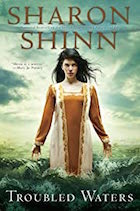
Sharon Shinn, Troubled Waters

In this traditional fantasy novel, protagonist Zoe Ardelay is plucked from obscurity to become the king’s fifth wife, but she escapes that fate, only to discover unsuspected magical powers that grant her a place at court in her own right. She navigates palace intrigues, contemplates her future role in the court, and tries hard not to fall in love with royal advisor Darien Serlast. This book is not particularly groundbreaking, but I really enjoyed it! The magical system, based on keeping the balance between five elements, is creative and informs the world of the novel in interesting ways. Zoe is likable, though sometimes a bit too impulsive, and Darien is a hero after my own heart. Overall, I liked this one a lot and have already checked out the next book in the series, Royal Airs, from my library!

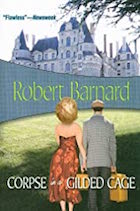
Robert Barnard, Corpse in a Gilded Cage

In this 1980s take on the English country house mystery, working-class Percy Spender has unexpectedly inherited an earldom and a grand estate. He and his wife just want to sell the place and go back to their regular lives, but their children — not to mention the family lawyer — have other ideas. Then Percy is murdered, and with multiple wills cropping up, it seems the investigation will hinge on who actually inherits the fortune. I wasn’t in the mood for this book when I picked it up, but I thought it would at least be a quick read that I could get off my TBR shelves. However, it actually won me over with its humor and satire of the British class system, not to mention this delightful allusion: “Dixie’s voice warbled from bass to soprano, replete with all the outraged disbelief of Lady Bracknell at her most handbageous.” So I think I need to keep the book now! I’d definitely recommend it to fans of this type of mystery.

Annika Martin, Just Not That into Billionaires

Nine years ago, outgoing ballet dancer Francine had a crush on her co-worker, socially awkward but technologically brilliant Benny. She thought he didn’t feel the same way, but after one drunken night, they got married in Vegas. Feeling ashamed the morning after (she’d tried to sleep with him and he’d refused), Francine left town, and she hasn’t talked to Benny since. Now she needs a divorce, but Benny unexpectedly refuses; instead, he insists that she pose as his loving wife, since he’s now a wildly successful billionaire whose personal life is being scrutinized by the press. Despite this ridiculous plot, this book completely sucked me in. Something about the chemistry between Francine and Benny, and their complementary weirdness, and Benny’s endearing awkwardness, really worked for me! However, I also think some people will find Benny an irredeemable jerk, which I completely understand! So this book won’t be for everyone, but I liked it and may try more by this author.
Mini-Reviews: Lady, Flight, Velocipede

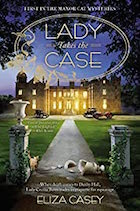
Eliza Casey, Lady Takes the Case

The lady of the title is Lady Cecilia Bates, the daughter of an old, aristocratic family that has fallen on hard times. To keep the estate functioning, her brother, Patrick, needs to marry a rich woman; luckily, American heiress Annabel Clarke has agreed to attend their house party. All seems to be going according to plan until one of the other guests, a famous explorer, is poisoned over dinner. When Patrick appears to be the police’s main suspect, Cecilia decides to launch her own investigation, along with Annabel’s intelligent maid, Jane, and a little help from Jane’s cat. I liked this book and think it would appeal to fans of Downton Abbey, but I think the setting and characters are definitely more interesting than the mystery. I’m not sure I care enough to read the sequel; another book in a similar vein is Alyssa Maxwell’s Murder Most Malicious, and I’d rather continue with Maxwell’s series.

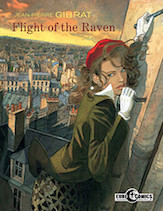
Jean-Pierre Gibrat, Flight of the Raven

I’m not generally a big graphic novel fan; I’m not a very visual person, and my tendency is to go straight for the text without really absorbing the illustrations. But this GN drew me in with its World War II setting, French Resistance heroine, and cat burglar hero, not to mention the absolutely gorgeous art! The overarching plot — in which the heroine, Jeanne, searches for her missing sister and worries about a traitor within her Resistance cell — is not particularly well fleshed out, but it’s really just an excuse for her to team up with the cat burglar and the other quirky characters she meets along the way. Overall, I did like this and would recommend it to people who enjoy both historical fiction and graphic novels.

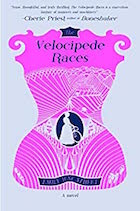
Emily June Street, The Velocipede Races

In an invented world similar to late Victorian England, velocipede racing is both a popular sport and the only socially acceptable way for upper-class men to earn money. Women, of course, don’t participate and are not even supposed to ride velos in private. Nevertheless, Emmeline Escot has always dreamed of racing, and she’s determined not to let social conventions get in her way. Complications ensue, however, when she is inadvertently “compromised” by a rich stranger and forced to marry. I picked up this book knowing very little about it, so I’m happy to say I enjoyed it! But I think my favorite parts were honestly the interactions between Emmeline and her new husband; their relationship interested me a lot more than the descriptions of velo racing, and I found Emmeline’s obsession with the races a little tedious. Still, I think this one is worth reading if you like historical romance with a strong (and not terribly subtle) feminist message.

Mini-Reviews: Graces, Proposal, News

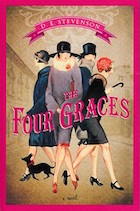
D.E. Stevenson, The Four Graces

The titular four graces are the four daughters of Mr. Grace, the vicar of the village of Chevis Green. They’re all pretty and intelligent, though Liz is the most outgoing, Sal is the most bookish, and Tilly is the shyest. (Addie, the youngest, is barely on page.) The girls are quite happy until the arrival of Aunt Rona, who’s snobbish and oblivious and determined to “manage” them all. As they wonder how to deal with her, they also take part in village life and consider their futures, especially after the arrival of two potential suitors. I always enjoy D.E. Stevenson’s books, and this one was a pleasant, low-stakes read, despite being set during World War II. I didn’t engage with it quite as much as I did with [Miss Buncle’s Book], although that could be partly because I have a cold at the moment. But I did enjoy the book and will likely revisit it at some point.

Melanie Dickerson, A Viscount’s Proposal

This Regency romance centers around Leorah, a spirited young lady who defies convention, and Edward, an uptight politician who hopes to become prime minister one day. Naturally, they dislike each other immensely, but their feelings change as they get to know one another better. Meanwhile, someone is trying to kill Edward, but no one knows who or why. This was my first book by this author, and I was underwhelmed. The setting doesn’t really ring true (I suspect a lot of historical details are wrong), and the writing style is awkward and inauthentic. The “mystery” plot is paper-thin, and I was expecting more because this book is part of the Regency Spies of London series. There is literally no spying at all! This is a quick read but a bland one, and I won’t be seeking out more books by Dickerson.

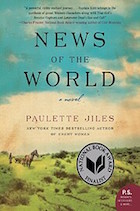
Paulette Jiles, News of the World

Captain Jefferson Kyle Kidd has lived through three wars and raised two daughters, but now he may face his toughest challenge yet. Johanna Leonberger is a 10-year-old white girl who was captured by Kiowa warriors four years ago and has been living among their people ever since. She’s just been “rescued,” and Captain Kidd is tasked with taking her to her relatives near San Antonio. But Johanna views the Kiowa as her people and doesn’t want to leave. Moreover, there are many dangers along the way, including Kiowa and Comanche raiders, the US Army, hostile townspeople, and opportunists exploiting the lawless American West of the 1870s. I loved this book! The writing style is sparse yet evocative, and the slow evolution of the captain’s relationship with Johanna is touching in its restraint. The book manages to include a lot of interesting history without being too expository or preachy. I would strongly recommend this to lovers of historical fiction, and I know I’ll be seeking out more of Jiles’s books!

Mini-Reviews: Secret, Pretty, Shell

Jennifer Kincheloe, The Secret Life of Anna Blanc

In 1907 Los Angeles, Anna Blanc is a wealthy debutante who seemingly has the world at her feet, but she chafes under her father’s strict upbringing and longs for excitement. When she stumbles upon an opportunity to become a police matron for the LAPD, she jumps at it, even though it means using a fake name and lying to everyone in her life. When women from the local brothels start dying, allegedly by suicide, Anna is convinced they’re really being murdered. She investigates with the help of handsome but skeptical Officer Joe Singer, learning about some of life’s harsh realities along the way. This is a book I found both enjoyable and frustrating. It moves along at a quick clip, Anna’s internal monologue can be amusing, and Officer Singer is a delight. Unfortunately, Anna is also insufferable — she’s such a thoughtless, spoiled brat! The book tries to redeem her by having her solve the mystery, but to me, that doesn’t make up for how recklessly and selfishly she often behaves. Your mileage may vary; maybe I’m being harsh because I know how deeply she would irritate me in real life. But for me, the obnoxious heroine means I won’t be continuing with this otherwise promising series.

Francis Duncan, So Pretty a Problem

Celebrated painter Adrian Carthallow has been killed; his wife, Helen, confesses to the killing, claiming that she shot him by accident. But the local police are able to disprove her story almost immediately, which raises the question, why did she lie? Amateur sleuth Mordecai Tremaine happens to be vacationing nearby, and he also knows the Carthallows socially, so he’s perfectly placed to investigate the matter. He soon uncovers plenty of motives among the Carthallows’ circle of friends, but who actually pulled the trigger? I’ve read a few of the Mordecai Tremaine books now, and I always enjoy them. There’s nothing particularly original about this one — and I was able to figure out the solution in advance — but I liked the book and will continue to read more in the series.

Rosamunde Pilcher, The Shell Seekers

This is a hard book to describe, because it’s mostly about ordinary people living ordinary lives, without many exciting events or dramatic plot twists. It centers around Penelope Keeling and describes her life, both as a 64-year-old woman in the present (that is, the 1980s, when the book was written) and as a young woman before and during World War II. It also explores the lives of Penelope’s three grown children, who are very different from their mother and from each other. I found this book a slow read but an enthralling one; Penelope is a (mostly) sympathetic character, and I enjoyed how the slow unveiling of her past clarified events in the present. If you like quiet British novels, this is definitely one to pick up.

Mini-Reviews: Premeditation, Skeptics, Summer

Tirzah Price, Pride and Premeditation

This YA historical novel is a spin on Pride and Prejudice: Lizzie Bennet dreams of being a barrister, but since such a career is unheard of for a woman, she’s currently an unpaid assistant at her father’s law firm. She hopes that scoring a big client for the firm will convince Mr. Bennet to hire her; when the rich and socially prominent Mr. Bingley is accused of murdering his brother-in-law Mr. Hurst, Lizzie hopes Bingley will be that client. Unfortunately, Bingley is already represented by the arrogant Mr. Darcy, but that won’t stop Lizzie from doing some investigating of her own. The writing style is a bit clunky (too modern, too American), and Lizzie annoyed me sometimes — she’s much more headstrong and obnoxious than the original Elizabeth Bennet. But I did enjoy the book’s creative way of integrating P&P’s characters into a murder mystery plot. It’s a fun, fast read, so I’d recommend it if the premise interests you. I think a series is planned, so I may check out the sequels too.

Christina Pishiris, Love Songs for Skeptics

Zoë Frixos has what many people would consider a dream job: she’s a music journalist at a respected London magazine. But the magazine is in trouble, and the only hope of saving it is to score an interview with famous yet reclusive rock star Marcie Tyler. In her quest to get the interview, Zoë keeps butting heads with Marcie’s publicist, Nick Jones, who is as arrogant and hostile as he is (frustratingly) attractive. Meanwhile, Zoë also has to sort out her personal life, as her childhood best friend and first love, Simon, has just moved back to town. This book was published in January 2021, but it feels like a throwback to the chick-lit heyday of the ‘90s. That’s not necessarily a bad thing — I enjoyed Zoë’s first-person POV, the predictable career and relationship angst, and the musical references peppered throughout. I didn’t particularly buy the romance, though. Because we never get the hero’s POV, he remains pretty opaque, and I couldn’t figure out what drew him to Zoë. Overall, not bad but not great — it was worth the $2.99 sale price I paid for the e-book, but I’m glad I didn’t pay full price.

Jessica Brockmole, At the Edge of Summer

When 15-year-old Clare Ross’s father dies, she is taken in by her parents’ old friends in France, Monsieur and Madame Crépet. At first she’s shy, grief-stricken, and lonely; but when the Crépets’ son Luc comes home from university for the weekend, Clare finds an unexpected friend. Their relationship deepens over the course of the summer, but eventually Clare moves out to live with her grandfather, and she and Luc can only be close via letters. Then World War I intervenes, but of course they are destined to meet again. I liked this book; it’s sweet and a little sad but ultimately hopeful. The main characters are endearing, particularly Luc. But the love story was almost too romantic for me, verging on the sappy. And I would have liked a little more plot; despite Luc’s wartime experiences and Clare’s travels, not a lot actually happens. Overall, this is an enjoyable read, but like Brockmole’s previous book, Letters from Skye, I didn’t love it.

Mini-Reviews: Ecstasy, Hana, Impossible

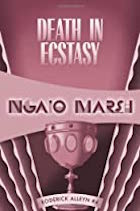
Ngaio Marsh, Death in Ecstasy

This fourth installment of the Inspector Roderick Alleyn series centers around the members of a neopagan religion, the House of the Sacred Flame. During one of its rituals, devout initiate Cara Quayne drinks from a ceremonial goblet and immediately collapses — not from spiritual ecstasy, as some of the worshippers believe, but from cyanide poisoning. Alleyn is on the case, assisted by his colleague Inspector Fox and his journalist friend Nigel Bathgate. Their investigation uncovers various dirty little secrets about the cult and eventually leads them to the murderer. The mystery plot was clever and fairly clued (though I didn’t guess the killer’s identity), and I enjoy Marsh’s writing style, especially the banter between the investigators. But I wasn’t a huge fan of the cult setting — the novel paints it as completely sordid and unpleasant, and I felt that way while reading. Nevertheless, I’ll definitely continue with the series at some point.

Uzma Jalaluddin, Hana Khan Carries On

Hana Khan is the 24-year-old daughter of Indian Muslim immigrants to Toronto. Her family is having a rough time: her father is recovering from a car accident, her older sister is having a difficult pregnancy, and the family’s halal restaurant is struggling. When a rival halal restaurant threatens to move into the neighborhood, Hana is horrified and determined to stop it — never mind that the owner’s son, Aydin, is surprisingly cute and fun to talk to. Hana is also struggling at work; she dreams of producing her own radio show, but for now she’s an unpaid intern, and her (white) boss isn’t interested in her ideas unless they’re stereotypical stories about Muslims. Will Hana be able to follow her dreams, help her family, and maybe even find love? I really enjoyed this light, fun novel, although there is quite a lot going on (I didn’t even mention the small You’ve Got Mail subplot!). Hana is a relatable character whose voice I really enjoyed, and it was nice to see her grow throughout the novel. I should note that the plot does include an Islamophobic attack on Hana and her friends, which is tough to read. But the book is ultimately joyful and uplifting, and I would definitely recommend it to fans of romantic comedies!

Maggie Stiefvater, Mister Impossible

After the events of Call Down the Hawk, Ronan, Hennessy, and Bryde are running from the Moderators and making a plan to strengthen the power of the ley lines. Jordan has discovered the existence of sweetmetals, artifacts that can keep dreams awake even if their dreamers die; Declan joins her in her quest to create one. Matthew is processing the fact that he’s a dream and not a “real” person. Carmen has been working with the Moderators but eventually comes to a crossroads. OK, so none of that summary will make sense unless you’ve read Call Down the Hawk, and possibly the Raven Cycle as well. It’s book 2 of a planned trilogy, and storylines are not resolved; rather, the book ends by setting up the final conflict that will play out in book 3. I’ll admit, much as I love Ronan, I found his story the least compelling; I was much more interested in Declan (my unexpected favorite!), Jordan, and Matthew. But I’m a big fan of Stiefvater’s writing and general vibe, so I enjoyed this book and can’t wait to see how everything turns out!

Mini-Reviews: College, Scholar

Caroline Stevermer, A College of Magics

Faris Nallaneen is the future duchess of Galazon, but until she is of age, her wicked uncle acts as regent. He’s decided to get her out of the way by sending her to Greenlaw, an all-female college with an unusual curriculum. Faris is reluctant at first, but she eventually makes friends, learns unexpected skills, and even discovers a unique magical destiny. After her time at Greenlaw, she must find a way to balance her magical responsibilities with her duties as the duchess of Galazon. I feel like that’s a very boring summary of a very fun book! It’s a quasi-Edwardian fantasy of manners, which is a subgenre I didn’t even know I needed in my life. At one point, Faris’s friend Jane turns an assassin’s bomb into a fashionable hat and then wears it, which gives you an idea of the tone. The magic in the book is not really explained or described in depth, so those who love detailed world-building might be disappointed. But overall, I liked it a lot — so much so that I immediately proceeded to read the sequel!

Caroline Stevermer, A Scholar of Magics

This book is set in the same world as A College of Magics and focuses on Faris’s friend, Jane Brailsford. Jane is now a teacher at Greenlaw and a powerful magician, and she’s been tasked with convincing the new warden of the west to take up his duties. Her mission takes her to Glasscastle, an all-male magical university in England, which takes a very different approach to magic than Greenlaw. There she meets Samuel Lambert, an American sharpshooter who’s been recruited to help Glasscastle with a special weapon for the top-secret Agincourt Project. When Lambert’s work and Jane’s mission collide, they team up to protect the future warden of the west and to discover the true nature of the Agincourt Project. This is another fun romp through an alternate 20th-century England, and I liked it as much as its predecessor. But it took me a long time to read, and I think that’s because of the pacing: nothing much actually happens until at least halfway through the book (and possibly more like two-thirds). Nevertheless, I still enjoyed spending time with these characters in this world!

Mini-Reviews: Return, Museum, Time

Megan Whalen Turner, Return of the Thief

***Warning: SPOILERS for previous books in the series!***

This last installment of the Queen’s Thief series finds the kingdoms of Attolia, Eddis, and Sounis banding together to defend themselves against the inevitable Mede invasion. The events are chronicled by Pheris Erondites, grandson of the traitorous baron whose machinations in Attolian politics are far from over. Pheris is physically disabled and mute, but he is also clever and observant. When he becomes one of Eugenides’s attendants, he gets a front-row seat to the action and even finds that he has a role to play. I don’t have much to say about this book, except that it’s a fitting end to a fantastic series. If you’ve loved the previous books, you won’t be disappointed! I did wish Costis and Kamet had a little bit more to do in this installment, since they were the focus of the last one; but that’s a very small complaint about an otherwise wonderful book. This series will definitely live on my keeper shelf to be revisited many times in the future!

John Rowland, Murder in the Museum

Mild-mannered Henry Fairhurst is working in the British Museum Reading Room when he notices that one of his neighbors has fallen asleep. His heavy snoring is attracting attention, so Henry attempts to wake him up — only to discover that the man has stopped breathing and died. When Inspector Shelley of Scotland Yard discovers that the man was poisoned, Henry becomes an important witness and uses his enthusiasm for detection to help Inspector Shelley solve the case. Along the way, they encounter a blackmail scheme, a pair of young lovers, a kidnapping, and more suspicious deaths. I liked the writing style of this book (straightforward and occasionally humorous) and found it a quick and easy read, but I wasn’t terribly excited about the mystery. I’m not sure it’s “fair play,” and the solution didn’t quite satisfy me. I did like that there was one seemingly significant event that turned out to be a coincidence; that doesn’t often happen in detective novels, but it’s very true to life! Overall, this particular book isn’t a keeper for me, but I’d definitely read more by this author.

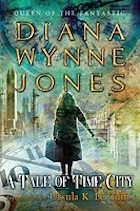
Diana Wynne Jones, A Tale of Time City

It’s the beginning of World War II, and Vivian Smith is being evacuated from London to the English countryside to escape the Blitz. Her cousin is supposed to meet her at the train station, but instead she is kidnapped by two boys, Jonathan and Sam. They take her to Time City, a place outside history whose residents are tasked with observing history and making sure it doesn’t go off the rails. But something is going wrong, and Jonathan and Sam are convinced that Vivian can somehow put it right — except they’ve kidnapped the wrong Vivian Smith! Diana Wynne Jones can do no wrong, and I enjoyed this time travel adventure, although I found the plot hard to follow at first. Fortunately, everything came together in the end, and I very much enjoyed Vivian’s narrative voice. Recommended for fans of the author.

Mini-Reviews: Gentleman, Goodbye, First

Amor Towles, A Gentleman in Moscow

In 1922, Count Alexander Ilyich Rostov is arrested and tried for the crime of being an aristocrat. But because he once wrote a poem with a revolutionary message, he isn’t immediately killed; instead, he is sentenced to house arrest for life in Moscow’s Metropol Hotel. As Alexander lives out his days in the Metropol, he befriends a variety of people, including hotel employees, Party officials, a beautiful actress, and (most significantly) a solemn young girl named Nina. Despite the turbulent political situation in the country as a whole, this novel focuses on one man’s life as he adapts to extraordinary circumstances. Like everyone else, I loved this book! The pace is slow, and there aren’t many dramatic events, but it felt like real life to me. There are some delicious satirical jabs at the broader political situation in Russia/the USSR, but the novel focuses primarily on Alexander’s own experiences. I would definitely recommend this to anyone who enjoys historical fiction!

Beatriz Williams, Lauren Willig, and Karen White, All the Ways We Said Goodbye

This is one of those historical novels with multiple storylines set in three different time periods. In 1914, Aurélie de Courcelles abandons her luxurious life with her mother at the Paris Ritz and runs to her father’s ancestral home, which is later invaded by German soldiers. In 1942, Daisy Villon is primarily concerned with keeping herself and her children safe in occupied France, but she is eventually drawn into the resistance effort and an illicit love affair. And in 1964, Babs Langford travels from England to Paris in search of information about her deceased husband’s war years. Overall, I liked this book and found it entertaining; there’s a lot of drama and excitement to keep the pages turning, and I do love a good WW2 spy plot. On the other hand, the plot twists and “reveals” are quite predictable. And while I liked all three stories, I think they were a little much for one book; perhaps the authors should have eliminated the 1964 story and focused on the other two in greater depth. As I said, I enjoyed the book overall, but I didn’t like it as much as these authors’ previous book, The Glass Ocean.

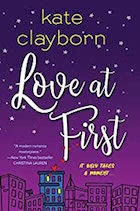
Kate Clayborn, Love at First

Nora Clarke loves her Chicago apartment building; her happiest childhood memories were spent there with her grandmother, and she’s known and loved her neighbors all her life. So when the building’s owner dies and his nephew, Will Sterling, inherits it, Nora is terrified that things will change. In fact, Will has no interest in owning or living in the building, so he decides to rent out his uncle’s unit to short-term tenants. Aghast, Nora is determined to stop him; but the more time she spends trying to persuade Will, the more she is attracted to him. I was a bit nervous about this book since I enjoyed Love Lettering so much, but thankfully I ended up loving this one too! I liked that the characters actually move on from the apartment conflict pretty quickly; they each come to understand the other’s position and are both willing to compromise. The real obstacles to their relationship are their fears and insecurities, which I found very realistic. I was rooting so hard for Will and Nora, and I enjoyed the quirky secondary characters as well (Will’s buttoned-up boss might be my favorite). And as with Love Lettering, I adored Kate Clayborn’s writing style. Fans of contemporary romance with minimal drama, where people actually deal with their problems like adults, should definitely check out this author!

Mini-Reviews: Queen, Unsuspected, Thieves

Rachel Bach, Heaven’s Queen

***Warning: SPOILERS for previous books in the series!***

In this conclusion to the Paradox trilogy, space mercenary Devi Morris and her lover Rupert are on the run, trying to figure out how to save the universe from the constant threat of the phantoms. Devi is determined keep her promise to save Ma’at and her Daughters; but since they’re the only known weapons that actually work against the phantoms, she’s fighting an uphill battle. Luckily, Devi’s good at thinking outside the box, and with Rupert at her side and some help from unexpected places, her crazy plan just might work. This is a satisfying conclusion to the Paradox trilogy, but you really need to read all three books to understand what’s going on. And I must confess, I was kind of tired of this series before I even picked up Heaven’s Queen. It’s a lot of space battles, Devi obsessing about her fancy suit of armor, Rupert declaring his undying love for Devi…I got bored after a while. I was underwhelmed by the romance; it felt very over-the-top and teen-angsty to me. Nevertheless, I’m glad I finished the series, and hardcore fans of the genre might enjoy it more than I did.

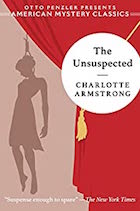
Charlotte Armstrong, The Unsuspected

In the eyes of the world, Rosaleen Wright’s tragic death was a suicide, but Rosaleen’s friend Jane is convinced it was murder. Jane turns to her friend Francis for help, telling him that she thinks Rosaleen’s employer, the famous radio personality Luther Grandison, is guilty. Francis immediately takes action, ingratiating himself into “Grandy’s” inner circle by pretending to be the husband of his ward Mathilda, who supposedly died in a shipwreck. But when Mathilda turns up alive, Francis must use any means necessary, including straight-up gaslighting, to maintain his cover and bring the killer to justice. So, yeah, the plot of this book is bananas, but I actually really enjoyed it! I thought the inverted structure of the mystery would make it less exciting, but there was plenty of forward motion to keep me on the edge of my seat. I also liked the main characters, especially Mathilda and Jane — and while Francis does some pretty despicable things, he’s conflicted and regretful enough that I ended up liking him too. Overall, this was a super fun and compelling read — I stayed up way too late to finish it — and I definitely want to read more by Charlotte Armstrong!

Megan Whalen Turner, Thick as Thieves

***Warning: SPOILERS for previous books in the series!***

This fifth installment of the Queen’s Thief series centers around Kamet, whom we briefly met in The Queen of Attolia as a slave and personal secretary to Nahusheresh, then the Mede ambassador to Attolia. Now, despite his master’s disgrace, Kamet is content with his power and status in the Mede empire. But the sudden death of Nahusheresh changes his life irrevocably: Kamet is forced to flee, or he and his fellow slaves will all be tortured and killed. He finds an unlikely companion in an Attolian soldier (whom, it turns out, we’ve also met before), who promises Kamet safety and freedom in Attolia. But Kamet has other plans, as does the Attolian king, Eugenides. This book is pretty uneventful compared with the rest of the series; most of it follows Kamet and the Attolian on their journey as they hunt for food, sell their belongings for cash, and evade their Mede pursuers. But the development of Kamet’s character and his friendship with the Attolian are a delight, and of course we get a bit of Eugenides and a few other familiar characters at the end. I heartily recommend both this book and the entire series — I can’t wait to read the next one!