Mini-Reviews: College, Scholar

Caroline Stevermer, A College of Magics

Faris Nallaneen is the future duchess of Galazon, but until she is of age, her wicked uncle acts as regent. He’s decided to get her out of the way by sending her to Greenlaw, an all-female college with an unusual curriculum. Faris is reluctant at first, but she eventually makes friends, learns unexpected skills, and even discovers a unique magical destiny. After her time at Greenlaw, she must find a way to balance her magical responsibilities with her duties as the duchess of Galazon. I feel like that’s a very boring summary of a very fun book! It’s a quasi-Edwardian fantasy of manners, which is a subgenre I didn’t even know I needed in my life. At one point, Faris’s friend Jane turns an assassin’s bomb into a fashionable hat and then wears it, which gives you an idea of the tone. The magic in the book is not really explained or described in depth, so those who love detailed world-building might be disappointed. But overall, I liked it a lot — so much so that I immediately proceeded to read the sequel!

Caroline Stevermer, A Scholar of Magics

This book is set in the same world as A College of Magics and focuses on Faris’s friend, Jane Brailsford. Jane is now a teacher at Greenlaw and a powerful magician, and she’s been tasked with convincing the new warden of the west to take up his duties. Her mission takes her to Glasscastle, an all-male magical university in England, which takes a very different approach to magic than Greenlaw. There she meets Samuel Lambert, an American sharpshooter who’s been recruited to help Glasscastle with a special weapon for the top-secret Agincourt Project. When Lambert’s work and Jane’s mission collide, they team up to protect the future warden of the west and to discover the true nature of the Agincourt Project. This is another fun romp through an alternate 20th-century England, and I liked it as much as its predecessor. But it took me a long time to read, and I think that’s because of the pacing: nothing much actually happens until at least halfway through the book (and possibly more like two-thirds). Nevertheless, I still enjoyed spending time with these characters in this world!

Mini-Reviews: Return, Museum, Time

Megan Whalen Turner, Return of the Thief

***Warning: SPOILERS for previous books in the series!***

This last installment of the Queen’s Thief series finds the kingdoms of Attolia, Eddis, and Sounis banding together to defend themselves against the inevitable Mede invasion. The events are chronicled by Pheris Erondites, grandson of the traitorous baron whose machinations in Attolian politics are far from over. Pheris is physically disabled and mute, but he is also clever and observant. When he becomes one of Eugenides’s attendants, he gets a front-row seat to the action and even finds that he has a role to play. I don’t have much to say about this book, except that it’s a fitting end to a fantastic series. If you’ve loved the previous books, you won’t be disappointed! I did wish Costis and Kamet had a little bit more to do in this installment, since they were the focus of the last one; but that’s a very small complaint about an otherwise wonderful book. This series will definitely live on my keeper shelf to be revisited many times in the future!

John Rowland, Murder in the Museum

Mild-mannered Henry Fairhurst is working in the British Museum Reading Room when he notices that one of his neighbors has fallen asleep. His heavy snoring is attracting attention, so Henry attempts to wake him up — only to discover that the man has stopped breathing and died. When Inspector Shelley of Scotland Yard discovers that the man was poisoned, Henry becomes an important witness and uses his enthusiasm for detection to help Inspector Shelley solve the case. Along the way, they encounter a blackmail scheme, a pair of young lovers, a kidnapping, and more suspicious deaths. I liked the writing style of this book (straightforward and occasionally humorous) and found it a quick and easy read, but I wasn’t terribly excited about the mystery. I’m not sure it’s “fair play,” and the solution didn’t quite satisfy me. I did like that there was one seemingly significant event that turned out to be a coincidence; that doesn’t often happen in detective novels, but it’s very true to life! Overall, this particular book isn’t a keeper for me, but I’d definitely read more by this author.

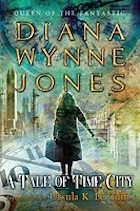
Diana Wynne Jones, A Tale of Time City

It’s the beginning of World War II, and Vivian Smith is being evacuated from London to the English countryside to escape the Blitz. Her cousin is supposed to meet her at the train station, but instead she is kidnapped by two boys, Jonathan and Sam. They take her to Time City, a place outside history whose residents are tasked with observing history and making sure it doesn’t go off the rails. But something is going wrong, and Jonathan and Sam are convinced that Vivian can somehow put it right — except they’ve kidnapped the wrong Vivian Smith! Diana Wynne Jones can do no wrong, and I enjoyed this time travel adventure, although I found the plot hard to follow at first. Fortunately, everything came together in the end, and I very much enjoyed Vivian’s narrative voice. Recommended for fans of the author.

Mini-Reviews: Gentleman, Goodbye, First

Amor Towles, A Gentleman in Moscow

In 1922, Count Alexander Ilyich Rostov is arrested and tried for the crime of being an aristocrat. But because he once wrote a poem with a revolutionary message, he isn’t immediately killed; instead, he is sentenced to house arrest for life in Moscow’s Metropol Hotel. As Alexander lives out his days in the Metropol, he befriends a variety of people, including hotel employees, Party officials, a beautiful actress, and (most significantly) a solemn young girl named Nina. Despite the turbulent political situation in the country as a whole, this novel focuses on one man’s life as he adapts to extraordinary circumstances. Like everyone else, I loved this book! The pace is slow, and there aren’t many dramatic events, but it felt like real life to me. There are some delicious satirical jabs at the broader political situation in Russia/the USSR, but the novel focuses primarily on Alexander’s own experiences. I would definitely recommend this to anyone who enjoys historical fiction!

Beatriz Williams, Lauren Willig, and Karen White, All the Ways We Said Goodbye

This is one of those historical novels with multiple storylines set in three different time periods. In 1914, Aurélie de Courcelles abandons her luxurious life with her mother at the Paris Ritz and runs to her father’s ancestral home, which is later invaded by German soldiers. In 1942, Daisy Villon is primarily concerned with keeping herself and her children safe in occupied France, but she is eventually drawn into the resistance effort and an illicit love affair. And in 1964, Babs Langford travels from England to Paris in search of information about her deceased husband’s war years. Overall, I liked this book and found it entertaining; there’s a lot of drama and excitement to keep the pages turning, and I do love a good WW2 spy plot. On the other hand, the plot twists and “reveals” are quite predictable. And while I liked all three stories, I think they were a little much for one book; perhaps the authors should have eliminated the 1964 story and focused on the other two in greater depth. As I said, I enjoyed the book overall, but I didn’t like it as much as these authors’ previous book, The Glass Ocean.

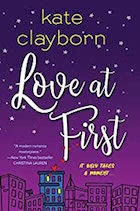
Kate Clayborn, Love at First

Nora Clarke loves her Chicago apartment building; her happiest childhood memories were spent there with her grandmother, and she’s known and loved her neighbors all her life. So when the building’s owner dies and his nephew, Will Sterling, inherits it, Nora is terrified that things will change. In fact, Will has no interest in owning or living in the building, so he decides to rent out his uncle’s unit to short-term tenants. Aghast, Nora is determined to stop him; but the more time she spends trying to persuade Will, the more she is attracted to him. I was a bit nervous about this book since I enjoyed Love Lettering so much, but thankfully I ended up loving this one too! I liked that the characters actually move on from the apartment conflict pretty quickly; they each come to understand the other’s position and are both willing to compromise. The real obstacles to their relationship are their fears and insecurities, which I found very realistic. I was rooting so hard for Will and Nora, and I enjoyed the quirky secondary characters as well (Will’s buttoned-up boss might be my favorite). And as with Love Lettering, I adored Kate Clayborn’s writing style. Fans of contemporary romance with minimal drama, where people actually deal with their problems like adults, should definitely check out this author!

Mini-Reviews: Queen, Unsuspected, Thieves

Rachel Bach, Heaven’s Queen

***Warning: SPOILERS for previous books in the series!***

In this conclusion to the Paradox trilogy, space mercenary Devi Morris and her lover Rupert are on the run, trying to figure out how to save the universe from the constant threat of the phantoms. Devi is determined keep her promise to save Ma’at and her Daughters; but since they’re the only known weapons that actually work against the phantoms, she’s fighting an uphill battle. Luckily, Devi’s good at thinking outside the box, and with Rupert at her side and some help from unexpected places, her crazy plan just might work. This is a satisfying conclusion to the Paradox trilogy, but you really need to read all three books to understand what’s going on. And I must confess, I was kind of tired of this series before I even picked up Heaven’s Queen. It’s a lot of space battles, Devi obsessing about her fancy suit of armor, Rupert declaring his undying love for Devi…I got bored after a while. I was underwhelmed by the romance; it felt very over-the-top and teen-angsty to me. Nevertheless, I’m glad I finished the series, and hardcore fans of the genre might enjoy it more than I did.

Charlotte Armstrong, The Unsuspected

In the eyes of the world, Rosaleen Wright’s tragic death was a suicide, but Rosaleen’s friend Jane is convinced it was murder. Jane turns to her friend Francis for help, telling him that she thinks Rosaleen’s employer, the famous radio personality Luther Grandison, is guilty. Francis immediately takes action, ingratiating himself into “Grandy’s” inner circle by pretending to be the husband of his ward Mathilda, who supposedly died in a shipwreck. But when Mathilda turns up alive, Francis must use any means necessary, including straight-up gaslighting, to maintain his cover and bring the killer to justice. So, yeah, the plot of this book is bananas, but I actually really enjoyed it! I thought the inverted structure of the mystery would make it less exciting, but there was plenty of forward motion to keep me on the edge of my seat. I also liked the main characters, especially Mathilda and Jane — and while Francis does some pretty despicable things, he’s conflicted and regretful enough that I ended up liking him too. Overall, this was a super fun and compelling read — I stayed up way too late to finish it — and I definitely want to read more by Charlotte Armstrong!

Megan Whalen Turner, Thick as Thieves

***Warning: SPOILERS for previous books in the series!***

This fifth installment of the Queen’s Thief series centers around Kamet, whom we briefly met in The Queen of Attolia as a slave and personal secretary to Nahusheresh, then the Mede ambassador to Attolia. Now, despite his master’s disgrace, Kamet is content with his power and status in the Mede empire. But the sudden death of Nahusheresh changes his life irrevocably: Kamet is forced to flee, or he and his fellow slaves will all be tortured and killed. He finds an unlikely companion in an Attolian soldier (whom, it turns out, we’ve also met before), who promises Kamet safety and freedom in Attolia. But Kamet has other plans, as does the Attolian king, Eugenides. This book is pretty uneventful compared with the rest of the series; most of it follows Kamet and the Attolian on their journey as they hunt for food, sell their belongings for cash, and evade their Mede pursuers. But the development of Kamet’s character and his friendship with the Attolian are a delight, and of course we get a bit of Eugenides and a few other familiar characters at the end. I heartily recommend both this book and the entire series — I can’t wait to read the next one!

Mini-Reviews: Thorn, Orange, Duke

Intisar Khanani, Thorn

Despite being a princess, Alyrra is a nobody. Abused and neglected by her family, she has nothing to look forward to except a politically strategic marriage. But when she is betrothed to the prince of a neighboring kingdom whom she has never met, she suddenly finds herself embroiled in intrigue and magic. A sorceress curses Alyrra to switch bodies with her lady’s maid, so no one recognizes her as the true princess and she must work as a goose girl instead. But Alyrra is content with her new life — until she realizes that she has a duty to ensure the good governance of her new kingdom, not to mention protect the life of the prince. Overall, I really enjoyed this book! Alyrra is a sympathetic heroine, and I enjoyed watching her slowly, painfully grow throughout the story as she realizes that she can’t avoid her real life forever. There are some pacing issues and some awkward character introductions that had me flipping backwards to make sure I hadn’t missed something. I also wanted some of the secondary characters to be more fleshed out, particularly Kestrin. But I liked the book despite these issues and will plan to read more by Khanani.

Note: This book was originally self-published in 2012, but it was subsequently rereleased by a traditional publisher. According to the author, the rerelease has “gone through four rounds of professional edition . . . the middle of the book was replotted, and the story overall has grown by about 20,000 words.” So, since I read the original self-published version (which was gifted to me years ago), my comments may not be particularly applicable to the version that’s widely available now! I’d actually like to read the rereleased version and see if the issues I complained about have been addressed.

Ellery Queen, The Chinese Orange Mystery

When Ellery Queen accompanies his friend Donald Kirk to a dinner party at Kirk’s hotel suite, he is shocked to discover a murdered man in the waiting room of Kirk’s office. The crime is bizarre for a number of reasons: not only does no one recognize the corpse, but there is absolutely no identifying information to be found anywhere on or around the dead man. Moreover, everything in the room has been turned backwards or upside-down — furniture, art, even the victim’s clothes. As Ellery’s policeman father investigates the case officially, Ellery also does some sleuthing among Kirk’s friends and family, and he eventually discovers the identity of both the victim and the murderer. I enjoyed this mystery and found the solution very clever; I never would have guessed it, but it does make sense and is fairly clued (although the killer’s motive is a little weak). Even the list of dramatis personae drops a few hints! Recommended for fans of Golden Age mysteries — and even though it’s part of a series, it can definitely be read out of order.

Loretta Chase, Ten Things I Hate about the Duke

This second novel in the Difficult Dukes series focuses on Lucius, Duke of Ashmont, whose wild and rakish behavior is a well-known society scandal. He has no interest in reforming his wicked ways, however, until he crosses paths with strong-minded bluestocking Cassandra Pomfret. I’m not a big fan of the “reformed rake” trope, but I liked that Lucius spends most of the book acknowledging his faults and genuinely making an effort to improve himself. He admires Cassandra’s strength and intelligence, and he supports her without trying to take charge or get in her way. I should say that, while this book can technically stand alone, it does refer back to events in A Duke in Shining Armor. I’m looking forward to the third book now, which looks like it will have a marriage-in-trouble plot…unfortunately, it’s not out yet!  

Mini-Reviews: Women, Coconut, Belle

Madeleine St. John, The Women in Black

This novel follows the lives of four women who all work at Goode’s department store in 1950s Sydney, Australia. Patty, in her mid-30s, is married but unhappily childless, and her husband Frank is oblivious to her emotional turmoil. Fay is around 30 and has been going out with men for years, but somehow none of them seem to want to marry her. Lisa, a temporary hire for the Christmas season, dreams of going to university and becoming a poet, but her strict father won’t hear of it. And Magda, a glamorous Slovenian immigrant, is adjusting to a culture very different from her own. I loved this book and devoured it in a single sitting. It’s light and charming and slyly funny, and I became invested in the stories of all four women. I especially loved Magda, who enjoys the finer things in life and is generous in sharing them. There’s a bit of romance, but the main focus is on women’s experiences and relationships. The book reminds me a bit of Miss Pettigrew Lives for a Day, but with a slightly more satirical edge. I expect to revisit it often and would recommend it as a great comfort read!

Amy E. Reichert, The Coincidence of Coconut Cake

Milwaukee restaurateur Lou Johnson is having a run of terrible luck. First her fiancé cheats on her; then, that very night, food critic Al Waters samples her cooking — which is subpar because of her distress over the breakup — and writes a scathing review. The day the review comes out, Lou goes to a bar to drown her sorrows and meets Al. They’re attracted to each other and soon strike up a romance. The only problem is, he doesn’t realize she owns the restaurant he panned, and she doesn’t know he’s the hostile reviewer because he writes under a pen name. I’m a sucker for a You’ve Got Mail story, and this is a fun one that made me want to visit Milwaukee and eat some fried cheese curds immediately. I never quite believed in Lou and Al as characters; they seemed like stock types rather than real people to me. But I liked the setting and the overall cheerful, Hallmark-esque vibe of this novel, so I’d consider trying more by this author.

Paula Byrne, Belle: The Slave Daughter and the Lord Chief Justice

The idea for this book came from an 18th-century English portrait of two young women — one white, one black — who are portrayed as equals, almost as sisters. The black woman was Dido Elizabeth Belle, the illegitimate daughter of an English naval captain and an African slave. She grew up in the house of her great-uncle, the Earl of Mansfield, who happened to be the Lord Chief Justice and who decided several cases that would be crucial to the antislavery movement in Britain. It’s a fascinating story, but unfortunately, there’s very little about Dido in the historical record, and consequently very little in the book! Instead, Byrne focuses on the English slave trade, the status of black individuals in London, the Earl of Mansfield’s legal career, etc. It’s all interesting, but I was hoping for more biography, less history. The book does have numbered endnotes, many of which cite primary sources, yet Byrne also editorializes a fair amount. I’d say it’s more of a popular history than a scholarly one. Overall, I’d recommend it for people who are interested in the period. Apparently there’s also a movie about Dido, called Belle, which I’m interested in watching now.

Here is the portrait of Dido and her cousin, Elizabeth Murray:

Mini-Reviews: Stitches, Murders, Light

Olivia Atwater, Ten Thousand Stitches

Euphemia “Effie” Reeves is sick of feeling invisible and insignificant. As a maid in a noble house, she is either ignored or mistreated by the family. When she falls for the youngest son of the house, she knows a relationship between them would be impossible, but she can’t help wishing for it anyway. Luckily, she has an ally in the faerie Lord Blackthorn, who is determined to pursue virtue by being kind to the powerless. Unluckily, despite his good intentions, his interference often does more harm than good. When Effie’s dream finally seems to be within reach, she discovers that her desires have changed. Like Atwater’s previous book, Half a Soul, this is a charming fantasy romance with some social satire baked in. I especially loved Lord Blackthorn’s enthusiastic efforts to help, despite (or perhaps because of) the fact that they usually led to disaster. Recommended for fans of the genre!

Elizabeth Daly, Murders in Volume 2

Rare manuscript expert Henry Gamadge once again plays detective when Miss Vauregard, a member of one of New York’s most prestigious old families, asks him to discover the true identity of a mysterious young woman who has ingratiated herself with the family patriarch (and holder of the purse strings). As Gamadge investigates, he becomes convinced that the woman is working with someone in the family; things get even worse when the patriarch is murdered and Gamadge himself is the most likely suspect! I enjoyed this novel, which is well plotted and contains such intriguing elements as a hundred-year-old unsolved mystery, a cult, and possible travel to and from the fourth dimension. This is also the book in which Henry Gamadge falls in love, and I would have liked a bit more development of the romance. But overall, I liked this book and will definitely continue with the series.

Connie Willis and Cynthia Felice, Light Raid

Sometime in the future, North America is engaged in a civil war, and 17-year-old Ariadne has been evacuated to neutral territory. But when her parents’ letters become less frequent and stop telling her anything specific, Ari knows that something must be wrong. She flees her foster home to return to HydraCorp, the large and powerful company where her parents live and work, only to discover that her father is falling apart and her mother is in jail for treason. Outraged, Ari intends to prove her mother’s innocence, but she is thwarted by the mysterious Joss Liddell, who is as irritating as he is attractive. As Ari investigates the situation at HydraCorp, she discovers a secret so big that it could change the course of the war. I never felt like I fully understood the world of this novel — the book doesn’t spend any time on exposition — and I’m still not sure what the war is actually about. But I did enjoy this book; it’s action-packed and full of plot twists, and there’s also a fun YA romance. I liked Ari’s narrative voice; she reads as immature sometimes, but that makes sense since she’s a teenager. Overall, while I don’t think this book is as good as Connie Willis’s solo stuff, it’s still an entertaining read.

Mini-Reviews: Honeymoon, List, Garden

Dorothy L. Sayers, Busman’s Honeymoon

Lord Peter Wimsey and Harriet Vane are finally getting married, and they’ve decided to spend their honeymoon at Talboys, a house in Harriet’s childhood neighborhood that she’s always loved and that Peter has purchased for her. They’ve made arrangements for the turnover with Noakes, the previous owner, but when they arrive on their wedding night, Noakes is nowhere to be found. Eventually Peter and Harriet discover Noakes’s dead body in the cellar, and all signs point to murder. As they assist the local police in solving the mystery, they also adjust to their new reality as a married couple. This might be my favorite Wimsey story yet. The mystery is more satisfying than many of Sayers’s others; there are multiple plausible suspects and some well-placed clues. But the subtitle of the novel is “a love story with detective interruptions,” and the real meat of the story is Peter and Harriet’s relationship, as they learn more about each other and figure out how to combine two very independent lives. This book also fleshes out two recurring characters, Bunter and the Dowager, in a satisfying way. A wonderful ending to the series, in my opinion, although Sayers newbies shouldn’t start here.

Suzanne Allain, Mr. Malcolm’s List

Jeremy Malcolm, the wealthy and handsome younger son of an earl, is widely regarded as the catch of the season. He wants to find a suitable bride, but none of the women he’s met has checked off every item on his list of requirements for a wife. When Julia Thistlewaite, one of the young ladies he rejects, discovers the existence of the list, she is outraged and asks her friend Selina Dalton for help. Selina will come to London and capture Mr. Malcolm’s heart by pretending to have every quality on the list, but will then reject him for not meeting her own standards. Selina is reluctant to go along with the scheme, especially when she meets Mr. Malcolm and finds herself extremely attracted to him. This Regency romance is fine but lacks depth. It’s extremely fast-paced, leaving little time for character or relationship development. Overall, I thought it was just okay.

Jules Wake, Covent Garden in the Snow

Tilly loves her job as a makeup artist at the London Metropolitan Opera Company, but she’s a disaster with technology. When she inadvertently sends a computer virus to her entire contact list, she’s forced to work with the new IT director, Marcus, to gain some computer literacy. Marcus looks like a slick corporate type, and Tilly immediately decides that he has nothing useful to teach her. But she also feels an unwanted attraction, and the more time they spend together, the more she comes to like and appreciate him. This was a cute read; I enjoyed the backstage theatrical setting, and Marcus is an appealing hero (perhaps a bit too perfect). But Tilly drove me CRAZY. She’s laughably bad at technology — so much so that I couldn’t take her seriously as a professional adult. She also puts up with way too much from her feckless fiancé, who has to betray her trust in multiple very significant ways before she’s finally ready to end the relationship. And she’s completely awful to her family for no discernible reason. Yes, she does grow toward the end of the book, but by then I was already too annoyed with her. Overall, I liked some aspects of this book, and it was a quick and entertaining read, but the frustrating heroine prevented me from fully enjoying it.

Mini-Reviews: Reading, Jeeves, Enchantment

Alan Jacobs, The Pleasures of Reading in an Age of Distraction

In this short volume, literature professor Jacobs speaks to people who would like to be readers but feel too busy or intimidated to try, and to people who once were readers but aren’t any longer. He champions the idea that reading can and should be a pleasure, not an obligation. His slogan is “Read at whim” — that is, what you actually enjoy, not what you or others think you ought to read. He discusses the perils of the reading list, the specific joys of rereading, and the notion that different kinds of texts can be read with different types of attention. I think this book is probably preaching to the choir for most of us, but I still found it very interesting, and I liked Jacobs’s friendly and humorous tone. Recommended for current and aspiring readers!

P.G. Wodehouse, How Right You Are, Jeeves

Affable, dimwitted Bertie Wooster gets into scrape after scrape while visiting his Aunt Dahlia in the country. Fellow guests include Roberta “Bobbie” Wickham, a beautiful redhead who is pretending to be Bertie’s fiancée while actually being engaged to his friend Kipper; famous mystery novelist Adela Cream and her playboy son Willie; Aubrey Upjohn, the menacing former headmaster of Bertie’s preparatory school; and Sir Roderick Glossop, a celebrated brain scientist currently posing as Aunt Dahlia’s butler. Naturally, complications ensue, and Bertie must call Jeeves back from his annual vacation to sort out the mess. Wodehouse is always good for the soul, and I found myself chuckling my way through this novel. A fun and breezy lark to kick off the year with!

Margaret Rogerson, An Enchantment of Ravens

Isobel is an extremely gifted painter, which means her work is in high demand among the fair ones. But when Rook, the autumn prince himself, requests her to paint his portrait, she makes a fatal mistake: she paints human sorrow in his eyes, which is both alien and scandalous to the fair ones. To clear his reputation and defend his throne, Rook whisks Isobel away to fairyland, where they encounter many perils and slowly come to a deeper understanding of each other. Yes, this book is YA, and it’s a bit dramatic and angsty at times, but I still really enjoyed it! I loved the magical portrayal of the fairy world, and I wish there were a series of books set in the various fairy courts. Isobel is a strong and practical heroine, and I couldn’t help but enjoy the sulky, emotionally oblivious Rook as well. I also loved Rogerson’s Sorcery of Thorns, and I really hope she comes out with another book soon!

Mini-Reviews: Cherwell, Vanity, Field

Mavis Doriel Hay, Death on the Cherwell

Four students at Oxford’s (fictional) all-female Persephone College meet to discuss the formation of a club in opposition to the college’s unpopular bursar. During their meeting, they spot a canoe floating down the Cherwell river — with the bursar’s drowned corpse inside. The girls are questioned by the police and, realizing they and their fellow students might be suspects, decide to launch their own investigation. I enjoyed this Golden Age mystery, although I wanted more undergraduate hijinks; most of the book has a light, humorous tone, but the final few chapters are quite somber. It’s interesting that this book was published in the same year as Gaudy Night, another mystery novel set at an Oxford women’s college. Gaudy Night is clearly the superior novel, but Death on the Cherwell works well as a less weighty counterpoint.

Kevin Kwan, Sex and Vanity

Lucie Tang Churchill has never felt accepted by her family; as someone with half Chinese and half European ancestry, she doesn’t quite fit in with either side. As a result, she’s always striven for perfection in every aspect of her life. But when she meets the quiet, handsome, unsuitable George Zao at her cousin’s wedding, Lucie is attracted to him and soon feels her perfect life spinning out of control. This novel is a breezy update of E.M. Forster’s A Room with a View, and while I love the original, I wasn’t quite as impressed by the retelling. It’s a fun read — I especially enjoyed the author’s snarky footnotes — but I couldn’t relate to the characters’ ultra-wealthy, jet-setting lifestyle. The book is filled with name-dropping of people, places, and luxury brands I’ve never heard of. I found Lucie shallow and didn’t understand what George saw in her. Overall, I think this book would make a fun beach read, especially for people who enjoy reading about yachts and couture clothing and hip restaurants. I see the appeal of it, but I definitely prefer Forster’s original novel!

Ellis Peters, The Potter’s Field

In this installment of the Brother Cadfael series, the abbey is given a tract of land known as the Potter’s Field. As the brothers begin to plow the field, they unearth the skeletal remains of an unknown woman. She is most likely the wife of one of the brothers, who deserted her to pursue his religious vocation. Could Brother Ruald be responsible for her death? Brother Cadfael and Hugh Beringar investigate to discover the woman’s identity and find out what happened to her. I love this series because, even though there’s always at least one mysterious death, the overall tone is very gentle and peaceful. Justice always prevails, and usually Cadfael helps a pair of young lovers get together, as he does in this book. It’s the perfect antidote to the anxieties of modern life, and I’d definitely recommend the whole series.