Mini-Reviews: Hunting, Zero, Secret

Anna Gavalda, Hunting and Gathering

This novel, set in the late ’90s/early aughts, follows four characters struggling to survive in Paris. There’s Camille, literally a starving artist, who’s eking out a living as a cleaning lady; Philibert, a sheltered aristocrat with OCD and no idea how to live in the 21st century; Franck, a talented chef who does nothing but work; and Paulette, Franck’s grandmother, who’s getting too old to live in her house but doesn’t want to move to a nursing home. All four are lonely and at the end of their resources, but as their lives intersect, they find connection and hope. I’ve read this book before and enjoy it every time. I laugh and cry and fall in love with the characters, and there’s an achingly lovely slow-burn romance as well. It’s not all sunshine and rainbows—Paulette’s story is particularly heartbreaking—but overall it’s a warm and uplifting book.

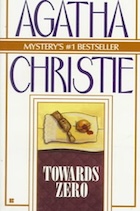
Agatha Christie, Towards Zero

The setup of this Christie novel is an ill-assorted house party in a small coastal town. Nevile Strange and his new wife, Kay, are visiting his former guardian, the rich invalid Lady Tressilian. Awkwardly, Nevile’s first wife, Audrey, happens to be visiting at the same time. The three members of the love triangle all claim to be perfectly fine with this arrangement, but tensions are high. When Lady Tressilian is murdered and it’s clearly an inside job, Superintendent Battle takes a hand in the investigation. This is one of Christie’s more farfetched tales, but it’s still a compelling read! I remembered the murderer’s identity and was entertained by the book’s clever misdirection involving certain clues and alibis. The characterization is on the weaker side—for example, there’s a romance shoehorned in at the end that doesn’t really work—but I still enjoyed rereading this one.

Genevieve Cogman, The Secret Chapter

In this sixth installment of the Invisible Library series, Irene is tasked with acquiring a book from Mr. Nemo, a mysterious Fae collector with a Bond-villain-esque island lair. In exchange, Mr. Nemo wants her to participate in a heist: She’ll work with a crew of dragons (including Kai) and Fae to steal a famous painting from an alt-21st-century Vienna. But tensions are high among the crew, the nascent dragon-Fae-Library treaty notwithstanding, and everyone has a hidden agenda. I love a good heist caper, so I found this book a lot of fun; it doesn’t do anything groundbreaking with the genre, but it both embraces and mocks the various tropes. I’m not sure the book does much to move the series forward, and with just two books remaining, I’m curious about the endgame. Guess I’ll just have to keep reading to find out!

Mini-Reviews: Shaman, Feast, Earl

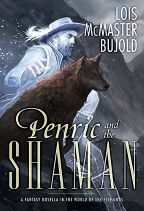
Lois McMaster Bujold, Penric and the Shaman

Four years after making the acquaintance of the demon Desdemona, sorcerer Penric has become a divine in the Bastard’s order. In that capacity, he is asked to participate in the hunt for a runaway shaman who’s responsible for the death of a young nobleman. His partner, the in-world equivalent of a police officer, distrusts all sorcerers and isn’t impressed by Pen’s youth and affability. But as they work together, they come to understand one another better—and realize that the shaman also isn’t quite what he seems. This novella has a lot of world-building that I found a bit hard to follow, even though I’ve read The Hallowed Hunt, which introduced the concept of shamans in this world. There’s also not much conflict; all the major players are well-intentioned and willing to collaborate to solve their problems. But I did enjoy the story and liked seeing Pen impress those who initially underestimated him. I’m excited to continue this series!

Ernest Hemingway, A Moveable Feast

I just got back from my first trip to Paris and thought this would be the perfect book to read while I was there! It’s Hemingway’s fictionalized account of his life in Paris in the 1920s with his first wife, Hadley. He talks about his favorite cafés, his writing process, his affinity for gambling and skiing, and his many friends and acquaintances in the Parisian literary world, such as Gertrude Stein and F. Scott Fitzgerald. I wouldn’t say I’m a huge Hemingway fan, but I do admire his writing style, and there are plenty of wonderfully evocative turns of phrase in this book. I think it’s a bit uneven—which is fair, as it was incomplete when he died and published posthumously—and I’m not sure I’ll ever want to reread it. I think it’s a bit too inside-baseball unless you’re intimately familiar with Hemingway and all the people he describes. Still, it’s reminded me that I would like to read more of Hemingway’s fiction.

Caroline Linden, An Earl Like You

Hugh Deveraux has just inherited an earldom, and with it a mountain of debt that his father had kept secret. With a widowed mother and two sisters to support, he needs money fast. He tries to recover his fortunes at the gaming tables, where he receives an unusual proposal: Rich merchant Edward Cross wants his daughter, Eliza, to marry an aristocrat. If Hugh is willing to be the bridegroom, Cross will pay all his debts and give Eliza a hefty dowry. Hugh is reluctant at first, but when he meets the warm and down-to-earth Eliza, he decides to go through with the marriage. But what will happen when Eliza discovers that her handsome suitor is only after her money? I quite enjoyed this variation on the marriage-of-convenience plot, where only one partner knows it’s a marriage of convenience. Hugh’s deception is appalling, especially because the kind and trusting Eliza thinks it’s a love match, and the book treats this conflict with the gravity it deserves while still making Hugh a likable and redeemable character. I liked this one and may try more from the author.

Mini-Reviews: Remember, Mortal, Bomb

Mary Balogh, Remember When

Clarissa Ware, the dowager countess of Ravenswood, is taking stock of her life. She’s nearly 50, her husband has been dead for several years, and her children are grown. Now she wants to discover who she is apart from her role as society wife and mother. To that end, she rekindles her friendship with village carpenter Matthew Taylor, who was her neighbor and best friend growing up. But any relationship between them will cause gossip; should they get together despite the possible cost to their reputations? This is a gentle, peaceful installment of the Ravenswood series. The conflict is practically nonexistent, and many of the scenes feel repetitive, as both Clarissa and Matthew spend a lot of time reflecting on whether they should be together. There are also the obligatory updates on Clarissa’s many children and family members, which I found a bit tedious. Overall, it was a decent enough read, but so far this series hasn’t grabbed me…though I am excited for Stephanie’s book now, and I hope it’s coming soon!

Genevieve Cogman, The Mortal Word

World-hopping, book-stealing Librarian Irene Winters has just been given her most high-stakes assignment yet. A secret peace treaty between dragons and Fae is in the works, mediated by the neutral Library—but one of the dragon negotiators has just been murdered. Irene and Vale are summoned to the scene of the crime, a version of Belle Époque Paris, where they must solve the murder and prevent negotiations from breaking down. But do the powers that be really want the truth to come out? This is another fun, page-turning installment of the Invisible Library series; it might even be my favorite so far. Most of the major series characters (Kai, Lord Silver, etc.) are on the scene and get some good page time. The romantic subplot takes a significant step forward. Plus, I always enjoy a good murder mystery! So yeah, I liked this one and am excited to continue with book 6.

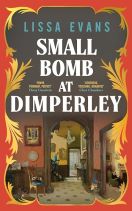
Lissa Evans, Small Bomb at Dimperley

World War II has just ended, and Valentine Vere-Thissett is leaving the army to return to Dimperley manor, which he’s just inherited (along with a title) from his older brother, who died in the war. Valentine doesn’t particularly want the responsibility, especially since Dimperley is falling apart. Fortunately, Zena Baxter, who came to Dimperley in a group of pregnant women who were evacuated from London during the war, has an idea that might save the estate. But not everyone is ready to embrace her plan. I loved this slice-of-life novel and its realistic depiction of postwar changes, but the characters are what really make the novel shine. Every single one is treated humanely and feels like a real person. There’s also plenty of quiet humor and an understated romance that I loved. All in all, an incredibly satisfying reading experience. I’m so glad I saw pamelad’s review on LibraryThing and decided to buy the book from a UK store (since it hasn’t been published in the US)—totally worth it!

Mini-Reviews: Chocolate, Red, Mistress

Charlotte Armstrong, The Chocolate Cobweb

When Amanda Garth, an aspiring artist, learns that she was almost switched at birth with a painter’s son, she impulsively seeks out her “almost” family and befriends them. But when she’s invited to stay at their home, she soon discovers a sinister plot that threatens the life of one of its members. Amanda warns the intended victim, but he doesn’t believe her, so she devises an outrageous — and dangerous — plan to trap the evildoer in the act. I was surprised that the evildoer’s identity and basic plan are revealed quite early in the novel, but the book still manages to be suspenseful and exciting as Amanda and the villain play their cat-and-mouse game. The climactic scene, in which Amanda sets her plan in motion, is particularly thrilling. This the second book I’ve read by Charlotte Armstrong, the first being The Unsuspected, and so far she’s two for two! I’m definitely interested in reading more of her work.

Antoine Laurain, The Red Notebook (trans. Emily Boyce and Jane Aitken)

This short novel, set in contemporary Paris, begins when bookstore owner Laurent Letellier finds a woman’s handbag. It’s obviously been stolen — the wallet, ID, and phone are gone — so Laurent goes through the rest of the bag’s contents, hoping he’ll be able to discover the identity of its owner. Among the items is a red notebook filled with the owner’s thoughts, lists, dreams, and so on; as Laurent reads these miscellaneous entries, he becomes more and more fascinated by the woman who wrote them. But will he ever find her, and what will happen when he does? This is a charming book full of literary allusions, Parisian atmosphere, and understated romance. The fact that the main characters are in their 40s lends a nostalgic air to the story; even though the setting is modern-day, it feels timeless and a bit idealized. I enjoyed it and will likely read more by this author.

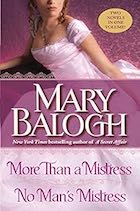
Mary Balogh, More Than a Mistress / No Man’s Mistress

In More Than a Mistress, Jocelyn Dudley, the duke of Tresham, is injured in a duel and hires the sharp-tongued Jane Ingleby as his nurse. Their constant bickering masks a mutual attraction, and when Tresham no longer needs a nurse, he offers Jane employment as his mistress. In No Man’s Mistress, Tresham’s brother, Ferdinand, wins a country estate in a card game. When he goes to inspect his new property, he’s shocked to find Viola Thornhill already living there; moreover, she claims the house is hers and refuses to move out. In both books, the women are hiding their true identities, and when the secrets come out, they unleash a lot of angst and conflict. I didn’t love either of these novels, mostly because I felt they went on too long after the secrets were revealed. I also found all four protagonists frustrating at times, as none of them were good at communicating their true feelings and opinions. My favorite character in both books was Tresham and Ferdinand’s sister, who fortunately has her own book! But these two novels are not among Balogh’s stronger offerings.

Mini-Reviews: Wicked, Left-Handed, Madam

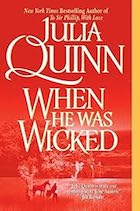
Julia Quinn, When He Was Wicked

Michael Stirling is known throughout society as “the Merry Rake,” but despite his myriad sexual conquests, he’s been in love with Francesca Bridgerton since the moment he saw her. Unfortunately, she was betrothed to his cousin John at the time and is now John’s wife. When John dies unexpectedly, Michael can no longer hide his true feelings, but can he pursue a relationship with Francesca without dishonoring his cousin’s memory? I wanted to like this book more than I did. I enjoy a hero who pines for the heroine, but in this case I didn’t understand why Michael was so obsessed with Francesca. He’s already in love with her when the story begins, so we don’t see what makes her so special to him. Further, he “courts” her exclusively by seducing her, so their romantic relationship is based entirely on sex, which I didn’t find particularly appealing. I’ve really liked some books in the Bridgerton series, but this one just wasn’t for me.

Garth Nix, The Left-Handed Booksellers of London

Eighteen-year-old Susan Arkshaw has come to London to find the father she’s never met. She tracks down Frank Thringley, an old friend of her mother’s, to see if he knows anything about her father — but she arrives just in time to see him crumble into dust at the prick of a hatpin. The hatpin’s wielder is Merlin, who describes himself as a “left-handed bookseller” and tells Susan she is in grave danger. He explains that the Old World of myths, legends, and ancient powers is real, and it’s starting to intrude dangerously into the ordinary world — unless Susan and the booksellers can stop it. This is a really creative YA adventure novel that seems intended to introduce readers to (or reinforce their love of) British fantasy fiction and mythology. I really liked all the literary allusions and the occasional humorous banter, but the book is a bit too episodic and plot-driven for me — too many action sequences, not enough character development. Overall, I liked but didn’t love it, and I probably won’t read the sequel.

Mary Stewart, Madam, Will You Talk?

Charity Selborne is a young Englishwoman on holiday in the South of France. At her hotel in Avignon, she befriends a 13-year-old boy named David and gradually realizes that something is very wrong in his life. She then learns that David’s father, an accused murderer, is at large and has followed David to France. Charity’s decision to help David plunges her into days of suspense and fear, during which she encounters a mystery with its roots in World War II and finds love in an unexpected place. I really enjoy Mary Stewart’s novels of romantic suspense, though they all follow the same basic pattern: beautiful girl in exotic location finds danger and romance. But this is one of her strongest books, in my opinion — the plot is nice and twisty, and there’s a very memorable car chase. Recommended if you like this type of book!

Mini-Reviews: Red, Rom-Com, Garden

Mary Roberts Rinehart, The Red Lamp

Professor William Porter has recently inherited a seaside house from his Uncle Horace. He decides to stay there during his summer vacation, along with his wife Jane, niece Edith, and Edith’s beau Warren Halliday. When they arrive, they immediately learn that the house is reputed to be haunted, and they soon witness strange occurrences themselves, such as a red light shining from the supposedly empty house. Then sheep start dying with their throats cut, and a police deputy goes missing. Are evil spirits responsible for these tragedies, or is human malice at work? This is my first book by Rinehart, and I wasn’t terribly impressed. The novel tries hard to create an atmosphere of eerie suspense, but I never fully felt that; instead, William’s constant musings on possible supernatural explanations just irritated me. In terms of moving the mystery plot forward, not much happens till almost the end of the book. I felt like there weren’t enough clues for readers to grab hold of, and I’m not quite sure the solution all hangs together. Still, Rinehart’s writing is good, and I’m interested to try more of her work; maybe this one is an uncharacteristic dud.

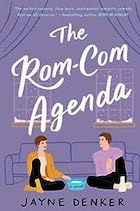
Jayne Denker, The Rom-Com Agenda

Eli has just been dumped by his girlfriend, Victoria, but he’s convinced she’s the one. While she’s on sabbatical in Europe, he and his friends devise a plan to win her back: He’ll give himself a makeover, basing his new look and personality on the heroes of classic romantic comedies. When he meets Leah, a lonely young woman who quickly gets absorbed into his friend group, they immediately hit it off and begin watching the rom-coms together. But as Eli and Leah grow closer, he must decide where his heart truly lies. This contemporary romance is predictable but sweet, and I enjoyed the allusions to some of my favorite movies, like Better Off Dead and The Princess Bride. I liked Leah’s quiet strength and Eli’s exuberant, genuine nature. The book also has a low steam factor with no explicit sex scenes, which is a plus for me. Overall, though, this is a fun read but not a standout, and I don’t feel particularly compelled to seek out more by the author.

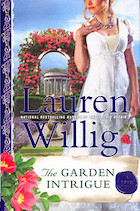
Lauren Willig, The Garden Intrigue

Augustus Whittlesby is widely regarded as the worst poet in Paris, but he’s also secretly a British agent working with — and infatuated by — the Pink Carnation, a.k.a. Miss Jane Wooliston. Jane’s friend, Emma Delagardie, constantly ridicules Augustus’s terrible poetry but is also maybe a tiny bit attracted to him. When Augustus and Emma are thrown together to write a masque for Bonaparte and his court, they develop a deeper relationship. But Augustus is conflicted, both because of his feelings for Jane and because he’s using Emma to learn more about Bonaparte’s plans for invading England. Augustus has been a frequently recurring character throughout this series, so I’m glad he finally got his own story. I liked that both he and Emma ultimately have the same conflict: they have to choose between guarding their (relatively) safe, self-protective lives and taking a chance on real love. This book isn’t quite as light and fun as earlier installments of the series, and it isn’t one of my favorites, but it’s still an enjoyable read.

Mini-Reviews: Orchid, Leopard, Between

Lauren Willig, The Orchid Affair

After spending the past 16 years as a governess, Laura Grey is eager to be sent on her first mission for the Pink Carnation. To her dismay, she’ll be posing as a governess — but her real job will be to spy on her pupils’ father, André Jaouen, who works for Bonaparte’s ministry of police. André is keeping many secrets, and as Laura discovers where his loyalties truly lie, she also finds herself increasingly drawn to him. This is another enjoyable installment of the Pink Carnation series. I liked seeing how the French Revolution and rise of Napoleon affected the people who were experiencing it firsthand. I also enjoyed the romance between Laura and André, who have both experienced hardship and gained wisdom from it. The book’s pacing is a bit slow, though, and I just didn’t love it quite as much as some others in the series. Still, I’m glad to have revisited this one!

Andre Norton and Rosemary Edghill, Leopard in Exile

This sequel to The Shadow of Albion finds most of the principal characters in America, known in this universe as New Albion. Sarah, now the Duchess of Wessex, travels to Baltimore to help her friend Meriel, whose husband Louis (the lost dauphin of France) has gone missing. The Duke of Wessex follows his wife, but he’s also been given a spy mission he may or may not choose to complete. And the evil sorcerer the Marquis de Sade is seeking the Holy Grail, rumored to be in the French colony of Louisianne, which will give him unimaginable demonic power. After I loved the previous book so much, it’s not surprising that this one was a bit of a letdown. While the setting is unique and fascinating, I got weary of all the world-building, especially when it slowed down the narrative. Also, I wanted more character interaction and development; I particularly felt the lack thereof in Sarah and Wessex’s relationship. That said, I’m still glad to have read the book and sorry the series won’t continue.

Mhairi McFarlane, Between Us

Roisin has been dating Joe, a successful TV writer, for nearly a decade, but lately she’s been thinking about breaking up. The problem is that they’re both part of a tight-knit friend group, and she doesn’t feel like she has a good enough reason to dump him. But things come to a head when the friend group gathers to watch Joe’s new TV show, which contains scenes straight from Roisin’s life, including private details about her dysfunctional family. After this betrayal, Roisin begins to wonder if she ever really knew Joe at all. I’m a McFarlane fan and enjoyed this latest book very much, but those expecting a light contemporary romance will be disappointed. Though there is a very sweet love story, the vast majority of the plot centers around Roisin’s relationship with Joe and her growing knowledge of his true character. McFarlane likes to explore the ways men can abuse and exploit women, so the focus on Joe is not surprising, but I would have liked a little more emphasis on Roisin’s new romance and her complicated family dynamics.

Mini-Reviews: Scandal, French, Murder

Sophie Irwin, A Lady’s Guide to Scandal

Ten years ago, Eliza Courtenay married the wealthy Earl of Somerset out of duty to her family, even though she was in love with Somerset’s nephew at the time. The marriage was restrictive and unhappy, but now the earl has died and left Eliza unexpectedly rich. She decides to take control of her life and set up her own household in Bath. But her newfound independence comes with complications, especially when she’s torn between her old love (who is now the earl) and the charming yet scandalous Lord Melville. I greatly enjoyed Irwin’s debut novel, A Lady’s Guide to Fortune Hunting, so I had high hopes for this one, but it never quite grabbed me. I liked the development of the love triangle, where Eliza’s choice of man reflects her choice about what kind of life she really wants. But at the same time, that conflict feels very modern; with historical romance, I want to be transported to a different time, and I didn’t feel that here. Overall, I’d call this one good but not great.

Sarah Ready, French Holiday

After watching her sister marry her best friend, with whom she’s been desperately in love for the past four years, Merry DeLuca needs an escape. Her godmother offers to let her stay in her French chateau, and Merry jumps at the chance. But she’s shocked to discover that Noah Wright, the best man at her sister’s wedding, is also staying at the chateau to work on a travel documentary. Merry and Noah have always disliked each other, but now their close proximity causes them to reevaluate their relationship. I enjoyed this contemporary romance, though it feels a little unpolished (which makes sense, as I believe it’s self-published). At times the prose gets a bit overwrought, and some of the humor veers toward cringey, but the romantic/sexual tension is well done, with excellent use of the “only one bed” trope. Definitely worth a read if the premise interests you!

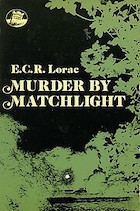
E.C.R. Lorac, Murder by Matchlight

In the opening chapter of this World War II-era mystery, a young man witnesses a murder—but because of the wartime blackout, he doesn’t actually see anything except a face that’s briefly revealed when the victim lights a match in the seconds before his death. Scotland Yard Inspector Macdonald is on the case and soon learns that the key to the truth lies in the dead man’s mysterious identity and background. This vintage mystery was a bit of a mixed bag for me. I loved the wartime setting and its subtle but important effects on the plot — for example, one of Macdonald’s suspect interviews is interrupted by an air raid. The cast of characters is interesting, and Macdonald is a likable sleuth. But I think the mystery itself is a bit weak, and the plot is mostly just Macdonald interviewing people, which gets boring. Overall, though, I’d be interested in reading more by Lorac.

Mini-Reviews: Rogue, Widening, Carnation

Virginia Heath, Never Rescue a Rogue

Giles Sinclair and Diana Merriwell have delighted in vexing each other ever since his best friend married her sister. Everyone thinks their teasing banter is masking a mutual attraction, but they both vehemently deny it. Yet when Giles finds himself in trouble, it’s Diana he turns to for help, and eventually they’ll have to admit to themselves — and each other — that their friends were right all along. There’s a lot in this book that requires suspension of disbelief (Giles might be illegitimate but no one knows! Diana is secretly a hard-hitting investigative journalist!). But if you can roll with the implausibilities of the plot, as well as the characters’ modern attitudes and language, this is a fun book. I liked it more than the first in the series, and I’ll definitely seek out book #3 when it comes out.

W. Bolingbroke Johnson, The Widening Stain

This vintage mystery novel, originally published in 1942, is set in a fictional university library. A French professor is found dead in the stacks, apparently having fallen off a high ladder. But Gilda Gorham, the library’s head cataloger, suspects foul play — especially when another member of the faculty is later strangled and a priceless manuscript goes missing. I liked this book well enough; the writing style is brisk and humorous, gently satirizing the world of academia and providing several limericks (of varying quality) as a bonus. The mystery itself isn’t terribly satisfying, as the motive hinges on some dubious psychology. But still, I found it an enjoyable read and a pretty good start to 2023.

Lauren Willig, The Secret History of the Pink Carnation

It’s 1803, and the Scarlet Pimpernel (who’s a real person in this universe) has inspired several other heroes with flowery names to spy against Napoleon. Lord Richard Selwick, a.k.a. the Purple Gentian, is on a mission to thwart Bonaparte’s invasion of England when he meets Amy Balcourt, an impetuous young lady who wants to join the Gentian’s league. As Amy and the Gentian fall in love, Richard struggles with when and how to reveal his true identity. I’m really glad I decided to revisit this series, because this book is a delightful romp of a historical romance that doesn’t take itself too seriously. If you’re looking for historical accuracy and period-appropriate dialogue and manners, this is not the book for you. But if you’re in the mood for some light-hearted, swashbuckling fun, I would definitely recommend it! Now I’m really looking forward to book #2, as I remember it being one of my favorites in the series.

Mini-Reviews: Kiss, Corner, Matzah

Lisa Berne, You May Kiss the Bride

Gabriel Penhallow is bored witless by the young ladies he meets in Society, but he knows it’s his duty to marry, so he decides to propose to the beautiful but insipid Cecily Orr. While visiting the Orrs, however, he comes across Livia Stuart, whose straightforward nature both irritates and attracts him. An impulsive kiss forces Gabriel and Livia into a hasty betrothal, but a true romance develops as they spend more time together. This is a pretty stereotypical historical romance, with a stuffy, imperious hero and a feisty, unconventional heroine. That said, I do like that formula and I enjoyed the book. It’s a bit different from The Worst Duke in the World (which I also enjoyed) — less frivolous in tone, and with more explicit sexytimes. Overall, I’d consider reading more by the author, but I’m not racing out to do so.

Elizabeth Cadell, The Corner Shop

Lucille Abbey is a highly competent, efficient woman who runs a secretarial business. When three of her best secretaries quit a particular job within the first day, Lucille decides to see for herself why this job is so difficult. She encounters an absentminded, impolite professor and an uninhabitable cottage; but despite her initial antipathy, she decides to stay and put things in order. Later, in Paris, she encounters the professor again and gets mixed up in an art theft. This is a light, pleasant read that I enjoyed for its sharp character observations and satisfying romance. The plot has a few too many coincidences but resolves well, though I wanted the art thief to get more of a comeuppance! Overall, I liked this more than Any Two Can Play and will likely reread it at some point.

Jean Meltzer, The Matzah Ball

Rachel is a Jewish woman with a shameful secret: She loves Christmas and is, in fact, a best-selling author of Christmas romance novels. But now her publisher is asking for a Hanukkah romance, and Rachel is at a loss — for her, Hanukkah just doesn’t have the same magic. Hoping for inspiration, she decides to attend a high-profile Hanukkah celebration called the Matzah Ball . . . but to get a ticket, she’ll need a favor from Jacob Greenberg, her summer camp first-love-turned-nemesis. If you would like to learn more about being Jewish in America during Christmastime, or about living with an invisible illness (Rachel has chronic fatigue syndrome), you’ll like this book. But if you’re looking for a believable, relatable romance, look elsewhere. Rachel and Jacob were 12 years old when they fell in “love,” and after only one meeting as adults, they’re thinking about each other in terms of love and long-term commitment. I just couldn’t buy it, and I wouldn’t recommend the book unless Rachel’s specific attributes and situation in life really resonate with you.