Mini-Reviews: Midwife’s, Check, Talking

Midwife's ApprenticeCheck Me OutTalking as Fast as I Can

Karen Cushman, The Midwife’s Apprentice

Catherine, Called Birdy was one of my favorite books as a child, but I don’t think I’d ever read The Midwife’s Apprentice by the same author. It’s about a young girl in medieval England who is completely alone; she begins the novel by sleeping in a dung heap to keep warm. But the village midwife eventually takes her in as a servant/apprentice, and the girl’s life improves somewhat. Eventually she learns enough about midwifery to make herself useful, makes a friend, and even gets a name of her own: Alyce. But when Alyce makes a mistake in her work, she runs away, certain that everyone will hate her. Will she ever find a place she truly belongs? I was charmed by this book and wish I had read it as a child; while it’s not a keeper for me now, I would definitely recommend it to elementary schoolers!

Becca Wilhite, Check Me Out

I really liked the premise of this book, with its librarian heroine and Cyrano vibes, but the execution was disappointing. Twenty-four-year-old Greta loves her job and her BFF Will, but she hasn’t managed to find romance yet. That is, until she meets dreamy Mac in the poetry section, and he sweeps her off her feet with his good looks and romantic texts. The trouble is, in person he’s not as sweet or witty as he is in print. Meanwhile, the library is in danger of shutting down, so Greta embarks on a series of fundraising schemes to save it. I thought the library-related stuff was interesting, and the book did a good job of covering the complexities of the situation (community benefits vs. budget, historical value of the library vs. need for a modern, accessible space). But the romance was frustrating for me; I felt Greta was clueless and shallow, and her descriptions of Will (who is overweight) were downright cruel at times. Overall, I was disappointed in this book and wouldn’t recommend it.

Lauren Graham, Talking as Fast as I Can: From “Gilmore Girls” to “Gilmore Girls” and Everything in Between

A fun celebrity memoir by Lauren Graham, best known for her roles as Lorelai Gilmore on Gilmore Girls and Sarah Braverman on Parenthood. As a huge Gilmore fan and someone who has always admired Lauren Graham, I was definitely the target audience for this book, and I enjoyed it overall. It doesn’t delve very deeply into Gilmore Girls, which I was a little disappointed by, but upon reflection it makes sense: Gilmore was legendary for its long hours and demanding showrunner who expected every line to be word-perfect, so it makes sense that Graham would be reticent about the probable difficulties of working on the show. She obviously feels much more warmly about Parenthood, a show I stopped watching after season 1. Still a worthwhile read for fans of either show, and Graham has a funny, likable voice. But Tina Fey’s Bossypants and Mindy Kaling’s two memoirs are still my favorites in this genre.
Mini-Reviews: Mask, Winter, Unlimited

Grey MaskWinter of the WitchDetection Unlimited

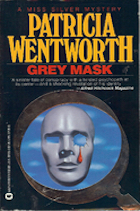
Patricia Wentworth, Grey Mask

Charles Moray has just returned to England after four years abroad. When he reaches his home, he is surprised to find that it is unlocked and that a secret meeting is taking place inside. He learns that the intruders are members of a criminal organization led by an unknown man in a grey mask. He also sees Margaret Langton — the woman he once loved, who broke off their engagement right before the wedding with no explanation — enter the house and speak with Grey Mask. Charles decides not to go to the police but to investigate the matter himself. He and Margaret eventually team up to save a beautiful young heiress who is in danger from the gang and to discover the identity of Grey Mask. I thought this book would be somewhat cheesy and campy, but in fact I really enjoyed it! I will definitely read more by Patricia Wentworth; this is technically the first book in the Miss Silver series, but Miss Silver is a pretty marginal character in this installment.

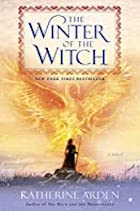
Katherine Arden, The Winter of the Witch

I loved the first two books in this trilogy, The Bear and the Nightingale and The Girl in the Tower, and this book was a fitting conclusion to the series. I love the setting, which is essentially a magical version of medieval Russia that contains various elements of Russian folklore. I also really like that the series doesn’t shy away from consequences: although Vasilisa is a sympathetic heroine, sometimes her choices have unexpected or unintended effects on those close to her. It’s a morally complex universe where no one is completely good or evil, and I liked that the book has some sympathy for even the most destructive characters. My only complaint is that the novel is a bit slow-moving, but if you liked earlier books in the series, you should definitely read this last installment!

Georgette Heyer, Detection Unlimited

I love Georgette Heyer, but this isn’t one of my favorite of her mysteries. I’m a little surprised that I feel this way, though, because the mystery plot itself is one of her strongest. It’s a simple setup: a universally disliked man is shot in his garden, and everyone seems to have an alibi for the time of death. I thought the solution was clever and hung together well, although I was a bit disappointed in the choice of murderer because I liked that character! But the reason I didn’t totally love this book is that there’s a lot of padding surrounding the mystery plot; most of the book is just descriptions of the various characters and how they interact with one another. And while Heyer is great at characterization, I just wanted the story to go somewhere!

Mini-Reviews: Scandal, Death, Enchanting

Do You Want to Start a ScandalDeath on a Friday AfternoonOnly Enchanting

Tessa Dare, Do You Want to Start a Scandal

This Regency romance is the story of Charlotte Highwood, who has been nicknamed “the Desperate Debutante” because of her mother’s aggressive matchmaking efforts. Her mother’s latest target is Piers Brandon, Lord Granville; so Charlotte seeks him out at a house party to reassure him that she doesn’t wish to marry him. This strategy backfires immediately when the two are found in a compromising position — they accidentally interrupt a lovers’ tryst, but everyone else believes they are the lovers. Charlotte decides to clear her good name by unmasking the real lovers. But of course, the more time she and Piers spend together, the more they fall in love. This book was fine, although I found the comic style a little forced and overwrought. Not bad, but not particularly recommended.

Richard John Neuhaus, Death on a Friday Afternoon: Meditations on the Last Words of Jesus from the Cross

I chose this book at the beginning of Lent as an appropriate spiritual read. As the subtitle suggests, each chapter is inspired by one of the seven last words of Jesus from the cross. Each “word” provides a jumping-off point for the author, a Catholic priest, to discuss various aspects of his faith. Sadly, since I read this a while ago, I don’t remember a lot of the details! But I do remember the chapter on “I thirst” being particularly interesting because it discussed the question of universal salvation (is it possible that everyone will be saved?). I’d say the book is geared more toward intellectual than devotional purposes. Overall, the book gave me a lot of food for thought, and I definitely plan to reread it in the future.

Mary Balogh, Only Enchanting

I’ve yet to be disappointed by a Balogh book, and this Regency romance is no exception. It’s part of the Survivors’ Club series, about a group of people who have been deeply wounded (physically, emotionally, or both) in the Napoleonic Wars, but it can be read as a stand-alone novel. The hero, Flavian, has returned from the war with a head injury that left gaps in his memory. When he is thrown together with Agnes, a widow living a quiet rural life, he impulsively proposes to her, and together they are able to fill in some of the blanks in Flavian’s memory — and fall in love in the process. That makes it sound like love magically cures Flavian’s mental injuries, which isn’t the case…I feel like I’m not describing the plot terribly well! But I really liked the book and will continue reading more in this series.

Mini-Reviews: Witch, Scarlet, Homicide

Water Witch*Study in Scarlet WomenHome Sweet Homicide

Cynthia Felice and Connie Willis, Water Witch

I’m a huge Connie Willis fan, so I had high hopes for this book, especially because it also contains some of my favorite elements: con artists, a missing princess, and a sci-fi/romance combo. But overall I found it pretty underwhelming. I really liked the kernel of the story, but I wanted it to be fleshed out a lot more, especially the characterization. The romance essentially comes out of nowhere, and I never really felt like I got to know the hero at all. That said, I really liked a twist involving one of the secondary characters, who came to be a lot more important than I initially expected. Overall, I didn’t like this as much as Willis’s solo work, but I already own two more Willis/Felice collaborations, so I’ll definitely read them at some point.

Sherry Thomas, A Study in Scarlet Women

I’d heard great things about the Lady Sherlock series but was hesitant to dive in, fearing that the books wouldn’t live up to the hype. But I was pleasantly surprised — I really enjoyed this book, which recasts literature’s most famous detective as Charlotte Holmes, a Victorian woman whose brilliant mind is constrained by the social rules of her time. So she decides to leave home and forge her own path. Meanwhile, of course, she solves several murders by realizing that they are all connected. I loved this take on a Holmesian character; Charlotte has a brilliant deductive mind but also really enjoys fashion, and her style is surprisingly ornate and gaudy. I also loved that the book, while sympathetic to Charlotte, also shows her flaws and the negative consequences of some of her decisions. I will definitely continue with the series sooner rather than later!

Craig Rice, Home Sweet Homicide

I found this mystery novel delightful. It’s about three children (ages 8 to 14, I believe) whose mother is a popular mystery novelist. When their neighbor is murdered in real life, the kids are ecstatic — now Mother might get some new material for her books, and the publicity is bound to be good for business. Plus, the handsome detective working the case looks like excellent stepfather material, though Mother doesn’t seem to agree. The children team up to solve the mystery with the help of their friends and neighbors; the result is a farcical romp that I thoroughly enjoyed.

Mini-reviews: Henrietta’s, Matrimonial, Austen

Henrietta's WarMatrimonial AdvertisementAusten Escape

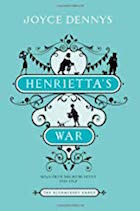
Joyce Dennys, Henrietta’s War: News from the Home Front 1939-1942

I greatly enjoyed this charming epistolary novel, which is both written and set during World War II. The titular Henrietta writes to her childhood friend Robert, who is off fighting somewhere in France, and describes daily life in her rural English village. Despite the constant presence of the war in the background, Henrietta mostly focuses on the mundane, humorous aspects of life. A pleasant and uplifting book.

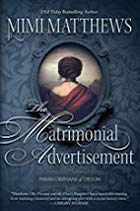
Mimi Matthews, The Matrimonial Advertisement

Last year I read Matthews’s novella, A Holiday by Gaslight, and enjoyed it so much that I wanted to seek out some of her full-length novels. This one, the first in her Parish Orphans of Devon series, is a “proper” Victorian romance (i.e., no explicit content) that centers around a marriage of convenience. Justin needs a wife to manage his remote, secluded estate, and Helena needs a safe place to hide from her past. The book definitely justified my high expectations, and I can’t wait to continue with the series!

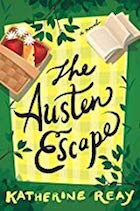
Katherine Reay, The Austen Escape

I’ve read one other book by Reay, Dear Mr. Knightley, and I wasn’t a huge fan. But when I got this novel as a gift, I decided to give the author another chance. Unfortunately, I didn’t like this book either — something about the writing style just grates on my nerves. I also found the heroine obnoxious and unsympathetic, and I have no idea what her love interest saw in her. I was frankly appalled by one major plot point: the heroine’s best friend, who has a history of mental health issues, starts to believe she’s living in Jane Austen’s time…and nobody seems to think this is something that needs immediate medical attention! So all in all, I wasn’t a fan, and I’m pretty sure I’m done with this author.

Review: Sherwood

SherwoodMeagan Spooner, Sherwood

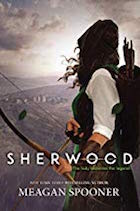
This retelling of the Robin Hood legend focuses on the character of Maid Marian. When her fiancé Robin of Locksley dies on crusade, Marian sees it as her duty to protect the people of Locksley from the corrupt Sheriff of Nottingham and his lieutenant, Sir Guy of Gisborne. When her maid Elena’s brother, Will Scarlet, is arrested for poaching, Marian is determined to save him, both for Elena’s sake and for Robin’s. But when she dresses in men’s clothing for her first rescue attempt, she is mistaken for Robin himself. The mistake gives Marian a daring idea: as a woman, she is almost powerless in society and cannot fight back against the corrupt laws that oppress her people. But as “Robin Hood,” she can actually make a difference. As her deception becomes more and more elaborate, she finds herself in increasing danger, especially from the enigmatic Gisborne. She also makes some hard choices as she learns how far she’ll go to protect her secret.

My all-time favorite version of the Robin Hood story is Robin McKinley’s The Outlaws of Sherwood. It’s just always felt true to me in a way that, say, the Errol Flynn movie (much as I enjoy it) doesn’t. To my surprise and delight, Sherwood gave me that same sense of truth from a very different perspective. This version of Marian is strong and independent, but while her heart is in the right place, she tends to act without thinking — a trait that usually irritates me, but it makes total sense for her character. And I love that she grows in this area throughout the novel, as she realizes that her impetuous actions sometimes have unforeseen consequences. Similarly, I love how this book gives some nuance to the Robin Hood legend: are his actions in robbing the rich to give to the poor always justified? Could he have worked within the law instead of deliberately flouting it? Finally, there’s a romance in this book that completely sneaked up on me, and I adored it. In short, I really loved this book; the moment I finished my library copy, I immediately bought one for myself! Highly recommended, especially if (like me) you also enjoyed Hunted.

Review: In Milady’s Chamber

In Milady's ChamberSheri Cobb South, In Milady’s Chamber

When Lord Fieldhurst is found murdered in his richly appointed Mayfair home, suspicion immediately falls on his wife. It’s common knowledge in London society that their marriage has been unhappy and that, because of Lady Fieldhurst’s inability to produce an heir, her husband has pursued sexual satisfaction elsewhere. Furthermore, the man was stabbed in the neck with his wife’s own nail scissors. The evidence seems ironclad; but John Pickett, the Bow Street Runner assigned to the case, is immediately enthralled by Lady Fieldhurst’s beauty and becomes determined to prove her innocence. As he investigates other promising suspects, such as Fieldhurst’s heir and his colleagues at the War Office, he uncovers many secrets but comes no closer to finding the killer — that is, until he and Lady Fieldhurst finally join forces to discover the truth.

I love mysteries and the Regency period, so any book that combines them both is something I’m going to want to read! In this case, the book delivered exactly what I wanted: a light, quick-reading, Heyer-esque period piece with a little mystery and a hint of romance. John Pickett is a somewhat unique protagonist for this type of story: most Regency heroes are self-assured and commanding, but John is young, naive, and idealistic to a fault. Nevertheless, he manages to be good at his job, despite being distracted by the beautiful Lady Fieldhurst. I was a little annoyed that he falls for her so quickly, and apparently on the basis of nothing but her looks, but his awkward pining does make for several humorous moments. Julia, Lady Fieldhurst, is also given some dimension and depth as she helps John with his investigation and contemplates her own future. The mystery is wrapped up a little too abruptly, although I did like the subtle hints to one part of the solution that are seeded throughout the book. But overall, I simply enjoyed spending time in this world with these characters, and I definitely plan on continuing with the series!

Review: Under a Dancing Star

Under a Dancing StarLaura Wood, Under a Dancing Star

In 1930s England, 17-year-old Beatrice Langton longs to be a scientist, but her parents have a different plan in mind for her: because she’s their only child, and they no longer have the money to maintain the estate, she must marry a rich aristocrat and restore the family fortunes. But Bea’s “outrageous” behavior at an ill-fated dinner party gives her life a new direction when her parents decide to send her to her uncle’s home in Italy. Far from being chastised, Bea is thrilled — especially when she arrives in Italy to find that her uncle and his bohemian fiancée are essentially living in an artists’ commune. She is soon enjoying the freedom of her new life, with one exception: one of the artists, Ben, is as argumentative and obnoxious as he is handsome. But when their friends dare them to embark upon a summer romance, Bea reluctantly agrees. If nothing else, it will be an interesting experiment, and she’ll gain some much-desired life experience. But when their pretend relationship becomes all too real, will their very different backgrounds keep them apart?

Much Ado about Nothing is my favorite Shakespeare play, so I’m game to read any and all retellings, especially if they’re set in interesting historical periods! This one takes place in the 1930s, so I couldn’t help but compare it with Speak Easy, Speak Love, which is another Much Ado retelling set in the 1920s. I absolutely adored Speak Easy, Speak Love, and I must admit that this book suffers a bit by comparison. It’s a light, fun read, and I enjoyed the chemistry between Bea and Ben, but to me it lacked the substance of Speak Easy, Speak Love. It’s also not as good a retelling of Much Ado — it focuses on the Beatrice and Benedick story but jettisons the Hero/Claudio plot entirely, merely keeping a few of the character names. I did love the way this book subtly paraphrased some of the most famous lines from the play, rather than quoting them outright; I thought that was a great way to pay homage to the original play while still keeping the language appropriate for the characters’ ages and the time period. Overall, I enjoyed this book and would read more by Laura Wood, but if you’re looking for a YA Much Ado retelling set in the early 20th century, I’d definitely recommend Speak Easy, Speak Love instead!

Review: Miss Grimsley’s Oxford Career

Mrs. Drew Plays Her Hand:Miss Grimsley's Oxford CareerCarla Kelly, Miss Grimsley’s Oxford Career

Miss Ellen Grimsley is the second daughter of a respectable country gentleman, and her destiny is to marry an equally respectable country gentleman and fulfill her womanly duties as wife and mother. But Ellen would much rather be a scholar and an explorer, traveling the world and making maps of far-off places. When her forward-thinking aunt gets her a place at Miss Dignam’s Select Female Academy, in the very town of Oxford, Ellen is thrilled — but she soon discovers that the classes are only in “feminine” subjects like French and embroidery. So when her brother Gordon, who’s flunking his Shakespeare course at Oxford, asks for her help, Ellen can’t resist writing his papers and even dressing as a man to attend lectures at the university. Obviously she can’t continue this charade for long without being caught; but luckily, the person who catches her is the kind and scholarly Jim Gatewood, who encourages her intellectual curiosity and converses with her as an equal. But when Jim professes his love for her and proposes marriage, Ellen is hesitant to give up her dreams, even for love.

Since this book came in the omnibus with Mrs. Drew Plays Her Hand, which I liked, I decided to give this one a try too. Unfortunately, I didn’t enjoy this one quite as much. The plot is rather muddled, and too many of the events strain credibility. For example, how does Ellen manage to fool everyone (or indeed anyone) in her male disguise? The book mentions that Gordon’s tutor is old and practically blind, but were there no other students nearby? Then there’s Ellen’s roommate, Fanny Bland, who is sometimes cruel and sometimes kind, without any real explanation for these fluctuating moods. Finally, the central conflict between Ellen and Jim seems to come down to Ellen’s own obtuseness. Despite her affection for, friendship with, and attraction to Jim, she refuses to see that she’s in love with him and turns down his repeated proposals of marriage. Near the very end of the book, there’s a hint that Ellen turns him down because she fears giving up her dreams of an independent life. That would have been a more interesting conflict to explore, but the book doesn’t dig into it at all, merely giving Ellen an abrupt change of heart just before the novel ends. Overall, a disappointing read — but at least I was able to finish it before the end of the year!

Review: Murder Most Malicious

Murder Most MaliciousAlyssa Maxwell, Murder Most Malicious

It’s Christmas 1918, and England is ready for a little peace on earth after the end of the Great War. But the house party at Foxwood Hall is anything but peaceful: on Christmas night, Lady Phoebe Renshaw hears her older sister Julia arguing with her would-be fiancé, Lord Allerton. The argument ends with Julia breaking off their relationship — and the next day, Lord Allerton is nowhere to be found. Then some of the Foxwood servants receive a gruesome surprise in their Boxing Day gifts, indicating that Allerton is dead. The police believe one of the footmen is responsible, but Lady Phoebe and her maid, Eva Huntford, are convinced of his innocence. In an effort to prove it, Phoebe and Eva do some investigating of their own, and they soon discover that many of Foxwood’s current inhabitants — both above and below stairs — had a reason to want Allerton dead. And if they don’t stop sleuthing, they may be the next to die.

This book has strong Downton Abbey vibes, and I think anyone who enjoyed that show will like this book too. It gives that same upstairs-downstairs picture of English country house life at a time when social mores were beginning to shift dramatically. Phoebe and Eva are both likable protagonists, and despite their class differences, it’s obvious that they truly care for one another. At times they feel a little too much like stock characters, though . . . like every other heroine in historical fiction, they’re intelligent women who seek to transcend their social roles, but they don’t have many other personality traits. The same is true for most of the other characters: there’s the eccentric older relative, the faithful butler, the autocratic matriarch, the handsome lord who’s more than he seems, and so on. Nevertheless, it’s an enjoyable formula, so I didn’t mind too much. The mystery plot was interesting, and while I did guess the culprit, it was fun to follow along. Overall, I’m definitely interested in continuing with the series, and I hope that Phoebe and Eva’s characters will be more fleshed out in subsequent books.