Mini-Reviews: Love, Byzantium, Ensemble

Lindsey Kelk, Love Me Do

UK native Phoebe Chapman is excited to spend a couple weeks visiting her sister in Los Angeles. Sure, her sister has to leave pretty much immediately for an emergency work trip, but Phoebe is happy enough to stay at her luxurious house and explore the city, with the help of handsome neighbor Ren and bubbly personal trainer Bel. Phoebe soon learns that Bel has a crush on Ren but is painfully awkward around him, so she decides to help the couple get together. But a little well-meaning advice soon spirals out of control, with Phoebe writing love letters to Ren on Bel’s behalf – while falling for Ren herself. I’m a sucker for a Cyrano de Bergerac storyline, and I enjoyed this book even though Phoebe’s plan was obviously doomed from the start. Yes, Ren is a little too good to be true, and the conflicts are all resolved pretty quickly. But I liked Phoebe’s humorous voice and her enthusiastic descriptions of LA from an outside perspective. Overall, it’s a fun read if the premise interests you.

John Julius Norwich, A Short History of Byzantium

In the late ’80s and early ’90s, English popular historian John Julius Norwich wrote a three-volume history of the Byzantine Empire. This book condenses that longer work into a single tome of 500-ish pages, giving a broad-strokes overview of the history of Byzantium from the reign of Constantine the Great in the fourth century to the Ottoman conquest of Constantinople in 1453. It’s a lot of ground to cover, so Norwich mostly sticks to the emperors and other powerful figures (popes, patriarchs, rival monarchs, etc.) who show up in the historical record. As someone who’s only mildly interested in the Byzantine Empire, I don’t think I’m the target audience for this book, which would probably be more enjoyable to someone with more background knowledge. But Norwich is an entertaining writer, and I think I will retain at least some of what I read, so I’d recommend it to people who are enthusiastic about the period.

Aja Gabel, The Ensemble

This novel closely follows four characters, members of a professional string quartet whose careers and lives are intertwined in various complicated ways. There’s first violinist Jana, the ambitious and emotionally ruthless leader of the group; Brit, the calm and kind second violinist; Henry, the viola prodigy to whom everything seems to come easily; and Daniel, the cellist with a monumental chip on his shoulder. As time passes, each character comes to terms with what he or she really wants from the quartet and from life in general. Literary fiction doesn’t always appeal to me; I find “literary” is often synonymous with “depressing.” But in this case, I found enough to like about these (sometimes quite unlikable) characters, and enough outcomes to root for, that I liked the book more than I expected to. I also thought the descriptions of music and life as a musician rang true. Overall, I think I’d like to read this book again someday, so I’m keeping it on my shelves for now.
Review: Play It Again

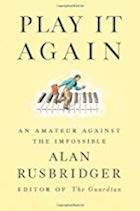
Play It Again- An Amateur against the ImpossibleAlan Rusbridger, Play It Again: An Amateur against the Impossible

The author of this memoir is, at the time of writing, a 57-year-old amateur pianist with a dream: to competently play Chopin’s Ballade No. 1 in G Minor, Op. 23. This is an extremely difficult and demanding piece, and Rusbridger is understandably nervous about whether he’ll be able to achieve his goal. His project is further complicated by the fact that his day job is editor of the Guardian, a major British news outlet. And of course, the time frame he’s chosen for learning the Ballade happens to coincide with high-profile news events such as the Wikileaks story and the News of the World phone hacking scandal. Nevertheless, Rusbridger manages to carve out at least 20 minutes to practice most days, and he also asks for advice wherever he can get it, including from books, music teachers, and even concert pianists. Rusbridger documents his quest to learn the Ballade in diary format, sharing his strategies, doubts, successes, and failures along the way.

I picked up this book because the premise sounded like something I might actually want to do: I’m an amateur pianist who took lessons from second grade up through college, and I still play occasionally for community theater musicals. I also own the score of the Ballade, though I’ve never attempted to read more than the first couple of pages. I think some familiarity with the Ballade is necessary to get anything out of this book; luckily, there are a ton of performances on YouTube, and Rusbridger includes his annotated score in the appendix. But he does spend a fair amount of time discussing the minutiae of the piece, referring to specific measure numbers, fingerings, and rhythms. So if you’re completely nonmusical, I wouldn’t recommend this book. I largely enjoyed following Rusbridger along his journey, although I couldn’t help noticing his privilege in being able to consult world-famous pianists about his project. The book also gets a bit same-y after a while, which made the last stretch somewhat tedious. Nevertheless, I’d definitely recommend this book to any musician, professional or amateur!

Review: Bel Canto

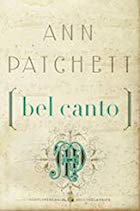
Bel CantoAnn Patchett, Bel Canto

In an unnamed Latin American country, the government is hosting a birthday party for Mr. Hosokawa, a Japanese businessman who is deciding whether to build a factory there. Since Mr. Hosokawa loves opera, the world-famous soprano Roxane Coss has been invited to sing. The party begins beautifully but is shockingly disrupted when members of a terrorist organization burst into the vice president’s home and take everyone hostage. The terrorists are looking for the president, but he’s not at the party; he stayed home to watch his favorite soap opera. As a result, the attackers don’t know quite what to do next, and the hostage situation stretches on for days and even weeks. As time passes, the gap between prisoners and captors begins to narrow, and everyone trapped in the vice president’s house is eventually united by their appreciation for beauty and their common humanity.

This isn’t my usual type of book at all, so I was surprised to find that I really enjoyed it. While the inciting incident is a hostage crisis, the novel is neither thrilling nor fast-paced. Rather, it’s very contemplative in tone and spend a lot of time exploring the thoughts and feelings of the various people trapped in the house, both prisoners and guards. It’s hard to single out one protagonist, as the narrative pays equal attention to at least six or seven people. Normally this would frustrate me, but here I think it helps to reinforce the novel’s theme of people from very different backgrounds finding common ground. I liked that even the minor characters are given depth and dimension; no one is a prop or a plot device. Also, as a musician (though not an opera buff by any means!), I very much enjoyed the emphasis on the power of music to bring people together, even if that message does get a bit too heavy-handed at times. Overall, I feel like I’m still processing this book, and I’m sure I will be thinking about it for some time to come.