Mini-Reviews: Dance, Babel, Thief

Lois McMaster Bujold, Mira’s Last Dance

Penric’s rescue mission continues in this novella, as he flees to safety with political target General Arisaydia and his widowed sister Nikys. They need to leave the country without being discovered, which means they must travel in disguise. When their journey leads them to shelter in a brothel, Penric poses as a female courtesan, drawing on the experience of Mira, one of Desdemona’s previous riders. But this masquerade is dangerous in more ways than one, as it complicates the mutual attraction between Penric and Nikys. This series continues to be enjoyable, though this installment is very short on plot. Penric’s gender-bending disguise is the main event, and it causes Nikys to reflect more deeply on the relationship between Penric and Desdemona, and what that might mean for a possible romance. The novella ends on an ambiguous note, so I’m interested to see what happens next!

R.F. Kuang, Babel

Robin Swift is a half-Chinese boy plucked from the slums of Canton and raised to study at Oxford’s prestigious Babel Institute of Translation. Babel scholars are trained to work silver magic via their powers of translation—and this magic in turn powers the might of the British Empire. When Robin first comes to Oxford, he falls in love with the university and the people in his cohort, who are all outsiders like him because of race, gender, or both. But the more he learns about silver magic and its ties to imperialism, the more conflicted he becomes. This is a novel I really wanted to like, and I did enjoy parts of it, like the Oxford setting and all the information about linguistics. But this is a novel with a clear message (imperialism is bad and must be resisted with violence), and I felt like I was reading a polemic rather than a story. The characters we’re supposed to like are not very likable or nuanced, and the villains are absolutely pure evil. So overall, I found this book disappointing, though I think I’m in the minority with that opinion.

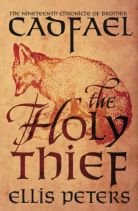
Ellis Peters, The Holy Thief

In the penultimate book of the Cadfael series, the civil war between King Stephen and Empress Maud has led to the destruction of a Benedictine abbey in Ramsey. Some of its brothers come to Brother Cadfael’s abbey in Shrewsbury to request their aid. Meanwhile, a troubadour from the South of France and his entourage, which includes a beautiful young woman, are also staying at the abbey. When a saint’s relics are stolen and a witness to the theft is murdered, Cadfael must once again investigate these mysteries and determine how justice can best be served. It’s always a pleasure to escape into the world of these novels, and I liked that after taking a backseat in The Summer of the Danes, Cadfael is back at the center of the action, finding clues, interviewing suspects, and talking things over with Hugh. I also liked the callbacks to A Morbid Taste for Bones, although if you don’t remember certain events from that book, you may have a little trouble following this one. But if you love the Cadfael series, this novel won’t disappoint.

Mini-Reviews: Heiress, Excellent, Witch

Sherry Thomas, Ravishing the Heiress

In this Victorian romance, Millie Graves is the daughter of a rich tradesman who has arranged a marriage for her with the destitute Earl Fitzhugh. When Millie meets Fitz, she falls in love with him immediately, but Fitz is much less impressed, since he’s already in love with his childhood sweetheart, Isabelle. When Millie realizes this, she proposes that they wait to consummate their marriage and that once she produces an heir, he and Isabelle can pursue an extramarital relationship. But as the designated time for the consummation draws near, Fitz is surprised to find that the woman he really desires is his wife. I was pretty disappointed in this book, mostly because Fitz is such a jerk for most of it! He spends his entire honeymoon drunk, openly cheats on Millie with random women, and makes absolutely no effort to understand her thoughts or feelings. I couldn’t believe we were supposed to be rooting for this guy, and he doesn’t do nearly enough in the end to make up for his abhorrent behavior. So I definitely would not recommend this one and am hoping that the other Thomas title on my shelves, His at Night, is a lot better!

Richard Hull, Excellent Intentions

This mystery story has a common Golden Age setup: Wealthy and thoroughly unpleasant Henry Cargate is poisoned on a train. It turns out any number of people wished him ill, but only a few had the means and opportunity to obtain the poison and put it in his snuffbox, where he’d be sure to inhale it. The unusual element of the novel is that it starts at the murder trial, where the prosecutor summarizes the case against the accused (whose identity isn’t revealed till very late in the book). The narration jumps back and forth between the trial and the preceding investigation, and readers get inside the heads of the Scotland Yard inspector, prosecuting and defense attorneys, and even the judge. I liked the clever narrative structure and the reminder that catching the murderer isn’t the end of the story. However, the actual mystery isn’t particularly creative or hard to solve; the unique structure is the most interesting part of the book.

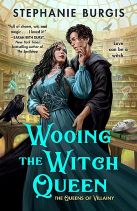
Stephanie Burgis, Wooing the Witch Queen

Queen Saskia is a witch determined to protect her people from the evil empire that’s trying to invade her country. Archduke Felix is the embodiment of that empire and the focus of Saskia’s hatred. But Felix is merely a figurehead imprisoned by his conniving relatives, who are about to escalate from torture to murder. When Felix escapes, he runs straight into Saskia’s kingdom but can’t reveal his true identity, so he applies for a job as her librarian, where romance and cozy villainy ensue. I enjoy Burgis’s writing, but this book fell a little flat for me. I think it’s because there’s no nuance; the good characters are 100% good, the baddies are entirely evil, and the romance lacks any real tension or depth. This book illustrates a trend I’ve noticed in the past few years, where romantic heroes are implausibly perfect and exist solely to provide emotional support to the heroine. Of course, I don’t want horrible, misogynistic “heroes,” but I would like them to feel like actual human beings and not cardboard fantasies. All that said, I may read the next book in the series when it’s published, but I will get it from the library instead of buying.

Mini-Reviews: Enemy, Rushworth, Spirit

Brigitte Knightley, The Irresistible Urge to Fall for Your Enemy

Osric Mordaunt is an assassin with a terminal illness. Aurienne Fairhrim, the best healer around, is the only person who might possibly be able to save his life. Too bad they hate each other, both personally and as a matter of principle. But Aurienne’s hospital desperately needs money to deal with a viral outbreak that’s targeting children, so Osric bribes her to help him. As they reluctantly work together to pursue a cure for his illness, they slowly grow closer. I’m a big fan of the enemies-to-lovers trope, and this book certainly deploys it well, with lots of charged banter and a slow burn that really ramps up the tension. But overall, the novel didn’t quite work for me; some of the banter felt forced, the occasional bawdiness was jarring, and I just wasn’t terribly invested in the romance. Also, the book is the first of a planned duology, and nothing is resolved at the end of this one! I didn’t realize I’d have to read a second book to get the whole story, and I’m honestly not sure if I care enough.

Claudia Gray, The Rushworth Family Plot

This fourth book in the Mr. Darcy and Miss Tilney mystery series is set in London, where both Jonathan and Juliet have been encouraged by their parents to look for other potential matches. But the two young people have eyes only for each other—that is, until another murder among their acquaintance captures their attention. The victim is Mr. Rushworth, Maria’s spurned husband from Mansfield Park, and it soon becomes evident that tensions are high within the Bertram household. There’s no shortage of suspects, especially when Henry and Mary Crawford also arrive in town. I’m continuing to enjoy this series, which takes Austen’s well-known characters in believable new directions, and I thought the treatment of the Mansfield Park set was particularly entertaining. I also enjoyed the overall plot, which results in a scandal that may divide Jonathan and Juliet forever. I’ll certainly keep reading the series—I want to know which Austen characters we’ll meet next!

Kristen Britain, Spirit of the Wood

This novella in the Green Rider universe is a prequel to the main series, focusing on supporting character Laren Mapstone. But the story is actually told from the point of view of Tavin, a new Green Rider who’s accompanying Laren on his first mission. When she’s gravely wounded, he must figure out how to help her; but Laren is carrying a lot of grief and trauma from the recent wars with the Darrow Raiders, and Tavin’s magical gift of empathy means he must experience it all along with her. This was a decent little adventure, and I liked Tavin and wanted good things for him. His journey of self-discovery was satisfying if a little slow at times. I don’t think the book adds much to readers’ understanding of Laren, though it does reveal how she got her scar. Overall, a fine but not particularly memorable installment of the Green Rider series…though I might be a little too critical, since I find I’m just not very interested in the series anymore.

Mini-Reviews: Practical, Listeners, Broken

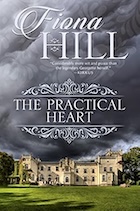
Fiona Hill, The Practical Heart

Gillian Spencer has just taken a job as companion to the two daughters of a viscount. Because the viscount is deeply in debt, Gillian must get the daughters married as soon as possible—preferably to rich men. But even with the help of the viscount’s handsome nephew, Miles Lawrence, she finds that her task is harder than she thought. After really enjoying The Country Gentleman, I was excited to try more by Fiona Hill, but I must say this book was a bit disappointing. It’s so short (only 139 pages in my e-book copy) that there’s really no time for character development. The romance between Gillian and Miles is barely sketched in, and the other characters are just there for hijinks and comic relief. I did still enjoy the writing style, particularly the viscount’s ornate way of speaking, but otherwise this one is just okay. I bought a whole Hill anthology for $2.99, though, so I will certainly try more of her work.

Maggie Stiefvater, The Listeners

June Hudson is the general manager of the luxurious Avallon Hotel in the mountains of West Virginia, where the mysterious sweetwater has kept the hotel prosperous. The U.S. has just entered World War II, and the government calls upon the Avallon to host a large group of Axis diplomats, both to keep them out of mischief and to show the enemy how prisoners should be treated. June is deeply conflicted about this assignment but resolves to treat the Nazis like any other guests. Eventually, however, both June and the Avallon reach a breaking point that will change the course of June’s life. I’m a huge fan of Maggie Stiefvater’s writing, so I was incredibly excited for her adult debut, and overall I was not disappointed. The story is based on true WWII events, and it’s a great backdrop for June’s character arc, as every decision becomes a compromise among competing priorities. The fantasy elements felt a bit unnecessary to me, but they also didn’t detract from the story. There’s a wonderful romance as well, so overall, I’d definitely recommend this one to fans of WWII-era historical fiction.

Tana French, Broken Harbor

Detective Mick “Scorcher” Kennedy has the top solve rate on the Dublin Murder Squad, which he attributes to his hard work and emotional detachment. But when he’s assigned to a high-profile case—an entire family murdered in their home—he finds himself becoming more and more personally invested as he and his rookie partner investigate. I think Tana French is a really good writer, and even though I wasn’t particularly interested in Scorcher’s story when I started this book, she soon made me empathize with him. The book’s central question also resonates: How much control do we really have over our own lives? But it’s so slow, diving deep into the minutiae of police procedure, and ultimately it took me a long time to read because I found it very put-downable. I do still want to continue with the series, but it’ll probably be a while before I pick up the next book.

Mini-Reviews: Masque, Library, Heartbeat

Stella Riley, Masque of Deceptions

Daniel, Viscount Reculver, has recently inherited his father’s title, along with a mountain of debt he didn’t know about. To make ends meet, he’s begun selling some of his family’s valuables. When Anna Hawthorne of Hawthorne’s porcelain manufactory hears this news, she’s determined to buy back the set of scent bottles that the late viscount had purchased from Hawthorne’s over the years. But when she meets the handsome and charming Daniel, she’s tempted to make a different offer entirely. As Daniel contemplates her surprising proposal, he begins to see Anna in a new light. This is the second book in Stella Riley’s new series, after The Shadow Earl, and I liked it more than its predecessor. Both Anna and Daniel are very sympathetic characters, and their slow journey from awkwardness to love is delightful. Of course Daniel’s close friends, at least two of whom are sequel bait, make a few appearances, but the focus is largely on the central romance. There are not one but two villains, which gets a bit tiresome, but luckily they don’t overwhelm the story. I’m hoping the next book in this series comes out soon, as I’m definitely excited to read it!

Sulari Gentill, The Woman in the Library

Four strangers are sitting at the same table in the reading room of the Boston Public Library, when they hear a woman scream. At the time nobody knows what’s happened, but news reports later reveal that the woman was murdered. The four strangers, who began talking to each other after hearing the scream, quickly become friends and speculate on who could have killed the woman—but things get complicated when it comes out that one of them has a violent past. I was intrigued by the premise of this book and imagined it would be a variation of the locked-room whodunnit, perhaps with a side of “unbreakable” alibi. Instead, very little time is actually spent on the woman in the library, as the book becomes more of a thriller, with plenty of “shocking” but repetitive revelations and a couple more violent deaths. As a thriller, it was…fine. The unmasking of the murderer fell flat, and then everything ended very abruptly. Overall, I just found it a bit lackluster, and I wouldn’t particularly recommend it.

Cara Bastone, Just a Heartbeat Away

Sebastian Dorner, grieving the sudden death of his wife, is shocked and ashamed when his son Matty’s preschool teacher, Via DeRosa, gently tells him that Matty shows signs of neglect. Seb vows to do better, and two years later, he and Matty are in much better shape. Seb is volunteering at Matty’s new school, where Via just happens to be the new guidance counselor. A mutual attraction builds between them, but Seb is 42 while Via is 27 and has a boyfriend. Will these obstacles prevent their romance? Ultimately, of course, the answer is no, but getting there is a delicious, achingly slow burn. I loved this book’s nuanced portrayal of grief and strong characterization, even of the minor players. Much as I adored Seb and Via together, some of my favorite scenes in the book were between Seb and his mother-in-law, who have a complicated relationship. Overall, I really enjoyed this novel and am eager to continue with the series. Highly recommended if you don’t mind some heavier elements in your romance.

Mini-Reviews: Murder, Ruin, Story

Anthony Wynne, Murder of a Lady

This mystery, set in the Scottish Highlands, opens with the murder of Mary Gregor, the elderly sister of the local laird. Her corpse is found in a locked room, and the police are stymied as to how the murderer got in or out. The discovery of a fish scale on the body leads the locals to believe that supernatural merman-like creatures are responsible. Luckily, amateur detective Dr. Eustace Hailey is visiting the area, and he eventually discovers a more logical explanation—but not before a troubled marriage nearly falls apart, and several more deaths occur. I quite liked this Golden Age mystery; I didn’t guess the culprit, and the locked-room puzzle was ingenious. I also found the psychological discussion interesting, although it occasionally seemed questionable and dated. But Hailey’s analysis of the dead woman’s character is both fascinating and integral to the solution of the case. It’s a bit melodramatic, and the book ends very abruptly; but overall, I liked this one and would recommend it to vintage mystery fans.

Mimi Matthews, Rules for Ruin

Euphemia “Effie” Flite was plucked from the streets as a child and placed in the Crinoline Academy, a school dedicated to educating strong and independent young women. Effie graduated years ago, but now the headmistress is calling in a favor: Effie must use her training to ruin the reputation of Lord Compton, a member of Parliament who’s opposing a bill that would allow married women to own property. In so doing, Effie butts heads with Gabriel Royce, a self-made man from the London slums who needs Compton’s influence to pursue his plans for social reform. I think Mimi Matthews is one of the best historical romance authors writing today, but I was worried that this new series would be too anachronistic and unsubtle (the back cover says something about “disrupting the patriarchy”). Happily, my fears were unjustified; Effie and Gabriel are both progressive thinkers for their time, but their beliefs are grounded in their cultural context and make sense for their characters. I also loved the romance, which is steamless but leaves no doubt that Effie and Gabriel are wildly attracted to each other. I’m excited to continue with the series—book 2 comes out in November!

Genevieve Cogman, The Untold Story

***Warning: SPOILERS for previous books in the series!***

In the last (at least for now) installment of the Invisible Library series, Irene finally comes to a reckoning with Alberich, who is a murderer, a traitor to the Library—and Irene’s biological father. But at their climactic meeting, Alberich reveals information that has Irene questioning her most deeply held beliefs and loyalties. How was the Library founded, who really controls it, and for what purpose? Irene must find these answers without getting herself or her loved ones killed in the process. When I first read The Invisible Library, I remember being disappointed that Alberich was a villain with no nuance and that Irene never questioned the benevolence of the Library. Thankfully, those complaints are no longer valid! This book finally digs into the Library’s true nature and sheds some light on a few things from previous books that seemed strange or incongruous. I think it’s a satisfying ending to the series, though I can imagine Irene & co. having further adventures if the author ever wants to return to this world.

Mini-Reviews: Ticket, Fatally, Inconvenient

Freya Sampson, The Lost Ticket

In 1962, twentysomething Frank met a girl on a London bus, and that single encounter changed his life. Unfortunately, he lost the phone number she gave him, and he never saw her again. Sixty years later, Libby has just arrived in London after simultaneously losing her job and her boyfriend. When she meets Frank (on the bus, of course), she’s fascinated by his story and decides to help him find the girl from the bus—posting flyers, placing newspaper ads, inventing a Twitter hashtag, etc. In the course of the search, Libby grows in unexpected ways as she discovers a new purpose and perhaps a new romance. This is a gentle, bittersweet novel about community and the positive ways people can influence each other. There are a lot of tender, effective moments, and Libby is a realistically complex character. Some aspects of the plot, like the romance and Libby’s conflict with her family, get short shrift. But overall, this is a pleasant, escapist, not too saccharine read.

Ande Pliego, You Are Fatally Invited

Six mystery authors are invited to a writers’ retreat at the home of reclusive best-selling author J.R. Alastor. Alastor is a pen name, and no one knows the author’s true identity, but the guests are all eager to meet their host. They don’t know that Mila, the event coordinator acting as Alastor’s proxy, has a grudge against one of them and is planning murder as her revenge. But when someone turns up dead—and it’s not the murder Mila had planned—she and the guests must team up to find the killer(s?) in their midst. This novel is heavily influenced by Agatha Christie’s And Then There Were None, with a dash of the Clue board game thrown in. As such, I was sold on the premise, and ultimately I enjoyed the book. It’s a little gory, and some of the logistical plot elements didn’t quite make sense (but maybe that’s my fault, as I was racing to the end and might have missed some details). But I liked the ending, and I’m pleased with myself for figuring out Alastor’s identity. Recommended if the premise appeals to you.

Loretta Chase, My Inconvenient Duke

Lady Alice Ancaster has decided it’s time to marry. Her brother constantly engages in reckless behavior that could get him killed, and his heir is a terrible cousin who would make Alice’s life miserable. Unfortunately, she’s already in love with the wrong man: Giles, duke of Blackwood, one of her brother’s best friends and partners in crime. Giles has loved Alice for years but knows she’s far too good for him, and he’d rather sow wild oats with his friends than settle down to marriage and respectability. When circumstances push them together, however, their attraction threatens to overcome their better judgment. Much as I love Loretta Chase, I found this book a little disappointing. It’s the third in a series, and the first two books hinted at problems in Alice and Giles’s marriage, which I assumed this book would explore. Instead, this is more of a prequel, starting well before their marriage and the events of books 1 and 2. The story is entertaining and well told, but it’s not the story I was hoping for. It’s still a Chase novel, which means there’s still a lot to enjoy (I do love me some pining, and there’s plenty of it here!), but this one won’t be a keeper for me.

Mini-Reviews: Hunting, Zero, Secret

Anna Gavalda, Hunting and Gathering

This novel, set in the late ’90s/early aughts, follows four characters struggling to survive in Paris. There’s Camille, literally a starving artist, who’s eking out a living as a cleaning lady; Philibert, a sheltered aristocrat with OCD and no idea how to live in the 21st century; Franck, a talented chef who does nothing but work; and Paulette, Franck’s grandmother, who’s getting too old to live in her house but doesn’t want to move to a nursing home. All four are lonely and at the end of their resources, but as their lives intersect, they find connection and hope. I’ve read this book before and enjoy it every time. I laugh and cry and fall in love with the characters, and there’s an achingly lovely slow-burn romance as well. It’s not all sunshine and rainbows—Paulette’s story is particularly heartbreaking—but overall it’s a warm and uplifting book.

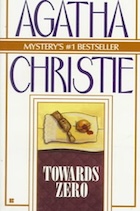
Agatha Christie, Towards Zero

The setup of this Christie novel is an ill-assorted house party in a small coastal town. Nevile Strange and his new wife, Kay, are visiting his former guardian, the rich invalid Lady Tressilian. Awkwardly, Nevile’s first wife, Audrey, happens to be visiting at the same time. The three members of the love triangle all claim to be perfectly fine with this arrangement, but tensions are high. When Lady Tressilian is murdered and it’s clearly an inside job, Superintendent Battle takes a hand in the investigation. This is one of Christie’s more farfetched tales, but it’s still a compelling read! I remembered the murderer’s identity and was entertained by the book’s clever misdirection involving certain clues and alibis. The characterization is on the weaker side—for example, there’s a romance shoehorned in at the end that doesn’t really work—but I still enjoyed rereading this one.

Genevieve Cogman, The Secret Chapter

In this sixth installment of the Invisible Library series, Irene is tasked with acquiring a book from Mr. Nemo, a mysterious Fae collector with a Bond-villain-esque island lair. In exchange, Mr. Nemo wants her to participate in a heist: She’ll work with a crew of dragons (including Kai) and Fae to steal a famous painting from an alt-21st-century Vienna. But tensions are high among the crew, the nascent dragon-Fae-Library treaty notwithstanding, and everyone has a hidden agenda. I love a good heist caper, so I found this book a lot of fun; it doesn’t do anything groundbreaking with the genre, but it both embraces and mocks the various tropes. I’m not sure the book does much to move the series forward, and with just two books remaining, I’m curious about the endgame. Guess I’ll just have to keep reading to find out!

Mini-Reviews: Dials, Misdirected, Mirror

Agatha Christie, The Seven Dials Mystery

At a lively country house party, the young guests mock their friend Gerry Wade for always sleeping late. They decide to play a prank on him, setting up eight alarm clocks in his room to go off early in the morning—but the joke falls flat when Gerry is found dead the next day, ironically from an overdose of sleeping medication. The death is ruled an accident, but when another of the houseguests is killed shortly thereafter, Gerry’s friends begin to suspect murder. The resulting story is a mashup of thriller and farce that includes sensitive political documents, hijinks at a second house party, and the mysterious Seven Dials society. This novel is a fun romp, with a light tone despite the murders, and Christie puts her own unique spin on the “secret society” trope. I enjoyed rereading the book and seeing just how she pulls off the unexpected conclusion. Not a top-tier Christie, but a good read nonetheless!

Lucy Parker, Misdirected

Hattie Murton is an actress with a major role on the popular (and steamy) historical soap “Leicester Square.” Now she has a problem: Her character is about to embark on a passionate romance with the show’s villain, played by the coldly arrogant Anthony Rafe. She’s not eager to simulate love for the man who treats her and everyone else with cynical disdain, so she’s shocked to feel a genuine spark of attraction during their scripted love scenes—and even more shocked to discover that Anthony might feel the same way. Lucy Parker is an autobuy author for me, so I was hoping to love this book, and I did. Hattie is a sweetheart without being insufferably saccharine, and Anthony is a swoonworthy hero who nevertheless retains his hard edges. His indignation at his growing feelings for Hattie is a delight! Definitely recommended for romance fans if you like the premise.

This book is only available on Audible right now, and it’s narrated by Nicola Coughlan (of “Derry Girls” and “Bridgerton” fame) and Gwilym Lee. I never listen to audiobooks, so I don’t have any basis for comparison, but I think both narrators did a good job, especially Lee. It was hard for me to get into the story at first, and occasionally I got confused about who was speaking, but ultimately the format didn’t prevent me from enjoying the book. Though if it’s ever published in paperback, I will definitely pick up a copy!

Kristen Britain, Mirror Sight

This installment of the Green Rider series is somewhat unusual. At the end of the last book, Karigan was spirited away somewhere; in this book, we learn that she’s traveled 168 years into the future. The Sacoridia she knows has vanished, and the land is now ruled by a tyrannical emperor. Technology has advanced, but magic is virtually unknown and the Green Riders are no more. Karigan is determined to get back to her own time and somehow prevent this future from occurring—but what if she can’t find a way home? I was initially biased against this book, fearing it would be a tedious side adventure with no lasting consequences for the series. But I actually found the book a refreshing change of pace, with an interesting steampunk setting and some new characters for Karigan to interact with. That said, it’s still far too long, and it doesn’t affect the series arc in any real way. My enthusiasm for this series is waning, honestly, but I’m still invested enough that I plan to continue for now.

Mini-Reviews: Lake, Simple, Beg

John Bude, The Lake District Murder

At an isolated garage in the Lake District, a man is found dead inside a car, with an apparatus indicating that he deliberately killed himself by asphyxiation. But Inspector Meredith notices a few things that aren’t consistent with suicide and soon comes to believe the man was murdered. As Meredith investigates, he also uncovers shady business dealings at the garage and searches for the connection between them and the murder. I love a good Golden Age mystery, but this one was often frustrating for me. The plot doesn’t really present a puzzle for readers to solve; rather, the story plods along with what feels like a minute-by-minute account of Meredith’s investigation. I think Bude was trying to make the point that detective work is often dull routine, not dramatic and glamorous—but that doesn’t make it fun to read about the dull routine! Overall, fans of police procedurals might enjoy this one more than I did, but I found it a slog.

Pamela Morsi, Simple Jess

Althea Winsloe is a young widow with a three-year-old son and a good farm property. Her small, tight-knit community is pressuring her to marry again, but she has no desire to give up her freedom or her farm. Still, she needs a man to help her work the land, so she hires Jesse Best, known to everyone as “Simple Jess” because he has an intellectual disability. As Althea gets to know Jesse, she realizes that despite his limitations, he’s very knowledgeable about farming and hunting – as well as being kind, loyal, and handsome. I think this is a book that might be polarizing; Morsi boldly chooses to tell some of the story from Jesse’s POV, and while I think she portrays him with sensitivity and kindness, it’s certainly a fine line to walk. I was rooting for him from the start, and I also liked the various secondary characters who populate Althea and Jesse’s community. Overall, I really liked this one and appreciated the unique premise, but I don’t think it’s a book for everyone.

Sarah Adams, Beg, Borrow, or Steal

This is Adams’s third book set in Rome, Kentucky, and the heroine is the oldest Walker sister, Emily. She’s the one who (seemingly) has it all together, who helps her family with terrifying competence and no hesitation. But lately she’s been feeling lonely and dissatisfied—that is, until her longtime nemesis, Jack Bennett, moves back to town. Emily and Jack have always argued, but now their fights are feeling more flirty than genuinely aggressive. They’ll have to overcome some baggage, however, before they can move past their bickering and truly trust each other. I enjoy the enemies-to-lovers trope and think this book does it well. I’m also a fan of prickly heroines who are outwardly competent but inwardly struggling, so Emily particularly appealed to me. Toward the end, I think things got a bit too syrupy-sweet (all the men in this series are annoyingly perfect), but I enjoyed the book and will definitely read the next one when it comes out!