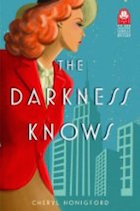
Review: The Darkness Knows

Darkness Knows, TheCheryl Honigford, The Darkness Knows

It’s 1938, and actress Vivian Witchell has just landed her first big role on a popular radio show called “The Darkness Knows.” Although she has a privileged background and still lives with her mother, a leading light of Chicago society, Viv is determined to succeed in her chosen career. She knows showbiz can be cutthroat, and she doesn’t shy away from competing with her fellow actresses, both for roles and for her handsome costar Graham Yarborough’s attentions. But when a famous actress at the radio station is murdered, Viv learns that the business is even more dangerous than she knew — especially when an anonymous letter hints that she might be the next victim. The police are immediately called to investigate the murder, but the station also calls private detective Charlie Haverman to protect Viv in case the murderer decides to strike again. Charlie wants Viv to stay away from the station and stay out of trouble, but of course Viv has other ideas. Can they unmask the murderer together before Viv or anyone else becomes the next victim?

I really enjoyed this book! The mystery, while not particularly innovative, was solid, and I loved the period setting. Viv is a clever, spunky heroine whose lively narrative voice is lots of fun to follow. I did find her somewhat annoying at times; like many amateur sleuths, she takes far too many risks and races into danger without thinking about the consequences. I also found her attitude toward wealth and privilege to be a bit confusing — she insists she wants to make it on her own, but she doesn’t mind enjoying the benefits that come from living with her rich mother. I hope the issue of social class will be explored a lot more in the sequel(s) that will hopefully follow this book. I also really liked Charlie, although his characterization as a tough, streetwise detective veers toward the stereotypical at times. The banter and chemistry between Viv and Charlie is a highlight of the novel, and I enjoyed their interactions more than the slow unraveling of the whodunit. Overall, if you like the premise of this novel, it’s a very enjoyable debut, and I definitely look forward to continuing with the series.
Mini-Reviews #6: Dog days

I can see the light at the end of the tunnel for these mini-reviews! I’ll do this post and one more, and then I should finally be caught up! *sobs with relief*

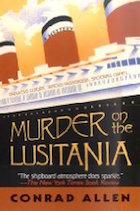
Murder on the LusitaniaSingle Girl's To-Do List, The

Conrad Allen, Murder on the Lusitania — This is a fairly pedestrian mystery novel set during the Lusitania’s maiden voyage, where ship’s detective George Porter Dillman thinks he’ll have to deal with nothing more exciting than a few thefts. Of course, when an unpopular journalist is murdered on board, Dillman has to investigate–and choose between two women, the beautiful but aloof Genevieve and the happy-go-lucky Ellen. I didn’t particularly like this book, mostly because the characters annoyed me. Dillman is too smug and superior, and Genevieve seems more like a male fantasy than an actual person. The solution to the mystery was fine but seemed to come out of nowhere–or perhaps I just stopped paying attention too soon. Overall, a very “meh” read, and I feel no desire to continue with the series.

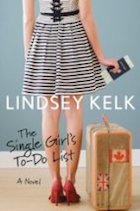
Lindsey Kelk, The Single Girl’s To-Do List — After enjoying Always the Bridesmaid, I had to track down another Lindsey Kelk novel, and this one did not disappoint! Rachel has just been dumped by her long-term boyfriend and has basically forgotten how to be single, so her two best friends create “the single girl’s to-do list” to force her out of her comfort zone. I really liked that Rachel’s friendships were so central in the novel, remaining constant throughout her tumultuous love life. Of course, the ultimate romance comes as no surprise, and I would have liked the hero to be a little more fleshed out. Nonetheless, I liked this book a lot and will continue to read more by Kelk.

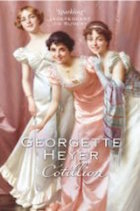
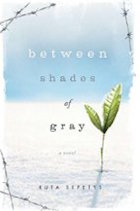
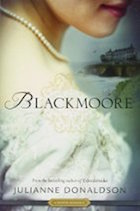
CotillionBetween Shades of Gray Blackmoore

Georgette Heyer, Cotillion — One of my very favorite Heyer novels, mainly thanks to its delightful hero, Freddy! He is a wonderfully unconventional leading man: not particularly handsome, not a ladies’ man, not overly burdened with brains. In fact, he reminds me of a slightly more functional Bertie Wooster. But of course, his “street smarts” and kind heart ultimately win the day!

Ruta Sepetys, Between Shades of Gray — This World War II novel centers around an aspect of the war that is sadly often forgotten. The narrator, Lina, is a 15-year-old Lithuanian girl who is abducted one night, along with her mother and brother, by the NKVD. Lina describes the horrible tortures and indignities she and her fellow prisoners suffer, as well as the desperate hope that somehow her father will find her. My favorite thing about this book is that many of the characters are portrayed with some complexity. For example, one of Lina’s fellow prisoners is a cranky old man who constantly complains, yet in the end he manages to do something heroic. Similarly, one of the Soviet guards is deeply conflicted about his cruel actions. But some of the other characters–particularly Lina’s saintly mother–remain annoyingly simplistic. I also wasn’t a fan of the flashbacks to Lina’s carefree earlier life; they were too jarring for me. Still, I liked the book overall, and I think it tells a story that needs to be told.

Julianne Donaldson, Blackmoore — Kate Worthington wants nothing more than to escape her horrible family and go to live in India with her aunt. But her mother refuses to let her go, finally delivering an ultimatum: if Kate wants to go to India, she must first receive–and reject–three marriage proposals. Since Kate is not beautiful and flirtatious like her sister, she despairs at first. But when she is invited to the estate of her old friends, Sylvia and Henry Delafield, she reasons that she can at least try. Of course, she doesn’t expect to fall in love along the way. While this book is extremely predictable, I have to say that I enjoyed it anyway! My biggest complaint is that it takes Kate far too long to realize that her ideal mate is right in front of her, head over heels in love. The Big Misunderstanding could easily have been solved with a little rational communication! I should also note that the book is subtitled “A Proper Romance,” which essentially just means it’s rated PG; there’s nothing explicitly religious or preachy about it. All in all, this was a pleasant read that satisfied my craving for a Regency romance.

Top Ten Tuesday: Back-to-school freebie

Top 10 TuesdayAs usual, it’s been a while since I’ve participated in a Top Ten Tuesday topic, but I couldn’t resist this back-to-school freebie! The topic asks for anything school-related, so my list is going to be the top 10 books I’d put on the syllabus for a “Mystery Novel 101” course, in (roughly) chronological order:

1. Edgar Allan Poe, “The Purloined Letter” and “The Murders in the Rue Morgue” — Technically these are short stories, but Poe is, according to the Poe Museum website, “widely acknowledged as the inventor of the modern detective story.” Both of these stories are notable for their surprise endings, although the solution to “Rue Morgue” would be considered insulting by most contemporary mystery lovers!

2. Wilkie Collins, The Moonstone — This one is remarkable for its use of mutliple points of view to describe the crime, the theft of a valuable jewel. It also exemplifies the sensationalism (and, unfortunately, Orientalism) typical of some 19th-century British literature, but it’s still a very compelling and suspenseful story.

3. Sir Arthur Conan Doyle, The Memoirs of Sherlock Holmes — Obviously this list wouldn’t be complete without some Holmes and Watson on it! I picked Memoirs, even though it’s not the first collection of Sherlock stories, because it contains some of the canon’s most notable moments, including the introduction of Mycroft (“The Adventure of the Greek Interpreter”) and the dramatic confrontation with Moriarty (“The Final Problem”).

4-5. Agatha Christie, The Murder of Roger Ackroyd and Murder on the Orient Express — I may be a bit biased because I fell in love with Dame Agatha’s novels at an impressionable age, but I couldn’t resist including two of her most famous novels! Both of them have twist endings, and while they may not be very shocking now, that’s only because so many other authors have followed in her footsteps! Also, “30 Rock” did an amazing homage to Orient Express in episode 515, “It’s Never Too Late for Now.”

6. Anthony Berkeley, The Poisoned Chocolates Case — I don’t remember how I first came across this book, but I do remember my utter delight upon finishing it! This novel is a perfect example (and send-up) of the mystery tropes and conventions that, in 1929, had already become popular enough to satirize. Six armchair detectives each propose a solution to a murder, and each of them is amazingly plausible and clever (although, of course, only one is correct)!

7. Vera Caspary, Laura — I had to include a noir crime novel on the list, and while I could have gone with The Maltese Falcon or The Thin Man, I decided on Laura for the purely subjective reason that I really love the movie! But the novel is quite clever as well, and it uses the Wilkie Collins-esque technique of multiple narrators, some of whom are not exactly reliable.

8. Something by John Dickson Carr — Here I must admit with shame that I actually haven’t read anything by John Dickson Carr, despite his prolific career spanning the 1930s to the 1970s. But he is generally acknowledged to be the master of the “locked room” or impossible crime, a genre that has proved to be both popular and long-lasting.

9. Maj Sjöwall and Per Wahlöö, The Laughing Policeman — Scandi-crime has become popular in recent years, but in the 1960s, Sjöwall and Wahlöö were among the first Scandinavian mystery writers to gain fame in the US. This novel, an installment in the Martin Beck series, deals with a mass shooting on a public bus where one of the victims is a policeman. It’s a wonderful procedural that realistically describes the routines, the tedium, and the false starts that plague real-life criminal investigations.

10. Luis Fernando Verissimo, Borges and the Eternal Orangutans — Possibly the strangest book on the list, this novel is an homage to Edgar Allan Poe by way of Jorge Luis Borges. It’s hard to describe without giving too much away, but it’s very clever and a very quick read!


Mini-Reviews #5: Summer Reading

All right, time to post some mini-reviews of books I read way back in July! Will I ever catch up with all my reviews? Only time will tell, so stay tuned! 🙂

Death of an AirmanSong for Summer, A

Christopher St. John Sprigg, Death of an Airman — In this mystery centered around an English aviation club, one of its best flyers perishes in a tragic plane crash. Most people assume it’s an accident, but the victim was a first-class pilot, and the inquest revealed nothing wrong with the plane. A few of the club members suggest suicide, but a visiting Australian bishop suspects murder. When the police get involved, they realize the victim’s death may be connected to a much larger criminal organization. I liked this mystery well enough, but I think the strength was definitely in the plot rather than in the characters. For example, for the first several chapters, it looks like the Australian bishop is going to be the sleuth, but suddenly everything switches to the police inspector’s point of view. Still, this was a fun variation on the “impossible crime” mystery with a truly ingenious solution.

Eva Ibbotson, A Song for Summer — Ibbotson’s novels are the ultimate comfort reads! I’d never reread this one before, and I think it’s because the plot moves a bit more slowly than in Ibbotson’s other novels, and the atmosphere is bleaker. It’s still a lovely book, but I definitely find myself returning to A Countess Below Stairs and The Morning Gift much more often.

It Happened One WeddingSpear of Summer Grass, ACrown's Game, The

Julie James, It Happened One Wedding — Julie James was my first contemporary romance author, and she pretty much single-handedly convinced me that not all romance novels are poorly written trash. This is another fun, banter-filled romance between hedge fund manager (?) Sidney and FBI agent Vaughn. They initially dislike each other but are forced to play nice when her sister and his brother get engaged. I think we all know where this is going.

Deanna Raybourn, A Spear of Summer Grass — After scandalizing English society with her outrageous behavior, Delilah Drummond is packed off to British East Africa so she won’t further damage her family’s reputation. Although Delilah is the consummate city girl, with her fashionable dresses and daring bob, she soon falls in love with the African landscape. She also encounters various dangers, from marauding lions to outright murder — and possibly finds love as well. I didn’t particularly like this book, and I’m not sure why. I didn’t dislike it either…I just felt indifferent to it. Delilah reminded me a lot of Phryne Fisher, but while I love Phryne, I didn’t have the same enthusiasm for Delilah. Maybe she was too similar (since I encountered Phryne first)? The romance also made me roll my eyes a bit; the hero is very much an alpha-male caveman type, and he just seemed like a stereotype to me. Overall, a “meh” read.

Evelyn Skye, The Crown’s Game — In an alternate Imperial Russia where magic exists but only a few have the power to wield it, Vika knows she is destined to become the Imperial Enchanter and take her place at the emperor’s side. But then she learns that there is another powerful enchanter in Russia — and that she must defeat him in the Crown’s Game, a magical duel in which the winner becomes Imperial Enchanter and the loser is condemned to death. Little does she know that the other enchanter is Nikolai, whose magic (and handsome face) intrigues her. As Vika and Nikolai get to know each other, they realize they don’t want the Crown’s Game to end in death. But will they be able to find a better solution? I have to admit, this book sort of lost me early on, when Vika is described as having wild red hair with a black streak down the middle. I immediately had a knee-jerk Mary Sue reaction, and I never quite warmed to Vika after that. I did end up somewhat liking the book, particularly for the Russian setting and the lovely descriptions of the magic. I also liked the fact that the stakes are real, and not everybody gets a happy ending. I’ll probably look for the sequel when it comes out. Nevertheless, I was definitely underwhelmed by this one, especially given the amount of hype I’d seen about it.

Mini-Reviews #4: June Books, Part 2

More mini-reviews! Just when I think I’m getting to the end of my backlog, I go and read more books. Will I never learn?

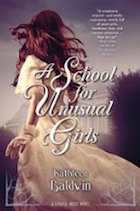
Only Thing Worse Than Me Is You, TheSchool for Unusual Girls, A

Lily Anderson, The Only Thing Worse Than Me Is You — Oof. I really wanted to like this one — it’s a modern retelling of Much Ado About Nothing! But I was very underwhelmed, and the main reason is that I couldn’t stand the protagonist, Trixie. She’s incredibly self-absorbed and utterly convinced of her own righteousness at all times, which makes her downright mean to the people around her. She’s also a proud geek girl, obsessed with comic books and “Doctor Who.” Don’t get me wrong — I have nothing against these things! But Trixie’s constant references to geek culture didn’t feel real to me. Instead, I felt like the book was trying to pander to a specific audience and going way over the top. In short, I just wasn’t a fan.

Kathleen Baldwin,  A School for Unusual Girls — This one’s about — you guessed it — a school for unusual girls. Sixteen-year-old Georgiana Fitzpatrick doesn’t behave as a proper young lady should; and when one of her scientific experiments nearly burns down the stables, her parents pack her off to a school whose reputation for strictness is legendary. Of course, Georgie soon realizes that the school is not what it seems and that her fellow students all have unique, mysterious abilities. There’s also romance, kidnapping, and a touch of espionage. All in all, a fun read, although not particularly groundbreaking in the genre. I’d like to read the sequel at some point.

Tell Me Three ThingsStrong PoisonDecent Proposal, The

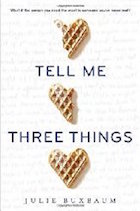
Julie Buxbaum, Tell Me Three Things — I enjoyed this novel despite its ridiculous premise: Jessie Holmes moves across the country when her dad remarries, and she is forced to attend a pretentious private school where she doesn’t know anyone — that is, until the mysterious Somebody/Nobody emails her, offering friendship and guidance in navigating the social scene at her new school. Though Jessie is skeptical at first, she soon opens up to Somebody/Nobody and speculates on who it might be. To the reader, the answer is astoundingly obvious, but it’s still fun to watch Jessie get there. A nice YA romance if you’re into that kind of thing.

Dorothy L. Sayers, Strong Poison — I read this installment of the Lord Peter Wimsey series years ago but didn’t remember much about it, except that Lord Peter finally meets his match in Harriet Vane, a young woman who’s on trial for murdering her ex-lover. For me, this was the best novel in the series so far. The mystery is well plotted (although, as with other books in the series, the suspect list is so small that the true mystery is howdunit, not whodunit), and the romance is nicely underplayed. I’m definitely loving this series more and more as I continue to read, and I’m looking forward to the next book!

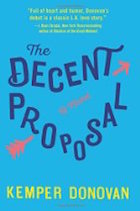
Kemper Donovan, The Decent Proposal — I was drawn to this book because of the title, and I knew very little about it going in. The premise is that a mysterious benefactor has promised two L.A. residents, happy-go-lucky Richard and highly regimented Elizabeth, that they will each receive half a million dollars if they agree to meet each other once a week for a year and talk — just talk. Of course they accede to the proposal, and of course they start out as very different people but eventually find some common ground. I liked the development of the relationship between Richard and Elizabeth, especially since I honestly didn’t know whether it was going to end in friendship or romance. I could have done without most of the other characters, actually; they seemed like they should get their own novels rather than being relegated to secondary characters in this one. I also think people who have lived in L.A. would get more out of the book, since it’s definitely written in that specific setting. Overall, I did like the book, but I’m glad I got it from the library instead of buying.

Mini-Reviews #3: June Books, Part 1

Still making my way through my review backlog, so here are some more short ones:

Lilac GirlsUnexpected Everything, The

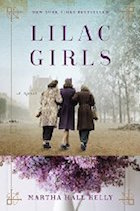
Martha Hall Kelly, Lilac Girls — For the past few years, I’ve really gravitated toward books set during World War II, especially those dealing with the “home front” experience rather than the actual fighting. So I think I wanted to like this book more than I did. I found the story of Kasia, a Polish girl imprisoned in Ravensbrück, to be the most compelling. I especially liked how the book follows her (and the other characters) long after the war is over and shows the psychological scars that still remain. But I didn’t like Caroline’s story at all; I found her the least interesting character, and the romance between her and Paul didn’t do anything for me. The book is worth reading if you like the time period, but I’d recommend Elizabeth Wein’s Rose Under Fire for a better book on Ravensbrück.

Morgan Matson, The Unexpected Everything — I’ve said it before, but it’s true: Morgan Matson writes the perfect summer reads! I really enjoyed this one, which centers around politician’s daughter Andie and a summer that doesn’t go quite according to plan. One of my favorite aspects of the book is that Andie has a really close group of girlfriends, and those relationships are just as important as her newfound romance. I’d definitely recommend this book as an adorable summer read, especially for those who enjoy YA.

Summer Before the War, TheDarker Shade of Magic, ACocaine Blues

Helen Simonson, The Summer Before the War — I really enjoyed this quiet, character-driven novel, although I wouldn’t recommend it to those who love lots of action and unpredictable twists. The plot (such as it is) centers around a young woman who moves to a rural English village to become the new Latin teacher. As one might expect, she meets with some resistance from the locals because of her youth and gender, but she also wins over some key players, including the unconventional Agatha Kent and her two nephews. Most of the book involves the resulting social politics, although the titular war (World War I) does intrude near the end.

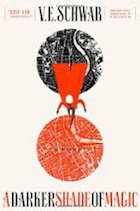
V.E. Schwab, A Darker Shade of Magic — This book hooked me from the first line: “Kell wore a very peculiar coat. It had neither one side, which would be conventional, nor two, which would be unexpected, but several, which was, of course, impossible.” The novel is an exciting blend of fantasy and sci fi, combining magical artifacts with parallel universes. The hero is a conflicted, magic-wielding prince, and the heroine is a scrappy thief and would-be pirate. In short, I loved it and have already purchased book 2, A Gathering of Shadows!

Kerry Greenwood, Cocaine Blues — After watching and LOVING “Miss Fisher’s Murder Mysteries,” I decided to pick up the first book in the series. Phryne is a wonderfully entertaining character: intelligent, rich, attractive, and determined to get the most out of life. I also really enjoyed the setting of 1920s Melbourne, where Phryne rubs elbows with all sorts of people, from wealthy blue bloods to socialist cab drivers to feisty maidservants. I did miss Inspector Jack Robinson, who apparently has a much smaller role in the books than he does in the TV series. I also didn’t care too much about the mystery, but I still liked the book for its setting and protagonist.

Mini-Reviews #1: Readathon leftovers

It’s pretty obvious that I haven’t spent much time on this blog lately. *blush* What can I say — life has been busy for the past couple of months, and when I’ve had free time, I’ve preferred to spend it doing other things (like reading!). As a result, I have a pretty huge backlog of books that I haven’t written about yet, and the thought of sitting down to compose a full review for each one is incredibly daunting. So, rather than continuing to avoid the task, I’ve decided to do three batches of mini-reviews — just titles and authors of the books I’ve been reading, along with a couple of sentences expressing my opinions. Once I catch up, I plan to go back to my regular style of reviewing. But for now, here are mini-reviews for the books I read during April’s 24-hour readathon:

Love, Lies and SpiesAs If!

Cindy Anstey, Love, Lies and Spies — A fun, lighthearted bit of Regency fluff for those who enjoy YA historical romance. I found the spy storyline weak, and the romance wasn’t quite compelling for me — Georgette Heyer, this is not! But it’s a pleasant enough read for fans of the genre.

Jen Chaney, As If! The Oral History of Clueless as Told by Amy Heckerling, the Cast, and the Crew — This book will only appeal to people who really love the movie “Clueless” and who are fascinated by behind-the-scenes movie knowledge. Fortunately, I fall within this demographic, so I really enjoyed the book!

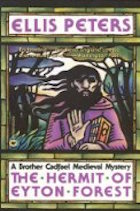
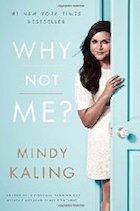
Hermit of Eyton Forest, TheAlways the BridesmaidWhy Not Me?

Ellis Peters, The Hermit of Eyton Forest — Full disclosure: this installment of the Brother Cadfael series features a male character called Hyacinth. But I still love this series about a 12th-century Benedictine monk who solves crimes! (Who wouldn’t?)

Lindsey Kelk, Always the Bridesmaid — Entertaining British chick lit about a young woman named Maddie whose two best friends are at opposite ends of the romantic spectrum: one just got engaged, while the other is getting divorced. My friend pointed out that Maddie is a huge pushover, which she (my friend) found irritating. While I think that’s a fair criticism, I ultimately enjoyed the book for  its humor and romance, so I’d definitely read more by this author.

Mindy Kaling, Why Not Me? — I think Mindy Kaling is very talented and hilarious, and this book had me giggling pretty much nonstop. I like that she isn’t preachy, she’s very self-aware, and she doesn’t apologize for her confidence (some might say arrogance). As she says in the book, there’s nothing wrong with being confident — as long as you’ve put in the hard work to back it up. Bottom line: if you like Mindy Kaling, you’ll like this book.

Review: Quick Curtain

Quick CurtainAlan Melville, Quick Curtain

Crowds flock to the London premiere of Douglas B. Douglas’ sensational new musical comedy, hoping to catch a glimpse of stage idols Brandon Baker and Gwen Astle. But they get even more sensation than they bargained for when leading man Baker is shot dead in the middle of Act 2. Fortunately, Inspector Wilson of Scotland Yard is in the audience, along with his son Derek, an enterprising young journalist. When another cast member is found hanged in his dressing room, the obvious conclusion is that he murdered Baker, then committed suicide. But Inspector Wilson isn’t convinced, especially when he finds a bullet hole in a place that would be impossible under that theory of the crime. He and Derek jointly investigate the mystery, which leads them to a remote village, several salacious secrets, and an altogether unexpected solution to the mystery.

I absolutely love Golden Age mysteries, and this one was a very enjoyable read, unique in its lighthearted tone and somewhat breezy attitude to police procedure. (For instance, does Inspector Wilson even have jurisdiction over the case? In this book, it doesn’t matter: he’s first on the scene, so he simply commandeers the investigation.) I loved the humorous running commentary on show business of the era; apparently the author himself had a long career in the industry. And I laughed out loud at various silly jokes, particularly an exchange where the play’s director is impatiently waiting for the doctor to examine the corpse. Finally fed up, the director asks, “Well?” “Not at all; in fact, he’s dead,” the doctor replies. The mystery plot isn’t particularly original, and a twist in the last chapter may irritate readers who want their mystery authors to play fair. But I really enjoyed the book’s tongue-in-cheek style and would definitely recommend it to fans of the genre!

Review: No Wind of Blame

No Wind of BlameGeorgette Heyer, No Wind of Blame

Plenty of people wanted to murder the shiftless, good-for-nothing Wally Carter. His rich wife, Ermyntrude, was tired of giving him money that he only drank or gambled away. Ermyntrude’s daughter, Vicky, thought her mother would be happier with another man. The slick “Prince” Alexis Varasashvili, had his eye on Ermyntrude’s fortune. And several other characters had equally strong movies for wanting Wally out of the way. But when he actually is shot, it seems that no one could possibly have fired the gun without being immediately discovered. As suspicion rests on each of the characters in turn, it’s up to Scotland Yard’s Inspector Hemingway to discover the truth. Along the way, a sordid scandal comes to light, a crooked business deal is unearthed, and romances end and begin.

I’m glad I chose this book to kick off my 2016 reading, since it contains both an ingenious mystery plot and a wonderful assortment of classic Heyer characters. I loved the histrionic Ermyntrude, who is certainly vulgar but also extremely kind-hearted. And Vicky, who delights in playing a variety of different roles (such as Sports Girl and Dutiful Daughter), annoyed me at first, but eventually I began to enjoy her antics in spite of myself. The main characters are so well-drawn that the mystery is a bit sidelined, but I do think the solution is very clever. I guessed the murderer but not the “how” or the “why,” although Heyer plants a few clues throughout the novel. The romances are a bit undercooked, especially the one involving Wally’s ward, Mary Cliffe. I don’t know whether I’d consider it one of my favorite Heyer mysteries, but it was still a fun read and a great start to the year!

Review: An English Murder

English Murder, AnCyril Hare, An English Murder

The setting of An English Murder seems, at first, to be a very conventional one. A group of family and friends come together for Christmas at a country house, Warbeck Hall. The house is owned by Lord Warbeck, a dying and impoverished peer who wants to be among loved ones for what he thinks will be his last Christmas. The holiday decorations are up and snow is falling fast outside. The guests range from the Lord’s difficult son to a visiting Czech historian. There is, of course, a faithful butler and his ambitious daughter. But when the murders begin, there is nothing at all conventional about them – or the manner of their detection. This ingenious detective story gleefully plays with all of our expectations about what an ‘English murder’ might be and offers enough twists and turns to keep us reading into the night. (Summary from Amazon.com.)

This was my first Cyril Hare mystery, but hopefully it won’t be my last! This is a quintessential English country house mystery, and I really enjoyed it. Most of the characters aren’t particularly likable, but the amateur sleuth, Dr. Wenceslaus Bottwink, makes up for all the others. Not only does he have a great name, but his somewhat detached “observer” status allows him to see the situation clearly and even find some humor in the various nasty interactions among other characters. The book is also interesting as a historical artifact: it was published just after World War II (1951, I believe) and contains characters whose views span the whole political spectrum, from socialism to fascism. The solution to the mystery, which also explains the book’s title, is one of the most delightful resolutions to a murder mystery that I’ve read in a while. Definitely recommended for vintage mystery lovers!