Review: The Last Policeman

Last Policeman, TheBen H. Winters, The Last Policeman

Hank Palace, a police detective in Concord, New Hampshire, is investigating the death of a man who was found hanged in a McDonald’s bathroom. His fellow police officers are certain it’s a suicide, and with good reason: an asteroid is hurtling towards Earth, and collision is both certain and imminent. As a result, suicides are on the rise, along with a variety of other behaviors. Some people are “bucket listers,” quitting their jobs to chase their lifelong dreams while they still can. Some people turn to religion, others to drugs. In these circumstances, one more dead man — especially one who appears to have hanged himself — doesn’t matter very much to the police. But Hank suspects that there’s something wrong about this suicide, and he’s determined to discover what really happened. He uncovers several more mysteries in his investigation, including a hidden cache of drugs and a beautiful woman who knows more than she’s saying. But the biggest obstacle of all is the widespread indifference to his quest. If the end of the world is imminent, does one potential murder even matter?

This novel is an interesting combination of two popular genres, the police procedural and the apocalyptic novel, and I think it’s a fairly successful one. Hank Palace is a dry, unintentionally funny narrator who manages to retain some of his ideals despite the cynicism of his surroundings. Even though he knows that life is about to change forever (assuming life will continue at all after the asteroid hits), he remains devoted to his job. But the world of this novel is even more interesting than its narrator. I think the various reactions of people in the book to the impending catastrophe are very plausible. And the details Hank lets slip about the new role of government are as realistic as they are chilling. In this world, every crime is punishable by death or life imprisonment. There is no habeas corpus, so anyone suspected of lawbreaking is condemned without trial. The US Constitution is still the law of the land, but it’s impossible to enforce — and most government officials and police officers don’t really care. Overall, I was fascinated by the setting of this novel and will eventually continue with the series to see what happens.

Review: The Lady Vanishes

Lady Vanishes, TheEthel Lina White, The Lady Vanishes

Iris Carr is a privileged young Englishwoman enjoying a holiday somewhere in Europe with a large group of friends. But when her crowd is ready to leave, Iris decides to stay an extra day and enjoy the beauties of the mountains by herself. When she boards the train to go home, she is immediately isolated from the other passengers because she doesn’t speak the native language. So when a talkative English spinster named Miss Froy introduces herself, Iris is glad to have the company, even though Miss Froy is rather a bore. After a long chat, Iris takes a nap in her compartment; but when she wakes up, Miss Froy is gone! Eventually she begins to worry, so she finds a young Englisman to act as interpreter and ask the other passengers where Miss Froy went. To Iris’ shock, they all claim not to remember Miss Froy and say Iris must be imagining things. Iris knows she didn’t imagine Miss Froy, but without any evidence to the contrary, how can she be sure? And if the lady does exist, why won’t anyone admit to seeing her?

Recently I watched Alfred Hitchcock’s “The Lady Vanishes” and really enjoyed it, but I had no idea it was based on a book! I’m glad I discovered the novel, though, because with all due deference to Hitchcock, the book is better. While the movie is a somewhat straightforward thriller, the book has more psychological tension because it keeps you in the dark about Iris’ mental state for much longer. Are the other passengers involved in some sort of unlikely but sinister conspiracy, meaning that she and Miss Froy are both in danger? Or, perhaps even worse, is Iris having a mental breakdown and imagining the whole thing? Either way, she’s trapped in a nightmarish situation, and the book does an excellent job of heightening this tension. I also think the book’s ending is better than the movie’s; while the film ends with a dramatic shootout, the novel has a much more subtle conclusion. So I would definitely recommend this novel to anyone who likes psychological thrillers, especially if you’ve seen or plan to see the movie!

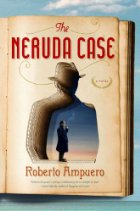
Review: The Neruda Case

Neruda Case, TheRoberto Ampuero, The Neruda Case (trans. Carolina De Robertis)

Cayetano Brulé, one of the most respected private investigators in Valparaíso, is on his way to meet a prospective client when he stops at a restaurant for lunch. When he opens the menu, he sees a photograph of Pablo Neruda and immediately recalls his first case as a detective, in which his client was the Nobel laureate himself. Suddenly it’s 1973, and Cayetano (a Cuban by birth) is somewhat adrift in his adopted homeland of Chile. At a political party with his wife, Cayetano meets Neruda for the first time, and they soon strike up a conversation. Later, Neruda invites Cayetano to his home and makes a surprising request: he wants Cayetano to find a missing person, a doctor whom Neruda knew many years ago. Cayetano’s search takes him to Mexico City, Havana, and even East Berlin, and he eventually learns that Neruda’s desire to find the doctor is not as straightforward as it seems. Meanwhile, Chile is also experiencing a period of upheaval, as Salvador Allende’s Marxist government is succeeded by the dictatorship of Pinochet.

This novel attempts to do many different things, with mixed results. As a mystery, I think it falls flat; there is no real urgency to Cayetano’s search, and the results of his investigation ultimately don’t matter very much to the story. The book is more successful at painting a portrait of Pablo Neruda at the end of his life. I feel like I got a sense of his personality and his importance to Chile as a political figure. Best of all, this book does a wonderful job of depicting the political situation in Chile at the time and relating it to the wider issue of global politics. It’s no coincidence that Cayetano mostly visits Communist countries, in an era dominated by the Cold War and the ideological conflicts between socialism and capitalism. The novel is definitely not neutral on this subject; both Cayetano and Neruda favor Allende’s government, while Cayetano condemns his wife’s more radical Communism. Overall, I was fascinated by the setting much more than I was by the story. So I’m glad I read this book, but I won’t be seeking out any more installments of the series.

Review: Murder at the Brightwell

Murder at the BrightwellAshley Weaver, Murder at the Brightwell

Amory Ames and her husband Milo are having marital difficulties. They met just a few years ago and married quickly after a whirlwind romance. But now Milo is spending most of his time in various fashionable European cities — and gaining quite a reputation as a playboy — while Amory sits at home. Then one day Amory receives a visit from Gil Trent, a longtime friend and former fiancé, who needs her help: Gil’s sister has just gotten engaged to a thoroughly unsuitable man, and Gil hopes that Amory can persuade her not to go through with the wedding. Intrigued by Gil’s reappearance in her life, and angry at her husband, Amory agrees to help. She accompanies Gil to the fashionable Brightwell hotel, where Gil’s sister, her fiancé, and a small group of friends have gathered. But Amory gets more than she bargained for when the fiancé is murdered, and the culprit must be someone she knows….

This is one of those books that you’ll enjoy if the summary sounds interesting to you. I really like traditional English mysteries set in the first half of the 20th century, and this novel is a solid addition to that tradition. Amory is a likeable narrator and protagonist, and even though her amateur sleuthing seems a bit unnecessary (given the presence of a competent police inspector on the case), at least she’s not obnoxious or too stupid to live. The mystery plot is reasonably satisfying; it’s not particularly original or shocking, but the killer’s identity did surprise me. There’s a strong romantic subplot in the novel as well, as Amory must choose between Gil and Milo. I’m a fan of romance in my fiction, so I enjoyed this plotline, although I was never really in any doubt about whom Amory would choose. All in all, I enjoyed the book and would certainly read a sequel if one materializes.

N.B. I received an ARC of this novel at Book Expo America. The US publication date, per Amazon, is October 14.

Review: The Mark of the Midnight Manzanilla

Mark of the Midnight Manzanilla, TheLauren Willig, The Mark of the Midnight Manzanilla

In the autumn of 1806, a popular novel called The Convent of Orsino (written by none other than Miss Gwen!) has sparked a vampire craze in fashionable society. Rumors swirl around one man in particular — Lucien, Duke of Belliston — whose long absence from society is seen as evidence that he is a creature of the night. Practical, outspoken Sally Fitzhugh is determined to prove this rumor false, so she seeks out an acquaintance with the duke. For Lucien, the rumor escalates from inconvenient to dangerous when a young woman is murdered at a society ball, with what appear to be fang marks on her throat. Lucien and Sally quickly realize that someone is framing Lucien for the murder, so together they decide to find the real killer. Is it someone with a personal grudge against Lucien, or could the nefarious French spy known as the Black Tulip be at work again? The more time Lucien and Sally spend together, the more they are drawn to each other; but before they can be together, they must defeat a cunning killer.

This 11th novel in the Pink Carnation series once again combines romance, historical fiction, and a touch of intrigue for a very enjoyable read. I wasn’t totally enthused about the plot of this installment beforehand, since vampires aren’t really my thing, but fortunately they’re not a big part of the story. I also didn’t completely warm up to Lucien or Sally, both of whom seem like types rather than characters…Sally in particular just seems like a younger version of Miss Gwen. But there’s still an awful lot to enjoy in this book! I was pleasantly surprised by the resolution of the mystery, which is quite clever and hangs together well. And as always, I adore the light, tongue-in-cheek tone of the series; it doesn’t take itself too seriously and aims to be entertaining above all else. I should mention that the contemporary story takes some significant steps forward in this installment, with Eloise facing important decisions both personally and professionally. So I’m really looking forward to the next (and last!) Pink Carnation novel, which will finally tell the story of the Carnation herself!

Review: Farthing

FarthingJo Walton, Farthing

This novel is a murder mystery with a twist: what if a fascist English government had made a separate peace with Hitler? In the world of this book, it’s 1949, and war still rages between the Third Reich (which now encompasses all of Europe) and the Soviet Union, but England has managed to remain at peace. The “Farthing set,” who engineered the treaty with Hitler, have congregated at an English country estate, where Lucy (the daughter of the house) and her husband David are staying. Because David is Jewish, they both endure various snubs and cruelties from the other guests. Then a notable member of the Farthing set is murdered, and his corpse is decorated with Jewish symbols. Lucy is convinced that her husband has been framed, and Inspector Carmichael of Scotland Yard agrees. But as the English government becomes more totalitarian and anti-Semitic, both Lucy and Carmichael must make devastating choices that could allow the murderer to go free.

This book was unsettling, to say the least, and I have very conflicting feelings about it. Part of the story is told from Lucy’s perspective, and I really enjoyed her character and her narrative voice. I also think the book very skillfully depicts a nation’s slow slide into despotism; one of the most heartbreaking and effective parts of the book, for me, was David’s strong faith in England. Despite the hardships he endures, he is convinced that Jews will never be persecuted in England the way they are in the Reich…but of course, events in the book ultimately prove him wrong. On the negative side, the “mystery” element of the book is very underdeveloped. I also became irritated by the sheer number of secret, illicit, and/or adulterous relationships in the book; it seemed like EVERY character was involved, which strained my credulity. (Also, everyone seems to have really good “gaydar,” if you’ll pardon the expression!) Overall, I’m not sure the positives outweighed the negatives for me, and I’m still undecided about continuing with the series.

Review: The Red House Mystery

Red House Mystery, TheA.A. Milne, The Red House Mystery

In the time-honored tradition of the classic British mystery, a house party goes terribly awry when one of the guests is murdered and the host disappears. Mark Ablett, owner of the Red House, enjoys collecting people around him, so the house party includes such diverse characters as his private secretary, a military man, an actress, and several idle young people. The party appears to be going well until Ablett learns that his brother, the black sheep of the family who had been living in Australia, will be visiting the Red House for an unspecified but sinister reason. When Robert is inevitably murdered, Mark is nowhere to be found. Is he the murderer, or did someone else in the house party do the deed? Young man-about-town Antony Gillingham just happens to arrive on the scene at a pivotal moment, so he decides to try his skill as an amateur detective; but ultimately he discovers that the solution to the mystery is far more tragic than amusing.

When I came across this book a few years ago, I was delighted to discover that the creator of Winnie the Pooh had written a mystery story! It follows many conventions of the classic Golden Age mystery — such as being “fair,” with all clues presented to the reader as the detective discovers them — but it turned out to be a bit darker and sadder than I was expecting. Tony discovers the murderer’s identity fairly early in the book, so the bulk of the mystery lies in discovering how and why the deed was done. And the thing is, I found the murderer very sympathetic! So I was disappointed that this character turned out to be the guilty party. Also, unlike many mysteries from this period, this book doesn’t contain much humor, nor are there any subplots to lighten the mood of suspense and doom. Tony’s sidekick provides a few funny moments, but otherwise the tone remains pretty dark. Finally, Tony’s character isn’t developed very much, which disappointed me; he seemed really interesting, and I would have liked to know more about his backstory. The book is still worth reading if you enjoy Golden Age mysteries, but I have to admit, it wasn’t my favorite.

Review: The Haunted Bookshop

Haunted Bookshop, TheChristopher Morley, The Haunted Bookshop

In this sequel to Parnassus on Wheels, bibliophile Roger Mifflin has temporarily abandoned his traveling bookstore for a more permanent location on Gissing Street in Brooklyn. He calls his store the Haunted Bookshop, claiming that it is “haunted” by the ghosts of great literature. One day a young salesman named Aubrey Gilbert enters the store, hoping to persuade Roger to advertise with his firm; instead, the two men have an intense discussion that leaves Aubrey with a newfound appreciation for literature. When Aubrey returns to the shop a few days later, he is immediately smitten with Titania Chapman, the beguiling new shopgirl. But as he starts to visit the store more regularly, he notices something strange: an old and rather obscure volume keeps disappearing from the Haunted Bookshop and then re-appearing without warning. Is there a literary-minded thief frequenting the bookstore, or is something more sinister at work?

This is one of those cozy little books that take you back to a simpler time, and I found it absolutely charming! Roger Mifflin’s enthusiasm for books is infectious, and the novel is full of his musings on literature, both in general and about specific books. Unfortunately, I didn’t recognize most of the titles he mentioned, presumably because they’ve gone out of fashion (and print!) since the book was published in 1919. But this is definitely the type of book that reminds me of the huge number of books in the world that I still haven’t read! The mystery plot is clever, though very slight and easy to guess (and very much a product of its time). I also liked the central characters, especially Aubrey, who makes a lot of endearing mistakes in his quest to solve the mystery and win Titania’s heart. All in all, I finished this book wishing that I could stop by the Haunted Bookshop for dinner and a literary discussion with these characters.

Review: Naughty in Nice

Naughty in NiceRhys Bowen, Naughty in Nice

Lady Georgiana Rannoch is facing yet another a dreary winter in London. Despite her royal pedigree — she’s 34th in line to the throne of England — she has no income, and the worldwide depression in the wake of World War I has made it impossible for her to find work. What’s more, her brother Binky and his intolerable wife, Fig, have decided to close up their London house, which means Georgie will be essentially homeless. Fortunately, the queen comes to her rescue by sending her to the French Riviera on a secret mission: she must recover a stolen snuffbox, believed to be in the possession of one Sir Toby Groper. At first, Georgie is ecstatic to be in Nice, mingling with rich English pleasure-seekers and dashing French aristocrats. She even meets Coco Chanel, who asks her to model one of the looks from Chanel’s new collection. But then a priceless necklace is stolen and a man is murdered — and in the eyes of the French police, Georgie is the prime suspect! Can she clear her name by finding the real thief and murderer?

I’m really enjoying the Royal Spyness series, and this book (the 5th installment) is no exception. It’s a light, exuberant mystery that still manages to incorporate a lot of information about this time period. For example, the Prince of Wales and his paramour, Wallis Simpson, make brief appearances in the book, and there are also a few mentions of Hitler as he begins his rise to power in Germany. In addition to the setting, I enjoyed the plot of this book, which is a bit more substantial than some of the earlier books in the series. Georgie is a fun character, but she’s not really much of a detective; she tends to stumble onto the solution of the mystery rather than actually investigating or deducing anything. In this book, though, she actually does take some initiative and is able to put the pieces together — though not before her own life is endangered once more. All in all, I think this is one of the better installments of the series, and I’m planning to continue with The Twelve Clues of Christmas in December!

Review: A Blunt Instrument

Blunt Instrument, AGeorgette Heyer, A Blunt Instrument

When wealthy Englishman Ernest Fletcher is found in his study with his head bashed in, his relatives and neighbors are shocked. Ernest was well-liked and seemingly had no enemies, so why would anyone want to kill him? But as Superintendent Hannasyde and Sergeant Hemingway investigate the case, they soon uncover several motives. First there’s Neville Fletcher, the dead man’s nephew and heir to his fairly large fortune. Then there is Helen North, who has a secret involving Ernest that she doesn’t want anybody — especially her husband — to know about. Or the culprit could be Abraham Budd, a businessman who was complicit in some of Ernest’s shady financial dealings. But as the police collect motives and unearth secrets, they become more and more puzzled by the conflciting testimony about what actually happened on the night of the murder. And when a second victim appears, Hannasyde and Hemingway know they will have to act fast to catch a partiuclarly elusive killer.

In general I prefer Heyer’s romances to her mysteries, but I really enjoyed this book! There are some wonderful characters in this one: the vague, mischievous Neville, who is much sharper than he appears; the blunt, monocle-wearing Sally Drew, who writes detective novels; Constable Glass, the Bible-quoting policeman; and the impatient, down-to-earth Sergeant Hemingway. The dialogue is witty and sparkling, as usual, and I loved the romance(s) that emerged throughout the course of the book. The mystery itself is also a bit more substantial than in some of Heyer’s other books, and I was surprised by the Christie-esque twist that revealed the murderer’s identity. Overall, if you’re interested in trying Heyer’s mysteries, I think this is a really good place to start! (Hannasyde and Hemingway are recurring characters in her mysteries, but the books absolutely do not have to be read in order.) I’m reading these mysteries in chronological order, so I’ll be interested to see whether they get even better as they go on!