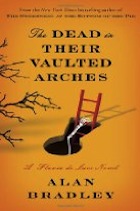
Review: The Dead in Their Vaulted Arches

Dead in Their Vaulted Arches, TheAlan Bradley, The Dead in Their Vaulted Arches

***Warning: MAJOR SPOILERS for previous books in this series!***

At the end of Speaking from Among the Bones, Flavia and her family received the shocking news that her mother, who disappeared many years ago somewhere in Tibet, had been found. This book begins with the de Luce family waiting at the train station for Harriet’s body to come home. Though Flavia is shocked and grieving, she can’t help wondering why Winston Churchill himself has come to pay his respects. Then there’s the man on the platform who whispers a mysterious message into Flavia’s ear and falls to his death on the tracks minutes later. Or was he pushed? As Flavia tries to sort out her feelings about her mother’s death, she can’t help but dig into the secrets of her family’s past — which, of course, turn out to be much bigger and more important than she ever imagined. Not only does she eventually solve the case of the man who died at the train station, but she discovers shocking information about Harriet’s death — and about her own future destiny.

I’ve enjoyed the Flavia de Luce series from the start, but this book is definitely my new favorite. The mystery plot is only so-so; the backstory of Flavia’s mother is rather predictable, and the villain of the book doesn’t have a terribly coherent motivation for some of the events that take place. Still, there is definitely more to be learned about the de Luce family’s past, and I’m sure additional solutions will be revealed in future books! I also think some of the secondary characters got short shrift in this installment; I wanted more of the vicar, the inspector, Adam Sowerby, and the other denizens of Bishop’s Lacey. But despite these nitpicks, I think this book got the most important thing exactly right: the reactions of Flavia and her father and sisters to Harriet’s death. This novel is a story of bereavement and grief much more than a mystery story, and in that light I think it’s fantastic. If you’re a fan of this series, you definitely won’t want to miss this installment! I can’t wait to see what’s next for Flavia and the rest of the de Luces.

Review: Fer-de-Lance

Fer-de-LanceRex Stout, Fer-de-Lance

This novel introduces the famous detective team of Nero Wolfe, an eccentric genius whose skill in detection is rivaled only by his fondness for orchids, and Archie Goodwin, his streetwise secretary. Although they live in comparative luxury, Wolfe and Archie have not been immune to the effects of the Great Depression, and they certainly won’t turn down any opportunity of making some hard cash. So when a worried Italian woman comes to their doorstep asking them to track down her missing brother, they are eager to take the case. Due to Wolfe’s obese build and strange fears of the outside world, he refuses to leave his home; so it’s up to Archie to investigate the man’s disappearance. He soon discovers, however, that the missing Italian man is just one piece of a much larger puzzle involving the sudden death of a prominent university professor. While Archie collects evidence, Wolfe applies his considerable talents to solving the mystery.

This is my first encounter with Nero Wolfe and Archie Goodwin, but it certainly won’t be my last! I loved Archie as the narrator; his wry, amusing voice reminds me of the fast-talking banter of the great screwball comedies of the 1930s. It was great fun to see the investigation through his eyes, as he applies his own special brand of persuasion to the various suspects and interested parties. Nero Wolfe, by contrast, is significantly less interesting, since the inner workings of his mind remain largely mysterious. He did have some funny moments, though, and I liked his extremely formal patterns of speech. He and Archie make a nice contrast in that regard, since Archie is full of contemporary slang and has an almost aggressively casual tone. As for the mystery itself, it is quite well-plotted, even if the solution isn’t very surprising. The only thing I disliked was that the book keeps going after the culprit’s identity is revealed. For me, the fun of reading a mystery is trying to solve it; once the solution is discovered, I don’t want to read a long denouement about how the guilty party was finally caught. So I thought the end dragged a bit; but other than that, I enjoyed this mystery and look forward to reading more in the series.

Review: The Impersonator

Impersonator, TheMary Miley, The Impersonator

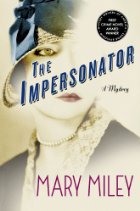
Leah Randall is a talented but impoverished actress who has worked on the vaudeville circuit her whole life. During the course of one performance, she notices a strange man watching her intently. Eventually this man, Oliver Beckett, approaches her with an astonishing proposal. He tells Leah the story of his niece, Jessie Carr, heiress to a substantial fortune, who vanished from her home several years ago without a trace. Leah bears a striking resemblance to Jessie, so Oliver proposes a scheme: Leah will pose as Jessie and return “home” to claim her inheritance, which she will then split with Oliver. At first Leah wants nothing to do with it, but when she is fired from her vaudeville act and can’t get other work, she eventually reconsiders. With Oliver’s help, she assumes Jessie Carr’s identity and travels to the Carrs’ home in Oregon. But the more time she spends with the Carrs, the more she becomes determined to discover what really happened to Jessie all those years ago.

If you read that plot summary and thought, “That sounds an awful lot like Brat Farrar by Josephine Tey,” well, you’d be right. The premise is exactly the same — Miley even acknowledges that Tey’s novel was the main inspiration for her own — but I enjoyed Miley’s novel in its own right. I especially liked the period details about vaudeville, speakeasies, and other highlights of life in the 1920s. There were even references to some Supreme Court cases of the era, which I appreciated as a law school survivor. I also liked Leah’s narrative voice: she’s plain-spoken, independent, and very aware of both her talents and her flaws. The thing is, though, Brat Farrar is still by far the superior book. Miley’s novel is a bit disorganized at times, including several subplots that are more distracting than intriguing. I also hated the romantic aspect of this book; it was unbelievable and underdeveloped. I did enjoy the book overall and found it very readable, but if the premise sounds interesting to you, you should really just read the original instead!

Review: Whom the Gods Love

Whom the Gods LoveKate Ross, Whom the Gods Love

Alexander Falkland, one of the darlings of English society, has just been murdered — bashed over the head with a poker in the middle of a party at his own house. The Bow Street Runners are at a loss to discover the killer; after all, who would want to murder a man who was universally liked? When the official investigation goes nowhere, Alexander’s father enlists the help of Regency dandy/sleuth Julian Kestrel. As a man of Alexander’s own social class, Julian has unique access to his friends and associates that the Bow Street Runners could never obtain. Julian agrees to take the case, but he warns Alexander’s father that unpleasant truths might emerge. And indeed, the further Julian digs into Alexander’s life, the more shocking secrets he uncovers, including several motives for murder.

I absolutely loved the first two books in the Julian Kestrel series, and I’m thrilled to be able to say that I loved this one as well! The strength of most mystery series depends on the protagonist, and Julian Kestrel is a wonderful sleuth: intelligent, intuitive, willing to cooperate with the police (a rare trait!), and always impeccably dressed. I also think this book is very well-plotted. Obviously there is more to Alexander Falkland than meets the eye, but the various twists and turns of the plot kept me in suspense until almost the very end of the book. My only problem with the book is that I really liked one particular character who ended up doing a horrible thing in the course of the plot. Because of this, the resolution of the mystery wasn’t completely satisfying for me; but I suppose that’s a testament to the author for making me care so much about that character! In short, I’d definitely recommend this book (and the entire series) to anyone who enjoys mysteries or historical fiction!

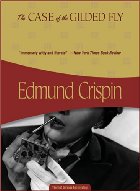
Review: The Case of the Gilded Fly

The Case of the Gilded FlyEdmund Crispin, The Case of the Gilded Fly

In 1940s England, a theater troupe converges upon Oxford to produce a new play by acclaimed playwright Robert Warner. One of the actresses, Yseut Haskell, is a beautiful girl who has attracted many admirers, but her outward appearance masks a cruel and self-absorbed personality. The other people involved with the play are frankly sick of her attitude, especially when she begins to stir up trouble within the company. So it’s not particularly surprising when Yseut is subsequently found murdered — in fact, nearly everyone in the theater company expresses relief that she’s finally gotten what she deserved. In the midst of this tense situation, Oxford don Gervase Fen uses his passion for criminology and his friendship with policeman Sir Richard Freeman to investigate the murder. As he talks to the various suspects and uncovers some unpleasant secrets, he begins to wonder whether exposing the murderer is really the best course of action.

This is a fairly typical Golden Age mystery, and as a fan of that genre, I enjoyed this book. I found Gervase Fen entertaining, although he wasn’t as prominent in the book as I expected he’d be; much of the story is told from the viewpoint of Nigel Blake, a young man who becomes involved with the theater troupe and falls in love with one of the actresses. I can see why Crispin chose that approach, though, because Fen claims to have solved the murder within three minutes of viewing the body! I also found Fen’s qualms about exposing the murderer very interesting. In many mysteries, it’s taken as a matter of course that the murderer should be unmasked and brought to justice; however, in this case the victim is a truly unpleasant person, and many of the characters think that the murderer did them a favor. Finally, I was struck by the fact that this really doesn’t feel like the first book of a series; there are several allusions to Fen’s past cases, and as I mentioned before, his character isn’t particularly fleshed out. Nevertheless, there are a few more Gervase Fen books, and I’ll probably seek them out at some point.

Review: An Old Betrayal

An Old BetrayalCharles Finch, An Old Betrayal

***Warning: SPOILERS for previous books in the series!***

Charles Lenox, Victorian gentleman and Member of Parliament, thinks he has left his former life as a detective behind. But when his aristocratic protégé, John Dallington, asks him for help with a prospective client, Charles is eager to lend a hand, leaving his work in the House of Commons behind. Since Dallington is laid up with a bad cold, Charles agrees to meet the prospective client in his place; but before Charles can make contact with the client, a young woman named Grace Ammons, she is scared away by a mysterious man. Eventually Charles learns that Grace has connections to Buckingham Palace, and he suspects a possible plot to steal the priceless items within it. But when the man who frightened Grace Ammons is later found murdered, Charles realizes that the plot against the palace is more shocking and deadly than he ever imagined.

This is the seventh Lenox mystery, and in my opinion, the series is still going strong. One of my biggest complaints about the last couple installments has been the neglect of the secondary characters, but this book gives them a lot more attention. There is a significant subplot involving Charles’ medical friend, Thomas McConnell, and Dallington (my favorite character!) is also prominently featured. I also largely enjoyed how the mystery plot unfolded in this book; unsurprisingly, the murder and the threat to Buckingham Palace turn out to be connected, and there are many clever twists and turns along the way. But I think my favorite aspect of this novel is how it ends: there are a lot of big changes for Lenox and his friends in this book, and in my opinon, they’re changes for the better. I’m really looking forward to seeing where the series goes from here!

Review: An Excellent Mystery

An Excellent MysteryEllis Peters, An Excellent Mystery

In the summer of A.D. 1141, two Benedictine brothers seek refuge at the Abbey of Saints Peter and Paul in Shrewsbury. They have fled the city of Winchester, where their former abbey has gone up in flames, a casualty of the civil war between King Stephen and Empress Maud that still rages on. The older of the two refugees, Brother Humilis, is obviously a nobleman — and just as obviously dying from a mortal wound sustained many years ago in the Crusades. The younger man, Brother Fidelis, is mute, but he tends his fellow traveler with astonishing devotion. Brother Cadfael, due to his knowledge of herbs and their healing properties, spends a lot of time with these two brothers and eventually discovers that there is more to their story than meets the eye. Meanwhile, Cadfael also investigates the disappearance of a beautiful young woman who intended to become a nun but never arrived at her convent.

This book is the eleventh installment of the Cadfael series, but I think it can largely function as a stand-alone; newcomers to the series wouldn’t get lost if they jumped in here, though I still recommend starting with A Morbid Taste for Bones. These books are always comfort reads for me. I love the historical setting of a medieval monastery, and I enjoy seeing how Cadfael’s small world is affected by larger historical events. I also like the fact that these mysteries are firmly on the “cozy” end of the spectrum; there is often murder, but it’s never grisly, and there’s also romance and humor and a lot of lovely descriptions of monastic life. As for this book in particular, I definitely enjoyed it, but I’m pretty sure I read something about the solution to the mystery ahead of time, because it definitely didn’t surprise me. In fact, I think the resolution is fairly predictable even if you haven’t been spoiled. However, I still liked this book a lot and look forward to the next installment of the Cadfael series!

Review: They Found Him Dead

They Found Him DeadGeorgette Heyer, They Found Him Dead

This book begins, as so many classic British mysteries do, with an ill-fated party at an English country house. Silas Kane is celebrating his 60th birthday, but many of his guests aren’t in a particularly happy mood. His heir, Clement, is desperate to get his hands on a piece of the older man’s fortune — especially because his beautiful but materialistic wife, Rosemary, is threatening to leave him. Meanwhile, Silas’ neighbor and business partner is eager to interest him in an investment opportunity, but so far he has stubbornly refused to consider the deal. So when Silas is discovered dead the day after the party — having apparently fallen over the cliff where he habitually took a walk every evening — there is no shortage of suspects to consider. And when Clement is shot in the study shortly afterwards, it seems clear that a murderer is at work. Once again, Inspector Hannasyde of Scotland Yard must untangle the various motives in play and discover the identity of a ruthless killer.

I’ve been steadily working my way through Heyer’s mysteries, and this book is a typical example. I always enjoy Heyer’s witty dialogue and hints of romance, although in this book the love story is very peripheral to the main plot. The mystery itself is fine, though there’s nothing particularly surprising for those who read a lot of detective novels. As always, the strength of Heyer’s books is her characters, and there several great ones here, from the self-absorbed Rosemary Kane to the exuberant young Timothy Harte, who is overly eager to assist the police in solving the murder. I should note, however, that while Inspector Hannasyde is a recurring character in Heyer’s mysteries, he is definitely not the protagonist; each individual book tends to revolve around the victim and the suspects much more than around the detective. Anyway, I definitely liked this book overall, but there’s nothing that makes it particularly stand out to me.

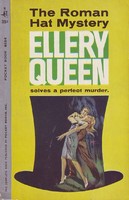
Review: The Roman Hat Mystery

The Roman Hat MysteryEllery Queen, The Roman Hat Mystery

In 1920s New York City, crowds have been thronging to see the latest Broadway hit, a sensationalist gangster play complete with flashing lights and gunfire. But little did the audience members of the Roman theater suspect that a real murder would be committed during the second act! Inspector Richard Queen of the local police is on the scene almost immediately, with his curious son Ellery in tow. In examining the victim’s body, they soon discover an interesting anomaly: despite being dressed in full evening clothes, the dead man wasn’t wearing a top hat. The police scour the Roman theater from top to bottom and search all the audience members as they leave the premises, but the hat is nowhere to be found. While Inspector Queen and his fellow police detectives identify the corpse and discover his involvement in a blackmailing scheme, Ellery applies himself to the mystery of the missing hat — and deduces the identity of the murderer as a result.

I really enjoy classic mysteries from the early 20th century, so I was excited to read this first Ellery Queen novel. Overall, I was very impressed with the mystery plot itself; the solution is tight and hangs together well, although part of the motive is concealed from readers until the very end. (Historical racism is also an aspect of the solution, which can certainly be offputting for contemporary readers.) I also liked the way in which the police were depicted as they investigated the murder: far from being bumbling idiots, they approach their job intelligently and methodically. I was especially tickled by the introduction of the district attorney as a character. Most mystery novels focus solely on catching the killer — never mind if s/he can actually be convicted in a court of law! I wasn’t as impressed with the characterization of the detectives, however. Inspector Queen was more central to this book than Ellery, but he didn’t seem to be consistently depicted, and Ellery was barely fleshed out at all. Presumably, though, more character development occurs in subsequent books, and I’d certainly be willing to read more Ellery Queen novels.

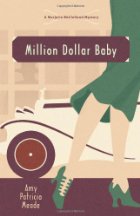
Review: Million Dollar Baby

Million Dollar BabyAmy Patricia Meade, Million Dollar Baby

Marjorie McClelland is a mildly successful mystery novelist trying to make ends meet during the Great Depression. Creighton Ashcroft is a wealthy Englishman who has recently purchased the grandest estate in Marjorie’s town. Though they come from two different worlds, Creighton is immediately attracted to the author and offers to help her with her latest book. Marjorie accepts his help, and they soon settle into a daily routine, which is shockingly interrupted by the discovery of a skeleton on Creighton’s property. Creighton and Marjorie call the police immediately, but Creighton regrets this action when the extremely handsome lead detective appears on the scene and competes for Marjorie’s attention. Can this trio of detectives discover what happened to the dead person? And will Creighton be able to win Marjorie’s heart away from his attractive rival?

Being a fan of the classic country house mystery, I was excited to read this book, which is first in a series set in 1930s New England. Unfortunately, I just wasn’t impressed by the writing style. The dialogue was awkward and clumsy, and there was too much “showing” rather than “telling.” I was also annoyed by the rapid shift in Creighton and Marjorie’s relationship; at first, he seems to be merely attracted to her, but about halfway through the book he suddenly feels deep and lasting love. I found the change very abrupt, and I couldn’t figure out why he was so interested in her after a few superficial conversations. I do think the setup of the series is interesting and unique — it’s not every day you have three sleuths embroiled in a love triangle while they attempt to solve crimes! However, the execution just wasn’t good enough for me to continue with the series.