Mini-Review: Luminous, Cherry, Green

Sylvia Cathrall, A Letter to the Luminous Deep

Set in a fantastical underwater universe, this epistolary novel centers around the correspondence between E., a reclusive but curious young woman, and Henery Clel, a scientist who answers her letter about a potentially undiscovered species. As E. and Henery write to each other, they forge a deep connection and fall in love. But one year later, something bad has happened and they’ve both disappeared. So E.’s sister, Sophy, and Henery’s brother, Vyerin, begin their own correspondence to figure out what happened to their missing siblings. I liked the premise of this novel but was disappointed by the execution. There seems to be a trend these days for books that are “no plot, just vibes,” and this book definitely falls into that category…in fact, it’s apparently just the setup for a sequel, complete with cliffhanger ending! The writing style is stilted and overly formal, and the four main characters all have the same voice – and essentially the same blandly pleasant personality. Honestly, I found this book a bit of a slog, and I won’t be continuing with the series.

Jackie Lau, Love, Lies, and Cherry Pie

Emily Hung hasn’t figured out her life yet and feels vaguely ashamed of it. Her writing career seems to be stalling, she doesn’t own a home or a car, and she’s “still” single at age 33. Her meddling mother is determined to “help” by setting Emily up with Mark Chan, the perfect-on-paper son of family friends. Emily is sure she won’t like Mark and immediately writes him off as too boring. But to get her mom off her back, she proposes a fake-dating arrangement, to which Mark surprisingly agrees. As they spend more time together to keep up the charade, they grow closer until Emily begins to see Mark with new eyes. This was a cute contemporary rom-com; Emily is a relatable character, and I enjoyed the development of her relationship with Mark, though he’s not quite as nuanced a character as she is. There were a couple steamy scenes that felt superfluous, and the third-act “breakup” was a bit forced, though thankfully it didn’t last long. Overall, a fun but forgettable summer read.

Christianna Brand, Green for Danger

This classic mystery novel takes place during World War II at a military hospital in Kent. Joseph Higgins, an elderly postman, is injured in an air raid and brought to the hospital for treatment. It’s supposed to be a simple surgery, but Higgins unexpectedly dies on the operating table. Was it natural causes or murder? A second death confirms the latter, and there are only six people who could possibly be the killer – six doctors and nurses who’ve worked and socialized together for months, and whose relationships are slowly poisoned by mutual suspicion. I love a Golden Age mystery, and this one has all the classic elements: a closed circle of suspects, an ingenious murder method, and an abundance of hidden motives. But what elevates this novel is the strong characterization of the six suspects, who feel like real people with realistic emotions and reactions to the book’s events. When the guilty party was identified, I was both surprised and a bit heartbroken, as I’d come to care about all the characters. Highly recommended for fans of this genre, and I will definitely seek out more by Brand!

Mini-Reviews: Mirror, Unsent, Train

Carol Berg, The Soul Mirror

Four years ago, Anne de Vernase lost everything when her father was convicted of evil sorcery and treason. Her mother is mad, her brother is in prison, and her younger sister has just died in a magical “accident” that might not be so accidental. Now Anne has been summoned to the royal court, where she is immediately plunged into various intrigues, including the murder of a noblewoman. She ultimately learns some shocking truths about both her own gifts and the magical conspiracy threatening the kingdom. This book really builds on the events of The Spirit Lens and sheds new light on its mysteries. I particularly enjoyed seeing the main characters from the first book through Anne’s eyes—understandably, she neither likes nor trusts Portier at first! This book thankfully doesn’t suffer from the “second-book slump” that is common with trilogies; rather, it moves the plot along nicely and actually resolves a lot of loose ends from book 1. I’m excited to read book 3 and see how things develop from here.

Lia Louis, Better Left Unsent

Millie enjoys her peaceful, low-drama, conflict-avoidant life. But when she’s feeling angry or frustrated, she vents by writing emails; she’ll never send them, of course, just consign them to the purgatory of her drafts folder. That is, until a server glitch sends out all her emails—the angry rants to rude coworkers, the hurt feelings about a friend’s behavior, the heartbreak over the ex who dumped her and is now engaged to someone else. Horrified, Millie just wants to apologize and pretend like it never happened, but eventually she learns that sometimes it’s OK to speak up about her needs and feelings. I’ll be honest, it took me a while to get past the fact that she was drafting all these emails from her work account! It’s such a monumentally stupid move! But once I got beyond that, I did enjoy the book. I could relate to Millie’s people-pleasing tendencies, and I was glad when she started to see herself and others in a new light. There’s also a nice, low-conflict romance, although the love interest is a bit too bland and perfect. Overall, this is enjoyable women’s fiction, but it’s not destined to be a favorite.

Benjamin Stevenson, Everyone on This Train Is a Suspect

After the success of his “memoir,” Everyone in My Family Has Killed Someone, Ernest Cunningham has been invited to an Australian mystery writers’ festival, which is taking place on a luxury train called the Ghan. Ernest is struggling to find inspiration for his second book, but fortunately, there are plentiful tensions among the train passengers that soon result in a murder. Ernest is excited to have another mystery to solve, but he soon realizes that with several other mystery writers on board, he’s not the only would-be detective on the case. This book has a very similar flavor to its predecessor but is even more metatextual, as Ernest talks about the aftermath of his first book, how it’s been received by the public, Goodreads reviews, and so on. I liked the twists and turns of the plot, and I liked that Ernest is still devoted to the Golden Age “rules” for mysteries – even as he learns that the rules don’t always cover every situation. All in all, this is a good sequel that should appeal to fans of the first book, though the series should definitely be read in order.

Mini-Reviews: Impossible, Tea, Rectory

Connie Willis, Impossible Things

I’m not a huge fan of short stories, but I do love Connie Willis, so I decided to revisit this collection of her early stories and novellas, which were all originally published in the ’80s and early ’90s. I was pleasantly surprised to find that there are really no duds in the collection, though of course some stories resonated with me more than others. I particularly enjoyed “Spice Pogrom,” an homage to the screwball comedy; “Chance,” a heartbreaker about a woman who’s consumed with regret over a bad choice she made years ago; and “Winter’s Tale,” a compelling, contemplative take on a Shakespeare conspiracy theory. The collection contains both tragic and comic stories, but even the tragic ones generally have a hint of hope or humor, and even the comic ones have surprisingly sharp edges. I still prefer Willis’s full-length novels, but if you like the author (or sci-fi stories in general), these stories are well worth reading also.

India Holton, The Secret Service of Tea and Treason

This final book in the Dangerous Damsels trilogy focuses on Alice Dearlove and Daniel Bixby, both of whom appeared in the previous book as a lady’s maid and butler, respectively. In fact, they’re two of the best spies in England’s shadow government, and now they’re tasked with working on a mission together. The Wisteria Society is allegedly plotting to assassinate Queen Victoria using a mysterious new weapon. Alice and Daniel must pose as a married couple, infiltrate the Society, and steal the weapon; naturally, complications ensue when the ruse starts feeling all too real. This book shares with its predecessors a light tone, copious literary references, silly piratical hijinks, and a central romance. But I think this is my favorite of the trilogy because I loved Alice and (especially) Daniel. Both are dealing with childhood trauma and neurodivergent brains that make them feel like outsiders, and it’s lovely to watch them slowly realize that they understand each other. That said, this series is a fun read, but I’m not sure I’ll ever feel the need to reread it.

Catherine Lloyd, Death Comes to the Rectory

Lucy and Robert Kurland are excited for the christening of their baby daughter, Elizabeth. But as they welcome their family and friends for the event, they’re also surprised by some unwanted guests: Harriet and Basil Northam, the daughter and son-in-law of Robert’s Aunt Rose, who recently married Lucy’s father. The obnoxious Northams have long sponged off of Aunt Rose and aren’t pleased that her remarriage may now disinherit them. When Basil Northam is found stabbed to death in the rectory study, Lucy’s father becomes the chief suspect, which causes tension between Robert and Lucy as they investigate the crime. This book is the last of the Kurland St. Mary mysteries, and while it doesn’t really feel like a series finale, it fits right in with the rest of the series: pleasant but bland, and not particularly remarkable as a mystery. I did like the brief observations on inequities in the justice system, but they’re not treated with much depth. Overall, these books are quick, undemanding reads, but I wouldn’t enthusiastically recommend the series. It’s fine, but I feel pretty tepid about it.

Mini-Reviews: Time, Comet, Overture

Kaliane Bradley, The Ministry of Time

In the near future, a secret branch of the UK government called the Ministry of Time has discovered time travel, but they’re still figuring out its rules and limits. As an experiment, they’ve extracted five “expats,” people from earlier periods of history who would have died in their own eras, and brought them into the present. The book’s narrator works for the ministry; her job is to live with one of the expats—Commander Graham Gore, a naval officer lost in an Arctic expedition in the 1840s—and help him acclimate to the 21st century. As the narrator gets closer to Gore and learns more about the ministry’s project, she discovers some sinister secrets and must decide where her loyalties truly lie. I’m still processing this book, to be honest, but I think I might love it. Bradley writes beautifully, and her characters are complex and interesting (especially Gore, whom I adored!). The only thing I didn’t like was the denouement, which felt a bit rushed and obvious. But the novel manages to be thought-provoking about power, narratives, and identity, while still being an excellent story. I’ll definitely be reading this again at some point!

Sheila Simonson, Lady Elizabeth’s Comet

The titular Lady Elizabeth is a would-be astronomer tracking a comet across the night sky. At age 28, she’s also been the de facto head of her family since her father’s death more than a year ago. So when the heir to her father’s earldom, distant cousin Thomas Conway, finally takes possession of the family home, Elizabeth is wary and defensive toward the newcomer. But when she helps nurse him after a battlefield injury catches up with him, she finds her feelings changing. Complicating matters is her quasi-engagement to Tom’s friend Lord Bevis and her need to care for her twin 15-year-old sisters. While I don’t mind the occasional “wallpaper historical,” it is refreshing to read a Regency romance that actually feels authentic to the period! While Elizabeth has a unique-for-her-time interest, she’s not a 21st-century heroine in costume. I also enjoyed her witty first-person narration, which is unusual for this genre. The romance is quite lovely with some funny moments (and steamless, which is a bonus for me). I’d definitely recommend this one to fans of historical romance and will be seeking out more by the author!

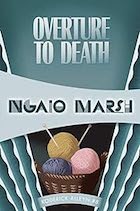
Ngaio Marsh, Overture to Death

This Golden Age mystery, book #8 in the Roderick Alleyn series, has a classic setup: Seven people in a small English village decide to put on a play. One of the actors, a universally disliked spinster, is murdered in a shocking fashion on opening night – shot via a booby trap hidden in a piano. Complicating matters is that Miss Eleanor Prentice, the victim’s equally unpopular friend/rival, may have been the intended target. Suspects include the local squire, a pair of young lovers, the vicar, the village doctor, and a femme fatale. Fortunately, Inspector Alleyn is on hand to uncover adultery, blackmail, and murder. I generally enjoy Marsh’s mysteries, although I think her books get less interesting after the murder occurs. This one is true to form: The setup and character introductions are great, but once Alleyn arrives on the scene, the “plot” is basically just a bunch of suspect interviews. That said, I still enjoyed the book, and I’m pleased that I managed to solve the mystery before the culprit was revealed.

Mini-Reviews: Scarlet, Pointe, Locked

Anne Gracie, Marry in Scarlet

Lady Georgiana “George” Rutherford isn’t a typical society lady: She rides astride, prefers dogs and horses to people, and has no interest in marriage. Hart, the duke of Everingham, doesn’t particularly want a wife either, though he knows he must marry to secure an heir. And after being jilted by Lady Rose Rutherford, he certainly isn’t looking to her family for a bride. But as George and Hart encounter each other at various society events, they’re reluctantly attracted to one another and are forced to wed when they’re caught in a scandalous embrace. I enjoyed this book more than I expected to…while the seemingly cold and closed-off Hart is my kind of hero, I don’t generally enjoy “feisty,” anachronistic heroines like George. But she won me over with her honesty and firm loyalty to her family. I actually wish the book were a bit longer—I felt like the transition from grudging attraction to feelings happened too quickly, and I wanted to really see them falling in love. That said, this is definitely my favorite book in the series, and I may be keeping it on my shelves for a while.

Chloe Angyal, Pointe of Pride

Chaotic, hot-tempered Carly and pedantic, uptight Nick seemingly have nothing in common. But in fact, both are floundering in their careers: Carly is a ballerina who desperately wants to be promoted to soloist, while Nick’s post-dancing photography career hasn’t taken off. Nick agrees to take photos of Carly that will boost her Instagram following, making her a more attractive candidate for promotion, and get his work into the public eye. As they work together, their hostility transforms into attraction. Like its predecessor, Pas de Don’t, this is a well-written contemporary romance with a beautifully depicted Australian setting. There’s not a lot about ballet in it, which I found disappointing, and the reason for the third-act breakup felt a little flimsy to me. But I did like the inclusion of Carly’s medical condition that makes penetrative sex extremely painful; there aren’t many romance novels where the sex is anything less than perfect and magical. Overall, I liked this book fine but am not particularly excited about it.

Ashley Weaver, Locked in Pursuit

In this fourth installment of the Electra McDonnell series, Ellie hasn’t seen her military handler, Major Ramsey, in months. They were both almost killed in their last mission, in which they also shared a passionate kiss that they agreed never to repeat. But when Ellie suspects that a high-profile London robbery might be a cover for espionage activity, she and Ramsey must work together once more. As their investigation leads them to a murdered woman and a valuable map, Ellie also pursues answers about her father, who might have been a spy for the Germans in the last war. I’m still really enjoying this historical mystery series; it’s an entertaining mix of WWII atmosphere, plot, and romance. The series-long stories make some real progress, as Ellie becomes more proactive in investigating her parents and examines her feelings about both Ramsey and longtime friend Felix. If the premise sounds interesting to you, I’d definitely recommend this series, though it’s best to start with book #1, A Peculiar Combination.

Mini-Reviews: Nursery, Disappearing, Spy

Catherine Lloyd, Death Comes to the Nursery

Robert and Lucy Kurland are finally parents to a two-year-old son, Ned, and they’re thrilled that Lucy is now pregnant with their second child. Lucy decides to hire additional help in the nursery, but the new maid, Polly, soon causes disruption in both the manor and the village. Her beauty attracts many suitors, some of them employed by Robert, and conflict is the inevitable result. When Polly is murdered, Robert and Lucy investigate and make some surprising discoveries about the girl’s past. This book is, like the rest of the series, a pleasant but not groundbreaking historical mystery. I found the mystery component a bit weak; I was able to guess the culprit in advance, so it was frustrating to wait for the characters to catch up – especially when one suspect insists that he knows the truth but won’t tell Robert and Lucy anything! I’ll definitely continue with the next (and so far final) book in the series, but I think I’m running out of steam.

Kate Clayborn, The Other Side of Disappearing

Jess Greene has dedicated her life to protecting her young half-sister, Tegan, after their mother ran off with famous con man Lynton Baltimore. Baltimore was the subject of a popular podcast several years ago, and now the podcast creators want to interview Jess and Tegan to see if they can track him down. Jess hates the idea but reluctantly agrees because Tegan is eager to participate in hopes of seeing her mother again. As they follow Baltimore’s trail across the country, Jess is attracted to the podcast’s producer, Adam Hawkins, but their mutual baggage hinders their romance. Clayborn is one of my favorite contemporary romance authors, and I really enjoyed this book, even though I’m not into podcasts or true crime. There’s not much lightness or humor in the book – the emotions are intense – but I loved both the romance and Jess’s development as a character. I do wish we’d learned more about Baltimore, but he remains an enigma throughout. Overall, though, I’d definitely recommend this book if the premise interests you!

Tatsuya Endo, Spy x Family, vol. 1

Twilight is a master spy, but his latest mission brings unique challenges: He has to infiltrate an elite private school, which means he needs a wife and child. But he gets much more than he bargained for when it turns out that his hastily adopted daughter, Anya, is a telepath and his brand-new wife, Yor, is an assassin. Will they be able to foil a dastardly seditious plot and, more importantly, come together as a family? I’m not much of a manga reader, but this one caught my eye with its spy-thriller-plus-found-family vibes, and I found it a very cute read! There’s a nice mixture of action and comedy with a bit of heart, and I like the art as well. This being volume 1, it only tells the beginning of the story – the installment ends with the entrance interview to the school – so I’ll have to read more if I want to know what happens next! Fortunately, my library seems to have several installments, so I probably will continue with the series at some point.

Mini-Reviews: Corpse, Brass, Grumpy

Ellis Peters, One Corpse Too Many

This second installment of the Cadfael series is based on a real event: King Stephen’s siege of Shrewsbury Castle in A.D. 1138 and his subsequent killing of all the castle’s defenders. In the novel, 94 men are supposed to be hanged, but Brother Cadfael finds a 95th body. The extra man wasn’t hanged but strangled, and Cadfael is determined to see his murderer brought to justice. As Cadfael investigates, he navigates treacherous politics, discovers a hidden treasure, and helps two pairs of young lovers. I love the Cadfael series, and this book in particular has always been a favorite. It’s a wonderful slice of medieval life that feels cozy despite the murder plot and wartime setting. I love the mixture of political intrigue, mystery, and romance, and the book introduces one of my favorite characters in the entire series (and one of my first fictional crushes, honestly!). I thoroughly enjoyed this reread and would highly recommend both the book and the series.

Nancy Campbell Allen, Brass Carriages and Glass Hearts

Emmeline O’Shea is an outspoken activist for shapeshifters’ rights, and she’s been asked to give the closing speech at an international summit that could produce a decisive victory in the struggle. But when Emme receives a nasty death threat, she’s forced to accept the protection of Detective-Inspector Oliver Reed of Scotland Yard. Emme and Oliver have clashed frequently in the past, but now that they’re spending more time together, their hostility is turning into something else. I love a good antagonists-to-lovers romance, and Emme and Oliver are both appealing characters (and yes, I especially loved buttoned-up, rule-abiding Oliver). That said, I think the first half of the book is more interesting than the second. They’re obviously in love with each other by that point, and the rest is just the plot playing itself out rather abruptly; I wanted more resolution with some of the secondary characters. Overall, this series is not a keeper for me, but I did enjoy the books and would recommend them if you like the idea of steamless historical romance with paranormal/steampunk elements.

Charlotte Stein, When Grumpy Met Sunshine

Retired footballer Alfie Harding needs a ghostwriter for his new memoir, but he’s notoriously gruff, taciturn, and hard to work with. Said ghostwriter, Mabel Willicker, is the opposite, cheerful and chatty to a fault. Their first few meetings are disastrous—pepper spray is involved—but as they work together, Mabel learns there’s much more to Alfie than meets the eye. When a paparazzi photo forces them into a fake-dating scenario, Mabel realizes she’s developed genuine feelings for Alfie, but she’s convinced he could never be interested in a plus-sized non-celebrity like her. I was a little worried this book was going to be cringey Roy Kent fanfic, but Alfie is very much his own person, and he’s an utter delight! He’s so weird and kind and awkward and vulnerable, and it’s obvious that he and Mabel are perfectly matched. I also loved Mabel and related to her insecurities as a plus-sized woman, but Alfie is definitely the star of the book. My one quibble, apart from the off-putting title, is the author’s irritating overuse of one-sentence paragraphs, which I found distracting. But I was frankly charmed by this book and would highly recommend it to contemporary romance fans!

Mini-Reviews: Heartless, Blunt, Mere

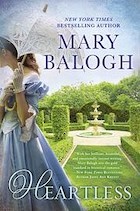
Mary Balogh, Heartless

For the past decade, Lucas Kendrick has lived in Paris, cultivating a reputation as a man without a heart. Ever since he was betrayed by and banished from his family 10 years ago, he’s resisted any hint of love or vulnerability. Now Luke has inherited a dukedom and must return to England to fulfill his duties. He also needs to marry and decides upon the beautiful, vivacious Anna Marlowe, though he has no intention of actually falling in love with his wife. Their relationship slowly deepens but is tested when Anna’s traumatic past catches up with her. I liked this book fine, but it would have been even better without the suspense subplot. I think romances are most interesting when the obstacles are internal to the people involved — character flaws they need to overcome, fears they need to face, etc. Luke and Anna have plenty of those obstacles, so the external conflict with the villain from Anna’s past felt like overkill. So while this is an enjoyable read, I don’t feel a need to keep it on my shelves.

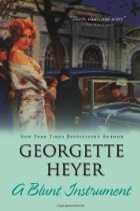
Georgette Heyer, A Blunt Instrument

When Ernest Fletcher is found dead in his study with his head bashed in, everyone is shocked — he was well-liked and seemingly had no enemies. But as the police begin their investigation, they soon unearth plenty of possible motives and suspects. There’s the dead man’s nephew, Neville Fletcher, who stands to inherit a fortune. There’s neighbor Helen North, whose gambling debts Ernest was using to blackmail her — and her husband, John, who may have been jealous of Ernest. But before the police can arrest anyone, they need to solve two problems: given the evidence at hand, how could anyone have had time to commit the murder? And what did the killer do with the weapon? This is one of Heyer’s best mysteries, in my opinion, with a clever solution and an entertaining cast of characters. My one quibble is that I wanted even more of Neville & co.; frankly, I felt the relationships among the suspects were more interesting than the mystery!

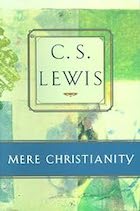
C.S. Lewis, Mere Christianity

A small group of people at my church decided to form a book club during Lent and chose this book. I’d read it before, years ago, but I’m really glad I decided to reread it now. Lewis is deservedly famous for his writings on Christianity; he has a gift for explaining complex ideas in a straightforward, accessible way. In this book, he suggests some arguments supporting belief in Christianity, states the religion’s core beliefs (shared by all denominations), discusses various aspects of Christian morality, and delves a bit into theological concepts such as the Trinity. Throughout the book, he emphasizes practical concepts such as what people must do in order to truly follow Jesus, and why it matters. I feel like most people interested in the topic have already read this book, but if it’s been a while since you’ve read it, I’d definitely encourage you to revisit it!

Mini-Reviews: Fate, Bigger, Don’t

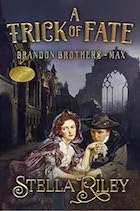
Stella Riley, A Trick of Fate

Max Brandon has a problem: Someone has been purchasing expensive goods and running up bills in his name, which he’s now being asked to pay. This minor nuisance becomes a major problem when the thief’s actions harm Frances Pendleton, Max’s first love. Now Max and Frances must team up to find the thief, and their quest leads them on a wild-goose chase throughout England and Scotland. After loving Stella Riley’s Rockliffe series, I had to continue with the spinoff Brandon Brothers trilogy (Max is Arabella’s brother from Cadenza). I don’t think you have to read any of the Rockliffe books to follow this one, but the two series are definitely set in the same universe. The love story in this book is a bit lightweight; while the obstacles originally dividing Max and Frances made sense, there was no reason for them not to be together in the present. But I love Riley’s writing and enjoyed the book anyway — especially since it also provides a peek at Elizabeth and Sherbourne, a couple from Cadenza whose story I’d wanted more of. I’d definitely recommend this book and author to historical romance fans and am eager to continue with the series.

Erle Stanley Gardner, The Bigger They Come

Most people know Erle Stanley Gardner as the author of the Perry Mason books, but he also wrote another series, featuring private detectives Bertha Cool and Donald Lam, under the pseudonym A.A. Fair. Narrated by Lam, this first book in the series describes how he got the job with Bertha Cool’s detective agency. It also details Lam’s first assignment: He’s tasked with serving divorce papers to an unfaithful husband, but no one seems to know where the man is. As Lam searches, he uncovers various secrets and even a murder — and demonstrates how, using a legal loophole, a person can commit murder and get away with it. This book is an enjoyable noir novel with plenty of fights, femmes fatales, and damsels in distress. The mystery itself isn’t terribly innovative, but Lam’s humorous narration keeps things light, and the book moves at a quick pace. I didn’t love the constant negative commentary on people’s sizes — part of the book’s “humor” comes from the fact that Bertha is a large woman, while Lam is a shrimpy guy — but I suppose that’s of its time. Overall, I liked the book and am interested in trying more by Gardner at some point.

Chloe Angyal, Pas de Don’t

Heather Hays’s dance career is finally taking off when she learns that her fiancé, a world-famous dancer in the same NYC ballet company, has been cheating on her. Desperate to get as far away as possible, she accepts a guest position with the Australian National Ballet. There she meets Marcus Campbell, a dancer recovering from an injury and grieving the recent death of his father. The two are immediately attracted to one another, but the ballet company has a firm no-dating policy. Will Heather and Marcus risk their jobs to follow their hearts? I have absolutely zero dance ability, but I’ve always enjoyed movies and TV shows about dancing, so the premise of this book intrigued me. I might have liked all the ballet background more than the actual romance, which is fine but a bit pedestrian. I did like the third-act conflict between Heather and Marcus, which felt realistic given the setup, and I enjoyed the resolution as well. A sequel is coming out in May, featuring Heather’s best friend, and I plan to get it from my library when it’s available.

Mini-Reviews: Tower, Bath, Gate

Nancy Campbell Allen, The Lady in the Coppergate Tower

Hazel Hughes has dreamed of a girl who looks exactly like her for years. So when her long-lost uncle reveals that she has a twin sister in Romania — a sister who appears to be slowly going mad — Hazel isn’t unduly shocked. She agrees to accompany her uncle to Romania in hopes that her skills as a Healer will help her sister. Dr. Sam MacInnes, Hazel’s employer, decides to come along for protection; as the two slowly fall in love, they also realize Hazel’s uncle is hiding something and try to uncover his sinister secrets. I’m continuing to enjoy this series of steampunk fairy tales. This installment is a riff on Rapunzel, but it also contains some clever allusions to Dracula — for example, in this book Hazel and Sam consider and reject the possibility that her uncle could be a vampire. The romance itself is a bit bland, as no real obstacles stand in the couple’s way. While I did like the book overall, I’m pretty sure I won’t be keeping the series on my selves once I read the fourth and final installment.

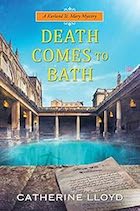
Catherine Lloyd, Death Comes to Bath

In this installment of the Kurland St. Mary series, Robert’s injured leg is paining him more than usual, so he and Lucy head for Bath in hopes that the spa town’s mineral-rich waters will provide relief and healing. There Robert befriends Sir William Benson, who’s also “taking the waters” for his health, and the two families soon become acquainted. But when Sir William dies, apparently drowned in the baths, Robert suspects foul play. And between Sir William’s much younger wife, three disappointing sons, and two odious stepsons, there’s no shortage of possible murderers. This is another strong entry in the series, benefiting from a new location and a close focus on the small circle of suspects. I liked Robert and Lucy’s dynamic as well; though they still butt heads occasionally, they work together and recognize each other’s strengths. I’m happy that the series is still so entertaining six books in, and I’m looking forward to the next one.

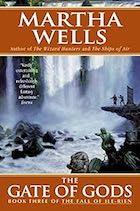
Martha Wells, The Gate of Gods

Following the events of The Ships of Air, Tremaine and her allies are in the country of Capidara, Ile-Rien’s ally and the current seat of its government-in-exile. They’re hoping to use their hard-won knowledge of the etheric gates to liberate the Rienish sorcerers trapped inside the besieged city of Lodun. But their plans go awry when half the group — including Tremaine, Ilias, and Giliead — travels to an unexplored world using a new type of etheric gate and can’t get back again. This conclusion to the Fall of Ile-Rien trilogy is a fitting end to the series; it answers the big questions of who the Gardier are and what they want, and it sees Tremaine finally deciding what she wants from her life. That said, I did find the ending anticlimactic — some of the answers the book provides don’t feel terribly satisfying. I also wanted more development for the secondary characters such as Florian, Gerard, and Niles, who were a constant presence throughout the trilogy but never really got their own stories. Overall, I’m glad I finally read this series but won’t be keeping it on my shelves.