Mini-Reviews: Ticket, Fatally, Inconvenient

Freya Sampson, The Lost Ticket

In 1962, twentysomething Frank met a girl on a London bus, and that single encounter changed his life. Unfortunately, he lost the phone number she gave him, and he never saw her again. Sixty years later, Libby has just arrived in London after simultaneously losing her job and her boyfriend. When she meets Frank (on the bus, of course), she’s fascinated by his story and decides to help him find the girl from the bus—posting flyers, placing newspaper ads, inventing a Twitter hashtag, etc. In the course of the search, Libby grows in unexpected ways as she discovers a new purpose and perhaps a new romance. This is a gentle, bittersweet novel about community and the positive ways people can influence each other. There are a lot of tender, effective moments, and Libby is a realistically complex character. Some aspects of the plot, like the romance and Libby’s conflict with her family, get short shrift. But overall, this is a pleasant, escapist, not too saccharine read.

Ande Pliego, You Are Fatally Invited

Six mystery authors are invited to a writers’ retreat at the home of reclusive best-selling author J.R. Alastor. Alastor is a pen name, and no one knows the author’s true identity, but the guests are all eager to meet their host. They don’t know that Mila, the event coordinator acting as Alastor’s proxy, has a grudge against one of them and is planning murder as her revenge. But when someone turns up dead—and it’s not the murder Mila had planned—she and the guests must team up to find the killer(s?) in their midst. This novel is heavily influenced by Agatha Christie’s And Then There Were None, with a dash of the Clue board game thrown in. As such, I was sold on the premise, and ultimately I enjoyed the book. It’s a little gory, and some of the logistical plot elements didn’t quite make sense (but maybe that’s my fault, as I was racing to the end and might have missed some details). But I liked the ending, and I’m pleased with myself for figuring out Alastor’s identity. Recommended if the premise appeals to you.

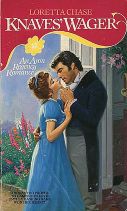
Loretta Chase, My Inconvenient Duke

Lady Alice Ancaster has decided it’s time to marry. Her brother constantly engages in reckless behavior that could get him killed, and his heir is a terrible cousin who would make Alice’s life miserable. Unfortunately, she’s already in love with the wrong man: Giles, duke of Blackwood, one of her brother’s best friends and partners in crime. Giles has loved Alice for years but knows she’s far too good for him, and he’d rather sow wild oats with his friends than settle down to marriage and respectability. When circumstances push them together, however, their attraction threatens to overcome their better judgment. Much as I love Loretta Chase, I found this book a little disappointing. It’s the third in a series, and the first two books hinted at problems in Alice and Giles’s marriage, which I assumed this book would explore. Instead, this is more of a prequel, starting well before their marriage and the events of books 1 and 2. The story is entertaining and well told, but it’s not the story I was hoping for. It’s still a Chase novel, which means there’s still a lot to enjoy (I do love me some pining, and there’s plenty of it here!), but this one won’t be a keeper for me.

Mini-Reviews: Shaman, Feast, Earl

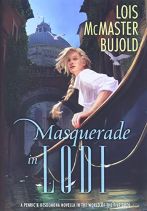
Lois McMaster Bujold, Penric and the Shaman

Four years after making the acquaintance of the demon Desdemona, sorcerer Penric has become a divine in the Bastard’s order. In that capacity, he is asked to participate in the hunt for a runaway shaman who’s responsible for the death of a young nobleman. His partner, the in-world equivalent of a police officer, distrusts all sorcerers and isn’t impressed by Pen’s youth and affability. But as they work together, they come to understand one another better—and realize that the shaman also isn’t quite what he seems. This novella has a lot of world-building that I found a bit hard to follow, even though I’ve read The Hallowed Hunt, which introduced the concept of shamans in this world. There’s also not much conflict; all the major players are well-intentioned and willing to collaborate to solve their problems. But I did enjoy the story and liked seeing Pen impress those who initially underestimated him. I’m excited to continue this series!

Ernest Hemingway, A Moveable Feast

I just got back from my first trip to Paris and thought this would be the perfect book to read while I was there! It’s Hemingway’s fictionalized account of his life in Paris in the 1920s with his first wife, Hadley. He talks about his favorite cafés, his writing process, his affinity for gambling and skiing, and his many friends and acquaintances in the Parisian literary world, such as Gertrude Stein and F. Scott Fitzgerald. I wouldn’t say I’m a huge Hemingway fan, but I do admire his writing style, and there are plenty of wonderfully evocative turns of phrase in this book. I think it’s a bit uneven—which is fair, as it was incomplete when he died and published posthumously—and I’m not sure I’ll ever want to reread it. I think it’s a bit too inside-baseball unless you’re intimately familiar with Hemingway and all the people he describes. Still, it’s reminded me that I would like to read more of Hemingway’s fiction.

Caroline Linden, An Earl Like You

Hugh Deveraux has just inherited an earldom, and with it a mountain of debt that his father had kept secret. With a widowed mother and two sisters to support, he needs money fast. He tries to recover his fortunes at the gaming tables, where he receives an unusual proposal: Rich merchant Edward Cross wants his daughter, Eliza, to marry an aristocrat. If Hugh is willing to be the bridegroom, Cross will pay all his debts and give Eliza a hefty dowry. Hugh is reluctant at first, but when he meets the warm and down-to-earth Eliza, he decides to go through with the marriage. But what will happen when Eliza discovers that her handsome suitor is only after her money? I quite enjoyed this variation on the marriage-of-convenience plot, where only one partner knows it’s a marriage of convenience. Hugh’s deception is appalling, especially because the kind and trusting Eliza thinks it’s a love match, and the book treats this conflict with the gravity it deserves while still making Hugh a likable and redeemable character. I liked this one and may try more from the author.

Mini-Reviews: Rake, Wildwood, Mistake

Eva Leigh, My Fake Rake

Lady Grace Wyatt and Sebastian Holloway have been friends for years, as both are socially awkward, scientifically minded nerds. Grace is infatuated with another scientist, but he sees her only as a colleague. So she and Sebastian concoct a plan: He’ll become a stylish, sought-after rake, then publicly flirt with Grace to make her crush jealous. But their plan goes awry when Grace and Sebastian find themselves wildly attracted to each other. I wanted to like this book – it seemed like a silly but fun gender-flipped take on the makeover trope (he takes off his glasses and is suddenly hot!) – but the execution fell flat. The hero and heroine are both anachronistically progressive (at one point, the hero refuses tobacco because it would be culturally appropriating Native American rituals), and their scientific interests try but fail to substitute for actual personalities. Ultimately, the book just wasn’t well-written or fun enough to compensate for these issues, and I don’t plan to try more by Leigh.

Juliet Marillier, Wildwood Dancing

Jena and her four sisters have a happy life as the daughters of a loving and prosperous merchant. Moreover, every full moon they’re able to visit the Other Kingdom, where they dance till dawn at the fairy court. But things change when Jena’s father travels south for his health, leaving the girls virtually alone. Jena’s sister Tati falls in love with a mysterious denizen of the Other Kingdom, and her cousin Cezar tries to take control of her father’s estate and business. Can Jena and her frog companion, Gogu, right these wrongs before it’s too late? I adored this book when I first read it and still liked it a lot this time around. Marillier’s prose is magical, and she creates a believable and immersive world. I really liked the incorporation of fairy tales and folklore, not just “The Twelve Dancing Princesses” but also “The Frog Prince” and vampire legends. I also appreciated the moral complexity of the book’s villain, Cezar, despite the intended YA audience. I prefer Marillier’s adult work, but this is still a very good read.

Sarah Mayberry, Her Best Worst Mistake

Martin is a conservative, buttoned-up corporate lawyer. Violet is a free spirit who wears scandalous outfits and likes breaking the rules. They’ve disliked each other for years but have had to get along because Martin was dating Violet’s best friend, Elizabeth. But when Elizabeth suddenly dumps Martin, Violet feels sorry for him and reaches out – only to discover a shocking sexual chemistry between them. But could that chemistry be the beginning of something more? This is a novella (about 150 pages) that manages to pack in quite a bit of backstory for the two main characters, setting up their opposites-attract dynamic and the conflicts that initially keep them apart. I liked both Martin and Violet and found their journey to love believable, if a bit sudden. There are several steamy scenes near the beginning, but the overall romance is surprisingly sweet. Recommended if you like the premise.

Mini-Reviews: Remember, Mortal, Bomb

Mary Balogh, Remember When

Clarissa Ware, the dowager countess of Ravenswood, is taking stock of her life. She’s nearly 50, her husband has been dead for several years, and her children are grown. Now she wants to discover who she is apart from her role as society wife and mother. To that end, she rekindles her friendship with village carpenter Matthew Taylor, who was her neighbor and best friend growing up. But any relationship between them will cause gossip; should they get together despite the possible cost to their reputations? This is a gentle, peaceful installment of the Ravenswood series. The conflict is practically nonexistent, and many of the scenes feel repetitive, as both Clarissa and Matthew spend a lot of time reflecting on whether they should be together. There are also the obligatory updates on Clarissa’s many children and family members, which I found a bit tedious. Overall, it was a decent enough read, but so far this series hasn’t grabbed me…though I am excited for Stephanie’s book now, and I hope it’s coming soon!

Genevieve Cogman, The Mortal Word

World-hopping, book-stealing Librarian Irene Winters has just been given her most high-stakes assignment yet. A secret peace treaty between dragons and Fae is in the works, mediated by the neutral Library—but one of the dragon negotiators has just been murdered. Irene and Vale are summoned to the scene of the crime, a version of Belle Époque Paris, where they must solve the murder and prevent negotiations from breaking down. But do the powers that be really want the truth to come out? This is another fun, page-turning installment of the Invisible Library series; it might even be my favorite so far. Most of the major series characters (Kai, Lord Silver, etc.) are on the scene and get some good page time. The romantic subplot takes a significant step forward. Plus, I always enjoy a good murder mystery! So yeah, I liked this one and am excited to continue with book 6.

Lissa Evans, Small Bomb at Dimperley

World War II has just ended, and Valentine Vere-Thissett is leaving the army to return to Dimperley manor, which he’s just inherited (along with a title) from his older brother, who died in the war. Valentine doesn’t particularly want the responsibility, especially since Dimperley is falling apart. Fortunately, Zena Baxter, who came to Dimperley in a group of pregnant women who were evacuated from London during the war, has an idea that might save the estate. But not everyone is ready to embrace her plan. I loved this slice-of-life novel and its realistic depiction of postwar changes, but the characters are what really make the novel shine. Every single one is treated humanely and feels like a real person. There’s also plenty of quiet humor and an understated romance that I loved. All in all, an incredibly satisfying reading experience. I’m so glad I saw pamelad’s review on LibraryThing and decided to buy the book from a UK store (since it hasn’t been published in the US)—totally worth it!

Mini-Reviews: Miles, Plot, Country

Jenny Colgan, 500 Miles from You

Lissa and Cormac are both home care nurses, she in London and he in the tiny town of Kirrinfief, Scotland. When Lissa is traumatized by an on-the-job tragedy, her boss forces her into a swap: She’ll go to Kirrinfief for three months, where she’ll theoretically have enough peace and quiet to begin healing, and Cormac will take her place in London. At first, both Lissa and Cormac have trouble adjusting to their new surroundings, but gradually they grow and change in unexpected ways. I’ve read a few books by Colgan and found them sweet, uplifting comfort reads. This book definitely has more darkness in it: Lissa’s trauma is described in detail, and many of the patients she and Cormac treat suffer horribly. But the novel retains a gentle feel and warm sense of community, especially in Kirrinfief. Scottish life is a bit too idealized, and the novel seemed to end rather abruptly, but I did enjoy it overall and will continue to read more by Colgan.

Genevieve Cogman, The Lost Plot

In this fourth installment of the Invisible Library series, Irene and Kai are unwillingly roped into political intrigue among the dragons, which puts the Library’s careful neutrality between dragons and Fae in jeopardy. To protect the Library, Irene and Kai travel to an alternate version of Prohibition-era New York City, where they have to evade mobsters and police as well as dragons. This fourth installment of the Invisible Library series is a fun read, consistent with previous books in the series. I enjoyed the new setting with its gangsters and speakeasies, and Irene continues to subtly grow and change as she realizes the Library isn’t always her highest priority. I missed Vale in this book, but it looks like he’ll be more prominent in book 5, which I plan to read next month.

Fiona Hill, The Country Gentleman

Anne Guilfoyle is celebrated as one of the cleverest ladies in London, and she relishes her position and status. But when her fortune is lost due to a bad investment, she’s forced to move to a country manor she’s inherited from a distant relative—and by the terms of the will, she must reside there for 10 months every year. Anne resents the change in her circumstances and views her country neighbors—especially the owner of the closest estate, Henry Highet—as ignorant bumpkins. But as she acclimates to her new life, she grows to appreciate country living, and Highet, more. I’m always on the hunt for well-written, steamless historical romances, and this one definitely fits the bill! Anne is somewhat hard to like at first, as she’s very condescending, but she grows sufficiently throughout the book. I also really liked Anne’s companion and the secondary love story featuring her. Overall, this was a very pleasant surprise, and I’m eager to try more by Fiona Hill.

Mini-Reviews: Blackveil, Scales, Claws

Kristen Britain, Blackveil

For centuries, a magical wall has protected Sacoridia from the forest of Blackveil, which was originally an Eletian kingdom but was tainted long ago by the evil sorcerer Mornhavon the Black. Now the wall has been breached, and a group of combined Eletians and Sacoridians, including Karigan, is sent inside the forest to discover whether anything good remains. But there are tensions among this group, and they are not the only ones who’ve entered Blackveil. I’m continuing to enjoy this series, though the books are very long and slow-moving – the group going to Blackveil doesn’t actually get there until more than halfway through! But I like that the series doesn’t forget about any plot threads, following up with many characters as they deal with magical destinies, court intrigues, and so on. Things are left very much unresolved at the end of this book (as in, there’s a bona fide cliffhanger), so I will certainly be continuing with the next one!

Stephanie Burgis, Scales and Sensibility

Elinor Tregarth is a “poor relation,” used to being despised and tormented by her spoiled cousin Penelope. But after one particularly awful day, Elinor has had enough and decides to leave her cousin’s home for good—taking Penelope’s dragon with her. (In this world, dragons are fashionable pets, small enough to perch on a lady’s shoulder.) As she decides owhat to do next, Elinor wishes she were as confident and poised as Mrs. De Lacey, one of society’s leading ladies. To her surprise, the dragon has the magical ability to make her look like Mrs. De Lacey—which gives Elinor the confidence to right some wrongs and even find romance. I love a good “magical Regency” novel, and this one is charming. It’s essentially a (steamless) Regency romance, with the fun addition of some dragon lore. I’m not sure the plot would stand up to rigorous scrutiny, but if you’re happy to go along for the ride, there’s plenty to enjoy here.

Stephanie Burgis, Claws and Contrivances

This sequel to Scales and Sensibility features Elinor’s sister, Rose, who has been living with a ramshackle but loving set of distant relations. When Rose discovers a dragon in the buttery, she assumes it must belong to her relatives’ neighbor, Sir Gareth. On her way to return the dragon, she encounters Cornelius Aubrey, an absentminded scholar hoping to consult with Rose’s uncle on some aspects of dragon lore. He convinces Rose not to surrender the dragon to Sir Gareth, and for plot reasons they must pretend to be betrothed. As they uncover a dastardly scheme involving the mistreatment of dragons, Rose finds herself increasingly attracted to her fake fiancé. This is another charming Regency romance with magical elements. I really enjoyed the interplay between Rose’s well-meaning bossiness and Aubrey’s obliviousness. The romance is sweet, the secondary characters are fun, and justice is served in the end. I believe there will be another book in this series at some point, featuring the third Tregarth sister, and I definitely plan to pick it up!

Mini-Reviews: Christmas, Paupers, Garden

Rupert Latimer, Murder after Christmas

A Christmas house party turns deadly when the guest of honor, Sir Willoughby Keene-Cotton, is found dead on Boxing Day. Uncle Willie was very rich, so plenty of people had a motive to kill him—except that, based on the specific legal circumstances surrounding his demise, it was unclear who would inherit his fortune. Similarly, he died by poisoning—but apparently nothing he ate in the hours before his death could have contained the poison. The increasingly bewildered police must sift through piles of red herrings before they can even verify that a murder has been committed, let alone by whom. This breezy vintage mystery multiplies motives and clues so that it’s nearly impossible to separate the important information from the surrounding camouflage. And that’s what makes it such a fun read—that, and the whimsical characters who needlessly obstruct the investigation. I really enjoyed this one and would recommend it as a good vintage holiday read.

Sheri Cobb South, Of Paupers and Peers

James Weatherly, a poor village curate, is shocked when a London solicitor informs him that he’s the new Duke of Montford. He travels to Montford immediately to claim his title, only to be attacked by thieves and lose his memory in the process. Miss Margaret Darrington finds him at the side of the road and assumes he’s Mr. Fanshawe, the tutor she hired for her teenage brother. James has no reason to doubt her identification and takes up his new tutorial position. But complications ensue when James seems smitten by Margaret’s beautiful sister, Amanda, who must marry a wealthy man — and when Margaret begins to fall for James herself. This is a sweet and steamless Regency romance that I very much enjoyed, despite the fact that it’s not particularly original. I liked that, while there are various moments of mistaken identity, they’re not drawn out too long and are solved promptly with intelligent communication. I’d definitely recommend this to fans of traditional Regencies, and I’ll seek out more by Sheri Cobb South.

Sarah Addison Allen, Garden Spells

In the small town of Bascom, North Carolina, magic is an understood and largely unspoken fact of life. Everyone knows, for instance, that the Waverley family’s garden produces plants that can influence your mood, and that if you eat the apples from their tree, you’ll have a vision of the biggest event in your life. Claire Waverley has embraced her family’s legacy and uses the magic plants in her catering business, while her estranged sister, Sydney, never liked being a Waverley and couldn’t wait to leave town. But when Sydney unexpectedly returns with a five-year-old daughter in tow, Claire’s carefully cultivated life begins to change. I really enjoy Allen’s books, which are tales of family, romance, and female friendship overlaid with a patina of magic. Claire and Sydney’s relationship is the heart of this novel, and I loved how they slowly grew closer despite years of misunderstandings. Recommended if you like books about small towns and the bonds between women.

Mini-Reviews: Bookishly, Arabella, Goodbye

Mia Page, Bookishly Ever After

Lexi Austen loves her job as the owner of Pemberley Books in Washington, DC. But lately it’s been harder and harder to make ends meet, thanks in part to a rival bookstore that’s begun encroaching on her turf. She concocts a scheme to distract the other bookstore’s owner, Sam Dickens, by making him fall in love with her, using techniques inspired by Jane Austen novels. But as Lexi gets closer to Sam, she soon finds it’s her own heart that’s in danger. I’ve been on kind of a disappointing streak with contemporary romances lately; this one was just okay. Lexi’s plan is obviously ridiculous, but I almost wish she’d gone a bit farther with it; that would have at least made the story a bit more unique. I did enjoy the DC setting, as I live pretty close, and the book mentions several real businesses and neighborhoods. But overall, I was underwhelmed by this one.

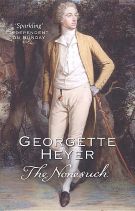
Georgette Heyer, Arabella

Arabella, a vicar’s daughter of no fortune, is eager to embark on her first London Season and hopefully marry a well-to-do man. En route, a carriage accident forces her to beg the help of Robert Beaumaris, one of the ton’s most eligible bachelors. When Arabella overhears Beaumaris complaining that she’s undoubtedly trying to trap him into marriage, she indignantly tells him she’s an heiress and has no need to marry for money. But when the rumor of her alleged fortune reaches London society, Arabella finds she needs Beaumaris’s help after all. This was one of my first Heyers, and it was a pleasure to revisit, although I found myself irritated that Beaumaris had so much more power and knowledge of the situation than Arabella did. But the romance is sweet nonetheless, and a mutt named Ulysses provides some fun comedy. Not a top-tier Heyer for me, but still a very good read!

Betty Neels, No Need to Say Goodbye

Louise Payne is a 26-year-old hospital nurse with three younger siblings to care for, and her salary barely allows them to make ends meet. A lucky inheritance from a distant relative provides the family with a country cottage to live in, where Louise finds that her near neighbor is Dr. Arlo van der Linden, with whom she worked in the London hospital. They were never particularly close before, but now Arlo is being friendly and helpful, even giving Louise a new job. Could he be interested in Louise’s pretty sister, Zoë? And if so, can Louise hide the fact that she’s fallen for Arlo herself? This was a quick read with a soothing, timeless atmosphere – I think it was published in the late ’80s or early ’90s but could have taken place much earlier. It’s a sweet though somewhat one-sided romance; Arlo is pretty high-handed, and we don’ know what’s going on in his mind till the very end of the book. I’ve got one more Neels novel on my shelves, and I’ll save it for the next time I want a quick read that doesn’t require any mental energy.

Mini-Reviews: Viscount’s, Christmas, Deerskin

Louise Allen, The Viscount’s Betrothal

Decima Ross, a spinster at age 27, is sure no man could ever fall in love with her because of her exceptional height. After her brother’s latest insensitive attempt to push her into the arms of an unwilling bachelor, Decima flees, but a snowstorm forces her to seek shelter with Adam, Viscount Grantham. Snowed in with only two servants, Decima and Adam soon grow close; but when they meet again in London, Adam is betrothed to another (beautiful and petite) lady. I’ve really enjoyed some of Allen’s other Regency historicals, but this one was disappointing: anachronistic behavior and dialogue, and characters behaving stupidly for the sake of the plot. I’ll continue to read more by Allen, but this is not one of her best.

Julianna Keyes, It’s Beginning to Look a Lot Like Christmas

Eve and Will are rival writers at the same travel blog, and they’ve both been assigned to cover Noelville, Vermont, during the run-up to Christmas. The problem is, neither one of them is a fan of the holiday season. But as they experience the marvels of the Christmas-themed town—including a nutcracker museum, cookie decorating classes, a moonlit sleigh ride, and more—they’re slowly won over despite themselves, and they also discover a surprising mutual attraction. I enjoyed this little Christmas novella, which feels like a self-aware Hallmark movie. Eve and Will’s snarking about the over-the-top Noelville traditions is the best part of the book, and they have a lot of fun banter. I felt like the romance was missing a scene or two; there’s never really a point at which they express their feelings for each other. But I’d recommend this one if you’re looking for a fun, bite-sized holiday treat.

Robin McKinley, Deerskin

Lissar, the daughter of a beloved king and queen of a prosperous kingdom, has a seemingly charmed life. But apart from her fleethound, Ash, she doesn’t have many friends and tends to be isolated and overlooked. When Lissar is 17, a traumatic event forces her to run away from home, and after a long period of healing, she finds herself in a new kingdom with a job in the royal kennels. As she slowly wins respect and love from those around her, she starts to hope for a better life—until the ghosts of her past trauma come back to haunt her. This book is a retelling of the Perrault fairytale “Donkeyskin,” which I’m not familiar with. But the dark thing that happens to Lissar is truly dark, so proceed with caution. Otherwise, McKinley’s books always seem to have weird pacing—lots of setup and a very short climax—but I don’t mind because she’s such a great writer that she just carries you along. This isn’t one of my top favorites by her, but it’s still well worth reading.

Mini-Reviews: Bride, Beau, Tomb

Mary Balogh, A Christmas Bride / Christmas Beau

In A Christmas Bride, Edgar Downes (brother of Cora from The Famous Heroine) is seeking a wife, but instead of proposing to one of society’s eligible young debutantes, he’s attracted to the scandalous widow Lady Helena Stapleton. Helena is drawn to Edgar as well, but because of certain events in her past (described in A Precious Jewel), she’s full of self-loathing and believes herself unworthy of love. Can Edgar change her mind? Then, in Christmas Beau, Max, the Marquess of Denbigh, is pursuing revenge against Judith Easton, the woman who jilted him eight years ago. He plans to seduce her, then break her heart as she broke his. But as he woos her, he begins to have second thoughts about his scheme.

One thing I admire about Balogh is her willingness to write unusual or unlikable protagonists. Helena and Max both do some objectively terrible things, and while I didn’t fully buy into their redemption arcs (especially Helena’s), I did appreciate their moral complexity. Christmas Beau is the more enjoyable book, in my opinion – A Christmas Bride has too many callbacks to previous novels – but both are pretty good reads. Be warned, both books are also overflowing with sappy depictions of a picture-perfect English country Christmas, complete with adorable children and unreasonably kind and accepting secondary characters. But ’tis the season for that sort of thing, and if you have a high sugar tolerance, you’ll probably enjoy these novels.

Kristen Britain, The High King’s Tomb

After the events of First Rider’s Call, the magical wall that protects the kingdom of Sacoridia from the dark magic of Blackveil is beginning to crumble. To fix it, King Zachary needs an ancient book that will explain the magic necessary to repair the wall, so he sends Karigan along with a rookie Rider to find it. But the acolytes of the evil sorcerer Mornhavon the Black are also after the book, hoping to destroy the wall for good. This continuation of the Green Rider series is, like its predecessors, a solid “classic” fantasy novel. I found it a bit too sprawling—there are a lot of POV characters and at least four different plots going at any one time, and it takes a while for everything to come together. That said, I appreciate the continuity between books and the realism of these characters having lives and problems in addition to the main “defeat the evil sorcerer” plot. My library has the rest of this series, so I’ll most likely continue with it in the new year.