Mini-Reviews: Prim, Reading, Headliners

Awakening of Miss PrimI'd Rather Be ReadingHeadliners

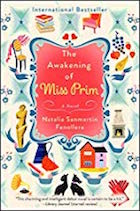
Natalia Sanmartin Fenollera, The Awakening of Miss Prim (trans. Sonia Soto)

This is a strange little novel about a young woman, Prudencia Prim, who applies for a position as a private librarian in a remote French village. A modern woman herself, she is initially shocked by the villagers’ old-fashioned beliefs and behavior. But she soon observes the happiness and prosperity of those around her, and with the help of her enigmatic employer, she comes to see the merits of their way of life. I think this book is aimed at a very particular audience, namely a certain subdivision of Catholics who are huge fans of G.K. Chesterton. If you don’t know what I’m talking about, I’d say this book is probably not for you! Even as part of the target audience, I still found it a little much.

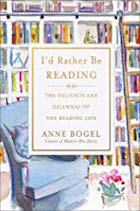
Anne Bogel, I’d Rather Be Reading: The Delights and Dilemmas of the Reading Life

I’m a big fan of Anne Bogel’s podcast, What Should I Read Next? So when I found her book at a library sale, I snatched it up! The essays are fun — nothing particularly new or memorable, but bibliophiles and fans of the author should enjoy them. A fun read, but not a keeper for me.

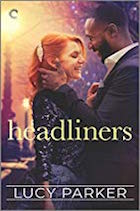
Lucy Parker, Headliners

Lucy Parker is an auto-buy author for me; I really love her contemporary romances set in the London entertainment world. In this one, protagonists Sabrina and Nick are rival TV presenters who are forced to work together to revive their network’s struggling morning show. If you enjoy enemies to lovers, this book is a great example! I especially liked how Sabrina and Nick resolve their conflicts like adults; there are no stupid misunderstandings or secrets kept for no reason. I note that, while this book can technically stand alone, it does refer back frequently to the events of the previous book, The Austen Playbook. Definitely recommended for romance fans, although my favorite Parker books remain her first two, Act Like It and Pretty Face.

Mini-reviews: Henrietta’s, Matrimonial, Austen

Henrietta's WarMatrimonial AdvertisementAusten Escape

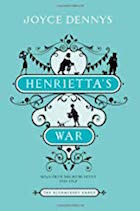
Joyce Dennys, Henrietta’s War: News from the Home Front 1939-1942

I greatly enjoyed this charming epistolary novel, which is both written and set during World War II. The titular Henrietta writes to her childhood friend Robert, who is off fighting somewhere in France, and describes daily life in her rural English village. Despite the constant presence of the war in the background, Henrietta mostly focuses on the mundane, humorous aspects of life. A pleasant and uplifting book.

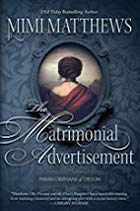
Mimi Matthews, The Matrimonial Advertisement

Last year I read Matthews’s novella, A Holiday by Gaslight, and enjoyed it so much that I wanted to seek out some of her full-length novels. This one, the first in her Parish Orphans of Devon series, is a “proper” Victorian romance (i.e., no explicit content) that centers around a marriage of convenience. Justin needs a wife to manage his remote, secluded estate, and Helena needs a safe place to hide from her past. The book definitely justified my high expectations, and I can’t wait to continue with the series!
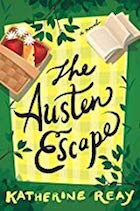
Katherine Reay, The Austen Escape

I’ve read one other book by Reay, Dear Mr. Knightley, and I wasn’t a huge fan. But when I got this novel as a gift, I decided to give the author another chance. Unfortunately, I didn’t like this book either — something about the writing style just grates on my nerves. I also found the heroine obnoxious and unsympathetic, and I have no idea what her love interest saw in her. I was frankly appalled by one major plot point: the heroine’s best friend, who has a history of mental health issues, starts to believe she’s living in Jane Austen’s time…and nobody seems to think this is something that needs immediate medical attention! So all in all, I wasn’t a fan, and I’m pretty sure I’m done with this author.

Review: Sherwood

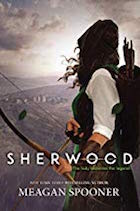
SherwoodMeagan Spooner, Sherwood

This retelling of the Robin Hood legend focuses on the character of Maid Marian. When her fiancé Robin of Locksley dies on crusade, Marian sees it as her duty to protect the people of Locksley from the corrupt Sheriff of Nottingham and his lieutenant, Sir Guy of Gisborne. When her maid Elena’s brother, Will Scarlet, is arrested for poaching, Marian is determined to save him, both for Elena’s sake and for Robin’s. But when she dresses in men’s clothing for her first rescue attempt, she is mistaken for Robin himself. The mistake gives Marian a daring idea: as a woman, she is almost powerless in society and cannot fight back against the corrupt laws that oppress her people. But as “Robin Hood,” she can actually make a difference. As her deception becomes more and more elaborate, she finds herself in increasing danger, especially from the enigmatic Gisborne. She also makes some hard choices as she learns how far she’ll go to protect her secret.

My all-time favorite version of the Robin Hood story is Robin McKinley’s The Outlaws of Sherwood. It’s just always felt true to me in a way that, say, the Errol Flynn movie (much as I enjoy it) doesn’t. To my surprise and delight, Sherwood gave me that same sense of truth from a very different perspective. This version of Marian is strong and independent, but while her heart is in the right place, she tends to act without thinking — a trait that usually irritates me, but it makes total sense for her character. And I love that she grows in this area throughout the novel, as she realizes that her impetuous actions sometimes have unforeseen consequences. Similarly, I love how this book gives some nuance to the Robin Hood legend: are his actions in robbing the rich to give to the poor always justified? Could he have worked within the law instead of deliberately flouting it? Finally, there’s a romance in this book that completely sneaked up on me, and I adored it. In short, I really loved this book; the moment I finished my library copy, I immediately bought one for myself! Highly recommended, especially if (like me) you also enjoyed Hunted.

Review: Would Like to Meet

Would Like to MeetRachel Winters, Would Like to Meet

Evie Summers has been an assistant at a film agency for several years, hoping one day to be promoted to agent. For now, though, her hands are full with the agency’s most important client, a critically acclaimed screenwriter who has been contracted to write a romantic comedy but who keeps missing his deadlines. In an effort to motivate him, Evie proposes an experiment to prove that people can fall in love the way they do in romantic comedies. She’ll use the meet-cute methods of famous romcoms to get someone to fall in love with her, and in return, the screenwriter will deliver his script. Of course, Evie’s various attempts at a meet-cute generally end in disaster; luckily, she has her friends and a sympathetic single dad named Ben to help her out. As she continues to struggle in her career and her love life, she gradually realizes that real love may have been right in front of her all along.

I enjoyed reading this book; it’s a fun, quick page-turner with a satisfying romantic comedy built into it. But I must say, I found a lot of Evie’s decisions frustrating, to say the least! She puts up with incredibly bad treatment from her boss, reasoning that if she just hangs in there a little longer, he’ll eventually promote her — but it’s immediately obvious that he never will. At one point, she seems to be torn between two suitors, but it’s painfully clear that one of them is just using her. There’s a big “twist” near the end of the book involving Evie’s written record of her meet-cutes, but I saw it coming a mile away. Basically, I felt sorry for Evie, but I didn’t have a lot of respect for her because she kept making such terrible choices. Also, I found her friend group a bit stereotypical, including a gay BFF and a super-type-A bridezilla. I did like the romance a lot and almost wish it had been more of a focus in the book. Overall, this is a cute chick lit novel that I’d recommend as a breezy beach or airplane read.

Review: The Element of Fire

Element of FireMartha Wells, The Element of Fire

In a quasi-Renaissance fantasy world, the kingdom of Ile-Rien is in a precarious position. King Roland is young and weak, completely under the thumb of his conniving cousin, who has his own plans for the throne. Roland’s mother Ravenna still wields much of the throne’s power, but her health is deteriorating, and many of those at court (including the evil cousin) are now her enemies. In addition to these domestic intrigues, Ile-Rien is now under threat from a foreign sorcerer, Urbain Grandier, who is rumored to be a powerful and dangerous dark magician. Thomas Boniface, captain of the Queen’s Guard and Ravenna’s former lover, is charged with finding Grandier and thwarting whatever plans he may have against Ile-Rien. Thomas also finds himself dealing with Roland’s half-fay half-sister Kade, who returns to court after a years-long absence with unknown motives. Amid the complex allegiances of the court — in which it soon becomes apparent that at least one traitor is at work — whom, if anyone, can Thomas trust? And when Grandier finally makes his move, will Thomas be able to stop him before it’s too late?

I first read this book in (I think) 2009, and I enjoyed it so much that I bought four other books set in the world of Ile-Rien. But for some reason, I never read any of those sequels, and since it’s been more than a decade, I wanted to refresh my memory of the first book. I’m happy to say that I still really enjoyed it! It strikes me as a quintessential classic fantasy novel, with tons of political intrigue, sorcery, and fay magic thrown in for good measure. I really like that, instead of the quasi-medieval setting of most fantasy novels, this book evokes more of a Renaissance feel, with pistols and gunpowder beginning to supplement (though not yet replace) swords as the dominant weapons. I also liked the main characters a lot, particularly Thomas and Kade. They share a cynical, bantering sense of humor that makes their interactions particularly enjoyable; but when the chips are down, they also share a deep courage and sense of loyalty. The plot is action-packed and exciting, and the world-building is vivid. In short, I’m really glad I reread this one, and I look forward to reading a few more of the Ile-Rien books this year!

Review: Love Lettering

Love LetteringKate Clayborn, Love Lettering

Meg Mackworth, the “Planner of Park Slope,” has a thriving business in which she creates unique, hand-lettered planners, journals, and calendars for her clients. She’s reasonably successful and Instagram-famous, and now a major stationery brand is interested in hiring her, which would be a big step forward in her career — if only she weren’t completely creatively blocked. To make matters worse, Meg is unexpectedly confronted by a professional faux pas she made about a year ago, when she hid the word “mistake” in a wedding program she designed. The would-be groom, Reid Sutherland, noticed the pattern and has sought out Meg looking for answers. An unlikely friendship grows between them as Reid accompanies Meg on various walks around New York City, searching for inspiration in the city’s wealth of hand-lettered signs. But their relationship can only be temporary, since Reid hates the city and plans to move soon. Can Meg convince him to fall in love with New York — and with her — before it’s too late?

I feel I’ve done a horribly inadequate job of describing this book, which is so much more compelling than I’ve made it sound! Most of what I mentioned above is the setup; the meat of the book is the slow development of Meg and Reid’s relationship. It’s a joy to see them fall in love in such a simple, quiet way, without a lot of unnecessary drama or conflict. The book is told exclusively from Meg’s point of view, so the reader gets to know Reid the same way she does, relying on every little comment, look, or gesture to figure out what he’s thinking. Some readers might be annoyed by this, but I actually really liked it! Reid is definitely my type of hero — a bit Darcy-esque in his directness and occasional awkwardness. I will say, I didn’t love the last section of the book, in which a big external conflict suddenly arises to threaten Meg and Reid’s relationship. I couldn’t figure out what purpose it served, other than to provide the obligatory “It almost didn’t work out!” story beat before the ultimate resolution. But overall, I loved this book and resented every time I had to put it down! Definitely recommended for fans of contemporary romance.

Review: Under a Dancing Star

Under a Dancing StarLaura Wood, Under a Dancing Star

In 1930s England, 17-year-old Beatrice Langton longs to be a scientist, but her parents have a different plan in mind for her: because she’s their only child, and they no longer have the money to maintain the estate, she must marry a rich aristocrat and restore the family fortunes. But Bea’s “outrageous” behavior at an ill-fated dinner party gives her life a new direction when her parents decide to send her to her uncle’s home in Italy. Far from being chastised, Bea is thrilled — especially when she arrives in Italy to find that her uncle and his bohemian fiancée are essentially living in an artists’ commune. She is soon enjoying the freedom of her new life, with one exception: one of the artists, Ben, is as argumentative and obnoxious as he is handsome. But when their friends dare them to embark upon a summer romance, Bea reluctantly agrees. If nothing else, it will be an interesting experiment, and she’ll gain some much-desired life experience. But when their pretend relationship becomes all too real, will their very different backgrounds keep them apart?

Much Ado about Nothing is my favorite Shakespeare play, so I’m game to read any and all retellings, especially if they’re set in interesting historical periods! This one takes place in the 1930s, so I couldn’t help but compare it with Speak Easy, Speak Love, which is another Much Ado retelling set in the 1920s. I absolutely adored Speak Easy, Speak Love, and I must admit that this book suffers a bit by comparison. It’s a light, fun read, and I enjoyed the chemistry between Bea and Ben, but to me it lacked the substance of Speak Easy, Speak Love. It’s also not as good a retelling of Much Ado — it focuses on the Beatrice and Benedick story but jettisons the Hero/Claudio plot entirely, merely keeping a few of the character names. I did love the way this book subtly paraphrased some of the most famous lines from the play, rather than quoting them outright; I thought that was a great way to pay homage to the original play while still keeping the language appropriate for the characters’ ages and the time period. Overall, I enjoyed this book and would read more by Laura Wood, but if you’re looking for a YA Much Ado retelling set in the early 20th century, I’d definitely recommend Speak Easy, Speak Love instead!

Review: Miss Grimsley’s Oxford Career

Mrs. Drew Plays Her Hand:Miss Grimsley's Oxford CareerCarla Kelly, Miss Grimsley’s Oxford Career

Miss Ellen Grimsley is the second daughter of a respectable country gentleman, and her destiny is to marry an equally respectable country gentleman and fulfill her womanly duties as wife and mother. But Ellen would much rather be a scholar and an explorer, traveling the world and making maps of far-off places. When her forward-thinking aunt gets her a place at Miss Dignam’s Select Female Academy, in the very town of Oxford, Ellen is thrilled — but she soon discovers that the classes are only in “feminine” subjects like French and embroidery. So when her brother Gordon, who’s flunking his Shakespeare course at Oxford, asks for her help, Ellen can’t resist writing his papers and even dressing as a man to attend lectures at the university. Obviously she can’t continue this charade for long without being caught; but luckily, the person who catches her is the kind and scholarly Jim Gatewood, who encourages her intellectual curiosity and converses with her as an equal. But when Jim professes his love for her and proposes marriage, Ellen is hesitant to give up her dreams, even for love.

Since this book came in the omnibus with Mrs. Drew Plays Her Hand, which I liked, I decided to give this one a try too. Unfortunately, I didn’t enjoy this one quite as much. The plot is rather muddled, and too many of the events strain credibility. For example, how does Ellen manage to fool everyone (or indeed anyone) in her male disguise? The book mentions that Gordon’s tutor is old and practically blind, but were there no other students nearby? Then there’s Ellen’s roommate, Fanny Bland, who is sometimes cruel and sometimes kind, without any real explanation for these fluctuating moods. Finally, the central conflict between Ellen and Jim seems to come down to Ellen’s own obtuseness. Despite her affection for, friendship with, and attraction to Jim, she refuses to see that she’s in love with him and turns down his repeated proposals of marriage. Near the very end of the book, there’s a hint that Ellen turns him down because she fears giving up her dreams of an independent life. That would have been a more interesting conflict to explore, but the book doesn’t dig into it at all, merely giving Ellen an abrupt change of heart just before the novel ends. Overall, a disappointing read — but at least I was able to finish it before the end of the year!

Review: Mrs. Drew Plays Her Hand

Mrs. Drew Plays Her Hand:Miss Grimsley's Oxford CareerCarla Kelly, Mrs. Drew Plays Her Hand

Roxanna Drew is at the end of her rope. After the death of her husband the vicar, she must find a new home for herself and her two young daughters. Her late husband’s brother is willing to provide this home, but only if she agrees to become his mistress. Revolted by the suggestion, Roxanna decides to rent the dower house of a nearby estate instead, but her brother-in-law’s nefarious schemes are far from over. Meanwhile, the estate’s owner, Fletcher Rand, Lord Winn, has problems of his own. He is shunned by most of society because he publicly divorced his wife after discovering her many infidelities. His family urges him to marry again and produce an heir, but Winn is reluctant to trust another woman — that is, until he meets Roxanna while on a tour of his estates. Winn is immediately attracted to her and quickly befriends both herself and her children. But when circumstances force them into a marriage of convenience, they must learn whether they can truly rely on each other.

As I’ve become more familiar with the romance genre, I’ve encountered Carla Kelly’s name multiple times as a respected author of traditional Regencies, and this particular novel is often praised as one of her best. I wasn’t quite as impressed as I wanted to be, but I did enjoy this book very much and have already begun another of Kelly’s novels. Both Roxanna and Winn struck me as mature adults who are doing their best in their respective difficult situations. I especially liked Winn because, while he’s slightly curmudgeonly at first, he’s not brooding or selfish like many other romance heroes. He shows his love for Roxanna by always putting her and her family’s needs before his own, but his sense of humor keeps him from being annoyingly perfect. There’s not much plot beyond the initial setup, and I found the writing style a bit clunky and some of the dialogue anachronistic. I also wasn’t convinced by the evil brother-in-law’s repentance in the end. But overall, I did like this one and will definitely read more by the author.

Review: Snowspelled

SnowspelledStephanie Burgis, Snowspelled

In a fantasy world analogous to 19th-century England, upper-class men are expected to be magicians, while upper-class women are destined to be politicians. But Cassandra Harwood has always had a thirst for magic, and her passionate determination got her all the way to the Great Library, the premier training ground for young magicians. She even found love there with the equally passionate and hardworking Wrexham. But a spell gone horribly wrong has deprived Cassandra of her ability to cast magic, not to mention her social standing and her fiancé. Now, four months after this tragic incident, Cassandra is snowed in at a house party with the high-society people she’s been trying to avoid, including her ex-fiancé. To make matters worse, the snowstorm seems to be magical in origin, and Cassandra is tricked into making a bargain with an arrogant elf-lord to discover who is causing it. If she fails, the consequences will be dire for both herself and her nation, as the age-old treaty between humans and elves will be broken. Can Cassandra discover the culprit and sort out her personal life before it’s too late?

I’ve read and enjoyed books by Stephanie Burgis before, and I’m a sucker for anything that can be described as “Jane Austen plus magic,” so this novella seemed right up my alley. And I did enjoy it overall, but now I find myself remembering more of its flaws. I think the main problem, for me, was the heroine. Cassandra is one of those protagonists who is incredibly stubborn, convinced of her own rightness, and unwilling to compromise. All of her problems in the story are of her own making, particularly the mess of her relationship with Wrexham. I did like Wrexham, and I enjoyed the banter between them, but it frustrated me that they’re both such poor communicators, especially since they were once engaged to each other. Cassandra does grow and change in the course of the story, but it was too little, too late for me. Also, as with many novellas, the short length doesn’t leave much room for nuance in the plot or characters. The world of the story is interesting, and I actually wouldn’t mind reading a full-length novel in this setting, but I feel like I didn’t get to see enough of the world. All in all, I’m not giving up on this author, but I think I’ll stick to her full-length novels instead.