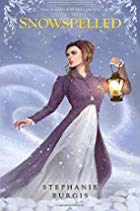
Review: Snowspelled

SnowspelledStephanie Burgis, Snowspelled

In a fantasy world analogous to 19th-century England, upper-class men are expected to be magicians, while upper-class women are destined to be politicians. But Cassandra Harwood has always had a thirst for magic, and her passionate determination got her all the way to the Great Library, the premier training ground for young magicians. She even found love there with the equally passionate and hardworking Wrexham. But a spell gone horribly wrong has deprived Cassandra of her ability to cast magic, not to mention her social standing and her fiancé. Now, four months after this tragic incident, Cassandra is snowed in at a house party with the high-society people she’s been trying to avoid, including her ex-fiancé. To make matters worse, the snowstorm seems to be magical in origin, and Cassandra is tricked into making a bargain with an arrogant elf-lord to discover who is causing it. If she fails, the consequences will be dire for both herself and her nation, as the age-old treaty between humans and elves will be broken. Can Cassandra discover the culprit and sort out her personal life before it’s too late?

I’ve read and enjoyed books by Stephanie Burgis before, and I’m a sucker for anything that can be described as “Jane Austen plus magic,” so this novella seemed right up my alley. And I did enjoy it overall, but now I find myself remembering more of its flaws. I think the main problem, for me, was the heroine. Cassandra is one of those protagonists who is incredibly stubborn, convinced of her own rightness, and unwilling to compromise. All of her problems in the story are of her own making, particularly the mess of her relationship with Wrexham. I did like Wrexham, and I enjoyed the banter between them, but it frustrated me that they’re both such poor communicators, especially since they were once engaged to each other. Cassandra does grow and change in the course of the story, but it was too little, too late for me. Also, as with many novellas, the short length doesn’t leave much room for nuance in the plot or characters. The world of the story is interesting, and I actually wouldn’t mind reading a full-length novel in this setting, but I feel like I didn’t get to see enough of the world. All in all, I’m not giving up on this author, but I think I’ll stick to her full-length novels instead.

Review: A Summer to Remember

Summer to RememberMary Balogh, A Summer to Remember

Kit Butler, Viscount Ravensberg, was once a respectable army officer, but now he’s one of London’s most notorious rakes. His father wants him to come home, accept his responsibilities as heir, and marry the woman his family has chosen for him. Kit rebels from this fate and decides to choose his own wife; but she must be so thoroughly respectable that his family couldn’t possibly object to her. Lauren Edgeworth fits the bill nicely: she’s not only beautiful but a perfectly proper lady. She finds Kit’s behavior shocking, yet she’s also intrigued by his mischievous attempts to provoke her. She won’t consent to a real marriage — ever since she was left at the altar a year ago, she’s been determined to remain a spinster — but eventually she agrees to a fake engagement. She’ll accompany Kit to his home and help to heal the estrangement between him and his family. But in return, she wants a summer to remember. Of course, the longer Kit and Lauren spend together, the fonder they grow of each other. But their love may not be enough to overcome past wounds and present insecurities.

Mary Balogh has quickly become one of my go-to historical romance authors, but I must confess that I didn’t love this book quite as much as some of her others. I think it’s largely because I didn’t find Kit remotely charming or fun in the beginning; rather, I thought he was pushing Lauren out of her comfort zone far too aggressively, almost to the point of harassing her. Balogh does course-correct fairly early in the novel, making Kit realize that he’s been treating Lauren as an object rather than as a fellow human being, but I felt that the transition was abrupt and the motivation for the change was unclear. The premise of the book is a bit thin as well — I didn’t understand what Lauren was actually hoping to get out of her summer with Kit, given that she was planning to live in Bath as a spinster afterwards. However, I liked that both characters are dealing with a lot of emotional pain, but they react in completely opposite ways, Lauren by adhering strictly to society’s rules and Kit by breaking them altogether. So I did warm up to both main characters eventually, and I ended up enjoying this opposites-attract romance quite a bit. I’ll definitely continue to read more by Balogh!

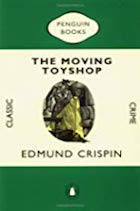
Review: The Moving Toyshop

Moving ToyshopEdmund Crispin, The Moving Toyshop

On holiday in Oxford, poet Richard Cadogan stumbles upon a perplexing mystery. Arriving in town late at night, he blunders into a toyshop (the front door being mysteriously unlocked) and discovers a corpse in the flat upstairs. Before he can do much more than ascertain that the old woman is really dead, someone hits him from behind and knocks him out. When he comes to, Cadogan escapes and rushes to tell the police about the murder. But when he leads the policemen back to the scene of the crime, the toyshop is gone. In its place is a grocer that has obviously been there for years. Of course, the police think that Cadogan is crazy, and they won’t investigate a murder without a body. Luckily, Cadogan is acquainted with Gervase Fen, an Oxford don who moonlights as an amateur detective. Together, Fen and Cadogan investigate the mystery and uncover a murderous conspiracy, as well as discovering what happened to the moving toyshop.

This is a fun romp of an English Golden Age mystery, with just enough Oxford detail to please fans of academic mysteries. But despite the fact that it’s probably Crispin’s most famous novel, several aspects of it didn’t work for me. First, I can’t figure out Gervase Fen as a character: he’s supposed to be about 40 and lean, but his dialogue (especially the constant exclamations of “Oh, my dear paws!” and “Oh, my fur and whiskers!”) makes me picture a much older and larger man. Also, he’s rude about Jane Austen, which is an automatic strike against him in my book! Then there’s the issue of pacing. The story starts off strong, but it seems like most of the mystery is solved with about one-third of the book still to go. Finally, it seemed like the novel was setting up a romance for Cadogan, but nothing ever came of it, which I found confusing and disappointing. Still, I did enjoy the novel’s light tone overall, as well as the Oxford setting. I’d consider reading more by Crispin, but I think I’ll have to go in with moderate expectations.

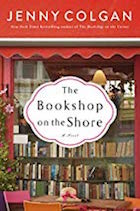
Review: The Bookshop on the Shore

Bookshop on the ShoreJenny Colgan, The Bookshop on the Shore

Single mom Zoe is at the end of her rope. She adores her four-year-old son, Hari, but is concerned that he still hasn’t started talking; he’s silent even when he cries. Zoe is also struggling financially, and Hari’s father Jaz is too busy chasing his dream of being a DJ to help out with child support. Fortunately, Jaz’s sister Surinder has a solution: her friend Nina needs help with her mobile bookshop in the Scottish highlands, and there’s also a live-in nanny position that Zoe could take to supplement her income and have a place to stay. Desperate, Zoe agrees, but she soon finds that both jobs are more difficult than she’d anticipated. Nina has very specific ideas about the right way to run the bookmobile, and some of Zoe’s innovations don’t go over very well. And at the “big house” where Zoe is to be the new nanny, she finds three out-of-control children who don’t want to listen to her, while their single father Ramsey seems to be totally disconnected from his children’s lives. The longer Zoe perseveres, however, the more successful she becomes, and the more she grows to love her new life. But when Jaz suddenly reenters the picture, she must decide where she truly belongs.

I’ve come to rely on Jenny Colgan for sweet, uplifting books with a hint of romance, and this book delivers on all fronts. It’s sort of a sequel to The Bookshop on the Corner, which focuses on Nina and the opening of her mobile bookshop, but it can be read as a stand-alone. I was in Zoe’s corner from the opening scene, where she’s sitting in a doctor’s office and describing all the times she cries in a given week. I was immediately hoping for good things to happen to her and excited to watch her overcome the various obstacles in her path. She’s a very likable heroine, hardworking and determined to do her best in any given situation. Sure, the actual plot isn’t terribly believable, nor is it unique; of course Zoe will eventually win over the difficult children and find her way to professional and romantic success. I also thought the precocious youngest child was completely implausible, but he was so entertaining that I didn’t mind. I should note that there is some depiction of mental illness in the book (including self-harm), which seems a bit dark for the overall tone of the novel. Nevertheless, I enjoyed this one a lot and look forward to my next Colgan book.

Review: Call Down the Hawk

Call Down the HawkMaggie Stiefvater, Call Down the Hawk

Ronan Lynch is a dreamer, someone who’s able to take objects from his dreams into the waking world. But lately he’s been having trouble with his dreams: he can’t always control what he brings back, and he’s unable to stay away from his home (near a ley line in Virginia) for any length of time. So when he encounters someone else in his dreams, another dreamer who calls himself Bryde, he’s eager to learn more — even though everyone else in his life warns him it’s incredibly dangerous. Meanwhile, Jordan Hennessy is an art forger on a mission to steal a particular painting that just so happens to have been dreamt by Ronan’s father. But complications ensue when her mission brings her into contact with Declan Lynch, Ronan’s uptight and seemingly boring older brother. And then there’s Carmen Farooq-Lane, who is part of a government agency tasked with finding and killing dreamers, because the agency believes a dreamer will cause the end of the world. But the more she learns about the agency’s agenda and tactics, the more she questions her role.

This book is set in the same world as the Raven Cycle, and while it is technically a stand-alone, I really think having the background from TRC is helpful for understanding the world of the novel and the characters of the Lynch brothers in particular. At the same time, I think fans of TRC might be disappointed by how little the other characters from that series appear. Adam is in a few scenes, but Gansey and Blue only appear briefly via text message. So I’m not quite sure who this book is for, if that makes sense; it seems like it would fall short for both newbies and TRC fans. Also, there’s a lot going on in this book, and I’m not sure it all works; the disparate stories take a long time to converge, and before they do, it can be tedious and confusing to figure out what’s going on. I did really like Declan’s story in this book; he was an intriguing character in the Raven Cycle, and I was glad to see more development for him here. But the Carmen sections particularly dragged and didn’t seem necessary for the plot. Of course, this is the first book in a projected trilogy, so maybe she’ll become more integral later on. But I should say that, while there’s no cliffhanger per se, the main plot lines are not resolved in this book. I’ll most likely continue with the trilogy to find out what happens, but so far I’m not enjoying it as much as the Raven Cycle.

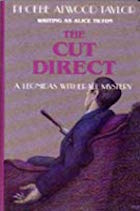
Review: The Cut Direct

Cut Direct.jpgAlice Tilton, The Cut Direct

Leonidas Witherall, a retired professor at a boys’ school, can’t imagine why anyone would want to murder him; but within the first few chapters of this book, he is twice run over by a car. The perpetrator looks like one of Witherall’s former pupils, an unpleasant young man named Bennington Brett. But when Witherall regains consciousness after the second vehicular assault, he wakes up in a chair across from Brett’s corpse. Concerned that he’ll be the number-one suspect if he calls the police, Witherall decides that the only available course of action is to solve the murder himself. Along the way, he accumulates a motley crew of assistants, including a drinking pal of Bennington’s, the Brett household’s beautiful secretary, a mobster and his girlfriend, and the kindly widow next door — whose brother just happens to be the local chief of police. Of course, Witherall’s attempts to investigate are hampered by the fact that his description is all over the police reports and the newspapers. As his efforts to evade capture become ever more farcical, he slowly begins to piece the mystery together.

This second book in the Witherall series is just as much madcap fun as the first book, Beginning with a Bash. The book is light, breezy, and full of delicious banter; it reminds me of the great screwball comedies of the 1930s, and I really wish someone would adapt the series for television. The opening chapters of the book are a little bewildering because Witherall himself doesn’t know what has happened to him, but it’s actually pretty easy to follow all the strands of the somewhat convoluted plot. As a mystery, I’m not sure it’s entirely successful; some aspects of the solution aren’t fair play, although I think astute readers will spot the culprit fairly quickly. But the characters, the dialogue, and the humor more than make up for any plot deficiencies. I especially loved Mrs. Price, the thoroughly respectable widow who wholeheartedly embraces Witherall’s schemes, even going so far as to use police resources to help him out of various difficulties. In short, this book (and, so far, the series) is a delight, especially for fans of movies like His Girl Friday and Bringing Up Baby.

Review: Aurora Blazing

Aurora BlazingJessie Mihalik, Aurora Blazing

Bianca von Hasenberg, a daughter of one of the three High Houses in the Consortium (an interplanetary governing body), adopts the public persona of an empty-headed space princess. But she’s actually an extremely gifted intelligence-gatherer with a wide network of informants, usually women she has quietly rescued from bad domestic situations. Thanks to the illicit experiments of her late husband, Gregory, Bianca also has the ability to detect and decode nearly any message sent via technology, no matter how complex its encryption. So when Bianca’s brother Ferdinand — the heir to House von Hasenberg — is kidnapped, she feels compelled to use her expertise to save him. But Ian Bishop, House von Hasenberg’s head of security, is determined to protect Bianca by refusing to let her participate in the investigation. Bianca doesn’t take his orders lying down, however, and soon she’s on the run with an angry, and infuriatingly attractive, Ian in hot pursuit. Eventually, they realize that they will accomplish more by working together, but their fragile trust may not survive all the dangerous ordeals that await them.

I enjoyed the first book in this series, Polaris Rising, and was excited for this sequel, which seemed like it would contain more of my favorite romance tropes—forced proximity, enemies to lovers, grumpy hero, and so on. But while those tropes do exist in the book, they fell flat for me, mostly because the romance definitely takes a backseat to the external plot in this book. It’s almost the halfway point before Bianca and Ian end up on the same spaceship, and even then, there isn’t very much development of their relationship. The turn from enemies to lovers seems very abrupt, and Ian’s shift in demeanor was particularly jarring to me. The character development is clumsy; Bianca and Ian each get a scene where one explains a tragic incident in his/her past to the other, but that’s it. It all feels very rote. I wanted more about Ian’s past, especially how he was able to become the head of House von Hasenberg security before age 30, and I think Bianca’s disastrous marriage should have been explored in more depth too. Plot-wise, there’s plenty of action, as well as fun tech discussions if you’re into that sort of thing. But overall, I’m pretty “meh” on this book. I will probably still read the third one when it comes out next year, though!

Review: The Spider’s Touch

Spider's TouchPatricia Wynn, The Spider’s Touch

***Warning: SPOILERS for The Birth of Blue Satan.***

This second book in the Blue Satan and Mrs. Kean series picks up shortly after the first one left off. Gideon, Viscount St. Mars, is accused of his father’s murder and, though innocent, has fled to France. There he is approached by supporters of James Stuart and asked to aid the Jacobite cause by returning to England and assessing whether the people would rise up to overthrow George I and restore the Stuart dynasty to the English throne. Gideon is reluctant to embrace the Jacobite cause wholeheartedly, but he agrees to the mission. Meanwhile, Hester Kean is living with her cousin Isabella and the rest of her family, who are trying to ingratiate themselves at George I’s court. However, the family unwittingly becomes close with a number of Jacobite spies and sympathizers. When Gideon returns to England and sees Hester’s plight, he is determined to protect her. And when one of Hester’s Jacobite acquaintances is murdered during an opera performance, she and Gideon team up to solve the mystery.

I don’t know why more novels aren’t set during the early 18th century, when the conflict between Hanover supporters and Jacobites provides such a compelling conflict and backdrop for dramatic action! So I’m very glad that this series exists, and I enjoyed this second installment very much. It had been a few years since I’d read the first book, but Wynn does a good job of catching up readers and reminding them of the most important plot points. I also appreciated the historical note at the very beginning of the book, which provides some much-needed context for the events of the novel. As for the book itself, I really like both Gideon and Hester as characters, and I especially like how Hester’s role (though necessarily a bit more passive, because she’s both a woman and a dependent) is just as vital as Gideon’s. The book starts out slowly because it follows each of them in turn, but it picks up once they start sharing scenes together. I’m definitely here for the inevitable romance! The mystery plot is probably the weakest element, as the culprit is fairly obvious, and I felt it was an uncreative way to resolve that character’s arc. Still, I really liked this book and will definitely continue with the series!

Review: Graceling

GracelingKristin Cashore, Graceling

Throughout the Seven Kingdoms, some individuals have superhuman powers known as Graces. A person’s Grace might be harmless or even useful, such as the ability to swim incredibly fast or to easily perform complex mathematics. But even those Graced with these benign abilities are viewed with suspicion and fear. Katsa, the niece of King Randa, is Graced with superhuman strength, which means that Randa uses her as a threat and a punishment to anyone who crosses him. Katsa hates being used to harm innocent people, and she has begun to fight back by forming a secret Council to rescue those whom Randa seeks to hurt. In the course of one of the Council’s missions, Katsa meets Po, a prince of a nearby kingdom who is Graced with fighting. As they become closer, Po encourages Katsa to stand up for herself at Randa’s court. The two of them also encounter a mysterious plot that sends them on a journey to the farthest reaches of the Seven Kingdoms, where they discover a king hiding a terrible Grace.

I bought this book when it first came out (10+ years ago!) because there was so much good buzz surrounding it; now I finally understand what the fuss was about! I found this book an enjoyable and compelling read. Katsa is a somewhat typical “strong female heroine,” but she’s saved from being too perfect because her Grace is powerless against the Grace of the book’s villain. I liked her stubbornness and independence, and I liked that she was nowhere near as emotionally fluent as the hero. Po is a dream of a love interest; not only is he handsome and able to fight Katsa as an equal, but he also truly respects her and doesn’t try to change her, even when she’s at her most frustrating. My biggest complaint with the book is that the pacing is odd. It almost seems like three different books — one at Randa’s court, another during Katsa and Po’s journey, and a third about the final showdown with the evil king. Personally, I was most interested in the first section, and I would have liked to read an entire novel about the Council and how Katsa finally gets the courage to stand up to Randa. Nevertheless, I would definitely recommend this book to YA fantasy fans!

Review: Murder Has a Motive

Murder Has a MotiveFrancis Duncan, Murder Has a Motive

When retired tobacconist Mordecai Tremaine accepts an invitation to visit his friends Paul and Jean Russell in the quaint village of Dalmering, he has no idea that he’ll shortly be called upon to use his skills as an amateur detective. But the day before he arrives in town, a local woman named Lydia Dare is found stabbed to death on the path that leads to her cottage. Mordecai’s friends ask him to help solve the murder, and he is more than willing to do so, especially when he learns that his friend Inspector Boyce is the Scotland Yard man in charge of the case. As Mordecai gets to know Lydia’s friends and neighbors, it seems that all the clues are pointing toward Martin Vaughan, an old friend of Lydia’s who was in love with her, even though she’d just gotten engaged to another man. But Mordecai is unconvinced, and as he continues to search for more suspects, the killer has ample opportunity to strike again.

I’ve read one other book featuring Mordecai Tremaine, Murder for Christmas, and I find my feelings about this book are the same: it’s an interesting, competently written Golden Age mystery, but not particularly groundbreaking or unique. I like Mordecai; he doesn’t have the theatrical idiosyncrasies of Poirot, but rather is kind and unassuming, preferring to fade into the background most of the time. I also really liked Inspector Boyce, and the conversations between him and Mordecai were my favorite scenes in the book. I felt that most of the other characters were pretty flat; they all seemed to be more stock characters than nuanced individuals. The mystery is clever and (I think) plays fair; I even spotted a pivotal clue, though I didn’t follow it to its logical conclusion. I’m not entirely sure I buy the murderer’s psychology, but I’m willing to suspend my disbelief. Overall, I like Francis Duncan and am glad I have a couple more of his books on my shelves, but I can see why he never became as popular as, say, Agatha Christie.