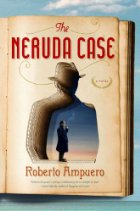
Review: The Neruda Case

Neruda Case, TheRoberto Ampuero, The Neruda Case (trans. Carolina De Robertis)

Cayetano Brulé, one of the most respected private investigators in Valparaíso, is on his way to meet a prospective client when he stops at a restaurant for lunch. When he opens the menu, he sees a photograph of Pablo Neruda and immediately recalls his first case as a detective, in which his client was the Nobel laureate himself. Suddenly it’s 1973, and Cayetano (a Cuban by birth) is somewhat adrift in his adopted homeland of Chile. At a political party with his wife, Cayetano meets Neruda for the first time, and they soon strike up a conversation. Later, Neruda invites Cayetano to his home and makes a surprising request: he wants Cayetano to find a missing person, a doctor whom Neruda knew many years ago. Cayetano’s search takes him to Mexico City, Havana, and even East Berlin, and he eventually learns that Neruda’s desire to find the doctor is not as straightforward as it seems. Meanwhile, Chile is also experiencing a period of upheaval, as Salvador Allende’s Marxist government is succeeded by the dictatorship of Pinochet.

This novel attempts to do many different things, with mixed results. As a mystery, I think it falls flat; there is no real urgency to Cayetano’s search, and the results of his investigation ultimately don’t matter very much to the story. The book is more successful at painting a portrait of Pablo Neruda at the end of his life. I feel like I got a sense of his personality and his importance to Chile as a political figure. Best of all, this book does a wonderful job of depicting the political situation in Chile at the time and relating it to the wider issue of global politics. It’s no coincidence that Cayetano mostly visits Communist countries, in an era dominated by the Cold War and the ideological conflicts between socialism and capitalism. The novel is definitely not neutral on this subject; both Cayetano and Neruda favor Allende’s government, while Cayetano condemns his wife’s more radical Communism. Overall, I was fascinated by the setting much more than I was by the story. So I’m glad I read this book, but I won’t be seeking out any more installments of the series.

Review: Murder at the Brightwell

Murder at the BrightwellAshley Weaver, Murder at the Brightwell

Amory Ames and her husband Milo are having marital difficulties. They met just a few years ago and married quickly after a whirlwind romance. But now Milo is spending most of his time in various fashionable European cities — and gaining quite a reputation as a playboy — while Amory sits at home. Then one day Amory receives a visit from Gil Trent, a longtime friend and former fiancé, who needs her help: Gil’s sister has just gotten engaged to a thoroughly unsuitable man, and Gil hopes that Amory can persuade her not to go through with the wedding. Intrigued by Gil’s reappearance in her life, and angry at her husband, Amory agrees to help. She accompanies Gil to the fashionable Brightwell hotel, where Gil’s sister, her fiancé, and a small group of friends have gathered. But Amory gets more than she bargained for when the fiancé is murdered, and the culprit must be someone she knows….

This is one of those books that you’ll enjoy if the summary sounds interesting to you. I really like traditional English mysteries set in the first half of the 20th century, and this novel is a solid addition to that tradition. Amory is a likeable narrator and protagonist, and even though her amateur sleuthing seems a bit unnecessary (given the presence of a competent police inspector on the case), at least she’s not obnoxious or too stupid to live. The mystery plot is reasonably satisfying; it’s not particularly original or shocking, but the killer’s identity did surprise me. There’s a strong romantic subplot in the novel as well, as Amory must choose between Gil and Milo. I’m a fan of romance in my fiction, so I enjoyed this plotline, although I was never really in any doubt about whom Amory would choose. All in all, I enjoyed the book and would certainly read a sequel if one materializes.

N.B. I received an ARC of this novel at Book Expo America. The US publication date, per Amazon, is October 14.

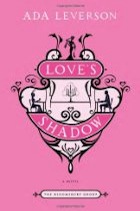
Review: Love’s Shadow

Love's ShadowAda Leverson, Love’s Shadow

Edith Ottley, a pretty and intelligent young woman, has begun to be bored with her life. Her husband Bruce is pompous, condescending, and unaware of his intellectual inferiority to his wife. Edith’s only solace is the companionship of her friend Hyacinth Verney, a young heiress who is living a dashing and unconventional life in London. Hyacinth has just begun to explore the possibility of getting married, and she is strongly attracted to the handsome but aloof Cecil Reeve. But Cecil, in turn, is hopelessly in love with a widow ten years his senior, although she doesn’t return his affections. In short, this novel is a comedy of manners about a social circle in which everyone is in love with the wrong person. Amidst all their tangled romances and unrequited loves, can any of the characters find true happiness?

I read this novel a couple weeks ago, and I find that I don’t have much to say about it now. The book is quite witty in places, and some of the situations and characters strongly reminded me of Jane Austen. (Bruce Ottley, for example, is a slightly more sympathetic Mr. Collins if ever there was one — which makes me wonder why Edith married him in the first place!) But this book never really goes below the surface or allows the reader to sympathize with any of the characters. All the conflicts in the book came across as trivial to me, and in the end I didn’t much care how all the various romances resolved. If you enjoy stylish, witty comedies of manners, you’ll find something to enjoy in this novel; but if you need a strong plot or sympathetic characters, you’ll end up feeling frustrated, as I did.

Review: Do Androids Dream of Electric Sheep?

Do Androids Dream of Electric Sheep?Philip K. Dick, Do Androids Dream of Electric Sheep?

Sometime in the early 21st century, World War Terminus has resulted in widespread destruction and nuclear fallout, so everyone who can afford it has emigrated to Mars. To help these emigrants establish a new civilization, androids were created to be servants and laborers. As time went on, the androids became more sophisticated until they were virtually indistinguishable from humans — except for a complete lack of empathy. Now some of these androids have returned to Earth, where their presence is illegal, and policeman Rick Deckard is charged with hunting them down and “retiring” them. In fact, he is authorized to kill them on sight; but as he pursues the rogue androids, he must confront his own feelings and beliefs, including what it means to be human.

When I started this book, I was expecting the main issue to be the nature of the androids themselves: If they have the same intelligence and (mostly) the same emotions as humans, aren’t they also human? But oddly enough, the book leaves no doubt on this issue — the androids are not human, and Rick Deckard’s struggle with this fact gets him into trouble on several occasions. Even though the androids are machines, Deckard can’t help but see them as human beings, due to his own empathetic response. He feels pity for them, recognizes their contributions to society, and even falls in love with one of them. Ultimately, the real issue of the book is not the humanity of the androids, but rather the humanity of the humans: Can Deckard do his job and still retain his humanity? As such, I found the book a fascinating read, even though it wasn’t quite what I expected.

Blade Runner final cutAfter reading this book, I decided to rent the movie “Blade Runner” so that I could compare and contrast the film adaptation with the original. Basically, the movie is VERY different from the book, and I was bewildered by most of the changes. The movie is visually stunning — I loved the vision of a post-apocalyptic Los Angeles — but I just didn’t understand Deckard’s relationships with the androids in the movie at all. It’s hard to say more without spoiling, but let me just say that the final confrontation scene goes VERY differently in the movie versus the book. The movie also suggests (and Ridley Scott confirmed that this was his intention) that Deckard himself is an android, which is 100% NOT the case in the book. So while “Blade Runner” is an interesting movie in its own right, it’s definitely not a faithful adaptation of the book!

Review: The Shadow of the Wind

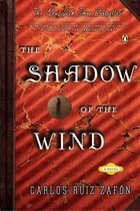
Shadow of the Wind, TheCarlos Ruiz Zafón, The Shadow of the Wind (trans. Lucia Graves)

When Daniel Sempere is ten years old, his father takes him to the Cemetery of Forgotten Books for the first time. There he must choose one book that calls to him, and it will be his job to protect it forever. Daniel chooses a novel called The Shadow of the Wind by Julián Carax, unaware that this simple decision will alter the entire course of his life. Daniel reads the book and loves it, so he tries to find other novels by Carax, only to discover that there are none. Someone is systematically destroying every copy of every book Julián Carax ever wrote, and he is calling himself Laín Coubert, one of Carax’s names for the devil. As Daniel comes of age in mid-20th-century Barcelona, he makes it his mission to discover who is destroying Carax’s books and why. His quest leads him to a long-buried secret involving friendship, passion, madness, and true love. But the more deeply Daniel digs into Carax’s mysterious background, the more he discovers parallels to his own life, and the more danger he finds himself in.

This is one of those books that just didn’t grab me, for some reason. I found myself able to put it down for days at a time, and when I finally did power through it, my mind kept wandering. But I don’t quite understand why, becasue I honestly liked a lot of things about this book! First of all, I’m now dying to visit Barcelona because of the vivid descriptions of its streets, neighborhoods, and restaurants. I also enjoyed the almost Dickensian depictions of the secondary characters, like this one:

His mouth was glued to a half-smoked cigar that seemed to grow out of his mustache. It was hard to tell whether he was asleep or awake, because he breathed like most people snore.

The plot is fairly melodramatic, but it’s undeniably interesting and full of event. Maybe I was a bit put off by the staggering number of coincidences connecting Daniel’s story to Carax’s, or maybe I didn’t like the portrayal of the female characters (who are basically nothing more than male fantasies). Ultimately, I just didn’t connect that much to the story or characters, so it was an effort for me to finish the book.

Review: Somewhere in France

Somewhere in FranceJennifer Robson, Somewhere in France

Lady Elizabeth Neville-Ashford, known to friends and family as Lilly, has always felt stifled by her privileged upbringing. Though she’d like to go to university and embark on a career, it seems her only task in life will be to snare a rich, titled husband. Unfortunately, the only man to catch her eye is Robbie Frasier, a promising young surgeon whom her parents consider quite unsuitable. But with the outbreak of World War I, Lilly suddenly has access to a variety of new opportunities. Hoping to help with the war effort, she learns how to drive and eventually applies to the Women’s Army Auxiliary Corps, where she becomes an ambulance driver. Meanwhile, she carries on a clandestine correspondence with Robbie, who is working in a field hospital in France. When she and her colleagues are offered a chance to transport injured soldiers from the front lines, Lilly jumps at the chance to be reunited with Robbie. But will the tragic violence of this war ultimately separate them forever?

I picked up this book because I wanted to read something set in World War I for the centennial, but I wasn’t in the mood for something incredibly dark or depressing. Unfortunately, this book goes too far in the other direction; it’s a light, pleasant romance, but the World War I setting is a mere backdrop. I don’t need to read about the horrors of war in graphic detail, but I do want to feel that the characters are in real danger, that they must struggle against real obstacles, and that the war has left some kind of mark on them. Instead, even the descriptions of what Robbie sees on his makeshift operating table are bland, evoking no emotional response whatsoever. Part of the problem is that Lilly and Robbie are both such clichés: she is the naive and enthusiastic upper-class heroine, while he is the overprotective self-made hero. I just didn’t really care about either character, so I wasn’t invested in their romance at all. I was more interested in the secondary characters, Lilly’s brother Edward and her friend Charlotte — I’d love to read the story of their romance! Overall, this book isn’t a bad read, but it is completely and utterly forgettable.

Review: Farthing

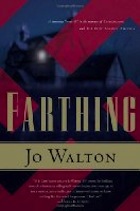
FarthingJo Walton, Farthing

This novel is a murder mystery with a twist: what if a fascist English government had made a separate peace with Hitler? In the world of this book, it’s 1949, and war still rages between the Third Reich (which now encompasses all of Europe) and the Soviet Union, but England has managed to remain at peace. The “Farthing set,” who engineered the treaty with Hitler, have congregated at an English country estate, where Lucy (the daughter of the house) and her husband David are staying. Because David is Jewish, they both endure various snubs and cruelties from the other guests. Then a notable member of the Farthing set is murdered, and his corpse is decorated with Jewish symbols. Lucy is convinced that her husband has been framed, and Inspector Carmichael of Scotland Yard agrees. But as the English government becomes more totalitarian and anti-Semitic, both Lucy and Carmichael must make devastating choices that could allow the murderer to go free.

This book was unsettling, to say the least, and I have very conflicting feelings about it. Part of the story is told from Lucy’s perspective, and I really enjoyed her character and her narrative voice. I also think the book very skillfully depicts a nation’s slow slide into despotism; one of the most heartbreaking and effective parts of the book, for me, was David’s strong faith in England. Despite the hardships he endures, he is convinced that Jews will never be persecuted in England the way they are in the Reich…but of course, events in the book ultimately prove him wrong. On the negative side, the “mystery” element of the book is very underdeveloped. I also became irritated by the sheer number of secret, illicit, and/or adulterous relationships in the book; it seemed like EVERY character was involved, which strained my credulity. (Also, everyone seems to have really good “gaydar,” if you’ll pardon the expression!) Overall, I’m not sure the positives outweighed the negatives for me, and I’m still undecided about continuing with the series.

Review: Water for Elephants

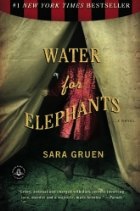
Water for ElephantsSara Gruen, Water for Elephants

Jacob Jankowski is an old man in his 90s living out the remainder of his days in a nursing home. His children rarely come to visit, and he’s both lonely and frustrated by nursing home life. But when the circus comes to town one day, it triggers Jacob’s memories of his youth and the years he spent with the Benzini Brothers Greatest Show on Earth. In the 1930s, Jacob was a promising veterinary student who was about to join his father’s practice; but after his parents’ tragic death, the practice had to be sold to pay the family debts. Bereft and with nowhere to go, Jacob hopped a train that turned out to belong to a traveling circus; and because of his veterinary skills, the ruthless circus owner decided to keep him around. At the circus Jacob met a variety of new people, including a sarcastic dwarf, a mercurial animal trainer, and the trainer’s beautiful but trapped wife. Eventually his involvement with the circus would trigger a series of shocking and catastrophic events.

I remember that when this book first came out, a lot of my friends were raving about it, convinced that I’d absolutely love it. Unfortunately, I didn’t have that experience…maybe I’m missing something, but this book just didn’t resonate with me. I really enjoyed the setting; circus life in Depression-era America was fascinating, and I liked the photos of real historical circuses that preceded each chapter. It’s truly amazing to think about the amount of work (and food!) it took to keep the circus going! But I wasn’t that nuts about the plot or characters in this book. The main story is the romance between Jacob and Marlena, a performer who is trapped in an unhappy marriage. But while her menacing husband is an interesting (albeit repulsive), larger-than-life character, Marlena herself seems very bland, with no defining qualities other than her beauty and her misery. I also didn’t find Jacob particularly interesting; he acts like a stock character rather than an individual. Overall, the book is worth reading if you’re interested in the setting, but in my opinion it doesn’t live up to the hype.

Review: The Red House Mystery

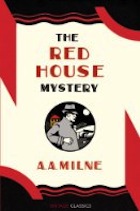
Red House Mystery, TheA.A. Milne, The Red House Mystery

In the time-honored tradition of the classic British mystery, a house party goes terribly awry when one of the guests is murdered and the host disappears. Mark Ablett, owner of the Red House, enjoys collecting people around him, so the house party includes such diverse characters as his private secretary, a military man, an actress, and several idle young people. The party appears to be going well until Ablett learns that his brother, the black sheep of the family who had been living in Australia, will be visiting the Red House for an unspecified but sinister reason. When Robert is inevitably murdered, Mark is nowhere to be found. Is he the murderer, or did someone else in the house party do the deed? Young man-about-town Antony Gillingham just happens to arrive on the scene at a pivotal moment, so he decides to try his skill as an amateur detective; but ultimately he discovers that the solution to the mystery is far more tragic than amusing.

When I came across this book a few years ago, I was delighted to discover that the creator of Winnie the Pooh had written a mystery story! It follows many conventions of the classic Golden Age mystery — such as being “fair,” with all clues presented to the reader as the detective discovers them — but it turned out to be a bit darker and sadder than I was expecting. Tony discovers the murderer’s identity fairly early in the book, so the bulk of the mystery lies in discovering how and why the deed was done. And the thing is, I found the murderer very sympathetic! So I was disappointed that this character turned out to be the guilty party. Also, unlike many mysteries from this period, this book doesn’t contain much humor, nor are there any subplots to lighten the mood of suspense and doom. Tony’s sidekick provides a few funny moments, but otherwise the tone remains pretty dark. Finally, Tony’s character isn’t developed very much, which disappointed me; he seemed really interesting, and I would have liked to know more about his backstory. The book is still worth reading if you enjoy Golden Age mysteries, but I have to admit, it wasn’t my favorite.

Review: In Tearing Haste

In Tearing HasteCharlotte Mosley, ed., In Tearing Haste: Letters Between Deborah Devonshire and Patrick Leigh Fermor

Deborah Devonshire began life as the youngest of the (in)famous Mitford sisters, but she unexpectedly became the duchess of Devonshire when her husband, Andrew Cavendish, inherited the duchy from his brother. Patrick Leigh Fermor was a travel writer who became a war hero by kidnapping the commanding German officer on the Nazi-occupied island of Crete. (The movie “Ill Met by Moonlight” is a fictionalized account of his experience.) The two first met when Deborah was still a young debutante, but they eventually formed a deep friendship, as well as a correspondence that would last for more than half a century. Although “darling Paddy” and “darling Debo” lived through many political upheavals and personal tragedies, their letters to each other always remained upbeat, humorous, and cheerful.

I usually find nonfiction very slow going, but this book was a pleasure to read. Both “Debo” and “Paddy” wrote in a lively conversational style that’s very easy to read, and I felt truly immersed in their day-to-day lives. Patrick often wrote about the various exotic places he visited, including the little town in Greece where he and his wife eventually settled. Deborah largely stayed on the Devonshire estates in England and Ireland, where she waxed poetic about sheep breeding and various fox-hunting excursions. The book also provides some fascinating insights into the psychology of the British upper classes: for example, Deborah mentions, with the utmost casualness, dining with President Kennedy several times. Though there’s not much in-depth discussion of the historical events through which they lived, anyone who is interested in reading a firsthand account of the 20th century should pick up this book! I’d also recommend it for fans of the Mitfords or early 20th-century British literature in general.