

Sherry Thomas, Ravishing the Heiress
In this Victorian romance, Millie Graves is the daughter of a rich tradesman who has arranged a marriage for her with the destitute Earl Fitzhugh. When Millie meets Fitz, she falls in love with him immediately, but Fitz is much less impressed, since he’s already in love with his childhood sweetheart, Isabelle. When Millie realizes this, she proposes that they wait to consummate their marriage and that once she produces an heir, he and Isabelle can pursue an extramarital relationship. But as the designated time for the consummation draws near, Fitz is surprised to find that the woman he really desires is his wife. I was pretty disappointed in this book, mostly because Fitz is such a jerk for most of it! He spends his entire honeymoon drunk, openly cheats on Millie with random women, and makes absolutely no effort to understand her thoughts or feelings. I couldn’t believe we were supposed to be rooting for this guy, and he doesn’t do nearly enough in the end to make up for his abhorrent behavior. So I definitely would not recommend this one and am hoping that the other Thomas title on my shelves, His at Night, is a lot better!
Richard Hull, Excellent Intentions
This mystery story has a common Golden Age setup: Wealthy and thoroughly unpleasant Henry Cargate is poisoned on a train. It turns out any number of people wished him ill, but only a few had the means and opportunity to obtain the poison and put it in his snuffbox, where he’d be sure to inhale it. The unusual element of the novel is that it starts at the murder trial, where the prosecutor summarizes the case against the accused (whose identity isn’t revealed till very late in the book). The narration jumps back and forth between the trial and the preceding investigation, and readers get inside the heads of the Scotland Yard inspector, prosecuting and defense attorneys, and even the judge. I liked the clever narrative structure and the reminder that catching the murderer isn’t the end of the story. However, the actual mystery isn’t particularly creative or hard to solve; the unique structure is the most interesting part of the book.
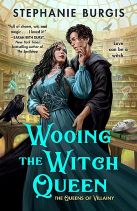
Stephanie Burgis, Wooing the Witch Queen
Queen Saskia is a witch determined to protect her people from the evil empire that’s trying to invade her country. Archduke Felix is the embodiment of that empire and the focus of Saskia’s hatred. But Felix is merely a figurehead imprisoned by his conniving relatives, who are about to escalate from torture to murder. When Felix escapes, he runs straight into Saskia’s kingdom but can’t reveal his true identity, so he applies for a job as her librarian, where romance and cozy villainy ensue. I enjoy Burgis’s writing, but this book fell a little flat for me. I think it’s because there’s no nuance; the good characters are 100% good, the baddies are entirely evil, and the romance lacks any real tension or depth. This book illustrates a trend I’ve noticed in the past few years, where romantic heroes are implausibly perfect and exist solely to provide emotional support to the heroine. Of course, I don’t want horrible, misogynistic “heroes,” but I would like them to feel like actual human beings and not cardboard fantasies. All that said, I may read the next book in the series when it’s published, but I will get it from the library instead of buying.
 You Book Me All Night Long
3 thoughts on “Mini-Reviews: Heiress, Excellent, Witch”